Scientist Stories: Carl June, Adoptive Immunotherapy for Cancer
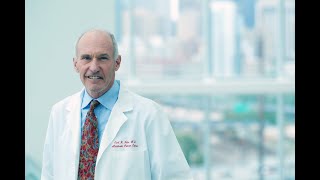
Carl June, an immunologist at University of Pennsylvania, traces adoptive immunotherapy from early failures with tumor-infiltrating lymphocytes to the breakthrough of CAR-T cells, which bypass tumor escape mechanisms. He describes a new collection of 17 articles mapping the field's current status and next steps: scaling production and expanding engineered T-cell therapy to solid tumors like lung, breast, and pancreatic cancer.
Chapters
Welcome to the Immunological Reviews Podcast. My name is Justina Stedanlick, and it's my pleasure to be here today at the University of Pennsylvania speaking with Dr. Carl June. He is the Richard M. Vake Professor of Immunotherapy in the Department of Pathology and Laboratory Medicine and the Director of Translational Research at the Abramson Family Cancer Research Institute. Dr. June, along with Dr. Robert Vonder Heide, is the guest editor of Volume 257 of Immunological Reviews covering adoptive immunotherapy for cancer. Dr. June, can you give us a brief overview of your scientific and medical backgrounds and how these experiences led you to the University of Pennsylvania?
Sure. I began on this about 25 years ago and have quite of an atypical background in that I was initially accepted to go to Stanford University in 1971 and then was drafted. We were in the middle of the Vietnam War at that time. And so I ended up going to Annapolis to the United States Naval Academy. And then after a variety of detours, ended up training as a medical oncologist at the Fred Hutchinson Cancer Center and University of Washington in Seattle. I did a year of graduate studies at the World Health Organization in Seattle, and then medical training, and then returned to the Navy where I had about 12 years to work on medical research and pay off basically my medical education. So during that time, I was not allowed to do cancer research. I was forced because of funding constraints to work on infectious diseases. Diseases, so there are regulations that all cancer research is done through the National Cancer Institute and Department of Health and Human Services in the United States, and the military does research in vaccines and infectious diseases, so I ended up working on HIV for about 10 years while I was in the Navy, and that turned out to be really important when I did move to the University of Pennsylvania in 19— '99, because we were the first then to begin to use HIV viruses as a tool to reshape cells so that they could be used for adoptive cellular therapy.
Adoptive immunotherapy for cancer is not a new idea. In fact, harnessing the immune system to combat cancer has been the elusive magic bullet for decades. Can you give us a bit of information about the early studies?
Sure, there's a long history, and unfortunately it's mostly disappointing, where we've had a number of exciting results and then they have failed to pan out when they've been tested in more rigorous clinical settings. So the initial testing, you know, was based on observations that infections could lead to spontaneous regression of tumors. And later studies in mice showed that it was T cells that resulted in the rejection of those tumors. And in fact, after World War II was when the first inbred mice were made, and it was shown that the transfer of T cells could lead to the rejection of tumors. So then the initial trials in humans were done in patients with melanoma, a tumor that often involves the skin, and then where T cells can be removed from surgical biopsies. And this was successful using so-called tumor-infiltrating lymphocytes. And there are chapters in our review that describe the use of tumor-infiltrating lymphocytes that Steve Rosenberg has pursued over the last 20 years or so. The issue with those is that they work in about 50% of the time with really astonishing results. But the problem has been that it's been unable, due to the complex culture system and the surgery required to obtain the tumor material, but unable to do this in formal clinical trials and to move it out beyond the National Cancer Institute. So that showed that it was possible to do adoptive therapy, but it was disappointing in that we haven't been able to move it beyond, you know, Bethesda in the United States. And then the first genetically engineered T-cell trials began in the 1990s, and Again, those showed safety, but they weren't able to be successful in that the adoptively transferred T cells ended up not persisting in patients. We've now learned that the reason they didn't persist in the patients was due to an unexpected difference in the biology between the mouse immune system and the human immune system. So the humans have, as well known now, programmed replicative senescence. As we age in life, we have shorter telomeres, and the mouse doesn't have this as an issue. So when people modeled the results from the mouse, they did adoptive therapy with, in general, fresh splenocytes, and culturing of the cells does not impact on the ability of the cells to live long-term. In humans, that's a major limitation. The initial trials were done with cells that had been cultured for months, months in vitro, and then when they were transferred back to patients, they couldn't persist and engraft, and that led to the disappointing results that were initially observed in the field.
As you mentioned, these early studies failed. However, you and other investigators at academic institutions have been successful with these therapies over the last 3 years. What's different now?
Sure. Well, as I mentioned before, part of the problem in the past was the senescence of of the cells that were infused. But the other major obstacle was tolerance, which is that the affinity of the receptors that were used in the infused cells was too low to really mimic what happens in an infectious disease response, where the response to a pathogen has high-affinity T cell receptors that are optimal for the immune system to eliminate, say, a virus or other pathogen. So now through genetic engineering, we're able to make T cells that have high-affinity receptors, either T-cell receptor alpha, beta, heterodimeric receptors or MHC class I restricted, or antibody-based receptors such as the chimeric antigen receptor. And this is what we call a CAR receptor now, but it's also called a T-body because it comprises both the antibody and the T-cell facts to make a T-cell that becomes bispecific. Retains expression of a functional T cell receptor and then has an MHC-unrestricted antibody receptor on the surface of the cell. And the major advance here is really twofold. One is that those CAR T cells now are able to kill in an MHC-unrestricted fashion. That means two things. One is that the cell can kill a tumor cell that has downregulated MHC Class I, which is really important since that's a major way of tumor escape. And then the second attractive feature of that is it's more off the shelf. You don't have to match the T cell receptor to each person's HLA type.
So the—
and then the other advantage of antibodies is they have much higher affinity than T cell receptors so that the recognition and signaling that's triggered when the T cell encounters the tumor target is much more robust than it is through a T cell that uses a low affinity T cell receptor.
In Volume 257 of Immunological Reviews, you and Dr. Van der Heide have assembled 17 review articles from the leading investigators in this field. What will we learn from reading these articles?
We're really excited about the timeliness of this issue. It has— it's a comprehensive set of reviews by leaders in the field. That addresses all aspects of engineered therapy with adoptively transferred T cells, from basic advances that are on the horizon to clinical advances. So the volume starts with a number of clinical reviews of the current status in the field of cancer immunotherapy. We've chosen not to talk about other forms of immunotherapy with adoptively transferred T cells, such as regulatory T cells or cells for control of viral infection. So the focus is on tumor immunotherapy and initially on the clinical status. Then there are a number of chapters that address the next generation design of chimeric receptors and engineered T cell receptors, showing how new forms of sophistication will occur through more controlled delivery of these chimeric receptors. In addition, there are reviews that look at making enhancements and other modifications of the receptors, such as incorporations of novel suicide systems and other secondary systems, such as so-called trucks. So a truck is a car that now has an even more potent signaling domain that can recruit the innate immune system as well as the adoptive immune system. And then the chapter also has a number of reviews on ways to culture cells that have more potent subsets and effector functions. So that could be from selecting out so-called stem cells from the T cell precursor pool or the use of hematopoietic stem cells and early T cell precursor cells that may have uses beyond what the use of mature T cells have that the rest of the chapters focus on. So we're excited both that this will summarize the current status of the field as well as foretell what we'll see in the next several years as the field rapidly evolves.
So your work has been at the forefront of cancer treatments. What do you think will come next?
So as the readers will notice from this volume, it's entirely composed of investigators from the academic arena, and this is one therapy that's developed entirely within the university settings with literally no involvement from the biotechnology or pharmaceutical industry. And now, for the first time, we have several pharmaceutical companies and biotechnology companies that are beginning to support trials in this area with engineered T cells. So in part, one of the next parts of the chapter in this field will be a swing in the pendulum of research and development to more development. And now that we have the basic fundamentals worked out, what will happen will be more of an engineering problem. It will be How does one scale this up and deliver it so that it's commercially available and widespread, rather than the current status, which is it's only available at the boutique cancer centers, from the authors in the volume of the chapters that we have. So the next engineering challenge is to move it beyond that so that it's commercially available and widespread throughout for all cancer patients. The other issue in the next several years will be really moving beyond B-cell malignancies. At this point, the primary efficacy is in leukemias such as chronic lymphocytic leukemia, lymphomas, and acute lymphocytic leukemia. So the major challenge to the field really is, can this move beyond B-cell malignancies and into other bone marrow malignancies like myeloma and acute myelogenous leukemia? And then even farther on the horizon will be solid tumors, such as the more common lung cancer, breast cancer, pancreatic cancer, brain cancer. All those trials are just beginning, and I think that'll be the next exciting forefront to see as those fields develop.
Thank you very much for taking the time to talk with us today.
More from Joshua







Scientist Stories: Hans Waterham, The value of phenotypic assays in peroxisomal disorders




Scientist Stories: Joel Zlotogora, Genetic carrier screening programs for reproductive purposes