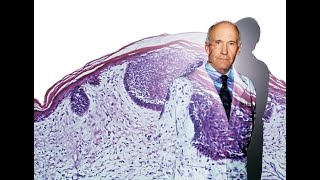
In this interview, Carl June and several industry representatives discuss the evolution of cell‑based immunotherapies, especially CAR‑T, from a niche academic concept to a globally commercialized treatment. The conversation opens with the ambitious question of curing cancer and moves into June’s early work in the early 2010s, describing how multidisciplinary research (virology, immunology, cell biology) led to the creation of chimeric antigen receptor T‑cells. A pivotal anecdote recounts the treatment of six‑year‑old Emily Whitehead in 2012, whose severe toxicity signaled therapeutic activity and whose rapid, complete remission sparked a wave of clinical trials. The panel reflects on the calculated risk taken by early leaders, the 2017 FDA approval of a CAR‑T product after Novartis licensing, and the massive scaling of manufacturing—from modest incubator‑filled rooms to large, digitally‑connected GMP facilities—highlighting Cytiva’s role in enabling industrialization. June notes the explosive growth of the field, from fewer than five labs in 2010 to over a thousand active trials today, underscoring the transformative impact on patients and families.
Chapters
Somebody asked me at the weekend, will we cure cancer? This is a big word. It's a big, it's a big ambition because there's so many different types of cancer that, you know, that's a big word that covers a lot of different disease types. But I think we'll be able to cure a lot of them.
Are you going to be a part of that?
I hope so.
I—
that's— yeah, well, you can tell by my smile that that's the sort of thing that motivates us, you know, is to really drive towards those kind of, yeah, inventions. And, you know, who'd have thought where we were now, like, we'd look 20 years ago, right? Hi, how are you?
I missed you. So good to see you.
Aaron, Aaron, how's it going?
Good, good to see you.
Welcome, come on in.
Thank you.
Thanks for bringing those peppers.
Of course.
You know, we've now been doing this for 10 to 15 years.
Don't make us old.
I won't put specific numbers in there, but it's been that long where we're working with our teams to innovate. We're being the voice of customer.
Just hearing all the great things that were happening at the organization at the time, and, you know, now Cytiva, of course, and getting in on something that big, you know, was exciting.
I'm not going to lie to you. It was sort of like, I need to be a part of this.
So it was fantastic timing too. Before I get too far, you said, how's that for sizing?
That's good.
We could go even a little tighter if you like.
All right. Yeah, I can manage that.
I can manage that. So 10, 15 years ago, I was a commercial guy. My role was to support people in core blood banking and in academic research mainly. Meanwhile, actually, there was sort of this research happening, particularly in the US, places like MSK and UPenn. Into how we could transform T cells and use those for fighting cancer. But that was a little bit quieter in terms of under the radar from where I was sitting, particularly until after 2010.
The leading pioneers in cell therapy at the time, as the field kind of slowed down in the MSC space and started to look towards T cells and immune therapy, was predominantly academic in nature.
If you look at it just at the atomic level, something like aspirin is composed of 21 atoms. You know, a biologic drug, you know, about 1,500 atoms. Then you get to a viral vector, which is 10 to the 5 or 10 to the 6 total atoms. Then you get to a gene-modified cell like a CAR-T therapy. It's just, you know, orders of magnitude of complexity.
Yeah, you know, one lesson has been, you know, these complex cell and gene therapies, I mean, like we've been saying from the beginning, they're multidisciplinary. There's virology, immunology, cell biology. So we had that embedded in this environment here, and that really promoted the research. The CAR T-cell stands for chimeric antigen receptor, and chimeric comes from the Greek word of a chimera, which was a a mythical creature that was 3 animals. It was a goat, a serpent, and a lion, lion's head. And what we did was put an antibody from a B cell into a T cell, and that then, that's why we call it their chimeric. So that's how we treated Doug Olson first. We treated about 3 patients then, adult patients with chronic leukemias, and we treated Emily Whitehead, in April 2012, and as a first pediatric patient. She was 6 years old at the time and had had multiply relapsed leukemia, and we infused her here at Children's Hospital Philadelphia on a Tuesday, but on Friday she had very high fever. She was so sick at that time that I had written a letter to go to our, you know, the president of the university saying that a child was likely going to die from the toxicity.
Yeah, so certainly there were real leaders in the industry, and key opinion leaders, and people within the businesses that would say, forget about the risky stuff and the future stuff. Let's focus on core blood and more traditional types of medicine, and how can we support that in the short term? But I think we have to take some risks in this industry to move things forward.
And she had a very strong response. She got very sick, which we now know meant the cells were working. And over the course of just a few days, her cancer really disappeared. And now we're 10+ years out. You know, led to the Novartis licensing and ultimately the 2017 approval of CAR-T as a therapy.
You know, the result with Emily Whitehead was beyond our wildest dreams. It turned out 90% of patients treated on our trial here at Children's Hospital, the first 60 patients we had, 90% had a complete remission. That's unheard of. So that, that allowed us in 2012 then to begin this journey. Of asking, could you commercialize that?
So really, that one patient almost opened the path for the entire field and for other patients. So just a remarkable time, exhilarating time, you know, when those initial responses were happening. And I think it goes back to that initial need that Cyteva was able to fill and really enable the industrialization and globalization of these therapies beyond these limited academic centers.
That was definitely, um, it was basically the time where we all looked at each other and said, hey, our customers are scaling up. They need something bigger. They need something that can do more. It's really, you know, we're going into that GMP environment.
Yeah, I think, you know, the leaders at the time took a risk, but it was a pretty calculated risk. I mean, the, the, the results of what was happening within that, the, the, within that karting space at that time, the, the phenomenal sort of results that they'd achieved, which were beyond expectation, I believe. Yes, there was some vision, and it took vision for those guys to see beyond, um, beyond the short term and see long-term play. But that's really what, what the leaders of the company at the time did. And yeah, it was pretty— well, I'm certainly very grateful for that vision. But it's, yeah, it's something that I think they can— those guys can be proud of taking that risk.
There was a handful, less than 5 people, labs in the world working on this back in 2010, you know, when our first patients were treated. And now there's more than 1,000 trials underway and thousands of laboratories working on this. So there's no, no way I could have thought that when this, you know, the first approval happened, that we would have this kind of progress in such a short period of time.
In fact, if I go back to sort of industry 10 years ago, they were in rooms smaller than this room with a couple of incubators and a hood. And now I walked into one of these sort of commercial manufacturing centers and it was like a warehouse. And it's full of equipment that's digitally connected and, and it's a world apart from where we were. And for me, what hit me was that, that, that change, that growth from 10 years back of what a manufacturing facility looked like back then to there and to see and to then put that forward and think how many patients, how many families' lives will be impacted by the activities in that room. Yeah, that was pretty impressive. That was pretty— I was proud of what the team has done, what the industry has done, and just to be a small cog in the wheel of it has been— yeah, that was pretty fantastic. Yeah, it was a good moment. What can I say?