Scientist Stories: Carl June, Pioneering T-cell therapies for cancer and adoptive immunotherapies
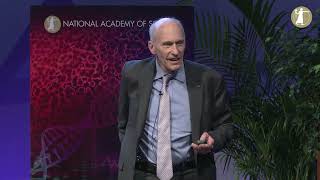
Carl June traces 30 years of CAR T-cell development, a living drug that rewires immune cells to fight cancer. He covers landmark cases like Emily Whitehead, the side effects doctors now manage, and how the therapy is expanding into autoimmunity and heart disease.
Chapters
Well, thanks very much, Dr. Wessler. And, you know, it's a huge honor to represent Class IV. The invention I'll talk about, CAR T cells, really happened because of the last 30 years, the advances and revolutions in molecular biology and in immunology, and that allowed this to happen. And so it's a wonderful honor to represent Section 43, Immunology and Inflammation. And my disclosures are here. So I wanted to put this into some perspective. Cicero said many eons ago that if you understood the cause of something, the cure would be evident. What, um, at my institution in the University of Pennsylvania in 1963, Peter Nowell discovered the first cause of cancer, which was the Philadelphia chromosome. It was a translocation that activated a kinase and caused leukemia. And, um, so you would think it would be easy to then have the cure. And the fact is, the FDA approval of a cure targeting the Philadelphia chromosome took 40 years. That was imatinib. And so that, you know, that's what you need when you look at medical developments. Keep that in perspective, the long lag time between basic discoveries and implementation in the clinic. So using the immune system to treat cancer is not new as an idea. You know, William Coley in New York City injected live bacteria into people with cancer in the 1800s. Some people responded, most just got infected and did not respond. But since 1990, there's been then good demonstration with basic immunology and other technologies to show that the immune system actually is relevant to human cancer. And a major change happened in 2013 in Science magazine in their December issue where they published the 10 major advances in science, said number 1 in 2013 was cancer immunology. And, and that was because of publications on checkpoint therapy for cancer and the CAR T-cell therapies that we reported in 2012. So the, the major approach of a CAR T-cell is cell therapy. And there are 3 kinds of cell therapy. There's one which is the first to be tested, tumor infiltrating lymphocytes. This is yet to be FDA approved, but that shows the principle that if you take a metastatic tumor from a patient, cut it out, grow those T cells in the tumor in a lab— so infiltrating lymphocytes, TIL, tumor infiltrating— and then give them back to the patients, Some of them are cured. What we have done with CAR T cells is to take them from the blood, so just our lymphocytes that circulate, and then in a laboratory genetically enhance them and give them back to patients. And this has now become FDA approved. So CAR stands from, you know, the words chimeric antigen receptor coming from the Greek, you know, mythical animal that was a lion, a goat, and a serpent. And, and that's because we make a T cell, and that's chimeric. We combine within lymphocytes. The two major kinds we have are B cells and T cells. The B cells make antibodies, and you've all heard about that for certain about spike COVID. Making antibodies from B cells protects us against infections. Our T cells prevent viral infections by killing pathogens that are intracellular, and the antibodies bind to extracellular pathogens. A CAR T cell is a chimera between the two. And so this is where the field is at this point. We have the ability to take— if this is the tumor cell up here, we can take a T cell and use molecular technologies to introduce a transgenic T cell receptor, and that can bind the tumor peptides that come from the inside of the tumor cell— mutated peptides. And the other CAR molecule, chimeric antigen receptor, targets a different class of antigens. It targets the surface proteome and glycome of the tumor cell, and the CAR molecule itself isn't a natural receptor like the T cell receptor. It's a chimeric molecule built that has the antibody that I mentioned that comes from a B cell, and then signaling domains that activate the T cell to kill the tumor cell and also to make the CAR T cell proliferate. The very first trials we did with CAR T cells actually were done in patients with HIV and AIDS. And this was started before there were potent antiretroviral therapies, and so it suppressed viral replication. These trials were sponsored by Tony Fauci and NIAID and showed we could block viral replication with a CAR T cell that killed HIV-infected cells in patients. We, over 10 years, did 3 trials with these CAR T cells in HIV/AIDS patients. And, you know, the main finding was that, was that these CAR T cells were the first living drug in patients. We could find them, you know, a decade or more after a single infusion. So these are genetically modified patient-specific T cells, which is autologous. We took them out in the lab, put a CAR molecule in there that binds to HIV and kills HIV-infected cells, gave them back to the patient, and they survived for 10 years in the patients. And so that was the first proof of principle. And then, you know, that was done when I was in the Navy in Bethesda and with funding from the NIH and the Army. And I bet I went back in the early part of the pandemic and gave a grand rounds there at Walter Reed where we did the initial patients, and shown here. So, and I saw some of those original patients 20 years later, they still have CAR T cells. So it's really a remarkable demonstration. You can take a cell that's long-lived and you can genetically modify it and they can persist. So then in 2010, we began applying that technology to cancer and specific to leukemia patients. And, you know, the first patient was an adult infused in 2010, and we reported him in 2011. And these, again, they're patient-specific T cells. So we get them out of their arm and then in 10 to 12 days, use genetic technology to modify the T cells, put the CAR in, so they have now an antibody in them that will kill leukemia cells on a molecule called CD19. And that became FDA approved then 5 years later. So pretty fast in the scale of usual medical developments. And the first patient we treated had a P53 mutant refractory leukemia. And we reported him, his 10-year follow-up in a paper in Nature a few months ago. And the first 3 patients that we treated, 2 of 3 had durable 10-year remissions. We could say they're cured with a single infusion of the CAR cells, and they had no unexpected long-term toxicities from this genetic modification. So Like we had shown in HIV, you could make a living drug by modifying our endogenous immune system. It's synthetic biology enhancing the function of the cells. He came back in the midst of the pandemic still masked, and that's because there's one off-target effect. The CAR T cells target CD19, which is on leukemia, but it's on your natural B cells. So he has an acquired immunodeficiency, and he doesn't have normal B cells anymore as well. And that's a research area that's underway. So then in 2012, we treated our first pediatric patient, Emily Whitehead, with the same CAR. And she had acute lymphoblastic leukemia, ALL. Had another toxicity. The first I mentioned was B-cell aplasia. You kill your normal B-cells, but you kill the tumor. She also had cytokine release syndrome and clinically had a fever of 106 degrees for 3 days. And this is the cytokines in her blood, uh, in fold above background. So these are chemical names, you know, interleukin-2, interleukin-6. Were a thousandfold above background. And this was happening as the CAR T cells killed her tumor. So it's an on-target effect, unlike chemotherapy. Like, if you throw up and have your hair come out, that's an off-target effect. This is on target, and it happens in responding patients with CAR T cell patients. And, um, so I look— this is, you know, she was Time we treated her, 6 years old. So this month is a 10-year anniversary since she was treated. She was just in Ireland and now 17 years old. And this is on Twitter. I got this on Friday. So she was in Ireland on Friday and with the first patient who's here to be treated in Ireland with these CAR T cells. And And it turns out there's now a full-length movie coming out, documentary about her case, and it'll be in Tribeca in the month of June if you want to see that at the film festival in New York. So the off-target effect— off-tumor but on-target effect she had, sorry, the high fevers and so on, is called cytokine release syndrome. And that can affect— it's pleomorphic, can affect any organ system. And there's many cytokines and chemokines that represent severe inflammation. She had literally 5 pounds of tumor at the time we treated her. You know, we could do imaging and, and look at how many leukemic cells she had. And so did their first adult patients that we treated. And so as all those cells die, they release— there's much inflammation and very high fevers made by this cytokine cascade. And when the FDA approved it, this is the package insert for the CAR. It can cause cytokine storm, which is on target. It's now treated with blocking the cytokine IL-6. And that's what saved Emily's life.. There also can be reversible neurologic toxicities called ICANS. And the drug we make, that transgene we put into the T cells, is inserted using a baseline HIV virus that's been gutted and then turned into a tool to insert the CAR molecule. So there's background sequences in the patient's T cells that can resemble HIV, and it's a false positive assay. So the trial then that we started as a Phase 1 trial at Children's Hospital was done in multi-center, led to FDA approval 2017. So CAR T cells now have been used extensively for HIV and AIDS now, and also really promising outside of the field of cancer. So in autoimmunity and heart disease. And many— over a century ago, Paul Ehrlich really hypothesized that the immune system might be the cause of autoimmune disease like arthritis and lupus, and that the balance between an active immune system and an inactive one— it could treat cancer, it could cause autoimmune disease. And so this really exciting paper was published by George Shett and colleagues in Erlangen in the New England Journal. A case report of a single Asian woman, 20 years old, refractory lupus, who had very high, you know, bad kidney disease, double-stranded DNA antibodies. Single infusion of that CAR T-cell that we used to kill B cells eradicated her pathogenic antibodies. It made the of autoimmune disease, and she's now in remission. And they have many patients now where this has occurred in this ongoing phase 1 trial in Germany. And with John Epstein and others at the University of Pennsylvania, we asked, could you treat the scars that happened after injury and enhance repair? So regenerative medicine approach. And you can induce heart failure in mice And what we found was if we treated and killed the fibroblasts with CAR T cells targeting a molecule called fibroblast activation protein, we could— instead of having this in an injured heart, we could get almost completely normal repair with functioning heart muscle. So this is something we're advancing in the clinic now at Penn. So where we are with cell and gene therapies is moving from a three-pillared system of pharma, biotech, and medical devices and to this fourth pillar of personalized therapies that are cell and gene and require much more complex logistics. It can be N of 1 as in SMA that we heard in the previous session. And one issue is whether these cell and gene products will be manufactured centrally in a central pharma model or locally at point of service at local hospitals. And I think that will happen, but it's not yet ready for prime time. And another issue is whether instead of using your own cells, you could learn to do this with other people's cells such as cord blood cells or those T cells. Or induced pluripotent stem cells. And that— there's a very active now biotech and academic working on this approach. And then another major issue from a social political issue is, you know, this is expensive if you treat one by one. And right now the manufacturing cost and so on for the CAR T cells in the United States is $400,000 a patient, but it costs $1 million to treat a patient with other therapies like bone marrow transplants and so on, which often don't work. And this is really coming to the fore this year and last year with the most common— whoops— most common cancer in the United States in adults with bone marrow that talks is myeloma, and a CAR targeting B-cell maturation antigen got approved for that. That tumor is 2% of all adult cancers in the U.S., but it's 7% of all medical costs. So it's a financially toxic tumor because you live many years, but you're still not cured. So if we can have a one-time curative therapy and learn how to make it cheaper, it will be much better for, for everyone. But right now we're in this issue where For instance, in the case of myeloma with non-curative therapy, the lifetime cost to treat all patients is $20 billion a year. And so, you know, we're stuck with that right now with therapies that are expensive but non-curative. So globally now, the major development of these therapies is in the US and China, and there's over 500 trials. Underway now. And to summarize, you know, we're moving in the case of cancer therapy from non-toxic— from toxic off-target effects with chemotherapy to precise cell and gene therapies. And I think one thing I've learned over my career is this from Yogi Berra: you can observe a lot just by watching, and if you come to a fork in the road, take it. And so there are many people involved. CAR T cells— my main message is they're a living drug. They're expensive at this point. We need to learn how to make them cheaply and robotically. It's an engineering problem, but they can be an early approach to synthetically enhance the immune system to treat both cancer, autoimmune disease, and heart disease. Many people involved in these studies, and I'd like to thank them. Here too numerous to name. Thanks.
More from Joshua







Scientist Stories: Hans Waterham, The value of phenotypic assays in peroxisomal disorders




Scientist Stories: Joel Zlotogora, Genetic carrier screening programs for reproductive purposes