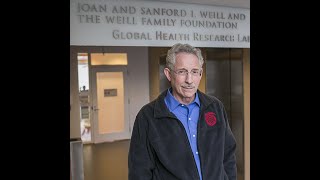
In this Immunological Reviews podcast episode, host Justina Stadanlik interviews Dr. Carl Nathan, chairman of Microbiology & Immunology at Weill Cornell. Nathan recounts his unconventional career path—starting in high‑school labs, earning an MD without a PhD, and shifting from a focus on cancer to studying macrophage biology and tuberculosis (TB). He explains why the existing TB drug regimen, though technically effective, is far from excellent: the drugs are old, toxic, require long combination therapy, and face rising resistance, while second‑line options are painful, expensive, and scarce. Nathan highlights the broader social determinants that fuel TB—poverty, poor ventilation, nutrition, HIV, and the growing burden of type‑2 diabetes—arguing that medical advances alone cannot control the disease. He describes Volume 264 of Immunological Reviews, a collection of 24 articles that pose fundamental questions about why the human immune system fails to contain TB despite full activation, and suggests that TB serves as a mirror for understanding human immunity. Finally, Nathan outlines a new, networked model of drug discovery where immunologists and pharmaceutical scientists collaborate from the outset, sharing data openly across institutions to streamline screening and reduce redundancy, a shift he believes could accelerate the development of better TB therapeutics. The interview underscores the intertwined scientific, clinical, and societal challenges of TB and the need for integrated, collaborative solutions.
Chapters
Welcome to the Immunological Reviews Podcast. My name is Justina Stadanlik, and it's my pleasure to be here at Weill Cornell Medical College speaking with Dr. Carl Nathan. Dr. Nathan is the chairman of the Department of Microbiology and Immunology, the R.A. Rees Pritchett Professor of Microbiology, and the director of the Abby and Howard P. Milstein Program in Translational Medicine. Dr. Nathan is also the guest editor of Volume 264 of Immunological Reviews covering tuberculosis. Dr. Nathan, can you give us a brief overview of your scientific and medical backgrounds?
Sure, it's, it's, it's brief in part because I never did get a PhD. On the other hand, I did start working in research in summers after 9th grade in high school. I spent 5 summers in a lab at NYU Medical School and learned about inflammation. Got very interested in that and continued some taking extra time for research at Harvard Medical School. But I got a straight MD, got boards in internal medicine and medical oncology, and regret not having a PhD. So I can't really claim to be an immunologist or a microbiologist, but then I don't have the responsibility of being an immunologist or a microbiologist either. I think I'm a humanist.
When you began your training, your goal was to treat cancer. However, your scientific investigations of macrophages led to important discoveries with implications for infectious disease, particularly tuberculosis. Can you tell us how your interest developed over time?
Sure, yes. I was very interested in treating cancer. As an oncology fellow, I got very frustrated with the tools and knowledge that could shape the development of new tools that we had at the time. I was very impressed with the damage the immune system can inflict on the human body when it thinks a particular location is infected, whether that's true as in an abscess or whether it's apparently not true as in a rheumatoid joint. And it just occurred to me, this is what we need to train on cancer, but we don't know enough how it works. I assume that the power of the immune system to do things like this didn't evolve to treat cancer because cancer is predominant in people past reproductive age. And on the other hand, it clearly evolved to handle infectious disease. So I thought if we're really going to make progress in understanding the rules and the tools that the immune system follows uses, we should work in the theater where they evolved. And ideally, facing stresses that would challenge the existence of the human species. So the dialogue between a very successful pathogen and a human, I figured, would teach us what we need to know to come back to cancer. So in a sense, my career has been an enormous detour. And fortunately, science is a multi-person relay race, and one only gets the baton briefly anyway. So that's the story.
Dr. Nathan, it was my understanding that we have excellent drugs to treat tuberculosis. Why is this disease such a public health problem today?
I agree. If you have drug-sensitive tuberculosis and you manage to take your 4 drugs every day, 4 drugs every day for 2 months, and 2 of them every day for the next 4 to 6 months or 7 months, and you're cured, you might consider them excellent drugs. But from another point of view, they're really not. The vast majority of them were developed many, many years ago, wouldn't pass today's safety standards. They're toxic. That's a lot of drugs for a long time. They make people feel either immediately better, which encourages them to stop, or worse because of the toxicity, which encourages them to stop. So it's very hard to finish. So actually, there are very few infectious diseases that are so difficult to treat in the sense of how long it takes to take combination therapy or any therapy. And it's just not workable. So I would argue they're not excellent drugs, but they're what we have. Unfortunately, that's rapidly becoming not the case either. We don't have them in the sense that resistance to them is now widespread. Now that brings you to the second-line drugs. No one would begin to say they're excellent drugs. Many of them are injectable. It's painful. They're toxic. They cause neuropathy, hearing loss, psychosis. Many problems. The treatment for drug-resistant TB often extends over 2 years and very often doesn't work. The drugs are very expensive. Most people who need them don't get them. It's a big stretch to consider them acceptable in any sense. And now we're running out of even those. So we have an enormous problem with drugs, and that's just the scientific and pharmacological problems. There are ancillary societal problems like counterfeiting, or don't have them at all, can't afford them, combined with great dearth of capacity for drug sensitivity testing and serious shortcomings in how to tell whether a new drug works short of a multi-year, very large, very expensive trial. So the drug situation is dire. Ironically, it's been that way a long time, but now the rest of what you might call modern medicine in economically advantaged countries is catching up with the direness of that situation. So TB has paradigmatic lessons, both in the problems and how to solve them, for a much broader problem of running out of antibiotics for bacterial infections across the board. Huge societal problem. The TB problem is compounded by the geometry of how fast TB is spread before people are successfully cured or rendered non-contagious or die if they're not treated. Even having outstanding drugs isn't going to control the problem. It's going to also require a vaccine, and there's a huge problem there as well. Those two things aren't going to be enough either. Basically, diseases like this are best controlled by eliminating poverty. And that's an enormously complicated problem to which scientists and medical people, healthcare people can best contribute by controlling diseases of poverty because of the interactive nature of poverty and the diseases that are predominant in impoverished situations. They have a ping-pong relationship. But, you know, not cooking indoors without ventilation and suffering the damage to the lung that smoke causes, having adequate nutrition, sanitation, potable water, all of these are all required. Huge problem. And then there's a fourth leg of the problem, which is predisposing medical conditions. You don't need a predisposing medical condition to get TB, but your risk of getting TB and having it be hard to treat is greatly exaggerated if you have HIV or if you're diabetic. The HIV pandemic is enormous, but it's coming under control, but its place in the TB problem is being taken by the rampant spread of Type 2 diabetes chiefly. So lots of problems. I wish the word excellent could be more fairly attached to anything in TB.
In Volume 264 of Immunological Reviews, you have assembled 24 review articles from leading investigators in the field. What will we learn from reading these articles?
I love these articles. I think they succinctly, in some cases brilliantly, reformulate the parameters of our ignorance. And I don't mean that to be amusing. I think that's absolutely essential to go to the next stage of success. So I think we're able to put specifics to questions I'll just state very broadly. How is it that every known element of the human immune system is mobilized against TB in someone who has TB and normal immune capacity? And yet it's not controlled? How is it that people who we can't tell apart phenotypically at the outset inhale this bacillus and have such disparate fates, ranging from no trouble at all to a latent infection that might actually help them cope with other conditions like allergy and atopy, or even cancer, that is preventing it? To people who have acute disease that spreads all over the body and is a complete loss from TB's point of view in terms of them being desperately ill but not contagious, who succumb to it. And then people in whom it's quiescent for decades and then reactivates, and they become carriers to others and enable the bacillus to achieve its own goal of propagation. We don't understand that. I mean, a lot of knowledge is gathering and there's beginning to be a way to penetrate that mystery, but we still don't understand it. With greater depth of immune sophistication, we can begin to ask whether we're paying not enough attention to non-protein antigens that are presented on invariant antigen-presenting molecules that might offer a different route to vaccines. Why don't the vaccines work? Where are the bottlenecks? What is the proper way to test them to find out what the correlates of protection are? I could go on. I mean, I think every chapter can be restated as a fundamental question. TB is one of a handful of diseases— I don't want to use the word elite. But in the sense that it has the predominant form caused by Mycobacterium tuberculosis itself has no other, that pathogen has no other natural host but humans. And it's been with us for many tens of thousands of years. So we and it have co-evolved. And it is a book, or a mirror, let me say, in which to learn what the human immune system is really like in action. And so I think that's what these chapters do. They are the mirror. It's a little foggy still, but it's beginning to take shape where we can look and see ourselves, ourselves as an immune organism.
In the review you co-authored with Dr. Barry, you emphasize the importance of immunologists working collaboratively with others in the drug discovery process. Can you tell us a bit about the efforts that you and others are undergoing And can you envision what will be required to effectively control or eliminate tuberculosis?
Well, the effective control or elimination of tuberculosis is bigger than the problem of finding new drugs, as I mentioned before. And it's going to require a new vaccine that's effective and other efforts to deal with poverty and efforts to control HIV and diabetes and a lot of other things. But on the drug front, I think what's really different now is important for drug discovery in general in the 21st century. So to oversimplify, but try to make it very concrete, the old system was a linear handoff. Typically, an academic working in the academy or moved into the industry, but working as a biologist, would formulate a hypothesis about pathogenesis and come up with either an idea or some chemical matter that they hoped might be turned into a drug. Then there was a handoff, and this next segment—and it was segmented, there was a barrier—would be to professional drug development people of many types. But bare minimum, synthetic chemists, medicinal chemists, pharmacologists, and toxicologists. They themselves would often work sequentially in a linear fashion. Then almost always it would fail as it got to clinical testing. Now the linear path I just described, in parallel there would be another one and another one and another one because everybody had the same ideas around the same time. They all worked secretly from each other by the rules of patent protection and industry practice. So you had a bunch of parallel paths, enormous redundancy of effort, huge amounts of people time, human resources and dollar resources falling off the cliff at the end. Nobody learning from each other. The new system is different in it's networked in two different senses. One is the biologists and the drug discovery people, the professionals work side by side from the beginning. The biologists are there to contribute their latest knowledge of what's going on and tools with which to probe and measure. And they're learning something about drug discovery so their own efforts are more effectively focused. The drug discovery people are learning completely new ways of thinking about the problem from the very beginning, how to screen, for example. And the academics who would like to screen are learning what to screen and what not to waste your time on and how to discriminate amongst the compounds that emerge from the screens. So within the pharmaceutical sphere itself, the medicinal chemists, pharmacologists, and toxicologists are working in parallel, not in sequence. So compounds that have a hope of progressing are identified and sorted earlier from those that are surely going to fail later, but why spend the money? Now that whole crosshatched network is crosshatched to the same efforts with the same goals at other companies with other academics, and it's all open. Everybody knows what's going on at the same time. The risk and reward is shared in proportion as the knowledge is shared. It's completely different. Now, is it going to work? It's going to take a long time to find out if somebody was cured from TB because of drugs discovered through this approach. But the approach seems to be working. There's enormous wealth of new chemical material with activity against TB in physiologically relevant states has emerged. The flow of compounds from one drug company to another to share the studies has reached the many thousands. And I think this is revolutionary, and I hope it spreads.