Scientist Stories: Carolyn Bertozzi, How Sugars Drive Cancer
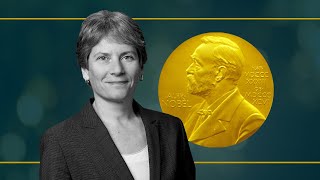
Carolyn Bertozzi spent two decades studying sugars on cell surfaces and discovered that cancer cells coat themselves in sialic acid, which tricks the immune system into ignoring them. Her team built a molecular 'lawnmower' that strips away these sugars, letting immune cells attack tumors again. The therapy is now in clinical trials.
Chapters
Welcome this evening. It is truly my honor to be here before you telling you about some of the work we've been doing in my lab., and sharing the stage with such distinguished and talented students. I was able to hear the performance from backstage. It's amazing. Uh, and I'm going to tell you about, um, work that we did that started about 20 years ago now and has culminated in the development of a new candidate for a medicine to treat cancer, which is actually being tested in cancer patients here at Stanford Hospital, amongst other sites around the country. And it all starts with sugars. Now, we've all experienced the joys of sugars. Usually, when we think of the word "sugar," we think of food, and we think of sweet foods like the one shown here, the famous peanut M&M. But the kind of sugars that my lab studies are not the kind you eat. Instead, they are the kind that coat the surface of all of our cells. And so the peanut M&M is still a good metaphor because just like the surface of our cells, the peanut M&M has a sugar coating. And I learned about the sugars on our cells way back when I was an undergraduate But very little was understood about the function of the cell's sugar coating. In fact, I remember taking a class as an undergraduate. It was a cell biology class, and our professor only had one thing to say about the sugar coating on our cells. And what he said is, "Oh, it's probably just like the M&M, where it's a protective coating." And people of a certain age, such as myself, will remember that the peanut M&M is designed to melt in your mouth but not in your hand. That's right. Now, it turns out that was a massive oversimplification of the functions of our cell surface sugars, but what do you expect from Harvard University? Okay, now fast forward to the modern time. We know that the sugars on our cell surfaces are very complex, and in fact, you can think of those sugars very much like the vegetation on the planet Earth. So if you flew around the planet in a helicopter, you would see something like this: trees and shrubs and grass, vegetation of all shapes and sizes moving and swaying in the wind. And we think that's what our cell surface actually looks like, but instead of trees and shrubs and grass, there are complex sugar molecules. Now I got fascinated with this subject back during my days as a graduate student and a postdoctoral fellow, because it was during those years— this puts me back to the 1980s, the 1990s— when medical doctors discovered changes in the structures of these cell surface sugars that occur during disease. And in particular, the observation was made that the pattern of these sugars on healthy cells is quite different from the pattern on cancer cells. And in fact, as this cartoon would suggest, the healthy cell has a well-manicured garden of sugars, but then the cancer cell has this overgrown jungle of sugars. And there was one particular type of sugar that was really growing out of control on the cancer cells, and it was a sugar that we call sialic acid. And for anyone who has an affinity for chemistry in the audience, this is the chemical structure of that sugar, sialic acid. So this observation was made, but it took many decades for people to understand why this happens. And this was work that my lab was involved in now maybe 15 to 20 years ago. And now I should make a confession because at that time my lab was not here at Stanford. It was at UC Berkeley. Okay, I survived that moment. Nobody has tomatoes in their pockets. That's good. So my lab then at Berkeley started trying to understand why these changes in sugars occur. And what we found is that it has to do with the immune system. So we now know that our immune system plays a very important role in protecting us from cancer. And most of the time, this works out quite well for us. Because most of us spend most of our lives cancer-free. And we have our immune cells to thank. Now, the immune cells travel around our bodies. They're blood cells. They're what we call the white blood cells. And one by one, they will sample all of the other cells in our bodies, and they will snuggle up and literally taste the surface of our cells. And in this image, you're seeing the immune cells as the green cells. They're small, but don't let that fool you. They are strong. And they are sampling a cancer cell. They're tasting it. When things are working well for us, the cancer cell has a bad taste. The immune cell will latch onto it, collect the information by tasting it, and if it tastes bad, well, the immune cell knows what to do. It drops a bomb and literally destroys that cancer cell. And this is how we remain healthy most of the time. But every once in a while, a cancer cell comes up with a trick, and it turns out that that trick is to put immune cells to sleep. And 15 years ago, immunologists and oncologists discovered a way to interfere with that trick that the immune cell plays, and they developed drugs that literally reactivate the immune system against the cancer. We call those immune therapies. Now, immune therapies were first approved for use by physicians back around 2012, 2013. So it's been more than a decade now. And they were so transformative at that time that you could read about them in every major scientific journal like Nature and Science. You could even read about them in the magazines at the supermarket checkout, like Newsweek and Time. Immune therapies were curing people from deadly cancers. And famous people benefited from these immune therapies. You might remember Jimmy Carter was one of the first patients to be treated with an immune therapy for his melanoma, his skin cancer, which had metastasized to his brain. That is a fatal diagnosis, and yet he was cured. Unfortunately, most patients don't have such a miraculous response. He was very lucky. Those first-generation immune therapies still to this day don't work in more than half of the patients that are treated with them, which has opened the question to the community as to why, and could there be other immune therapies that would be more effective? For patients who don't respond to those first generations of immune therapies. So this is where we had a realization. We were studying the cell surface sugars. We were trying to understand why so many cancers had this jungle of sialic acid. And what we discovered is that those sialic acids, when they grow out of control, they are able to deliver a different message to the immune cell. Those sialic acid sugars make the cancer cell taste good. And now the immune cells are confused. They don't understand this is a cancer cell. They think it's a healthy, good-tasting cell, and so they fail to respond, they fail to kill the cancer, And that coating of sialic acid allows the cancers to survive and grow and spread. Another way to think about this— again, people of a certain generation will recognize this actress, Michelle Pfeiffer. And just like all of us, she can look fabulous, but it kind of depends on what she's wearing and on her makeup. And so I like to think of her in this slide as wearing a coating of sialic acid. She looks fabulous to your immune system. Take it away, and now your immune cells can see what lurks beneath. So there we were at Berkeley with this discovery, and we realized if we could make a medicine that strips those sialic acid sugars off the cancer cell, then we would give the immune cells a fighting chance at recognizing those cancer cells as diseased. We wanted to make a medicine. Berkeley is a wonderful university, don't get me wrong. Many of us may have children who are attending Berkeley right now. I met a few during the reception. But as wonderful as that university is, it is not a place with a medical center. There isn't a hospital system and a medical school. There aren't graduate students who are also interested in medicine and MD-PhD students who aspire to be physician scientists. And I realized that to take this scientific discovery from the lab and actually make a medicine based on this knowledge, the best place to do that was right here at Stanford. So I had the great privilege of being able to move my lab here to Stanford back in 2015 in order to basically make medicines from the science of the sugars. And I was very fortunate that the very first year I arrived at Stanford, a graduate student joined my lab, and her name was Melissa Gray. She was one of my very first Stanford students, and I pitched her the project idea, and she just picked it up and ran with it. And she was absolutely brilliant. And what Melissa did is she figured out how to make a medicine that acts like a lawnmower. So her medicine parks on the surface of cancer cells, the motor revs up, and it literally mows the sialic acids right off the surface of the cancer cell. And the molecule actually looks like this. It's a molecule that is part antibody, and antibodies are a very important class of medicines, but we attached to the antibody an enzyme that is the lawn mower part. That cuts the sugars off. And this was the focus of Melissa's thesis project. We filed a patent application, and then we decided to start a company. And that company is Pallion Pharmaceuticals. And those scientists took Melissa's thesis work, ran with it, optimized it for a human medicine. And that's the medicine that is right now in a Phase 1/2 clinical trial for patients who are basically running out of hope, and we hope we can deliver something impactful for them. So hopefully that gives you the sense of, first of all, my research interests and the great benefit that Stanford has been to my research program. And that benefit is both in the context of the ecosystem of having the sciences, the engineering, and the medicine all together in the same place, world-class scientists, engineers, and physicians, and brilliant, fearless students who are the heart and soul of everything we do. So with that, thank you very much for listening to me, and I'll be seeing you in about 20 minutes or so to talk more with students. Thank you. The preceding program is copyrighted by the Board of Trustees of the Leland Stanford Junior University. Please visit us at med.stanford.edu.
More from Joshua







Scientist Stories: Hans Waterham, The value of phenotypic assays in peroxisomal disorders




Scientist Stories: Joel Zlotogora, Genetic carrier screening programs for reproductive purposes