Scientist Stories: Carolyn Bertozzi, Targeted Degradation of Extracellular Proteins
In this talk, Dr. Carolyn Bertozzi presents her laboratory’s development of lysosome‑targeting chimeras (LYTACs) as a platform to degrade extracellular and cell‑surface proteins, complementing intracellular degraders such as PROTACs. She begins by contrasting occupancy‑driven pharmacology (traditional inhibition) with event‑driven pharmacology (protein degradation) and notes the therapeutic gap for the ~40% of the proteome that is extracellular or membrane‑bound. Leveraging the natural mannose‑6‑phosphate receptor (M6PR) trafficking pathway, the lab synthesized glycopolypeptide polymers bearing mannose‑6‑phosphate (or phosphonate) moieties that bind M6PR and mediate endocytosis to lysosomes. Initial uptake assays with biotinylated polymers demonstrated receptor‑specific internalization, and these polymers were conjugated to antibodies (e.g., cetuximab, anti‑PD‑L1) to create bifunctional LYTACs. In vitro, LYTACs drove robust degradation of soluble targets and membrane proteins such as EGFR and PD‑L1, with degradation dependent on M6PR (CRISPR knockout abolished effect). In vivo mouse studies showed rapid clearance of target antibodies when paired with LYTACs, confirming systemic degradation. To broaden tissue specificity, the team adapted the liver‑specific asialoglycoprotein receptor (ASGPR) using tri‑GalNAc dendrimers, achieving efficient uptake and comparable degradation of EGFR in hepatocyte lines. Graduate student Green Ahn further optimized LYTACs by moving from heterogeneous lysine‑based conjugation to site‑specific aldehyde‑tag chemistry, reducing valency (1–2 dendrimers per antibody) and improving pharmacokinetics (prolonged serum half‑life, reduced hepatic clearance) while retaining degradation potency in cell culture and xenograft models. The talk also addressed mechanistic questions (catalytic turnover, hook effect, resistance mechanisms, immunogenicity) and highlighted that LYTACs are more forgiving in structural design than PROTACs, but membrane protein “personalities” influence degradability. The presentation concludes with future directions: expanding receptor repertoires, refining catalytic designs, and applying LYTACs to therapeutically challenging extracellular targets.
Chapters
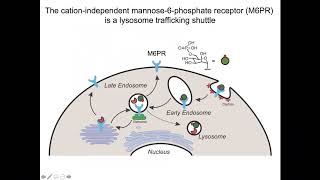
So first and foremost, let me thank Milka and Katherine and all of the committee members who organized this wonderful series. And my own students are registering for many of the talks, and so I think that's great. We're going to learn a lot. And also for including me. I'm a relative newcomer to the area of targeted protein degradation, so it's really exciting for me to be included in this community. I think it's incumbent upon me to start with my conflict of interest disclosure. So as was already mentioned, I'm a co-founder and SAB chair of two companies that have an interest in targeted degradation. Lycia Therapeutics is a relatively new company, just launched over the last several months, which is focusing on extracellular degradation using the LiTAC platform, which I'll present in a minute. I'm also co-founder and SAB chair at Pallion Pharmaceuticals out in the Boston area and a member of the board of directors of Eli Lilly. So with that, let me just start by introducing the people who did the work that I'm going to present this morning. This project in my lab was spearheaded by postdoctoral fellow Stephen Banach, and he will only be a postdoc for another few months because he is joining us at Stanford as an assistant professor of chemistry and a member of our Chem-H Institute starting in January. And Still in the lab after Steve departs will be graduate student Green Ahn, who's just starting her fourth year in the PhD program in chemistry and in our chemical biology interface graduate program. So I'm going to start by telling the audience what I think many of them already know, which is that degradation of a target is a different pharmacology than the more conventional way that we have drugged targets through inhibiting them. Either with small molecules or with biologics like monoclonal antibodies. And, you know, this is a field that was launched by Craig Kruse almost 20 years ago now, and Craig has outlined, you know, the fundamental difference between these approaches in this beautiful review article that's cited at the bottom of the slide. But, you know, the more conventional way of drugging a target is to develop an inhibitor so that in the presence of the inhibitor, there's an equilibrium between bound and unbound, in which case the bound form of the protein where the ligand is docked, for example, in an active site of an enzyme, is non-functional. So you control the occupancy by drugging in an either covalent or non-covalent way, but the protein is still present. And in this manner, you can shift the situation from the normal state— from the disease state to the normal state through occupancy. As we all know, not all proteins are amenable to this kind of of small molecule inhibition, and there are notoriously undruggable targets that have caused many a tear to be shed in the biopharma industry over the last several decades. For example, transcription factors, scaffolding proteins, proteins that lack an obvious binding site for a small molecule ligand, and certainly lack a binding site that would affect the function of that protein. And also many proteins have multiple functions and downstream consequences, and a ligand that binds to one site might not block other important functions of the protein. So nowadays we can think about a different kind of pharmacology, which is the development of a degrader that removes the protein. And rather than occupancy-driven pharmacology, Craig calls this event-driven pharmacology. And these historically undruggable targets might be amenable to this other kind of pharmacology, which is the degradation approach. So it took 20 years for this concept to get from the academic setting to startup companies, and now finally there are degraders that are in human clinical trials. So it's a very exciting time for me to be entering this field. So these targeted degradation platforms that have been reported and translated to date have focused largely on protein degradation systems that are basically inside the cell, and the first wave of these harness the ubiquitin proteasome system. So this is a system wherein a protein is targeted for degradation by ubiquitination through the E3 ligase system. And the two platforms that are now the most visible, and also in human studies, are the so-called PROTACs, in which a bifunctional molecule binds to a target on the one hand, and then on the other hand recruits an E3 ligase such as cereblon, which then leads to, by proximity, ubiquitination of the target and degradation by the proteasome. And the related IMID platform, which takes advantage of the fortuitous discovery that thalidomide can bind to cereblon and can be used as a bridge, as a sort of pro-TAC-like molecule. More recent newcomers to the scene have targeted other cytosolic degradation systems, such as the autophagy system, and there are two TAC-like acronyms that have been coined in this space, such as the Atex and the Autax, and without going through the details, these are systems that basically target a cargo to the autophagy lysosomal system. It's another degradation machinery inside the cell. So this is very exciting work, but it leaves a substantial chunk of the proteome unaddressed, and those are the proteins that are extracellular, either secreted into the extracellular space or or presented on the cell surface as membrane-associated targets that do not have a ligandable cytosolic domain. And the estimates put this part of the proteome at roughly 40% of the proteins encoded in the human genome, and they are not available to the proteasome or to the autophagy lysosomal system because they don't have these cytosolic-facing ligandable domains. There are many interesting targets among this set of the proteome. For example, there are cytokines, immune complexes, amyloid aggregates that are in the extracellular space that are pathogenic drivers of a number of diseases. And these have historically been very difficult to drug using conventional approaches, especially where an antibody binding to these targets does not block their function, or at least doesn't block it adequately to get the pharmacology that you need. Also, there are cell surface targets some of which have been drugged, but the drugging is inefficient. For example, receptor tyrosine kinases have been often difficult to drug, and if they can be drugged with small molecule kinase inhibitors in the setting of cancer, often through mutations, those receptors become, you know, insensitive to such inhibitors. Other cell surface molecules that are of interest to drug are adhesion molecules like integrins, and of course immune modulatory molecules such as the checkpoint receptors.. And all of these we think are potential candidates, or you could make an argument that they are good candidates for a degradation strategy. So how could you target this other world of proteins for degradation? Well, you can just borrow from nature. You know, how does nature usually catabolize these molecules? She does so through the so-called endosome-lysosome system. So endocytosis is a process by which vesicles form, and there are different mechanisms for this that allow either cargo attached to the membrane or cargo captured from the extracellular space to be internalized first into an early endosome, which then goes through a maturation process to form ultimately a late endosome, which then fuses with a lysosome in the endolysosomal cycle. So this endosomal system basically brings cargo into the lysosome where the hydrolases such as the glycosidases, the proteases, the lipid hydrolases can tear macromolecules down to their individual building blocks, which are then used for de novo biosynthesis. And this is a natural system by which we turn over these extracellular molecules. So when Steve Bannik joined my lab, he had the goal of harnessing this system to target extracellular proteins for degradation. And to do this, he took advantage of a member of a family of lysosomal trafficking proteins. And this protein is called the cation-independent manosylphosphate receptor, and I'm just gonna call this M6PR. This is a naturally occurring lysosomal shuttle whose primary function is to target lysosomal enzymes from the Golgi compartment where they are biosynthesized to the lysosome where they need to do their business. So all those hydrolases that I alluded to earlier, they get to the lysosome because of this receptor, and what happens in the Golgi compartment is those enzymes are glycosylated, with N-linked glycans, and those glycans are capped with the mannose-6-phosphate mark, and that epitope is recognized by this receptor in the Golgi compartment, which carries those enzymes through a retromer complex into a lysosomal intermediate— or sorry, an endosomal intermediate that ultimately deposits the cargo into the lysosome. So at any given time, 90% of this mannose-6-phosphate receptor is cycling around inside the cell between the Golgi and the lysosome, but 10% of that protein at any given time can be found on the plasma membrane where it can capture glycoproteins from the extracellular space that also carry the mannose-6-phosphate mark. And when the mannose-6-phosphate receptor captures those proteins, it brings them through clathrin-coated pit formation into an early endosome and then deposits them to the lysosome. And the way that it deposits is basically through a pH switch. So at pH 7, which is the pH outside the cell, mannose-6-phosphate receptor binds to this phosphorylated sugar with high affinity, so it can snatch these molecules from outside the cell. But as the pH drops progressively through the early to late endosome maturation process, the dropping of pH increases the Kd or decreases the affinity to mannose-6-phosphate, and the cargo is released so that it can make it to the lysosome. This extracellular capture, internalize, and deposit process has been harnessed by people in the industry of lysosomal storage disorder therapy. So there are a number of genetic diseases in which patients are missing lysosomal enzymes, and they can be delivered by infusing that patient with recombinant forms of those enzymes that carry mannose-6-phosphate. That way cells can grab them, take them up, and bring them to the lysosome. There are many therapies on the market that harness this pathway for exactly this purpose. So Steve's idea was to take this pathway and use it not as a lysosomal delivery agent for an enzyme replacement therapy, but rather as a lysosomal delivery pathway for targets of degradation. And he basically generated bifunctional molecules that we call lysosome-targeting chimeras, or LYTACs, borrowing from the community here, which has invented all kinds of interesting TAC acronyms. And the LYTACs have two components. On the one hand, they have an element that binds the mannose-6-phosphate receptor, so it's a synthetic glycopolymer, as I'll show you in a bit, that has mannose-6-phosphate analogs on it. And on the other hand, there's a part that binds a target that one wants to degrade, the protein of interest. And I'm showing, in this cartoon, that target binder as a monoclonal antibody shape, and that's because many of the LI-TACS we have made to date are based on antibodies. But one should think agnostically because we also now know from work in our lab that small molecule target binders can work in this format, peptide target binders can work in this format, but most of the work I'll show you is, is around antibodies. So that molecule we envisioned would be able to bind two different classes of targets. Some targets could be soluble targets that could form a complex outside the cell and then be captured by the mannose-6-phosphate receptor and brought into the cell and deposited into lysosomes. And by contrast, there could be targets that are membrane-associated, and our view here would be that that antibody would bind to those targets first, and then the mannose-6-phosphate groups would interact with the receptor on the same cell, and then the complex would be delivered to the lysosome through that internalization process., and we were pretty confident that the soluble target scenario would work because of the precedent from enzyme replacement therapies being delivered this way. There was not precedent, not precedent for membrane targets being basically cycled through the mannose-6-phosphate receptor, so this was more of an open question. So we started with what we thought was the lower-hanging fruit, which was to target soluble targets, and To test whether this would work, we synthesized basically glycol polypeptides, and we did this through a polymerization chemistry, and it's rather historic why we started with this kind of an architecture, because we already were making glycopolymers of this type for other unrelated purposes. But we knew from work we had been doing that one can take protected glycosylated amino acids, such as this mannose-6-phosphate serine adduct, and then modify the amino acid to form this N-carboxy anhydride, so the so-called NCA derivative. And these glycosylated NCA amino acids could be polymerized with a nickel catalyst through a living polymerization chemistry that was first reported by Tim Deming's group at UCLA a few decades ago. And that chemistry, followed by the deprotection, allowed us to form glycol polypeptides of controlled peptide length. Which we could then attach chemically through bioconjugation to antibodies or other binders of interest. And so to test whether these molecules would be recognized by mannose-6-phosphate receptors and taken up and delivered to lysosomes, Steve did a simple experiment where he just took those glycopoly peptides and introduced a biotin group, and then in solution he had a fluorophore-tagged neutravidin protein, and he could assay for uptake simply by fluorescence microscopy or by flow cytometry. So this was a very simple uptake assay for a biotin LITAC. And using K562 cells, what he found is that these biotinylated glycopyeptides decorated with mannose-6-phosphate, which is this analog here, of different lengths— he made what we called short oligomers of 20 amino acid units or long oligomers of 60 amino acid units. He also made analogs in which the phosphate, which is susceptible to hydrolysis by phosphatases, was replaced with an inert phosphonate of similar lengths, and these molecules were very efficiently taken up by cells as shown by increased fluorescence by flow cytometry. And by contrast, he also made some molecules with other sugars which wouldn't be recognized by the mannose-6-phosphate receptor, such as galNAc or mannose, and as you can see over here, galNAc polymers, mannose polymers, or polypeptides are not taken up by these cells, whereas any glycopolypeptide that has the mannose-6-phosphate groups or the mannose-6-phosphonate groups, whether they're short or long, doesn't matter, all of these are efficiently taken up by cells, and that uptake is inhibitable by high concentrations of soluble mannose-6-phosphate, indicating that it's this receptor that we're harnessing with these molecules. So that gave us some confidence that the glycopolypeptide format for displaying these epitopes would be a productive format for a LITAC molecule. So to construct antibody-based LITACs, what Steve did is he made— now we're sort of focusing on the phosphonate analogs because of their stability in serum, they're not cleaved by phosphatases— he made these polymanosixphosphonate oligomers short oligomers around 10 units, and basically took the free amino terminus of the glycopoly peptides to do bioconjugation so he could attach them to antibodies. And the way he did that in our first generation LITACS was the kind of quick and dirty approach, which was to take antibodies and then conjugate them non-specifically on lysine residues with a spacer group that had a polyethylene glycol capped with an azide. And so these heterogeneously modified antibodies with their azide groups were now poised for a click chemistry conjugation through a cyclooctyne functionalized glycopoly peptide to make the LITAC. And the CTX is an abbreviation for an antibody called cetuximab, which is an antibody against the epidermal growth factor receptor, EGFR. It's actually a clinically approved drug. And I'll show you why we chose that in a bit. But just to kind of show you how we can analyze the conjugation reaction, this is a native gel showing the starting antibody in this lane, and it runs as multiple bands because it has different glycoforms. After the conjugation of the lysine residues, the migration is increased because the net negative charge is increased. So we took away positive charges. When we did the acylation of these lysines with an NHS ester, so now they run faster in a native gel because they have a higher net negative charge, and after we conjugate mannose-6-phosphonate glycopolypeptides, the negative charge of the phosphonate further increases their migration in this native gel. We also do mass spec analysis and all the usual analytics, so these, this first generation of LITACs were heterogeneously modified with roughly 10-mer oligo glycopoly peptides, roughly 3 per antibody. So that's a lot of mannose-6-phosphate, and as I'll show you later, we now know in retrospect that this was actually overkill. We didn't need nearly this much, but that's what we made in our first pass. Okay, so to test whether these molecules would be taken up or would allow uptake of soluble targets in vivo, Steve did an experiment in the mouse where he modeled uptake of immune complexes. So a simple experiment where he took the rodent and through IP injection introduced an immune complex of an antibody against another antibody where the target antibody had a fluorescent probe on it and the antibody could either be a LITAC antibody with the mannose-6-phosphate groups or a naked antibody, identical antibody, lacking those mannose-6-phosphate groups. And after the injection, he then waited for a period of time and then did a blood draw, extracted tissues to see whether this cargo fluorescently labeled antibody had been taken up and degraded. And what he found is that if you look at the serum, the liver, and the spleen from these animals after either 24 hours or 48 hours, you can quantitate the amount of the fluorescently labeled cargo antibody just by doing a LI-COR image after gel separation. And what he found is that in the case where there was a LITAC, so the positive case, you could see a reduction in the levels of that cargo antibody after 24 hours, but certainly after 48 hours, that cargo antibody had been almost nearly cleared, both from the serum and also from the tissues. And by contrast, in the setting where it was just a naked antibody targeting the cargo antibody, which is in the two minus lanes here, there was basically no loss of that antibody even after 48 hours. So this was an indicator that the LyTac antibody could clear a target antibody out of both the blood and tissues through mannose-6-phosphate receptor-mediated clearance. So with that, we started thinking about membrane-associated targets, and we chose EGFR as a model target because, for a number of reasons, it's certainly an important cancer target, although it has been drugged and there are some very effective medicines that are used in humans, in particular molecules that are specific for the kinase and even mutant forms of the kinase that are oncogenic drivers. But no matter what the therapy is, all patients who have EGFR-driven tumors eventually develop resistance to those. So we felt there was still a need for different kinds of pharmacology in the EGFR space. And I mentioned cetuximab before. This is a drug, it's an antibody against EGFR that blocks the binding of its ligand EGF, but doesn't have a significant impact on the homeostasis of the protein or the steady state levels of this protein on cancer cells. So we made that cetuximab LITAC and asked the question whether we could drive degradation of EGFR by lysosomes in this manner. And it was pretty striking what we found in Steve's very first experiment using HeLa cells as a target. They express a lot of EGFR. What you're looking at here are HeLa cells on a plate where EGFR is labeled with a fluorescent antibody that's pink and the nuclei are blue. And so untreated HeLa cells have a lot of EGFR that primarily resides on the plasma membrane. And if you treat these cells with the naked antibody cetuximab, there's not much change in EGFR still on the plasma membrane. But the cetuximab-Li-Tac drove EGFR into the lysosomes quite dramatically. And this led to degradation. So what you're looking at here are Western blots of EGFR, and I think the important lane to focus on is the lane that's here on the far right. So this is the situation where the cells are treated with the LITAC antibody, and there's a significant loss of protein compared to untreated cells, which is in the far left, to the point where there's a relative reduction of about 80%. So 20% of the protein is still there. Remember that it's always being biosynthesized, so all we can really do is reset the steady state level of the protein unless we block biosynthesis. And we did a similar experiment with HeLa cells in which we had knocked out the mannose-6-phosphate receptor using CRISPR, and here there's essentially no loss of EGFR when we treat with the LyTag. So again, that shows that this degradation is really happening through the M6Pr lysosomal trafficking. Pathway. People always ask me about the kinetics of degradation, so I thought I would preempt that question by showing this slide. It takes some time to reset the steady-state levels of EGFR in this particular experimental setting, but you can see that if we treat with the LyTag at time 0, there is a steady decline in steady-state protein levels, which is the red dots, and it kind of plateaus out at around 20%, and it's persistent over multiple cell doubling times. Another question people ask me is, are the LyTACs catalytic? And they can be catalytic, but it requires that the antibody let go of its cargo in the endosomal lysosome pathway, perhaps in a pH-sensitive way. And if you do back-of-the-envelope calculations, we probably have multiple turnovers of this particular LyTAC, but it is going to be LyTAC-dependent. Okay, there are other targets, of course, one would like to look at on the membrane, and we thought that the famous checkpoint ligand PD-L1 would be an interesting target because of course it's therapeutically important. There are approved drugs that target this protein and block its interaction with PD-1, the T cell checkpoint receptor. Also, it has an interesting recycling biology of its own. So it is known that PD-L1 levels on the plasma membrane are in part regulated by an interaction with a chaperone, called CMTM6, which is this green squiggle. So when CMTM6 associates with the cytosolic domain of PD-L1, it basically brings it into a recycling endosome and increases its steady state level on the plasma membrane because it's not going down this parallel competing pathway of degradation in the lysosome. And so it was an interesting question because what happens if you introduce a LITAC against PD-L1, which has a ligand for the mannose-6-phosphate receptor, which wants to take a different pathway of trafficking to the endosome, late endosome, and then the lysosome. It's kind of a tug of war, you know, could, could a LITAC be effective on a protein like this that has a different recycling biology pulling on it? And the answer is yes, we can get some significant degradation of PD-L1 with a LITAC. And so what Steve did here is he took Genentech-Rochas drug Tecentriq, which is a blocking antibody against PD-L1, and converted it to a LITAC by conjugation with the mannose-6-phosphonate glycopolymers. And what you're looking at here is basically no treatment. This is the steady state level of PD-L1 in a cell line that is a constitutive expressor. Treatment with the naked antibody, treatment with a control LITAC that has a different sugar that doesn't interact with mannose-6-phosphate receptor, really no difference here, but the Tecentriq manosixphosphonate LITAC drives down the steady-state level of this protein to about 30% of wild-type. And we can inhibit that with high concentrations of soluble mannose-6-phosphate, again showing that this is dependent on the mannose-6-phosphate receptor. Okay, so at this point, you know, we had a pretty good handle on how the first-generation LITACs were behaving, but we also knew that there was a lot of room for improvement, optimization, and expansion of the platform. And this is where Green Ahn came in and started her thesis project, which has developed into a beautiful dataset, which I'll now show some of in the last little part of this talk. Okay, so the questions that Green wanted to answer in her thesis project were, first of all, mannose-6-phosphate receptor is a beautiful lysosomal trafficking receptor, but it's not alone. In fact, there are a dozen or so lysosomal trafficking systems that have been characterized out there, and, you know, could other members of this functional family also be exploited in the LI-TAC format? She also was interested in whether LI-TACs could be made tissue-specific, and these two questions are actually linked together because some of the other lysosome trafficking receptors are expressed in a tissue-specific manner, whereas by contrast, the mannose-6-phosphate receptor is quite ubiquitous. It's a housekeeping function because it's populating lysosomes with the lysosomal enzymes, so you can pretty much count on mannose-6-phosphate receptor to be expressed in just about any cell type. Not true of some of the other receptor systems, but that could be advantageous to get specificity of a lye tag. And then finally, we were very interested in whether we could optimize the design of these lye tags. You know, Steve's generation 1 lye tags were very heterogeneous. The glycopolymers that we made, even though they were made through a living polymerization, so they had a pretty narrow polydispersity index, but they were still heterogeneous to some extent. And the lysine conjugations that we had used to make the lytex were very heterogeneous. Nowadays, of course, there are some beautiful mechanisms for site-specific bioconjugation, and we had even developed some in our lab for the purpose of making antibody drug conjugates. So we were, we were very keen on using those more modern bioconjugation methods. To make cleaner LITACs and even optimize the LITACs by moving the lysosomal trafficking receptor binding moiety around the surface of an antibody to find an optimal geometry for a LITAC. And Green has been working on all of these different facets of the technology. Okay, so Green started by basically shifting to a different lysosomal trafficking receptor, but one that still binds a carbohydrate ligand, and that is the well-known acyloglycoprotein receptor, also called ASGPR. This is a liver-specific uptake receptor that is quite famous for its function in clearing glycoproteins out of circulation, also clearing aging platelets out of circulation, and it does so by binding to terminal N-acetyl galactosamine, which is also called GalNAc residues, as well as galactose residues, where this N-acetyl group would be a hydroxy group. It's a trimer on the surface of hepatocytes, and it was well known that you can make synthetic displays of galactose or N-acetyl galactosamine to bind that trimer in a multivalent fashion with very high affinity. The expression level on hepatocytes is huge, you know, there are a million or more ASGPR trimers, on your typical hepatocyte. It internalizes cargo through the clathrin-coated pit process, similar to the mannose-6-phosphate receptor, and has a pH switch in the affinity of its ligands, very similar to mannose-6-phosphate. What's cool is that it's already been used for hepatocyte-specific biomolecule targeting, not so much in the protein space, but in the antisense oligonucleotide and siRNA space. So Alnylam and Ionis and other companies that are in the siRNA and oligonucleotide therapeutic space have made conjugates that have dendrimers like this one terminating with GalNAc, this sort of tri-GalNAc dendrimers, and these molecules are actually in approved drugs already and very effectively target this hepatocyte receptor for uptake and internalization. So So we had a pretty good sense that this would be a system that we could very quickly convert to the LyTag platform. I should note that we are not alone in our interest in this, and in fact, just in the last, I mean, month really, two other groups have put beautiful papers up on ChemArchive showing extracellular degradation of the LyTag type through the acyloglycoprotein receptor. So I would direct you to read David Spiegel's preprint on this technology showing a small molecule GaLNAc conjugate driving degradation of soluble proteins, and another very recent posting from Weiping Tang's group also using that triantennary GaLNAc motif for degrading soluble proteins, and then Green, my student, also has a preprint up there that was a couple weeks ago now, basically illustrating her work. So you can read about it, and here's the citation. But I'll just kind of walk you through some of her key data. So to make LyTACS that target ASGPR, she took the page from Alnilam and Ionis and synthesized that tri-galNAc motif terminated with a cyclooctyne that she could then click onto pre-functionalized antibodies. And in her first rendition, she also made non-specific lysine conjugates, the same thing that Steve had done. She took an NHS azide linker, conjugated the lysines to introduce the azide, and then clicked this dendrimer onto the antibodies to make a first-generation ASGPR-targeting LITAC. And she showed that such LITACs can grab soluble cargo, in this case she just used an antibody as a soluble cargo, and very efficiently take them up through the ASGPR. So this is just simply an uptake assay where she's looking at the accumulation of the fluorescent antibody cargo. It was Alexa Fluor 647 labeled rabbit IgG with a LyTAC that was basically built from a secondary antibody, and here's the ASGPR taking it up. So by flow cytometry, what she found is that the LyTAC made from the trigalactodendrimer gave very good uptake compared to just naked antibody treated control, and it was much more efficient uptake than a comparable LyTAC LITAC made using mannose-6-phosphonate groups. So, so she got uptake through the mannose-6-phosphate receptor, but these hepatocytes, ASGPR is really good at uptake. It's actually much more efficient. Although interestingly, when she then went to look at a membrane target, comparing head-to-head the GalNAc LITAC versus the mannose-6-phosphonate LITAC, it was a bit of a more even playing field. So now what you're looking at is the relative levels of EGFR on 3 different hepatocyte cell lines that express both M6Pr and ASGPr, right? So these cells have both internalization lysosomal trafficking receptors, and she made cetuximab Lytags with either of the 2 sugars, and in both cases, the Lytags drive degradation of EGFR. So here's cetuximab-treated the GalNAc LyTag, the mannose-6-phosphonate LyTag, and same for all 3 cell lines. So the degradation efficiency was actually quite comparable, even though the uptake efficiency of the LyTags favors ASGPR by a long shot, but degradation kind of normalizes the playing field. So it's interesting that I think once the antibody binds to EGFR, the details of the lysosomal trafficking system are sort of less important as long as there's a system there, and we have some ideas for why this could be the case having to do with proximity effects and so on, which I won't go into here. But suffice it to say that the ASGPR-targeting LITACS seem to be fine for both soluble targets and membrane targets, similar to m6PN. Also, Green did some experiments comparing the functional consequences of EGFR degradation through the ASGPR receptor system versus just blocking EGFR with cetuximab alone. And as we had hoped, what she found was a deeper effect on blocking downstream signaling by virtue of degradation versus just ligand blocking. So the way that people basically monitor signaling through EGFR is by looking at the phosphorylation status of itself as well as downstream signaling intermediates. And so here's the pathways. I won't go through the details, but what Greene did is she She took cells, treated them with the Lytac to degrade EGFR or to block it, then came in with EGF, the ligand that initiates the signaling, and then quantitated phospho-EGFR, phospho-AKT, phospho-MAP kinase by Western blot. And what she found at two different doses of EGF, either 100 nanograms per mL or 50 nanograms per mL, that while cetuximab alone does block some of the signaling, you see a reduction in the intensity of phospho-EGFR, same with these other phospho-intermediates, there's a deeper inhibition of signaling when you're degrading with either the GalNAc LyTAG or a mannose-6-phosphonate LyTAG, which performed comparable in these experiments. So with this, Green then went to test whether she could affect degradation of EGFR in HCC, or hepatocellular carcinoma xenograft model, using the HepG2 cell line. So this is a cell line that has ASGPR, because of its hepatocytic origin, and it also has M6PR because most cells do. Okay, and what she did is she basically did subcutaneous injection of these cells into immune-compromised mice, waited for the tumors to grow above 100 cubic millimeters, and then administered conjugates of pertuzumab. And that's because this is a HER2-expressing cell line where HER2 is known to actually drive the proliferation. And so pertuzumab is an antibody against HER2. It's a drug, it's a clinically used drug, it's just basically an immune therapy against HER2. And she converted the pertuzumab to a LITAC exactly as I had shown previously for cetuximab. And she did 3 different doses, harvested the tumors, and then looked at the levels of HER2 by Western blot. And it was interesting because what she found in this experiment is that the mannose-6-phosphonate pertuzumab LITAC was a pretty effective degrader. So here's HER2 levels from untreated tumors, mice treated with the naked antibody pertuzumab. There's a little bit of reduction, but there's a much more significant reduction in HER2 levels when those mice were treated with mannose-6-phosphonate LITAC. But interestingly, the pertuzumab GaUNAC LITAC, which performed as a degrader, it was quite comparable to the mannose-6-phosphonate LyTag in cell culture. Those two were pretty indistinguishable, but in this in vivo experiment, the GalNAc-protuzumab LyTag underperformed. It was not a good degrader. So we were wondering, like, what was going on there? And then we realized that, you know, we had put a ton of GalNAc on these LyTags, and I'll just go back. I didn't go through the details, but when Green first synthesized these lytags with the tri-GalNAc dendrimer using the lysine conjugation chemistry, she had a pretty high level of conjugation. So there were on average 10 of these dendrimers on each antibody, and 10 dendrimers means 30 GalNAc residues because there's 3 GalNAc per dendrimer, right? So this was just a ton of GalNAc, and so we wondered whether we had put so much GalNAc on this lytag that it had just gotten cleared out of circulation rapidly through capture by the liver, ASTPR, before it had a chance to engage its target and affect degradation. And so we kind of looked into that more, and the way that we were able to sort of address that question was to shift over to goal number 3 here, which was to simplify the structure of these LITACs, make them more homogeneous, and make them more controllable in terms of the ratio of the LITAC part to the antibody part. Okay, and so to do this, Green took advantage of some chemistry that we had developed a decade earlier to make site-specific antibody drug conjugates. It's a technology that we call the aldehyde tag, and I won't go into the details— this is all published work and it's been out there for a while— but to make a long story short, what we can do is genetically encode an aldehyde group at a site of interest, and so that the aldehyde group can be conjugated through a Pictet-Spengler-like chemistry with a functionalized indole to form an adduct that is rock stable because of a carbon-carbon bond that's been now formed on this aldehyde group on the protein. So using that chemistry, we can very precisely control the placement of this azide linker, and as well as the ratio. So we can have one per heavy chain, one per light chain, and we can move them around anywhere we want them. And this then serves as the site for conjugation of the GaLNAc dendrimer. And so Greene made a little panel of GaLNAc dendrimer lytax where she positioned the dendrimer either near the C-terminus of an antibody, near the hinge region, or up here in the CH1 domain of the heavy chain. And she made lytax with either 1 or 2 of these dendrimers per molecule, so these are much lower valency lytax compared to that 10 heterogeneous LyTAC. And so now the question is, how do these LyTACs perform just in cell culture to degrade either EGFR or HER2? So she did this with cetuximab, she did this with pertuzumab, and there's a lot of western blots here, but I'll just bottom line it for you. So here's an EGFR-targeting cetuximab LyTAC panel. If you look at the heavily GaLNAc-modified LyTAC, so this was heterogeneous, 30 GaNACs, 10 dendrimers, very good degradation of EGFR. But when she compared that to her site-specific LITACs, which either had a C-terminal, the hinge region, the CH1, with either just 1 dendrimer or 2 dendrimers, they weren't quite as potent in degrading, but they weren't bad considering they have, you know, 1/10 of the GaNAC compared to the heterogeneous LITAC. And for the HER2-targeting pertuzumab-based LITACs, it was even more dramatic. Where the sort of messy heavily GalNAc-modified heterogeneous LITAC could get you from 100% down to 25% of steady-state HER2, but her site-specific essentially monodendrimer-modified LITACs were almost as good. They're pretty good degraders in cell culture. So with this, she then went back to look at some of the in vivo behaviors of these LITACs. So here's an experiment where what Green did is she just injected the different kinds of GaLMac LyTACs into the mice and then looked at the level of the LyTAC either in the serum or in different organs, and I'm just showing the serum data here. And sure enough, after 6 hours, that very heavy modified heterogeneous GaLMac LyTAC was almost completely gone from circulation. It had just been taken out and presumably just processed in the liver. But the site-specific LyTACs with a lot less GaLMac, with either one dendromer or two dendromers, they were still there at 6 hours and at 24 hours and at 48 hours and even at 72. And here's a plot for three different animals of the plasma levels of just one of those site-specific LITACs, the one with the LITAC in the CH1 up in the FAB region. And you can see after 80 hours there's very little loss. It's insignificant, essentially no loss in the levels of this LITAC floating around in the plasma. Which means that now we have a Gaumac-Lytac whose pharmacology is more like a naked antibody, but at least in cell culture, it's still a good degrader. All right. And so she just sent me these data this morning, 'cause she's doing some xenograft studies with her new site-specific HER2-targeting pertuzumab Gaumac-Lytac. And now, you know, she did an experiment where she grew the tumors and then did 2 injections of a site-specific pertuzumab LITAC, harvested the tumors, and now she is able to get good degradation. And so just as another point of comparison, Western blots of HER2 from the tumor lysates, treating with pertuzumab alone does not affect the level of HER2, treating with that messy heterogeneous LITAC does not affect the level, presumably all cleared in the liver, but now this site-specific low-valency GalNAc dendrimer is a pretty decent degrader. So I think the story here is that there's still a lot of room for us to optimize here, but the fact that we can make these LITACs in a more controlled way bodes well for making molecules that have some really interesting in vivo pharmacology. So with that, I'll just give a quick little view to the future, which is, you know, where there's still a lot more we can do with optimizing the structures and understanding the pharmacology of these LITACs, but we're at the point now where I think we're ready to make some molecules that can target extracellular proteins for degradation, and particularly targets that either can't be blocked with an antibody because their function is not a blockable function that way, for which they might be— a degrader could be more effective than an antibody or another kind of block, and just, you know, looking at all kinds of interesting therapeutic targets. So with that, I'll thank the people— most of this work was done by Steve Banach and Green Ahn, But they had a very important supporting cast that contributed in lots of different ways, all of whom are shown here. And then finally, I'd like to thank all of these organizations for funding, most importantly, Howard Hughes and the National Cancer Institute. And now we can take questions.
Thank you. Thank you, Carolyn. It was really exciting to see all of your work. We have a huge number of questions in the panel, so we'll try and get through as many of these as we can in the short time that we have.
So I'll pass over to Alyssa for the first question.
Thank you, Carolyn, for an incredible talk. So a very common question that you touched upon in your talk already, but everyone is wondering about the fate of the lytacs. Are they also degraded and whether they're catalytic? So I was wondering if you could speak more to that.
Yeah, that's a great question. I'm trying to get out of Presenter view here so I can go back, but I can't figure it out. So I'll just— because I thought it would be good to have a visual, but I just want to go back to the pathway. I'll just— okay, this is good enough. So basically the pH switch allows ASGPR, it's the same for M6PR, it allows basically release of the LITAC. In the endosomal pathway. For the Li-Tac to be catalytic so that one Li-Tac molecule can mediate degradation of multiple targets, the antibody part, or the binder, has to also let go of the cargo so that it can be recycled through the FcRN pathway. And FcRN is, it's sort of the inverse of M6Pr in that it also is a pH switch, but it binds with high affinity at low pH. Cycles cargo back out to the plasma membrane where its affinity decreases at pH 7, so it can release cargo. So if we can harness the Fc-RN recycling pathway from the antibody part, then we should be able to achieve catalytic activity. Some antibodies, just fortuitously, some antibodies we've worked with fortuitously are pH sensitive, so they do actually release their cargo as the pH drops from 7 to 5.5. Not all antibodies have that property. So looking ahead, I think if one were going to use an antibody in the LyTag format, then one would want to engineer this in as a part of the selection process or the engineering of that antibody. There are other LyTag molecules we work with which are not antibody-based. They're entirely small molecule or they're non-digestible molecules. Those kinds of molecules could be catalytic just the same way that protacs can be catalytic, especially if you make them, you know, sort of have a good PK profile where once they're in a cell they can get back out again and so on. So it's less of an issue actually for non-degradable lytacs, but antibodies are degradable lytacs. Does that answer the question? Does that answer the suite of questions? Okay.
There seems to be a lot of interest in comparing protacs and lytacs So I was wondering if you could talk to us a little bit about the effect of polymer length in LITACS, and also whether or not hook effect could be a problem with these.
Yeah, the hook effect. So, the hook effect is the classic situation where, you know, as you dose in a bifunctional molecule, it gains activity as it's able to bridge the two components, but above a certain threshold concentration, you can get to the point where you're saturating both target proteins, whether it's the E3 ligase and the protein of interest, you're saturating them in a way that you're not engaging them in the same bifunctional molecule, so you decrease the activity. So we have not actually seen the hook effect with LITACS. So we've done dose-response curves, but we've never seen a loss of activity at high doses. So it doesn't look like we're saturating, at least with membrane targets, you know, where we have not seen a situation where we're saturating. And with M6Pr at least, it would be hard to do that because at any given time, 90% of the mannose-6-phosphate receptor is not on the plasma membrane. It's actually inside the cell and it's constantly on the move. So as soon as you bind an M6Pr that is on the plasma membrane and it starts to internalize, it's going to— you're going to get repopulating. You're going to repopulate that, you know, suite of M6Pr molecules with a new suite which are unbound because they were buried inside the cell. So it might actually be hard to saturate the system the way that you can with a more conventional PROTAC system. Having said that, I should say from the enzyme replacement therapy literature, there is a saturation of uptake that you can— there are, you know, I mean, it's not like there's infinite capacity here. You are at some point limited by the capacity of the lysosomal uptake pathway.
Thank you. I was also wondering if you could comment on any known or potential resistance mechanisms you can foresee limiting the effectiveness of Lytac.
Yeah, so I mean, you certainly could conceive of resistance mechanisms. For example, you know, if you're targeting a lysosomal trafficking receptor that is not essential for the cell, the cell need only stop expressing it. And the cell will then achieve resistance. That's why initially we were so interested in mannose-6-phosphate receptor, because it does serve a housekeeping function, and without a functioning mannose-6-phosphate receptor system, cells are pretty heavily compromised because they cannot populate their lysosomes with enough lysosomal enzymes to take care of metabolism. So it might be hard for a cancer, for example, and that's a setting in which you worry about resistance, resistance, it might be hard for cancer cells to just turn off mannose-6-phosphate receptor. So we'll find out, I guess. With ASGPR, you know, your liver certainly depends on this system for your health, but any individual tumor might not be so dependent on this system.
Thank you. There's also a lot of interest, again, comparing LITAC ability to EGFR and whether or not LITACs would be able to overcome mutations in EGFR.
Yeah, so, so right, and of course mutations in EGFR are— that's the story for so many cancers. So, you know, as long as the LITAC binder, you know, whether it's cetuximab or a different antibody that has a different epitope, you know, as long as that epitope remains intact and the antibody can still bind, there's no reason why the LITAC, of shouldn't be relevant to any mutant form of EGFR. We haven't shown that experimentally, but there's no— I can't think of a rationale where any of the known mutations would confer resistance to the LITAC approach, but a mutation that interrupts the epitope to the antibody would confer resistance, of course. And, you know, if you put a tumor under pressure of a LITAC, you may well see those kinds of mutations arising.
So another common question was wondering if the lytacs cause immunogenicity due to the presence of the antibody.
Yeah, good question. Yeah, so do the lytacs— are they immunogenic? We don't know yet is the true answer. We hope not, and the— our choice of the lytech structures were meant to mitigate that possibility. So there's a reason that we chose the glycol polypeptide format to introduce the mannose-6-phosphate groups, because those are molecules that are readily degraded into simple natural monomers like sugars and amino acids. The phosphonate makes the sugar part less metabolizable than the natural sugar phosphate would be. So, you know, that could possibly be an immunogenic component. We haven't really looked, so I guess we'll find out. With the ASGPR moieties, there's no evidence from the ASO and siRNA literature. There's no evidence that that dendromeric group has immunogenic qualities. Of course, we've conjugated it to a protein, so it's a different hapten than it would have been otherwise. So I think the jury's out on that.
The last one will be, could you comment on the efforts involved in setting up this LITAC system and any difficulties you faced in doing this?
So what are the difficulties we faced in making, making the LITACs or setting up the system of LITACs? You know, making the LITACs is pretty straightforward, so I don't think there's much of a chemical challenge. I say that now after 20 years of investment in bioconjugation technology in my lab. So I think that part is pretty straightforward now, and the reagents that we use to do it are mostly commercially available. All these bifunctional linkers, this stuff is all commercially available now. And I think it's interesting because our experience with LITACS is that there's a lot more forgiveness in terms of the details of the structure and activity than I've seen from the PROTAC literature. So, you know, PROTACs have to be very carefully defined with the right geometry to form the bridge between the protein of interest and the E3 ligase. Change a couple of methylene groups in the spacer and you've ruined the PROTAC. And the same is not true here. I think there's, there's just many more available conformations of these molecules that give you an effective LITAC activity. So, so that means that, you know, we chose a certain type of structure of mannose-6-phosphates, we chose a certain way of doing the conjugation. I haven't shown you many other types of conjugates we've made that are equally active, so I think, I think you can be forgiven a lot in how you put your LyTag molecule together, so that's nice. Having said that, I will also say that we have also observed that different membrane-associated targets are more or less amenable to being degraded in the LyTag. Format. Membrane proteins have personalities, they have their own preferences of where they want to go, right, and you're giving them a lytic and telling them to go, go over here, but they might want to go over there. So I think we're still trying to understand the rule book in terms of what membrane protein makes a good lytic target, and some might be better than others. Soluble targets are much less quirky and easier to— I think you can pretty much count on any soluble target being available to the LI-Tag platform.
So I want to thank you for your time today and for opening this seminar series. It's been fantastic having you join us. I also want to apologize for all of the questions we were not able to get through, but I have taken a copy of them and hopefully we can kind of incorporate these into some future sessions that we have. So, thank you everyone for tuning in and joining us today. Our next scheduled speaker is Ray Deshaies, who will be speaking on September 17th. So, please head over to our website and register for the next seminar in the series.
And thank you again, Carolyn, for this. Thank you everyone, I appreciate it. Great questions.
More from Joshua







Scientist Stories: Hans Waterham, The value of phenotypic assays in peroxisomal disorders




Scientist Stories: Joel Zlotogora, Genetic carrier screening programs for reproductive purposes