Scientist Stories: Craig Crews - Co-Founder of Arvinas, a pioneer in targeted protein degradation
In this talk, Dr. Craig Crews recounts his path from developing proteasome inhibitors—most notably the Yale‑originated drug carfilzomib—to pioneering two small‑molecule strategies that actively eliminate proteins inside cells. He contrasts traditional occupancy‑driven inhibition with an "event‑driven" pharmacology where a transient drug‑target interaction tags the protein for proteasomal destruction, allowing catalytic reuse of the drug. Crews first describes hydrophobic tagging, which attaches a greasy moiety to a protein (often via a HaloTag fusion) to mimic a misfolded state and trigger quality‑control‑mediated degradation, showing proof‑of‑concept with oncogenic RAS and androgen‑receptor (AR) models, including in vivo tumor suppression comparable to enzalutamide. He then introduces PROTACs (Proteolysis‑Targeting Chimeras), heterobifunctional molecules that bring a target protein into proximity with an E3 ligase (initially VHL) to induce ubiquitination and degradation. He details the structural basis of VHL binding (hydroxylated proline motif), the evolution from peptide‑based anchors to drug‑like small‑molecule VHL ligands, and the creation of degraders for AR, ERRα, EGFR, BET proteins, and phospho‑PROTACs that selectively dismantle downstream signaling nodes (e.g., FRS2, PI3K). The talk also covers translational efforts through the Yale spin‑out Arvinas/Arvinus, which has optimized degraders to nanomolar DC50s and advanced multiple targets toward clinical development. Finally, Crews discusses challenges such as E3 ligase selection, resistance mechanisms (e.g., VHL loss), linker optimization, and the broader vision of converting “undruggable” proteins into degradable targets, thereby expanding the druggable proteome.
Chapters
So now we're going from the Cancer Prevention and Control Program to developmental therapeutics, and it is a true pleasure to introduce Dr. Craig Kruse. Dr. Kruse is a member of the Department of Chemistry at Yale. He is probably best known as being known as the father of carfilzomib. For those of you who are myeloma doctors or take care of people with hematologic malignancies, carfilzomib made a big impact in in the treatment of myeloma. And Craig is also constantly thinking of new ways to make drugs for cancer and for other diseases better.
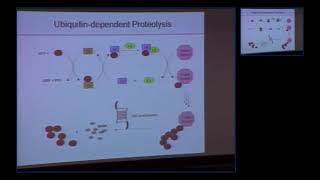
Dr. Kruse. Thank you, Tom. Thank you for the introduction. Thank you for the invitation. Just like to begin by seeing how I can move this forward. Any suggestions? I don't think that will work on mine. Well, that's what I'm working on is my computer and it doesn't seem to be engaging. Did the AV guy just leave? I have a question here. How can we make this move? Let's try this again. Yes, much better. So I'd like to tell you today about two technologies from my laboratory that really affect the intracellular concentrations of particular proteins. And I should just, by way of conflict of interest, disclose that I'm both a shareholder and a consultant to the company I started here in New Haven in Science. And so briefly just to give you a background on my interest in controlling intracellular levels with small molecules, as Tom mentioned, we've been working for a number of years on developing proteasome inhibitors. And this really came from our natural product mode of action study around a compound from a microorganism initially identified by BMS. So apoxomycin is a natural product. That was identified based on its potent anti-tumor activity, but they didn't know how it worked. And in fact, it wasn't developed, I've been told, because they were concerned without a mode of action, they were concerned that they wouldn't be able to get approval. And what we were able to show is after the first total synthesis of this, that it's a very potent and novel proteasome inhibitor. And we improved upon this and came up with a molecule we call YU101. Which served as the basis of a company called Proteolyx, which further developed YU-101 by adding a little solubilizing moiety into the drug candidate PR-171, or carfilzomib. And as Tom mentioned, this is the drug that was ultimately approved for multiple myeloma. Proteolyx went on to be bought by Onyx Pharmaceuticals, which then turned around and sold itself for even a lot more money to Amgen based on this Yale drug. And so it's a wonderful success story for Yale Oncology. But what I want to do today is actually talk about my new story and possibly finish up with some, a new company that I've started, as I mentioned. This all deals with instead of blocking protein degradation, two different techniques in which we are inducing protein degradation using a small molecule approach. So the question is why? What's the advantage of degradation versus inhibition? And if you think about the current paradigm of pharmacology, it's very occupancy-centric. You know, you have an active site or a binding site, and the more you fill that binding site, the more clinical benefit you have. But as we all know, you need a lot of drug out here to ensure that at any given time, 95% of your target protein population is inhibited. And that now requires, all the challenges that go along with high concentrations of drug, trying to get systemic exposure, metabolism, and so on. So what we want to do is change the paradigm away from occupancy-driven to one that we call event-driven pharmacology, where a drug binding to the protein actually now tags it for degradation, leading to its degradation, and thus liberating the drug to then go off and do it again. Again and again. So this is a catalytic drug mechanism suggesting that we need very little drug because you only need transient amount, transient interaction with the drug target, but also you don't need a lot of the drug for inhibitory purposes. So how do we go about doing that? The two technologies I want to describe are called hydrophobic tagging and PROTACs. And this first really focuses on what normally happens when a protein is heat shocked. It will partially unfold exposing hydrophobic patches that are recognized by intracellular proteins, chaperonins, heat shock proteins that will help in the refolding of the protein. But if unsuccessful, these same proteins will target it for proteasome-mediated degradation. And so what we want to do is take a native protein and not heat shock it, but just stick on the surface of it, append a little bit of grease such that we can hopefully then engage the same quality control mechanisms to target this protein for degradation. And so we were able to demonstrate this in a proof of concept system in which we've taken a protein that will covalently bind to a short chloroalkane compound. And this is a technology that's developed by Promega and they call it a HaloTag. System. And so the idea is that we will take a little bit of grease and attach it to a chloroalkane, and that will allow us to covalently label with a little bit of grease these fusion proteins. And what we've been able to show is that we can take this HaloTag protein and make fusion proteins such that these fusion proteins are now susceptible to a hydrophobic tag-mediated degradation. And these are, transmembrane proteins, either single-pass, four-pass, or even GPCRs, all can be induced using this hydrophobic tagging technology. And as I said, this is a very small molecule. Here's the chloroalkane and here's a little bit of grease that we've appended onto the surface of this fusion protein. We've even taken this HaloTag protein and fused it to oncogenic RAS. And again, you can see that this fusion protein is induced to be degraded when we add our hydrophobic tag to the cells. And that this fusion does not disrupt the transformation activity of this in the sense that cells expressing HaloTag oncogenic RAS still are transformed as indicated here in colony formation in cell culture. Whereas if we treat those cells with hydrophobic tag, we can now block that transformation. We can take these same cells and actually put them into mice and get tumors. And it's these tumors that grow rapidly in vehicle-contracted cells but we can inhibit when we're now inducing the degradation of this oncogenic RAS. So what we were trying to do now, and I'll come back to this at the end, and we would like to now come up with a a ligand for RAS that would allow us to now add a little bit of grease to it, target oncogenic RAS without having to make a fusion protein and really go after endogenous tumorigenic oncogenes. Now the question is, can we take this technology and move it from just a proof of concept academic exercise into now ability to target an endogenous oncogenic protein. And we've been focusing on the androgen receptor. This is for a number of reasons. One, there's already a ligand for it, testosterone and all the other SARMs out there. But also because of the mechanism that are of resistance that currently appears clinically when patients are treated, prostate tumor patients are treated with antiandrogen therapy. And that is either amplification. Of androgen receptor to now deal with low levels of androgen or mutation of the androgen receptor such that an antiandrogen instead of being an antagonist when it binds to the mutant AR now acts as an agonist. Either of those we feel, either of those resistant mechanisms could be addressed if we had a way to bind to the androgen receptor and induce the degradation of it. And in that way simply make the protein go away. And so what we're looking at here is a ligand for, um, antigen receptor. In fact, this is an agonist that, as you can see by Western, does not affect the stability of the antigen receptor. But when we add our little hydrophobic tag to this, we now turn an agonist into a degrader. So we're not dealing with a SARM, we're talking a SARD for selected antigen receptor degrader. We've even taken this SARD into animal studies, xenograft, using prostate tumor line. And as you can see, the tumors progress, but in red, if we treat the cell, the animals daily with our hydrophobically tagged version of this AR ligand, we can significantly impede the growth of the tumors. In fact, And this works just as well as the most recently approved, FDA-approved drug, inzalutamide, or MDV-3100. And so what I want to do now is talk about a second strategy, and this really is one that's proving to be actually more useful and has broader applicability. And we call this PROTACs, for Proteolysis Targeting Chimera. And so just by way of refresher, proteins are targeted for degradation through the action of E3 ligases. And this is a complicated slide, but I just want to point out that there's an E1, an E2, and an E3, and these different proteins all play a key role in taking ubiquitin and ultimately tagging proteins that then are recognized by the proteasome for degradation. But what we want to do is really focus in on this last step. What we would like to do is, in a nutshell, hijack E3 ligases such that instead of only working on their target proteins, they would actually recognize proteins we want destroyed, whether they were their normal substrates or not. And the way we do this is using a hetero-bifunctional approach where one end of this drug would bind to the target protein we want removed and the other end binding to the E3 ligase., and by bringing these two together, by forming a ternary complex, we would then affect the ubiquitination state of the target protein leading to its degradation. The drug survives to go off and do it again and again and again. And so the E3 ligase that we focused on initially is the von Hippel-Lindau protein or VHL. And there are a number of reasons why we wanted to focus on this. Primarily is because we had a crystal structure of it bound to its substrate, or I should say a short segment of its substrate, which is HIF. In fact, there is a crystal structure of a 19-amino acid peptide bound to the active site of VHL, and there's a critical hydroxylated proline here that's important for recognition of the HIF peptide by VHL. Now this longer 19-amino acid peptide has been shortened and the critical minimal recognition motif has been recognized as the 7-amino acid sequence. So we've taken this sequence as our anchor ligand, if you will, and incorporated it into a heterobifunctional molecule. Again, here is that HIF peptide sequence interacting with VHL.. In this case we've added DHT, dihydrotestosterone, to bind to antigen receptor. And because all of this is a big ugly molecule, we had to cheat a little bit and add a cell-penetrating peptide to get it inside cells. And so what we've done is we've taken cells that have stably expressed an antigen receptor fused to GFP simply so we can monitor intracellular levels of AR. And when we add to these cells our ProTac, the 8 arginines help it get inside, the HIF binds VHL, testosterone will recruit androgen receptor, and our fusion protein then becomes ubiquitinated and ultimately will be degraded by the proteasome and the cell won't fluoresce anymore. So this is what it looks like to cells that are expressing this fusion protein. If we treat these cells with that PROTAC I just described on the previous slide, within 1 hour we can induce the loss of this protein very selectively in that we don't affect other proteins inside the cells. And so where we're going with this is that we like to explore whether it's possible to remove this and put a ligand for for phosphoproteins. And let me explain. If you think about how growth factors work, you have heterodimerization of receptor tyrosine kinase leading to autophosphorylation, and you have all of these phosphorylated tyrosines which serve as scaffolds, excuse me, ligands for SH2-containing proteins. And you get this big signalosome, this big scaffold from which you have a lot of different sub-branches emanating. The problem right now, if one wanted to use a small molecule approach to investigate phosphoproteomics, is that we have sledgehammers. We have ligands that inhibit the receptor tyrosine kinases and block all of these pathways. What we'd really like to have is the ability to induce the loss of just one sub-branch and to interrogate what are the downstream consequences of that. So what we've done is we've taken our our ProTag technology and instead of the dihydrotestosterone as the recruiting element, we've taken the amino acid sequence that's autophosphorylated upon growth factor addition from one of these RTKs and we've incorporated that peptide sequence into a ProTag. Again, the same HIF, same 8 arginines. But in this case when you have growth factor binding and you get autophosphorylation here, you also get phosphorylation here leading to the recruitment of these downstream signaling components which ultimately will get ubiquitinated and destroyed and now allowing one to investigate what happens when you just remove one sub-branch. And so we've been able to demonstrate this with several different signaling pathways. The first is nerve growth factor and it binds to its receptor. Receptor tyrosine kinase TRAK-A. Immediately downstream of TRAK-A is a membrane-bound protein called FRS2. And so the question is, could we get rid of this proximal signaling molecule and what effect would it have on NF-kappa B— excuse me, NGF signaling? So this should look familiar, 8 arginines, the HIF sequence, the linker. And here we've taken that sequence from TRAK-A that gets phosphorylated upon autophosphorylation. But when phosphorylated, it then serves as the binding site for this downstream component. And when we add this to cells and look at levels of FRS2, first of all I'll show without adding it to cells. You can see this is the endogenous level of FRS2. If you add nerve growth factor, you get a shift in mobility because it gets phosphorylated. But if you add nerve growth factor and increasing amounts of what we're calling a phosphoprotac, we can induce in a concentration-dependent way the degradation of this and not affect other proteins in the membrane or other SH2-containing proteins, but really block downstream MAP kinase signaling. Now the beauty of this approach is that the control is very simple. Instead of a tyrosine that can be phosphorylated, change this to a phenylalanine, which can't be phosphorylated. Activated. And these phosphonol versions have no effect on stability of FRS2 or downstream signaling. Now the specificity is quite nice in the sense that we can induce degradation of FRS2 by nerve growth factor but not by other mitogens that clearly will activate MAP kinase signaling in this pathway. And that's also shown here. Is that if you look here as MAP kinase, we can block downstream signaling when we add both of these. But in the presence of both of these, if we rechallenge with EGF, we get fine MAP kinase signaling. With IGF, we still get that activation. So we really have only knocked out NGF signaling within these cells. Now we've gone on to show this is true with other signaling pathways, HER2 and HER3 coupled to PI3 kinase. And so the question is, if we knock out PI3 kinase, can we knock out downstream Akt levels or activation? And so what you're looking at here is, again, a phosphoprotac. We've added neurorregulin, which is the ligand for HER2, HER3, and we can get a growth factor and phosphoprotac-dependent degradation of PI3 kinase and loss of downstream activated Akt, whereas the phospho-null controls don't have any degradation or downstream consequences. Now we can take these two phosphoprotacs and the control, and we can show that the null control has no effect on the cytotoxicity of cells, but in yellow, if we knock out PI3 kinase, that these cells now die. And we've looked at this differential cytotoxicity actually inside xenografts and were able to show that the phosphoprotac can decrease tumorigenesis but the null version can't. Again demonstrating that we can knock out selectively proteins and get an anti-tumor activity. So where we stand with this is that we have this ability to induce protein degradation but we really are kind of limited to peptides. And we really would love to have a small molecule, all small molecule, ProTAC. So we need to replace this portion with something that's more drug-like. And again, going back to our VHL ligand that has this hydroxylated proline critical for the activity, what we've done is we've kept that critical pharmacophore and just varied the left and the right-hand sides of this. To make a molecule that binds to the same site but clearly is much more drug-like, a small molecule. And just if you overlay this molecule with the original HIF peptide, you can see just the scale of this is much smaller, but yet it occupies the critical binding site important for VHL activity. And so what we've done is we've taken these ligands Now this is our small molecule anchor ligand. And we've linked off of it and added different ligands with the idea that now we would be recruiting whatever binds these target ligands, we'd be recruiting to VHL and inducing degradation. And so just to give you an example, here is a small molecule in the literature off the shelf. It binds to a nuclear hormone receptor called ERR alpha. Ligand itself doesn't have any effect on the stability of the protein under a variety of concentrations. But if you now take this ligand and add a linker and add our VHL ligand, we can induce very nicely degradation of this intracellular protein. So this is endogenous proteins using an all small molecule protease. And I mentioned that we had previously shown that Ras can be subjected to degradation using the hydrophobic technology. What we really would like to do, working with Bill Jorgensen, is come up with a way to have a small molecule that could bind to the surface of RAS, preferably in an activation conformation-dependent way, the GTP-bound form. And we've come up with a ligand— excuse me, a pocket here that could potentially bind a ligand that is not present in the GDP-bound conformation. Confirmation. And so Bill and I recently received a pilot award from the Yale Cancer Center and we're developing ligands to fill this pocket and ultimately use those ligands to then make a RAS-targeted PROTAC for degradation. And so I just want to finish by telling you a little bit about what's going on over in Science Park. I mentioned that this, technology, both of these technologies were licensed by a Yale startup known as Arvinus. And we now have over 20 people over in Five Science Park and as well as additional 25 chemists in China making molecules that are moving things along. The project that's the furthest advanced is again the androgen receptor. I'm, just to put it in context, the hydrophobic tag that I developed in my lab had a DC50 for degradation concentration about 1 micromolar. The company is now being able to get things that can very, very efficiently degrade the androgen receptor. In fact, the DC50 now are 30 to 50 nanomolar and more where they're eliminating over 95% of the protein. They've been able to do this with a number of different target proteins taking a known ligand for EGFR. They can create a series of different PROTACs that again in a concentration-dependent manner can induce degradation of this membrane-bound RTK. And yet another one, here's a protein of BET domain involved in epigenetic chromatin remodeling. And again, they've been able to come up with a small molecule-based PROTAC that can induce degradation of of these key proteins. So I just want to finish up by describing again some of the advantages of this. The catalytic quality of this is very important because by using a catalytic mechanism, a lot less drug is required. And moreover, because it is an enzymatic reaction, you just need transient interaction as opposed to occupying that site at all times. So we really feel that this is a completely different paradigm for how drug development can proceed. The next is one that really excites me. If you think about the entire proteome, only about 25% of it has an active site or a binding site for a ligand. So there is a very large component of the proteome that's currently not druggable. And so, but the idea is that if you have a ligand that could bind to some nook or cranny onto the surface of a protein. That ligand itself, upon binding, may not have any biological activity. But by tethering it to some of our technology, we can now turn that ligand actually into a degrader. And we'd be able to make those proteins pharmaceutically vulnerable. And that really leads us to opening up a whole new classes and redefining what makes a drug target, allowing us to really go after non-enzymatic structural regulatory proteins, transcription factors, antigen receptors, anything to which you could have a small molecule binder, we'd now be able to induce the degradation. So with that, I want to thank Tom again, and I'd be happy to answer any questions. Questions?
I guess I'll start with one. So Craig, when you look at the antigen receptor approach, thoughts on why—
on mechanisms of resistance, why would some cells be resistant to this type of approach? To our approach? Yeah. So we obviously are dependent on VHL or whatever E3 ligase we've co-opted. And so one can imagine that there could be loss of VHL or mutations in VHL that prevent the PROTAC binding. There could be other ways that one could upregulate— going back to hydrophobic tagging, there could be upregulation of the foldases so that we now can help maintain even the presence of a hydrophobic tag, we can maintain high enough levels of fully formed target proteins. And so, but on the whole, we think that this type of approach would allow us to address mechanisms that aren't currently addressed. Possible. Yes? With the Grease approach, how selective is that, or is it selective? So the selectivity actually comes from the recruiting element, right? So if we have dihydrotestosterone in that Grease 2, we're selectively inducing degradation of the AR. The mechanism, because there are many different chaperonins that we're gawping on. So that is less well-defined than obviously a very specific interaction with BHL and the protec. Marcus? Are there any spatial constraints for where the ubiquitin is going to get added as opposed to the binding site? Right. So that's a great question. What we're finding is there's a bit of black art in terms of the linker, linkerology if you will, that the proper presentation of your tertiary protein to this artificial substrate to the E3 ligase. This obviously hasn't evolved to ubiquitinate that, and so we find that we have to do a little bit of playing around finding other linker links. But that being said, because it's not directly binding to the E3 ligase, there's a lot of flexibility, and so we think that that's overcoming any inherent structural challenges. Yes? [Speaker:MALE_SPEAKER] How many E3 ligases can you target? This is a good one, but there's so many in the cell. [Speaker:ERIC_BROWN] Right. So we have, for example, we published on MDM2. We've taken Nutlin, imidazoline class of MDM2 inhibitors, and shown that that now works. The company has gone even further and are targeting additional E3 ligases. You just need a ligand. And because there have been many drug efforts in the industry of coming— trying to identify ligands of E3 ligases, even though they may not have worked as an inhibitor, they may serve as anchor ligands for PROTACs. And so we might be able to revive many of these industrial projects.
Craig, thank you very much.
Fabulous presentation. Thanks, guys.
More from Joshua







Scientist Stories: Hans Waterham, The value of phenotypic assays in peroxisomal disorders




Scientist Stories: Joel Zlotogora, Genetic carrier screening programs for reproductive purposes