Scientist Stories: Craig Venter, What is Life?
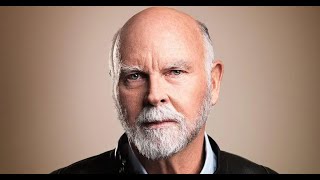
The event, hosted at Trinity College Dublin, commemorates Erwin Schrödinger’s 1943 public lecture “What Is Life?” and explores its lasting impact on molecular biology. Luke O'Neill opens with a welcome, followed by Luke Drury’s historical overview: the role of Edmund Whittaker, Éamon de Valera, and the establishment of the Dublin Institute for Advanced Studies, which recruited Schrödinger as its first director. Drury describes Schrödinger’s personality, his “aperiodic crystal” concept, and the first use of the term “genetic code”. The talk then shifts to the 1993 symposium celebrating the lecture, highlighting signatures from luminaries such as John Maynard Smith, Stephen Jay Gould, and Jared Diamond, and anecdotes linking Schrödinger to Irish cultural figures like Louis Le Brocquy and Flann O'Brien. Craig Venter then delivers a 21st‑century perspective. He outlines the rapid progress from the discovery of DNA’s role (Avery, Watson & Crick) through the development of sequencing technologies, the synthesis of the first synthetic bacterial chromosome (Mycoplasma mycoides), and the methods that turned digital code into physical DNA (Gibson assembly, one‑pot enzymatic assembly). Venter explains genome transplantation, methylation considerations, and how swapping a synthetic genome can convert one species into another. He expands the vision to “digital biology”: converting computer code into DNA, rapid vaccine production, and the prospect of a portable digital‑to‑biological converter. The talk concludes with speculation about future synthetic life, space colonisation, ethical questions about resurrecting extinct species, and the potential to create novel organisms with expanded genetic alphabets. A brief Q&A touches on de‑extinction, novel amino acids, and the role of epigenetics in genome transplantation. The overall narrative links Schrödinger’s early theoretical insight to modern synthetic genomics and future biotechnological horizons.
Chapters
Taoiseach, Provost, fellows and scholars of Trinity, honoured guests, you're all very welcome to this really very, very special occasion. We're here to mark a cold winter's night on the 5th of February, on a cold summer's night in 1943, when a very small Austrian man stood on this very stage and for the first time ever spoke about the genetic code that predicted DNA, that had a revolutionary effect, as we know. We're going to celebrate this tonight in many ways. And I'd like first of all to call upon Luke Drury, who's going to come up and give us the context of Schrödinger and what he was doing in Dublin and why he had to give this public lecture in the first place, because it was one of the public lectures he gave that was called "What Is Life?" So Luke.
Thank you, Luke. T-Shock Provost, distinguished guests, it is a great pleasure and honor for me, both on behalf of the Royal Irish Academy and the Dublin Institute for Advanced Studies, to speak on this historic occasion. My task is to give some of the background to how the remarkable lecture that we celebrate tonight came came to be given. Let me begin with someone that few of you have probably heard of. Edmund Taylor Whittaker was a distinguished mathematician, later historian of science, who spent most of his long career at the University of Edinburgh, but he did spend some time here as one of the last Royal Astronomers of Ireland, and he is significant for the story of tonight's lecture for two reasons. Firstly, while in Dublin, he had a young student, a man called Éamon de Valera, and he inspired in him a lifelong devotion to mathematics and a great admiration for the legacy of William Rowan Hamilton. And we'll come on to that later. So when de Valera then in the late 1930s began to think of establishing what was then only the second institute for advanced studies in the world, He naturally turned to his former teacher for advice, and Whittaker made one key recommendation. He told de Valera that the hardest thing to do was to give a comprehensible public lecture, something I can vouch for actually from personal experience, and de Valera took this to heart and wrote into the 1940 act that each school of the institute must offer a public lecture every year. And if it hadn't been for that and the recommendation of Whittaker, we would not be here tonight. This brings me, of course, naturally on to the next major player in this story, Éamon de Valera, a remarkable man in many ways. His political career and influence on Irish society remains a subject of vigorous debate, I think it's fair to say. And for those who are interested, I recommend the Academy's publication Judging Dev. What is perhaps not so widely known is that his interest in science and mathematics was in fact genuine and deep. And in fact, I recall a previous Provost of this College telling me that his life used to be made miserable because at 9 o'clock in the evening his secretary would tell him that the Oresund Uktaron was on the phone and the president was having a problem with mathematics, could the provost help him? Those days are gone, I fear. So it was this deep admiration for mathematics and science as well as his instinctive horror, I think, at the barbarism of the Third Reich which persuaded him to establish the Dublin Institute for Advanced Studies in 1940 and to recruit Erwin Schrödinger as the first director of its for this he was elected to honorary membership of the Royal Society of London and I reproduce on the slide an extract from the biographical note written about him for the Royal Society by one of his successors, one of Schrödinger's successors, the great relativist J.L. Singh. The final actor in this story is of course Schrödinger himself and here is a nice photograph from the Institute Institute's archives showing Schrödinger, and on the right, Max Born, and on the left, an Irish woman who perhaps does not get the recognition she deserves in this country, Kathleen Lonsdale, one of the pioneers of X-ray crystallography, which was of course a key tool enabling the discovery of the structure of DNA. Schrödinger was a highly cultured man, a fascinating and in many ways a contradictory personality. He founded the new quantum mechanics, but like Einstein, he could never quite accept the inherent weirdness it implied. However, his famous Gedankenexperiment with the cat and his discussion of what he termed entangled states, a phrase which he himself invented, managed to bring certain key issues of quantum mechanics into sharper focus. In some ways a conservative with a very Germanic love of bildung and heimat, He also led a most unconventional life, openly living in Clontarf with two women and conducting many affairs while in Dublin. One is tempted to say that while a theoretical physicist, he took a keen and practical interest in applied biology. Whatever the motivations, we must be grateful that when faced, thanks to Whittaker's advice to de Valera, with the need to give a public lecture, he chose the remarkable and unconventional subject of what is life. With all the consequences that followed from that and which we will hear about later. In conclusion, if I may finish on a personal note, I cannot resist noting that had our current funding regime existed in the 1940s and had Schrödinger submitted a proposal to work on the nature of life, he would have had great difficulty, I feel, and he would have had to struggle to show its impact on economically relevant issues such as the yield of sugar beet. One lesson we can surely take from What Is Life and its subsequent impact on biotechnology is that we need both research for knowledge and research for applications. Neither can flourish without the other, and we neglect one at our peril. Thank you very much.
Thank you, Luke, for putting it in context. Now I'm going to give a bit of background about what Schrödinger did on this night in February in 1943, and it's no exaggeration to say that what he did that night sparked a revolution. He lit a rocket that went off, and we're very honored to have Jim Watson here tonight, for example, who depended on Schrödinger's What Is Life lecture to inspire him, for example. It's also safe to say there'd be no DNA revolution without this lecture. There'd be no biotech industry. So as Luke has said, a long way away from that time that gave rise to a whole industry. So the importance of the lecture is very important. Secondly, it was the middle of the Second World War. There was devastation in Europe, and yet on the margins of Europe, a little country called Ireland lit a candle basically for civilization, just like the monks had done in the 8th century with the Book of Kells. It's very similar that it happened in Ireland. This lecture sparked a whole revolution and really helped civilization along. And we had a lecture here. Now, where's my remote? Is this the remote I'm supposed to use? Oh, hang on. I've gone too far. I've gone too far. Hold on. So we had a conference here actually in 1993 to commemorate the 40th anniversary of this called "What is Life?" as well. And I got a book out of this. I edited this book with a guy called Mike Murphy. And it was Mike Murphy, a colleague of mine in biochemistry, who said that "What is Life?" lecture happened in Trinity. Many of us weren't aware of that. We knew about the book, but we weren't aware it was done in Trinity. And we published a book, we edited a book, and all these great speakers came to the conference. There were the conference proceedings. And just the impact. It was translated into 17 languages, amazingly, this proceedings of this event in 1993. And very importantly, we got all the people who spoke at it to sign the book. And this is the names that came here in 1993. And you see them here, they're all very famous people. John Maynard Smith, Stuart Kauffman, Roger Penrose, Christian de Duve, Stephen Jay Gould, Jerald Edelman, Jared Diamond. All of them, I got their signatures. This is before the days of eBay. I would have auctioned it by now. And that was the What Is Life version in 1993. So that just shows you all these people turned up. Me and Mike Murphy in our mid-20s invited them and they all came along. And it was a great celebration. Now I show this because one of the speakers, Jared Diamond, is a very famous writer. He wrote a great book called The Third Chimpanzee. You may have read it. And myself and Paddy Cunningham for ESOF invited Jared to come. And he wrote this nice letter back. He said, "Apologies, but I'm unable to accept your invitation. Are you the Luke O'Neill who organized the 'What is Life?' symposium in Trinity some years back? I remember at the dinner, your co-organizer reaching over and taking some of your food, a common sign of intimacy among primates. Did that person become your wife?" And she did, and she's here somewhere, Margaret. There she is. Round of applause for Margaret. And at the time, my girlfriend— right now, Margaret was the official photographer of the event. And this is the Japanese translation. There's all the speakers. There's Margaret Werle. They couldn't translate her name into Japanese, but there's all the speakers. So Jared Diamond is obviously a very peculiar man. We're very happy to get that letter from him. Now, let's get back to the matter in hand, though. In the book "What Is Life?" Schrödinger opens with this great sentence, really. He said he gave the lecture in Dublin, he points that out. And he said the subject matter was a difficult one, and the lectures could not be termed popular, even though the physicist's most dreaded weapon, mathematical deduction, would hardly be used. And he was a fantastic communicator. The book was written with crystal-clear prose and inspired people like Jim Watson, Seymour Benzer, Leslie Orgel, Francis Crick. All of these great giants of molecular biology said they read the book and they were inspired. Of course, the question is what inspired him in the first place. There's the book, of course, when it came out. It says in the page, "Given in Trinity College, Dublin." This is the 1943 edition. But what's interesting is Louis Le Brocquy became a big friend of Schrödinger and turned up at the lectures and sketched a picture of Schrödinger during the lecture, which we couldn't get our hands on for this, sadly, but later on, then, did a beautiful, typical Le Brocquy portrait. So Schrödinger was very popular in Dublin, many friends, many artists, including Le Brocquy. Here's a great picture, I think, from the Royal Irish Academy in 1942. Here's de Valera, here's Schrödinger, here's Paul Dirac, who won the Nobel Prize with Schrödinger, outside the Royal Irish Academy. There's a worrying number of priests here, you'll notice, in the background. But that was a conference that was held in Dublin when he could invite his friends. Now, this was the inspiration for "What is Life?" A paper had come out in 1938 by a guy called Max Delbrück, a very famous biochemist, molecular biologist. And in this paper, what they were doing was they were irradiating fruit flies with radiation, fruit flies, and we heard about fruit flies yesterday from Jule Hoffman. And they were trying to quantify the smallest amount of radiation to cause a change in the phenotype, the trait of the fly. And they were able to test the smallest amount of radiation and they got maybe the wings changed in the fly. And from that they said a gene must be 1,000 atoms big because that amount of radiation would cause a mutation in a molecule that size. Schrödinger read that paper and was inspired to give his lectures. And he says in "What Is Life?" the target for which the ionization radiation, is about 1,000 atoms big. We believe a gene to be an aperiodic crystal. Very important. He said a gene must be stable, so it must be a crystal. It must have information, so it's aperiodic, and that was the phrase he coined. And then he says it's the chromosome that contains some kind of code script, and that was the first time ever the term genetic code was used on this stage in 1943. And of course we now know the genetic code was a good way to describe this. Now mind you, the other thing is two-thirds of the book was not about genes at all. It was about thermodynamics. And he had this awful diagram. And that's been neglected, amazingly. The triumph of what is life was DNA. The thermodynamics was kind of forgotten about, I guess. And people often forget that we've still work to do on the thermodynamics of living systems. And there's the structure of DNA that came out, of course. And then we had the famous Watson and Crick paper. And as I say, Jim will speak a bit later to describe the structure of DNA. But very importantly, Francis Crick writes to Schrödinger in Clontarf with a reprint of the paper. Isn't that amazing? And he says here, "Me and Watson, we know we were very influenced by 'What is Life?'" He said, "We thought you'd be interested in the enclosed reprint." This is the key reprint of all biology in history. And he said, "We think your term 'aperiodic crystal' will be a very apt one." And that shows you the influence of this very important lecture. Aperiodic crystal does describe DNA. Now, the last thing I want to say before we hand over to our honored guest is Flann O'Brien got involved inevitably, and he became friends with Schrödinger, and they kind of hit it off. And the Third Policeman, as you may know, involves the molecular exchange theory and so on. And in 1942, before the What Is Life lecture, Schrödinger gave a public lecture on the Heisenberg uncertainty principle, right? And Flann O'Brien was in the audience. There was a second professor in the DIAS at the time in Celtic studies. Because de Valera had two hobbies: Irish history and mathematics. And they appointed a chair in Celtic studies, a guy called O'Reilly and Schrödinger. And O'Reilly spoke. He was an expert on St. Patrick. And he said there was a historical record that there were two St. Patricks, and this is true. One came from Rome called Palladius and one from Wales called Patricius. And then Schrödinger gets up and he talks about the quantum world, the uncertainty of existence, you know. And the next day in the Irish Times, Flann O'Brien writes the funniest The Dublin Institute for Advanced Studies, with its strange combination of Celtic history and cosmic physics, has proven there were two St. Patricks and no God. And I just find that very funny. And that's a round of applause for Father Ryan, even though he isn't here. What a wonderful phrase. So this just shows you the influence Schrödinger had. And now it gives me a great pleasure to introduce our keynote speaker for tonight, and no finer person could we have for this task. To reflect on Schrödinger, and of course he's here for ESOF as well. I'd like to welcome Craig Venter, who's going to speak about "What is Life? A 21st Century Perspective." Craig.
Well, thank you for that wonderful layup for this exciting event. And Tayshak and Provost, distinguished guests, family and friends, it's indeed an honor to be here for this event. And I was asked earlier whether the goal is to dissect what Schoedinger had spoken about and written. Or to present the new summary, and I always like to be forward-looking, so I won't give you a history lesson except for very briefly. I will present our findings on first on reading the genetic code and then learning to synthesize and write the genetic code, and as many of you know, we synthesized an entire genome booted it up to create an entirely new synthetic cell where every protein in the cell was based on the synthetic DNA code. So as you all know, Schrödinger's book was published in 1944. It was based on a series of 3 lectures here starting in February of 1943. And he had to repeat the lectures I read on the following Monday because the room on the other side of campus was too small. And I understand people were turned away tonight, but we're grateful for internet streaming so I don't have to do this twice. So also due clearly to his historical role, and it's interesting to be sharing this event with Jim Watson, who I've known and had multiple interactions with over the last 25 years. Including most recently sharing the Double Helix Prize for human genome sequencing with him from Cold Spring Harbor Laboratory a few years ago. Now, Schrödinger started his lecture with a key question and an interesting insight on it. The question was, I'll read it, how can the events in space and time which take place within the boundaries of a living organism be accounted for by physics and chemistry? It's a pretty straightforward, simple question. And then he sort of answered what he could at the time. The obvious inability of present-day physics and chemistry to account for such events is no reason at all for doubting that they will be accounted for by those sciences. So while I only have around 40 minutes, not 3 lectures, I hope to convince you that there has been substantial progress in the last nearly 70 years since Schrödinger initially asked that question, to the point where the answer is at least nearly at hand, if not in hand. So I view that we're now in what I'm calling the digital age of biology. My team's work on synthesizing genomes based on digital code in the computer and 4 bottles of chemicals illustrates the ultimate link between the computer code and the digital code. Life is code, as you heard in the introduction, was very clearly articulated by Schrödinger as code script. I think perhaps even more importantly, and something I missed on the first few readings of his book early in my career, was, as far as I can tell, the first mention that this code could be as simple as a binary code. And he used the example of Morse code with just dots and dashes could be sufficient to give 34 different specifications. I've searched and I have not found any earlier references to the Morse code, although historian that I know wrote Crick a letter asking about that, and Crick's response was, "It was a metaphor that was obvious to everybody." So I don't know if it was obvious to everybody after Schrödinger's book or sometime before. One of the things though, Schrödinger was right about a lot of things, which is why in fact I think We celebrate what he talked about and what he wrote about, but some things he was clearly wrong about, like most scientists in his time, and he relied on the biologists of the day. They thought that protein, not DNA, was the genetic information, and I think it's really quite extraordinary because just In 1944, in the same year that he published his book, is when the famous experiment by Oswald Avery, who was actually 65 and about ready to retire, along with his colleagues Colin MacLeod and MacLean McCarty, published their key paper demonstrating that DNA was actually the substance that causes bacterial transformation. And therefore was the genetic material. His experiment was remarkably simple, and I sort of wonder why it wasn't done 50 years earlier, because with all the wonderful genetics work going on in Drosophila, certainly people were looking at chromosomes. He simply used proteolytic enzymes to destroy all the proteins associated with the DNA, and showed that the DNA, the naked DNA, was in fact the transforming factor. The impact of this paper was far from instantaneous, as has happened in this field, I think in part because there was so much bias against DNA and towards proteins that it took a long time for that to sink in. In 1949, obviously, was the first sequencing of a protein by Fred Sanger, and the protein was insulin. And this work showed, in fact, that proteins consisted of linear amino acid codes. So, and he won the Nobel Prize in 1958 for that achievement. And was very key in terms of later understanding of the link between DNA and proteins. But as you heard in the introduction, obviously the discovery that changed the whole field and started us down the DNA route was the 1953 work by Watson and Crick with help from Maurice Wilkins and Rosalind Franklin showing that DNA was in fact a double helix and had a clear explanation of how it could be self-replicated. Again, this was not, as I understand, instantly perceived as a breakthrough because the bias biochemists were still hanging on to genetic code, but soon with a few more experiments from others, the world changed pretty dramatically. I think the next big thing came from the work obviously of Khorana and Marshall Nirenberg in 1961 where they worked out the triplet genetic code, so 3 letters of genetic code coding for a single amino acid. And then this became clear how the linear DNA code that coded for the linear protein code. This was followed a few years later by Robert Holley's discovery of the structure of tRNA, and tRNA is the key link between the messenger RNA and bringing the amino acids in for protein synthesis. So Holley, Nirenberg, and Khorana shared the Nobel Prize in 1968 for that work. The next decade brought us restriction enzymes. So my friend and colleague Ham Smith, who's at the Venture Institute now, in 1970 found the first restriction enzymes. These are the molecular scissors that cut DNA very precisely and enabled the entire field of molecular engineering and molecular biology. And Ham Smith and Warner Arbor and Dan Nathan shared the prize in 1978 for that work. The '70s brought not only some interesting dress codes and characters, but the beginning of the molecular splicing revolution using restriction enzymes. Kohn and Boyer and Paul Berg all published the first papers on recombinant DNA. Cohen and Boyer at Stanford filed a patent on their work, and this was used by Genentech and Eli Lilly to produce human insulin as the first recombinant drug. DNA sequencing, reading the genetic code, progressed much more slowly. So in 1973, Maxam and Gilbert published a paper on 24 base pairs, 24 letters of genetic code. RNA sequencing progressed a little bit faster, so the first actual genome, a viral genome, an RNA viral genome, was sequenced in 1976 by Walter Fiers from Belgium, and this was followed the following year by Fred Sanger again sequencing the first DNA virus, and this was Phi X174 that I'll bring back to mind with you. So this became the first DNA virus and the first viral DNA genome, and it was also accompanied by this new sequencing technique called— now referred to as Sanger sequencing— that Sanger introduced. This is a picture of Sanger's team that sequenced Phi X. The second guy from the left on the bottom is Clyde Hutchinson, who is also a member of the Venter Institute and joined us after retiring from the University of North Carolina and took— played a key role in some of the synthetic genome work. So in 1975, I was just getting my PhD as the first genes were being sequenced. 20 years later, I led the team to sequence the first genome of a living species, and Ham Smith was a key part of that team. This was Haemophilus influenzae. Instead of 5,000 letters of genetic code, this was 1.8 million letters of genetic code, or about 300 times the size the PhiX genome. 5 years later, we upped the ante another 1,600 times with the first draft of the human genome using these new whole genome shotgun techniques. And the smaller papers, the public genome effort size doesn't reflect its significance, only its relative significance to me. So the human genome is about half a million times larger than the PhiX genome. So it shows how fast things were developing. And reading genomes has now progressed extremely rapidly. So instead of years or decades, it now takes about 2 hours to sequence a human genome. Instead of genomes per day or genomes per hour or hours per genome, we can now, and have recently done a demonstration sequencing 2,000 complete microbial genomes in one run in one hour. So the pace is changing quite substantially. Now, I view DNA as an analog coding molecule. And when we sequence the DNA, we're converting that analog code into digital code. The ones and zeros in the computer are very similar to the dots and dashes that Schrödinger indicated might be the original code. And I've called this process digitizing biology. Now, numerous scientists have drawn the analogy between computers and biology. I take these even further. I describe DNA as the software of life. And when we activate a synthetic genome in a cell, we call— We describe it as booting up a genome in a cell the same way we talk about booting up a software. Now, June 23rd of this year was Alan Turing's— would have been his 100th birthday, and Turing described what has become to be known as Turing machines, and the machine described a set of instructions written on a tape. He also described the universal Turing machine, which was a machine that could take that set of instructions and rewrite them. And this was the original origin of the digital computer. Now, his ideas were carried further in the 1940s by John von Neumann, as many people know. And he conceived of the self-replicating machine. So von Neumann's machine consisted of a series of cells which encoded a sequence of actions to be performed by the machine. And using a writing head, the machine can print out a new pattern of cells, allowing it to make a complete copy of itself on the tape. So many people have certainly made the analogy, most recently in Nature, Sydney Brenner, who played a role in almost all these stages of early biology, wrote an article about Turing and biology. And in this, he argued that the best examples of a Turing and von Neumann machine is found in biology, with the self-replicating code, the internal description of itself, and that this is the key kernel of biological theory. So while software was pouring out of sequencing machines around the world, substantial progress was going on describing the hardware of life, or proteins. So in biochemistry, the first two decades of the 20th century were dominated by what was called the colloid theory. So life itself was explained in terms of the aggregate properties of all the colloidal substances in an organism. We now know that these substances are a collection of 3-dimensional protein machines, each evolved to carry out a very specific task. Now, these proteins have been described as nature's robots. And if you think about it, for every single task in a cell, Every imaginable task as described by Tanford and Reynolds, there is a unique protein to carry out that task. It's programmed when to go on, when to go off, and it does this based on its structure. It doesn't have consciousness. It doesn't have a control from a mind or a higher center. Everything a protein does is built into its linear code derived from the DNA code. Just briefly, there's multiple protein types. Everything you know about your own life, most of it is protein-derived. About a quarter of your body is collagen. It's a matrix protein just built up of multiple layers. We have rubber-like proteins that form blood vessels in the lung. We have transporters that move things in and out of cells, enzymes that copy DNA, metabolize sugars, et cetera. Now, the most important breakthrough, I think, outside of the genetic code is determining the process of protein synthesis. And to show you how recent all of this is, this is the 3-dimensional structure of the bacterial ribosome determined in 2005, and the 3-angstrom structure of the eukaryotic chromosome was just determined and published in December of last year. This is all recent science in recent history. And these are extraordinary molecules. It's the most complex machinery we have in the cell. As you can see, there's numerous components to it. I try to think of this as maybe the Ferrari engine of the cell. If the engine can't convert the messenger RNA tape into proteins, there is no life. And if you interfere with that process, you kill life. So major antibiotics that we all know about, the aminoglycosides, tetracycline, chloramphenicol, erythromycin, et cetera, all kill bacterial cells by interfering with the function of this structure. So the ribosome is clearly the most unique and special structure in the cell. It has 7 major RNA chains, including 3 messenger— 3 tRNA chains and 1 messenger RNA. It has 47 different proteins going into the structure and one newly synthesized protein chain. The size is several million Daltons. So this is the heart of all biology. We would not have cells, we would not have life without this working. And this is the machine that converts the linear DNA code into proteins. And the process with doing this, RNA synthesis from the RNA, is called transcription, and protein synthesis is called translation. So if these processes were highly reliable, life would be very different and perhaps not need the same kind of information-driven system. If you were building a factory to build automobiles that worked the way the ribosome did, you would be out of business very quickly. A significant fraction of all the proteins synthesized get degraded shortly after synthesis because they form the wrong conformations, they aggregate in the cell, or cause some other problem. So as transfer RNA brings in the final amino acid to a growing peptide chain coming out of the ribosome, The next step is truly one of the most remarkable, and that's the protein folding. So the number of protein conformations, if you have 100 amino acids, is on the order of 2 to the 100th power. It would take about 10 to the 10th years for you to even try all those if you could try one a second. But built into this linear code of the amino acid, based on the linear genetic code, these processes happen very quickly. So here's a movie that spreads out that 6 microseconds, slightly longer, to show you folding of a small protein. So this is the end folded structure. So you'll see it starts with the linear protein, and over 6 microseconds it goes through all these different conformations. To try and get to the final fold. So somehow the linear code limits the number of folds it can take, but it tries a number of different ones. And if it gets them wrong, the protein has to be degraded very quickly or it will cause problems. So imagine all the selection that went into this because the protein structure actually determines its rate of folding. As well as the final structure. In fact, the N-terminal amino acid determines how fast a protein is degraded. This is now called the N-rule pathway for protein degradation. For example, if you had an amino acid, a lysine, arginine, or tryptophan as an N-terminal on a protein beta-galactosidase, it results in a protein with a half-life of 120 seconds in E. coli or 180 seconds in a eukaryotic cell, yeast. Whereas you have 3 different amino acids, a serine, a valine, or methionine, you could have half-life of over 10 hours in bacteria, over 30 hours in yeast. But these are still relatively short times. A bacterial cell in an hour will have to remake half of all its proteins. We make things at an almost similar rate, but because of this instability and the random folding and misfolding of proteins, protein aggregation is a key problem. So we have to constantly synthesize new proteins. And if they fold wrong, you have to get rid of them or they clog up the cell the same way as if you stop taking out the trash in a city. And this is definitely not Dublin. Everything comes to a halt. So cells work the same way. You have to degrade the proteins. You have to pump the trash out of the cell. It can be toxic very quickly. And there's a number of diseases known to most of you that are misfolding or aggregation diseases. And Alzheimer's disease and mad cow disease are examples of accumulation of toxic protein aggregates. But recently a new drug came out to deal with cystic fibrosis. And it's quite interesting. People thought the mutations in cystic fibrosis just yielded in a less functioning chloride ion channel that affected the cell's ability to survive properly. It turns out this single mutation, that's the major mutation in cystic fibrosis, actually blocks the protein from disassociating with its chaperonin and never gets to the cell surface. So simple changes, a single letter change in the genetic code in this case doesn't allow it to fold properly and get associated. So lots of diseases are turning out to be problems from protein folding based on this genetic code. So I'm trying to leave you with the notion that life is a process of dynamic renewal. We're all shedding about 500 million skin cells every day. That dust that accumulates in your home, that's you. So you shed your entire outer layer of skin every 2 to 4 weeks. You have 5 times 10 to the 11 blood cells that die every day. If you're not constantly synthesizing new cells, you're in trouble. And the one that surprised me the most looking at this, about half of all our cells die during normal organ development. So everything is constantly turning over and changing. Looking at cancer cells, the half-life of human proteins was between 45 minutes and 22 hours. If you take the DNA out of the cells, the cells die. Uh, so this is a key part of things that we were looking into going forward. Now, as you know, all life is cellular, and the cellular theory is that you can only get life from preexisting cells, and people attributed all kinds of special parameters to these cells over time. This is what an artist's version view of what a cell cytoplasm might be. It's actually quite a crowded place. It's relatively viscous.. It's not this empty bag with a few proteins floating around in it, and it's a very unique environment. Some of the proteins are actually in solid phase. Now, a key tenet of chemistry that's developed is the notion of synthesis as proof. This perhaps dates back to 1828 when Francis Wöhler first synthesized urea. Now, this is heralded as the end of vitalism because it's thought that you could only get organic molecules from living entities. And so a great amount of attention was given to this. But now there's tens of thousands of papers published that either have proof by synthesis as the starting point or a key point of the title. We decided to take this same approach dealing with DNA and dealing with life. Back in 1995 when we sequenced the first genome, we actually did a second one that year looking for the cell with the smallest genome, and we chose Mycoplasma genitalium. It has 482 protein coding genes and 43 RNA genes. We asked simple questions. How many of these genes are essential for life? What's the smallest number of cells needed for cellular machinery? And ultimately to answer these questions, could we design and construct a minimal DNA genome of the cell? As soon as we went down that route, we had new questions. Would chemistry even allow us to synthesize a bacterial chromosome? Chromosome? And if we could, would we just have a large piece of DNA, or could we actually boot it up in the cell like a new chemical piece of software? We decided to start where DNA history started with Phi X174. We chose it as a test synthesis because you can make very few changes in the genetic code of Phi X without destroying viral particles. So Clyde Hutchinson, who helped sequence Phi X, Ham Smith and I developed a series of new techniques to correct the errors that take place when you synthesize DNA. The machines that make DNA are not very accurate. The longer the piece of DNA you make, the more errors. So we had to find ways to correct errors. We corrected the errors and had this 5,000-letter piece of DNA we injected into E. coli. And this is the actual photo of what happened. The E. coli recognized the synthetic piece of DNA as normal DNA, and the proteins, being robots, just started reading this piece of genetic code because that's what they're programmed to do. They made what the DNA told them to do, is to make viral proteins. The virus self-assembled, and it showed its gratitude by killing the cells, which is how we detect it. We get these clear spots on the cell. So we call this a situation where the software is building its own hardware. All we did was put a piece of DNA software in the cell and we got out a protein virus with a nucleic acid core. Now our goal was not to make viruses, we wanted to make something substantially larger. We wanted to make an entire chromosome of a living cell. But we thought if we could make viral-sized chromosomes accurately, maybe we could make 100 or so of those and find a way to put those together. So that's what we did. We sent out— set out to sequence these pieces that we made, these small pieces. We sequenced them, verified them, and put them together, and it looks like a a soccer or basketball playoff. So we put 4 pieces together, and we had pieces now that were 24,000 letters long. We would grow these up, sequence them, and assemble those together to get pieces that were 72,000. We would do this again. It was very laborious. This took about a year and a half to do. And we got pieces 144,000 letters in length. This was way beyond the largest piece that had ever been synthesized of 30,000 letters. And at this time, E. coli didn't like these large pieces of synthetic DNA in them, so we switched to yeast. I found out last night this is a city that loves beer. That comes from this same brewer's yeast, beer and bread. But aside from fermentation, this little cell has remarkable properties of assembling DNA. So all we had to do was put the 4 synthetic quarter molecules into yeast with a small synthetic yeast centromere, and yeast automatically assembled these pieces together. So that gave us the first synthetic bacterial chromosome And this is what we published in 2008. This was the largest chemical structure of a defined structure ever assembled. We continued to work on DNA synthesis, and somebody who started out as a young postdoc, Dan Gibson, came up with a substantial breakthrough. Instead of the hours to days to years, He found out that by putting 3 enzymes together with all the DNA fragments in one pot at 50 degrees centigrade for a little while, it would automatically assemble these pieces. So it went from a year or so down to an hour. And this is a breakthrough for a number of reasons. Most importantly, it allows us now to automate these processes. So having a simple one-step method allows us to go from the digital code in the computer to the analog code of DNA in a robotic fashion. And this has been scaled up substantially. We proved this initially by, in just one step, synthesizing the mouse mitochondrial genome. So I had two teams working, one on the chemistry and one on the biology. And it turns out the biology ended up being more difficult than the chemistry. So how do you boot up a synthetic chromosome in a cell? This took us substantial time to work out. And this paper that we published in 2007 I think is one of the most important for understanding how cells work and what the future of this field brings. So this is where we describe genome transplantation. And simply by changing the genetic code, the chromosome in one cell, swapping it out for another, we converted one species into another. And because this is so important to the theme of what we're doing, I'm going to walk you through this a little bit. And by the way, these are two of the scientists that led this. Carol Luchtig was the one with the breakthrough, John Glass and there was a large team working with them. So we initially did this by isolating the chromosome from a cell called M. mycoides. And chromosomes are enshrouded with proteins, which is why there was confusion for so many years whether proteins or DNA were the genetic material. We simply did what Avery did. We treated the DNA with the proteolytic enzymes, removing all the proteins. Because if we're making a synthetic chromosome, we need to know, can naked DNA work on its own? Are there going to be some special proteins needed for transplantation? We added a couple of cassettes to it, one so we could select for it, and another so it would turn cells bright blue if it got activated. And we found a way to get these this genome into a recipient cell, a cell, M. capricolum, which is about the same distance apart genetically from M. mycoides as we are from mice. So relatively close, on the order of 10% or more different. So let me show you what happened. We have this very sophisticated movie. So we inserted the M. mycoides chromosome into the recipient cell. And just as with the phiax, as soon as we put this DNA into the cell, the protein robots started producing mRNA and started producing proteins. Some of the early proteins were the restriction enzymes that Ham Smith discovered in 1970. They recognized the initial chromosome in the cell as foreign DNA and chewed it up. So now we have the body and all the proteins of one species and the genetic software of another. So what happened? In a very short period of time, we had these bright blue cells. When we interrogated the cells, they had only the transplanted genome. But more importantly, when we sequenced the proteins in these cells, there wasn't a single protein or other molecule from the original species. Every protein in the cell came from the new DNA that we inserted into the cell. Life is based on DNA software. We're a DNA software system. You change the DNA software, you change the species. It's a remarkably simple concept, remarkably complex in its execution. Now we had a problem that some of you may have picked up on or have read about. We were assembling the bacterial chromosome in a eukaryotic cell. So we're going to take the synthetic genome and do the transplantations. We had to find a way to get the genome out of yeast to transplant it back into a bacteria. We developed a whole new way just to grow bacterial chromosomes in yeast. In yeast as eukaryotic chromosomes. And it was remarkably simple in the end. All we do is add a very small synthetic centromere from yeast to the bacterial chromosome, and all of a sudden it turns into a eukaryotic chromosome. The centromere is when you look at pictures of chromosomes, it's that little piece in the middle of the Y, for example. So now we can stably grow bacterial chromosomes in yeast. So we had the situation where we had the M. mycoides chromosome in the eukaryotic cell. We could try isolating it and doing the transplantation. The trouble is it didn't work. And this little problem took us 2.5 years to solve of why it didn't work. And it turns out when we initially did the transplantations taking the chromosome out of the M. mycoides cell That DNA had been methylated, and that's how cells protect their own DNA from interloping species. So we proved this by isolating the 6 methylases and methylating the DNA when we took it out of yeast. If we methylated the DNA, we could then do the transplantation. We proved this ultimately by, in the recipient cell, removing the restriction enzymes, and in that case we can just put in naked unmethylated DNA because there's nothing to destroy the DNA in the cell. So we're at this point now where we thought we had solved all the problems. We could create these new bacterial strains from the bacterial genomes cloned in yeast, and we had this nice cycle. We could work our way around the circle. We could add a centromere to the bacterial chromosome and turn it into a eukaryotic chromosome. The advantages for those of you who work with bacteria, most bacteria do not have genetic systems, which is why most scientists don't work with them. As soon as you put that bacterial genome in yeast, we have the complete repertoire of genetic tools in yeast such as homologous recombination. So we can make rapid changes in the genome isolate the chromosome, methylate it if necessary, and do a transplantation to create a highly modified cell. So at this stage, we decided to synthesize the M. mycoides genome with all these new synthesis techniques. Dan Gibson took this on almost single-handedly. It's 1.1 million base pairs. We started with pieces that were 1,000 letters long. We put 10 of those together to make pieces that were 10,000 letters long. We put 10 of those together to make pieces now that are 100,000 letters long, and we had these 11 100,000 base pair pieces. We put them in yeast. Yeast assembled the DNA. We knew how to transplant it out of yeast. We did the transplantation, and it didn't work. So those of you who are software engineers, software engineers have debugging software to tell them where the problem is in their code. So we had to develop the biological version of debugging software, which was basically substituting natural pieces of DNA for the synthetic ones till we could find out what was wrong. We found out we could have 10 of the 11 synthetic pieces, and the last piece had to be native DNA to get a living cell. We resequenced it and found one letter wrong, and in an essential gene made the difference between life and no life. So it was in a DNA gene, which is important for starting the whole process of binding to DNA. We corrected that error. So 1 out of 1.1 million, we corrected that error, and we got the first actual synthetic cell from the genome transplants. One of the ways that we knew this was a synthetic cell We watermark the DNA so we could always tell our synthetic species from any naturally occurring one. This was reported in early 2010, and Science published it shortly thereafter. The watermarks— we watermarked the first genome that we did just using the single-letter amino acid code. And we were accused of not having much of an imagination. So for this new genome, we went a little bit further, and I added 3 quotations from the literature. But first, we developed a whole new code where we could write the English language, complete with numbers and punctuation, in DNA code. It was quite interesting. We sent the paper to Science for review, and one of the reviewers sent back the review written in DNA code, much to the frustration of the Science editor who could not decipher it. But the reviewer's DNA code was based on the ASCII code, and with biology that creates a problem because you can get long stretches without a stop codon. So we developed this new code that puts in very frequent stop codons 'cause the last thing you wanna do is put in a quote from James Joyce and have it turn into a new toxin that kills the cell or kills you. You didn't know poetry could do that, I guess. So we built in the names of the 46 scientists that contributed to this, and also there was a message with a URL. So being the first species to have a computer as a parent, we thought it was appropriate it should have its own web address built into the genome. And as people solved this code, they would send an email to the web address written in the genome. And once numerous people solved it, we made this available. And let me just— I know this is hard to read. The three quotes are the first one and probably the most important one to Ireland is James To live, to err, to fall, to triumph, to recreate life out of life. Somehow that seemed highly appropriate. The second is from Oppenheimer's biography, American Prometheus. See things not as they are, but as they might be. And the third from Richard Feynman. What I cannot build, I cannot understand. Everybody thought there was very cool until a few months after this appeared, we got a letter from James Joyce's estate attorney saying, "Did you seek permission to use this quotation?" And in the US at least, there's fair use laws that allow you to quote up to a paragraph without seeking permission. So we sort of dismissed that one. James Joyce was dead, we didn't know how to ask him anyway. And then we started getting an email trail from a Caltech scientist saying we'd misquoted Richard Feynman. But if you look on the internet, this is the quotation that you find everywhere. And we argued back, this is what we found, and this was what was in his biography. And so to prove his point, he sent a picture of Feynman's blackboard with the original quotation. And what it was, what I cannot create, I do not understand. I think it's actually a much better quotation. And we've gone back to correct the DNA code so that Feynman can rest much more peacefully. So we can actually go much further now. And there's an exciting paper that includes, out of Stanford, that includes John Glass from my institute, using our work on the mycoplasma cell to do the first complete mathematical modeling of a cell. And I was going to show you the movie of their mathematical model, but it has so many different components it would take about 20 minutes to show. But this is coming out in Cell, I think, next week. Is going to be an exciting change. So we can go from the digital code to the genetic code, and now modeling the entire function of the cell in a computer, going the complete digital circle. We're going further now. We're using computer software to design new DNA software to create new cells. And this is an important part of what I'll be talking about on a Saturday evening. Now, in conclusion, I hope it's starting to become clear, if it wasn't already, that all living cells that we know of on this planet are DNA-driven, DNA software-driven biological machines comprised of hundreds to thousands of proteins, and these are protein robots coded for by the DNA. These protein robots carry out these very precise functions and develop by billions of years of evolution. You make a change in the DNA code, it makes a change in the protein code that can affect whether the protein's functional or not, it can affect whether the cell lives or not, It can affect the rate that the protein folds, how fast it is degraded. This is all programming built into life that controls the three-dimensional structure. So this is dynamic regulation and explains most of what Darwin described as Darwinian evolution. By making a copy of the DNA software, the cell can self-replicate. Making another copy of itself. As Schrödinger described, all these processes require energy. And from all the genomes we've sequenced, there's a range of mechanisms that cells can provide energy. As you know, if we eat sugar, that's one way to do it. And with simple metabolism, it's been well-worked-out pathways for decades how we extract extract the energy contained in the sugar molecule, converting it into cellular energy that can drive all these different processes. In 1996, we sequenced the genome of Methanococcus junaceae, the first archaea and the first autotroph. That means it makes everything from life from inorganic substances. And it makes its energy by converting CO2 into methane. It also uses the carbon in CO2 to make all its proteins, and lipids. All these processes are coded for in the DNA. We've shown now using synthetic genomes, when you put new DNA software into the cell, the protein robots read it immediately, start producing the proteins coded for, changing the cellular phenotype. And when you change the DNA software, you change the species. This is all consistent with Schrödinger's code script, an organism's astonishing gift of concentrating a stream of order on itself. Schrödinger, citing the second law of thermodynamics, the entropy principle, the natural tendency of things to go over into disorder, described the notion of order based on order. We get the order from the genetic code, we get the order from its interpretation into protein code. We can digitize life and regenerate life from the digital world. And just as the ribosome can convert the analog message in mRNA into a protein robot, it's becoming standard now in the world of science to convert digital code into proteins, viruses, and now cells, scientists send digital code to each other instead of sending genes or proteins. And there are several companies around the world that make their living by synthesizing genes for scientific labs. It's faster and cheaper to synthesize a gene than it is to clone it or even get it by Federal Express. An example of the this digital biological conversion is, we've been working on new ways to make vaccines using synthetic DNA. And we've progressed this process very efficiently. And now working with BARDA and the US government and Novartis, BARDA sends us an email containing a test pandemic flu sequence. And we have less than 24 hours to convert that digital code into a virus. We now have that process under 12 hours. We get that to Novartis, and they're ready to scale up production for vaccines. Now we're in the process of building a much smaller, simpler, what I call digital conversion device. So my digital biological converter is going to work somewhat like the telephone, where it takes digital waves and converts it into sound waves so you can hear it. Only we'll have a small box that you could attach to a computer to in fact receive a digital wave and convert it into a protein, perhaps a vaccine, or even a cell. So think about in a future flu pandemic, we could digitally distribute a new vaccine and cell seconds around the world, because this is biology now moving at the speed of light, perhaps even to each individual home. All life is derived currently from other cellular life, but I think it's just a short matter of time before someone discovers the right chemical cocktail of enzymes ribosomes, lipids together with the synthetic genome to just create a simple boot-up system to get cells without a prior cellular history. So let's look at the tremendous progress in this last 70 years since Schrödinger's lecture on this campus and try to imagine things 70 years from now. Jim Watson's still with us. Whether he'll be with us 70 years from now is an open question, but certainly some of you will be here in 70 years. So in the year 2082, what will be happening? Well, we just saw my friend Elon Musk launch a private space flight to go up to the space station. Certainly within 70 years, we will have colonized the moon and Mars. There's several working on trying to do that. So just think, new life forms for food, energy production, new medicines. Perhaps a vaccine could be sent from Earth to Mars at the speed of light, taking somewhere between 4.3 and 21 minutes to get there, depending on the distance between Earth and Mars. The digital and biological worlds are now becoming interchangeable. Perhaps more importantly, and I'll speak to this again on on Saturday evening, synthetic life is going to be the tool that allows us to understand the diversity of life on this planet and hopefully enable new industries to produce food, fuel, clean water, and medicine as we add 1 billion people to the planet over the next 12 years and every 12 years following that. As we'll hear in a few minutes, and you heard in the introduction, Schrödinger's life helps to stimulate Jim Watson and Francis Crick over 60 years ago to help kick off this new era of the DNA world with their discovery of the double helix. One can only hope that this new frontier of synthetic life will have a similar impact on the future. Thank you very much.
Thank you very much, Craig. I wonder, will the weather be better in 70 years' time? Let's hope it is. Now, we've got a very special event coming up now, but before we do, I just want to show a piece of paper here. This was— Jonathan Coleman, who's in Cran, uncovered this. This is Schrödinger's original writing, and he typed it himself in the 1950s. He did this for King's Hospital School to describe to schoolchildren quantum physics as a Galileo dialogue between various scholars, and he gave it to King's Hosp. We keep unearthing these Schrödinger artifacts, which we're going to have in a museum eventually. So this is like the Shroud of Turin in some ways. I better give it to Luke immediately in case I damage it. But next of all, let me call upon a very important man who is with us at ESOF, of course, to come and join us. And can you put your hands together for Jim Watson, who's going to come up out of the cell.
Putting together a book which became the Molecular Biology of the Gene. It was before we knew the complete code. It was after Nirenberg had shown the poly-U is polyphenylalanine. And so I thought we knew the general principles. And so I thought maybe initially the title I was gonna use for the book is This Is Life. I thought, you know, that'll be controversial because, you know, I haven't explained everything. So it just became the molecular biology of the gene. Certainly Craig's talk is, you know, it's much more beautiful 60 years later in everything we understand. You know, I think listening to Craig saying, you know, chemistry is a good thing. I think our finding the DNA structure was, I think, unusual in that Crick and I, neither of us knew any chemistry. Luckily there was a chemist in the room and helped. But I think we're sort of in this era of beautiful high technology. Sort of sentimentally, I hope, you know, there's still a role for the biologist. And time will tell, but I want to congratulate Craig on a very beautiful lecture.
Take a seat, Jim. They might ask you a question.
Take a seat.
Hold on for that. So now you've got your chance to ask any questions. Anybody want to ask any questions of our speakers tonight? Any volunteers? There's fear in the room. Don't be shy. There's one there.
Right microphone. Do you see this technology being used to revive extinct species or to archive the genomic sequences of endangered species? So it's an interesting question. A lot of people do think that the potential is there. If that's the only way we can save species on this planet, we're in deep trouble. And some of the species that people want to resurrect, I'm not I'm not sure you really want a woolly mammoth in your backyard, but— or a saber-toothed tiger. The problem is ancient DNA that people have been working with is very incomplete. So there's at least currently no way, even if we had the complete accurate genome, to resynthesize a complex species. But this field is changing very, very rapidly. I think we need to think very carefully before we do such things. If it's just done for a circus benefit, I don't think that's a good direction for humanity to go. People right now do try to pay companies to clone their dogs and cats and other pets. But they get things that look like their previous pets. But they grow up in a very different environment, and environment is still a very important part of our development.
Do you think we'd create a brand new life form, Craig? I mean, you can imagine new amino acids being put in, can't you, and creating something really unusual.
I mean, a lot of people are working on that. Somebody showed that if we switch to a 4-base code instead of a 3-base Obviously the number of combinations goes up exponentially. And there have been artificial synthetic amino acids that are added to cells. And we've been trying to do this as well. It can have some real benefit because you could create an organism that would be sort of immune to viral infection because the code would be sufficiently different. At least for a while.
Any more? There's one back there.
Yeah, okay. Okay. If I understood it correctly, you say that it's not enough to transfer the DNA, you need as well to transfer the methylation of the DNA, the epigenome. It's quite important for me because the DNA DNA is inherited while methylation is something that comes from the environment. So I wanted to ask you why it is so and if you think that really you need to have both the DNA and the epigenome to make— to change the species, to make a cell work, or if one day the DNA will be enough. I think you missed the second half of that. So we— methylation was important when we put it into a cell. With an intact restriction system. Because the methylation, the Capricolum and mycoides species shared one restriction enzyme, so the same methylation pattern protected it from that restriction enzyme. When we removed the restriction enzyme gene from the recipient cell, we could use naked unmethylated DNA. So it's only the microbial world that uses restriction enzymes as their way of protecting protecting from foreign invasion. And I think it's pretty easy to see why, though. And it's a question of how much biology, how much of our evolution was a result of cells adding an entire genome to their repertoire because there was a mismatch in the restriction system. When we started sequencing microbial genomes, everybody was absolutely certain there would only be one chromosome per cell, for example, in cholera. In fact, Carl Woese argued we shouldn't even waste time sequencing the cholera genome because the 16S RNA made it look like E. coli. When we sequenced the cholera genome, we found two chromosomes, one that was similar to E. coli and one that was totally different. So imagine when you add an entire chromosome, you're adding a 1,000-gene repertoire instantly to a species. So evolution is just not point-by-point mutation evolution. We had convergence of major genomes moving together when there was a mismatch in their restriction systems.
Thank you very much. I think we'll wrap up. I want to say a big thank you to the Taoiseach for coming tonight. Lá Gaimhin Dé Valera came to the What Is Life lectures and he brought the whole cabinet. Taoiseach, you could convince them obviously to come. They said there wasn't much entertainment in 1943. I guess. A big thanks to Jim, of course, for coming to ESOF and sharing with us his few thoughts. And most of all, a big round of applause for Craig Venter.
Thank you.
More from Joshua







Scientist Stories: Hans Waterham, The value of phenotypic assays in peroxisomal disorders




Scientist Stories: Joel Zlotogora, Genetic carrier screening programs for reproductive purposes