Scientist Stories: Cynthia Kenyon, Genetics of Aging
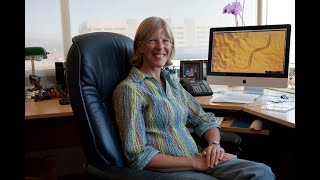
In this recorded Lasker Lessons in Leadership talk, Dr. Cynthia Kenyon reflects on her unconventional path from a curious child in Georgia to a world‑leading researcher on the genetics of aging. She shares personal anecdotes about early experiments with ponds, pets, and music that taught her to question norms and follow curiosity. Kenyon describes how a chance encounter with a bacteriophage‑based reporter system led to the discovery of genes induced by DNA damage, and how a rotation student’s screen uncovered the daf‑2 mutation that doubled the lifespan of C. elegans, establishing the conserved insulin‑like signaling pathway that regulates aging in worms, flies, mice and hints in humans. Throughout, she extracts “life lessons” – keep options open, learn how to learn, be a fanatic, embrace risk, recognize luck, and treat science as a collaborative, generous endeavor. She discusses mentorship, emphasizing the importance of choosing advisors you admire, fostering happy labs, giving credit generously, and coaching lab members to become more talented than the PI. Kenyon contrasts academia and industry, noting industry’s focus on process, truth, collaboration, and leadership coaching, while acknowledging academia’s freedom. The Q&A segment provides practical advice for trainees on selecting mentors, switching fields, and navigating multiple mentorship relationships. The talk blends scientific narrative with personal leadership philosophy, offering guidance for early‑career scientists.
Chapters
Hello and welcome, everybody. Good afternoon. My name is Lauren Wedekind and I'm a third-year PhD candidate in the NIH Oxford Cambridge program, studying between NIDDK Phoenix and Oxford. So welcome to the Lasker Lessons in Leadership with Dr. Cynthia Kenyon. It's great to see so many familiar names and faces, student and leadership, from the OxCam program, also postbacs. Welcome all. I'll provide you with instructions regarding the Q&A after Dr. Kenyon's talk, but first I'm going to introduce you to my fellow NIH Oxcam Program classmate Jacob Gordon, who's going to be introducing Dr. Kenyon. Thanks.
Thank you, Lauren, for the welcome, and thank everybody again for joining us today. So like Lauren said, my name is Jacob Gordon, and I'm a first-year PhD candidate in the NIH Oxcam program based out of the National Institute of Environmental Health Sciences in Durham, North Carolina, and Cambridge in England. So our attendees today include a cross-section of individuals from the NIH, the international academia, representatives from industry, as well as science enthusiasts. So before we begin, let me remind you that this is a recorded event. So we ask that you stay muted throughout the lecture and only unmute when you are called upon during the moderated Q&A session at the end of the talk. So the Lasker Lessons in Leadership series is a collaboration between the Lasker Foundation, the International Biomedical Research Alliance, and the NIH Oxford Cambridge Scholars Program. So it is an absolute honor for me today to introduce one of the world's foremost authorities on the molecular biology and genetics of aging and life extension. Cynthia Kenyon graduated as valedictorian in chemistry and biochemistry at the University of Georgia and completed her PhD at MIT. While studying at MIT, Dr. Kenyon pioneered the identification of genes on the basis of their expression profiles, discovering repair genes activated by DNA-damaging agents. As a postdoctoral fellow at the Medical Research Council Laboratory in Cambridge, England, she helped to demonstrate the universality of developmental pattern formation. In 1993, Dr. Kenyon's pioneering discovery that a single gene mutation could double the lifespan of healthy fertile C. elegans roundworms sparked an intensive study of the molecular biology of aging. So these findings have now led to the discovery that an evolutionarily conserved hormone signaling system controls aging in other organisms as well, including mammals. Dr. Kenyon joined Calico in 2014 as the vice president of aging research. Calico is a research and development company whose mission is to harness advanced technologies to to increase our understanding of the biology that controls lifespan. Dr. Kenyon is a member of the US National Academy of Sciences, the National Academy of Medicine, and the American Academy of Arts and Sciences. And she is the former president of the Genetics Society of America. She has received many scientific awards and honors, the most recent being last week when Dr. Kenyon received the 2021 Dixon Prize in Medicine. So without further ado, Please join me in welcoming Dr. Cynthia Kenyon.
Hi everybody, it's great to be here. I love talking to graduate students. I'm going to share my screen now. Okay, so it's really fun for me to give a talk like this because I do think that during my life things happened that make me think these were important, um, lessons. Really, it sounds kind of corny, but lessons. And so I entitled my talk Life Lessons from a Small Creature, being C. elegans, which you can see here, beautiful little creature. But then I realized that some of my lessons came before I even knew about C. elegans. So then I thought, well, we're really all small creatures. This is me. So it's really life lesson from two small creatures. So what I'm going to do is to just sort of go through my life, hopefully not in too much excruciating detail, and just point out what led to things that I think were important lessons for me, um, okay, that influenced my life and that I think are— you might find relevant. And I just hope that from all this someone might find something that's useful. Okay, so I was a little bit of a character when I was young, and I think I still am a little bit. Um, and my father always said, there's the right way, the wrong way, and Cynthia's way. Always said that. And now my husband always says that, because I made the mistake of telling him that my father said it. But anyway, I thought I would give you some examples, just a few. One is I liked animals. And so I had a pond in my house, like one of those children's wading ponds. It was blue. And I had it on the floor with goldfish and turtles. And I had those actually all my life through graduate school. And then I even had a pond outside for guppies where I put a heater outside, although my father got mad because He thought I shouldn't be heating the outdoors. I convinced my parents to let my parakeet live without a cage. So I just put some sticks on the, you know, hanging from the ceiling with newspapers underneath. And he mostly stayed up there. And then also one other thing I remembered is that, you know, it was really hot. I grew up in Georgia. It was really hot. And so I kind of got used to putting on wet clothes. Like I would wash my clothes and I would put them on right away and go to school or whatever. And by the time I got there, they would be dry. But I would be cool. So that's just a little example. So there's a life lesson there, which is good, which is kind of this fool around. And don't just— I mean, this is for me. This is what I'm telling myself. But I never really— just because someone says this is how you do something, I would always think, well, maybe, but maybe there's some other way. And that actually, that attitude, I think, made a huge difference because it made me question paradigms enough to actually test them in the lab. Okay, so a lot of my lessons came from choosing a career, which started pretty early. I decided not to be an artist, but music was a big deal. When I was, I guess, around 12, I happened to be listening— my mother put on some record in the living room of classical music. It was something, it was Eroica, actually, by Beethoven, and I was just mesmerized and transfixed, and I loved it. I just loved it. So I started listening to music all the time, decided I wanted to be a musician, went to music camp, and studied the French horn. And this is an Alpenhorn, which is like a French horn straightened out. And so I really thought I was going to do this, but I was never any good. I really wasn't. And it took me all the way to college to figure out that I was no good. And that was really not good. I mean, why didn't I figure that out a long time earlier? And once I stopped trying to play the French horn, everything was so easy. I could just do everything with so much easier, and I was so much better at it. So that is a life lesson, I think. It's not enough to love it. You have to be good at it. Okay, so there, that was one life lesson for me. I also liked writing. We lived near a river, and I used to spend a lot of time down the river writing. Here's a little poem I wrote when I was, I don't know, I guess about 12. And I thought maybe I would be a writer. I love to analyze literature. And I wanted to understand myself and people by reading great novels. That's where I thought, you know, truth lay, in the insight of great writers. Maybe it does, but I'm not sure. But anyway, I also liked math a lot, and chess, and breaking codes. I love to do that. And I found that I liked chemistry, but I hated biology because when I was in graduate— sorry, in elementary school and high school, all the biology that I learned was really descriptive, and I just thought it was completely boring. So college— well, it turns out I decided not to go to college. I wanted to go back to nature, and so I didn't apply. And actually, when I was in high school for a while, I had moved into a tent in the woods, and I just thought this would be a great place, great way to live. So I didn't apply, and I graduated from high school, and I totally freaked out. I just looked I looked into the future and it was like a gray piece of paper. Nothing was there. And I just freaked out and I signed up for the University of Georgia, which is where I lived in Athens. And they let me into summer school. And so I took a course in psychology. So, so much for that. So I was in college and then I met my advisor and immediately decided not to major in literature because he said that what you would do if you major in literature is you would become a critic of other people's writing. And I wanted to be I didn't want to talk about something other people did. So I didn't like that. But then I didn't know what to major in. So I roamed from major to major. And the only thing I knew is I really wanted to get out of Georgia. And here's some— I mean, I really had a lot of majors. Some I actually really wrote down and some were just in my mind, but there's a little list of some of them. It was kind of a mess. And so by the time I was a junior, I still didn't have a major and I had to have one. So I dropped out again to go back to nature. And so, I was gardening and things like that. And I studied chess endgames and helped other people write term papers. And that— there's a life lesson there because no one was telling me what to do. I could do anything I wanted. I had dropped out. But what did I do? I was solving puzzles. And I was learning things through these, you know, vicariously through these term paper discussions. And I also started going a little bit psycho, meaning that I needed some structure and some goals. So that was really, really valuable. And now I'm kind of scared to retire. I'm getting to that age because I think I don't want to go there again. So anyway, but so I learned something about myself. And I think that's important to pay attention as you go along and notice what you like, just because you'll be doing something and you'll go and you'll, you'll like it. But if you stop and think, hey, I like that, then maybe someday there'll be an opportunity to do that, and you will do it because you know you like it if you pay attention. But anyway, I was saved. My mother worked in the— as an administrator in the physics department. And she brought home this book. She's a little worried about me. And she found this book written by Jim Watson of DNA fame called Molecular Biology of the Gene. And instead of hating biology, now I loved biology because it was about gene switches, things like the lac operon, circuits, and switches, and logic. And it was biology. It was life, it was animals, it was nature. So it was so exciting. So I rushed back to school and loaded up on biology courses and other science courses. And I also worked in a lab studying gene switches. And I made a discovery, which was really exciting. And actually, that feeling— you probably have had it— of you're all alone, maybe it's at night, and you look at a gel, which is actually the way— this is not actually me. This is But you look at a gel and there's a band on it and it tells you something that no one knew. No one knew that, but now you know it and no one else knows it. It's like you and, and the essence of, of the world, the universe, it's just the two of you. And it's so addictive. So anyway, I was hooked for life. And I think actually in science, well, maybe science is really easy for some people all the time. But for me, it was not easy. Sometimes it was super fun, but sometimes there would be competitions which were really hard for me, or, you know, nothing would work for a long time, and that was really hard for me. But I think because I loved it so much that I could, I could make it through. And so I think that was really important, and I, I certainly loved it. So life lesson: it's not try not to do things that you're not good at, like play the French horn if you're me, and try to find something that you love. And that combination, if you love it and you have an ability to do it, is really dynamite. Okay, so I majored in chemistry and biochemistry, and my dad was always saying, keep your options open. For example, I wanted to drop out of high school and he would not let me because he thought if I never went to college, and I didn't have a degree from high school, I would have nothing. I would have nothing. So anyway, to keep my options open. So I did. And I made good grades. In fact, I made all A's all through school, all through all this. And then MIT let me into graduate school. So that's a big life lesson to me. Keep your options open. And I'll show you when an option closed in a minute. But that can happen. There was another lesson that I just wanted to mention that I learned through all this education, which was, Learn how to learn. That might seem obvious, but they never teach you that in school. They just teach you things and you're supposed to learn them. But there are ways to learn, and different ways for different people. And paying attention to how you learn is good, because then you can learn new things, and you always have to learn new things as the years go by. Okay, graduate school. So I was in the lab of wonderful Graham Walker, who studied the back— Well, he was studying mutagenesis, really. But he was also interested in this thing called the SOS response, which was the bacterial response to DNA damage. And that was really interesting. Bacteria are just bacteria. But if you irradiate them or treat them with Mitomycin C or something like that that damages DNA, they change. They start growing as filaments. Their repair ability gets better. Anyway, there's other things that happen, but it's kind of a whole cell differentiation in a way. And nobody knew how this happened. The gene RecA was known to be involved in it, but no one knew anything else. So something happened to me that let me figure a lot of this out, which was so exciting. So I'm going to tell you what it was because I think there's a little lesson there. So a great scientist named Boris Magasanik, who worked at MIT, went to a Gordon conference. And he came back and he gave a summary of the Gordon conference. And I went to the summary and he talked about lots of different things, but one was this new bacteriophage, which had been a virus for bacteria, which had been constructed by Malcolm Casadeban in Stanley Cohen's lab when he was a postdoc. And this guy was a derivative of bacteriophage mu, so it had mu on the two ends of it here. So it could hop anywhere into the chromosome of bacteria. And it carried a lacZ gene, so colonies could be blue, but it didn't have a promoter for lacZ.
So it had to—
so if it hopped into the chromosome near a promoter, then lacZ would be expressed only when that promoter was on. And so Boris said that Malcolm Casadaban had wanted to use this to study the arabinose operon. So the idea was you could make an arabinose mutation, this phage because it causes mutations when it jumps into a gene. And then you would have a way of assaying beta-gal expression— or not beta— yeah, for arabinose. So you could study arabinose by blue colonies. And I thought this was just great, so cool. So I told everybody I knew about it. I just kept telling people and telling people about this cool trick. And then one day, like maybe a week later, I was coming around my bench to go to my seat in my lab. And it hit me that I could use this to see if genes were turned on in response to DNA damage, which is what we studied in the lab. And no one had ever done that. No one— now we do this kind of thing all the time with microarrays and stuff. But no one had ever looked for genes solely on the basis of their expression. But I realized that you could do that with this little guy for the SOS response. And so I did it. And it worked. And I found all these genes that were turned on by DNA damage. So RecA already was known to, but all these guys were genes that I found that were turned on by DNA damage. One was UVRA, which was very famous because it encoded a DNA repair gene. OK, so there's some really big life lessons here, I think. First, be a total fanatic. I was a total fanatic. I would never have had the idea if I hadn't left the bench and gone to the meeting review. So, you know, things like reading papers and going to reviews and just talking are good. And the other thing is I don't think I would have remembered for a whole week long enough to have the idea if I hadn't been telling everyone about it. So I guess that's my life lesson because it made a big difference in, you know, it was a really cool discovery. Oh, and by the way, I invented something which I thought I would share because I'm so proud of it. When you work on bacteria, you pick colonies with a loop. So you have a Pasteur pipette that you stretch out and you have a little platinum wire with a loop at the end. So you pick your colony. And I had to pick all these colonies and I didn't like picking one loop at a time. So I made the super loop, which was a normal loop and then two other loops. And so I could pick three colonies before I flamed the loop. And it was very popular and other people in the lab liked it. And I think it's disappeared now, but I just wanted to share that with you. Okay, so another thing I learned in graduate school which really had a big effect on me was this: bacteria— so when you irradiate an animal or bacteria, you cause thymine dimers and mutations. That's known. UV causes mutations. What I didn't know, and what's amazing, is that bacteria actually need a gene a whole gene called UMC to make mutations. If they don't have this gene, then UV will still kill them, but you won't get any mutations. And that just blew my mind because I just thought, well, of course, it's kind of boring, you know, it's a chemical, mutations happen. But no, a gene was needed to do it. So to me, this is a big life lesson, and it influenced me later in my career, and I'll point to that, which is things that seem boring might be boring, but they probably aren't boring. Like, people used to think chromatin was incredibly boring, for example, but they might not be boring, and they probably aren't. And the other thing is, nearly everything in biology is regulated. So if you think something just happens, maybe, but I think probably not. Okay, so then I went to England to do a postdoc with Sydney Brenner, and, um, I wanted to work on ClAgens, but Bob Horvitz was, who was working on worms already, was, had a lab next to mine at MIT, and he was very inspiring to me. So I went to work on these little worms. And Sydney was, as you probably know, amazing. Sydney Brenner is one of the foremost biologists ever, I think. He was part of the, he helped to discover mRNA, he helped to show that the DNA code was a triplet code, he pioneered C. elegans as a model organism, And then he played a huge role in getting the big science and DNA sequencing established, which has been really, really valuable. And if you think about what Sidney did, every time he did something— well, first of all, he's brilliant beyond imagination, but he also went into new areas and pioneered them. And that was very inspiring to me. And so a life lesson to me was plunge into the unknown. And I felt that I had plunged into the unknown by going to study worms. All the cell lineages had been figured out by John Sulston. So we knew where every animal— sorry, every cell in the animal came from. And the animals were transparent, so you could look right into them and you could see— see, these are nuclei here. You could see individual cells. So it's kind of like the crystal structure in a way at the cellular level of an animal. So the idea was from— I wanted to do was to study developmental biology and to try to learn where important decisions were made by learning where there were changes in the cell lineage. So at the time— so I'll go back here. At the time, C. elegans was thought to be really weird. First of all, other animals didn't have such invariant cell lineages. They were variant. And also, it was thought if you killed cells with a laser in worms, which you could do, But generally, the other cells didn't change their fate. So people got the idea that C. elegans was all programmed by the asymmetric distribution of determinants again and again at cell division through the lineage, and that cell interactions didn't make much of a difference.
But—
and that was bad, because it was known that cell interactions are really important in other animals. For example, there were these genes called the homeotic genes, which subdivided the segments of Drosophila. When it was an embryo, and their expression was lined up along the body axis in the order— well, anyway, so that a gene that was responsible for a certain body region was expressed there. And these were genes that gave different body regions their identities, and they were just being cloned when I was a postdoc. And Peter Lawrence, who worked on them, said, Cynthia, why don't you stop studying the worm? You could come to my lab and you could study something interesting— antennapedia, which was a homeotic gene in this cluster. And I didn't, I didn't. I thought I'm going to stay with the worm so I can learn something new. So I found from years and years of studying in a dark room, watching cells divide, that this mutant called MAV5 was probably really interesting. In the MAV5 mutant, interesting things would happen. Cells that were supposed to migrate one way would migrate but the other way. So they knew how to move, they just went the wrong way. And there were these little mating structures called sensory rays. You can see there's 9 of them here. In this mutant, there were 3, but the others were gone. So it had the ability to make rays, but it just decided not to make these rays. So it was really interesting. And so I studied and studied, and finally I figured out that all of the things that went wrong in this animal were in the same body region here, the posterior body region. And that was really interesting because the cells in this region, unlike in flies where all the cells sort of stay put, these cells come from all over the place in the worm. They end up there, but they don't start out there. And plus, anyway, so this suggested if it's specific for this region, that maybe there was some kind of cell-extrinsic positional information in this part of the animal that no one had known about, and maybe it was something really new. So I was excited about it. So I'll take a little break before I tell you whether it was new or not. John Solstice, who was the one who did the Cell Lineage, he told me something when I was there that was really, really important and stayed with me my whole life. You know, even now this comes up, and it's about credit. People would argue about authorship and credit and things like that. And John one time said to me, always give people more credit than they think you deserve— sorry, than you think they deserve. That way, maybe you will give them as much credit as they think they deserve. And actually, it's human nature, I think, to think that, you know, you're the one, you're the one, even if you didn't do that much. You think, "Ah, I was so important," and you want to be recognized. And so it's nice to know, I think, that people are wired that way. Not everyone, but a lot of people, I think. Okay, John did this Philistel lineage I was telling you about. Okay, so then I went to UCSF, and I cloned my gene MAB5. And lo and behold, it was antennapedia, of all things. Here it was. We showed that worms had this cluster, with other labs as well, so that they had this cluster, and we did a lot to characterize it. So it was good and bad. I was actually really upset when I learned it was MAB5. I thought, no, I wanted to find something new. Ah, but the world was excited, and there was something exciting about it, which is if you look at these animals, worms and flies look really different, and worms aren't even segmented like flies are. And these genes were known to be invertebrates also, like in mice and people, but everyone thought that's because they were segmented, but now it was clear that it was even more fundamental than that. But the kind of the take-home message is animals look really different from others, from one another, and you think that that's probably something fundamental, but they have the very same patterning algorithm. They do it the same way. They just make different structures, but they do it the same way with the same algorithms and the same genes. So that was interesting. Okay, so there was a life lesson about learning something new. If you want to do something, if you want to learn something really new, okay, do something really different. —so I thought at UCSF where I was a professor, we worked on this and this was great, but I also wanted— I still wanted to do something really new. And so I had one idea: love peptides. I had broken up with a boyfriend and I felt awful, and I thought this must be what getting over an addiction is like. I don't want to go into it in detail, but it seemed to me that it was kind of like an addiction. So I thought maybe there are love peptides like, you know, morphines that are inside of you that make you addicted. And so I wanted to study them, and I talked about them. But the problem was I had kind of closed my options, like my father said. I didn't know how to do endocrinology. I didn't know anything about it. So there are love peptides. Other people went and they found them, and they're really interesting. And I could have found them, but I didn't know how to do it. So I studied aging. And I could do that because I worked on sialogans already. So why would I want to study aging? At the time, which was the early 1990s, aging was thought to be hopelessly boring, really boring. But remember, bacteria need a gene in order for UV to cause mutations, and things that seem boring probably aren't, and nearly everything in biology is regulated. So I thought about this, I thought, huh, maybe it's not so boring. Um, and the other thing is different kinds of animals can have really different lifespans, but they all arose from a common precursor. So there had to be— and they differ because of their genes and all these mutations that happen in evolution— so there must have been mutations in genes for aging, and that must be why they have different lifespans. So I thought, well, if they're mutations, if they're genes, I can find them genetically. Evolutionary biologists argued that there couldn't be genes for aging. They always were They were extremely, and still are in my opinion, dogmatic. And it was great when there were no experiments. They could just say whatever they wanted, and they could just argue with other evolutionary biologists, but there was no outside truth for them. And they said that there couldn't be genes for aging because if there were, by the time they were able to exert their effect, you would have already reproduced. So you couldn't pass the favorable genes on to your progeny. And there are ways around that, but I'm not going to go into that right now. But anyway, I just thought, I don't care, they could be wrong, and I'm going to look for genes for aging. Also, I had this background in developmental biology, and I thought, you know, they're conserved regulators for pattern, maybe they're conserved regulators for aging. So this had been really drilled into me, like firsthand, I was part of it, part of the discovery. So there's a life lesson there too. Try applying knowledge from one field to another. Okay. So it was really hard to get the project started. Super hard. It took years. There already was a mutation called age-1 which had been reported to extend lifespan in worms, but the animals weren't very fertile, so people thought they only lived longer because they didn't put their resources into reproduction. So it was kind of not clear that it could happen. All these people, National Academy members, had all these reasons that you couldn't have a gene for aging. One said you couldn't get worm aging mutations in the worm because in order to live longer, you would have to grow, and the worms had a fixed lineage, so they couldn't grow. So that was it. And another person just told me that— another National Academy member who I will not name— told me that he knew people that would study aging. And he said it like this. He said— he would just look down on me with scorn, scorn, like I am so much better than you, that kind of feeling that makes you feel like this small and horrible. Anyway, he said, that he had friends that tried to study aging, but they fell off the edge of the earth. It's like the earth really was flat and you thought it was round and off you went and you fell off. And it was— the people wouldn't— and anyway, the other thing was people who studied aging were thought to study something really boring, so they were thought to be not good scientists. And graduate students at UCSF, they wanted to be good scientists, not bad scientists, so they didn't want to study aging. So I couldn't tell and my lab members didn't want me to. So I, I tried to capture rotation students before they signed— before my lab members got to talk to them and get them interested in the project. And one finally did, and he was this kind of cavalier person— not cavalier, but in a good way, a kind of a risk-taker— named Raymond Tapteon. And he said, okay, sure, I'll look for long-lived mutants. And so he did, and we found a long-lived mutant. DAF2, and we found these mutants lived twice as long as normal. This was really luck. That's another life lesson. Luck is a really big deal, and this was— we were really lucky. But anyway, this mutant lived twice as long as normal, and it stayed young way longer. And by the way, I was first author in this paper because I did half the experiments myself, and I wrote the paper, and everyone else was a rotation student, and not one of them joined the lab. Nobody. So, however, new people joined the lab, and I was able to keep the project going, which was great. So life lesson: if everyone hates it but you can't see why it's a bad idea, then go for it. Okay, I want to show you a little movie of these beautiful worms. This is what normal worms— normal C. elegans— you can see why it's called elegans. This is the adult in 2 weeks. See, it has a very short lifespan. It's moving its head, but that's it. And here's our mutant when it's the same age. Look at it. It looks great. So it's really kind of a miracle, except it's not. It's science. So anyway, just want to show that to you. So it's really as if these two people who I found on the internet are both 90 years old. Oh, this one is a DAF2 mutant, hypothetically, not really, but it's like they're the same age. That's what this mutant is like. And I think that's really important because no one thought that was possible. I didn't. Nobody did. And I think we wouldn't have invented airplanes if we hadn't seen birds fly. Birds could do it, heavy birds, so we knew it was possible. If there weren't birds, I don't think we would have tried. So these long-lived mutants became kind of analogous role models for life extension and healthy life, and they stimulated a really extensive study of the molecular regulation of aging. And there are hormones and transcription factors, and it is conserved. It's the same in the fly and the mouse. There are hints of it in humans. Yeah, so it's a nice story, and I have to say, I always wanted to study something completely new, but there's still new stuff all the time coming— people learn in this field, and it's new and surprising. So I'm here, and I think I'm here to stay. I'm at Calico now, which is great. It's still— it's like part It's one of the alphabet companies, and it's part basic research on the basic biology of aging, but it's also drug development. And so I get to try to see if I can make drugs that will make people have healthier lifespans and maybe age more slowly. So that's really fun for me. OK, so I have a couple of other thoughts about leadership. And I'm just going to mention them because they're mostly about how I run my lab or ran my lab. And now I'm at a higher level of leadership And so some of them apply there too. I don't know if this will mean anything to anyone and if these are really good or not, but I always think of myself as a coach and not a boss. So I'm kind of helping my lab members to, I don't know, be terrific. And I like it when they think of their own ideas. I really want everyone in my group to be more talented and smarter than I am. That's really great. It's kind of scary because you have a certain responsibility and you don't want to mess them up. And if, you know, but I think that's a wonderful feeling. Um, I know I'm training the next generation, and the older you get, the more you realize that that is the most important thing. It is the most important thing to leave behind the most talented possible next generation of scientists. I always try to invest in my lab members to make them more talented and more skillful. Like, if they want to take some kind of computer course, I'll say, yes, go ahead, do it. It helps them, it makes them happy, and it's good for their skill set. And like, if I had done a little endocrinology, maybe I would have looked for love peptides, although I'm glad I looked at aging. But, you know, um, it helps science for them to become more versatile, and of course it helps the lab too. Um, I also strive to maintain generosity of spirit myself, and I try to encourage other people to do it too. It's always— life is hard. Science is really hard sometimes. So why make it worse? Be happy and be kind, I think. And the other thing I do all the time is I ask questions. I ask questions out loud in meetings. And I don't have much of a filter. So I ask dumb questions sometimes. And it's embarrassing. But I actually think it's good for me to do that. I know it's at my own expense. Perhaps, but dumb questions tell everybody else that, you know, she made it somehow and she asked a stupid question. Maybe it's okay if I ask a stupid question. So that's number one. It might embolden other people, especially in the lab, but maybe even in bigger settings. And also, a dumb question can lead to a discussion that very, very often creates a new idea. I've seen this so many times, and I think if you only ask really, really smart, educated questions, you won't really explore the unknown and get people to join you in doing it. So I think you cut yourself off from a lot that way. So I encourage that. So I want to thank my mentors, my lab members, my colleagues, and all of you guys for listening. And I hope— I don't know how much time I've used, but I hope we can ask some questions. So I'll stop sharing now.
Okay, thank you so much, Dr. Kenyon, for the wonderful talk. So I just wanted to start off the question and answer portion. For the next 20 minutes, we'll be taking questions via our Zoom chat. So if you see the bottom, there is a button to open up the chat, and I'll be monitoring the submitted questions there. So when I call on you please unmute and turn on your camera if possible, and then ask your question after you introduce yourself briefly with your affiliation. If you're having technical difficulties, I'm happy to ask your question for you. Just be sure to specify that when you submit your question. And so first of all, I'd like to start off following on that last couple slides that you gave. A lot of us are current or maybe prospective PhD students based at the NIH or based at the NIH and our UK institution. So especially for those of us who are just starting out, like in the early phases of our PhD or applying, do you have any broad advice on how to start making connections with potential mentors? And, and maybe based on your experiences as a student and also your experiences mentoring them.
Okay, yes, two things. The first is, and this was another life lesson actually for me, the first is, you know, you're going to learn how to be a scientist as a graduate student. So look around you and try to find people that you think are good scientists. You will be a scientist that's kind of like your advisor. It's hard to avoid. So you want to join the lab of someone that you admire. And that you want to be a little more like, and you also want to learn the kind of science that they work on. Not that you'll work on it. In fact, I think it's good to switch fields. I think it's really good that I went from bacteria to worms. I think that was a great switch because I learned different things and it was synergistic. So you don't have to, as a graduate student, go to a lab because they do what you want to do forever, but do it because you like the You like them. Oh, that's another thing, my life lesson. The first lab I went to was not a happy lab, and I thought, I don't care, I like the PI, I'll be fine, and I don't know, I just didn't think it would apply to me, but it did. I was really unhappy in that lab because everyone was unhappy, and I ended up leaving the lab, and so I would also advise checking it out, talking to the people in the lab, You know, you want to— life is tough, so you want to be happy, so it's good to go to a happy lab. So that's my answer. Great advice.
Thanks so much on that. So I'll shift to questions from the audience now. So first of all, Claire Pomeroy, could you unmute and ask your question? Feel free to turn your camera on. Thank you for a fantastic talk. You've had such a fascinating career. Career in so many different types of organizations. Can you talk a little bit about the differences between working in academia and in industry? Because many of the scholars listening on this talk are making those life choices right now.
Yes. First of all, I want to suggest that anyone interested in this There's a person named Morris Birnbaum who wrote— he wrote a perspective. He was a scientist, an academic scientist, and he was in my field, and he's a great guy, and he went to Pfizer. And he wrote an article saying what we have here is a failure to communicate. Morris Birnbaum. And I would read that article because it's different. It's different. It's not the same. In a way, companies are the natural extension of what we do in labs. I mean, companies are totally dependent on academia for the discoveries that are made in academia because they can use that information as a basis for drug development, for bringing it all the way to the clinic. Um, CalCA is a little different because it's a— 50% of it is really just ordinary academic-like basic research, but still there is a big drug development part, and I'm part of that because I want to see if I can slow down aging in people. Um, but anyway, I think there are differences. Um, first of all, companies are much more— they pay more attention to the process. So I have a leadership coach now, and I never even knew they existed in academia, but I have actually someone that helps me to be a better leader and to get along with other people better than I do. Not that I'm terrible at it, but everyone can improve, and they put time into that kind of thing. Another thing is, in companies, the truth is really important. It's always important. To me, it's like a religion. You wouldn't ever want to be doing something as— it's sort of an honor to be in science, and you want to be right. That's a big deal. But in industry, you have to be right. You don't want to make— if you start working on something that isn't right, you waste a lot of time and money. It's horrible. So the bar for, like, instead of using, like, a p of 0.05 in industry really isn't good enough. You really— it's just not what it is in academia. It is. So that's another difference. The, um, not that academics are wrong, I don't mean to say that, but it's, it's a different kind of, um, yeah, it's a different kind of bar in a way. Um, the other thing is, um, I— there's a lot more in, in the company. So one thing I've always wondered about in academia, um, is often labs are little fiefdoms, or little— I like to think of them as small companies where you're the CEO and you have your little company and you do your thing. Um, but at— in, in, uh, in companies, it's much more collaborative. People are always mingling with each other and helping each other and teaming up. Teams just organize. They self-organize from all over the place for projects, and actually drug development involves a real huge organization where each team has its own job and hands off to the next team, so organization is very important, but you really have a feeling of working toward a common goal in a company, and you have the feeling in academia too, But I think it might be a little bigger in a company in general. So those are, you know, I don't know how helpful that is. Those are some things I think about, but I do recommend that article by Morris Birnbaum. Thank you.
Great. I've added that article to the chat, Pharma and Academia: What We Have Here is a Failure to Communicate. Thanks for that recommendation.
Well, thanks for doing that. Great.
Sure. So going on to Sean's Sean, if you can unmute and introduce yourself briefly.
Hi, my name is Sean.
Can you hear me? You good?
Yeah.
Okay.
Hi, my name is Sean Corcoran. I'm a second-year student in the program. And my question was, so it seems like you took a lot of risk throughout your scientific career and you were very successful, but how did you— how were you able to balance like the combination of luck and skill it takes to be successful approaching very risky questions and problems that might not pan out and still be successful?
Yeah, what I did was I, um, well, my postdoc was a total risk, actually. And like, as you know, my graduate career, I heard Boris give that talk and I tried it and it worked. So it was like a charmed existence, and it was so much fun. And, you know, I already had a project. And when you— I looked for for colonies using replica plating that would turn blue if you gave them a DNA damaging agent, but not if they didn't. So it's like 2 weeks, you do the experiment, and if you don't get any blue colonies, you're done. And so it was, you know, it's not really much of a risk. It's— I think you always should do that, especially as an early graduate student if you can. It's nice to have your main project, but just try a few other things, because if they work, it could be great. In terms of My postdoc, though, that was really hard because I thought Nav5 was going to be interesting, but it just took, it took a really long time to figure out. It sounds crazy that, that it, that there was this posterior thing about the phenotype, because in all the posterior, all the interesting structures in the male were in the posterior, and not in the hermaphrodite. So there was a sex thing, it was all very complicated. But during that time, I, you know, I couldn't— like, if someone— I actually worked at night, partly because everyone was always screaming in the day and, um, arguing about not getting their paper into Nature. And I thought, I'm never even going to have a paper, you know, or it's never going to be interesting. It was horrible. But I don't know, I just kept on. And I guess it was good because you learn how awful it feels. So if a student feels awful, you can identify with it. But anyway, that was really hard, but it did turn out well. Probably because I went into something that was unknown. So pretty much every time you turned around, you would learn something new, even if it was still, you know, just like flies almost in the end, it was still interesting. With aging, by the time we started studying aging in the lab, I already had a lab. They were studying pattern formation, you know, these migrating cells and things. They were busy learning more about homeotic genes in worms. And so I just thought, I really want to do this. And it was really just a rotation student. Now, if he hadn't— I mean, it might have taken a few more rotation students. We were lucky to find it when we did, but they were there. So we would have found those mutations. But at the same time, I didn't stop my lab and say, OK, now I'm going to try this other thing. It was already going. So if it hadn't worked— that's the nice thing about genetics. If you think, ah, maybe there's a gene for this, and if you look and there's no gene, there's nothing to study because there are no mutants. So you're done. So I guess, yeah, I think you have to have, um, a sort of a safety net, and you have to be able to cut your losses and know— kind of have a sense of when to do that. But I think if you don't take a risk, it's not as much fun, and you probably won't— I don't know, it's just really fun to be more risk-taking, I think.
All right, so going into that question a little further, Chad has a couple follow-ups. So Chad, if you could unmute and introduce yourself briefly.
Hi there, my name is Chad. I'm a final-year OxCAM student split between the National Cancer Institute and the University of Oxford. So I'm— I think I'm following up on Sean's question, and instead of talking about projects. I'm talking about switching fields in terms of your career. So, um, when switching fields, how do you judge the safety of the leap per se? Or maybe a better way to phrase that is, is there a good cost-benefit analysis that you would have to decide whether or not switching fields is a good thing or a bad thing? Yes.
I mean, I don't know if I know the answer, but I have some thoughts about it. The first thing is, um, It's always good to learn new things, so if you switch fields and if you can shift, make a pretty big shift, that's a good thing because you'll learn something really new, and the more you really do, when you can apply something from one field to another, it's really powerful, a way of thinking or technologies, so that's good. Um, that's the first thing. The second thing is in the field, I think you want to think that there's a there there, that this really is a field I don't think it would have been a good idea necessarily to join the aging field in the decade back when everybody thought it was— there was nothing to study and not have an idea to do genetics because people were just sort of wandering around, not really learning much, in my opinion. But if there's a field where people are learning things, but there's a lot of unknowns, you know, whenever you do an experiment and you get a result that you don't expect. Or like with me, actually, I forgot to say this, but it's a big deal. When we found the Daphnia 2 mutant lived long, there was a lot of resistance to that. People had all sorts of reasons for why it might live long that were boring, and they just didn't want to accept that it was interesting. In fact, this person wrote a News and Views with my Nature article saying that this was really not interesting at all. And she now works on this same topic. But I think when you— when you feel that resistance, you know that you're doing something important. You know, if you, if you do an experiment and you get a result that is— it's true, it's not like you dropped, you mislabeled your tubes, it's true— and it's not what you expect, that means that it's a fertile field. There's stuff that you don't understand, and that's where you want to be. And especially if there's resistance to your ideas, then you really know you're, you're where you want to be. You've got to push because you're changing a paradigm. You know, once everybody thinks, "Oh yeah, you know, of course I predicted that," and everybody predicted it and you showed it, so what's the information content in that? I don't know. All right, that's Cynthia. That's how I feel. Other people can feel differently, certainly.
All right, thanks for that. We're nearing just a few minutes left in questions, so we'll try to accommodate the next couple. We have one from Kritika. You go ahead, Kritika. Hi, Dr.
Kenyon. Thank you for your great talk. I'm Kritika. I'm a first-year NIH Rhodes Scholar here at Oxford. So yeah, just end of the day over here. But in the Oxcam program, we have— most of the students have more than one mentor. So usually it's one on the Oxford or Cambridge side and one on the NIH side. And based on your talk, I've been writing down all these lessons that you've learned from your mentors. So I wanted to just ask if you could share a little bit more advice on best ways to navigate those relationships, and then a little bit more about the role of mentorship in your career.
You mean people who mentored me? Yes. Yeah, well, so the first question was mentoring relationships. People are people, so in fact, that's something I was really surprised about. I thought, am I going to have a lab? Who's going to be in it? What if I don't like them? Well, it turns out people— people that you don't like don't want to join your lab, so they're not there. And I like most people anyway, but they're not there. People like— they come to your lab because they like you, and presumably, and they like the way you are. So you probably choose a mentor because you like something about that person. And so your ordinary skills and interpersonal relationships that you developed your whole life should serve you well. I don't know. I was kind of a handful, I think, as a graduate student because I would argue with my advisor a lot, but he was good. He was— he put up with me, which was really nice. I don't know, I mean, I don't really know what's more to say. I mean, definitely want to work with someone that you really fundamentally admire, and I have absolutely really admired all of my advisors and mentors. And there are some that I didn't list, like Ira Herskowitz and Bruce Alberts at UCSF were not— I mean, they were other professors, but they were huge mentors and very important to me. And Art Levinson at Calico is like that, and I learned so much from them. So I think, I don't know, I can't really say more than that. And then you asked, um, what was the other question? It was about mentoring.
I'm sorry, the role of like, how have you navigated your personal relationships with your mentors? Because we have like more than one, so how do, how, what best advice do you have about navigating those relationships?
Well, nothing more than I've already said. I mean, you want to I don't really know what to say. Um, it's just like— okay, well, I can just say some general things, like maybe you two disagree about what should be done. Um, you want to do the best thing. You certainly— if your advisor has the idea and it's a better idea, you should do it. If you have the idea and you think it's a better idea, you should try to convince your professor that you're right. And maybe you can do it on the side if it's a little thing. You can't just, you know, sabotage the whole lab, but you could do that. But I think kind of like getting to yes is important for that if you have different opinions about things. I don't know, kindness, generosity of spirit. I don't really know what else to say about it. I've never had real problems with my advisors. So I don't think I'm very good at— ah, if you are— I don't know if you are, but if a person is having a problem with an advisor, I would seek help. Talk to people, other trusted people. Have a thesis committee, a strong thesis committee, and go to your thesis committee members and get their advice. That can happen. Yeah, I don't really know what more to say about it, but I wish you the best of luck, and all of you.
So going on, we can have time for one more question. So from Yogin Kanti, if you could unmute, introduce yourself briefly, and ask your question.
Hi, thanks very much, Lauren. Thanks, Dr. Kenyon. My video is not working, but hopefully the audio is working. I was very interested in one of your comments earlier that things that seem boring usually aren't. And I'm a Lasker scholar at the NIH who recently shifted over here. And so, you know, this is, it's a very interesting concept to me. And I wanted to get your perspective on how this, as well as the role of serendipity, have played in your career, and then how you organize teams now to increase the likelihood of getting some, having some of these more serendipitous advances. I think graduate students often fret over whether they're supposed to get lucky or not lucky. And so would really be interested in your comments.
Yeah, um, I think sometimes, like, chromatin is a great example. One time Mark Ptashne said— I forget what he said, I can't remember— but it was like, he worked— so, you know, you can switch on genes in a test tube when all you have is DNA and a repressor and polymerase, that's, you know, or it— so you don't need chromatin. So you could imagine that it's not important, but it has all these different I don't know. In that case, you just have to imagine that if there's something there that nature could use, it would use it. And it does. Of course, we all know that now. Cancer, for a long time before oncogenes were discovered, was thought to be just too messy. And Alzheimer's also, big time, was and still is by many people thought to be just really messy. But it isn't. I mean, these little aggregates, they have lives of their own and they move from cell to cell. And there are genes involved. It's very, very— it's fascinating. So, I mean, there are just so many cases. I mean, if something happens, like aging happens to everybody, but it happens at different rates. So what more do you need? And there's something there, right? Because if it weren't, you'd just all fall apart at the same rate. So anyway, so that's the first thing. Just always ask yourself, this sounds boring, but could it be interesting? And then in terms of starting to study it, that's hard because you have to convince someone to do it unless you can do it yourself. I know that I learned about Prusiner's early work on prions, which really interested me. He was trained as a doctor, as a— yeah, a doctor. And he— people who got this prion disease, everyone thought it was a virus, but there was no fever. And there were other things that viruses always had that this didn't have. And he said, huh, there's no fever. It can't be a virus. It has to be something else. And, you know, I don't know if you know the story, but it was a self-replicating protein, and the whole concept was crazy, and he was really kind of ostracized, um, in big time. And he had to work really hard to show that a protein could actually— and it wasn't just replicating in terms of the number of proteins, it was the conformation that was replicating. It was a really new concept, and it was messy and kind of ugly and it needed a whole new way of thinking and no one believed it, but he knew it couldn't be a virus because you would have a fever and these other things that I've forgotten. So yeah, I guess you just have to figure out a way to do it, maybe convince some other people that it's interesting like rotation students or do it on the side or just read enough about it that you can really make a good argument. There's, um, there are grants for people who want to try crazy ideas But if it's really too crazy, even those people turn out to be kind of conservative. So you just have to do your best. But people do it. People do it. That's the history of science. If you look at it, there's a lot of messy stuff that's turned out to be fascinating in the past.
All right. Well, your question and answer section and the talk both illuminated a lot about the mysteries of aging and your research, your approach to mentorship. So really appreciate that. We've gotten a lot of good feedback from folks across the board as faculty members, NIH investigators, and students. So just wanted to thank you overall for being our Lasker Lessons in Leadership speaker for March 2021, Dr. Kenyon. Our next Lasker Lessons in Leadership is scheduled hopefully for in-person, if it's safe, in the fall with Mr. Kenneth C. Frazier. So please take a moment to fill out this survey that's linked in the chat. I will submit it to the chat. And this helps us to assess how, how we have Lasker Lessons in the future in terms of accessibility, in terms of your interest in topic. And I also wanted to thank Randy and Alex from the Biomed Research Alliance. So thank you so much. And if you had anything to add, Dr. Kenyon, about, you know, if people are welcome to contact you with other questions. Yeah, so thank you so much on behalf of Oxcam.
I just want to thank everybody. It was a lot of fun for me too. So take care and bye-bye.
All right, take care. Bye everybody, and please take time to fill out the survey. It should only take a moment.
More from Joshua







Scientist Stories: Hans Waterham, The value of phenotypic assays in peroxisomal disorders




Scientist Stories: Joel Zlotogora, Genetic carrier screening programs for reproductive purposes