Scientist Stories: Daniel Nomura, Chemoproteomic Platforms & the Undruggable Proteome
In this seminar, Professor Dan Nomura presents his laboratory’s comprehensive strategy for tackling the undruggable proteome using chemoproteomic platforms. He begins by defining the undruggable proteome—proteins lacking well‑defined small‑molecule binding pockets such as RAS, MYC, and p53—and explains how activity‑based protein profiling (ABPP) enables the discovery of ligandable cysteine, serine, lysine, and methionine hotspots across the human proteome. By aggregating ABPP data from many labs, his group built a ligandability database containing >120,000 reactive sites, covering >98% of E3 ligases and a substantial fraction of intrinsically disordered regions. The database fuels the design of covalent small‑molecule libraries that can be screened in target‑based or phenotypic formats. He then details several therapeutic modalities derived from these chemoproteomic insights: - Molecular glue degraders discovered via phenotypic screens (e.g., EM450/EN67 targeting the E2 enzyme UBE2D to degrade NF‑κB or BRD4 isoforms). - PROTAC‑like heterobifunctional degraders that repurpose covalent E2 or E3 recruiters (e.g., EN67‑JQ1, EN67‑AR ligand) to achieve isoform‑selective degradation of BRD4, androgen‑receptor variants, and other targets. - Covalent E3 ligase recruiters (e.g., RNF126 covalent handle on ribociclib) that enable CDK4 degradation, illustrating rational design of covalent handles to engage novel E3s. - DUB‑TACs (targeted protein stabilizers) that use a covalent OTUB1 recruiter (EM523) linked to disease‑relevant ligands (e.g., Lumacaftor for ΔF508‑CFTR) to restore protein levels and functional activity, with mechanistic validation via ternary‑complex formation, proteomics, and functional assays. Across these examples, Nomura emphasizes the importance of linker chemistry (alkyl vs. rigid heterocycles) for potency, selectivity, and drug‑like properties, and highlights translational efforts through spin‑out companies (Frontier Medicines, Synartis Therapeutics, Vicinitas Therapeutics). The talk concludes with a forward‑looking vision that chemoproteomics will continue to expand the toolbox of induced‑proximity modalities—degraders, stabilizers, and beyond—to address previously intractable disease targets.
Chapters
Hi everyone, and welcome back to another TPD seminar. We have a fantastic speaker here today. Professor Dan Nomura is a professor of chemical biology and molecular therapeutics in the Department of Chemistry and the Department of Molecular and Cell Biology in the Division of Molecular Therapeutics at UC Berkeley and an investigator at the Innovative Genomics Institute. He's also an adjunct professor in the Department of Pharmaceutical Chemistry at UCSF. Since 2017, he has also been the director of the Novartis-Berkeley Translational Chemical Biology Institute, focused on using chemoproteomic platforms to tackle the undruggable proteome. He is also a co-founder of Frontier Medicines and the founder of Synartis Therapeutics, based on his group's discovery of the Dub-Tac platform. Dan is also on the SAB for a long list of biotechs that I could not go through. Among his many honors includes the National Cancer Institute Outstanding Investigator Award, Searle Scholar, American Cancer Society Research Scholar Award, and the Mark Foundation for Cancer Research Aspire Award. Now I'm going to hand that over to you, Dan.
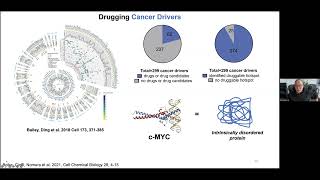
Thanks a lot. And just first off, I've been a huge fan of this Dana-Farber TPD webinar series, and certainly I think my lab has religiously watched this seminar series. So thank you for doing this for the whole, you know, TPD community. I think it's been an incredible resource for the whole community. So thank you for the invite to give a talk here today. Before I begin, these are my disclosures and conflicts of interest. All right, so our lab is really, really interested in tackling the undruggable proteome, which I think is still very much the biggest bottleneck that we face in drug discovery, that over 90% of human proteins are considered undruggable. Because most proteins, you know, don't really possess well-defined binding pockets that a small molecule can bind to, to affect their function. So very likely, if you discover a new disease target, you're not going to be able to develop a drug against it very easily using any current available therapeutic modality, whether it's small molecules or degraders or, you know, things beyond degraders or gene therapy or cell therapy or anything. So what are undruggable proteins? Well, unlike, you know, you know, what are undruggable proteins? Unlike druggable proteins like enzymes and receptors that have well-defined binding pockets that a small molecule can bind to, undruggable proteins include things like protein complexes or intrinsically disordered proteins where it's really unclear where within these smooth interfaces or garbled messes like this you can identify binding pockets that you can pharmacologically interrogate. And in cancer, we've known for decades so many different drivers of cancer like RAS and MYC and p53, that are oncogenic or tumor suppressor drivers of cancer, yet except in the case of KRAS G12C mutations and now a couple of others, other mutant forms of RAS or other forms of RAS or, you know, intrinsically disordered transcription factors like MYC or mutationally inactivated and sometimes unfolded tumor suppressors like p53 still remain really, really difficult for direct drug discovery approaches. And these 4 proteins just represent the tip of the iceberg of tens of thousands of other protein targets that remain intractable to direct drug discovery approaches. And so our premise has always been that if we can identify these binding pockets or ligandable hotspots across all proteins in the proteome, we could really effectively go after liganding any protein and subsequently developing new disease therapies. And I think, you know, as the chemical biology field has really evolved, you know, with technologies like fragment-based drug discovery or computational approaches or chemoproteomics or DNA-encoded libraries, our ability to find binders for proteins has really exponentially increased, but I think one of the realizations that we're all seeing is that simply finding binders to proteins alone is often insufficient to functionally manipulate their roles in a way that would therapeutically be beneficial, and oftentimes you need to then couple that with other therapeutic modalities like targeted protein degradation in order to force functionality on that protein. And that can oftentimes be also very challenging. And so another major goal within our lab has been to really expand the arsenal of new therapeutic modalities that we can mix and match with ligands to really enable kind of the next generation of drug discovery. And so to do this, we've been using chemical proteomics or chemoproteomics and coupling that with covalent chemistry to be able to discover ligandable sites and ligandosites directly in complex biological systems. And we've also been using these strategies to really expand the scope of targeted protein degradation approaches, which will be the majority of the focus of my talk today. And then also inducing the proximity of proteins to destroy them is just the tip of the iceberg of what you can do with this kind of approach. In fact, not every protein benefits from destroying it. And so we're also going beyond degradation to develop new induced proximity-based therapeutic approaches, all towards discovering new therapeutic targets and drugs. And so the underlying chemoproteomic approach that we use is an approach that was pioneered by my former postdoc mentor, Ben Cravatt, at Scripps Research called activity-based protein profiling, which uses reactivity-based chemical probes to profile proteomide reactive functional ligandable sites directly in complex biological systems. And the way this works is that we have a series of electrophilic reactive probes that can covalently modify nucleophilic amino acid hotspots within proteins like serines, cysteines, and lysines, that not only take place in enzyme catalysis, but also post-translational regulation, protein-protein interaction, allosteric binding, protein-protein interactions, or really any kind of, you know, ligandable site that these molecules can access. And you can read those events out because all these probes burn alkyne handles. They can use copper-catalyzed click chemistry to append on your analytical handle, whether it's a fluorophore like rhodamine or a biotin enrichment handle. And so showing here are various examples of reactivity-based probes that the chemical biology field has made through the years, for example, serine or cysteine or lysine or methionine activity, and you could see all these possess these red reactive electrophilic warheads as well as these blue biorthogonal handles. And so in a typical experiment, you could take any kind of complex proteome and you can throw in your reactive probe and the probe will broadly react across tens of thousands of ligandable sites across the proteome, and you could subsequently read that out by clicking on some, you know, variant of a cleavable biotin azide tag onto your probe-labeled proteins, and you could subsequently enrich those proteins with avidin, digest your proteins to release your tag, and subsequently, you know, isolate your or probe-modified tryptic peptides, which you can shoot onto the mass spec to identify the sites of probe labeling. And many of these sites of probe labeling now constitute potential ligandable sites that can now be pharmacologically interrogated using covalent small molecules. And collectively now, and, you know, many labs have been doing this across the country, you know, collectively when you aggregate all of these chemoproteomic datasets, we've now identified over, you know, 100,000 of these potential ligandable sites across really the vast majority of the human proteome, and we've already these into a database where we can really search for any protein target of interest now, and what's really cool about this is that we can quantitatively assess the reactivity of specific cysteines within targets or lysines or other amino acids and really identify where these aberrantly reactive nucleophilic sites are that oftentimes correspond to ligandable sites within these proteins. But simply identifying pockets within proteins alone isn't sufficient to develop small molecule ligands against them, And so we've also built out or purchased in tens of thousands of these small molecule libraries that possess these red reactive warheads. So for example, in this case of cysteine, if you find a cysteine-reactive hotspot with this broad promiscuous iodoacetamide probe, we built out large libraries of acrylamides and chloracetamide warheads to have tempered reactivity that can irreversibly react to thiols. And by diversifying the R groups here, we can confer specificity for certain cysteines over others. And you can deploy these in pure protein target screens where you can screen a ligand library and if the ligand binds to your protein compared to your control, when you chase with a fluorophore-tagged reactive probe, the probe can no longer bind to those sites. So it's a simple competitive assay and you can read that out as loss of fluorescence in a gel-based format or high-throughput screening format. Or these days we can rely on the actual rapid-fire TOF system, which is an incredibly powerful approach for doing high-throughput intact protein mass spectrometry-based screening to identify covalent binders for proteins. But most importantly, you could do this directly in complex biological systems where you can envision treating your covalent ligand in vivo in a human or mouse or cells or lysates, and the ligand will irreversibly bind to whatever protein targets that it's going to bind to compared to your control. So when you chase with an alkyne functionalized reactive probe, the probe can no longer bind to those sites. So it's a simple competitive assay across the whole proteome now, which you can then quantitatively read out by clicking on isotopically encoded mass tags taking it through this whole process and now identifying where ligand displaced probe labeling, allowing you to identify exactly which amino acid or which protein target you're looking down to and also how selectively it bound to that site on a protein-wide scale. So these technologies have now been around for quite a while. Again, you know, really pioneered by efforts by Ben Cravatt and his team. And what this really enables you to do is a lot of different things. So if you already know what target you want to go after, you can use this approach to assess target engagement and also assess proteomide selectivity, so you can couple that with medicinal chemistry efforts to not only optimize potency against your target, but also proteomide selectivity, and also to reduce any kind of toxicological off-target liabilities. Another major advantage of this is that you can use this to enable target identification of covalent small molecules that come out of phenotypic screens and really shorten the time to kind of deconvolute the mechanism of action of molecules that come out of these chemical genetic approaches. And so what we've been doing with this, we've been taking our covalent ligand libraries and screening them in various target-based and biochemical phenotypic screens, and once we identify small molecule hits, we can then very rapidly deconvolute their mechanism of action using chemoproteomic strategies. So another thing that, that's really been attractive for using chemoproteomic approaches has also been to expand the scope of emerging and new therapeutic modalities, including, for example, in targeted protein degradation. Where in targeted protein degradation, we have kind of two of these approaches, right, with these heterobifunctional PROTACs and these monovalent molecular glue degraders, where oftentimes the challenge is actually finding the ligand against your target or finding the recruiter against, you know, E3 ligases beyond kind of the two main E3 ligase recruiters that are used. And also another kind of major challenge has been to more chemically rationally design these kinds of molecular glue degrader molecules to be able to engage either E3 ligases or neo-substrates, but covalent chemoproteomic approaches can really help in expanding the scope of these kinds of approaches. And again, you know, now with all the different technologies at our disposal in the chemical biology field for ligand binding discovery, you know, we can really think beyond degradation. Again, not every protein benefits from destroying it for therapeutic activity, and so, We need to really develop the arsenal of other therapeutic modalities to be able to more precisely manipulate either post-translational modifications on proteins, proteins themselves, or even nucleic acids like DNA and RNA or epigenome targets. But we now have, I think, the capabilities to develop recruiters against really any effector protein to envision, right, developing the full complement and arsenal of induced proximity paradigms, whether it's through the heterobifunctional approaches or through molecular glue approaches, you know, beyond degradation. And so this is an area that we're heavily investing in. And so starting off, I realize I probably talked about this particular story last time already when I gave this talk, I think, 3 or 4 years ago, but, you know, in cancer, I think still we know so many different drivers of cancer, yet only a small fraction of them have any kind of small molecule associated with them, and it's because because most of these targets are still among the undruggable class of proteins. Yet if you mine our ligandability database, we've identified ligandable sites across really the vast majority of all the cancer drivers. And we can go after, I think, now targets like, for example, MYC, which has eluded kind of drug discovery approaches because much of MYC is highly intrinsically disordered. This is an amplified transcription factor that is a major driver of many, many different cancers through upregulating the transcription of hundreds of cell proliferation genes. And our ligandability database, for example, has clearly shown us that the cysteine 171 is an aberrantly reactive cysteine that is embedded within this intrinsically disordered region of MYC. And, you know, I've talked about this before, and this is all published from several years ago now, but we were able to discover this covalent ligand, EN4, that seems to selectively target this intrinsically disordered cysteine 171 within MYC. And I guess what's not necessarily reported in this paper, because we figured this out a few days after our paper was published, is that what this ends up causing is actually a targeted destabilization event where targeting the cysteine, this intrinsically distorted cysteine, causes a thermodynamically destabilizing event within Myc, ultimately leading to what we think is likely an unfolded protein response and ubiquitination and degradation of Myc. And that really leads to profound inhibition of Myc transcriptional activity and anti-cancer effects. Now, this was kind of fortuitously stumbled upon, and we kind of, you know, didn't really follow it up for a while, but this concept, I think, of targeted destabilization, particularly of these intrinsically disordered regions within, for example, transcription factors to induce their degradation, I think, is something that we've actually now seen a couple of times over in other stories that I won't reveal yet, but I think potentially this is a unique strategy that we're really thinking about for, you know, drugging these really difficult-to-drug transcription factors in cancer. So, you know, if you look at our ligandability database of now over 120,000 ligandable sites, not surprisingly, the vast majority of those sites are within highly ordered regions. But a good 12%, over 14,000 sites, are aberrantly reactive cysteines in this case that are within intrinsically disordered regions of proteins. And within those are proteins like MYC, but also many, many other targets that are of high value in cancer and something that we've, you know, kind of systematically started going after. And I think this is something that hopefully will become an emerging theme that you'll see coming out of our lab. In coming months to years. But going back to PROTACs and heterobifunctional modalities, you know, one of the challenges in this field is that we have over 600 E3 ligases in the human genome, but primarily we've still relied on two E3 ligase recruiters. One is with the thalidomide class of molecules that bind to cereblon, and another one is with the VHL recruiters. And it's becoming clear that, you know, these two E3 ligase recruiters are likely not going to be sufficient to be able to degrade every and any target of interest. And so having a larger expanded arsenal of E3 ligase recruiters can be beneficial. And I think now, you know, this field has really taken off where there are many different strategies that one can take to really expand upon E3 ligase recruiters, but covalent chemoproteomic approaches have certainly contributed to this, so we've previously published on, for example, this covalent natural product, nimbolide, that targets ARNF114 that you can use in PROTACs, or for example, RNF4 covalent recruiters, or in collaboration with Michael Rappa's group, FEM1B recruiters that you can use to degrade near substrate proteins in an on-target, you know, E3 ligase-dependent manner. And certainly, we've been able to expand upon covalent recruiters for E3 ligases. This is something that Ben Cravatt and Xiaoyu Zhang have also expanded upon, and more recently, DNA-encoded library technologies have really contributed to further expanding upon these kinds of recruiters, and I think the Structural Genomics Consortium has also recently published on a nanomolar novel E3 ligase recruiter that you can use in targeted protein degradation applications. But if you mind our ligandability database, we've now identified ligandable sites across over 98% of the over 600 E3 ligases, and we've in fact published this in the supporting materials of this review that we've recently published in Biochemistry. So you can go in there and kind of search for your favorite E3 and look at whether there are potentially aberrantly reactive cysteines within your favorite E3. But I think, you know, a better approach potentially to degrading targets is using monovalent molecular glue degraders. While there have been huge strides made for developing Protaxin, the orally bioavailable and even brain-penetrant degrader molecules, These things still tend to be larger molecular weight and challenging for medicinal chemistry applications, whereas with monovalent glue degraders, you know, these molecules are smaller molecular weight and can also often access shallow pockets across protein interfaces to be able to glue, for example, an E3 ligase with a neo-substrate to ubiquitinate and degrade those proteins. And then obviously, an example of a molecular glue degrader is thalidomide, which binds cereblon to glue it to neo-substrates like sulforadonychros to ubiquitinate and degrade them. And it was the SOF4 degradation that led to the birth defects, and Ikaros degradation led to anti-cancer effects. Now, it's been thought that, right, like, thalidomide-type molecules are like, you know, one-in-a-billion-type molecules, and you're not going to be able to, like, just systematically discover these things. But I think a lot of work done at Dana-Farber and many other institutions have revealed, right, that these things can be more systematically discovered. And inspired by work done by Garrett Winter's group and Christina Mayer-Ruiz's group, we have also started taking kind of systematic approaches to discover new molecular glue degraders through various phenotypic screens. And these days, we're taking more kind of target-centric cellular glue degrader screens, but upfront, we kind of did a very crude kind of cell death screen for anti-cancer phenotypes, where the approach that we took to discover new molecular glue degraders was to screen our cysteine-reactive covalent ligand libraries. So these are covalent small molecules, for anti-cancer effects, and then counterscreening for, you know, molecules that showed attenuated phenotypes upon either, you know, treatment in the hyponethylation line or with treatment with a methylation inhibitor for inhibiting colony-free ligases to identify molecules for which mechanism of action was likely going to be through some molecular glue degradation event. And, again, you know, deconvoluting the mechanism of these things oftentimes is pretty challenging. You know, functional CRISPR screens have really arisen as a powerful approach. But we thought that we could, you know, further kind of accelerate this approach by using, you know, covalent chemo-proteomic approaches to help deconvolute the mechanism, right, of whatever molecular glue degrader that came out of our screens, and then use subsequently quantitative proteomic approaches to figure out what target we degraded to be able to reassemble the ternary complex. And so Ellie Keen, a chemical biology graduate student in our lab, took this on, and she initially screened our cysteine-active covalent ligand library to look for molecules that, showed anti-cancer activity in HAP1 leukemia cancer cells. And then she counterscreened any hits that came out to look for attenuation of phenotype in— with a colon methylation E3 ligase inhibitor. And what she found out of that was this covalent, really tiny fragment, EM450, that seemed to kill cancer cells, but that phenotype was attenuated with the MLN4924 compound, the methylation inhibitor, to the same extent really as the molecular glue degrader that Garrick Winter had discovered. And because this is cysteine reactive, we used our covalent chemoproteomic approaches to map the global cysteine reactivity of this molecule. And among the targets, obviously, this thing is pretty tiny, so it's not totally selective, but among the targets that we identified, there was really only one protein that was involved in the ubiquitin proteasome system, and that was this allosteric cysteine 111, on this E2 ubiquitin conjugating enzyme, UBE2D. Now, there are 4 different isoforms of UBE2D, UBE2D1 through 4, and they're basically like 98% identical in sequence, and so including this cysteine 111. So we actually can't distinguish between the cysteine on UBE1 through 4. It's very likely that this molecule is binding to all 4 UBE2Ds. But nonetheless, we validated this interaction. We made an alkyne functionalized probe version of EN450 that, again, kills cancer cells but that phenotype is completely attenuated with a methylation inhibitor. We can take pure UBE2D1 protein and show dose-responsive covalent labeling of the protein with our alkyne probe handle. And then we can also show that we can pull out UBE2D1 but not unrelated proteins like GAPDH out of cells and that we can now compete that with excess EM450. And so then we wanted to establish whether, you know, this E2 was actually responsible for some of the cell viability impairments. And so we knocked down UBE2D1 in HAP1 cells, and we can show that that anti-cancer phenotype is significantly attenuated. The dose-response curve is shifted if you knock down UBE2D1. And so then we wanted to figure out the other half of this equation. What were we actually degrading? And so we did quantitative proteomic approaches to look at what proteins were changing in protein levels upon EM450 treatment, and one dot showed up. So the thing that it looked like we were taking out was this nuclear transcription factor NF-kappaB1. Which has been shown to have oncogenic properties in cancer cells. And you could see that NF-kappaB is reduced in levels by EMD450 treatment, and that's attenuated with the methylation inhibitor. And so, you know, that showed us, you know, potentially that what we were doing was that this covalent molecule was covalently attaching to UBE2D and engaging in molecular glue interactions with this transcription factor NF-kappaB1 to induce its polyubiquitynation and subsequently proteasome-mediated degradation. And to further show the ternary complex was being formed, we pulled down NF-kappaB in the presence of EM450, and you can see enhanced pulldown of the E2 UBE2OD1. Furthermore, we reconstituted the whole kind of Cullin E3 ligase complex and show that it's only in the presence of the kind of Cullin complex in the presence of NF-kappaB and EM450 that we see this enhanced ubiquitination of NF-kappaB1, both looking at FLAG ubiquitin as well as NF-kappaB polyubiquitination as well, showing that this ternary complex is resulting in a productive ternary complex resulting in enhanced ubiquitination of this substrate in a reconstituted system. And so it looks like the E2 is not interacting by itself or with like a ring E3 or something. It still does require the full complement of the Cullin E3 ligase. Complex. And so we also were able to show, well, you know, we believe that probably the full anti-cancer activity of this EM450 molecule is due to not just this molecular glue-degrader interaction, but probably, you know, other off-targets that this molecule might have. At least some of the anti-cancer effects are attenuated with EM450 treatment if you overexpress NF-kappaB in these cells. And so, you know, it indicates that at least part of the anti-cancer activity may be mediated through this unique molecular glue interaction between this E2 and this transcription factor. And so this was unique in that, you know, so far E2s haven't really been exploited in either molecular glue degrader interactions or in targeted protein degradation approaches, but it indicated that this allosteric cysteine 111 that we had targeted that is distal from the actual ubiquitin-conjugating cysteine, cysteine 85, on UBE2D, seemed to be an exploitable site for recruitment of neo-substrates. And so one thing that we wanted to explore was whether we could actually exploit that site kind of going backwards from molecular glues back to heterobifunctionals in PROTAC applications. And so a very talented postdoc in our lab, Nafsyka Forte, took this on where she linked this original kind of molecular glue degrader E2 covalent ligand EM450 to the BRD4 inhibitor JQ1, this thing still binds in a dose-responsive manner to UBE2D2. We can see competition of this molecule against cysteine-reactive probe labeling on recombinant UBE2D2. And when we treat this in cells, interestingly, we do see degradation of BRD4, but we only actually see selective degradation of the short BRD4 isoform, and really it's not touching at all the long isoform of BRD4. We're still not exactly clear what the mechanism of this selectivity is, But initially, the degradation that we were observing was not that particularly robust. You see that, you know, a good, like, chunk of BRD4 is still left over here, right? Now, this molecule obviously came out of a phenotypic screen. It's completely unoptimized. It's not like we screened directly against the E2, and so we did a more target-centric screen, screening our whole cysteine-reactive covalent ligand library against this E2, and we identified a better scaffold with this EN67 molecule that binds to UBE2D2 directly. And when we reconstitute the E3 ligase ubiquitination activity of this molecule, we see that EN67 doesn't inhibit ubiquitination activity, which we expected because this is likely targeting that allosteric cysteine 111 but not the ubiquitin-conjugating cysteine 85. We further confirmed this by, you know, taking recombinant UBE2D protein and showing by mass spec that this is selectively labeling just the cysteine 111 on UBE2D. We also further made an alkyne functionalized probe version of EN67 and showed that this still binds the UBE2D, it outcompetes probe labeling. We can also throw this into cells, do a biotin-click, avidin pull-down, and we could show that we could pull out UBE2D2 out of cells of not unrelated proteins like GAPDH, and we've also done cysteine chemoproteomic profiling on EN67 and show that while this is not completely clean, the cysteine 111 on UBE2D is really the only target that's being engaged among the ubiquitin proteasome system. So at least within the ubiquitin proteasome system, it seems pretty selectively engaging that site. And so once again, we then linked EN67 onto the BRD4 inhibitor JQ1, and we could show that this still binds again to UBE2D, and this is able to now more robustly take out BRD4 Once again, showing this isoform selectivity, we're only taking out the BRD4 short isoform, not the long isoform. This is interesting because previous studies have shown that it looks like the short isoform seems to have more oncogenic activity while the BRD4 long isoform seems to have more tumor suppressive activity. So this is a bit hand-wavy, but, you know, there could be therapeutic advantages for selectively taking out just the BRD4 short isoform while still maintaining the BRD4 long isoform. Long isoform. But nonetheless, previously we haven't really seen this kind of isoform selectivity and, you know, this exploiting the E2 in this case seems to have that kind of selectivity. We could see both time-responsive degradation of BRD4 and that degradation of BRD4, just the short isoform, is not surprisingly attenuated by either proteasome inhibitor treatment or with a Cullin methylation inhibitor treatment. And this is E2 dependent. So we do have to knock down all 4 E2s, the UBE2D1 through 4, in order to get this rescue. But we could see that the degradation of the short isoform of BRD4 is completely attenuated if you knock down all 4 UBE2D1 through 4 isoforms. And so it's on-target activity. We've also applied this to other substrates outside of BRD4 because BRD4 is probably the easiest target to degrade. And so we've also taken Arvinas's protease AR ligand and linked it onto our E2 recruiter, and we could show very robust androgen receptor degradation in androgen-sensitive LNCaP prostate cancer cells, nearly to the same extent as ARV-110. And again, this degradation of androgen receptor is attenuated with a Cullin E3 ligase inhibitor. And when we do quantitative proteomics on this degrader, we get rather quite selective degradation of the androgen receptor across the proteome. And so, you know, this was just an example case of where we can not only exploit, you know, substrate receptors and call in E3 ligases or ring E3 ligases, but this shows us the possibility that we can engage E2 ubiquitin conjugating enzymes either in molecular glue degrader interactions or even exploit E2s also in PROTAC applications as well. But going back to kind of the, you know, molecular glues, you know, so I think many groups are now finding these molecular glue degraders through phenotypic screens that are cleverly designed, right? And it turns out that these molecular glue degraders are much more common than we had originally expected. But so far, it's been more challenging to kind of rationally and chemically convert protein-targeting ligands into molecular glue degraders. And so this is something that we really wanted to tackle of whether there was any kind of chemical rational design strategy to be able to do this. And we were really, really inspired by work, actually, the majority of it coming out of the Dana-Farber Cancer Institute TPD Center, as well as Nico Tomas' group and others, where there were many kind of fortuitous discoveries across the field where rather minor chemical substitutions to otherwise non-degradative inhibitors like rosclovatine against CDK12 or this Bi compound against BCL-6, rather minor chemical substitutions to those molecules converted these into molecular glue degraders of their targets or their target protein interaction partners. And recently, there were two really beautiful bioRxiv studies that came out of Ben Ebert and Nat Gray and Eric Fischer's group, as well as Garrett Winter and Alessia Trulli's group on also BRD4 molecular glue degrader and its mechanism in exploiting DCAF16, again, really seeing these kind of very small structural changes on JQ1 that convert these molecules into molecular glue degraders of BRD4, where all of these studies indicated that maybe there are chemical rational design strategies to be able to do this. And so Ethan Tariki in our lab, who's a very talented chemical biology student alongside a postdoc in our lab, James Papazemas, who's now working at Novartis, took on this endeavor where we started with very well-established drugs like ribociclib, that's a CDK4 and 6 inhibitor for breast cancer, where we know exactly how this binds. There's crystal structures of this thing bound, and we know that this piperazine handle is the exit vector pointing out of CDK4. And we started depending on various chemical handles to look for chemical handles that would induce the degradation of CDK4 as opposed to just merely inhibiting it. And so Ethan originally made just 9 compounds because we really didn't know what we were looking for, whether it be a reversible handle or a covalent handle, and so we tested just a variety of kind of carboxyl gases that we can couple onto this, and just from the first 9 compounds that we made, we actually found the cinamamide handle that's actually a covalent handle, you know, has this Michael acceptor here, that when attached to ribociclib led to the degradation of CDK4 as opposed to just the mere inhibition. And so this was really interesting to us. This was in fact degradation. That degradation of CDK4 was attenuated if you pretreat the cells with a proteasome inhibitor. And that covalent handle was necessary. If you reduce that covalent handle so it's no longer reactive, you don't get degradation of CDK4 that you observe with the original reactive molecule. So because this is likely cysteine reactive, we mapped the, cysteine reactivity of this molecule using covalent chemoproteomic approaches. And, you know, this thing is not completely clean. This is, you know, has several targets, but there's only one target in this target list that was an E3 ligase, and that was this interestingly zinc-coordinating cysteine 32 in this RING E3 ligase, RNF126. And we confirmed this direct interaction biochemically and also now through NMR studies, showing that this ESD-1027 compound outcompetes cysteine-reactive probe labeling of pure RNF126 protein at about 50 micromolar. It's not really that potent. And so we originally thought that this nanomite handle was reacting with RNF126, this portion was binding to CDK4, we're gluing these together to ubiquitinate and degrade CDK4. Consistent with that, also we showed by mass spec that we could also see the covalent adduct of cysteine-32 on RNF126 And I'm not showing you the data here, but we've also been able to show by 2D NMR studies in collaboration with Novartis that this molecule is indeed binding pretty selectively to the zinc-coordinating region within RNF126 without really distorting the RNF126 structure or unfolding the protein or disrupting its function. And to confirm that this was really happening through RNF126, we've also been able to show that knocking down RNF126 protein completely attenuates the degradation of CDK4, at least with this EST-1027 molecule and degrading CDK4. We also see that RNF126 is also being lost as well. We believe that this is, you know, kind of stoichiometric with its degree of engagement of RNF126 in cells. And, you know, for degraders that are operating at much lower concentrations, we don't necessarily see this RNF126 degradation, but for the degraders that are operating At higher concentrations, we do seem to also be taking out RNF126. But nonetheless, you know, this all shows so far on-target activity. And so then we wanted to extend this to a really similar molecule, so we appended this cinnamomide handle onto a really, really similar Pfizer CDK4 inhibitor, palbociclib. And unfortunately, this now lost binding to RNF126. And was no longer able to pick out CDK4. And so that was a bummer. We couldn't even transplant this onto an incredibly similar protein targeting ligand against the same target. And so we did a little bit more structure-activity relationships, first of all, playing around with our cinamamide handle. And first of all, we found that the SAR was pretty tight. If you move the CF3 group to even the ortho or meta positions, you already lose degradation activity. And if it's just an acrylamide handle, you also don't get degradation. But we found that this fumarate handle seemed to be more permissive. It was able to degrade CDK4 more robustly, and this molecule with this fumarate handle attached to ribociclib was now a much more potent binder to RNF126, now in the low micromolar, high nanomolar range. And so again, we were able to show that this binding occurs, you know, covalently on that cysteine 32 of RNF126. We don't yet know whether it's attacking here or attacking here yet. But nonetheless, it seems to be still binding to RNF126. And now when we attach this fumarate handle onto pabo-ciclib, we still maintain binding to RNF126. And now this shows CDK4 degradation. And so this seems to be a more permissive handle, at least for CDK4. And so then we wanted to kind of see what was the minimum unit of both the original sonamide handle and also the better optimized fumarate handle that was leading to recognition of RNF126. And we found that with the original snanimomide handle, we actually required quite a bit of the ribociclib core structure for this thing to recognize RNF126, whereas with the fumarate handle, as soon as you attach the perezine from ribociclib, you restore binding to RNF126 as if the entire ribociclib was bound, and really attaching more and more pieces of the ribociclib structure don't really help you in increasing potency against this E3 ligase, and so it turns out that this portion is the minimum covalent handle you need to bind to this E3 ligase, so basically the fumarate handle plus this piperazine. We also made an alkyne functionalized probe version of this handle. I'll just note that this handle actually is substantially hotter as an electrophile than if you attach it to a whole ligand, but nonetheless, this handle is able to covalently modify pure ARNF126 protein in a dose-responsive manner. You can outcompete that labeling with excess of the handle itself. And we can also do pull-down proteomic profiling experiments in cells, and RNF126 in this pull-down experiment is the most significantly pulled-out E3 ligase. This handle is not completely clean though, it does start now pulling out some additional kind of ring E3 ligases as well, but RNF126 is one of the primary E3 ligases pulled out. And so then we wanted to see, you know, can we transplant this across a lot of different types of protein targeting ligands across different chemical classes as well as different protein classes. And so we first started with drugs that already had piperazines or other related heterocycles in their core structure. So we started, for example, with Gleevec, a BCR-ABL and CBL kinase inhibitor for leukemia, where it has this kind of piperazine towards its exit vector. And so then we just depended on our fumarate handle, right? And this molecule is able to take out not only the fusion oncogene BCR-ABL quite robustly, in leukemia cancer cells, but also the parent kinase C-Abl as well. We also stuck this onto Pfizer's sildenafil or Viagra, which also has a piperazine in its core structure, not that we really needed a better Viagra, but this molecule was able to take out phosphodiesterase 5 as well. We also stuck this onto, for example, the BTK inhibitor, Brutonib, and we're also able to take out BTK in cancer cells. We also stuck this onto a histone remodeling complex inhibitor for SMARCA2, and we're also able to take out SMARCA2, and what— it's not shown here, but we we can also take out SMARCA4 as well. We also stuck this onto the Denali Genentech LRRK2 inhibitor for Parkinson's disease, and we can moderately at least take out LRRK2 in cells as well. And so then we wanted to put this onto protein targeting ligands that didn't already have a piperazine in its core structure, such as JQ1, the BRD4 inhibitor, and this degrader turns out to be the best degrader that we have. We see nanomolar degradation of both the long and short isoforms of BRD4, you could see that at the lower concentrations that were not— that were taking out BRD4 were not necessarily taking out ARNF126, right? But you could see that at higher concentrations like 5 micromolar, you could see that ARNF126 is also going down as well. When you do quantitative proteomics on this degrader, we see rather quite selective degradation of BRD4 in proteomes as well. This is not necessarily the case with all the degraders that we're testing. Some of them do seem to show dirtier kind of proteome-wide profiles in terms of their selectivity, but, you know, probably the selectivity garnered here is also coupled with the fact that this thing is taking out BRD4 quite quickly and that we're able to see degradation quite potently as well. We've also stuck this onto the HDAC, pan-HDAC inhibitor, vorinostat, and we could see that HDAC1 and HDAC3 are taken out, but not, for example, HDAC6. In this case also, we're not seeing necessarily BRD2 and BRD3 being taken out. It seems to be still, you know, somewhat selective for BRD4. So there is some degree of kind of preference in degradation here still, but still, you know, we're seeing degradation across a lot of different protein classes. So then we wanted to go after a target that was much more challenging as a target to degrade, and this is the truncation mutant of the androgen receptor, ARB7. Which has really been challenging, I think, to go after because the truncation mutant is basically missing the steroid binding domain, which is druggable, and all that's left is the intrinsically disordered DNA binding domain that's now constitutively activated to drive androgen-resistant prostate cancer cells. And previous studies have reported this DNA binding ligand against the androgen receptor that's still left over in the truncation mutant. And so we stuck that ligand onto our fumarate handle, And this molecule, both of these molecules are able to take out not only the wild-type androgen receptor in androgen-sensitive prostate cancer cells, but in androgen-resistant prostate cancer cells, we can also take out ARB7 as well. And so this is really unique in that, you know, we can now take out also the truncation mutant of this pretty undruggable transcription factor. And so, you know, what's really neat about this is that this is still, I would say, quite early. We're still really working hard to optimize and reduce the electrophilicity of this chemical handle. But compared to the respective PROTACs that are made against many of these targets, which are much larger in molecular weight, all of our molecules are substantially smaller in molecular weight, and we've been able to take out targets that probably no one cared to take out, phosphodiesterase 5, but also, you know, targets that have been challenging to take out such as ARB7 as well. And so we're pretty excited about this. We think that this is likely just the tip of the iceberg of other types of covalent handles that can be transplanted on the protein targeting ligand, convert these things into lower molecular weight monovalent degraders, and at least with this handle, we've been able to really show diversity of targets that can be taken out, The recent Dana-Farber study also showed that a covalent vinyl sulfonamide handle on JQ1 can also be used to take out BRD4 in a really unique molecular glue interaction with DKAP16, and we're also starting to identify other covalent handles as well. Also taken more broadly, right, we've identified many different covalent handles that can be used in this case for molecular glue to greater scaffold, but also for other examples in protec applications, And I think one outstanding question that we're now further exploring is whether we can use these handles as scaffolds for creating molecular glue degrader libraries, much like, you know, Celgene, BMS have done for thalidomide and imid analogs, and now many companies are also kind of exploring that space, but can we get beyond imids and cereblon to create new molecular glue degrader scaffolds? And so that's something that we're kind of actively exploring currently as well. But going back to heterobifunctional modalities, you know, I think now that we have the capabilities of enabling ligand discovery against a much larger breadth of targets, we can now start thinking about developing recruiters for other effector proteins outside of degradation, including deubiquitinases or deacetylases, or, you know, many, many other types of effector proteins. And in fact, we've been able to develop recruiters against all of these now, deubiquitinases, deacetylases, phosphatases, as well as, you know, methyltransferases or even deaminases and such. But I'll show you one example with ubiquitinase targeting chimeras or DUB-TACS for targeted protein stabilization, which are essentially the off-targets of PROTACS where— or sorry, not the opposite of PROTACS, where there are thousands of disease-causing proteins that are aberrantly ubiquitinylated and degraded to cause disease that you wouldn't want to degrade further. You'd want to stabilize and stop the degradation of those targets. And the way to do that would be to develop a D-ubiquitinase or DUB recruiter and link it onto a protein targeting ligand to induce the proximity of a DUB to your ubiquitinated target protein to cleave off those ubiquitin chains to stop the degradation and stabilize your target of interest. Now exploiting cysteine chemistry in DUBs is quite tricky because most DUBs have a catalytic cysteine, and if you targeted the catalytic site, you would just have a dead DUB and you couldn't recruit it to do its chemistry on, you know, substrate targets. And so to start this project, we mined our ligandability database to look for D-bikotinases that had a more reactive allosteric cysteine than the catalytic cysteine. So not surprisingly, all the DUBs that we profiled had a ligandable cysteine in it, but we were surprised to find that actually more than a third of the DUBs had a more reactive aberrantly reactive allosteric cysteine than the catalytic cysteine. And among those DUBs was OTUB1, which is very highly expressed across nearly every cell and tissue type. It's very permissive in its substrate scope, but it's very, very precise for removing these K48 ubiquitin chains, which are the type of ubiquitin chains that destine proteins for degradation. And our ligandability database had shown us that this allosteric cysteine 23 was an incredibly aberrantly reactive cysteine by orders of magnitude more so than the catalytic cysteine 91. So we thought we could selectively target this allosteric site. And so we took pure OTOB1 protein, and we screened our covalent ligand library against it, and we identified this molecule, EM523, that by mass spec selectively engaged this allosteric, yet again, an intrinsically disordered allosteric cysteine 23, but it did not touch the catalytic cysteine 91. And consistent with that, when you reconstitute the activity of OTOB1 in the presence of activating E2, looking at di-biquitin and di-moni-biquitin cleavage, we see that EM523 does not inhibit D-biquitinase activity at all, which is exactly what you want for a recruiter. You want a silent recruiter that doesn't inhibit the DUB activity. So then we wanted to apply this to an actual working situation for proof of concept studies, and so we went after cystic fibrosis, where in cystic fibrosis, this deletion in this phenylalanine 508 in the CFTR chloride channel cause this protein to become destabilized and aberrantly ubiquitinylated and degraded through ERAD pathways. So they get less protein trafficking up to the cell membrane, and that causes the really lethal cystic fibrosis disease. Now Vertex has developed this really beautiful chemical chaperone drug, Lumacaftor, that helps CFTR protein stabilize a little bit better so that you get a little bit more of this protein trafficked up to the cell membrane. But a large fraction of the CFTR protein is still aberrantly ubiquitinylated and degraded. So we thought a DUB-TAC could synergize with Lumacaftor. And so a very talented chemical biology graduate student in our lab, Nate Henning, as well as another chem-bio student, Lydia Boyki, who are now senior scientists at Vicinitas Therapeutics based on this technology, formed these two DUB-TAC molecules originally, linking our covalent OTOF1 recruiter EMT523 onto the Vertex drug Lumacaftor, via either a C3 linker or a C5 alkyl linker. And we treated these in bronchioepithelial cells expressing the deltaF508 CFTR mutation. And we found that the C5-linked 57 molecule was able to really radically stabilize CFTR protein levels compared to vehicle control or compared to the Vertex drug lumacaftor. And so this was quite exciting to us. This was very, very much linker dependent. Short linkers really, really don't work. It's really only the C5 linker and the C6 linker that are able to robustly stabilize CFTR, and as soon as you go longer than that with PEG linkers, it also doesn't work. So this is very, very linker dependent, which is very analogous to ProTex. We were also able to show ternary complex formation by native MS, showing that this molecule is able to stabilize the OTOF1-CFTR ternary complex, but we don't see that necessarily with the M523 treatment alone or with the vehicle. Furthermore, that ternary complex seems to be required in cells. You can outcompete the CFTR stabilization with excess lumacaftor or excess of the DUB recruiter. And furthermore, this seems to be on target. If you knock down OTUB1, you substantially attenuate the stabilization response that you see in control cells. And by quantitative proteomics, CFTR is really one of the top proteins that go up in these cells. You do see all these other red dots showing up that are also significantly going up with this DUB-TAC treatment, and they almost almost all turn out to be proteins that are heat shock proteins. And so we think that this is actually an on-target effect where, since you're elevating the levels of this relatively unstable protein to such a high degree, the cell's compensating by also upregulating its own protein chaperones to keep it stable as well. Now, the question, right, is are we just accumulating all of this CFTR protein at the ER and Golgi, or are we actually getting functional channel up to the cell surface? And so in collaboration with Novartis's respiratory group, we did chloride channel conductance studies in primary human donor bronchiopithelial cells from cystic fibrosis patients bearing the delta F508 CFTR mutation. And so I want you to focus in on this middle part here where these cells have been treated in black with ibocapdoor, which is the channel opener that patients are co-treated with in combination with lumacaftor. And in green, our cells have been treated with ibocapdoor plus lumacaftor, so chloride channel conductance goes up a bit more. And in blue are cells that have been treated with our DUB-Tac plus ivermectin. So it goes up significantly more. And so this really shows us that we are actually getting functional channel up to the cell surface to improve chloride channel conductance in these primary donor bronchiopneumonial cells from cystic fibrosis patients. Now, you know, oftentimes, right, in academia, we oftentimes publish these floppy alkyl-linked, you know, heterobifunctional molecules, If you look at basically all of the, you know, PROTACs that have gone into clinical trials, to I think make these molecules more orally bioavailable and have good PDPK properties, you know, most of these molecules have been converted to more rigid heterocycles. You can actually see this in the most recent disclosure from Neurex's orally bioavailable BTK degrader as well. And so we've taken similar steps to take the C5 alkyl linker geometry and replace that geometry with more rigid heterocycles and spirocycles. And we see that several of these compounds, like GL3 and GL8, those substantially improved CFTR stabilization, like GL3 and GL8 here, compared to the original 57 molecule, which in contrast actually seems, you know, not as good. And so this is just in cells, right? So we're not even talking about, metabolic stability of the compounds or PK properties. We think that likely what's happening is that we're rigidifying the ternary complex that's being formed between CFTR and the DUB, enhancing its stabilization activity. Going beyond CFTR, we can also show that this works with, for example, tumor suppressors as well, like We won't kinase. So We won't kinase is oftentimes aberrantly ubiquitylated and degraded in cancer cells, because it's a tumor suppressor that phosphorylates CDK1 to shut down its function to shut down cell cycle. And so we took a Wee1 kinase inhibitor and linked it onto our DUB recruiter via various linkers, and we could show that these DUB-Tags were able to stabilize the tumor suppressor Wee1 kinase as well in cancer cells to the same extent as a proteasome inhibitor like bortezomib. And so we're pretty excited about this. We think we can go after a whole swath of previously intractable proteins, including, you know, many tumor suppressors that are aberrantly degraded in cancer cells, as well as the many, many genetic disorders where mutations in genes leads to the destabilization and aberrant degradation of those targets, as well as haploinsufficiency targets, where maybe you only have 50% of the protein levels. And by slowing down its turnover and increasing levels even by a little bit, you can have transformative therapeutic effects. And so this actually came out of our longstanding collaboration with Novartis. And we've spun this out now as Vicinitas Therapeutics in South San Francisco. And we're off to the races on trying to develop DubTax and targeted protein stabilization approaches into drugs. And so I'll just stop there. I think this is really the tip of the iceberg of other types of both glue, you know, degrader, glue stabilizer, glue whatever approaches, or heterobifunctional approaches that exploit induced proximity to be able to really tackle some of the most challenging disease targets that we have in biology, and that chemoproteomics approaches can be used to either directly tackle on drug protein targets, but can also be used to expand the scope of targeted protein degradation platforms, and also catalyze the development of new therapeutic modalities. And with that, I'd like to thank my really exceptional team of, you know, graduate students and postdocs and undergraduates at UC Berkeley and the Innovative Genomics Institute. And all of the stories that I talked about today were through our collaboration with Novartis Berkeley Translational Chemical Biology Institute and was really supported by, a lot of funding that we've also received from the Mark Foundation for cancer research. And with that, I'd be happy to take any questions.
More from Joshua







Scientist Stories: Hans Waterham, The value of phenotypic assays in peroxisomal disorders




Scientist Stories: Joel Zlotogora, Genetic carrier screening programs for reproductive purposes