Scientist Stories: David Bostein, The Emergence of Genomics
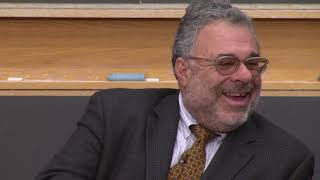
David Botstein traces his career from the Bronx High School of Science through MIT, Genentech, Stanford, and Princeton, reflecting on how genetics became genomics. He argues that scientific training has collapsed: undergraduates memorize instead of think, primary literature is unreadable, and most contemporary biology papers are mathematically unsound. He championed project-based teaching at MIT and warns that without quantitative literacy, systems biology has no future.
Chapters
So our speaker today is Dr. David Botstein, who is currently the Anthony Evanin Professor of Genomics at Princeton and the director of the Lewis-Sigler Institute of Integrative Genomics at Princeton. Yes. David first came to MIT in 1967 when the department was around 25 people on the faculty. He was one of a number of young phage geneticists, including Ethan Signer and John King, and several of his colleagues at the time, Maury Fox, Gene Brown, were the senior members of the department. And he was here for 20 years. And then went to Genentech as vice president for research. And after that— He moved to Stanford as head of the genetics department in the medical school, and more recently to Princeton as a professor of the long title that I gave you before. Um, so I've known David, uh, ever since he began here. I think I actually wrote a letter for his tenure decision at the time. I look back, I was right. Now David has, as you've heard, moved from one institution to another. And I will not try to cover all the different areas from phage, human genetics, yeast molecular biology, and database analysis, other than to say I can tell you that when he first suggested that a database was needed for yeast, there was considerable doubt in the NIH that one was necessary. Interestingly, no one doubts that today. David and I have had a long history together. We took two sabbaticals together. We've written a number of reviews and papers together, and I think it's because in general we speak the same language. It's much easier to understand what the other person is trying to get at when you both speak the same language. And as you might guess, it is the language of genetics. There's a period in David's life that I am unfamiliar with, and that was his time at Genentech, which I figured I didn't know because it was of commercial concern. But now several books have come out revealing David's role there, which is very similar to that that he has in all the institutions he's been at. Which is that he breathes intellectual oxygen into the atmosphere. And so I just read to you from a book recently came out called "Her2" by Robert Bazell. In the mid-1989, management almost shut down the Her2 project.
Okay.
Two scientists in lower management came to the rescue. David Botstein, who had served 3 years as VP for research, and Art Levinson, who was moving up through management ranks. Both believed that despite popular wisdom— I emphasize that— antibodies had a future in in medical care. Now, you know, you get to learn a lot about a person when you write with them. Actually, David in the early 1970s was also a student in the yeast course at Cold Spring Harbor. His partner was Ira Herskowitz, also a graduate of this department. And what I learned about David is he is impatient for results. He had moved from working on phage to working on yeast. And they were looking for temperature-sensitive mutants. And it's the closest I've seen David to get into a physical tussle because he was expecting, just like you could see plaques in about 3 or 4 hours, that he would see the temperature-sensitive mutants in about 3 or 4 hours. And so he was constantly opening the incubator and looking at the plates, much to the consternation of his partner, Ira, okay, who finally came to me complaining that David was screwing the experiment up. It's always a pleasure for me to hear David speak, and I hope you will welcome him today.
Well, thanks for the nice introduction. It's always fun to be introduced by Jerry because you never have any idea what's going to happen. Okay, it's happened to me more than once and it's always a pleasure. I'm really honored to be here. This was, in a very real sense, the place where I grew up. So I'm really happy to be back. And I thought a lot about what I should say. And I listened to some of the talks of some of you here. And I decided that, well, I can't completely skip over my early life. But I'm going to make that really short. And then I want to talk about what I thought was really important in my time here. And then I'll let you guys ask questions or whatever you want to hear about. So I'm an immigrant kid. My parents were house officers in Zurich, Switzerland. When the war broke out, they were refugees. It's sort of Weinberg-ish, if you heard Weinberg's talk. We arrived in this country by ship. The SS America in 1949. Of course, much of the remaining family was wiped out by the Germans, but my parents, because they were in Switzerland, they had the good sense not to run back to Poland when the war broke out, and so they ended up in this country. And I went to school in New York City in the days when public schools were good. In fact, better than the private schools. And I went to the Bronx High School of Science, the sort of standard thing if you lived where I lived, if you were interested in this kind of thing. And really, at science, I became really, really interested in mathematics and physics. And I had no intention of applying to Harvard, but my father, who was a radiation oncologist, He had two ideas in his head, and it was clear that I could not dislodge both of them from his head. So one of them was that I had to go to Harvard in order to amount to anything in the United States, a questionable proposition at best, okay? And the second is that I could never survive in the world unless I had an M.D. So I chose that— I gave in on Harvard and fought about the M.D. I went to Harvard with the idea of being a physicist. And that didn't work out for various reasons. One of the great things about college is that you get to— especially a good college— is you get to see what the competition is really like. And it was very clear that if you were talking theoretical physicists, that wasn't me. And so I was looking around for other things to do. And I came into the— sphere of influence of Jim Watson, who was at that time an assistant professor and was turning the world upside down, or so he hoped. And in fact, he did at Harvard. And they eventually threw him out. That's a whole other story. But the only time I know of that they threw somebody with a Nobel Prize out the door, but they did. And the result— of my sort of being in that area is I went to the Department of Biochemical Sciences, which wasn't a department, it was just an umbrella program, and said, how can I sign up to do some kind of biophysics? And they said, well, you can get a tutor. And I said, well, I want Watson. Can't have Watson, OK? So they went through a bunch of other names, and then they said, well, how about Magasanik? And they said it with such a a tone of respect that I said, I better settle for Magasanik. The poker game is over. And of course, I went to see Boris. And he asked me, what happens to glucose when the bacteria eat it? And I said, well, it makes more bacteria. And then he said, well, think harder about it. Anyway, he took me under his wing. And I learned a huge amount. From him there. But what really happened was that I spent the summer— Boris was recruited by MIT, and I spent that summer here at MIT across the hall from what was then Sal Valuria's lab, working by myself on tryptophan-degrading enzyme. You don't want to know about this. This was really not a very interesting project in retrospect. But I did learn how to streak out— for single colonies. Luria taught me that himself. And it was a small place, and it was utterly different from Harvard, from my perception. And I realized that what I really wanted was the intellectual community that those guys had. And so I convinced Boris that it was all right for me to take Cyrus Leventhal's course, which was then called— I don't know what it was called. It was intended for physicists who might be interested in biology. Biology, and I convinced Boris that that was me. And so I came and took this course. And that was what really changed my life. Most of you, some of the old folks remember Sy. Of course, Maury in particular was recruited here by Sy. Maybe many of the people who came here— maybe Luria was even recruited by Sy. I'm not exactly sure of the chronology. But he had the idea If there is a thought about quantitative and molecular biology, Cyrus Leventhal embodied that. He was not only charismatic, but he was really smart. He was— in the way in which he interacted with students. It was a really different world. Undergraduates like me, random undergraduates who arrived from nobody knew where, were taken really seriously. And there was a level of intellectual discussion It was long before the events that have infantilized education all the way through MD-PhD, the education that we have now. We were expected to think seriously about things for ourselves. And when we did that and we actually put the effort into it, we were taken seriously in a way that is very, very hard to make happen anymore. Because nobody expects it, neither the faculty nor the students. Anyway, so I was very impressed with that, and I still remember some of the things that happened in that course. It was a really big influence in my life. And then I decided to become a graduate student here, and they took me. And I was here for a couple of years. I got married, and my ex wanted to go to medical school, and she didn't get into medical school in Boston. So we went off to Michigan. And I went to Luria. And I said, do you know anybody in Michigan? And Luria said, yeah, I have this guy, Mike Levine. And I showed up in Michigan. And with my 2 years of MIT, I passed my prelims and everything. And they made me take the prelims over again. MIT wasn't good enough for them. Academia never changes that way. OK. That wasn't good enough. So I had to do it again. But the good news about my having to do it again was I had to do a minor. So I was in a department of human genetics run by the late Jim Neel, who was a character unto his own. It was a department of human genetics in a medical school. And it was a Noah's Ark of genetics. We had everything from phage people, like me, and all the way up to people who were interested in the anthropology of the American Indians and the heritability of fingerprints. Things of that nature. So it was really broad. And we had— so I had to take a minor. So one of the big areas was population genetics, was human population genetics. And so since I was interested in math and so forth, and I certainly didn't want to think about the American Indian fingerprints, and I certainly didn't want to know the symptoms of all the different hemoglobinopathies. Which was another possibility. I decided that the Hardy-Weinberg law, that was the way to go. And as a consequence, I learned state-of-the-art population genetics in 1964, whatever it was, '65. And that stood me in good stead when the human genetics thing happened, because I actually knew what a LOD score is. I could actually calculate it, which was even better. So that was a— everything you learn is good for you eventually if you somehow manage to keep it in your head. So that was my education, pretty much. Then after that, I was recruited here to a position that doesn't exist anymore, which is instructor. We had the idea— and the reason for it was simple to tell. It was the Vietnam War. I had actually intended— I had two postdoctoral ideas. I was going to finish my thesis, which was on phage, and I was going to work either for Dale Kaiser or Sydney Brenner. And I talked to both men, and they both thought that that was really interesting. And then I talked to my draft board. And my draft board said, well, you won't make it to either place because we'll draft you. And I said, "How about if I am at MIT?" And they looked up in their little book, "Is that a defense industry?" And I said, "Yes." At that time, you have to understand, it really was, okay? Across the street here, they were making, you know, the actual guidance systems for the bombs that were going to fall on Vladivostok or not, okay? And so— Of course, I wasn't going to do that. I was going to come work with Maury. But MIT took this business very seriously and said, you've got to teach. So what do you want us to teach? Well, we have this lab course. Well, this lab course was a lab course that everybody hated. The students hated it. The faculty hated it. Nobody liked this lab course. This lab course was a disaster. So Beth Jones, who was also an instructor working with with Boris and I decided that we would make a different kind of lab course. And we did. And there was born the project lab system, which you guys, I understand, still run. And we still— we run it at Princeton as well. And it turned out pretty well. It turned out to be so much work for us and so much work for the students that we made it into a double course, which I think it still is. And I took the yeast course and met Ira Herskowitz and started to work on yeast and became a geneticist. And one of the very interesting things about all this is until I went to Michigan, I'd never really had a formal course in genetics. I'd never had a course in elementary genetics at all. I did have a course in population genetics because of this this minor that I had to pass a prelim on Hardy-Weinberg law and associated matters. And then, you know, I sort of put one foot in front of the other. And in thinking about this talk, I decided that I really don't want to talk about myself so much. I do want to talk a little bit about what has happened in our business, as it were. And I started already to talk about one of the issues that concerns me, which is this business about taking undergraduates seriously. I think that I've developed a whole theory about why it is that so there's been this monotonic decline in interest in hard science among American students. It turns out it's for first world students more generally. It's not just American, because when I go to Sweden and Norway, they tell me the same story. And the statistics bear that out. And the question is, why is it that we have— that this is happening? And there are really two theories. One theory, which I call the establishment academy theory, very ably put forward by Bruce Alberts, is that it's all the fault of the high school teachers. That somehow the high school teachers have that K-12 education is where we're losing the students. And this is pretty generally accepted. And I don't believe that theory at all. And in fact, I think that theory isn't even close. And I'll give you a very simple anecdote— not an anecdote, a factoid— that shows that it can't be true. So when I went to Harvard in 1959, I was one of at most 10% of students who knew calculus. I went to the Bronx High School of Science. They taught us calculus. There was an advanced placement exam, but nobody took it. Okay? It was, you know, it was uncommon. It was not standard. Today, you can't get into MIT or to to Princeton or to any college of the first rank if you haven't done calculus, at least Calculus AB, mostly Calculus BC, which is, you know, well into differential equations and series and all the rest of that sort of stuff. Where does everybody think these kids learn that stuff? Certainly not from the street, okay? Not from their peers or their parents. It's not on YouTube. Okay? The only— whatever is the input into a freshman year has to be— is already now being furnished by whom? It's got to be the high school teachers. So it may be that high schools are failing if you look over the distribution of all students. And I believe that that could well be true. But from the point of view of the whatever cut you want to make of the distribution that ends up in elite colleges and universities and ends up doing science for a profession can't be true. So it's not their fault. I think it's self-evident that can't be true. So then where do we lose them? And a small amount of investigation— it's easy to convince yourself we lose them in college. And where do we lose them in college? We lose them in the first 2 years. And this is one of the things that I learned at MIT, because MIT is different from most of the other places. So if you go to Stanford, or you go to Princeton, or you go to Harvard— 3 places I know reasonably well— and you are a young lady who's just finished high school, calculus BC, bright-eyed and bushy-tailed, and wants to be a neurobiologist. Since Bob is here, neurobiology is the highest form of biology. Everybody knows that. And so you want to be a neurobiologist. So what happens to you? You go, and you go to an office. And the office is run by somebody. The name at Princeton is— her name is Elena. And at Stanford, her name was Suzanne.— and it's so far back I don't remember what the Harvard one is called. Okay, so this person is not a faculty member. This person is typically called a coordinator. And the coordinator says to this young lady, "That's really interesting. We really want to help you become a neurobiologist, but first you have to take this whole regime of courses with hundreds of other students." all of whom have in common that they don't want to learn this at all. They want to learn something else. But before they let you learn anything else, you have to take this course in biochemistry and genetics and various other things— chemistry, organic chemistry— and a whole set of prerequisites. Now, nobody likes to teach these prerequisite courses, because nobody likes to teach students who don't want to learn. And these students don't want to learn. They want to jump through a hoop. And it's made doubly bad because half the students or more— at Princeton it's like 70%, Stanford similarly— of the students, actually their whole undergraduate education is jumping through a hoop. They really want to be in medical school. So the result of this has been not just a dilution, but an actual decimation of the intention of teaching anybody anything, which is to have them understand. This has been transformed into a different task, which is to memorize, to remember. And this makes sense if you're thinking about actual doctors. And the way— when students come and say they're thinking about MD-PhD, which I personally believe is the worst idea, policy idea, that the NIH ever had. He's sitting right there. He knows it, right? He knows it as well as I do. And this idea was— and the reason the idea is a bad idea The reasons are two. One is that it causes students to stay in school well into their productive years, of their most original productive years. So that, that is a very big part of why the first NIH grants are now going to people in their early 40s, whereas I started as an independent investigator when I was 29. OK? Different world, right? Completely different world. And I wasn't unusual. All of my peers, the Ethan Signers of the world, were the same. We were all the same age. So I was not a prodigy. Don't get the wrong idea. In no way was I a prodigy. I was standard. I was right in the middle of the distribution. So that's one reason. That it's a bad idea. But the other reason is because of internal schizophrenia. And the internal schizophrenia has to do between understanding and remembering. And the way I explain it is to say, imagine that you're in an airplane. You're flying along, right? And the airplane suddenly does this. What you don't want is for the pilot to be thinking about the vector forces on the wing. OK? What you want is the pilot to have trained and know by muscle memory, by intuition, by instinct what you have to do to get from here back to here. That's all you want. That's what you want from your doctor. When I have an arrhythmia, I do not want to understand all the electrolyte— I don't want him to be calculating electrolyte concentrations in his head. That's hard. And it's going to distract him from the big problem of getting me back to having a regular sinus rhythm, right? So they are different professions. And in 1917, Flexner had this great idea that by mandating that the doctors would need to have more science, that he was improving the medical profession. And arguably, for the next 50 years, he did. But now the law of unintended consequences has has taken over. And we are in the unfortunate position of having our introductory education, the education where you get young people turned on to the real possibilities, has been hugely distorted by the fact that we've tried to mix together two immiscible cultures. They're cultures that are very different. For a scientist, the right thing to do when you have a problem is to think hard about it and to think about how your assumptions could be wrong. And this is a lengthy process. It's a painful process. The right thing for a— physicians are people of action. The right thing for physicians to do is to do the best they can with the information at hand and not worry about the theoretical soundness or basis. In their leisure time, they can worry about whether what everybody thinks is the right thing to do is the right thing to do. But when faced with the patient, they have to do the best that they can on limited information. It's a very different business. And the idea of trying to educate people to do both is an idea which I think manifestly has done damage to both the medical education business, which I know from the inside for from Stanford, and certainly the undergraduate science education business. And in fact, were it not for the engineering schools like MIT and Caltech and a few others, the situation in this country would be very much worse, because it's very, very difficult for students to persist in an atmosphere where all their peers have almost no work to do compared to them. They're working day and night. They're going to labs. They're doing problem sets. They got various kinds of head breakers At Princeton, second-year physics is called death mechanics. OK, this is not an exaggeration, right? I mean, these problems are really hard. And so what we did at Princeton was we did, as my dean, who has a brass rat, comes from MIT, he has accused me properly, he said, I've made a little MIT inside Princeton. And Nikolai, who was there, knows that this is pretty much what we have. And the idea here is taking undergraduates seriously, asking them to think and not to remember necessarily. I mean, it's good if you remember something. I mean, if you have complete loss of memory, actually, you can't do anything. Don't misunderstand me. But the whole idea is a different thing than it has become. So that's one thing I wanted to say. Observation I wanted to make about teaching, and with a little coda, which is that I got a job at MIT not because of my research. I have no illusions about this. It was because Project Lab— they didn't want to give up Project Lab. If they didn't hire me, no one was going to teach Project Lab. And for a long time, until Graham Walker came along, nobody else wanted to teach Project Lab. And so it was a long process before people understood that it was a good thing and that it was actually fun to do. And I've always thought of myself as a teacher, and that connection between teaching and research is the other thing that I think has really disappeared. Most of the young people I meet, even at Princeton, need heavily to be convinced that teaching is any part of their career. And the truth is that for me, most of the really good ideas that I've had have come as a consequence of my function as a teacher. And I can put it very simply: if you teach sensibly, sort of Socratic method kind of teaching, which is what I do, a student will ask you a question. And sometimes you know the answer to the question. That's good. Sometimes you don't know the answer to the question. So what do you do? Well, the first thing that flashes through my mind anyway is, why don't I know this? And usually it is because I don't know it. And so I take that possibility into account. And so my immediate response is, you know, I don't know the answer to this question. I'll look into it. "Come back tomorrow and we'll have a discussion." And I go and look it up, and most of the time, that's right. I didn't know it. The answer is no. Sometimes nobody knows the answer. Well, what do we call that? That's a research problem. And it happens much more often than you would think because in the way we do research and the way we write— I was talking to one of your colleagues coming out of the Whitehead Institute. And he was complaining about— he didn't want to come to this talk, so he was saying he has his grant to write. So I say, why are you writing so many grants? And he said, yeah, I have all this money. I need to have all the money to do all the research and so forth. How many people in your lab? 25. I never had 25 people in my lab. Not even close. We had that many when Pat Brown and I were both running a lab together, but I count that as 12 each. That's not 25. And he said, do you ever get anything out of writing a grant? And I looked at him, and I said, yeah, because it gives me every n years— I don't write so many grants. I write grants when I need to. I get to look at what I'm doing and to seriously think about why am I doing this instead of all the other things I could be doing. And somebody alluded to the fact that I keep changing things. And the answer is that at least for me, if not for the field, I get to the point and say, you know, I'm not going to be able to contribute very much to this anymore. I'm done with this, right? And it's time to move on to something usually tangential, but not exactly what I was doing before. And I think that's a good thing to have to look every so often. Now, of course, if your pure thoughts about what you should be doing are read by idiots who don't understand any of it, okay, then of course it's not a good thing. And if they don't give you the money, it's also not a good thing. But the idea of giving an account to yourself at least to yourself of why you're doing what you're doing, that's a good thing. And I take it very seriously for what it is. It's better than writing a review paper. Review paper, you have to make the whole field happy. For a grant, you just have to make yourself happy, right? You have to make a cogent argument for why you want to spend this money and what you want to spend it on. And if it's the same old thing, you might not get the money. Well, That's probably right. You shouldn't get the money. Anyway, so that's the other thing. And the last thing I wanted to bring out, which is a really major change from when I was growing up, is the literature. And this is actually my biggest concern. And I think that almost all of my thoughtful friends are on the same page. I teach from papers. What is it called? Used to be 786, then it was 750. It's called— what is it called now? Method and Logic. Method and Logic. Okay, that was the same name that we had. Okay, so Method and Logic was the graduate course that I inherited ultimately from Sy. And this course Method and Logic in the form that we taught it with Richard and Frank Solomon. We took papers and the idea was to read the papers very closely and understand everything in them so that we could understand why they did it and how they did it and how it works. And we constantly— Richard was particularly very avid to have modern papers. And so when we started with this in the '70s, there were modern papers that you could teach. But today, there are no modern papers that you can teach. None. Zero. Because the papers are unreadable. They're unreadable by anyone. In fact, many of them, it's clear they haven't been read by anybody. OK? They are compendia of figures. The typical figure has 10 panels. And some of the people who want to look for a job at our place show this figure from Science magazine. 10 panels. You need a telescope to know whether on the top left things are going up or they're going down, right? It's not transparent, it's not understandable, and whenever you actually look, you can see that the really interesting stuff is in the supplementary material. Now, if the paper hasn't been read by anybody, you can imagine the state of the supplementary material. Supplementary material was put together by a postdoc or graduate student or whatever. It was done to satisfy anonymous reviewers who may or may not have understood the original paper, because nobody can understand the original paper, and the reviewers maybe even less so. And as a consequence— now I'm exaggerating, okay, but not much. That's the problem. The papers that you read today are not transparent. The only papers that are understandable are papers of, what shall I say, discovery. Somebody discovers a new kind of RNA and makes a big argument about the new kind of RNA. Those kinds of experiments, maybe if they're done right, you can understand them. But almost everything else is obscured by the loss of the standard, A, that scholarship and discovery go hand in hand, and teaching is part of the point of the paper. The idea behind the paper is that anybody should be able to read the paper and understand it if they have a minimum education. So for example, when I was an undergraduate, I heard the code was being worked out. I could read those papers and I could understand them. There was nothing. There was no supplementary material. There was no secrets. There was no secret password to actually look at the data. There was none of that. And not only that, but the Jacob and Monod paper came out in '61. I was an undergraduate. I read it within a year of its publication. I understood the greater part of it with a basic physics education. Wasn't that hard to understand. It's not that the experiments weren't subtle or deep. They were both subtle and deep. But they were written up in a way that anybody could— and these guys spoke French. And I defy anybody to find me a modern paper in a prominent journal that's actually teachable. Can't. That's a real loss. And it's one of the reasons that we lose students in undergraduate years, because they never see the front line. And when they see the front line, they can't understand what they're seeing. We have a really serious problem. It's not a— it's not a— people are just not paying enough attention to this. And everything is on the economics of it and how do you get a job and so forth. And you have to have a paper in Science. But the truth is that I'm always happy that we don't publish in those journals because then we get to actually tell a story. And I'm proud to say that most of my papers, even now, are readable, even if they're not in the potato chip journals. Potato chip for empty calories. Uh, the, uh, the reality is that this is an intellectual business. And if it's an intellectual business, it lives on understanding. And if it lives on understanding, then having a paper read by a 22-year-old who puts the stamp of approval and gets it into a very prominent journal is a nice thing for short term, but long term, your work is lost. That's the long and the short of it. So I'm done editorializing, and I'm happy to take questions. I'll jump in.
OK. About 30 years ago, we had a conversation about the, uh, what you referred to as the Malthusian problem, which is, um, I remember being in your lab, it was very easy to see there was a, um, a whole shelf devoted to feces of people that had come through your lab, and in steady state, only one of those people, you know, if you have a steady state system, would essentially take, take your job. So I mean, we have a system where, you know, say in this department, for an assistant professor to be successful, they have to train umpteen students and postdocs. And so I think this is right now at this moment, even though this was a problem that was recognizable 30 years ago, this was not a sustainable way of building, you know, sort of the base basic research enterprise in the country. It's, I think, you know, I feel right now we're sort of actually hitting the wall and there's going to be a big shakeup. And I just wondered if you could comment on this and sort of say ideal world, what sort of system should we transition to?
[Speaker:DR. JOHN_HOPKINS] No, I got it and it is your problem, boss. All right, okay. The answer is a little complicated, but not that complicated. There are two issues. One issue, the long shelf of theses, it has to be said that I was unusual. I had more students and fewer postdocs than most people. And I had a lot of joint students. And I think that that's part of the way that the future. So I would say of all the students that I had, maybe as many as a quarter in fact were shared with another professor. In those days Chris Walsh was common. Maury and I had 2, 3, 3 such joint students. And so that, and we each got a copy of the thesis. So that's, there's a little bit of illusion there, right? Okay. And we each of course claimed the person person as our student, and with justice. I think that's fine. But that's trivial. The second issue, I think, has to do with the fact that at that time the science was growing, and I felt it was reasonable to have a reasonable rate of growth. And particularly genetics was growing, and we were in a sea of biochemistry. Some of it was very smart biochemistry. Most of it was know-nothing biochemistry. Biochemistry, just like now. And now it's no-nothing molecular biology, but then it was no-nothing biochemistry. And we thought that we had something to contribute in the way of training. But it was unsustainable, and I thought it was unsustainable at the time. We talked about it that way. But then we have the second problem. The second problem is the problem of quality. So if you are going to think about who should have how many students, you can try to do what the Stanford biochemistry department used to do, which is they limited the number of students that any professor could have. And so there were a few attractive professors and a few not so attractive professors to the students who knew nothing. They didn't do this in a thoughtful way. They did it in a thoughtless way. And that doesn't work. That produces rancor and means that the students no longer come to your department. So that's not a solution. So it has to be some free competition of ideas at some level. And in those days, the reason I had so many students was because I taught the entering graduate students, and they liked my teaching. I mean, it was not a secret, right? I took method and logic. They liked what they heard. They drank the Kool-Aid. And that was how it worked. It wasn't some kind of a conspiracy. Other people could have I never taught this course. Other people did. And I think they benefited in the same way. But today, nobody sees that benefit. But that's another question. So then the question is, who— right. So there's no question that there's not enough money in the budget to fund everybody who needs to be— who wants to be a scientist. And so it has to be competitive. And the big problem, in my view, is that the thoughtfulness of the community, and therefore of peer review, because it is peer review, has changed. The community is not nearly as thoughtful as it once was, and the peer review is not nearly as— and the approach to this of limiting the number of people on the basis of just some kind of numbers or some kind of egalitarian principle, I think, is not going to work just as it Didn't work at Stanford Biochemistry. But the idea should be that we should do everything possible to make it possible for everybody to compete. But in the end, the winners are the ones who get the money and the ones who have the best ideas. And we should spend much more effort on making sure that the ideas are the best ideas and not just the most popular ideas. That's not so easy, but I think that's That's the task. Right now, I would say that the generation of teachers in the teaching institutions are retiring. And there's, in fact, a shortage of people who are trained and educated in the appropriate way to do the teaching in the way that we're used to thinking of doing it. And if we still had the connection between teaching and research, as still exists at MIT and a few other elite places, it wouldn't be so bad. But very large amount of the money that comes out of NIH is going into the salaries of people who are not teaching at all, okay, because the government has in its wisdom decreed that through Circular 821 that you get paid for the research. And so there are all kinds of— mainly medical schools and freestanding institutions where basically they're renting space. And that is not helping us. We do want to teach people about science. And in fact, we're losing that game. And let me give you two reasons that I think we're losing the game. First of all, if you look in our great universities, universities, and you ask how many students are learning introductory biology. At MIT, it's everybody, right? But you teach the 7.01 6 times? 3 times. 3 times, okay. All right? You teach it 3 times. And so that each one is about 60 students or something like that? No, no.
100.
Wow. No, it's— one of them is 400. OK. Nobody taught on that scale 30 years ago. It wasn't done. OK? Everybody decided, like a sensible bacterium, that when you got to a certain size, you had to do it in two. But that means you've got to have more teachers. So the teaching institutions are hugely understaffed. Have enough so that you teach 60 or whatever the quantum is, right? 60 to 100 is, I think, the maximum that you can sensibly teach in one go, right? Otherwise, you might as well do it on the internet. And we know that people don't learn to understand on the internet. That doesn't work. At least no one has made it work yet. So that's one piece of it. So we're actually understaffed. At that end. And we're grossly overstaffed at people who basically play the lottery. They write 20 grants a year or 10 grants a year, and one of them hits. It's like spam, right? And one of them hits, and they're in business for a while, and they don't get fired from their soft money institution. And then they do it again, right? And that's actually not helping the enterprise at all. Let me give you the last piece. We have all of these students in colleges all over the country who don't learn any science at all. Now, we could actually set a standard and say, you know, we want everybody to understand, you know, the basic ideas of evolution, not as a sort of a throwaway, but actually understand, you know, duplication and divergence and DNA and all the rest of that stuff. That sort of stuff. And at Princeton there are courses like that, but I would say not more than a third of all the students ever take a serious science course, although there are courses that are labeled serious science, but they're not. They're something for poets, which is, you know— so why? Because the faculty claim that they don't have enough horsepower to teach these courses. So that's the other side of that question. And the universities need to step up, pay their share.
Yeah? I'm a little hesitant to ask this question, but I have to. Why did you leave MIT?
Why did I leave MIT? One reason is— related very closely to what Gobind Karana told me. We were having— Gobind was an interesting man, and we were having lunch one day, and he was very earnestly giving me advice. And what was the advice? The advice was that one shouldn't stay more than 10 years in the same place doing the same thing, because that's as much as— that's the quantum of human originality. Basically, that was the argument. And Tom, I'm sure, has heard this many times. And I agreed with that. So I felt— so I changed from phage to yeast. And then it was time to— I wanted to do something different. The other thing was that I had been on sabbatical a couple of times. And I discovered that when I moved, I actually got a boost in my environment because I wasn't hearing the same thing. After a while, no matter how smart your colleagues are, you eventually have a predictable predictive power about what they're going to say. And so I just decided that it was time to go. But what really pushed the story was that Jim Watson decided that he was going to retire from Cold Spring Harbor. And this was 1986. '85. He decided he was going to— and I was on the board at that time of Cold Spring Harbor. I still am. And they came to me and said that they had asked Bruce Alberts to be Jim's successor, and Bruce had turned it down, and was I interested? And so Cold Spring Harbor was a very interesting place, and Jim had basically resurrected it into a really major establishment. And for our science culture, for both the scholarship issues and the courses and the teaching, it started to carry, which it still does, a disproportionate burden of dissemination of the front end of science to the world. So it was a very interesting offer, and I basically agreed to do that. Then Jim changed his mind. And then the prospect was that I would be there running the lab while Jim was in residence. And that was a non-starter. I knew enough about Cold Spring Harbor. I know where the bodies are buried there. And I wasn't going to do that. That wasn't going to work. And I explained that to Jim, and he didn't disagree. And so he went back to Cold Spring Harbor, and I was here. And then I had already started to talk to various people about doing something genomic at Cold Spring Harbor, which we would have done. And there was a— we had a proposal for MIT to do something with the— and MIT wasn't interested in the direction I wanted to go into, I perceived. And so this idea from Genentech came out of the blue. And it sounded really interesting. And I have to say that in the next 3 years, I learned more than I had in the preceding 10. There was no question that it worked for me. And that was why. It was nothing about MIT. MIT was an ideal place for me. Nothing is forever. You have to keep moving if you're alive. Yeah, back there.
[INAUDIBLE] Yes. [INAUDIBLE] I don't think there's a shortage of PhD students or candidates. So do you think the huge issue is that we're losing the best undergraduates who could go into science?
Yes. Yes. —Now let me first quarrel with one of your statements. If you look at these periodic reports, usually written by Phil Sharp for the National Academy, about the demography of the scientific establishment, you will discover that more than 50%, pushing 70% in some fields, of all the graduate students have degrees from foreign colleges. Okay, that's not healthy. It's not healthy. It doesn't mean those are not the best students, usually. Okay, they're the students who are desperately interested in coming to this country. Okay, so that's one piece. So in terms of just American education, we are losing ground even more rapidly than overall. So your premise has this very complicated issue that, in fact, many, if not most, of the graduate slots are not being filled by students with American bachelor's degrees. So that's one piece. And the other piece is what you said. Everybody— I go every graduate program I've ever had anything to do with says, we have no trouble filling the top half of our class. And then it gets to be increasingly difficult. And that was never a problem when I was— I was the graduate officer here for how long? 5 or 10 years. A long time. Was never a problem. [Speaker:AUDIENCE] But don't you think the staffing and faculty transition issues would be even worse if everybody was a superstar? [Speaker:JOSHUA ELKINGTON] No. No, because really original people manage to distinguish themselves in various ways. I mean, to a very large extent, very large part of our community, if we're honest with ourselves, are people who go forth from their postdoctoral position like an unguided missile. They have a direction and a velocity that was determined by their previous state. They're doing the same thing that their advisor was doing and extrapolating it further. That's not what we're looking for. We take the intellectual underpinnings of our business not nearly seriously enough. Yeah? You have started something at Princeton which is an integrated science course. Do you think that is the wave of the future? It is the wave of the future for Princeton and places like it, which are general universities. Where you have two problems. One problem is engaging the really bright students and not turning them off by making them memorize random organic chemicals, for example. That's one piece. And actually teaching them statistics and mathematics that is appropriate to the way most of us think biology is going to look in the future, certainly if you're involved in big data sets. So that's one piece. The other piece is making an environment for them where they don't feel like they're discriminated against nerds. They're the bottom of the lowest of the low. While everybody's out partying, they're solving problem sets. And for Princeton, both of those things are important. At MIT, there's no such problem. The second problem doesn't exist, because everybody— right? Nobody in his right mind signs up to MIT with the expectation that they're not going to stay up nights solving problem sets. Right? They signed up for this place because of that. And that's why you all are the conservators of science culture in this country. You're not having any trouble. I mean, I would say that— By far, the best prepared undergraduates that I've had in my lab— and I've had quite a few— are the MIT ones. I mean, they're quantitative. They're not afraid of the computer. If they see a big sigma, they don't hiss. You know, you have to live in this other world in order to understand how different it is. Yes? What do you think your— personally think your most important experiment was, and what do you think which result, which piece of data had the biggest impact on science in general? Piece of data?
Result, or, you know, some discovery that you made.
Well, it's like being asked to choose among your children, okay? I mean, you know. You know, there's a story in the Bible about this, right? More than one. I would have to say that in terms of accelerating the movement of science, it has to be the 1980 human genetics polymorphism paper. There is nothing I ever did that would not have happened anyway. I think there are very, very few of us who can say that if— that otherwise. Okay? But I think that the 1980— that idea would have taken a much longer time to happen if we hadn't pursued it. So I would have to say that. But very close behind, I would say, is the transposition in bacteria. Now there are other people who did that, but we were clearly in the lead there, and we figured out what it meant and how to exploit it much more quickly than our than most of our competitors, collaborators. In those days, everybody talked to each other. I mean, they knew what we were doing. We knew what they were doing. It was not the sort of kind of atmosphere that it is now, let's say, in cancer research. It was a collaborative endeavor in many ways. But I would say that that was— and that would be close behind. And the third one is completely obscure, and it really is just now coming out. And that was this— in 1980, I was asked to give a talk in New York, and I didn't have a good subject to give a talk, so I decided to talk about this idea that I had sort of adapted from Hershey, from an unpublished paper. English little thing of Hershey's about how viruses evolve, the modular basis of the evolution of viruses. And at the time, this thing sank like a stone into the bottom. Nobody paid any attention to it. But now it's had a renaissance. I'm getting correspondence as if it had been written yesterday, 1980, right? Because they're sequencing all this seawater, and what we had thought was going on obviously is going on and is the standard. And the unit of selection is the little module for lysis or DNA replication or repressor and not the virus. And I think I would give that my vote for prematurity, but not for influence. Yes?
So you touched on the idea that quantitation is becoming more important in biology.
So I wanted to ask you about a lot of research is now falling under the rubric of systems biology and integrating databases. In general, do you think things are going in the right direction? Do you think it's being done correctly, incorrectly?
Just your thoughts on that. For me— Having started out, as I said, in biophysics, it's back to the future. When I got into this business, the place was littered with people like Maury Fox and Sy Leventhal and various people whose education included statistics and whose way of thinking included the statistics sensu physics, and physical chemistry, thermodynamics, And that was part of the education. It was required of both undergraduates and graduates in those days to take 5.60, right? I bet it's— still. For undergraduates and graduates? Not graduates. Not graduates. Yes, right. That, by the way, was always the story at MIT. The graduates couldn't stand the competition of the undergraduates. And so Jerry and I made a course which we called Genetics for Graduate Students, which was 7.03 slightly diluted, so the problems were easier. It's true. Anyway, so the answer to your question is that a big part of it is just back to the future. What's different is that in order to do the kind of experiment that ends up in the standard, what I call the standard Lewin model, okay, so this is a horizontal line with a bunch of eggs sitting on the left end of that line, okay, a little arrow going to the right, and your contribution was to name one of the eggs, okay, and show that it belongs there, right? Okay, so to do that, you don't need to do anything quantitative. You'd be able to count on your fingers, right? And that's it. And those days are, I think, rapidly coming to a close. And so what's the best way to do system biology? System biology to me just means that actually not worrying about the individual parts, but worrying about how they all function together. And I think that's always been on the agenda, but hasn't been technically technologically accessible. Now it's technologically accessible, but only those people who can handle the math and the statistics and the other quantitative stuff are actually able to exploit the technology. I mean, there is nothing more misleading than a microarray paper done by somebody who doesn't understand how to do the math, right? And unfortunately, that's 90% of the papers. We have a very big problem along those lines, and I don't think we're going to solve it until we raise a generation of students more like the generation that was just before me, where it was taken for granted that you knew how to do all these quantitative things. The computer, of course, has made it both easier and harder in a way. Because so many people are afraid of the computer and don't have any means for manipulating the computer themselves. And the thing that we've done in our undergraduate program that I think has been the most effective and most empowering of all the things that we do is we make them learn Java and MATLAB up front, and so that every time they have a problem, they have a choice of trying to solve it analytically or verbally or doing a simulation. And sometimes the simulation is the better choice.
Well, I'd like to thank David for—
More from Joshua







Scientist Stories: Hans Waterham, The value of phenotypic assays in peroxisomal disorders




Scientist Stories: Joel Zlotogora, Genetic carrier screening programs for reproductive purposes