Scientist Stories: Donita Brady, The role of metals in cancer focusing on copper & kinases
Dr. Donita (Danita) Brady presented her laboratory’s discoveries on how the transition metal copper regulates oncogenic kinase signaling and autophagy, revealing new therapeutic vulnerabilities. She explained that copper binds directly to the MAP2 kinases MEK1/2, enabling their activation of ERK1/2, and that the high‑affinity copper transporter CTR1 and the copper chaperone CCS deliver copper to MEK1/2. Genetic loss of CTR1 or CCS diminishes MAPK pathway output, reduces tumor growth in BRAF‑mutant melanoma and KRAS‑driven lung adenocarcinoma models, and overcomes resistance to BRAF/MEK inhibitors. Small‑molecule inhibitors of the copper‑delivery axis (DCAC50) and bifunctional copper‑chelating MEK inhibitors (C16) suppress MAPK signaling and tumor progression. A kinome‑wide screen identified dozens of copper‑dependent kinases, notably the autophagy regulators ULK1/2, whose activity requires copper binding. Copper depletion impairs autophagy induction during amino‑acid starvation, while copper excess drives autophagy. In KRAS‑driven lung tumors, CTR1 ablation reduces both MAPK signaling and ULK‑mediated autophagy, leading to markedly lower tumor burden. The talk concluded with open questions about copper coordination chemistry in MEK, regulation of CTR1/2 trafficking under nutrient stress, and broader implications for development and other metal‑transport pathways. Overall, copper is presented as a nutrient‑based, druggable vulnerability in cancer.
Chapters
It's a real honor for me to introduce our genetics seminar speaker today, Dr. Danita Brady. Dr. Brady is the Harrison McCrea Dixon and Clifford C. Baker Presidential Professor of Cancer Biology at the University of Pennsylvania. She received her Bachelor of Science in Chemistry from Radford University, followed by a PhD in Pharmacology from UNC Chapel Hill. Chapel Hill, where she worked on GTPase signaling with Dr. Adrian Cox. She subsequently completed her postdoctoral fellowship with Dr. Chris Counter at Duke, where she made the groundbreaking discovery that copper is required for signaling by the oncogene BRAF, and that copper chelation suppresses tumor growth in preclinical models of BRAF mutant cancers. As a faculty member at UPenn, Dr. Brady continues to make impactful discoveries on the role of copper as not only a regulator of MAP kinase signaling, but also kinase is governing other major cellular processes such as autophagy. Her research offers an entirely new paradigm in which micronutrients alter oncogenic signaling to drive cancer progression, which is a largely untapped source for the development of novel cancer therapies. Given her research accomplishments and the highly innovative nature of her work, Dr. Brady has won numerous awards, including the Linda Pechenik Montague Investigator Award, the Michael S. Brown New Investigator Research Award, and scholar awards from the V Foundation, the William Guy Forbeck Research Foundation, and the Pew Charitable Trusts. It gives me great pleasure to welcome Dr. Brady to tell us more about her work on copper-conducted kinase signal transduction mechanisms and vulnerabilities.
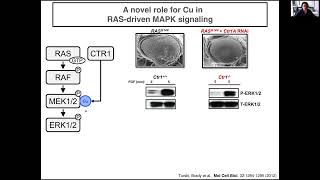
Thank you so much, Mendar, for that really kind introduction and also for giving me the opportunity to share some of our research with the Department of Genetics at Yale. Today I'm going to tell you a little bit about our work on the interplay between oncogenic kinase signal transduction and copper homeostasis and how we try to leverage that in the context of cancer. Sometimes I use this. Let's see. There we go. So normal physiology really relies on the orchestration of complex processes within cells, between cells, and among cells in their environment in order to maintain proper tissue homeostasis. And to enable the precise coordination of these cellular processes, with both dynamic spatial and temporal control, evolutionarily conserved signal transduction pathways serve as a means to integrate and distribute information. And proteins within these signaling pathways function as nodes to both sense and respond to and in turn facilitate outputs that you see here at the bottom of my screen. And so, during the multi-step process of tumor initiation and progression, cancer cells acquire unique capabilities termed the hallmarks of cancer. Highlight here at the bottom of my— surprising that aberrant activation of signaling initiators and inactivation of signaling repressors generates an imbalance in normal cells and disrupts the tight control the signal transduction pathways typically have on these cellular processes that when dysregulated drive these hallmarks of cancer. And decades of research has revealed the complex nature of oncogenic cellular signaling networks and their exceptional vulnerability as targets in cancer. And so protein phosphorylation is the most common form of reversible post-translational modification, with an estimated 50% of all proteins undergoing phosphorylation. And the phosphorylation state of any given protein is controlled by the coordinated action of protein kinases and phosphatases that add or remove this phosphate group respectively. And while there are 518 protein kinases and about 156 phosphatases in the human genome, recent pan-cancer analysis has revealed that 91 protein kinases could be considered cancer drivers out of the 1,100 identified based on somatic mutations, copy number alterations, expression changes, and chromosomal translocations. And so we're all used to thinking about protein kinases and how they can be aberrantly activated in cancer through these point mutations, gene amplification, and chromosomal translocations that I'm showing you here. And of the most famous of those is the BCR-ABL or Philadelphia chromosome that actually was identified here at Penn. Of these 91 protein kinases, they can function as oncogenic drivers, meaning that they convert a normal cell into transformed cell, there are 20 of them that have FDA-approved small molecules, while 4 of them are orphan in the sense that there's no small molecule to actually target their aberrant activation in cancer. And beyond this, while small molecule inhibitors that target protein kinases have been clinically efficacious, several challenges such as the emergence of resistance, tumor cell heterogeneity, and undruggable targets has limited their widespread use of these agents in cancer. This is one of the best illustrations of the resistance that occurs in the context of responses to kinase inhibitor therapy is in the context of BRAF mutation-positive melanoma. What I'm showing you here is data from the 2002 study where they were looking at trying to identify mutations within the canonical MAP kinase pathway, where they identified that the serine-threonine kinase BRAF, which typically phosphorylates and activates the MAP2 kinases VEGF1 and 2, which then phosphorylate and activate the MAP kinases ERK1 and 2, was mutationally activated in the benign nevi for melanoma. And what I'm showing you here at the bottom of the screen is that these metastatic melanoma deposits in this patient with BRAF mutant disease. This patient was given the first BRAF inhibitor that made it to the clinic, Vemurafenib, and you could see that these lesions were almost completely gone after a short course of this therapy. But unfortunately, about 15 weeks after that response, these lesions reappeared in the same exact location, and this was due to reactivation of this canonical MAP kinase pathway. While these targeted therapies can work, the major, the major shortcoming is this resistance, and this underscores the real need to identify novel modes of kinase regulation in order to bring these tools to bear in cancer therapy. And so since the activity of protein kinases are governed by a multitude of inputs such as nutrients, each of those inputs becomes a potential therapeutic vulnerability. And my lab is really interested in this interplay between oncogenic kinase signal transduction and nutrient homeostasis so that we can leverage that in the context of cancer. And so, once thought of really as the byproducts of cellular metabolism, we now really do appreciate that metabolites can directly regulate multiple cellular processes by functioning as signaling molecules themselves. And thus, the availability of metabolites can function to promote regulatory post-translational modifications. In this case, I'm thinking about acetyl-CoA, which is really important for acetylation of proteins targets, specifically histones, which can regulate gene expression or affect protein structure and function via direct metabolite-protein interaction. So downstream of acetyl-CoA, acetoacetate has been known to actually bind to and regulate the ability of oncogenic BRAF to actually interact with MEK1 and 2. But unlike these organic metabolites that I show here on the left side of my screen, Metals are unique micronutrients that can neither be destroyed within biological systems, and therefore proper dietary intake and strict homeostatic mechanisms to monitor metal abundance are really vital to understand how they are important in biology. And our lab is really trying to, to focus on this emerging paradigm where transition metals actually regulate protein function through these allosteric interactions that we call metalloallosteric theory. And so a little bit more about how metals function in biological systems. They're known to be the redox-inactive transition metals. So here's sodium, magnesium, potassium, calcium, and divalent zinc are known to be dynamic signals where changes in the availability of these and increases in concentrations of these redox-inactive metals is known to regulate biological function. In contrast, the redox-active transition metals, iron and copper, are typically buried within enzyme active sites where they help with redox potential of catalysis or are structural cofactors in those enzymes. But today what I'm going to tell you about is the ability of the transition metal copper to actually come on and off of protein kinases and regulate signaling outputs downstream of them. To really understand the importance of copper homeostasis in biological systems, we can really think about this in the context of rare genetic disorders, Minkie's disease and Wilson disease, which are caused by aberrant copper homeostasis. Outside the cell, copper is found in its oxidized copper(II) state. It's reduced by the metalloreductases steep family of proteins, and then imported into the cell through the homotrimeric high-affinity copper transporter CTR1. Once inside cells, copper is immediately bound by low molecular weight glutathione or chaperone proteins that are really important for delivering copper to the enzymes that require copper for function. And so inside the cytosol, copper is required for superoxide dismutase function, where it gets rid of reactive oxygen species and converts that into hydrogen peroxide, a more molecular oxygen. Outside of that, copper is critically important in the mitochondria for the most evolutionarily conserved copper-dependent enzyme cytochrome c oxidase, and there's a yet-to-be-defined mechanism of delivering copper to that organelle. And finally, copper is critically important within the secretory pathway where the small molecule chaperone ATOX1 delivers copper to the P-type ATPases, HP7A and HP7B depending on the cell type, This leads to copper import into the Golgi apparatus and methylation of secreted copper-dependent enzymes like lysyl oxidase or dopamine beta-hydroxylase. And when we think about the rare genetic disorders that underlie deficiencies in copper homeostasis, we can model that in the context of these multiprindle animals that have mutations in ATP7A. You can see that these animals are much smaller in size and they're actually hypopigmented, and this is due to the inactivation of the copper-dependent enzyme tyrosinase. And so this is one of the first connections that copper was critically important for cell growth-like phenotypes. Outside of that, the loss of ATP7B causes Wilson disease, and this leads to the hyperaccumulation of copper in both the brain and the liver. And in the context of animal models of Wilson disease, either in a mouse or rat model, this can actually promote neoplastic proliferation of those tissues and promote hepatocellular carcinoma and cholangiocarcinoma development. And so these two rare disorders really underlie the importance of copper homeostasis, but also point to the importance of copper in cell growth-like phenotypes that are not fully explained by the repertoire of copper-dependent enzymes that are currently known. And so in trying to understand why copper was important for this phenotype, Dennis Seals' lab and Michelle Turski in that lab specifically was interested in characterizing the phenotypes associated with the loss of the homologs to CTR1 in Drosophila. And what— one of the first observations that Michelle made is that when you stable express an oncogenic variant of RAS in the Drosophila eye, this leads to this rough eye phenotype due to too many cells and the fusing of ommatidia. If you simultaneously express RNAi against CPR1, you see a complete reversion of that phenotype, suggesting— and this is one of the first kind of connections between proper copper homeostasis and copper import and a RAS-driven phenotype that actually depended upon canonical MAP kinase pathway activation, where members of that pathway are actually important for that phenotype. And through a long, long We went on to show is that if you get rid of the high affinity copper transporter Ctr1 in mouse embryonic fibroblasts and then subject them to the receptor tyrosine kinase ligand FGF and look at MAP kinase pathway activation, we see that there's reduced basal activation of the pathway and stimulated activation of the pathway if you don't have the copper transporter. And this was actually due to the inability of MEK1 and 2 to actually talk to ERK1 and 2. So the inability of these two, these protein kinases to phosphorylate ERK1 and ERK2 in the absence of copper, while other aspects of the pathway were fully intact. And so based on that observation, we reasoned that the MAP2 kinases may be copper-dependent or binding proteins. And so to assess that, we took recombinant Mec1 and asked whether or not it could be purified by copper-charged resin specifically, and we were able to identify that Mec1 could bind to copper selectively. In addition to that, in a series of in vitro kinase assays, we found that adding copper sulfate to MEK1 kinase assays could increase the ability of MEK1 to phosphorylate a kinase, ZERK2. But if we added the copper chelator tetrathiomolybdate, which is typically an investigational drug for the treatment of Wilson disease, then you would see reduced phosphorylation of ZERK2. And so this is really showing that copper is a novel regulator of RAS-driven MAP kinase signaling.. And so we were, as pharmacologists and cancer biologists, we were interested in repurposing this idea and capitalizing on the fact that BRAF mutant melanoma requires MAP kinase signaling. And so we first tested whether or not BRAF-driven tumorigenesis required the copper transporter by stably expressing oncogenic BRAF in C3LM wild type or knockout, and then injecting those into immunocompromised mice. What we observed is in the CTR1 knockouts, we got much smaller tumors that were able to form, and that these tumors had a latency of about 2 weeks in terms of getting to the same tumor size. Copper transport was critically important for this BRAF-driven tumorigenesis. Outside of this, we translated that to a genetically engineered mouse model of melanoma, which is driven by a BRAF pre-activatable allele and loss of the tumor suppressor PTEN. We then enrolled mice into different cohorts of treatment, and we found that treatment with a copper chelator, TTM, led to a similar growth delay for these melanomas to the BRAF inhibitor, vemurafenib, and when we combined a copper chelator with vemurafenib, that extended the time that it took to get to a tumor a certain size. Similarly, when we looked in the context of MAP kinase inhibitor resistance, here we're reactivating the canonical MAP kinase pathway through a MEK1 mutation that was actually identified in that patient that I showed you earlier. When we stably express that variant of MEK1, we're able to model resistance to the BRAF inhibitor, vemurafenib, but these tumors remain sensitive to the copper chelator PTM. And so what I've showed you at the beginning of my talk is really that there's this interesting interplay between copper homeostasis and MAP kinase signal transduction that's critically important in the context of BRAF-driven melanoma genesis, where we're able to repurpose the investigational drug, TTN, to forestall canonical MAP kinase pathway activation downstream of oncogenic variants of BRAF or MEK, and that this can be part of a rationally designed clinical trial where you combine that with BRAF inhibitors and MEK inhibitors. This also works in the context of resistance to these therapies. When I started my lab here at the University of Pennsylvania about 5.5 years ago, we knew that there were multiple other questions about how copper was contributing to MAP kinase pathway regulation and cellular function. Of those, one of the first was how does copper modulate MEK1 and 2 kinase activity at the atomic and molecular level. Today I'm not really going to talk about this work, but we've been able to solve the X-ray crystal structure of MEK bound to copper and understand a little bit more about the coordination chemistry in solution for how MEK1 binds to copper 1 specifically, and which ligands are required for that. Similarly, we were really interested in how copper actually gets to the MAP2 kinases MEK1 and 2 in cells. Copper is rarely free inside cells, and it's typically bound to either the enzymes that require it for their function or the large amounts of glutathione that are within cells. And so, we reason that there might be a dedicated mechanism by which copper is delivered to these protein kinases that could be targeted in the context of BRAF mutant disease. Similarly, because the large pools of glutathione are really important for buffering both, um, and copper inside cells, we wondered whether or not altering intracellular glutathione pools may be a way to manipulate that kinase pathway activation. And we've shown that that is actually— that actually can be done in the context of both KRAS and BRAF transformed cells, where you see changes in copper availability that are dependent upon intracellular glutathione levels. And beyond that, in collaboration with my previous postdoctoral mentor Chris Counter, we've been really interested in identifying a novel class of MEC1/2 inhibitors which actually target the copper-dependent activity of MEC1 and 2 and exploiting those in the context of cancer. And so for today, I'm going to tell you a little bit about how we've identified the mechanism by which copper is delivered and to MEK1 and MEK2 inside cells and how we can target that in the context of cancer. This has been a multi-laboratory collaboration through with members of the Penn research community, specifically Ronan Marmosine, George Burslem, and Megan Matthews' lab, and members of our lab, Ninian Blackburn's lab, Duane Winkler, and Purnilla Withong-Staffseed's lab. And so as I said before, we're really interested in the copper delivery mechanism of copper to Mec1 and Mec2 inside cells. And so to begin to really understand this, Michael Grasser, who is a graduate student in Ronan's lab, first took recombinant Atox1 or recombinant CCS and loaded them with copper in solution and then added that to Mec1 kinase assays and determined whether or not we saw increases in Mec1 protein kinase activity. What we found is that in a dose-dependent manner, if we add copper-loaded CCS to recombinant Mec1, we could see increases in Mec1 kinase activity, and the selective increase in Mec1 kinase activity exhibited by CCS is due to a difference in the affinity between these, between these chaperone proteins and Mec1. So in a series of SIRAS-PLANS1 resonance experiments with Pranella Sassi's lab, what we determined is that the affinity affinity of Mec1 for CCS was about 2 micromolar, while the affinity of ATOX1 for Mec1 was around 10 micromolar. And so this difference in the ability of a copper-loaded CCS to actually activate Mec1 may be due in part to this difference in the ability of CCS to actually interact with Mec1 itself. In addition to that, in order for copper, for this copper-loaded CCS to activate Mec1, if through a copper-dependent mechanism, that would mean that it would have to release its copper to Mec1 in a defined system. And so to test whether or not copper-loaded CCS was capable of delivering copper to Mec1 and in an in vitro scenario, what we took is a copper-loaded CCS and then loaded that and then added that to MEC1 and then separated the proteins by size exclusion chromatography and then assessed how much copper was in either the MEC1, the CCS fraction on its own, or the MEC1 fraction on its own. Out of bacteria, what we find is that MEC1 typically binds to about 0.1 to 0.5 moles equivalent of copper, so it's not fully loaded with copper. However, if you load Mec1 with a copper-loaded CCS, you can get about 1 mole equivalent of copper bound to that protein. And so this suggests that for every one Mec protein, that there is one copper bound to that, and CCS is capable of loading that site. This wasn't super surprising to us that we saw that 8 that CCS was actually the chaperone for MEK1 inside cells and not ATOX1. And this is really due to the work from Novare Periman's lab where they've used RNAi screens in Drosophila to identify novel regulators of MAP kinase signaling. Specifically, what they had previously identified is that loss of the high-affinity copper transporter Ctr1 or the chaperone CCS was able to reduce MAP kinase pathway output in these RNAi screens. And so this was also a another instance where we had direct evidence that CCS was a regulator of canonical MAP kinase signaling. And so we next wanted to ask whether or not these two proteins come into close proximity within cells, but we knew that that interaction was fairly transient because we didn't see a stable dimer of CCS with MEK1 in Enzyme-based assays. And also with the affinity that we had calculated by SPR. And so to do this, we utilized the promiscuous biotin ligase, BiRA. We specifically fused BiRA to the N-terminus of ATOX1, or CCS, and then stabled it in C293T cells, and then treated those cells with media that had no biotin or had excess biotin. We then pulled down the biotinylated proteins in each of these cell lines with streptavidin, and then immunoblot for either MEK1 or the known targets of the chaperone proteins. In this case, APOX1 is known to deliver to ATP7A in this cell type, and so we see bi-accumulation of ATP7A, while in the CCS cells we see bi-accumulation of SOD1 and MEK1. And so this suggests that CCS and MEK1 are within close proximity to each other in the cellular system. And so to really drive home the point that CCS is required for copper-mediated activation of the canonical MAP kinase pathway, we took normal cells and knocked down the endogenous CCS with two shRNA and looked at copper stimulation of the pathway. What's interesting here is that we're using a very low concentration of the copper chloride, so This is 1 micromolar copper chloride spiked into the media, and within 10 minutes, we can see robust activation of the MAP kinase pathway. And so, this really shows that this pathway is responsive to copper availability. However, the responsiveness of the pathway requires endogenous CCS expression, where we see reduced phosphorylation of ERK1 and 2 in these cells. And so, beyond that, Gavin Bond in the lab was interested in determining whether or not CCS was required for BRAF-driven MAP kinase pathway activation. And so what Gavin did is he took several BRAF mutant melanoma cell lines and knocked down the— knocked out the endogenous CTR1 or CCS and then looked at MAP kinase pathway activation. And what he found is that he saw similar reductions in MAP kinase pathway signaling if he got rid of CCS in comparison to CTR1, suggesting that CCS is required for this activation And then if you look at melanoma proliferate— melanoma cell line proliferation in these low-growth assays, we found that CCS knockout or CTR1 knockout could reduce the growth of these cells. However, we won't be able to genetically manipulate CCS availability in melanomas, and so we needed to identify a small molecule that would be capable of disrupting CCS-mediated delivery of copper to MEX1 and MEX2 in cells. And so we were aided in, in this choice by some work done by Chun He's lab at the University of Chicago, and they had done a screen for small molecules that would be able to prevent the delivery of copper to the cognate copper-dependent enzymes from the chaperone protein, where the small molecules interact with the copper-loaded chaperone and prevent prevent exchange, and so they had identified this small molecule DCAC50 that prevents CCS and ATOX1-mediated delivery to, to their dependent enzymes. And so what we first tested is the responsiveness of the MAP kinase pathway to EGF stimulation if we co-treated with this small molecule inhibitor of CCS, and what we found is that as you increase the concentration of DCAC50, you see reductions in the phosphorylation of ERK1/2, either basally or in response to the receptor tyrosine kinase ligand EGF, and so this suggested that DCAC50 was able to reduce MAP kinase signaling output, and similarly in the context of BRAF mutant melanoma cell lines, we see this dose-dependent inhibition of MAP kinase signaling in these two BRAF mutant melanoma cell lines as we increase the concentration of DCSD50. And this correlates with a reduction in the ability of these cells to grow at low density. And so this really shows that we're able to target this new aspect of copper-mediated MAP kinase pathway activation by selectively targeting the chaperone. And so, what I've told you for this part of my talk is that we've identified the delivery mechanism of copper to the cytosolic MAP2 kinases, MEK1 and 2, and that we can target this copper-mediated activation of these proteins through the small molecule inhibitor DCAC50. We're also able to repurpose this small molecule in the context of BRAF mutant melanomas that require MAP kinase pathway activation, and so we believe that this dedicated copper delivery system may be another way to target copper copper-mediated activation of BRAF signaling inside cells. And this would be really— it would be another way to kind of repurpose this idea that copper is required for kinase signal transduction outside of copper chelators that inhibit a lot of other copper-dependent enzymes. In addition to that, I'd love to share some of our work on these novel classes of MEK1/2 inhibitors where we've utilized screens to identify another set of small molecules that can inhibit MAP kinase pathway activation. And so we were aided in kind of thinking about this, this idea by work that was done by Liz Patton's lab, where they were using chemical genetic screens to identify small molecules that could prevent melanocyte pigmentation in a zebrafish model. And what they found is that the first small molecule molecule, allosteric inhibitor of MEK1 and 2, specifically UL126, which all of us use in our labs to target MAP kinase pathway activation, actually can prevent zebrafish pigmentation, and outside of that actually forms a complex with copper chloride in solution. And so this really suggested that some of the first MEK1 and 2 inhibitors may actually function by this unique capability of interacting with copper that's bound to the MEC12 proteins. And so based on that idea, we developed a high-throughput screen to identify these novel MEC12 inhibitors that were bifunctional, meaning that they were copper chelators and MEC12 inhibitors. And so we screened 122,000 compounds for copper binding capability, and 2,100 of them were able to bind to copper selectively. And of those, 17 of them were capable of inhibiting MEK1 kinase activity, and we've moved forward with the small molecule C16 as this kind of novel regulator of MAP kinase pathway activation. When we look at the capability of C16 to actually chelate copper, it's very similar to the FDA-approved small molecule Trientine, which is important in the context of war Wilson disease, so it chelates copper similarly to that compound. When we look at its ability to inhibit MEK1 kinase activity, it's within one order of magnitude similar to the MEK1/2 inhibitors, cobimetinib and trametinib. It has no capability of inhibiting the kinase activity of this unique copper-independent MEK1 protein. And across the kinome, it only hits about 17 other protein kinase to a similar degree when you use that as IC50 concentration. And because of this, we next wanted to test whether or not T-16 was able to inhibit the transformed growth of MEK deletion mutants. So these are new mutations that are known to be resistant to canonical MAP2 kinase MEK1/2 inhibitors specifically. When you stably express this deletion mutant in MEK1, in A375 cells, we're able to model resistance to shemitinib. However, this deletion mutant remains sensitive to this small molecule, C16, and when we increase the concentration of C16 in these cell lines, we see reduced phosphorylation of the MAP kinase pathway. And so, what this means is that we've identified another way to potentially go after the copper dependence of MEK1 and MEK2 in CITE cells. Finally, with the last few minutes of my talk, what I'd like to share with you is our new story on copper, the copper dependence of another cellular process, specifically autophagy. And this is really driven by the idea and part of our long-term research goals, which is the hypothesis that kinase activity is in part dependent upon metals in order to ensure that cellular processes essential for proliferation are restricted to optimal growth those conditions, so that they're dependent upon copper availability for their activation. And so to date, we've used multi-tiered screening approaches to identify 56 other copper-dependent protein kinases, each of which kind of represents an unknown contribution of copper to a signaling event and/or cellular process. We did this by utilizing the Enrichogen Select screen kinome profiling platform, we were able to utilize the copper chelator TPM and identify and determine whether or not these 414 kinases within that platform could be inhibited by this copper chelator. We found that 132 other protein kinases could be inhibited to a similar degree to MEK1 and 2 when we utilize a high dose copper chelator TCM, and then when we stably expressed each one of these kinases in 293T cells, we were able to identify that 66 of them could be purified by our copper-charged resin. And so this really illustrates the fact that copper is both required or binds to many other protein kinases. Of interest to two members of my lab, were ALK1 and ALK2, and that's because these protein kinases were inhibited to 96% and 93% respectively in this in vitro-based platform screen, while another close protein kinase was only inhibited by 47% by the copper chelator. And so Tiffany and Jessica were really interested in first understanding whether or not ALK1 and ALK2 bind to and require copper for kinase kinase activity. And so, what we first did is we purified recombinant ALK1 and then asked whether or not it could selectively interact with a copper-charged resin over an iron or a zinc-charged resin. And what we found is that ALK1 could specifically bind to this copper-charged resin, and then in the context of in vitro kinase assays, when we added exogenous copper chloride and looked at ALK's ability to phosphorylate Akt13, we saw a dose-dependent increase in the ability of ALK1 to phosphorylate Akt13, but if we incubated these kinase assays with the coupler QLITER TTM, we could see a dose-dependent reduction in ALK1 kinase activity that was very similar to the kinase inhibitor MRT68921, which was developed by Ian Ganley's lab. And so what we've now been able to show is that this screening approach that we identified was able to pick up these new copper-dependent kinases where ULK1 and 2 can bind to and require copper for their activity. And so, what are these protein kinases for? ULK1 and 2 are well-established downstream targets of the protein kinase, mammalian target of rapamycin or mTOR, and when associated with the rapamycin-sensitive mTOR complex I, mTOR controls cellular energetics by driving anabolic processes such as lipid, nucleotide, and protein synthesis, and suppressing catabolic processes like autophagy. And mTOR kinase activity is blocked in response to either amino acid deprivation or low cellular ATP levels, and this in turn relieves the inhibitory phosphorylation that mTOR usually places on ULK1 and 2 and initiates the formation of an autophagosome. Which degrades and recycles proteins, lipids, and organelles to restore nutrient balance inside cells and form metabolic blocks for metabolic pathways, or these building blocks for these metabolic pathways. Specifically, the active ULK1 translocates to the ER with its constitutive binding partners Atg13 and Syp200, where it drives phagophore formation by phosphorylating core components of the class III PI3 kinase or Vps34 complex. And this ULK1-mediated phosphorylation of the Vps34 complex stimulates this PI3 kinase activity and leads to the generation of PI3P on this growing autophagosome. And this PI3P serves as a docking site for 5-domain-containing proteins like DSCP1 and WIPI1 or WIPI2, and that recruits the ubiquitin-like conjugation complex, ATG5-12- 12 and 16 to then lipidate and cleave LC3B. And that's why this is often utilized as a readout of autophagy induction. And then that autophagosome typically fuses with the lysosome, and that's how you get breakdown of the constituents of that autophagosome. And so we were really interested in whether or not copper was actually required for autophagy induction, and so we utilized our Ctr1 knockout mouse, we re-expressed the human copper transporter CTR1 or an empty vector, and then looked at copper levels using the CS4 copper probe from Chris Chang's lab. This is an on/off copper probe, so when it's bound to copper you see fluorescence, when it's not bound to copper you don't see fluorescence. And we see that our CTR1 knockout cells have about a 50% reduction in the normal amounts of copper that are available. When we then took these defined genetic cell lines and then exposed them either to amino acid deprivation or TOR inhibition with treating with the rapamycin, and then looked at LC3B lipidation, we see that there's reduced LC3II levels when we withdraw amino acids and then utilize the BAF clamp. This prevents the autophagosome from from being degraded in the lysosome and allows us to actually quantify the amount of LC3B that's on that growing autophagosome. We see reduced LC3II levels in the context of amino acid deprivation or rapamycin treatment, which is an ULK1/2-dependent process. Similarly, if we get rid of the copper exporter ATP7A, this leads to an increase in intracellular copper levels, levels, and we look at autophagy induction, we find that increasing intracellular copper levels is able to increase LC3II levels. It's also capable of increasing the phosphorylation of ERK1 and ERK2. And so this is really interesting because it means that increasing intracellular copper levels is able to activate both of these kinase signal transduction pathways. To us, because it's been previously established by Roman Polosuk's lab that in the context of low Wilson disease and where there's increased copper availability in these hepatocytes, they had identified that copper, that autophagy was actually activated in these Wilson disease hepatocytes where you see increases in LC3II puncta in these ATP7B knockout cells. So copper is actually sufficient to induce autophagy. And so based on this, we reasoned that copper availability may be changing in the context of amino acid withdrawal. And so we incubated cells with either plentiful amounts of amino acids or exposed them to amino acid withdrawal. I don't know if I'll be able to show this without my arrow. So here when we look at CF4 fluorescence, we see that there's no real change in cells that have plentiful amounts of amino acids. We're looking— we're taking an image every 5 minutes here and then quantifying over time. But when we withdraw amino acids, we see this increase in copper availability inside these cells. And if we quantify this, we find that there's a significant increase in copper availability when we withdraw amino acids. And we believe that this helps to sustain or send a signal to ALK1 and ALK2 for their kinase activity.. And so to test this directly, we expose cells to amino acid withdrawal and then immunoprecipitated the endogenous ULK1. We find that during amino acid deprivation, you see increases in ULK1 kinase activity due to the increase in phosphorylation of ATG13, but this isn't sustained in the context of Ctr1 absence. And so this suggests that copper is critically important for this amino acid withdrawal and the response response to the ULK1/2 kinases. Because we had spent a lot of time characterizing the copper dependence of the canonical MAP kinase pathway, we then wanted to know whether or not this phenotype of autophagy induction was due to ULK1 and 2 regulation or due to MAP kinase pathway activation. And so to test this, we took CTL1 wild-type or knockout cells and either exposed them to the MEK1/2 inhibitor or we reactivated MAP kinase pathway signaling through this ERK2 gain-of-function mutant, which is insensitive to phosphatases and has increased kinase activity. What we found is that, and similar to what Martin McMahon and Channing Durr's lab has found recently, is that MAP kinase pathway inhibition actually increases autophagy, and this is still— the reduction in autophagy is still maintained in the CTL1 knockout cells, knockout. And then if we reestablish MAP kinase pathway activation in the Ctr1 knockouts as shown here, we're not able to restore autophagy levels. And so this suggests that copper is required for autophagy induction in this MAP kinase independent fashion. To get at this more directly, we also made knockouts for ULK1 and 2 using guide RNAs, in the context of Ctr1 wild-type or knockout cells. When we expose them to amino acid deprivation, what we find is that Ctr1 deficiency leads to a reduction in LC3II levels. Similarly, if you get rid of ULK1 and ULK2, you reduce autophagy induction, but this is exacerbated if you also get rid of copper influx. And so this suggests that the copper-dependent autophagy actually requires ULK1 and ULK2. Expression. And so as cancer biologists, we wanted to translate this to a scenario where copper was actually required, or where autophagy was actually required for tumorigenic phenotypes. And so we utilized previous expertise from Eileen White's lab where they had shown that in KRAS-driven lung adenocarcinoma, if you get rid of one of the proteins that's important for LC3 lipidation, Apg7, that you can extend the time that it takes for these animals to succumb to lung cancer and reduce lung tumor burden, and so we collaborated with members of David Felder's lab to utilize the LOXOx-KRASG12D P53 flox flox mice that also harbor a LOXOx luciferase. We then treated these mice intratracheally with lentivirus that expressed Cas9 Cre recombinase and guide RNAs against beta-galactosidase or CTR1, and then monitored tumor growth over time via bioluminescence, and what we found is that over a 16-week period of time, you could see significant tumor burden in the beta-gal treated animals, while in the CTR1 knockout animals, we saw reduced tumor growth over time, and this led to about a 50% reduction in tumor burden, and so this suggested to us that we might be dually targeting these two kinase pathways that are critically important for caspase homogenesis and may also be superior in the case where MAP kinase pathway inhibition actually leads to this paradoxical activation of autophagy. And so here, by withdrawing copper availability, we're able to target both of these pathways and you don't need two small molecules. And so, to assess this in those KRAS-driven lesions, we looked at the percent positivity for phospho-ERK and LC3 in the CTR1 knockout tumors, and what we found is a significant reduction in the phosphorylation of ERK, and it's also correlated with a significant reduction in LC3 positive staining, which also correlated with a reduction in the number of autophagosomes that were formed in these lung tumors. And so this also shows that genetic ablation of Ctr1 is capable of both reducing canonical MAP kinase pathway activation and autophagy in these KRAS-driven tumors. And so to really determine whether or not the contribution of copper to autophagy was important in this KRAS-driven tumor phenotype, we next assessed the response to nutrient deprivation for these KRAS-driven lung adenocarcinoma cell lines in the context of nutrient withdrawal. And so when you withdraw nutrients to these cells and then ask them to recover, this recovery is dependent upon intact autophagy. And so what we found is that if you knocked out the endogenous ATG5, which is important for lipidating LC3, or knocked out CTR1 using two different guide RNAs, we saw a reduction in the ability of those cells to actually survive nutrient deprivation. And beyond that, if we restored canonical MAP kinase pathway activation in these cells by re-expressing an ERK2 gain-of-function mutant, we weren't able to restore survival of these cells, suggesting that this is a MAP kinase independent phenomenon where Ctr1 is required for survival under nutrient deprivation. Outside of that, we wanted to really determine whether or not binding of copper to ALK1 and ALK2 was required for kinase activity, and this was important in the context of KRAS-driven tumors. And so we made mutations within ALK1 and ALK2 at similar residues within MEF1 and 2 that were able to inhibit its ability to bind to copper. And so mutation of this histidine within the HRD mutase and then this methionine and histidine within the activation segment led to the inability of ELK1 to bind to these copper-charged resins. And then when we looked at the ability of this mutant kinase to phosphorylate APT13, we saw reduced phosphorylation of Atg13, suggesting that copper binding to ULK1 and 2 is critical for kinase activity. When we then knock down the endogenous ULK1 and 2 and then re-express either a wild-type or a copper-binding mutant of ULK1, what we found is that there was reduced ability of ULK1 and 2 to induce autophagy if it was no longer able to bind to copper,, and it's correlated with a reduction in its ability to phosphorylate Atg13. And so this binding of copper to ULK1 and ULK2 is required for autophagy induction in these KRAS-driven tumors, and when we look at tumor growth over time for these cells that have loss of the endogenous ULK1 and ULK2 and either have free expression of the wild-type protein or the copper-binding mutant, we find that loss of Cup1 leads to a reduction in tumor growth over time. They can be rescued by re-expression of the wild-type protein but not re-expression of the copper-binding mutant. And this is very similar to what you see if you get rid of Atg5 in these cells. And so what we believe is that this importance of copper transport to KRAS-driven tumorigenesis is also really important for both autophagy induction and MAP kinase pathway activation. And so in summary for this part of my talk, what I've shown you is that copper is an essential regulator of the autophagic kinases ULK1 and ULK2 to drive lung adenocarcinoma, where specifically the loss of the high-affinity copper transporter CTR1 leads to a reduction in copper influx, and this leads to a reduction in ULK1 and ULK2-dependent autophagy induction, especially in the context of BRAF- and KRAS-driven lung tumors, which critically depend on autophagy for survival. This work was done by Tiffany Fang and Jessica Bassimo in my lab, in collaboration with Andre Gudial and Michele Giacchini in David Felder's lab. And finally, we continue to really be interested in this idea that nutrients underlie these novel vulnerabilities inside cells, and so many of the other members of my lab are continuing to work on that. I'd like to thank the people who helped us do this work, specifically my former postdoc and members of his lab, Matt Crow and Hamid Zabrazzadeh, members of Dennis Seals' lab, Michelle Trusky, the people that I already thanked that helped us understand copper regulation of the canonical MAP kinase pathway, and our funding sources. And I'd be happy to take any, any questions that people might have about this work.
Thanks a lot, Dr. Brady, for a wonderful talk. If anyone has questions, either raise your hand and you can ask it live or put it into the chat, especially trainees. We'd love questions from trainees. Maybe I'll start with a quick one. You alluded to the fact that you were pursuing some studies to understand the mechanisms behind how copper modulates kinase activity.
Would you be able to share some of that data? Sure. So what we've The major ways that we've been really trying to think about this for a while now is both trying to understand the coordination chemistry of MEK bound to copper and understanding which ligands are actually critical for that to really try to think about how this copper interaction could be activating protein kinase function. What we've been able to identify thus far in solution is that copper coordination within MEK1 requires at least sulfur, so either coming from a cysteine or methionine, and a histidine residue. And what's interesting with the CCS-mediated regulation is that for the activation of SOD1, what needs to happen is that you need a disulfide to be installed into that protein, and that actually leads to an intermolecular dimer. And so what we believe could be happening is that CCS-mediated installation of copper actually promotes dimerization of MEC1, and that increases kinase activity.
And since there's no other questions yet, what other proteins does CCS deliver copper to?
So you're thinking about inhibiting it with a drug inhibitor, what kind of off-targets might you expect? Yeah, absolutely. Absolutely. So definitely in that context, we would expect to see reduced SOD1 activity, which would increase superoxide levels, which could potentially be another way in which these small molecules would be effective in the context of this disease. And so it's not going to be merely the fact that we can prevent that specific delivery to MEK1, but I think just having the proof of concept means that maybe we'll be able to even identify other small molecules that would be more selective. Perfect.
Ben Turk, do you want to ask a question? Sure.
Hey, Danita, nice, nice talk.
Thank you, Ben. I was wondering, Do you know how nutrient withdrawal modulates copper uptake? So do you see an effect on CTR1 trafficking or cell surface expression, or do you know if its phosphorylation state changes?
Yeah, those are really great questions. Those are all the things that we're trying to understand now based on that response that we saw with the amino acid deprivation, that we saw this increase increase in intracellular copper levels. We don't know if that's one, like you're suggesting, if it's an increase in uptake through CTR1, differences in trafficking. What we do think is that, you know, our hypothesis is that that's coming from intracellular store actually, probably either endosomes or lysosomes. In that case, that requires CTR2 function because that's important for putting copper into those locations. And we see some copper CTR2 dependence some of our phenotypes related to that. And so that's what we're thinking. But I think you're right that regulation at the receptor level for CTR1, whether it's glycosylation or other things or phosphorylation that could be occurring in these contexts, that is completely untapped and would be really interesting to explore. Yeah.
Thanks.
Yeah. Great talk, Dr. Brady. To follow up on Dr. Turk's question, I'm really curious as to how the cells know when you deprive them of amino acids to take in more copper. So based off that logic, have you or do you think that you'd see the same if you deprived them of glucose or deprived them of lipids? Yeah, that's a really great question. So we haven't tested other withdrawal mechanisms. What we have started to look at is whether or not PTR 2 is really localized close to the VAPPase and maybe is important for breakdown or important for acidification of lysosomes and things like that. Those are the types of questions that we're trying to address now by utilizing the sensors that we can do. But I think you're right that we can also get rid of extracellular copper via other means to really test whether or not this this is an increase in uptake or a release from the intracellular store. We got it. I think we have to tackle that first, and then we'll be able to add the other layers. Yeah, thank you. Donita, great talk. My question is, and maybe you mentioned something to that extent, I missed it, but what is the role of copper in sort of developmental processes, organismal development, which is, you know, can often be linked to also it's growing cancer. So is it required for organismal development, these knockouts? Are they lethal in animal models? Yeah, great, great question. So loss of CTR1 leads to reduced survival, so that is embryonic lethal. And in that case, I think, you know, it's critically important for so many different enzymes from CCO to lysyl oxidase, to dopamine beta-hydroxylase, so many of these enzymes that are critical for biosynthesis of these molecules that I think that, you know, the loss in that case is underlined for that. What we have done is we made a knock-in for the MEC1 copper-binding mutant. I think that that will be an interesting reagent because in that case we'll be able to assess you know, of the CTR1-deficient phenotypes, how many of those are driven by maybe a deficiency in MEK's ability to bind to copper. So that might be something kind of cool to be able to tease apart these developmental issues as well.
Yeah, it's a great, great question. In terms of the genetic diseases of copper metabolism, you said there was cancers associated with Wilson's disease. Do the types of cancers that form give you any insight in terms of potential kinase pathways that might be activated by copper?
Can you get any functional data from that? Yeah, so we're hoping that we can get functional data from that. We've looked a little bit in terms of copper dependence in the context of hepatocellular carcinoma, wherever you utilize copper chelators, you can withdraw some of these phenotypes. In that case, we think some of it's actually connected to regulation of metabolism, where copper— we have some data that copper is important for PKM activity, and so I think it's actually really important for maintaining glycolytic flux in that case. But, you know, I think you're right that in the context where we're increasing copper availability in those diseases, you should be able to see some of those pathways coming on and off.. And so, you know, one other thing that we're interested in is like Hippo-mediated signaling that could also be important in that deliver phenotypes that you see.
And I think there's one more question in the chat. Just curious about whether any other ions can be transported by CTR1/2 that could compete with copper transport?
Yeah, that's a great question. So there's nothing else that can really be transported, but if you treat cells with silver, which is isoelectric to copper(I), which is being transported by CTR1, you can inhibit its function because it will actually bind to, to the silver, and that's not a functional regulation.
Alright, maybe we'll have one final question from the chat from another trainee, Ryan Chow. I think there was a study showing that eukaryotic histone H3 can function as a copper reductase.
Any evidence that the cells have alterations in H3 composition, abundance, or function with these different perturbations? Yeah, so that's a fascinating science paper where they showed that, I think it was H2, H3 could function as a copper reductase. This adds lots of new ideas to the field because the fact that you actually have copper II availability inside cells is not something that is well established. And then I think also with the connection that you have mutations in H3, right, in different cancer contexts, and that regulates tumorigenic phenotypes, could maybe then connect to changes in copper availability. So I think that that's now I think the next phase of studies that people, that people are going to want to do now that it's been shown that these histones can function as reductases.
It's pretty fascinating. Great, thank you so much again for a wonderful talk, and we look forward to continued interactions in the course of the day.
Thank you so much, I really appreciate this invitation. I look forward to catching up soon.
More from Joshua







Scientist Stories: Hans Waterham, The value of phenotypic assays in peroxisomal disorders




Scientist Stories: Joel Zlotogora, Genetic carrier screening programs for reproductive purposes