Scientist Stories: Elaine Fuchs, Stem Cells and Medicine
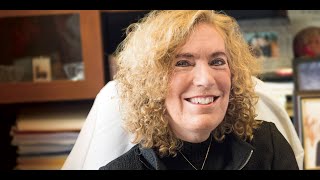
Dr. Elaine Fuchs pioneered the study of skin stem cells and used transgenic mice to link keratin mutations to epidermolysis bullosa. Her lab now investigates cancer-initiating stem cells and an "inflammatory memory" in skin stem cells that could lead to treatments for psoriasis and atopic dermatitis.
Chapters
Hello and welcome to the next in our series of Conversations with Giants in Medicine. I'm Ushma Neal with the Journal of Clinical Investigation, here today to speak with the cell biologist Dr. Elaine Fuchs of the Rockefeller University. Fuchs is known for revolutionizing the molecular and genetic study of skin. Her research has shed light on all dermatologic disorders and aspects of skin growth and regeneration. Her more recent work in stem cell biology has revealed broad paradigms that regulate tissue regenerative stem cells across the body, and the mechanisms she has described have massive ramifications in cancer and regenerative medicine. Thank you so much for joining me today, Dr. Fuchs.
It's my pleasure to be here.
Can you start by telling me a little bit about where you grew up and your family?
I grew up in a small town, which was then at least a small town, of just outside of Chicago. And at that time I grew up in lots of fields of corn and a lot of open fields with nothing and trees around. And so there was a lot of room to really get excited about biology from a perspective of being a child. And you ask a child to, to go out into the field and find something interesting, and they can become scientists fairly early on in their careers.
So you grew up with a father who was a geochemist, correct?
I did. He worked on meteorites. He was looking actually specifically at extraterrestrial minerals, minerals that are not found on Earth. He did look at the lunar samples during the lunar landings, but found them very uninteresting. There was nothing there that wasn't found on Earth. Whereas some of these meteorites coming from billions of miles away that hit the Earth, those were the gold mines for a geochemist of his expertise.
Do you think that he influenced at all your view on whether or not you should go into science or medicine?
To some extent, yes. Not through his geochemistry or his electron diffraction patterns that he was obtaining, but through his ability to recognize recognize rocks that would contain fossils. He took us out into the quarries that existed around the Chicago suburb areas. We would collect rocks, my sister and I. I think he would put a few rocks that he knew would contain fossils in our bags just to help us out, unbeknownst to us. But it was cracking open. He would crack open these rocks and just to see the fossils. To me, that was probably the exciting part of what my father taught me. But my father really thought I would be a good secretary or elementary school teacher. I think that was— those were the sights that he placed on my career.
But you also had an aunt who was very influential and scientific.
She was my father's sister. Both of them went to the University of Chicago. My aunt was much more adept at school than my father. My father could have easily gotten into medical school. My aunt was denied medical school. She became a technician at Argonne National Laboratories, was a biologist. And she is the one who was really— she was very much an early pioneer in the feminist movement, very much an advocate of women's rights, I think rooted in that experience that she had when she was a student. And so she had a huge impact on my confidence as a woman and as as someone who could do anything they wanted to do.
So then how did you decide to study physical chemistry at the University of Illinois?
That roots back to my interest as a senior high school student of going to various different universities. And at that time, I went to my dad and said, I'm interested in all these different universities. Universities, and can I apply to these, and do you have any recommendations for me? He said yes. He said if you can think of a, I don't know, maybe it was a several hundred dollar a year reason back then as to why I wanted to go anywhere besides the University of Illinois where I would get a scholarship, or the University of Chicago where he had scholarship advantage because he was, he was a graduate of the University of Chicago. And we would talk about it, and since everyone in my family had gone, except for my mother, had gone to the University of Chicago, I said, "Absolutely not, I'm not going to the University of Chicago." So I went to the University of Illinois, and then I was going to be a biology major, but I realized they only had biology for teachers or advanced biology. And from my father's encouragement for me to go into education, I said, I'm not going to be a teacher. And from my father's high expectations, very low expectations of me, was cautioning me not to do anything with the word advanced in front of it. And so I looked at chemistry. I could be a straight chemistry major.. And so I signed up for chemistry. Ironically, I never took biology the whole time I was at the university. I really got hooked on physics and physical chemistry and higher-order mathematics. I loved it.
During this time, you were also extremely active in Vietnam War protests and the burgeoning feminist movement.
I grew up in a family that was really strongly advocating the rights of everyone, the importance of equality, the importance of opportunity to everyone, and that really got me very early on in the movements for Blacks in our country, and Martin Luther King was coming on the scene, Bobby Kennedy, all of these real progressive people that were advocating the right messages for our country. And that got me very much involved, and very soon on, of course, then there was the Vietnam War. My father was coming from a military family, and it was very hard for him to realize that not all wars were good that the United States fought. And so we started to have these, I would say, slightly frictional conversations at the dinner table. And in the end, when I became a I was a freshman in college and started to participate in marches. My father said, "Well, I understand what you're trying to do. I'm supportive of it. Would you mind marching in the back rather than in the front?" And so I respected his wishes. But, yeah, aspects of our community as a whole, our country, the world, are very important to me. And that doesn't leave you. You grow up in a family like that and you carry that interest all the way through.
So you applied to the Peace Corps originally for after college, correct?
I was very intrigued by Chile because Allende was in reign. Here they had a Marxist government, which I thought was very intriguing. A 200-year history of democracy. So how is that possible to have all of this democratic government and all of a sudden you have a Marxist leader? What could have happened to the country to make them think that way? And who is this guy? And I started to read about him and I thought, okay, this is really— this is what I would like to do, to go to Chile. Did all of— had all the measures in place and I got my Peace Corps notice, Uganda. And Idi Amin, who is this tyrant, kicked all the Peace Corps workers 6 months down the road had I been there, kicked them all out of the country after jailing them first. But he was exactly not the person that I wanted to see as a government leader of whatever country I was participating in the Peace Corps with. And so my default pathway was graduate school.
Now, you were an early Grexit pioneer. Is it true that you refused to take the GRE?
In those times when I was finishing off my degree, undergraduate degree, it was not optional. And yet I felt that it was important for me not to do it. I think part of the reason was that I wanted to spend this summer in Europe and if I wasn't going to go to the Peace Corps and so I wrote a 3-page letter as to why I was not going to take my GRE and that if they felt that I, that that was necessary, then I was probably not the student for them. In the end, I got accepted everywhere I applied. So students, it was possible way back then. You didn't need to spend these 4 decades of taking GREs.
So then how did you choose Princeton and biochemistry for your PhD?
Naivety. Fortunate. Naivety. I really have to say that I didn't, I hadn't really carefully planned out what I wanted to do. I was so convinced that I wasn't going to be going to graduate school that the graduate schools I applied to did not get the kind of attention that they probably should have gotten from me. On the other hand, And I was hesitant of going to a place like Harvard. It just wasn't even there that I was thinking about going because I again had this uncertainty of, well, I was at the University of Chicago— or University of Illinois. I did well at the University of Illinois, but then this is Harvard, or this is another another great university. And so I wasn't really thinking that Princeton, Department of Biochemistry at Princeton, would be great. And I fell into a university with a rising stars department, and it was a fabulous experience for me. Had I known just how exceptional the scientists were who were just starting at the time and moving up through the ranks. I probably would have been intimidated to go there.
What was your project on for your PhD thesis?
My project was on bacterial sporulation. I was supposed to look at how bacterial spores transition to a vegetative quiescent state and how they broke down their cell wall and had to rebuild a new cell wall that was compatible with cell division. And so in a sense I could look back and say, well, it was really looking at how do you transition from a quiescent state to an actively proliferating state. So I could say, well, there's a thread that goes through my career. But it really— I was not viewing it as that, I really needed to work with someone who really taught me how to do well-controlled experiments. I was coming from purely physics and mathematical background, and to think like a biologist— what always troubled me was that there were far too many variables. You couldn't solve the experiment. And so you had to try the best you could to set up controls, but you couldn't still set up enough that you could solve the experiment. I find that what's fascinating now in biology.
So then you transitioned to Howard Green's lab at MIT to get into more mammalian epithelial biology, correct?
I did. I heard a lecture by him when I was at Princeton taking a piece of human skin and being able to put it into culture and find cells that he could passage endlessly without their losing their ability to differentiate and make skin. And to me, that was phenomenal. We weren't calling them— he didn't call them stem cells at the time, but they were the early starting of the very first stem cells that were ever cultured. And looking back, again, it was that impulse. You hear something, you're struck by it, you're excited by it, and that passion lingers over days to follow. And it's important to follow your passion wherever it may take you.
Did you think you were going to stay on the academic professorial path?
I did not think I had the ability, so I'm not even sure I was thinking about a professorial path. As I was developing at, as a postdoc at MIT, I started to get the sense that I really did like biology. I loved the system I was working on. It was exciting. I was starting to meet with some success. And at that point, I can remember thinking, well, if I maybe one day have a small little laboratory in some small college, maybe with a student or two, that might be something that would be really exciting for me.
And yet you ended up at the University of Chicago for your first position. How did that happen?
Yes, ironic, because I said I would never go there when I was in high school. It was from my graduate advisor, who interestingly when I started thought women didn't belong in science. And so— Is this Charles Gilbarg? Charles Gilbarg. So it was a bit of a challenge to— and it was a surprise for me that he would ever be suggesting that I would apply at a place like the University of Chicago. But he had gotten an invitation to submit an application and he, I don't think he really realistically thought I would get the job, but he suggested to me, I said, well, I've been one year in my postdoc, so I really was not looking for a job. And he said, "Well, I'm gonna recommend you anyway. In this way you can treat it as practice, so you'll get a sense of what it is to give a job interview when you're later on down the road ready to go." And I thought, "Well, this sounds great. Free trip home to visit my family." And, which I took it as. I mean, I prepared. I took it as my trial run for whenever I was looking forward to getting a job, but it was really my practice run. I think they— I can only look back and say I don't know why they ever gave me the job, but I think it probably had to do with the fact that they were impressed when they asked me where else I was applying and I said nowhere, and I think they took that as a sign of confidence that I would get the job that I applied for. And of course, it could have been nothing farther from the truth.
So you arrived then a year later already with NIH funding in place. How did you decide what to fix your lab's path on at that point?
Oh, that was pretty clear. That was clear from the get-go from the path of what— where I was going in in my postdoctoral studies. I had tried two different projects that Howard Green had wanted me to do. One was to find additional growth factors. We had known that epidermal growth factor was important in propagating the cells in culture. And so Howard very wisely thought there might be additional growth factors that could stimulate these cells. There were two places to find them. One was serum and the other was urine. So I had a whole bag of collecting vessels to give to all my fellow postdocs. I was fractionating urine and I immediately decided I think I want to go in a different avenue for my postdoctoral work. Although maybe I could have been Juan Masaki and discovered TGF-beta had I continued. But no, I wanted to do isolate messenger RNA, look at gene expression. It was just at the cusp of DNA recombinant technology. And so for me, that's what I wanted to do. I wanted to look at, are there different genes for these major structural proteins of the skin? And it naturally flowed. At that point to saying, well, we had these messenger RNAs. We had shown that they're— I had shown that they're coding for different proteins, different keratin proteins. So as soon as I moved to Chicago, by then the regulations had been lifted on doing cloning, and I immediately set out to clone the keratin RNAs that I had identified when I was a postdoc, so that was easy.
And you were one of the early pioneers to adopt using transgenic mice for study of disease and pioneered the whole world of reverse genetics in order to start with a mutant protein and end up with the matching disease.
Again, I think this is a bit of this reflects my lack of training. I was never, I never took a genetics course. And so the conventional genetic way was just, one, it was completely off of my— outside of my expertise or my approaches. But secondly, I didn't like the idea. I didn't like the idea of slogging through DNA, choosing a disease and slogging your way through DNA until you sequence enough and then you can maybe find the genetic mutation that causes the disease, and then at the end of that you have no idea why. Here's this protein, what is it doing? And I thought that's the fun part. So for me, that's what I was studying were the proteins. And we had these mutant proteins in a dish in culture. We put in the mutant genes, they disrupted the keratin network. But then what does that mean to a human individual? At the time, we knew that globins were the major structural proteins of the blood, that sickle cell anemia, the thalassemias were diseases of globin gene mutations. So it seemed like there ought to be mutations of keratin for these skin diseases, but what skin diseases to look at? And at that point I decided we need mice and had never worked with mice. It was clear that there were transgenic mice or knockout mice that were coming on the scene. We weighed them both and the mutations that we were working on acted in a dominant negative way. And so we thought transgenic mice and no one at Chicago was doing this. So I called up— there was one person at the University of Illinois in Chicago who had just moved— and called her up and said, how about we buy the microscopes, our microscopes, we set them up in your laboratory, I send my postdoc or my graduate student to learn the technology, and then we'll move everything back. And she agreed, and we got it going. But again, I think you go through following your passion. You try enough new things. And for me, going through physical chemistry, switching to biochemistry, switching to cell biology, this was— and then switching to molecular biology, then switching to mice shouldn't be so difficult.
You're very adaptable. But so I read one thing that you wrote when you were talking about how you had a very astute technician who recognized that after you'd created this line with this mutant keratin, that none of the mice really had much of a phenotype until she recognized that the mother was eating some of the diseased pups.
Yeah, Linda Dagenstein, she noticed that one of the mice was being eaten and that it had a skin phenotype. And of course, I knew nothing about mouse behavior, that mom was taking a look at all of her pups and all the ones that looked damaged, she ate, and all the ones that looked healthy, she left. And so we were looking at all the healthy ones with very mild levels of keratin mutations, and that was, yeah, that helped enormously.
But then you matched up this mutation to a human correlate in epidermolysis bullosa, but at the beginning people didn't necessarily believe you.
Fortunately, there was a bookstore across the, across the street, and we bought a dermatology textbook and really thumbed our way through the dermatology textbook book to diagnose the mice. And so in our first publication of that, which was in January of 1991, it was in press and we were— I was just talking about the work at a scientific meeting and the person who was chairing the session challenged challenged me after my talk and said, "I don't know what you've got here, but it's certainly not epidermolysis bullosa simplex." And, and I realized at that time that when you're challenged and you are fairly confident that you're right, but you don't know that you're right at that point, you have to be able to cogently explain this is why I think this is and then you have to challenge the person who just challenged you to ask that person why they doubt it. And all of a sudden, that reverse genetic approach, reverse behavior approach, started to make me realize that that really is helpful. Someone can denigrate your work or be skeptical of your work, but you have the right to know why. And as soon as that happened, then the reasons why were not justified. And so at that point, it was— I was trying to defend myself, and Mina Bissell, who I did not know at all, stood up and she said, look, I don't know if she's right, I don't know if she's wrong, but science will figure it out and give her a chance. I thought her talk was interesting. And at that point, John Stanley, who was chairman of dermatology at University of Pennsylvania, very highly regarded dermatologist, stood up and said, well, actually, if I had to diagnose it, I would have made the same diagnosis that Elaine did. And so really, that was a turning point in my own career because you recognize the importance, one, of defending yourself, of being able to stand up in front of maybe not so friendly fire and really be able to justify your own science and your own conclusions. And it's really nice to have important people to stand up as as well. And I think that makes a difference in the whole community.
Pivoting a little, your work over many years focused on the basic biology of skin, but you have also since pivoted a little towards stem cells. And given especially that the skin is the largest source of adult stem cells. But the thing that I've noticed is that much of your work focuses largely on basic mechanisms even though your work has such massive ramifications in therapeutics, regenerative medicine, the beauty industry, hair restoration, but you seem to have shied away from any kind of commercialization of your findings.
Yeah, it's true. I, I really have always been inspired by the science and by wanting to know how does this work. That's a thread that has gone on since the very beginnings. And I also really enjoy working with students and working with postdocs, challenging them and mentoring them to the point where they're ready to go off and do great things on their own. There's no better satisfaction that a professor can get than to watch their own students and postdocs succeed in a way that you begin to recognize that they are rising, even rising above you, and that's a wonderful thing to have if you're a professor and you take your job as a professor seriously. So there has been that thread of education even though I resisted it from the early days of my father encouraging me, but it's always been there, and that's what drives me. That's where my passion is. And I watched Howard Green in taking his work from realizing that he could culture these cells and that they had clinical application at that time for burn— treating burn patients and I watched how the science changed dramatically to actually be able to translate one's discoveries into a clinical application. There was a lot of mundane science that was biologically very uninteresting, very uninspiring, but really necessary to move that field forward. Forward to the clinics. Howard did that. He made that commitment, and I always looked up to him for having made that commitment and pursued that. But I also realized that that's not for me. And so if I can take my science to the point, which I also feel is very important— it's not just the basic science we do, but it is that we would like to to see this reach the clinical level and the applicability level, whether it's biotech or pharmacy or pharmaceutical approaches or clinical approaches. I think that's extremely important, and I've realized over my career that I have to take my science a little bit further than I would like to, to the translational level, to really be able to interface with those who are really inspired by taking it to the translational level or to the cosmetic level or to the pharmaceutical level and be able to really bridge the gap. And that's one thing that I— it's been an adjustment for me from the days where I was just focusing on nuts and bolts basic science. So, but it's still not cross crossing that bridge.
What do you think your current family of scientists is going to guide your lab towards in the next 5 to 10 years?
Right now, I think we're really excited about getting back to the medical implications of our work. Some of the work that we've been uncovering over the last couple of years has indicated to us that we know where the tumor-initiating cells of cancers reside. We know to some extent how they resist chemotherapy. We know to some extent how they resist immunotherapy. And it's starting to tell us that if we dig deeper and understand more about these cells and how they resist various different therapeutics that we hit them with, that we can continue to forge new avenues to treat cancers. And so we're very much interested in that, ferreting out those cells that linger after all the therapies are done and trying to find out where they are and what makes them tick. And similarly, on another vein is is our work on inflammation. And there we've identified a very interesting memory system that stem cells have to be able to remember that they've seen an inflammatory experience. So in psoriasis or atopic dermatitis, even other inflammatory diseases in inflammatory bowel disease, often when inflammation comes and goes and it comes back, it comes back usually more powerful than the first time around and often in the same spots. And we've begun to realize that part of the reason for that is residing in this memory at the DNA level that that stem cells harbor. And so again, thinking that if we can uncover that memory, then we may be able to change the way in which we treat inflammatory diseases. Right now it's on immunosuppressive drugs, which are systemic and hit all the organs of our body. We might be able to target them a bit to particular organs or tissues, but it's still not satisfactory in the long run. If we could simply erase the memory, if we understand it enough, then just maybe we could topically apply a memory eraser to be able to treat inflammatory disorders. So it's a pie-in-the-sky idea right now, but on the other hand If we don't do the science to find out whether it's possible, we won't know whether it is or it's not.
Well, it seems like you might be getting into something that's more commercializable, but we will stay tuned.
Ah, but we will never be the ones to commercialize it. I'm fairly confident of that. But I would be more than happy to see other people do so. And we might facilitate, continue to facilitate a little bit more than we have in the past to branch out to make sure that these kinds of things do happen in the future.
So if you could not have been a scientist, what else do you think would have kept you interested over the course of a career?
Very easy answer, a National Geographic photographer.
Thank you so much for telling us a little bit more about your path science, Dr. Fuchs.
My pleasure.
More from Joshua







Scientist Stories: Hans Waterham, The value of phenotypic assays in peroxisomal disorders




Scientist Stories: Joel Zlotogora, Genetic carrier screening programs for reproductive purposes