Scientist Stories: Elizabeth Villa, Cryo-EM and Studying Parkinson's Disease
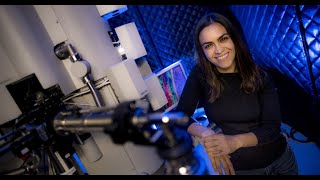
In this bite‑sized bio‑podcast, host Peter O’Toole interviews Elizabeth Villa, an associate professor at UC San Diego whose career spans physics, theoretical biophysics, and cryo‑electron microscopy (cryo‑EM). Villa recounts her early fascination with time, her physics degree in Mexico, an exchange stint in Nottingham that sparked interest in biophysics, and a Fulbright‑funded PhD in Klaus Schulten’s computational biophysics lab. A serendipitous email from Joachim Frank led her into cryo‑EM, where she helped develop map‑guided modeling and later focused on cryo‑electron tomography (cryo‑ET). She describes landmark projects: the discovery of a phage‑built “nucleus” that compartmentalizes DNA, and a correlative light‑electron study of the Parkinson’s‑related kinase LRRK2. Villa reflects on lab culture – submission‑beer, rejection‑cocktails, acceptance‑champagne – and her open, enthusiastic personality, contrasting with more reserved PI styles. She discusses work‑life balance with a young daughter, the challenges of academic politics, and the high cost and maintenance of cryo‑EM instruments. A recurring theme is the need for automation and democratization of high‑resolution microscopy, both to lower barriers to entry and to accelerate data acquisition and analysis. Visual storytelling is highlighted through a David Goodsell‑style painting overlaid on a tomogram and a LEGO model of a cryo‑EM microscope. The interview closes with Villa describing an algae bloom she observed, expressing wonder at nature’s beauty, and thanking listeners. The episode ends with sponsor acknowledgment (Zeiss Microscopy) and a reminder to visit the series website for more recordings.
Chapters
Welcome to The Microscopists, a bite-sized bio podcast hosted by Peter O'Toole, sponsored by Zeiss Microscopy. Today on The Microscopists—
Today on The Microscopists, I'm talking to Elizabeth Biller, Associate Professor at UC San Diego, whose work spans multiple disciplines. We discussed the benefits of collaborative research.
Led up to eventually a collaboration with Joachim and also a beautiful friendship. I should have given you I have a picture of you often dancing at my wedding.
The importance and fun of studying macromolecules.
You know, proteins are very social and there's these networks that are formed and I can't for the life of me be happy with studying a single biomolecule again.
The pros and cons of using advanced microscopy to illuminate important biological complexes.
The beauty and the horror of EM is that you see everything.
And developing new lab rituals.
In my lab we're trying to establish a new tradition which is submission beer. Rejection cocktails, and acceptance champagne.
All in this episode of The Microscopist. Hi, I'm Peter O'Toole from the University of York, and today on The Microscopist I'm joined by Elizabeth Biller from the University of California in San Diego. Elizabeth, how are you?
Hi, I'm great. Thanks for having me. I'm excited about today.
I was thinking about this. You know, you're known for your cryo-EM work significantly, but you come from a physics background. You're now doing loads of biological research using chemistry-type tools. What are you?
I'm a scientist. I don't know. You know, I don't I, I know a lot of my physics friends that have moved to biology make a point to say they're physicists doing biology. I don't, I don't know. I think I'm just trying to claw myself into, you know, doing cell biology discovery. So, um, I don't know, it's just, you know, whatever is needed to, to follow the question. But in the sense of enjoying the process of building the tools as much as the question, I think that, you know, I guess makes me still a little bit of a physicist. Okay, so, you know, the process, the tinkering, that no one can see it, so I want to see it. That I think that part is, I guess, at heart a physicist.
So, so let's see how you try and work out how you got to where you are today. So your degree was in physics in Mexico. Is that correct?
My undergrad degree is in physics. I actually lived in Nottingham for one year. In the UK? Yeah, yeah. And as an exchange student. Yeah, that was my first biophysics class that got me excited. Yeah.
I have to be careful what I was going to say because I was going to say I'm sorry it was Nottingham, but then I'll offend everyone who's in Nottingham. So I won't say that.
I had a blast.
I've had some good times in Nottingham.
Yeah, I, I loved it. Yeah.
So what inspired you to go into physics to start with as an undergraduate?
Oh, you know, I wish— so I guess on one side, I've always been fighting time. You know, like, time has been a concept that since I was a kid, I was always a little confused and upset about, I guess. Like, why can't it go backwards? Or, or, you know, how it's I just think time is a very weird dimension. But really, I think I just love math. I really like— I mean, I like biology, but I don't— I'm not very good at, you know, remembering things by heart or just sort of— yeah. So I— and I love math. And I— it's a little funny because I decided to study physics because my dad told me you should study physics, because if you study physics, you can do whatever you want after. And I was like, you know, I could see myself being happy doing 100 different things. And my dad is an economist, so he's not, he's not a physicist, but he's like, you can do finance, you can do economics, you can do whatever. The important thing about physics is that you learn to make models, which is true. And so I did. And I was, I was very happy studying physics. And, you know, as I said, sometimes I would be like, oh, biology is so cool, but it's so messy and things like that. So I was happy doing physics. So it was sort of like a very smooth transition. Yeah, I decided I wanted to do theoretical biophysics. And so that's sort of— and as I said, I've been sort of like slowly clawing my way to more and more bio, but I just, I guess, like math and making models. I still do.
So you got into physics because you didn't like— well, maybe not the right term, didn't like time, wanted to understand time better. As a dimension. And now you've ended up looking at spatial dimensions and really trying to get to break—
Very successfully freezing time though, so that's good. But now I miss dynamics. Like, I love cryo-EM, but I miss the dynamics part of it. So, you know, always trying to combine with other things. But yeah, I think, you know, the only thing that I can remember as a child that was, you know, in the physics sense, exciting to me about the universe is like, what do we think time is and why does it exist? And, you know, things like that. But yeah, but I think I went into physics as many people go into university to kick the can of a decision of what to do a little forward.
That's— yeah, for me, biochemistry was just that, because you do biochemistry, you can do many other jobs like accounting or whatever else. God, I'm so glad I wasn't an accountant. So after your physics degree, where did you go to?
I went to do my PhD in true form to the theoretical and computational biophysics lab of Klaus Schulten in Illinois. So I, I got a Fulbright Fellowship. I met my husband in the interviews, which is like the nerdiest story you've ever heard of. And then I went to Illinois in the middle of the cornfields. And again, I actually had a lovely time over there. It's a very good group of biophysics, and I was exposed to a lot of things. So I started my studying elastic rod models of DNA, and then, you know, slowly got more and more into being more interested in, you know, I guess physiologically relevant biology. Um, but yeah, I worked with Klaus. He passed away in 2016, and yeah, it's amazing. It's like a true physicist trying to, you know, build these enormous simulations to try to Build Biology. He called simulations the computational microscope.
So that's— so you made an early move into biophysics. So the biology was already coming into it.
Right.
And then to Mexico, to US, to a bit of time in Nottingham.
Yeah. And then to the— and then back to Mexico, the US. Germany and then California.
That was Max Planck Biochemistry in Munich?
Yeah. So when I was a, I think like a first-year grad student, I wrote an essay in a class that was taught by Nigel Goldenfeld, who's a condensed matter physicist who has done, you know, he, he's very famous for renormalization theory. And then he went up into finance and then he decided it was time to go into biology. So as we do, he decided to learn something by teaching it. And so I took a course from Nigel that was called Statistical Physics Applied to Biological Information and Complexity.
That's a short course.
Yes, it's basically like a lot of cool stat math. And I wrote an essay so that you know how little biology I knew, even though I said I wanted to do biology. I wrote an essay of this thing that I found that was called the ribosome, and I talked about it. It was, it was not a very good essay about how it's a thermal ratchet. I mean, technically doesn't need energy to make proteins, right? Like you have transcription factors and all these other things, but just with thermal motions, it technically could make a protein. And I wrote a bad essay about it, and Joachim Frank found this essay. I guess he was Googling himself. And then he wrote me an email and he said, you know, when are you finishing your PhD? You should come work for me. And I was so excited. Yeah, I was like, I went to class and I'm like, oh my God, this rock star, like, you know, just emailed me. And I think class was like, I'm a rock star too. And so we sort of like that. Led up to eventually a collaboration with Joachim and also a beautiful friendship. I should have given you a picture of Joachim dancing at my wedding, but as we were, you know, eventually we collaborated with Joachim. This is when cryo-EM structures were really, you know, he had the best resolution structure, was like 6.73 Armstrongs, because you know that second digit was important. And so Basically, it was time for stop chopping structures and just sticking them into cryo-EM maps and try to do a more systematically correct way of building models into this sort of like quote-unquote low-resolution maps. So we started thinking about developing this method and there were a few people in Klaus's lab that were interested about it. And the really cool part is that, you know, we needed— we wanted to understand electron optics and what the image actually means in order to— because what we were going to do was use it as a potential in the molecular dynamic simulation. So the map was going to attract atoms into it, and you wanted to make sure that it was sort of like something that was reasonable. And so the really fun part is, I think at that time Joachim's lab was very productive, but it was mostly people interested in the ribosome as opposed to an image processing like in the old days. So I always had to talk to Joachim about it, and that was— that really made me so I just fell in love with cryo-EM. It was just that, like, you know, and not— I mean, you know, now we're— it's a very prolific technique. At the time, you know, we were called out, it's blobology and whatever. But I wasn't excited about the structure. I was excited, you know, the average tells you about structure, but the standard deviation tells you, like, the fluctuations tell you about function, right? And I was like, this method is going to be huge because it's a biophysics method. It's not just a structure method. So I was very excited about it. And then I went to Woods Hole in the marine biology lab to, to, to the physiology course. And then I was like, okay, like, you know, single molecules wiggling around are great, but, you know, proteins are very social and there's these networks that are formed and I can't for the life of me be happy with studying a single biomolecule again. And, but I, you know, so having, you know, Woods Hole was amazing because I I worked with Ron Vale, Eric Wieschaus, and Tony Hyman. I mean, and I was just blown away because I came from this very sort of molecular view to just blowing up my mind and just— it was just amazing. And so then I decided, you know, cryo-EM technically is the, you know, electrons, I guess, is the, the best radiation we have to look at biomolecules, right? Like just in terms of wavelength and minimizing the radiation damage from X-rays and stuff. And so why is it not the best imaging tool for cell biology? And then that's how I ended up involved in Bammmeister's lab because that's exactly what he was trying to do for years, right? To develop the technology. So, I mean, important to say that before Woods Hole, I've never held a pipette in my hand except for one week in Rob Phillips' lab in Caltech, which was really fun. So that was a trip. It was a pretty crazy change. But, you know, I'd do it again and again.
I didn't realize that you have been in every— almost every rock star EM, cryo-EM lab there is. You must have gone through almost all of them. I didn't notice Richard Henderson there, but otherwise—
Yeah, you know, but also, like, almost by chance, right? I mean, Baumeister, of course, I know it wasn't by chance, but like So all how I entered cryo-EM was just like this random thing of, you know, Joachim writing me an email and then just changing my life.
So where do you see, not where do you see EM going, we'll come to that. Where do you see your research going? 'Cause you're now getting more and more bio-orientated trying to solve those, the social side of proteins, which is a lovely description of it. Where do you see your own, your heart in the research going?
You know, it's— I know some people have a dream proper, and, you know, they want to completely solve how this protein works or how this process works, or— I have a very selfish selfishly oriented view of science. I work on something that excites me, and very often that happens after a conversation. We have like this entire project on this phage nucleus, we call it, which is a large phage that infects bacteria and builds a compartment that's basically like a eukaryotic nucleus. It compartmentalizes DNA, it separates transcription and translation. I can't stop thinking about it. You know, another conversation I had one day about this kinase that, you know, is the main cause of Parkinson's disease, and then all of a sudden we were working on that, and, you know, I couldn't read enough. And I guess the unifying theme is always trying to get, um, inspired by a problem that I think it's amazing, and then trying to push and adapt, you know, different methods to tackle it with with whatever is needed. And, you know, at this point in my lab, it's, it's of course core cryo-electron tomography, but, you know, we'll do whatever we need and find whatever friends we need to, to go for problems that are exciting. So I don't know what to tell you. I, you know, I—
You've answered it. So you are, you are a true technologist. I think to be true. And You're not looking for problems to solve. You're not looking— you look, you've got the technology development and then helping, so using that to solve problems that are needing it, which is a nice way around to it. Those conversations, so those moments of inspiration, you talked about the phage, for example, where do they come from? What sorts of conversations are these? Down at lunchtimes in a shared canteen? Are they at conferences? Are they just chance one-to-one conversations? Where are they coming from?
I think all of those, right? All of the above. And, you know, the vast majority of them don't lead to me being like, coming back to the lab and being like, oh my God, I'm so excited. And, you know, everybody in the lab is like, don't make eye contact, don't make eye contact. Because otherwise they're like, yo, let's do this. So yeah, you know, down the hall. So Joe Pogliano, who's at UCSD, just was down the hall from where my lab was located when I came to UCSD. And Kit, his wife, is also an amazing scientist. We have grants together and students together, and it was just basically, you know, a couple of conversations. Others have been at conferences. Just, you know, I don't know about others, but at least my career has been really marked by these serendipitous events that are like one conversation, one email, something like that, and then it sort of, you know, it sticks in my head for a while and then eventually sometimes I do something about it.
It was interesting hearing you go back to your lab and no one makes eye contact. So I presume you're generally very enthusiastic around the lab?
Me?
Yes.
Yeah, yeah. I mean, I only have, I guess, one mode, so.
So you're not calm? Person at work, you are a full throttle?
No, I don't. I mean, I wish I had a better poker face sometimes and, you know, modulate my enthusiasm or other. But no, this is more or less how I am, which is very different from a lot of the PIs that I grew up seeing. Klaas wasn't like that. Klaas was like just bubbly everywhere. Like he would be super happy or super mad, like very honest. And I actually really love that. And that's one thing that I actually also loved about Germany is that, you know, brutal honesty can be very, very good for having successful friendships and collaborations. And, you know, so just everybody knows where you are in the same place and what you like and what you don't like. And I think that for me, that's easier. I don't, you know, that's like anti-English, I know. But, but that's something that I, I don't know if I learned it or picked it up from, from Clavis, and, and I like it. So yeah, this is— I am like this in the lab, and I think, dare I say, people, new PIs are feeling that it is okay to be yourself in the lab, and I think before people felt you need to check your personality at the door maybe, and, and I think that's that's changing, and I, I like it.
Yeah, gosh, I, I don't think I've ever contemplated how the personality is viewed, so I'm so glad that's changing.
No, you know, in the sense that— so I, in, in my opinion, I think a lot of people thought, you know, if you're very bubbly or if you're whatever, maybe you're not taken seriously, right? And so, so, so maybe modulate that. Yeah, I mean, that's good that you've never had to worry about it. It means never been a problem for you. And honestly, I've never tried to modulate it, and it's never been a problem for me. But I know it's in a lot of people's minds.
Yeah, actually, I wonder, actually, with the older guard, you know, on committees and stuff, whether that is still the case. And maybe they find it a bit— uh, I didn't know where— a bit not offensive, it's the wrong word. I'm trying to find the right word. But, you know, if you, if you've got characters— I'm a fairly full-on character in meetings, or can be. Yeah, and maybe actually it is, maybe it's quite jarring for them sometimes compared to this very composed, subtle way of— ah, it's the future.
Good to have all sorts at the table, right? I think, and you know, as I said, just to be clear, I don't think it's ever, you know, been a negative thing for me. I mean, at least not that I've noticed, and I enjoy it. But, you know, it's just, it's a little bit more fun. I mean, why would we be so serious about everything?
So you're sounding excited. People who are listening, they're getting this, they're building up an impression right now. So I've got to ask, are you a messy person or a tidy person?
I mean, my background is tidy.
Well, your background is tidy. Okay, if you spin your camera around, how tidy is it?
You can see my desk right now. I am not a tidy person. I am, I was, or when I am in the lab and things like that, I am tidy. I'm very organized with my file system, you know, so for certain things, but my reaction, I mean, but I have to fight entropy all the time. I mean, so my baseline is definitely not tight.
Said like a true physicist. So are you a minimalist or a maximist? Do you like lots of stuff or do you like keeping things to a minimum?
Huh, I don't, I don't know. You know, one, one thing that I— so I, I don't know if you're asking, you know, science-wise, but I can say when it comes to consumerism, you know, in the US there's always this— I remember when I moved to the US from Mexico, shocked of how much trash I produced. You know, because everything comes single packed and everything. I was like, I don't. And so that's, I think, something, you know, in sale and everything is so cheap and you can buy like and buy, buy, buy. And that's something I actually really liked about Germany, that you buy one really good jacket and then it, you know, it lasts you for 15 years. So not like fast fashion and things like that. So I guess in that sense, more minimalist, especially as we all, I think, become aware of you know, how we're messing up the planet, it's kind of like good to keep it tight.
You've got a jacket that's 15 years old.
I do. No, I don't know, 15, but at least— let me see. I'm— yeah, I think I, I bought a couple of really good jackets when I came to Munich, like for skiing and stuff like that, and they're great.
So you wear them once a year when you ski?
Well, now yes, but other things, like, you know, I, I have One jacket I've had, like the jacket I'm looking at, it's like 8 years old probably. So when I came here, I don't know, not all my clothes are 15 years old, but I, but I try to, you know, just maybe reduce my carbon footprint where I can.
But coming, staying out of work a little bit, I, I believe you are a family person. So we have this, which is a scary picture right now. Because this is your husband, but it looks like I'm your child, which is really, really scary. But if I just duck out of the way—
I think I'm going to adopt you now, Peter. I think it's the law.
I can't, I can't. There's nowhere I can hide here. I'm either going to be your husband or I'm going to be his wife. I don't know which way it is. I'm your child. Now actually, if you're listening to this, maybe just watch the YouTube of just this picture that's come up. My head just perfectly replaces your daughter's head, which is really scary. I'll go over here.
There you go, now we're a family.
So, so, so, so this is your daughter. How old is your daughter now?
She's 7 now. This picture is, uh, yeah, like I guess 7 years ago, uh, when, when— yeah, so we— I, I was— I found out when I came to UCSD. So she says, love, as old as my lab, I guess.
So, so this is Closer to now.
That's us in Big Sur a couple of, a few weeks ago.
Yeah.
Driving down the California coast.
So what does your husband do as a job?
He's a physicist. Uh, he's still a physicist. He's stuck with it. So he's, he's a faculty member here at UCSD also.
So you're both working at the moment. How did you, how did you, how did you balance that work-life balance? You're both working. You have a young daughter.
That's why I, you know, when you ask me like hobbies, I'm like, I guess I just gotta send a picture of my family because that's when you have kids. Yeah, so it's, you know, it gets a little better with time, but I think, um, I'm just always in awe of people who have children when they're like grad students or postdocs because even, you know, as a faculty member, it was, it was, you know, it was challenging at some time, so You balance, you balance. I think my lab benefited from me having a kid. I used to work crazy hours when I was a grad student and postdoc. When I was in Munich, Easter would come and I'm like, "Oh my God, the microscope's for me. Yay!" because everybody else took holiday. I mean, we did sometimes too, but yeah, so I think it was good because a child forces you to have better work-life balance and And it's fine, you know, things work. You just, you become more efficient. And I mean, I'm like totally oversharing, but like your marriage becomes more like a business, like very transactional and planning and things like that. But, you know, you kind of like make it work. It's, you know, everybody who has children and has, you know, two 2 jobs are like— both have jobs, has to go through me.
So critically, now this is important, it's not detrimental to your career, and it's clearly not detrimental to your career.
So far so good. And you know, I, I have to say, I, I on purpose, you know, she's so tiny and she was growing so fast that we decided, you know, we need to enjoy these years. They're going to go so fast. And, and it was a little bit of a stressful thing. And, you know, some people kind of would be— because I would be like, if it's from 5 to 8 PM, I'd be like, to my life, unless they're dying, I'm gone. Like, you know, I, I need to, I need to do this. And, and then I'm back, right? Like, and, and we can talk. And on the weekends also, a lot more, as I said, a lot more time off than, than we used to take. And yeah, I think so far, I don't— I think if you're tidy, if you're organized, I don't think it hits your productivity that much. I mean, it does, but yeah, but it doesn't— I mean, it doesn't matter. It shouldn't matter is what I want to say.
I think there's a lot to be said, as you say, when you're out of day job number 1 and into day job number 2, which is your family and stuff. Actually, that's gives your brain time to breathe. And I think sometimes where some of the best ideas come from, you know, it's not when you're trying to think of ideas, it's when you're not trying to think of ideas that inspiration can come. So I was going to ask, you talked about you didn't have hobbies because it's very much balancing the two, but you still have good times. Are you a, are you a beach bum, or are you someone who likes to go and sightsee and travel?
Am I a beach bum? Like, just staying in— can you say that?
Would you prefer just to be on the beach all day, or do you prefer actually going sightseeing when you do take time off and go on holiday?
Oh, um, both, I think. I mean, I like eating, uh, so that's a big part of, like, traveling for me, you know. I like sightseeing. I don't— I'm not so much a beach bum.
The reason I asked, you sent me some pictures and here you are on a beach with your daughter at a younger age, and then you sent me another picture and here you are again with your husband and your daughter on a beach. I thought, really?
We live in San Diego. That's, that's not holidays though, that's weekends for us.
Um, you're so lucky.
I know, I'm sorry. Uh, yeah, so this is, this is not travel. This is, you know, this is, um, killing Saturday afternoon. And, uh, so yeah, so I, I— we do, we do like the beach a lot, obviously. Um, we live here, we take advantage of it. Um, sometimes we go with, like, if we go with family on vacation, like my parents or things like that, then typically a beach is nice because, yeah. But otherwise, sightseeing, we like. It's really fun to go to museums when with small kids, right? Because everything's new and fresh and you feel like you're seeing these things for the first time, and that's just so fun. But yeah, and then as I said, I, I really like— I really enjoy trying foods from different places and stuff. So I know it's weird to say, but food is a big part of my travel agenda typically.
So go on, what's your favorite food?
Sorry, my favorite food? I don't know. Uh, I, I don't know. That's a really hard question. I can tell you, weirdly enough, it's not desserts or things like that. It's mostly like savory things. Um, I just, I just like everything. I mean, not everything, but most things.
Okay, so, so what do you dislike? If you went to a conference and they took you out for dinner and they served up and you go, please don't let it be, please don't let it be, what is it that you would fear that they were in front of you?
I'll try everything once. I can't, you know, there's things that I like more than I like less, but, um, no, off the top of my head, I can't imagine that you'll serve me something that I'll be like, even if it looks like super weird, my mother was like, you have to try once. Like, maybe you don't like it, then you don't have to eat it again, but you try it once. So I, I don't, yeah, I don't know.
I love the way you said, you know, it doesn't matter what I serve you, you have no idea how bad my cooking is. Actually, it's really not that bad. I quite enjoy cooking, so I can't really say.
I enjoy eating. Like, I cook because I like eating, but not because I enjoy cooking. That's how I know I'm not a chemist. I think chemists are traditionally, or at least my friends that are chemists, are very good cooks.
Saturday night, put some good music on, put a glass of red wine and cook.
That is love.
Okay, so you talked—
we talked—
I should have realized the beach connection because this is, I presume, a lab photo.
That's my lab photo. Yes, we just took that a few weeks ago. Yeah, with a piece of That's the Scripps Pier. Yeah, that's like the, uh, San Diego, like the UCSD, uh, Scripps Institute of Oceanography Pier. So a lot of cool research comes out of that.
Big lab. Is that 11 I can count on there?
It's a big lab. Yes, yes, it's a big lab. So a lot of, a lot of people are joined with other labs because we work together. But yeah, it's a big lab. It's, it's It's a great lab. I'm really lucky. Sorry, I'm lucky, luckier than most.
I'm going to ask you, you're not old, you're really young, and you have a big lab. How did you find this at the very start when you set off and actually you struck out into your own lab? How did you find that moment? And, you know, you're stepping out. Your own lab, which is quite different to being a postdoc in someone else's lab with the direction that comes. Suddenly you are the director of that research. How did you find that?
You know, it's, it's kind of brutal how academia works. So, you know, I basically— so I thought it was really funny when I came to UCSD. I came to a room and that was my office and it was empty. It didn't have a chair on it. And all I got was like this index number, which is basically like a bank account. And that's it, you know. So I was discussing with my brother, who's an investigative journalist, and we were, you know, talking about this. And he's like, so let me understand this. So you are— you were in school for like a really, really, really long time and you became very good at this one thing. And then people hired you because you're very good at this one thing. And now They hire you, they basically give you a bank account, and you have to manage people, which you don't know how to do, manage your finances, which you don't know how to do, teach, which you don't know or aren't trained how to do. And the one thing you don't do is the thing they hire you to do. I'm like, yeah, that sounds about right. Because you do it, of course, you mentor people to do it. But as time goes by, you spend a smaller fraction of your time actually in the lab. And so it's very weird, but you just, I mean, you just do it. What are you going to do? I mean, it's exciting also, you know, you buy all these new things and like the first box that comes with your name, you're like, oh my God, it's my lab. It's, it's, I don't know, it's exciting. It's, it's challenging. I mean, the last 2 years obviously has been really hard being a mentor and just trying to keep people happy and telling them everything's going to be okay, well, you know, crossing your fingers behind your back yourself. And, and, uh, but it was, it was fun, uh, challenging and stressful. And but I, I, you know, and then I had like a tiny baby, it was— but, but, but it was, it was, I don't know, you know, uh, survivor's bias, I guess. I, I'm, I'm happy. I, I like my job. A lot.
So it sounds like COVID was a challenging time over the past couple of years to keep the team going.
You know, it's— I mean, about the science, I'm not supposed to say this, but like, it was really important, but I didn't care. If we took a hit scientifically, I'm like, I decided I was not going to chase people around into being productive while, you know, all of these things going on. And, you know, like in the US also then became all this sort of like racial justice events and things like that. And a lot of people were in a, you know, very isolated, bad place. And for me, it was just, you know, my job is to be a mentor and I take that seriously. I think that's probably, you know, other than, you know, making scientific discoveries or things like that, is that I I, I want to make sure people in my lab are successful and, and happy. And, and yeah, I, I thought it was challenging. I think, yeah, I don't know, you know, but they're great. I told you, my lab is just, just full of amazing, funny, creative, smart, hard-working people that are super resilient. And, and, and, you know, so does that mean—
I'm just going back to the picture— there's a lot of them? That's— you're their line manager? But actually, some of these are PhD students, I presume, postdoctoral staff.
Yeah.
That actually need more guidance than a typical line manager. If you've got someone who's already very skilled, that, you know, they're pretty much solo running anyway, and you're just there as a mentor, as you say. In this case, it's more than a mentor, isn't it? You know, you do have to give direction, more advice. How do you find— how do you make sure you give them all enough time? And I presume some must demand Demand's the wrong word. Some like to have more time, some like to have less time. So it's not demanding, the wrong phrase. It's just, it's just how they work.
Yeah. So I think, you know, that's a really funny thing that, um, to bring up because I, all the labs I was in, so like in Klaus's lab or in Wolfgang's lab, they were really, really large labs where they're very sort of like hands-off. I mean, I always think it's it's like you just walk in and it's, you know, like a Willy Wonka and you get to play and do whatever. Willy Wonka is a bad analogy, but, but places that I, I always was very self-driven. And I, I don't mean to say this is a bad thing or a good thing. I think that really important thing is to find a good fit between your style and the lab style. So I was ever only in these labs where I was just so lucky to have all the resources that I needed and the occasional, you know, discussion with my advisor, which was great. And they were both very supportive mentors. So even when I was starting my lab, I was very hands-off and that's very rare for an assistant professor and probably a bad idea, but that's how I did it. And so, and I found out, you know, as the years progressed that as you're saying, Some people need more structure, some people want less, and sort of like adapting is important, but I've learned to adapt and try to stand up to it, but I do have serious conversations with people that are joining my lab and being like, it's not only about the science you want to do, it also needs to— I want to make sure that if you come to the lab, you're successful, and I'm here for you, and I feel I'm more like a coach than a boss, you know, like I'm there to finesse their skills and cheerlead and help them around and things like that, but I, you know, they're their own people and I'm just, you know, I'm just providing a home for them to do fun things, just how I was lucky to have that when I was a trainee.
So out of your team, who's the best one? No, I'm joking. I say, is there any question you don't want me to ask? I never thought of that one.
Amazing. I love my children equally.
Sorry, there's always one that's the least favorite. There's always a black sheep in every team.
Uh, also, it's really funny, like, uh, People in my lab come from all walks of life, right? And that's also really fun about like interdisciplinary teams these days that, you know, some of them come from, you know, hardcore materials science and some of them are, you know, just— I had a fantastic cell biologist in my lab, Rekha, who, you know, she never did like a lot of quantitative stuff. And, you know, they bloom along the way, right? Because you learn from, from from the others and gain perspective. So I like that, it's really fun.
So coming back onto the more scientific side of the work side, you sent me this picture which I'm glad you opened up, and hopefully we can— if you're going to watch this, we'll try and get a bigger blow-up of this. But you describe the picture for those who are listening.
So that, I mean, that's a slice through a tomogram. So as we discussed earlier, you know, that doing cryo-electron tomography of cells, as John Steadat once told me, like the beauty and the horror of EM is that you see everything, right? And so this is a cell, this is a human cell, and I think this is a tomogram also from Rake. And you can see the nuclear envelope is up here, these two lines. And then there's a mitochondria on top and the nucleus on the bottom, right? So mitochondria up, yes. Nucleus is in the bottom. So you can see some chromatin over there and nice things, and there's a nuclear pore. And I've always been— I'm a very visual person, obviously, and I love David Goodsell's work. And that's a painting from David Goodsell superimposed in one of our tomograms. And I remember seeing the tomogram— this is sort of like one of the first ones that we got in the lab when I moved here— and I put the painting on top and, oh my God, it just fits perfectly. David is so good because what he does is You know, he reads a lot about a particular corner of the cell, and then he uses all data that's available to him and he makes some educated guesses and talks with the scientists and he makes these beautiful paintings and it's right on the money. So my, you know, one of my dreams is to be able to annotate tomography by using, you know, things from many, many other techniques to basically make what David does.
Very— so this was a painting, not, not colored tomogram. This was—
that's a watercolor and was not based on our data. And I mean, I—
oh my goodness, I know. Oh, I didn't realize that.
That—
so this, this artist drawing fits the real scientific image, which is down to the nanometer, sub-nanometer resolution.
Like, you see there, like, the nuclear lamina, you can see it, the nuclear envelope, the nuclear pore, everything. It's just It's just shocking how good he is.
Silence is me a bit shocked. Sorry, I haven't got another question because— wow. I'm also amazed that you also managed to get a tomograph that actually fits the same orientation. I know there's a bit of movement, but to even get it to that is— that's—
you know, I mean, it fits very nicely in a lot of tomograms, but in this one, and you can't see it very well right now, but like even the chromatin like, like right, right where your ear is right now, like a little bit higher, I guess, like your temple there, like the chromatin is coming in and it just fits like this chain that you did.
Yeah, yeah, I see the gray of the chromatin coming through. Yeah, yeah, I say the gray of the chromatin, that's the gray in my hair as well, it matches it. So you didn't realize I could match your gray electron microscope images as well either.
Yeah, so yeah, you know, it's fun to think about, you know, that maybe one day it will be a as good as David in annotating our data. And so, you know, because—
Yeah, you sent another image as well, two images. And this one, do you know what, it doesn't look as cool. But oh my goodness, this is a really challenging imaging to get. So actually, those not— actually, I wait. Elizabeth, you describe it. That's probably more sensible than me describing this cloud.
The green is a little saturated. I'm sorry, I didn't realize this. But this is an image from our project on LARC-2. And the reason I sent it to you to you is because it's this so-called correlative light and electron microscopy. And so here we have a protein that's YFP-tagged that we're showing in green, and it's co-localized with microtubules. So if you can see, like wherever you see the dark green, there's always these little like lines around them. And those are microtubules that are decorated with this protein called LRRK2 that is the main cause of genetic Parkinson's, and that's what we were studying. But it's really fun, I think, you know, to say combining different modalities to get to the answer that you need is always really fun. And so in this case, it's light and electron microscopy. And I think it's, I mean, everybody's very excited about it now. It's just a really great thing to do, you know, combining imaging modalities. And yeah.
And it is good that you've seen the lighter side of biological sciences as well. So that's a really good—
I love light microscopy, and I mean, this is a still image for both of them, but of course the beauty of light microscopy is that you can see dynamics, right? And that's—
And maybe that brings in your time dimension again, that you can do your time lapse and then freeze that moment in time. So you do have the time resolution. And then yes, you're pausing time or freezing time, literally freezing time at that moment, which is nice. It does bring your time as well as the resolution, the spatial dimensions, to be much better at that point. I've got to ask, so actually for people, not everyone will be expert in cryo-EM. These microscopes cost— go on, how much does a microscope cost typically?
I think that it's too much. So like several million dollars is the right answer. I think, you know, somewhere from 5 to 8 probably. And then they come with a service contract that's about $250,000 a year.
Yeah, that's the bit that really bites because that's the bit that keeps on biting year on You're right.
Buying the instrument is a thing that you can get people excited about. Maintaining the instrument, it's a much taller order, right? Because, um, yeah, it's, it's the same thing as, you know, sometimes building a facility is great, staffing it— no, it's, it's not as shiny, right, to like donate money to keep something running.
It's just shiny when you cut the ribbon and And I think you actually, you've mentioned something that's actually really important because it's not just the cryo-EM world, it's also the genomics world, it's also the spatialomics side. The cost of the very latest technologies are increasingly expensive, and this isn't just companies profiting on it, you know, this is just the cost of the research and development to get to that next level of resolution and sensitivity costs money. It's not cheap, and not everyone will have them. So it's not like they've got unit sales of tens of thousands of these, right? So it does cost a lot of money. And so I think the key bit— you've already mentioned your research into Parkinson's disease, uh, and the importance to look at the structure to understand the disease to start with, right? Got Do you have other examples of these beyond Parkinson's that this is being used for?
Yeah, so I mean, this project with Parkinson's is the first time in my life that I worked on something that I, that like could directly help people, which was really humbling because I was like, oh, I'm a basic scientist, I'm a basic scientist. And it was actually really touching and meaningful and, and I I've been bit by the bug, so that's good. But a lot of people are using tomography to try to understand disease in general. Many different diseases. Shor's at the LMB works on amyloid fibers for Alzheimer's. It's just shocking that they're starting to find out that there's different types. And, but, but then you can, there's only so many probably. And so it's, it's, you know, and how to, at the chemical level, maybe how to combat them and things like that. So there's, you know, it's, it's, it's growing. And as cryo-EM became this, you know, very high resolution method so fast, then you can really go into like drug targeting and, you know, solving structures with different drugs bound to them or things like that and starting to look at. At different things. And in cells, of course, it's the same thing because as long as you can have enough good statistics, you can see how like a drug would change or disease would change. I mean, you know, the fact that you'll have a single point mutation and it'll wreak havoc in an entire organism, to me, it's just like insane. And, you know, it needs to start somewhere, right? And so at the cellular level, sometimes the phenotypes are actually quite remarkable and that's just fascinating to see.
Now, you didn't send me a picture of these £5 to £8 million microscopes, but you actually have a picture of— well, it's not even a schematic, is it? It's a Lego design of— is it actually a cryo-EM, a Lego cryo-electron microscope?
Yeah, that was a gift a few years ago from the vice president of Thermo Fisher, and And the part that I— that did not— that, that I, I don't think it cost him a million dollars. It was, it, it, it was built by, um, by a person that works on the floor of the factory of Titan Cryosis. So those are original Lego parts. Now they have sets that they give you either when they want to sell you one or when they've sold you one, which is a good idea because sometimes PIs don't get to play with the real thing. So you get to play with the one in your office, I guess. So that one's in my office.
So Thermo, if you're listening, yes please, that would be cool. I've got a nice flow cytometer one back at home, but I haven't got a— There you go.
You need to complete the whole set. Get your little sandbox in your office with all your toys.
I'm trying to think, who was it that did loads of Lego during lockdown? So one of the other podcast guests, actually, that's what they did. They spent loads of time— it's what they did with their child, with their children during it. Yeah, yeah, yeah, yeah. Interesting Lego, which I think is super cool. Yeah, it will come to me as we go through. Uh, so everything has sounded really rosy and really good. There must have been really difficult times though, uh, that you've encountered. So what's been the most challenging time to date? Oh, it's Prisca Liberale, wasn't it? It's Prisca who did loads of Lego. Anyway, sorry, go on.
Um, the most challenging time— there's been a bunch.
Um, do any really stick out as I, I really wouldn't want to relive that time? Or that moment or that challenge or that problem?
I would say sometimes academic politics can be difficult, so there's been a couple of instances that I'd rather not describe in detail. But yeah, I think, yeah, there's, yeah, I have a few, but I'll tell you over a beer one day.
Okay, so, okay, so on that point, wine or beer?
Wine or beer?
Yeah, what's your preference? Some quickfire questions.
Wine or beer? I thought you said why no beer?
I'm like, no, no, no, why?
Oh my God, I can't choose between my babies. Don't do that to me. So I drink beer again. Another very good habit I picked up in Germany. I drink beer often with dinner. But on weekends, as you said, as I'm cooking sometimes I actually like to have a glass of wine and sort of— it's different. If I'm writing a reference letter for someone, I have a glass of wine. I don't know. It's like a nice tradition. It puts me in a good mood. So no. Actually, in my lab we're trying to establish a new tradition, which is submission beer, rejection cocktails, and acceptance champagne. Oh, there's a lot of cocktails.
Yeah. How many, how many papers do you publish a year? Because that could be a lot of alcohol just in one year.
Yeah, just especially the cocktail, sadly, right? Like, everybody gets rejected much more than people, um, think or know. So it's not that much. I mean, you know, cryoelectron tomography is slow enough that I'm not worried about us um, under alcohol consumption.
Okay, so tea or coffee?
That also fluctuates too. I really like tea, so right now I'm going through a tea, uh, period. Um, good British tea. But, uh, but I like coffee too, and sometimes I do espresso only, and, and then sometimes I do, you know, other— yeah. So today I was having like a taller, like an Americano.
So yeah, if you're gonna have caffeine, make it short and make it good.
Make it short.
Yeah, I think I know the answer to this already from earlier. Chocolate or cheese?
Why are you making me choose between things I love? Okay, I'll tell you what, no white chocolate, no milk chocolate. So dark chocolate, that's it. And cheese, I adore, like most kinds of cheese. Also, one of my very best friends is Rachel Dutton, who's a cheese scientist, and therefore I get like a really good, like I get really good consulting on cheese. So yeah, I see.
I'm guessing to answer all your questions, you never want to trust a Dutch cheese scientist because there's holes throughout all their research. Sorry. Book or TV?
Book or TV? Hmm. I used to be book. I think, like, since the pandemic started, I kind of picked up on TV again. But I have to say, the new podcast era is wonderful for me because what happens for me is that if I'm— I listen through the entire however many seasons of the, you know, this show Lost. Yeah, I had never seen it. And when I was in Munich and I was trying to like write some code like for tomography analysis and whatever, I listened through like all seasons of Lost and like in some season I turned around like, oh, she's blonde. Like I would have imagined her being different because I think I was born for podcasts. So I listened to tons of podcasts.
What's your favorite podcast? Sorry, what's your favorite podcast?
Hmm, The Microscopist.
Oh, it's the right answer! So what sort of genre of podcast do you like listening to?
I did a lot of true crime when the pandemic started, you know, whatever got me out of reality, and so that kind of stuff. So a lot of fiction I like to listen to, but also this is how I consume my news. Like The Daily and This Week in Virology was, I think, the podcast everybody needed during the pandemic. I mean, I was not very well versed in biology, and I think they've done a fantastic job at educating people through a very scientific point of view, but also approachable for other people. So I listen to that. And then This Week in Microbiology is also amazing. Yeah, so it's sort of like a healthy mix. Also audiobooks sometimes. So I found I need to go back into sitting down and reading books because lately I haven't been doing it a lot. But when I do read, very often I like reading in Spanish, like Latin American authors or things like that, because that really kind of like turns off my brain. Like it feels like it really like Switching languages for me seems to really allow me to switch, you know, mentality. And that's sort of very good for just getting distracted.
I have to ask, do you speak German as well?
Very badly.
Okay.
No, I learned French in school, so I speak French. Um, but when I went to Germany, I'm like, I'm so good at languages. It turns out I was just young when I learned them. So it was hard also, you know, Germans speak, um, English very well, so they'll switch. And when I moved to Munich, I didn't know electron microscopy, I didn't know cell biology, and didn't know image processing. And so I think German suffered as a result of my many shortcomings. So I ended up learning the others better.
The other— that last set of quickfire questions. Early bird or night owl?
Night owl.
PC or Mac?
Mac.
McDonald's or Burger King?
Neither.
Mexico or US?
Sorry?
Mexico or US?
Different. I love them both.
That was very politically careful.
No, it's true. I'm, you know, I'm Mexican. I dance. I, you know, I don't know, but I'm an American citizen. I love a lot of things about the US. It's just, you know, it's just, it's a mix. I'm both with a little bit of German.
Okay. Favorite movie?
Favorite movie. Oh, this is hard. I don't have a favorite. I don't really rewatch movies over and over. Except for Frozen, but that was not my choice.
Okay, maybe I should have asked least favorite movie.
I was like, it's a fine movie. Um, I don't, I don't know. I'm sorry, I don't, I don't, I, I watch a lot of French cinema. Um, it's a lot of fantastic movies there, but I, yeah, I don't, I don't have a favorite movie, I don't think.
Very quick, a book. Favorite color?
This one this week. I've been testing colors for my office wall, and I'm kind of liking blue with a little bit of green on it.
Right, so turquoisey?
Yeah, it's like a dark turquoise.
This does not show a true color right now. My face looks really red. You have no idea. It's the winter over here. I am still really pale. It's just my camera white balance does no justice. My window surface does not do a good job of white balance on this. Uh, we've talked, you know, we are up to the hour and I've got loads of questions I wanted to ask you and I haven't asked you them all. I guess the, the biggest question is, where do you see the biggest— what's the biggest challenge that needs to— that we need to overcome to help cryo-EM, microscopy in general move forward? What is the biggest limiting step at the moment?
I think automation. You know, there's a lot of things that we still do by hand that we shouldn't have to. And so, I mean, there's obviously like— this is not going to be a short answer if we have to talk about bringing the technology to like as far as they can go. But in order to sort of democratize these technologies better, I think that the barrier of entry is still relatively high. And I don't, I don't think it should be. It's just, it's just, I mean, for one thing it's information and there's a lot of kind of like hidden knowledge that, you know, at least in my lab and I think many others, we try to put out in the world. Like, you know, these are, when this happens, you can do this. But for the stuff that we do, so just sort of like focusing on tomography, I think that companies need to make these instruments leaner, meaner, and sort of like basically have a lot more automation into them. And then so we can focus more on, you know, making the questions relevant and, and, and, and making the cell lines that we need or asking the right questions and preparing all the way to there. It's like in my lab and others, it's still a big sort of like a big barrier to getting the data and then an even bigger barrier to analyzing the data. And I think that there's no reason why we shouldn't put a lot of effort into making that go away. And then, you know, I think that as people go to the core and use confocal now and it's one of 15 tools that they use to publishing a paper. EM should be similar. There's no reason not to. And, and for light microscopy, I think it's, it's getting better. But, um, yeah, more access, cheaper access, um, um, and, and I think a lot more automation. Like, there's no reason why the computer shouldn't, like, guide you through a lot more than it does right now.
Um, so I guess that's like You're into— obviously a lot of the work is volume EM as well with the 3D rendering, but actually it's not just the volume of the image, it's the volume of images to make it statistically relevant as well. So actually, as you say, automated speed, back to your time. Yeah, so if you can automate it, you can speed it up. So now trying to speed up time, see that? See, see, they can speak. That's good. And then you did send me another picture, which I think is quite apt now, that I think you probably got what you want to find at the end of the rainbow. Is that probably your today?
That's from a photographer, Eric Jepson, at UCSD, who just does beautiful images. And, and that was a few weeks ago also. There's two rainbows in there. Yeah, that's the Scripps Pier. That's also from him. That's, um, That's over the Christmas Break. And right now we have like dinoflagellates, so if you go at night, you actually see like that.
Um, it does look amazing.
It's actually an algae bloom, uh, and it's— it looks red sometimes. It's beautiful. Yeah, it's hard to be— it's hard to be mad at the world sometimes when, you know, you go and sit there.
No, it does look very calm and peaceful. Yeah. Elizabeth, we are up to the hour. Can I just thank you once again for today? And actually, for everyone who's watched, listened, please remember to subscribe. But actually, you've heard a lot today about volume EM. Jeff Lichtman obviously does a lot of volume EM as well. Lucy Collington for the CLEM side and volume EM. Priscilla Barale for the Lego-making side of things. And Harold Hess putting that CLEM side together as well. So there's lots of others, but Elizabeth, I've got to say, your excitement, your enthusiasm, your passion. Wow, you're amazing. Thank you very much for joining us.
Oh, you're amazing. Thank you so much for doing this. I think this is, uh, for me, this podcast has been inspiring, uh, to listen to. So I'm sure I wish I had this young me. So thank you for doing this.
Yeah, thank you very much.
Thank you for listening to The Microscopists, a Bite-Sized Bio podcast.
Sponsored by Zeiss Microscopy.
To view all audio and video recordings from this series, please visit bitesizebio.com/the-microscopists.
More from Joshua







Scientist Stories: Hans Waterham, The value of phenotypic assays in peroxisomal disorders




Scientist Stories: Joel Zlotogora, Genetic carrier screening programs for reproductive purposes