Scientist Stories: Ellen Rothenberg, T-cell Gene Regulatory Networks
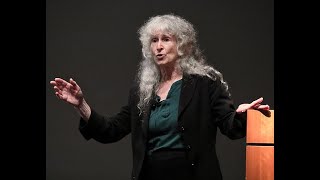
In this Global ImmunoTalk, Dr. Ellen Rothenberg (Caltech) presents a comprehensive overview of how multipotent progenitors become committed T cells, focusing on the gene regulatory networks that orchestrate this process. She begins with a brief biography highlighting her distinguished career and contributions to immunology. The scientific core of the talk explains that T‑cell identity is built on multiple layers of gene regulation: transient cytokine‑driven programs, stable lineage‑defining transcription factor programs, and permanent chromatin states that persist for the cell’s lifetime. Using single‑cell RNA‑seq, ATAC‑seq, and pseudotime ordering, her lab maps the narrow developmental window in the thymus— the "commitment" stage— where chromatin accessibility and transcription factor binding shift dramatically. She distinguishes early (Phase 1) factors such as PU.1 (SPI1) that are expressed before commitment and act to keep cells multipotent, from later (Phase 2) factors like Bcl‑11b and TCF7 that lock in the T‑cell program. Functional experiments in the OP9‑Δ in vitro culture system, combined with CRISPR‑Cas9 mediated knock‑outs and rescue, reveal how these factors influence the speed of progression through defined milestones (ETP → DN2 → commitment). The talk then examines two signaling axes that remain constant in expression but change function: Notch signaling, which is essential pre‑commitment for genes like TCF7 but dispensable post‑commitment, and the RUNX family (RUNX1, RUNX3) that, despite flat expression, redistributes across the genome in a stage‑specific manner, regulating a large fraction of developmentally dynamic genes. Redundancy among RUNX paralogs, partner‑dependent binding (e.g., PU.1‑driven “theft” of RUNX), and large‑scale chromatin looping changes illustrate how transcription factors can act as mobile effectors rather than static binders. Rothenberg concludes by framing the major frontier in molecular immunology as understanding how short‑term signaling integrates with long‑term epigenetic programming to enable durable T‑cell identity and how this knowledge could enable therapeutic re‑programming of immune cells.
Chapters
Welcome everybody to a new Global ImmunoTalk. I'm delighted to introduce our co-organizer and co-host, Dr. Elina Zuniga, who will introduce our speaker today, Dr. Ellen Rothenberg.
Yes, hi everyone. It is my delight and honor to introduce to you Dr. Ellen Rothenberg. Ellen is distinguished professor of biology at California Institute of Technology in Pasadena, California. She received her bachelor's degree in biochemical sciences from Harvard University and her PhD degree from the Massachusetts Institute of Technology. After a Jane Coffin Childs postdoctoral fellowship at Sloan-Kettering Institute and an assistant research professorship at Salk Institute, she joined Caltech in 1982 and rose through the ranks to become Albert Billing Rudolph Professor in 2007 and then Distinguished Professor this year. Ellen has received many, many honors, too many to go through all of them, of course, for her tremendously significant scientific contributions, and I'll go to that in a few seconds. She was selected Fellow of the American Association for the Advancement of Science in 2017, Fellow of the American Academy of Arts and Sciences in 2018, and a member of the inaugural class of distinguished fellows of the American Association of Immunologists in 2019. Ellen is also a fervent teacher. She won the Richard Feynman Prize for Excellence in Teaching in 2016 and 8 other teaching awards at Caltech. She has also been a very active member of the community of immunologists worldwide. She has organized multiple international conferences in immunology and system biology and has served as a scientific advisory board member for US and international research institutes She has been in the editorial board of several immunology journals, committees for the American Association of Immunologists, and grant reviewer in panels for NIH, NASA, and others. I would also like to emphasize and say without hesitation and truly huge admiration that having started her career at the time when it was not that popular for females to do science. And despite that, having established herself as a truly renowned, a world leader in immunology, Ellen has been a role model and inspiration for many female scientists around the world. And we are very, very grateful for that. So related to her specific research, Ellen and her team have really broken new ground and led the way towards in-depth understanding of gene regulation and development of T lymphocytes, gene networks controlling hematopoietic cell fates, and mechanisms underlying the dynamic of single-cell developmental decisions. Ellen and her team first defined the whole set of transcription factors that are important at different stages of T cell development, including, for example, BC11A and GATA3, and then delved into the molecular mechanisms of their action, showing their relationship to epigenomic change, their ability to influence each other, and the distinction between dynamic and persistent epigenetic states. So Ellen's pioneering and elegant and in-depth work over the years has really clarified how developing cells acquire the properties they will need in order to work as T cells, why the options that remain open to precursors still remain open and for how long, and how the cells that make decisions that they do at each branch point are regulated. So in my opinion, her work has not only been central for understanding the development of T cells, but has also served as a model on how to study gene regulation for other cell fate decisions within the immune system and beyond. And I cannot wait to learn more about that from Ellen herself. Herself during her talk, which is entitled Supplying the T Cell Generation Pipeline by Gene Regulation: Quick Start Operating Instructions. So, Ellen, we cannot be more honored and delighted to have you today here as a Global Immuno speaker, and we are super thankful that you have accepted our invitation and, and for all your efforts to prepare this talk.
This is an incredibly generous introduction. Thank you for your extreme kindness, Alina. And Carla and Alina, I'm super grateful to be here. And the whole community, thank you for being here. I hope that I can interest you over the next hour or so.
So Ellen, as a leader in molecular immunology and with the admiration for all the tremendous work that you have done, What we would like to know today is your opinion on which are the most important gaps in knowledge that need to be addressed in the field of molecular immunology.
Well, Elina, this is a great question, and I think for myself, I prefer not so much to think of the gaps as to think of frontiers. It seems to me that where we have gotten to is we have a very good explanation in the short term, in the immediate term, for how molecular mechanisms cause changes in gene regulation. But lymphocytes are a school for scientists in how many different layers of gene regulation there really are. It's extraordinary how cells like T cells can circulate through the body really for years in many different signaling environments, all by themselves and still remember that they're T cells and yet keep this great repertoire of possible functional responses. It's like an extremely well-trained musician traveling through the world and possibly playing different kinds of music, but always being a musician. How does the cell— and what is the difference between the programming for being a T cell, which is rock stable, and the immediate dynamics of cytokine gene regulation, which we all know quite a lot about. And it seems to me that this is really a lesson for the entire field. We really don't understand how the molecular mechanisms operate over long time scales versus short time scales. And I think this is going to be a frontier really for the whole field of development, but it's incredibly important for immunology. We'd like to be able to manipulate the cells, not just now, but actually to retrain them, say, to have different signaling thresholds? And how do we know how to make that a long-term change versus a short-term one? I think that these are going to be incredibly illuminating and exciting if we're, you know, if the funding agencies will give people in the field the opportunity to study these questions. And if I can persuade people today that these questions are interesting.
Definitely agree. It's fascinating. And I love your Metaphor there that teachers are a school for scientists.
We can learn from that.
That's very nice. I will implement in my teaching. So Ellen, if you wish, you can share your screen.
Okay. Let's see if I can do this. Is this coming up all right now?
Yes.
Perfect. Beautiful. Beautiful. Okay, well then I will get started, and I hope that I won't go too long. Thank you very, very, very much for having me, and I hope that I'll interest you today. I want to tell you about a couple of stories that have emerged from our continuing fascination with the process through which multipotent progenitors become programmed to be T cells. And on the right, I'm showing you one of these little partial gene regulatory network models that we worked out over the last few years. I won't really be talking about that today. I'll be talking more about what's happening inside the cells to set them up to be able to execute this gene regulatory network. So let's see if I can advance the slides. Okay, so what is a T cell? This is the question, and this really relates to the question that Alina just asked me. If we think about a T cell, it's— if you look at a single-cell RNA-seq t-SNE plot or something like that, you're classifying the cells based on what genes they're expressing right now, so that an activated cell looks very different from an act— from a non-activated cell. But really, we see several layers of gene regulation expressed right there. First, what the cells are or are not expressing right this hour. That's a based on a transient reversible type of gene regulation. The cell will go back to being resting after it stops expressing that cytokine. On the other hand, we know that there's another layer, because the cells, for example, that have been programmed to be Th1 or Th2 or Th17 type cells, have a different specialist repertoire than the other subsets, and the cells remember that through some transcription factors, through some signaling receptors, but that's a more stable program. Going to be shut off. Underlying that, though, is this basic question of what kind of a cell it was in the first place, and cells basically remember whether they're conventional or innate type cells in terms of where they put their activation thresholds, and there's also a bifurcation between CD4 and CD8 killer programs, and this is a mostly stable bifurcation of gene regulatory programs operating underneath the transient cytokine gene expression. And then underneath all of this is being a T cell. The genes that are turned on that make the cell a T cell, and that are turned off to prevent it from being something else, are regulated permanently. And they're regulated, as we were saying a minute ago, over years. They will not change. CD3 expression is going to be something that every T cell keeps on doing until it dies. And these are the genes that I'm going to talk about today, really, because the question is, when is this part of the T cell T cell gene regulation program established. What we know about this is that it's established in the thymus at a stage when there are actually very few cells of this kind in the thymus. The major transition that turns on this set of genes really occurs at this stage that we're calling commitment. And this is way back before T cell receptor gene rearrangement. So this is not dependent on TCR at all. It's upstream of that. And in steady state in a mouse thymus, this would be representing less than 50% 50,000 cells before commitment in a thymus that has on the order of 300 million cells. So it's not going to be the majority populations that you see. Nevertheless, these are the cells that are pipeline for everything else that happens later. And understanding this is really where the identity is established. Now, this— we have cell surface markers that I'll show you in a minute that allow us to distinguish the cells at these different stages prospectively. And if you take an ETP or a DN2A out of the thymus out of the Notch signaling field, which is the main environmental signal that the thymus provides, up through DN2A, those cells, when they're removed from the Notch signaling, can go off and become something else, not just NK cells, but they can become dendritic cells, they can become macrophages, they can become granulocytes to some extent. After commitment, even though the cell doesn't look a whole lot different from its precursor on the cell surface, it is now utterly unable to have any of those options, and in fact it becomes a T cell or it dies. So this is a fairly fundamental cell biological change, and what is interesting is that it has turned out over the last few years that it represents a really profound molecular change as well, which is not predicted from its change in cell surface phenotype. It's a trivial change in cell surface phenotype. It's a huge change in both chromatin state and transcription factor expression. This is just a picture of a heat map from a beautiful paper from Keiji Zhao's lab that they were kind enough to let us contribute to a little bit. And they're showing the genomic sites genome-wide which change in their chromatin accessibility between hematopoietic stem and progenitor cells and double positive thymocytes undergoing selection. And what you can see, I hope, is that there's the hotspot for change, both in terms of decrease of accessibility and increase of accessibility between these two stages called DN2 and DN3. Now that's a fairly coarse-grained analysis, but my student in my lab, Shen Wang, in some unpublished work has done this at the single-cell level, and you can see incredibly clearly where commitment occurs. It's a huge transition in terms of the single-cell ATAC-seq, that single-cell chromatin accessibility map, and the cells going through this little narrow gate completely flip over which transcription factor motifs are in the open sites. It's a very dramatic change. In fact, it's caused by transcription factor action change, and if you look at transcription factors, this is sort of focusing in on those that we have studied because of their strong changes in this window of developmental time. And you can see that there's a whole set of transcription factors that are expressed up until commitment, and then with slightly staggered timing, they're shut off. We'll come back to some of these later. And there are also other transcription factors that we recognize as T cell transcription factors: TCF1, GATA3, Bcl-11b, and these are turned on at various times, either before or right in the middle of commitment. Bcl-11b is a very popular transcription factor in my lab because it turns on exactly during commitment, and we actually have a fluorescent reporter mouse with a fluorescent reporter in the Bcl-11b locus that lets us pinpoint at a single cell level whether it's gone through commitment or not. Now, I'm showing you this picture from— and this is a version in the latest review article, but honestly, these are based on population RNA analyses, and there's always a question in population RNA analyses, whether you're looking at the gene expression from the whole population or from the population you care about biologically, or whether you're looking at a signal that's coming from a contaminant. And especially in these ETPs, which have very, very little T cell quality yet, there's a huge question about whether the signal is really coming from the T cells. And so, in order to understand what's happening at this changeover, we need to know accurately what is the gene expression profile of the pre-commitment cells. So that we can tell what changes. We don't want the gene expression profile from contaminants. And so Wen Zhou, a wonderful student in my lab who just defended her thesis, has spent the last few years in my lab trying to really nail this down at the single-cell level. And so what Wen has been looking at is, can she actually deconstruct this precursor compartment really to understand at single-cell level the order of the gene expression changes and their relationship to T lineage programming. So what Wen has done is she's taken the markers that are the best for separating these early cells, which are, in the mouse, KIT expression, which is characteristics of the uncommitted cells, and CD25 expression, which is sort of the marker that they've really entered the T cell program. And she's basically taken this whole group of intermediates across this continuum and sorted them and then put them through conventional high-throughput RNA, single-cell RNA-seq, and two other much deeper sequencing methods, and/or much deeper, more sensitive analysis methods, so that we can ask at a single-cell level, down to the single molecule, where the RNA expression is occurring, and to what extent two lowly expressed RNAs may overlap. And so we've basically looked at this whole transition, And we've also, to help orient the direction the cells are going, we've spiked in a small population of cells from a post-commitment stage to show where the cells are going to. And so this is work that was published about a year and a half ago, and but I'm going to spend a couple minutes on that this morning just to review what Wen found, basically. When we looked at the— this is looking at 10x data, single-cell analysis, and using the force-directed graph network called SPRING, which is a method of laying out the cells. It's not t-SNE. It's a little bit more sensitive to the actual parameters of developmental distance. And what you can see is in a sort of a slanted way, you have a nice progression of early genes on the upper right end, later genes on the lower left end, sort of in stripes across. And the reason they're in stripes is because, as people often find with single-cell analysis, one of the axes that distinguishes the cells is where they are in the cell cycle. And that's actually this other slanted axis. It's essentially orthogonal to the developmental axis. So we can see sort of FLIP3, MEF2C, LMO2, very much focused on the early cells. We can see progressively IL-2 receptor alpha, that's the DN2 marker. FGF3 also transiently comes on. Here's Bcl-11b just starting to come on as the cells just start to get committed, and RAG1 finally coming on as the cells are getting eligible to rearrange. And then here in the opposite direction, you can see the cell cycle. There's a lot you can tell about this. You can also see when there are contaminants, you can see them very clearly. Here are some committed granulocyte precursors that you can see quite easily here. We've sorted them out and proven they were committed. Now, using these axes and using what we know about the major genes that kind of orient the progression, we can actually make a pseudotime model that aligns the dynamics of expression of the most variable genes in what is the computer-estimated best developmental time. And the computer model tells us that this is probably one trajectory rather than a set of branched trajectories. But, and you can see that there are a set of genes that really are expressed early and a set of genes that come on later. One of the interesting things is that by using this highly multiplexed single-cell RNA-seq method that I briefly mentioned that we did, we were able to prove that the cells first turning on the T cell program genes got a TCF, are actually at the time still expressing this progenitor gene set as well. So this is really part of the inheritance of the cells that become T cell precursors. But you can see that there are a couple of other transient waves of gene expression in here, which we wouldn't necessarily have expected, and they really suggest that the processes possibly more complicated, that there may be more intermediate states as the cells go through. And one question is whether this is really true, that is, do the cells really go through these waves of differential gene expression on the same pathway, or is this just a computer artifact of mushing together cells that are actually trying to make a branch, but the the computer program is mistakenly mashing them down into the T cell program. And we were particularly interested in getting this right, because some of the genes which are expressed right here in this wave are actually usually associated with non-T programs, myeloid programs. SPI-1 goes up, myeloperoxidase goes up. By the way, this has later turned out to be confirmed in human early T cell development as Well, TyroBP, these are not really T cell genes. Why are they turning on? And so one possibility is that these cells are actually not in the T cell pathway. The other is that there's a kind of multi-lineage priming going on here. And so what we've done is we've actually taken the trouble of using the pseudotime genes to come up with markers to finally dissect this stage, even in the ETP compartment, and sort the cells out according to where they are estimated to be in pseudotime, and then ask, ask, who is really more advanced along the T cell pathway? Is it this cell or is it this cell? And if it's really off the pathway, then it will look less advanced on the T cell pathway. But if it's actually an intermediate, it will look more advanced. And one way that we can do this so nicely is because there is a beautiful in vitro culture system that many of you are very familiar with. It was invented by Juan Carlos Zúñiga-Flücker's lab. About 18 years ago, this OP9 delta system, which has subsequently been joined by a beautiful system from Gay Crooks' lab as well, but this is, this is with the OP9 delta system at the moment. It's very amenable to watching individual cells develop from, say, a single cell to a clone through the DN1 to DN2 transition and the DN2 to commitment transition. This is seeing Bcl-11b fluorescent reporter turn on. And so we can actually look at a couple of developmental thresholds along the T cell development pathway and ask who gets there first in real actual time. So here what we've done is we've sorted the ETP subsets according to our pseudotime markers, which one are estimated to be the earliest, the next earliest, the next earliest, the next earliest.. And then we've actually put them in culture for 4 days and let them race against each other. And these are the milestones that we're checking, but first to go from ETP to DN2 based on CD25 expression, then to go into commitment based on Bcl-MMB expression. And I think you can see pretty easily here that the cells that were estimated to be the most, most advanced along the T cell pathway based on the pseudotime model, actually get to the endpoint faster than the ones that were earlier, even though these are the cells which are expressing the multilineage priming signature. And we actually really— our reviewers asked us to do this at the single-cell level, and when Jo actually did this, it was a heroic experiment, she actually sorted out about 60 individual clones from each of these populations, did the whole experiment over again, and scored the frequency of clones that made it past these individual landmarks. And this shows that it's completely, it's completely consistent with our pseudotime model. So we were very— we feel that the pseudotime model is actually quite reliable, and that in fact there is a more complex process going on in which there are several waves of gene expression going on as the cells respond to the thymic environment to determine whether they're going into the T cell pathway. I should point out that we've estimated by population dynamics modeling that this transition from the first entry into the thymus to this commitment state is probably at least 10 cell divisions in a young postnatal mouse. And so there's a lot of time that needs to be accounted for. And this suggests suggests then that it's a molecularly dynamic time. There's a lot going on, and throughout this period, the cells are progressing towards commitment. Now, why would the cells be doing this? And you could imagine that it's just noise, but it actually seems in some of the most recent work that Wen has done, which I'm not going to have a chance to show you in date and detail, it turns out that We now see that by knocking out individual transcription factors, both of the progenitor set and of the T cell set, that these ETPs during those 10 cell divisions or so are actually involved in a continuous tug of war between transcription factors that are pulling them in various directions, more or less similar to the Notch signaling direction, but being opposed by other transcription factors that are trying to hold them back. And so essentially what you're seeing is an interplay between several different programs. We're very interested in what this actually means, and what is this actually evolved for? Is this a heritage of some earlier evolutionary program that the cells just haven't gotten rid of, or is it actually useful to move the cells through the thymus to get the right proliferation and so forth? So for the first part of the talk, then, the conclusions are really that, in fact, the T cell signature transcription factors do begin to be expressed in a cell that still has this multi-lineage gene expression profile. And the cells are going into the T cell program with this complex process, and some of the early expressed transcription factors are actively working to pull the cells back in the uncommitted states. One more cell division, please. One more cell division, please., as well as others opposing it to push them forward. And one of the interesting things that I don't have a chance to tell you about is that some of these early factors, although they're holding the cells back, are actually also preventing them from spinning off into aberrant pathways. So let's now move on to talk about how this works, and this will be the rest of the talk. We'll be talking more about transcription factor machinery. Machinery. So the rationale for this, obviously, we're really interested in how this works in T cell development, but even if one is not interested in this early stage of T cell development, I think it's a particularly nice system for looking at mechanics of how transcription factors cause heritable changes in cell identity, which are probably applicable to other cases as well. We're lucky in this system because we have these beautiful stage markers, and we have this in vitro system in which we can pull apart individual stages in real time, and we can perturb them, as you'll see in a moment. And we think that this is actually giving us a chance to study much more mechanistically aspects of mechanism which are probably also used to some extent in peripheral T cell decisions and in innate cell decisions. Now let's just focus in on a couple of the most dramatic and important transcription factors in this process. And this is sort of zooming in on this commitment period from thymus-seeding precursors, which would be the earliest ETPs, to the slightly later ETPs, the first DN2s, the committed cells, and then post- post-commitment cells. And the main things you want to remember are that you have TCF7, which is the gene that encodes TCF1, comes on very, very early in this process, way before commitment. Bcl-11b is turned on in the mouse system significantly after TCF7. But while TCF7 is coming on, you still have genes like PU.1, or which is encoded by the SPI1 gene, transcription factor PU.1, expressed at a quite robust level. And we've spent a lot of time studying PU.1 and Bcl-11b in this system, and we'll come back and talk about RUNX and E proteins a little bit later. But PU.1 is our representative of these factors that are expressed before commitment, and this group we're going to call Phase 1 factors because it's It's really a pretty big discontinuity between what the cells are doing before commitment and after. This whole set of transcription factors expressed like PU.1 we'll call phase 1 factors. Transcription factors expressed like Bcl-11b we'll call phase 2. Now, we can actually parse exactly what each of these factors are doing in the T cell development system, making use of the in vitro differentiation culture system, and the fact that we can isolate cells at known stages, either after or before the commitment transition, and we can then modify those cells. I mean, you can easily, easily transduce these cells with retroviral vectors. They love them. And you can get very good efficiencies of transduction, whether you're transducing an shRNA, whether you're transducing Cre, or whether you're transducing a guide RNA into a cell that already has Cas9. And so, for example, this is an example of a strategy we would use to look at what PU.1 is doing for the cells. We can take the cells while they're still expressing PU.1 and take the PU.1 away by Cre or shRNA or Cas9-mediated deletion, or we can take the cells after they've turned PU.1 off and we can add PU.1 back to the cell by simply transducing the PU.1 cDNA back into the cell. And we can take this apart by asking what genes are affected, RNA-seq. Where is it binding in order to exert these effects, ChIP-seq. ATAC-seq is how the chromatin structure is either following the impact of PU.1 or how it's constraining what PU.1 is doing when it's added back as opposed to when it was expressed normally, and so forth. And we've done this with several factors. We've spent a lot of time on PU.1 and Bcl-11b for obvious reasons. They're the low-hanging fruit in the system. You know, PU.1 has this marvelously well-established association with non-T fates, myeloid, dendritic cell, granulocyte of various kinds. B sulfates, everything but T sulfates. So it was an obvious one to study when we were trying to understand how access to those fates were shut off. Bcl-11b is our star pupil in terms of becoming a T cell, showing a T cell-specific signature. And so over the last few years, if you've heard me speak, I've probably talked about PU.1 or Bcl-11b. Here, this is all they're going to get. P1 is the most prevalent factor involved in establishing and maintaining the open chromatin pattern in the pre-commitment cells. And it acts— if you look at where it's actually binding, it more often is acting as a positive regulator of target genes where it binds. It can act as a pioneer factor. We've shown how it binds to closed chromatin and can open it. We know that it can drive cells towards a myeloid fate if it's overexpressed. Expressed, but as long as Notch signaling is strong enough, it can be modulated and tamed by the Notch signaling to play roles within the T cell pathway. So this is a very nice factor. Bcl-11b actually has an interesting pattern because it has a very strong protein-protein interaction dependence for where it binds on the chromatin. It actually binds to ETS RUNX sites rather than to its own motif, and it's often at chromatin loop anchors. It's implicated in both positive and negative regulation. It's got a very elegant transcription factor cascade that activates it initially, but it's actually a little bit disappointing as a T lineage identity factor because it doesn't really positively regulate and maintain all the T cell genes you would want it to if it were really the T cell factor. It's pretty good at inhibiting the access of the pro-T cells to innate lymphoid fates. But if you take a cell, you know, it will be expressed throughout T cell function. But if you take a mature T cell and knock out Bcl-11b, it does a lot of weird things, but it doesn't turn off its T cell identity genes like CD3 or anything like that. Continues to express TCR. So there's something missing from the system. And one question is, have we actually possibly got the— are we entitled to focus only on PU.1 and Bcl11b-type transcription factors that are dramatically regulated across commitment? Should we really ignore all of the much larger number of transcription factors that don't change very much during commitment? Now, the way you would— and this is sort of a logical question— in general, when you're classifying cells and looking at how transcription factors give them identity, you normally assume that expression of transcription factor targets correlates with expression of the transcription factor. You do this to classify cell types. I think any of you who have tried to infer transcription factor networks who works using most of the software that's out there to do this will basically have used this logical assumption. But the corollary of that is that if a transcription factor's expression doesn't change across a developmental transition, then are we entitled to regard it as insignificant because its targets will be the ones that don't change? Well, is it really true that its targets will be just background, just mmm, all the way through? Actually, it turns out that the answer is no. And this is something that we've been able to find out because of the useful features of early T cell development, but it may actually turn out to have much wider application. So that's what I'll talk about for this last part of the talk. Let's focus on two transcriptional regulator systems that are actually incredibly important for T cell development, and yet which really don't change across the commitment transition. One of them is Notch signaling itself. Notch signaling is needed throughout this entire process and well beyond it, really into beta selection. So is Notch doing the same thing all the time? Is that just sort of a constant background? The other is RUNX factors. RUNX1 is the one that's most highly expressed in the T cell lineage, E proteins are also very important here, but I'm going to mainly talk about Notch and RUNX. Now, you might assume that Notch is an ancient conserved signaling system, and one of the Notch target genes, HES1, is certainly turned on throughout this process. But is Notch really doing the same thing mostly throughout this process? And because of the nature of the T cell system, we can actually ask this question and answer it in a way that's a little bit harder in vivo in human patients. One is that we can take cells that we are— that we know haven't started the T cell program yet. We can take them from Cas9 transgenic mice that are set up to be able to use any guide RNA as a targeting system for deletion of the target gene. And we can then put them in OP9 delta culture and then start an absolute time clock running. And after 2 days, we know they haven't gone through commitment yet, we can transduce them with guide RNAs, 1, 2, 6 guide RNAs, and then after 4 hours put them back in Opi9 delta culture, and then wait, say, 3 to 5 days and analyze them. And by then they're just coming up to commitment, but they haven't gone through it yet. Or we can let them wait 10 days before we add the guide RNA, so they've already gone through commitment, and now we can do the same type of experiment, and we can compare the differences in gene expression, whether you knock the gene out before commitment or whether you knock it out after commitment. And this is really just telling you that the quick take-home message from the Notch system, we were actually— we knew that some of the Notch target genes changed through this period. We had no idea how strong, how huge the magnitude of the change was. These are genes which are notch-dependent. These are the genes which are directly or indirectly notch-repressed, probably indirectly. There is very little overlap between the genes that are notch-dependent, say, before commitment and after commitment. It is really quite striking, and even smaller overlap for the notch-repressed, presumably Hes1-repressed genes. And lest you think that this is perhaps just flirting with the threshold of statistical significance, which any of you who do genomics are used to. I'm just showing you some RNA-seq tracks to show you what I mean by the magnitudes of this difference. Two very robustly expressed genes, so there's no detection issue here. This is the effects of knocking out Notch1 and Notch2 on TCF7 expression in pre-commitment cells, versus in post-commitment cells. And you can see that in pre-commitment cells, it has a severe effect on the ability to upregulate TCF7. And this is something that had been shown earlier by Avinash Bandula's lab and Weber et al., and also by Fotini-Gunnari's lab, Garmar et al. But in phase 2, TCF7 doesn't care about Notch signaling at all. In fact, it's at least as robust with no Notch signaling for those 3 days. And similarly, Myc is in the opposite direction. No effect on Myc at all if you take Notch signaling away before commitment, severe effect if you take it away after commitment. So this is actually a case where it matters tremendously which phase of the process you take out this constantly regulated input. From what you're going to see as its target genes. This is just a few days apart in the same lineage, and the cells have changed whether they need the Notch signal or not for these particular genes.
And the rest—
and so that's just a teaser for this next story, which is about RUNX1. And we've really been very interested in RUNX1 for several reasons. One is that if you look at its expression pattern, it's super high in the T cell pathway compared to other hematopoietic cells. So that might mean that it's important. And if you look at ATAC accessibility, chromatin accessible sites, before and after commitment, all the different sets of sites that you get, whether they're phase 1 specific before commitment, phase 2 specific after commitment, or whether they're shared, one of the top 3 transcription factor motifs in all three types of sites is always RUNX motifs. So what is this RUNX doing? And, you know, this is just a plot showing how enriched the PU.1 motif is in phase 1 specific versus the other types of sites. I told you this is a huge contributor to the phase 1 specific chromatin. Here's TCF7 just coming up after commitment as a strong contributor. To phase 2-specific sites, but the RUNX site is really— the RUNX motif is contributing all the way across. So it should be doing something. But the problem is that if you knock RUNX1 out in early precursor T cells, you really don't see any effect until after commitment. And this bothered us, and it was sort of going along with this flat expression, and we were thinking, okay, we don't know really what's going on. But When whole genome data came out, and this is data from the ImGen Consortium, but we have very similar data that we've published also, you can see that RUNX1 is not the only RUNX transcription factor of its family that's being expressed in the cells at this time. And so the red dots here are RUNX1, and the blue dots here are actually RUNX3, which at the ETP stage is expressed just as strongly as RUNX1, and we've gone back and looked at that in our single-cell data and our single-molecule fluorescence and C2 hybridization data. And actually RUNX3 and RUNX2 are expressed at least as high a level as RUNX1 until commitment, and then they sort of drop off. So is it possible that really the reason the RUNX1 knockout by itself wasn't showing an effect was because these other factors are in, these other RUNX factors are there providing backup for RUNX1, that they're actually giving redundancy to the system. And so the question was, can we actually use our Cas9-based in vitro differentiation system to knock out multiple RUNXs at the same time? And in fact, you can do this very effectively. And when you do that, you see that RUNX1 and RUNX3 are regulating the same genes additively, but actually superadditively. If you simply knock out RUNX1 or RUNX3, you see very little effect. If you knock them both out together, you see very big effects. And what— this is just putting it on a sort of a cartoon representation from a principal component analysis, which is in our new paper. But basically, if you knock out RUNX1 and RUNX3 together, the cells, rather than looking like DN2A cells before commitment. They go all the way back almost to being like ETP cells in terms of transcriptome. It really stops the progression along the ETP to DN2A phase, and from the DN2A stage, the cells spin— if you knock out RUNX1 and RUNX3, then they spin off into an abnormal program. Now, this is what's interesting about it, because we— okay, we see that it's important, but the question is, what are the genes that this RUNX is regulating, and are they actually genes which are just essential for being a T cell, which are expressed all the way through, and they may just be using different RUNXs? Well, again, let's look at the genes which are affected by the RUNX deletion depending on whether we knock it out before commitment, or after commitment. And we can see that there's a large group of genes that are regulated by RUNX. I'll show you more about them in a moment. But one of the things that we noticed is that these hits were extremely interesting genes. Usually when you do a perturbation and you look at the gene list, you see a lot of things that you don't know anything about because they don't really play a huge known role in the T cell in the program you're studying. In this case, we saw an awful lot of familiar names, and that's because it turned out that the genes which change the most between pre- and post-commitment stages— between pre- and post-commitment stages, two ways of plotting the same thing— are highly enriched among the RUNX-affected genes as compared to the RUNX-insensitive genes. We have only on the order of 400, 500 genes total that are either up or down regulated in response to RUNX, and yet they're super enriched. P-values on the, you know, or 10 to the minus 30th, or 10 to the minus 29th. These genes are incredibly enriched among— for those that have more likely upregulation after commitment, or more likely downregulation after commitment than others. So this is a very high enrichment for developmentally dynamic genes, despite the fact that the RUNX1 itself is flat. And if you look at just this set of specially variable genes that we used back at the beginning of the talk to make our pseudotime models, 763 highly varying genes, the most informative about how far along the T cell pathway they come. This staggering 20% of these genes are among this little set of genes regulated by RUNX. So this is a very, very preferential regulation for one transcription factor input of developmentally dynamic genes. So, and this is again showing you the magnitude of these effects. And I'm just drawing your attention, this is a lot of data, just you can focus on these particular two genes, which are very important for T cell development. Here's TCF7 again, encoding TCF1, critical for establishing the T cell identity from the beginning. You can see that if you knock out RUNX1 and 3 in phase 1, it's flatlined. You get nothing turned on at all. Whereas if you knock it out in phase 2, it doesn't touch it. No effect whatsoever. Even more dramatic effects, arguably, than the RUNX, than the Notch effect I showed you before. And this is another really fast fascinating one. PU.1 encoded by the SPI1 gene. If you knock out RUNX in phase 1, no effect on PU.1 really. They all look very similar. If you— but PU.1 is supposed to be turned off at commitment. If you knock off, if you knock out the RUNX factors after commitment, right around the time of commitment, PU.1 cannot go off. PU.1 is actually massively upregulated compared to where it should be.. And so this is a tremendous influence on the identity of the cells at these times. In fact, in a heat map that's way too busy to show you right now, it turns out that we can classify a number of different patterns of responsiveness of these genes to RUNX. So it's not just that the target genes of RUNX themselves are variable, some of them going up, some of them going down, some of them in regular development, it's also that the time window in which they are most sensitive to RUNX is varied. And this is despite this almost constant level of RUNX activity. Now, none of this was expected. This is one of these things where you, you know, Dorothy arrives in the land of the Wizard of Oz and says, "Toto, we're not in Kansas anymore." more, because how are these incredibly varied patterns of gene expression mediated by a transcription factor pair that's there all the time? And the answer is that these transcription factors move all over the genome. They are not binding to the same sites before and after commitment. They're actually quite dynamic. Now, this is just what we call a fishbone plot. It's a heat map in which each very, very, very thin row is basically one particular genomic site, and we're comparing its status of whether RUNX1 is bound to it, whether RUNX3 is bound to it before commitment, whether RUNX1 or RUNX3 is bound to it after commitment. And you can see that although there's stable binding at promoters, which by the way has no correlation with regulation at all, it's very sad, the promoters are not where the action is happening, the non-promoter sites do correlate with regulation. But you can see that some of these sites are very preferentially occupied in phase 1 and then emptied in phase 2. Others, absolutely the reverse. Others bound all the way throughout. And the interesting thing is this is not just a response to those changes in chromatin accessibility. Here I'm showing you essentially the same thing on the right of this heat map, but we're also clustering it with the accessibility landscapes of these sites so that you can see what's happening to the chromatin accessibility at that same site. Now these phase 1 sites, the phase 1 preferential sites, a lot of them are binding with PU.1, and as I told you, when PU.1 is taken away, a lot of the sites that it— where it was maintaining accessibility go away. And so there's a group of these RUNX binding sites where the accessibility goes away, and the RUNX goes away. But not all. And very strikingly, some of these sites in here, which only become bound well in phase 2, are actually sites which don't change their ATAC accessibility at all. Either they're closed the whole time, or they're open the whole time. And still RUNX isn't binding there before, or very little,, and then it binds there big time. So this says that RUNX, even though it's present all the time, is not doing the same job on the genome all the time, because it can move. It can pick different subsets of its sites. Now, we know the partner factors can strongly influence where the RUNX goes. And we published a paper a couple of years ago showing how strongly PU.1, if it's expressed, can attract RUNX to join it at its sites, even if the RUNX was binding to a better site somewhere else. It'll actually take the RUNX to the PU.1 site, and because the RUNX pool appears to be limited, it actually does it at the expense of the other sites. So you can— so we call this theft, actually. Now Bcl-11b, after commitment, also co-binds with RUNX. It's not quite as much of a bully as PU.1 is in terms of dominating where RUNX goes. But in fact, you still have cases where there are target genes where Bcl-11b has a big effect, either as a positive or a negative regulator. And in most of those cases, you will see a place where RUNX1 binding to this site depends on Bcl-11b. But sometimes without Bcl-11b, RUNX would bind to a different site instead, which is erased with Bcl-11b. So RUNX is very sensitive to what the other transcription factors are in the cell. And so this is a set of partner-dependent mechanisms which actually affect RUNX at the site-by-site-by-site level. The selection of which enhancer it will bind to, which one it won't bind to at a given moment based on what partner factors are expressed in the cell at that time. There's another mechanism too, which is particularly interesting for someone who's thinking about establishing long-term changes in chromatin configuration. And that is that we also see a group behavior of RUNX binding. We see this very dramatically at a gene like Bcl-11b. ,which goes from being dead off to being permanently on. And when it makes that transition, all the RUNX binding goes— RUNX binding is excluded from almost 2 megabase region, which contains the regulatory elements for Bcl-11b before commitment. As the cells go through commitment, RUNX suddenly appears over essentially more than 30 sites in that region. Boom, 30 sites. And, sorry about that, I was— and you can see a slightly less exotic but still very pronounced version of this group behavior appearing around THY1's regulatory sequences, disappearing from HHEX's regulatory sequences. This group behavior then goes along with large-scale changes in chromatin looping. Very easy to see around the BCL11B locus because the distances are so long. A lot of the Hi-C data for chromatin interactions is really easy to see, to show. And here's, for example, the BCL11B major enhancer, and you can see the increase in the looping that goes along with this appearance of much more RUNX binding. We still want to know whether this is cause or effect. We're working on this right now. But essentially what this shows is that RUNX factors are using both the site-specific and domain-specific mechanisms to shift binding preferences quite dramatically to regulate different target genes depending on the developmental stage. So they're actually acting as a mobile strike force across the genome, and just because they're expressed consistently doesn't mean that they're doing consistent jobs. In fact, they have a central gene network role in some of the most dynamic changes in gene expression in T cell development, and we think they may be either upstream or immediately downstream of some of the biggest chromatin changes as well. And this— there's a highly dynamic genomic redistribution, so if you see transcription factor binding in one developmental context, that does not necessarily tell you where it's going to be binding in another one. And the target genes, very interestingly, when you try to align those windows of sensitivity to perturbation with the binding changes, we don't have this really the resolution we'd like, but it looks like actually the time that the target genes are most sensitive to RUNX perturbation is not when the RUNX is most bound there,. But when the RUNX is just in transit, just changing its pattern of establishment, so you knock out RUNX just before they arrive at these sites, you have a much bigger effect on gene expression than if you take it away after they've arrived at these sites. And this is going to be something that we'll obviously be very interested in. And so it may be that the binding change, rather than stable occupancy, determines the impact on the targets. So I want this— I want to take you through this because I think it affects the way one thinks about transcription factor causality in all kinds of contexts, both in developmental biology and in actually immunology, in the dynamics of an immune response, in immunological memory, in the choices the cells make whether or not to remain stable to their subset or to take on a different role. The transcription factors are frequently conditional and context-dependent in their action, not just that they read the genome to look for their motifs, but actually they can choose a different subset of their target motifs very, very broadly depending on what else is expressed in the cell. Transcription factors affect each other's effective affinity of binding to particular sites. And this goes not only through co-recruitment, through cooperativity, which is a well-known mechanism for 25 years, but also they can seem to be able to affect each other's site preferences even when they don't bind together, potentially through effects on the free pool size, which is something which is really almost like action at a distance. And the transcription factor actions can alter genomic landscapes that affect the likelihood of other factors binding, which can extend over hundreds of kilobases of genomic region. And finally, that factor effects can be stronger in triggering changes of target gene expression than in maintaining a stable gene expression level. And so this suggests, again, that catching the right transitional period will actually be the best way to see what a transcription factor is really doing for a system. So I want to end by thanking the people who did this work that I told you about today. I really highlighted work at the beginning, the single-cell ATAC data from Sean Wang in my lab, who has another beautiful story that I didn't have a chance to tell you about. The single-cell transcriptome data was carried out by Wen Zhou, who just graduated, a marvelous graduate student also. Mary Yui is my long long-term collaborator, and she was actually the person who discovered the timing of T lineage commitment. And to my great sorrow, she's actually decided to retire at the end of this month, so I'd like to give a public call out to Mary, who's been an absolute glory to work with for a long time. The work that I told you about at the end about the conditionality of transcription factor action was really spearheaded originally by Hiro Hosokawa, initially with another postdoc, Jonas Ungerbeck, who had left by the time this picture was taken. And Hiro now has his own lab at Tokai University, and he worked with Maile Romero-Wolf on a lot of his initial work. And then the Röntgen story has really been spearheaded by Hiro in collaboration and with the inheritor, Bo Young Shin, who's taken the analysis to an extremely high level. And so I apologize if I've gone over. I am delighted to have had the chance to tell you about this work today, and I hope that you will feel welcome to ask questions on the Twitter. I'm very happy, I will be very happy if any of you find this interesting.
Thank you so very, very much. Thank you, Ellen. That's no question it's interesting, it's fascinating, your work. So thank Thank you so much. And so engaging, your talk. Like, I can see how you got all these numerous teaching awards. So passionate and engaging.
Thank you so, so much for sharing. Thank you. Thank you, Ellen. I cannot agree more with Elina. What an extraordinary talk. Beautiful work. Thanks for sharing those very insightful discoveries. We've learned a lot. So I just want to remind people, you can ask your questions on Twitter. You can go to the Global Immuno Immunotalks site in Twitter, and you will be able to find this tweet that says, ask questions for Dr. Ellen Rothberg here. Make sure you reply to that tweet, mention the hashtag #globalimmuno and @immunospeaker. Ellen will be using the immunospeaker account to answer all your questions. So thank you again, Ellen.
This was truly extraordinary.
Thank you all very much. Thank you, Ellen, and thank you everyone, and see you in a week.
Yes, see you, see you next week.
Bye-bye.
More from Joshua







Scientist Stories: Hans Waterham, The value of phenotypic assays in peroxisomal disorders




Scientist Stories: Joel Zlotogora, Genetic carrier screening programs for reproductive purposes