Scientist Stories: Euan Ashley, Data & Precision Health
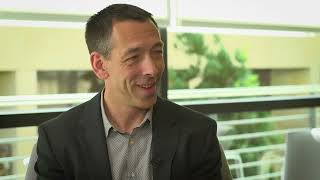
Dr. Euan Ashley runs the Undiagnosed Diseases Network, which diagnoses about one-third of 1,500 patients yearly through genome sequencing. Getting a diagnosis cuts downstream healthcare costs by 94%. He's pushing for more diverse ancestry data in genomic databases and using wearables to catch cardiovascular disease early.
Chapters
Dr. Ashley, your work with the Undiagnosed Disease Network was recently featured in the New York Times for helping rare disease patients receive diagnoses. Can you tell us a little bit more about this network and how patients and providers have benefited from this large-scale research initiative?
Yeah, the Undiagnosed Diseases Network is really one of my favorite things in the world. It started at the NIH in 2008 as a single center, and it started out of a need, I think, to try and answer questions for those who had no answers at all. These are kids, adults who've gone from doctor to doctor to doctor with really no answer. They have an undiagnosed disease, a rare collection of symptoms and signs that really no one can explain, and there was really nowhere for them to turn. And a group at the NIH had the foresight to try and do everything that medicine can in one place for those particular patients. And it was such a success over the course of several years that unusually they decided not to just continue it in one site, but rather to expand it across the nation. And now we have 12 clinical sites in the United States where patients can go who have this kind of problem, undiagnosed disease. And so we recently put together the data from the first 20 months of the program. And during that time, we saw— we took referrals from 1,500 patients. We accepted about 600 or 700. And we made diagnosis in a third of those patients. And so a third, I think, was a number we were quite happy with, given that when people came in the door, they'd spent sometimes months, often years, going from center to center without any answers. And while some of those diagnoses came from simply bringing together all the information in one place, what I sometimes call the Sherlock Holmes approach, basically combing through the chart, looking at the patient for clues, trying to really put the patient together, three-quarters of the diagnoses came from sequencing the genome either of the patient themselves or of their family. And so the power, I think, of the genome to be able to provide these kinds of answers was really, in the end, we felt quite significant. And one of the things we were most happy about, or two things I would say, one is that in 80% of the cases after we made a diagnosis, we were able to change something important for the family or for the individual, such as to say that we would change either by finding a new treatment about a fifth of the time we could find an actual treatment based on the diagnosis. About a third of the time we were able to change the diagnostic strategy, usually by doing less testing, because we now had the answer. And a third of the time we were able to help the family, and especially parents if there was a young child involved, make better decisions about the future, given we now understood the inheritance of the disease for their one individual.
How have some of the providers viewed this research initiative in their own kind of frontline experience? Experience caring for the patients that are involved in the network?
Yeah, I think that we, we work very closely and collaborate very closely with the providers, so we can take referrals from the patients themselves, from their family members, or from a physician. Regardless of where the referral initially comes from, we do go to the local physicians, and sometimes that's a general practitioner, family practitioner, sometimes it's a geneticist, sometimes it's even a regional-level geneticist, and we work closely with them, sharing with them the results from the study, explaining to them the genome data, and then trying to help with a plan that they can then put into place. Because obviously we can't be there for all these patients over the course of the next 10 years. We need to hand their care back to the local provider. But hopefully we hand them back with an answer and with a plan moving forward.
And so the goal of a network, as kind of a lot of us here at Stanford would see it, is perhaps an ironic opportunity in precision medicine initiatives to pattern clinical genomic data at scale. So looking at associations across millions of similar patients versus the current standard of several thousands in RCTs.
Yeah, one of the most exciting things about clinical genomics, I think, is just how it is a microcosm for what's happening in data and how we apply the insights gained from a population to a single individual. And I think this is never more clear than in this world of genomics because We can only ever interpret one human genome in the context of all the other ones that we currently have access to. And that's because we all have genetic variants. We're all unique. And that's because we have millions of individual genetic variants. Some of those cause disease and are really important and rare. Some of them contribute just a tiny amount to disease, not enough on their own, but when together with thousands or millions of other variants, they can contribute to disease. And some we believe to be genuinely benign, not causing any kind of disease or contributing any amount. And because of that, when we look at a new genome from a new patient and we're trying to solve their problem, we have to look at all those variants and try and judge which are important and which are not. And the only way we can do that is by looking at the genomes of all the other people that we have access to. We're fortunate now that we have access to hundreds of thousands of individuals. But we're still not resting because although we do have hundreds of thousands of genomes available, they're still mostly in a Caucasian population. And so we have a challenge where we really need to improve the diversity of the genetic data we have at scale, at a population scale, by making sure we have representation from all parts of our society, all parts of the world, because only then will we be able to bring really the best insight to the individual in front of us in the clinic.
Now, if we focus a bit more on treatments, What opportunities do you see exist to really learn from potentially off-labeling use of existing treatments in some of these rarer disease populations or potentially underrepresented disease populations as well?
Yeah, no, it's a really important question because when we're dealing with N of 1 cases, as we often are with the undiagnosed diseases population, we're sometimes dealing with something that has never been seen before. Often we're connecting one patient with the 4 other people on the planet who have that condition. So we're not talking about a population where we can do a randomized controlled trial of 10,000 people. That's just not there. And so we're in a whole different world. And we have to look, as you mentioned, to drugs that are perhaps approved for another indication, similar indication, that could be used for this one. In some cases, we have amazing stories where even supplements can make a huge difference. When we have a metabolic disease and we learn that the gene that is responsible is a particular enzyme in a pathway, then we can then understand what's missing. If we look downstream and see what's missing, there have been occasions where we find that the thing that's missing is available over the counter on Amazon, and they can— the family can literally order something that will help their kid on Amazon, and it can be delivered the next day. Those kind of stories just are so inspiring to us and really When we think of a test that also doesn't cost that much, I think although the first genome was potentially $3 billion, the Human Genome Project, we're now talking about $500, $1,000 for a genome. So a test that really is much cheaper, at least to generate the data, than say an MRI study, but one that can really provide an answer. And in this particular world, often the costs after doing the test are lower. So in the Undiagnosed Diseases Network, we looked for a subset of patients at the costs before they came to the network and the costs after. So effectively, we were looking to see how much can we save by interrupting the diagnostic odyssey or by solving this number of cases. And what we found was that the costs after we were involved were 6%. So there was a 94% reduction in cost. So suggesting that if we could work earlier before there was a long odyssey of many months and years, not only would we save emotional stress, an emotional cost, but actual dollars to the healthcare system. And so we're happy that the payers have started to wake up to the idea of genome sequencing and bringing it earlier by approving it earlier can really save them money, save the system money, and I think make everyone happier and healthier.
And why do you think that is? Does that, in your opinion, have more to do with the lead time that you generate with an earlier answer to a patient's clinical disease and their presentation, or do you feel that a lot of that value comes from establishing the appropriate treatment or potentially a novel treatment that could benefit the overall clinical trajectory for the patient specifically?
Yeah, I think it's both those things, but it's probably more the former. I think that what happens with these patients often is they'll go from one center to another, and many of the tests will will even be repeated. They'll go from one specialist to another specialist. And each specialist, of course, is an expert in their own area. And they do the testing that is pertinent for their own area. And in many cases for these patients, they decide that there's nothing abnormal, or they can't find the answer. So they move to the next specialist. And then there's another series of expensive tests. And then the next specialist. And then sometimes they move across the country. Maybe they come to a specialist center like Stanford, or to the Mayo Clinic, or the Cleveland Clinic. And often their tests will be repeated at that point. So I think a huge amount of the saving comes from simply interrupting that odyssey, just not having to do all that testing. If we get to the answer early, we realize that 4 of those 5 specialists, we didn't need to go there. We didn't need to check the liver, we didn't need to do the kidney work because the answer is in the nerves or in the brain. And so I think a lot of the cost saving is there. But equally, we're very excited, especially moving forward for the network, with the potential of finding these new therapies. And really bending the cost curve down for these individual patients by quite literally making them better. Right.
And you've also engaged in a lot of really interesting work to develop the clinical genomics program here at Stanford. And how has, in your opinion, kind of whole exome sequencing been used to identify new treatment opportunities? For patients that you've studied?
Yeah, I think that again, although the Undiagnosed Diseases Network is at the most extreme end, those are the hardest cases in medicine effectively, and they're the challenge. And we, we can solve a third of those, which is great. We want to work on the other two-thirds, and so we have our work cut out. But just as much as we're pushing the boundary on that end, thinking about metabolomics and other, other omics, proteomics, as another potential potential technology to help us move in that direction. We're interested in spreading what we've learned in the other direction, to make this kind of technology and these kind of insights available much more broadly. And that's part of what the Clinical Genome Program at Stanford is here to do, is to make sure that exome sequencing, genome sequencing is available earlier for patients when they really need it, so that our healthcare system and the whole healthcare system can really get the win from saving the money that can be saved by diagnosing these patients earlier. And that we can serve our patients better by not having them traipse from one doctor to another. And so I think at an individual healthcare system, we can take the learnings from the national network and apply them and really move us forward in getting new treatments, therapies, diagnoses for patients locally. And I think when we can do it here, then we can spread it through the world as well.
And I know that you've been involved in a lot of interesting partnerships with nearby and really international emerging technology companies on utilizing some of their device and mobile health technologies in experimenting with patients in clinic and analyzing potential digital biomarkers that you could generate for predictive purposes. So can you talk a little bit more about kind of the interesting projects that you've been recently involved with and kind of the future of those technologies?
Yeah, absolutely. We talked most so far about precision medicine, the idea of applying these technologies like genome sequencing to make the diagnosis of patients better. But in reality, we think here at Stanford about precision health. We like to think of the idea of predicting and preventing disease because our responsibility isn't just to those who've— well, those who are undiagnosed with disease, those who are diagnosed with the disease, but also to the large group of people who are at risk of disease. And so we have to think of ourselves more as a healthcare system, truly healthcare system, rather than a disease-focused system. So we have— and by doing that, I think we can have a huge impact. One of the ways of doing that is, I think, by embracing digital health technology. And particularly in my area, I'm a cardiologist, and so I'm interested in the heart. Cardiovascular disease is the biggest killer in the developing world and the developed world. So really across the world, cardiovascular disease is is the biggest killer, and we have, I think, a very potent tool in being able to measure the cardiovascular system because the pulse is pretty readily available and physical activity is readily available as something that a device like a wearable can measure. There is really no— across the whole of medicine, there is no more potent treatment than physical activity. Particularly for cardiovascular disease, there is no drug that can equal the power of physical activity to reduce the risk of disease, the risk of heart attack. And I think if we can measure something, we can begin to really change it. And so the opportunity then, I think, is digital wearables, for example, or even the phone in your pocket— doesn't even need to be a wearable— can tell you, can tell me, can tell your doctor much more about your physical activity patterns, how well you sleep, and if you have the heart rate, also what your heart rate is at any moment, what it is when you're exercising. By putting that all together, we can really start to get a picture of a full 24 hours of activity and exercise and sleep for an individual. And we know that all of those are incredibly predictive. I think if we can measure them, we can start to find ways of engaging people in their own health, giving them that information back, giving them some targets, and having them hit those targets. And we know that If they can be physically active, they can reduce their risk of heart attack by half, which is a huge win. So we're really interested at Stanford in using this digital technology to reduce people's risk of future disease, as well as using all technology to diagnose people better.
Right. And what would you say to critics who would, would push back on the notion that a lot of the data that we gather from these wearables and devices can be valuable feature sets that we input into a larger learning system strictly based on the fact that a lot could be potentially low quality and could produce kind of confounding issues at a large scale. How would you address those concerns?
Yeah, so I think we always need to think about the quality of the data that we use regardless of where it comes. And I think that whether that's in the electronic health record, whether it's a scribbled doctor's note, whether it's a phone call or a text page that isn't well written or that has a spelling error making the meaning indistinct, or whether it's coming out of maybe a more sophisticated level from an LED, a little light shining into your skin that's trying to tell you what your heart rate is. I think we're at risk from noisy data everywhere. But one of the real advantages about large-scale data is that to an extent the noise remains the same, the signal can be picked out. There's a certain power that comes from having large-scale data. Sometimes it's called the unreasonable effectiveness of data, and if you have very large-scale data, you can start to pick out patterns, or certainly computers can start to pick out patterns that wouldn't otherwise be seen. So we can tolerate some noise within that context, perhaps more than we could if we're looking at just a small amount of data data where a large amount of noise will swamp any signal that we have. And I think that this part of the artificial intelligence revolution, or at least the second revolution if you like, is that we can start to train computers on these large-scale datasets to really mimic the sorts of decisions that humans can make, but then really scale. Whereas a doctor could only see a few thousand patients probably in their career, a computer can theoretically look through millions. Of healthcare records and can really start to learn from patterns that might not be obvious to the human at all, just because the human can never put that many records in their brain at any one time. So I think we always have to be wary of the quality of the data. On the other hand, I think if we can gather together in a computable format large enough data, the noise, individual noise, starts to become less important.
And what are the themes here at Big Data in 2015? 2019 that you think are going to be evolving over the course of the next two days that are particularly exciting for you?
Yeah, I think that we're seeing technology impact medicine in so many different ways, but I think that we have to remember that technology is only part of the picture. We always have to have the human at the center, and the human that we're most concerned about is our patient, you know, either current patient or future patient if we're thinking of preventing disease. The second human we have to pay a lot of attention to is the doctor, physician, the healthcare professional. And if we're thinking about technology and how it interacts, we have to think about the effect of technology on both of those people. And at Stanford in particular, what we're trying to do is use technology to bring those two humans closer together. We're trying to have the technology step into the background. And there's a few different projects that we're highlighting at the conference here over these couple of days that really exemplify that. We'll hear that from the speakers on stage. We must never forget that the human is the centerpiece of this, and whether it's the social determinants of health or we're thinking about how robots interact with humans, say autistic children, then I think we always need to remember that it's the combination of the two that will really be the win in the end. And if we think of how the two interact, that will take us to a better place.
Great, that's fascinating. Thank you so much, Dr. Ashley, for organizing this wonderful event and for taking the time to speak with us.
Oh, definitely a team effort, but thank you so much for talking to me.
More from Joshua







Scientist Stories: Hans Waterham, The value of phenotypic assays in peroxisomal disorders




Scientist Stories: Joel Zlotogora, Genetic carrier screening programs for reproductive purposes