Scientist Stories, Euan Ashley, The Genome Odyssey
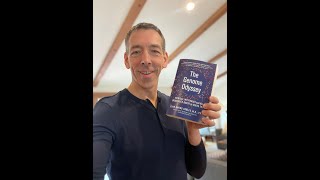
In a moderated virtual program hosted by the Commonwealth Club, Stanford professor Dr. Euan Ashley discusses his new book The Genome Odyssey: Medical Mysteries and the Incredible Quest to Solve Them with 23andMe CEO Anne Wojcicki. Ashley explains why he wrote the book – to share the awe‑inspiring journeys of patients and the collaborative nature of modern genomics. He recounts a flagship case of a newborn with Long QT syndrome, illustrating how rapid whole‑genome sequencing, deep‑coverage and mosaicism analysis saved the child’s life. The conversation moves to the dramatic drop in sequencing cost (the “Ferrari for 40 cents” analogy), the shift from rare‑disease diagnostics to population‑scale applications such as polygenic risk scores, prevention, and drug discovery. They discuss large‑scale cohorts (All of Us, UK Biobank, Million Veteran Program), the promise of super‑human genetics and Mendelian randomisation, emerging epigenetic technologies, and the ethical, regulatory and privacy challenges of genomic data. Ashley ends with a hopeful vision of genomics integrated into everyday health monitoring and preventive care.
Chapters
Become a sustaining member of the Commonwealth Club for just $10 a month.
Join today.
Hello everyone, and welcome to today's virtual program at the Commonwealth Club. My name is Ken Broad. I'm a founding member at Jackson Square Partners here in San Francisco. The firm is a proud supporter of the Commonwealth Club, and we are pleased to underwrite today's event with Dr. Ewan Ashley, Professor of Medicine and Genetics at Stanford University. And the author of the new book, The Genome Odyssey: Medical Mysteries and the Incredible Quest to Solve Them. In the book, Dr. Ashley explains the science and medicine behind genome sequencing, both how far we've come, but also how we are still in the early days of our genome odyssey. Dr. Ashley will be joining conversation today with Anne Wojcicki, founder and CEO of 23andMe, a company that enables individuals to better understand their genetics and DNA. Jackson Square Partners is focused on investing in disruptive innovations that foster societal benefits via better, faster, cheaper delivery in healthcare and other industries. Few areas have the ability to be as indescribably transformative as genomic medicine, where you can now buy the equivalent of a Ferrari for 40 cents, as Dr. Ashley will explain. Genomic advances have also allowed the rapid development and deployment of multiple COVID vaccines. Something that would have been impossible just a few years ago. Before I turn it over to Anne to begin the program, I encourage our viewers to become members of the Commonwealth Club. To learn more about membership and its benefits, please visit the club at www.commonwealthclub.org. To support the club right now with a tax-deductible gift, please click on the blue Donate button on your screen. And now, over to our moderator, Anne Wojcicki.
Thank you so much. It is such a pleasure to be here, and it is such a pleasure to be introducing Dr. Ewan Ashley, who is a longtime friend, also a neighbor, and somebody who my whole family is close to. And obviously, we've had the great pleasure of being able to work together in the field of genetics and research. So, I have to say, like, part of the reason why we started 23andMe was out of this passion for curiosity. And that I love, I love science, I love genetics, and I love that sense of discovery. Like, it really is, it's better than Christmas. It's better than opening a present and having, you know, making a discovery. And so, I have to say, your book, science books are not always the most riveting, but you do such a phenomenal job of giving that sense of the hunt and discovery. And so I really just want to open with that is like, you know, why, why did you write this book? What's some of your favorite stories? And, you know, what is it that like, tell me about that, that hunt that you have, have been on?
Well, yeah, I mean, what a pleasure. And thank you so much for, for, for doing this here today. Great, great to chat to you. And there's a few other people out there as well. Well, you know, I wrote the book because I live in awe of my patients' life stories, you know, from day to day, just what they go through. It's just incredible to me. And I felt that I really wanted to share that more broadly and really tell the sorts of journeys that they go through. And I think particularly in this era of genomic medicine, where we have many patients who toil for weeks, months, years even with undiagnosed disease, mystery diseases that no no one can explain, I think the power of being able to sequence the genome and what it can bring to them in terms of answers and perhaps eventually what it can bring to them in terms of therapies, that was what really drove me. But I'm really glad you mentioned science as well because, you know, I think science— people often think of science, as you say, as kind of maybe even a little boring. It has to be boring because it has to be rigorous. People in a lab doing things exactly the right way. But science isn't that. Science is about the people. Doing the experiments, it's about the ideas that come forward, and then the people they work with, 'cause nobody can work alone. This idea of the lone scientist isn't really true, and we certainly talk about that in the book. It's the teams of people that come together and the journeys they take together to make these new discoveries. And I think it's those two kinds of journeys, and of course, we ended up calling the book "The Genome Odyssey," which speaks to the idea of journey, the scientific journeys, the patient journeys, and how they kind of intertwine. Was really what drove me. And this amazing technology that we've both, you know, been close to for these last 10 years and pushing genomic data forward.
Yeah. So, like I said, it's that sense of the hunt. Like, again, one of my hopes here with your book is that you actually, like, that there's kids out there or teens reading this and they get that sense of like, this is an amazing adventure. I think of like almost like you talk about the story of, again, the little girl, the newborn with the heart issue, and like the hunt, like all those people who had to come together to solve this problem. And I think of like almost a pack rat of kids that like how they're like, again, figuring out how to create trouble, but like in some ways you are figuring out how to solve a problem. So maybe you could just tell us like, what is your favorite story in this book?
Well—
I know it's like picking your favorite child, which you can't really do.
I was just gonna say.
But maybe tell us one story that— that you think is just like almost one of like the one that sticks out the most in your mind?
Well, I'd love to tell the story that you mentioned. I think it illustrates many elements of the book and there are so many stories and every patient is so special. It was very hard to work out which stories to even include in the book. And there are many stories that didn't quite make it that we have to tell another day. But the particular story, yeah, that you mentioned in mind relates to a little newborn girl. And in fact, a little girl who came to our attention before she was even born. And she came to our attention because, you know, when mothers are pregnant, the heart rate of the baby is often measured through the abdomen of the mother. And what we found was that the heart rate of this little one was only 70 beats per minute, which is pretty normal for you and I sitting around at home or chatting. But for a little baby swimming around his or her mother's womb, that's too low. It should be about 140 beats per minute. We transferred the mom up to Stanford Children's Hospital and delivered little girl Astrea by cesarean. And at that point, it became very clear that she didn't have a heart block, which is one of the reasons you can have a low heart rate, but rather a genetic condition called Long QT syndrome. Now the QT is something that comes from the electrical activation of the heart. Goodness knows why they started in the middle of the alphabet with P, Q, R, S, T to name those waves instead of A, B, C, D, which might have been more reasonable.
—science a bad rap.
Yeah, I know. But for some reason, at some point lost in history, they decided to name the electrical waves of the heart P, Q, R, S, T. So the Q to T interval is the resetting of the heart after every beat. And that's really important because the heart needs to reset ready to electrically activate the next time. And if it doesn't reset in time, then in a little one like this, the heart rate goes down. Now, having a low heart rate isn't by itself a problem. What is a problem this little one suffered was a potentially fatal heart rhythm problem, which is called torsades de pointes, and it has a French name, which rather belies the fatalistic nature of the rhythm. And it's basically a cardiac arrest rhythm, which means the heart is not beating. There is no blood coming out of the heart. And on her first day of life, there were multiple occasions when her heart stopped beating and CPR had to be carried out at the bedside by the team. And one of the things that we talk about as a theme through the whole book is how we can use genetic information to really bring what we call precision medicine, more of a precise therapy. And what happens, of course, when a little one is that sick is we just throw everything at the wall. Anything that we think could work, we throw it at the little one. And she actually became one of the youngest kids ever to have a defibrillator, one of these devices about this size, placed Now, in adults, it's placed under the collarbone, but in little babies, has to be placed in the abdomen. So she became protected through that so that she could receive an electric shock. But what we really needed to do was to try to work out what the genetic basis of her disease was. And so we started by sequencing her genome along with a company, Illumina, the first of many partners in this little story. They had worked with Steve Kingsmore, a group— he used to be at Kansas, now at Rady Children's— to do sequencing faster than ever before. We talk about a bit in the book about how it's much cheaper than it used to be, and Ken mentioned the Ferrari analogy at the beginning. But in this case, what mattered was not so much the cost, but the speed. And they developed a way of sequencing the genome over 2 or 3 days, and we were able to get that data back and make a diagnosis. But in her case, and we have, there's another little baby we talk about in the book who had a similar situation where that was really the end of the story. We made the diagnosis, managed to make her therapy more precise, and she did very well. But the other story, amazingly, that there were two, in this case, it wasn't quite clear what was going on because it appeared that she definitely had this mutation that seemed to be just in the right spot, the right place to be causing this disease. But our computer methods disagreed. As to whether it was real or not. One of them said, yes, this is real, is the answer. And two of them said no. And so this is when we started to really lean on all our friends everywhere. A company we had started a few years ago called Personales, I called a few of my friends there. Folks there who were willing to come in on the weekend essentially and sequence much more deeply the two parents and the kid. We spoke to another friend, Steve Quake, who had developed a method for doing single-cell sequencing, because what it looked like in the end was that she might be one of these very rare situations, very rare individuals who had essentially two genomes. So when she'd been developing, a mutation had arisen in one of her cells, and then as she'd grown into a full-size baby, those cells have then spread through the body, and some of those cells had this mutation and some did not. So we worked with Steve for that. Then we worked with the company, Gilead Pharmaceutical Company, to help work out what that mutation meant what it meant. And then finally, we worked with a group at Johns Hopkins, Natalia Treynova, whose group do computer modeling of the heart to try and work out, is this really the answer? And she built an individualized 3-dimensional model. And so, as you said, yeah, this was just an incredible journey with this little one and teams from industry, from academia, patients, doctors, folks in the lab, genetic counselors, mathematicians, just all coming together. On behalf of this one little baby. And thankfully, in the end, she actually eventually needed a heart transplant. But I talked to her mom just a few months just before we finished the book, and she's doing really well, had her 5th birthday recently, and the story has a very happy ending. So yeah, it's, for me, just a really fun opportunity to try to bring people together from different places. And I think, as you said, if kids are thinking about what to do with their lives, then I hope this kind of a scientific adventure on behalf of patients might be something that they'd be interested in.
It's such an amazing story because it, one, it shows like how much of an impact you had. Like, of all the things you can do in life, like you had a meaningful, like you saved this person's life. Like you guys really, again, but it has a massive impact on someone. And it really came from how you were so resourceful at pulling all of these various points. And to me, there's almost that sense of a shock, like, she has two genomes, people. Like, when did that part of the plot come in? Like, who knew? Like, it's such an interesting part. Like, I don't know when we first sequenced the genome if we realized that this could happen. But like, that's like, that's to me, it was like, it's almost that moment of science, like, holy cow, you can actually have this, you can have the mosaicism, and then you have the chimericism, like, you can have different, your body's not all the same. And so you, there's so many surprises, right? Which is part of what's so fun in, again, the stories that you tell. So it's almost where I think back on like, And you talk, you start the book talking about the Ferrari example. And so I'd love to actually hear your thoughts. Like when you first saw the human genome being sequenced back around the, you know, around 2000, what did you think?
Yeah, I mean, it was, I think, a remarkable moment. I mean, at some level, I mean, obviously I'm a doctor, cardiologist, as you know, and, but at some level, you know, my geekdom is the thing that really comes to the fore, like from being a very young age. I love computers and science and data. And I think I'd never really thought that— I kind of kept those two separate. On one hand, there's a sort of pastoral aspect of being a doctor and trying to look after people. And another is this kind of geek world. And I think when I first came to Stanford, which was actually not long after that, 2002, I realized around that time that these two things could actually come together. And this technology that I love so much and the application of computers and understanding data could actually be applied to medicine. But up to that point, medicine had been pretty low throughput or low data. Like in the cardiology world, we would send a cholesterol panel and you might get 4 or 5 numbers back and that would be it. I mean, that's— so we think about your bad cholesterol and your good cholesterol and your triglycerides. But all of a sudden, Genomes were available and genomes were 6 billion letters of data. And I just, the idea that medicine wasn't really set up to deal with that kind of data was a lot of what drove me. I mean, I think that, yeah, just in those early days, as I mean, at the beginning, there were only obviously this one genome that cost $3 billion, at least it was funded, the Human Genome Project, 10 countries, 10 years. And as I was saying in those early chapters, you know, in the end, it's a patchwork quilt of DNA from multiple people. So it's about half a genome, but it really underlines what we— the reference sequence is what we've used all these years since to build tools like the ones you have at 23andMe that can begin to describe really important things about people's genetic makeup and democratize that information. And that's what I think has been exciting about bringing down the cost. And, you know, I think that we mentioned I should explain that for people that haven't— I mean, basically, there's a famous graph that the National Human Genome Institute put together that shows this incredible decline in the cost of sequencing from $3 billion, which it was in the early 2000s, to $500 now, maybe even a little less, to sequence a human genome. And that level of reduction in cost is just spectacular and kind of unprecedented, maybe even in the history of medicine. And this graph was basically— it showed Moore's Law, which we're very familiar with in technology world. Gordon Moore, the co-founder of Intel, described this idea of technology moving forward really fast, basically that transistors, the number of transistors you could put in an integrated chip would double approximately every 18 months. And people took that as emblematic of the speed of technology moving forward. The amazing thing was if you plot the reduction in cost of human genome sequencing against that, it tracks it until about 2008. At which point it just leaves it in the dust. That reduction in sequencing goes so much faster. And we would basically show this graph, those of us who were excited by this world, to the point where people would start to run bingo cards at the conferences. They were like, okay, now you've shown the graph, we can, we can move on, because everyone would show the same graph. And so I was preparing for a talk one day. I thought, I need to find another way of saying this. And I thought, what, what is something that's really expensive that Some people want that we could, you know, parallel— Oh, there you have it. Look at that. Perfect. Visuals as well.
Visuals as well.
I'm serving as moderator. That's incredible. Plus gymnastics as you lean backwards.
Very good.
Some stretching.
That's right.
We've got to get that going too. So yeah, Moore's Law shown there at the top in that white line. And then the green line is the reduction in cost of human genome sequencing. Look at that. Pretty incredible all the way down to the—
It's pretty amazing that's happened. So go on.
Yeah, yeah, just incredible. So, but a graph is a graph and, you know, some people love graphs. I love numbers. But so I thought I was sitting there making slides for this talk and I thought, well, people like Ferraris too. So I should look at a Ferrari and I would drive past one actually on the way home where we used to live in Meadow Park. There was a Ferrari garage there and I would, you know, being a, junior doctor at Stanford, academic, a little bit out of my range. But I would do mental math in my head. I'm like, well, if that car that was like $350,000 was as cheap as genome sequencing was now, and it basically was $0.40 at the time. And if you convert it to today, which is a few years later, it's probably $0.05 or maybe even $0.01, depending on which number you use. So I started including that in my talks. And actually, what happened is that that's all anyone remembered afterwards. And so people would come up to me years later and go, "I saw you give a talk 2 years ago. That Ferrari thing, I liked that." And I would like, "Okay, well, you know, if you remember one thing, that's probably it." So when it came time to put the book together, I thought, well, maybe that's an analogy that helps people understand just how rapidly these genomic data is now available.
So yeah, kind of amazing. It's absolutely amazing. Everyone can relate to a low-cost Ferrari.
Yeah, right, right. A Ferrari for you and one for you and one for you. Yeah, so. Exactly.
It's almost like an Oprah thing. Coming down in the same cost curve, but it is, I mean, it's remarkable how much genetic information has become, you know, cheaper to acquire. So that kind of is my next thought. And, you know, when I think back on that moment when the first sequence came out, and then we talked all, you know, Francis Collins came out and talked about the opportunity for the human genome to really transform how you predict disease, you prevent disease, and you treat disease. So do you think, like, how far do you think we are on that journey? And what have you been excited to see happen? And then what do you actually wish you saw more of?
Yeah, well, I think the first thing, you know, I start the last chapter with this quote that I love from Bill Gates, which is that most people overestimate what they can do in 1 year and underestimate what they can do in 10. I think because it's 10 years now since then, and maybe a little bit more than 10, that many of us, for you, I think, have been involved in this world, I think that's really true. In 2009 and 2010, when the first genome, we worked on Steve Quake's genome, and he was the 5th person in the world to have his genome sequenced, we had the sense that maybe by next year, naively, in 2 years, everyone would have their genome sequenced. I think that clearly, that didn't happen. But on the other hand, 10 years later, I think we're at a really interesting point. So how did we get from there to here? The first thing is that I think we all thought that initially pharmacogenomics, the idea of using genomic information to help prescribing, the idea of personalizing medicine through prescribing, was the next big thing. And it didn't quite happen, and it still hasn't quite happened, but I do think we will eventually get there. What happened quite quickly, though, which was really exciting and really reflects the content of the book, was that the genome became really relevant for these people with rare disease, genetic disease, undiagnosed disease. And within just a few years, the genome, or perhaps sometimes the exome, which is just the 2% of the genome that is represented by the genes, you could sequence just that 2%, that became much more commonly available to the point that we were starting to solve these conditions. About a third of the time has remained about the number over the years. And it has just been transformative for that group of people with rare disease. And so I think that that's been a major change change. And to the point that we now are sending genomes and exomes routinely, almost every day we're sending for someone in that setting. But what I think is really interesting now is that we now have gotten to the point where I think we have enough information on large populations. And some of it is through large academic groups coming together, like all of us here in the US or the UK Biobank, Some of it, of course, is through companies like 23andMe, where large, very large millions and millions of people have their genetic data stored. And what that has allowed us to do is get to the point where, as well as having information for the folks with rare disease, and just this is the week of rare disease, I should mention that, you know, the last day of February every year is Rare Disease Day. So this was Sunday, just a couple of days ago. Of course, it's the 28th, 3 years in a row, and then 29th some years. And so for rare disease, That's 1 in 10 people. So usually people are very surprised to learn that 1 in 10 people has a rare disease, which means that collectively rare disease is as common as diabetes. So that's where most of the impact of the genome has been so far. That's a significant impact. But the question I get asked most often in my cardiology clinic is when's the genome coming for the other 9 out of the 10 people, the people who are gonna get heart disease, who are going to get cancer, who are going to get these common diseases. And that is, I think, why right now is a really exciting time because The genome's had this impact on those rare diseases, but we know through these large groups have the confidence to be able to refine our estimates for these common diseases like heart disease, heart attack, diabetes, high blood pressure, cancer, using what we now, what we call polygenic risk scores. I know that these are familiar to both of us, but this concept of using genetic information across the whole genome where each individual variant is a small effect, but you add them together and you get a significant effect. So for example, the genetic data we can get from your genome is a better estimate of whether you'll have a heart attack than asking someone if they smoke or knowing if someone has diabetes or knowing what their cholesterol is. And of course, the most important way of doing that is to essentially put all of those data together in one prediction model. And we've been working recently with a company. Peter Donnelly is one of the leaders in this field. I know that you know him well. From Oxford from early after this information became available. And we have been working recently with them to think about what those scores look like and how that might integrate with those kind of regular risk factors. And I know you've been working in that area too. Mm-hmm.
Oh yeah, I think it's an amazing area. So it actually, this whole concept of like without a doubt, like I see more and more genetics has been penetrated into the undiagnosed disease area, cancer, rare disease. But you have a quote in your book, page 46, "Despite dropping prices, few genomes are sequenced solely to guide preventative care." And that to me is really sad. And again, when I think about that vision that Francis Collins laid out, like there's absolutely this potential to have every single person sequenced. And it's no longer about price, right? Right. It's absolutely affordable. And so that's kind of what I want to just like get into a little bit is like when, when does that vision happen? Like when is it that it just is like totally normal that everyone is getting their sequence and then want to jump a little bit after that into the All of Us program? Yeah, yeah.
Well, I think that we're there. It's certainly from these early days, when we think of the last 10 years, it's a question I've been asked every single year. When is the moment? When is it relevant for me? And thinking specifically about primary care, or maybe you don't even need a doctor. It's your information. Maybe you should have it for yourself, right? And I do think we're there. So clearly cost was part of it. And just as the information to be able to use the genome for rare disease where you cover each spot, you know, 30 or 40 times, whereas that has come down in cost. In fact, to do a lot of this prediction for common disease, you don't actually need to cover each spot 30 times. You can actually cover each spot 1 or 2 times or use one of these little tools, these microarrays that give you that information and map that to the millions of data points that you need to refine these estimates of how likely you are to say, have a heart attack or suffer cancer. So when it's down at the cost of a haircut, which is basically where we're at now, we're into two figures, $50, depending on exactly where you are, even a little bit less for some data, a little bit more for others, it's possible to have that data. And I think increasingly it's clear that we can use that information in an actionable way. So good example, I mean, again, from my area of cardiology, but heart attacks are the most common cause of death in both the developing and developed world. You'd think that if we had a method available for the cost of a haircut of being more precise about estimating your risk of having that, that we would use it. I think that heart disease is almost right down the middle, 50% nature, 50% nurture. So nobody's gonna say that it shouldn't be about exercise and diet, right? And you're definitely not gonna hear that from a cardiologist. I spend much of my life trying to get people to exercise more and eat better. But it's 50% nature, right? 50% is in your genome. And people are remarkably poor— and I'm speaking for myself— at remembering and notating what their family history is. And of course, your family history is only your family history. You don't actually know which of your family history traits that you actually inherited. So much better than that is getting the information from you yourself. And so that's where I think it's finally time. And we have enough confidence now in these estimates from these polygenic scores to be able to say we should be incorporating them. And I think that it's very clear that the individual traditional risk factors help you predict. It's clear that the genetic data is a little better than any one of them alone. And then together, they're just much better. And so if we start with a recommendation, let's say, and this is from the American Heart Association, if you have a risk of a heart attack over 10 years, risk predicted of more than 7%, you should probably be on a cholesterol-lowering medication. Well, we can estimate that either by including the genetic information or not, and it's better if we include the genetic information. So, I think we agree on this significantly that it's time that people—
Well, it's funny what is interesting. So, for instance, like, 23andMe has polygenic risk scores now in the cardiac space. And what's interesting is that the system, like the healthcare system as it is, and this is one thing that I had always found frustrating, is that prevention, and again, you call out prevention specifically. To get treated, there's a full path. But when you get somebody who is, if someone comes in and they're genetically higher risk for atrial fibrillation, it's not part of the existing reimbursement system.
Right. So how—
do you think we have to create a new type of care to really drive home the adoption of primary care genetics? And like you, I mean, and I know you as a physician and I know like the empathy you have and like how much you want to really help. It would be so much better if you could prevent. Right. Like that's absolutely your goal. And so how is it like that we— because that's the beauty of, you know, polygenic risk scores and some of the opportunity to prevent.
100%. And I think that I touched on that at the beginning and then a lot more at the end of the book where I sort of look to the future, which is one of prevention, I think, which is really what we're hoping for and looking for. And I think that certainly, it's almost a cliché now that our healthcare system is really a sick care system. We wait until someone is actually sick and then we looking to see what we can do about that. And I think that increasingly, we know. I mean, just as an example, I sometimes use— I downloaded at one point the inspection guideline for California State for bridges. And it's very long. It's like 75 pages. And all the— yeah, yeah, no, that's about right. Yeah. But we build a bridge. We put it up. We understand that it's going to be weathered and that over many years, parts of it eventually will fail. And that bridge is important because there are cars and people going across it. We understand that we should check things every few years because, you know, there are weak portions and that after 30, 40, 50 years, you know, that somewhere will fail and we should make sure we get it before it fails. But when it comes to the most important structure of all, in many ways, our human body, we're content to just wait till something falls off, you know, wait till the shoe drops and then we'll, oh, I wonder why that happened. And I really do think that we need to move forward and I do think that genomics can help. Because essentially the sorts of data we have, and this is the unusual thing about the genome, is it can provide the data across all diseases. Now we have a varying amount of confidence in each one. I mean, I think we're both definitely at the point where we're convinced that for heart attack, we have that confidence and actually for many cancers now too. And there are other diseases where we probably don't have the confidence in the scores for all diseases yet. But the amazing thing is the same data, whether it's the $50 you spend for that information, that once you've spent it, We've already spent it. That data is there. You could then get estimates for even eventually hundreds of diseases and at this point certainly a handful of really important ones where we have the confidence. And so I would love to see a health care system where we take the idea of prevention much more seriously. And a lot of it will come down to really hard things like trying to get people to exercise more and eat better. But I think that information is power, you know, and it's really empowering to people to understand, you know, everyone starts out with a pretty high chance of getting cancer. Chance of getting either heart disease or cancer, but wouldn't it be nice to know which one? And then, or Alzheimer's disease and others where there are specific things that you can do and specific places you can work on with your life to know which, you know, it'd be nice to know what you should be working on. Absolutely.
So I'm gonna ask one more question and then I think for people to feel free to send in their questions and then I'll turn it, I see a couple questions have already popped up, but then I'll turn over the questions. But you talk a little bit about All of Us and you talk about it quite a bit in the book, but then you just mentioned it briefly in this conversation. I'd love to hear your thoughts there. And then also the potential for All of Us and what do you think that will, like what will that drive and what will like the end consumer eventually be able to get from that?
Yeah, so for those who don't know, All of Us is the major program that came out of what was announced under President Obama in one of his State of the Unions, and what was formerly called the Precision Medicine Initiative. This is the Cohort Program, the idea that really came from the highest level of government. Actually, one of the really fun things that I got to do in the book was dig a little bit into the history of a few of these. I was lucky enough to, with help from some folks who were part of the Obama administration and the Office of Science and Technology Policy, folks like Claudia Williams and DJ Patil and others, be able to kind of get an inside view. And John Holdren, who was head of the Office of Science and Technology Policy, was actually a critical part of this. And in fact, I tell in the book the story of Jill, his daughter, who was someone who suffered from cancer, and she was kind enough to share her story. And really, she became very motivated because she understood that there was a family history of cancer. Cancer. And she was really pushing her dad, in this case, to be tested. And eventually, he was tested and he was found to carry a genetic variant that would predispose her, if she had inherited it, to cancer. And she was then immediately tested and she had it. And then she had some investigations and was found to have an early form of cancer. And so she almost immediately went to surgery. And so the very beginnings and the origins of this story were at the highest levels. I mean, they're literally in the Office, and she spent time with President Obama. He was very interested because of his own family history of cancer in his mom. And this really drove the bringing together of threads that had been sitting there for a while. So Francis Collins had talked years before, he's the head of the NIH, about bringing together a cohort, and others had come forward with the ideas that had kind of not quite gathered their momentum. But when they were given that momentum from the president, it really took off. And in that part of the story, I also talk about Eric Dishman, a really inspiring patient and inventor, innovator, entrepreneur who helped at the beginning lead that program and has now stepped back a little bit. But it really came from that place. And the idea was to have a million individuals sign up to be partners. And this was one of the most amazing parts of it. I think really influential, I hope, for other studies going forward, because that had not been the norm to think of the people in the study as partners, not just— certainly not subjects, not even participants, but really partners in the science that would be ongoing. And so people willing to share their medical records, their genetic information across a diverse group in the US, and then be willing also to be followed up. So there's a digital platform that Eric Topol and others have been championing. Josh Denny and others now running, Stephanie Devaney running the program centrally. And they're hitting targets for diversity. They're hitting targets for getting hundreds of thousands of people in, and they've even started to return some of that genetic information back to those individuals. And so I think it's been a big success so far, but obviously I think we're just a drop in the ocean compared to the sorts of impact that it could have. And we know a bit of the impact it could have because of some of the work with the UK Biobank. So the UK was a little bit earlier in taking on a large cohort program, had 500,000 people in the UK, and that has led to now thousands of scientific papers. And so the sharing of that information, I think, has been really has been really powerful in terms of pushing science forward.
So that taps into one of the questions that we have here a bit, is, you know, about the future of genetic research and development. And also, you know, when I think about like what really is that potential of some of these incredible, you know, databases, communities that have come together.
Yeah, and I think so we touched on one of the things already, which is just having much larger numbers has allowed us to be much more confident in these predictions. So when we're actually thinking about preventing disease, we, these cohorts like the ones that you have and from the UK Biobank and from others and eventually all of us too, give us this significant confidence in being able to predict and prevent disease. And I think the diversity component really important in that because a truly globally diverse population cohort for genetics is something that we're all aspiring to. And that like many areas of our world in the last, for a few decades, there's been an overrepresentation of white men everywhere. So we really need to correct that. And that's part of the mission of all of us. But one of the other things that I'm incredibly excited about, and there's a couple of chapters on this in the book, is using that level of population data. I know you agree with this too, but to build better drugs, discover better drugs. The amazing thing about human population about the human population genetics is that so much of what we might want to do with new therapies is already encoded in genomes if we just look hard enough. So there's a chapter called Superhumans where I talk about some of the individuals who really have kind of superhuman genetic mutations. These people walk among us and they have incredibly low cholesterol, for example, or they have a little better way of pushing oxygen out to their tissues. And if we study those people, if we can find them with these big cohorts of individuals with genetic information, we can find targets for new therapies. And we can go one step further than just finding the target. And this is a little bit more complicated, certainly won't go into the details here, but there's something we can do which, and just thinking about your t-shirt, it's called Mendelian randomization. This is Gregor Mendel there. And it's a way of— And it's special for you. Yeah, I know, it's perfect. So, and there's a way of basically doing almost like a kind of clinical trial that's randomized, but with the genome because genetic variants are shuffled as a new embryo is made in a random way. And that embryo is made before any of life happens. Because of those two things, we can use that along with this genetic information to truly work out if something if one thing causes another. Normally, that's pretty straightforward. If it rains, people put umbrellas up. None of us are confused and think that it was because someone put an umbrella up that it rained. We never have a confusion there because we understand how the world works. Interestingly, in a world that we don't understand yet, where we're exploring in science, it's actually not that common if two things coincide to know if one caused the other or the other caused the one. Mendelian randomization is an interesting tool then for drug discovery. Using genetic information that allows us to get not just that what's associated with, you know, X and Y are associated, but rather X causes Y. And that gives us the confidence to move forward in developing a drug, knowing that we might be able to reverse the disease if we can establish that relationship. And so I think I'm really excited for the next 10 years in being able to take these large groups of patients and essentially using that genetic information, work out what new drug targets are, and really do that in a way where we stack the dice. Before, it was like, I have an idea. This might work. And drug companies would spend all this money. But now, we have this genetic information at scale that allows us to say, this really might work because we have evidence from human genetics that this is the right target.
We have other questions here, but I have to jump in because, again, I get that privilege as moderator. My path, like, I find it so interesting that all of life comes from 4 base pairs. Yeah. Like, in some ways, like, it's— we draw that analogy for kids of like, it's like cooking, but you only have 4 ingredients and you mix it up in different ways. And sometimes you get a banana and sometimes you get a monkey and sometimes you get a human. And it's like, for me, this is so mind-blowing. Right. So, like, one question for you, like, will we ever have enough data to ever absolutely understand the human genetic code and be able to predict function from the genes? Ah, yeah.
Well, you know, I think that stating anything confidently in relation to the human genome is something I stopped doing a long time ago because We've just been humbled too many times. And, you know, I think, I mean, let's face it, we used to call 98% of the genome junk DNA. I mean, that's a phrase, junk DNA. I mean, what kind of arrogance did we have as a species to think that nature had decided 98% of our genome wasn't doing anything? And so every year, we're sort of embarrassed by finding out more important things that happen in that 98%. And in fact, even just yesterday, I was at a conference meeting, a virtual conference, and they were talking about the complete finishing of the human genome, because really we have a lot of the really important parts, but the really hard-to-get parts, we're still not quite there. And so we're only now just actually finishing off, like polishing up the last few parts. And some of those parts, it turns out, are gonna be really important for disease. The other thing is that, you know, with these rare diseases, I thought we can often make a diagnosis 30, 40% of the time, but that's not good enough. I mean, that's still leaving two-thirds of those patients without answers. And so we need to do better, push the technology further. We need to get better computer methods to come up with answers. Maybe sometimes it's even not the genome. You know, maybe it's actually the environment or maybe it's the immune system, which is pretty interesting because the immune cells actually rearrange their DNA in order to focus on things like viruses. We all know about viruses this year and last. And so sequencing the immune cells is actually a very interesting approach to understanding the immune system. So I think we have a lot of work to do. To go. But as you say, 4 letters, unbelievable complexity with a genome that connects us to essentially every living organism on Earth. You know, sometimes I get up and feel not that much different from a banana. So I, you know, I'm in tune with my genome there.
I do have another t-shirt that says 50% banana. So because you do have, you have DNA in common with the banana. So it's helpful for people to remember, like, It's really true.
It's somewhat humbling and really true.
It is humbling that you are similar to a banana. Like, you're not that far. So, um, it's the, the points that you raise there actually tap into another question about epigenetics. And, um, you know, how do you use epigenetics? Are you incorporating that into your models at all? So, like, your thoughts there.
Yeah, no, really important. And then for those who aren't that familiar, uh, epigenetics is really Well, it's defined in lots of different ways, but in the broadest sense of it, it's really thinking about anything that determines whether a gene is turned on or off. And it turns out that there's a whole level of mystery there. Some of it comes from these regulatory regions of the genome, which are basically the 98% we used to think of was junk. So there's a lot going on there, something they call promoters and enhancers. Those are two ways in which genes are turned on and off. Turn off. There's ways that genes can kind of be— because the genome is in a three-dimensional structure, and increasingly, we're learning about that three-dimensional structure. The double helix was something we knew for many years back, but understanding now how the genome actually opens up to allow genes to be expressed in a given tissue, that's also part of epigenetics. And actually, the genome itself can be modified with chemical changes. Some of the really exciting new approaches to sequencing actually get you some of that information at the same time. Traditionally, sequencing has been done through the company I mentioned earlier called Illumina. Most of the sequencing that's been done in the world has been done using that technology. And actually, the origins of it from a pub in Cambridge in the UK, I talk about one of the chapters in the book. But newer technologies are here as well. And I think they're very complementary. And we call those sometimes long-read technologies because the the molecules of DNA that they can read as they spell out are much longer. Instead of being 100, 200 base pairs, they're more like 10,000, 15,000. And as those long molecules of DNA are kind of pulled through and read, you can pull extra information, in this case epigenetic information, out. So we're starting to be able to use that. Of course, it's tissue-specific, which means that every cell in the body is, you know, has an identity, a liver cell or a white blood cell or some other muscle cell. And they start their life with the same blueprint, which is the DNA. But which of those genes are turned on and off and expressed at what level, that comes down a lot to epigenetics. And that epigenetics is impacted by our environment. So there's a lot of interest, for example, in things like exercise and what impact it has, let's say, on the epigenetics of our muscles. Really important area and one that we're gonna get lots and lots more information on as these newer technologies come through where we kind of get that extra information along for the ride. Like, not exactly, nothing's for free, but it does come along. You get the A, T, G, and C letter, but then you'll also get every few base pairs, a little indication of the chemical changes that happen to the genome.
Yeah, it's such an interesting area. I would love, We haven't seen— I'm super eager to see where the epigenetics world can go and how that information gets to be incorporated in. I'm going to transition a little bit because you can't have a conversation about genetics without also tapping into some of the ethics, the regulatory, the privacy, all of those questions. So we do have a question about whether or not the government is keeping pace with scientific advances or behind the curve. I'd also love to expand this, not just the US government, but like globally, because obviously there's, you know, there was a whole discussion recently about China and all the things that they're doing. So love to just hear your thoughts globally on regulatory and privacy and transparency.
Yeah, I think, of course, a really important question. And at some level, we always answer it by saying that the privacy question is key for any kind of information that you have about yourself. It could be your bank account data, your tax data, your medical data is obviously particularly sensitive. And that's the case whether it's your X-ray or your cholesterol panel. There is, of course, a difference with genetic data in that it is at some level identifiable. Now, it's not that you can just take a look at the stream of letters flying by and you immediately know who that person is and what diseases they might be susceptible to. It's obviously quite a lot harder than that. But we do treat genetic data a bit differently. And I think that that's not unreasonable. I think the good news is that we have experience in dealing with highly sensitive data. And the government has experience in dealing with sensitive data. Well, the banking industry is another one, but Department of Defense, clearly. There are precedents for this. But the healthcare system is not necessarily known for being the best from an information technology standpoint. I think many of us have realized in this last year that a lot more can be done when the forces are right, you know, and that telemedicine has finally taken off and the use of digital technology that has been ubiquitous in our lives for years is now making its way into medicine, which is a good thing. But I think that also raises these questions of privacy and they're really important. And so I think that we need to continue to pressure our lawmakers to make sure that they are keeping up. I think one of the challenges is that when innovation moves so quickly and technology moves quickly, right, it's hard for regulatory agencies that are usually underfunded and understaffed to move as quickly as they need to. And of course, they have a narrow remit. We've had conversations like this in the context of the pandemic. And you may have read articles about the idea that a lot— while there's been great clinical testing from labs and hospitals like Stanford and UCSF and others. What we haven't really had is at-home testing. And we should be able to test at home for COVID. We should be able to test at home for respiratory viral illnesses. And we should be able to do that in a way where we can get the result right there and then. And this technology has been around and it's been very frustrating, I think, to many that that hasn't been there. One of the reasons has been that it falls a little bit in between two stones from a regulatory perspective. And so I think that's clear both for genetics generally and the specific viral genomics that has driven a lot of the diagnostic and therapeutic approaches to the pandemic. I think we're seeing, fortunately, of course, the vaccines coming through now, which is great. But what we have never seen over this whole time is the widespread application of at-home genetic diagnostic testing. And I think part of that is the fact that the regulatory bodies are, ill-equipped to move as quickly as the technology allows. And so that's something that, as you said, it's not simply a US thing by any means. And the GDPR laws of Europe in terms of privacy of data have been really important, a big overhead for tech companies and for healthcare companies. They have absolutely the right heart, which is to make sure that people's data is protected, But there are times when people really want to share their data. I mean, an interesting contrast is with our patients, the rare disease patients. They want to tell the world because they're looking for anyone to help anywhere. If there's a chance that someone else in another country has a variant in the gene that their kid has, for example, they want to know. In fact, we have examples, stories I tell in the book, in particular, Matt Might. Basically, his story started when he wrote he deliberately wrote a viral blog post in the hope that he could share his family's challenge as widely as possible to be able to find an answer. I do think we have to get the right balance between appropriate regulation that can move fast enough, obviously, privacy at all times and power in the hands of the person whose data it is. They should hold their data and be able to determine who gets it. We should also have mechanisms if they want to share it to make sure they can share it safely. Safely and securely. And I think that's going to be a really important part of the next 5 or 10 years.
Do you have a sense— we got one question about this— do you have a sense of how many people actually have been sequenced or genotyped yet?
Well, I think genotypes are a much bigger number, and I think that when we look at estimates and, you know, we mentioned that there are somewhat smaller numbers, 500,000 in a few different different academic groups. A million is the aspiration for all of us. Actually, a much larger number of people have their data, of course, with companies like yours and 23andMe and Ancestry and others. And so I think that's definitely in the tens of millions of people for sure for that level of data. I think it's a little bit lower. It's probably single millions for actual full sequence with deep, deep coverage of every spot in the genome. But it's certainly changing rapidly. And I was at a meeting last year with I think 40 countries represented, and each one had a program that was being put out there to sequence millions of genomes. And so here, even in the US, as well as all of us, we have the Million Veteran Program that's already recruited 7, I think 7 or 800,000 veterans, and over 100,000 of those already sequenced. In the UK, there's Genomics England, which has sequenced over 100,000 individuals. So that's continuing to rise rapidly, both in terms of the between the more broad genetic data that's a bit cheaper that can help predict disease and then the deep sequencing that we use for diagnosing rare disease.
So one area that I— Tabetha, you don't talk as much about this in the book, but it's been very topical of late this month. There's been a couple editorials in— or articles in New England Journal and others out there about the connection of ancestry information with health.. And one thing that 23andMe has done, and we published on this, is that we saw that a number of our customers who have the BRCA variant, and which is this typically, again, one of those 3 common mutations traditionally associated with Ashkenazi Jewish population, that over 30% of those customers never knew they had Ashkenazi Jewish ancestry. And we see it similar as well as like people who don't necessarily know that they have African ancestry. And are carriers for sickle cell. So like that, I'd love your thoughts as well there. Is, is that an area where healthcare, um, like starts to use genetic information instead of, you know, traditionally profiling an individual? So it's, it's one aspect. Again, you're the physician, I'm not, but like almost the first sentence of every physician's medical record is about, you know, 45-year-old white male comes in. And blah, blah. So love your thoughts there as well.
Yeah, and a very difficult but really important question. I mean, obviously the history of genetics is tied up with misconceptions on the history of race. And we have to first state, of course, always that race is a cultural concept. But I think we miss a trick, if you like, if we simply allow a mapping either directly or formally or less formally, as you describe in a medical note, between those self-professed cultural concept of race, which has its own independent and individual and important implications for health because of healthcare beliefs predominantly, and a biological aspect of ancestry. And I think it's helpful to use those different terms that I think is underutilized in our ability to try and actually reduce disparity across medicine. And I think, you know, you have a great example of it there. In the same way that our reference sequences in genetics have been way too weighted towards the European or the Northern European population, essentially white population, also every other measurement we make in medicine has been too weighted towards the normal pop— I mean, every time you have a sodium measured, you know, there's a normal range. Every time we measure the thickness of your heart, there's a normal range, or blood pressure, normal range. Those normal ranges actually were not developed in a diverse population. And I actually do believe that there's an incredible change and a very powerful change coming to medicine when we learn better how to integrate that ancestry information to be able to understand better exactly what is normal and what is not by having a much more refined estimate of the normal that I would even like to see, as you said, the power of the genetics is that nobody has a single ancestry. If you walk along your genome, you have elements of your genome that reflect the history of the human race. And we're all essentially tapestries at the end of the day. But knowing where those different parts of your genome map, and even down to the individual kind of addresses on your genome that map to those different parts, actually, I think we really need to start using that information. And we're quite excited to do it. I mean, just one very simple A simple example from our practice is that we often will look to decide if a variant in a gene that we found causes, let's say, an inherited heart disease. If it's very rare, we'll say, well, the chances of it being very— of it causing this disease are much higher because it's not been seen in anyone else. But that's anyone else traditionally has been anyone else in this very much European population. What we often will do is nowadays, thankfully, is be able to go to a bit more of a diverse population and check. And for many of the variants that we thought thought were causing disease because we hadn't seen them in the European population, we find out they're common, let's say, in an Asian population or an African population. So it's vitally important we have that information, those broad populations. But then also, I agree, really important that we start to use it in medicine as well.
So I just want to end with, you know, what is your hope? Like, if we reconvene in 10 years, what do you hope do you hope to have seen happen?
Yeah, well, I guess first of all, if we listen to the Bill Gates quote, I have no idea. So we're gonna be surprised by whatever we've achieved. But I really do think that we're at the turning point of the integration of genetic information into medicine. And so beyond where it's had this impact to date, I think for rare disease, I think we're gonna be solving more mysteries, which is great. That's the first thing. We'll get better information. We'll get information across those dark corners of the genome that we've been missing using new technologies. We'll have better computer algorithms. It'll be faster and, yes, cheaper. And, when we find something, we're going to be able to compare it to tens of millions, maybe even hundreds of millions of genomes from around the world to give us real— just to give us real confidence in what we're finding. So that's exciting. And then, I think we're going to start integrating that information into the rest of healthcare and even things like digital data. We are able to now monitor your heart rate using a watch. For potentially this rhythm, atrial fibrillation, that came up earlier. Well, what if your watch already knew your chances of having atrial fibrillation because it had some access to your genetic information? I think we're going to start to see that data integrated and be able to give people the power they need to take control of their own healthcare and prevent disease before it comes up.
Mm-hmm. I totally agree. I'm super excited about the future of where genetic information direction is going. And, you know, the number one thing I hope for is that there really is this opportunity to help, like, one, everyone get access to their genetic information. And secondly, that it really is used to help people prevent because we'd all much rather be, you know, stay healthier than stay effectively managed. So that's, that's, you know, that's, that's, that's, that's my hope for the world is that there really is this opportunity to to make everyone healthy at 100. So with that, thank you so much. It has been a real pleasure. Any last comments from you?
No, thank you. So, I mean, it's just been a real pleasure to chat. I hope it's just great to catch up. Maybe we could— I know that when we first met, part of our conversation was about the fact where I live now on Stanford campus is where you grew up. Yeah, exactly.
You're next to my neighbor's house. I used to hang out. I joked to you, and I don't do it anymore, but I did used to TP your house. But now that toilet paper is in great demand, I have— I've stopped.
Good news.
Otherwise, but it has been, like I said, one, you know, it's a pleasure interviewing you because one, I'm obviously passionate about genetics, but you and you are, you are a true, truly wonderful human being. And I've seen how you execute on how you really care about patients. And you have been incredibly helpful to me and my family. And like I said, you are— you're the definition of a good doctor. Thank you so much. So, all right, thank you so much. A pleasure.
More from Joshua







Scientist Stories: Hans Waterham, The value of phenotypic assays in peroxisomal disorders




Scientist Stories: Joel Zlotogora, Genetic carrier screening programs for reproductive purposes