Scientist Stories: Florian Krammer, Viruses and Glycoproteins
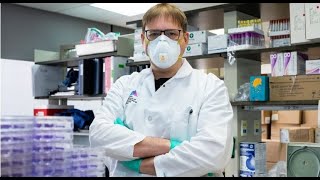
In episode 26 of the Immunology Podcast, hosts Dr. Jason Goldsmith and Dr. Brenda Raut open with a light‑hearted chat before diving into a rapid‑fire roundup of recent immunology papers. They discuss a Nature Medicine study linking broad‑spectrum antibiotics that target anaerobic gut microbes to poorer outcomes and increased cytokine release syndrome in anti‑CD19 CAR‑T therapy, highlighting the microbiome’s impact on immunotherapy. Next, they review a Nature paper describing a genome‑scale ORF gain‑of‑function screen that identified lymphotoxin‑β receptor (LTBR) as a synthetic driver of T‑cell proliferation, improving CAR‑T function via NF‑κB activation. The conversation then shifts to a Nature study on fungal strain diversity in inflammatory bowel disease, showing that high‑damage Candida isolates exacerbate disease through IL‑1β‑mediated macrophage injury, suggesting strain‑specific therapeutic strategies. They move on to a Nature Neuroscience paper revealing direct channels between cerebrospinal fluid and skull bone‑marrow niches that regulate myeloid cell egress to the brain, emphasizing a newly appreciated neuro‑immune axis. The main interview with Dr. Florian Krammer covers his lab’s rapid pivot to SARS‑CoV‑2 research, the development and global deployment of various vaccine platforms (mRNA, vector, inactivated, and a novel Newcastle‑disease‑virus‑based vaccine), lessons on speed of regulatory approval, the importance of preparedness for future pandemics, the value of mucosal IgA‑inducing intranasal vaccines, and observations on Omicron’s reduced severity in the context of baseline immunity. The episode closes with a personal question about hobbies and announcements of open lab positions. Throughout, the hosts blend conversational banter with analytical commentary, providing both scientific depth and accessible discussion for an immunology‑research audience.
Chapters
This is episode 26 of the Immunology Podcast, Viruses and Glycoproteins with Dr. Florian Kramer. Hey everyone, this is Dr. Jason Goldsmith and Dr. Brenda Raut. Welcome back to the Immunology Podcast, where we have conversations with immunologists. The Immunology Podcast is brought to you by Stem Cell Technologies, a global biotechnology company supporting life science research and fostering communication and collaboration in science. Today we have Dr. Florian Kramer from the Icahn School of Medicine at Mount Sinai on the podcast to talk about his research seeking to understand broadly reactive immune responses against the surface glycoproteins of RNA viruses, with the goal of developing better vaccines and novel therapeutics. We've also got our usual roundup of recent highlights in immunology news coming up, but first—
We'd like to remind our listeners about Immunology of Infectious Disease News, A free weekly newsletter brought to you by Stem Cell Science News summarizing the latest research, news, jobs, and events in infectious diseases. Immunology of Infectious Disease News helps you stay current with the latest COVID-19, HIV, hepatitis, tuberculosis, influenza, and malaria research. Subscribe at www.immunologyofinfectiousdiseasenews.com.
How are you, Brenda?
Hey, Jason. Very happy. I know we always talk about the weather, but it's so nice and sunny that I need to share it with you here.
You know, it was, we had a great day Saturday. Sunday was runny, but I started rebuilding my raised beds on Saturday and realized that I'm not as young as I was anymore and I feel it the next day and then had trouble getting out of bed after lifting all the dirt from one garden bed to the other and then rebuilding one.
Yeah, I heard that it goes all downhill after, you know, a certain age.
It's not the doing, it's the recovery from the doing that I have learned.
Oh, okay. So at the moment you have all this adrenaline that keeps you going.
You're fine. You're on top of the world going, and then you wake up the next morning and can't move.
But I heard that you're going to do something that no one's ever too old ever to do.
I am indeed going to Disney in a week-ish. Yeah.
Nice.
My— about a week or so. My daughter is— has never been. Neither is my son, but my daughter's very into Disney princesses. And so she's going to experience all of the wonderful princessiness.
Very good. I'm glad for her. You know, I went to Disney when I was like 4. I don't really remember anything, but I do have a lot of pictures with Mickey and Minnie Mouse that my mother has somewhere in her albums.
This is not helping me. My daughter's almost 5, like could be 5 right after we get back. So I'm hoping she's going to remember it.
But you know what I remember? I actually do remember we saw a show for like a Ghostbusters theater show. So I remember that. I remember the whole Ghostbusters music and like things happening on stage. So that, that stuck with me. Maybe that will stuck with your daughter.
She gets to have like breakfast or tea or something with the Disney princesses. So, you know.
Yeah, but the Ghostbusters is so much more memorable. It's true. We didn't have Frozen when I was 4 years old. I'll give you that. I don't think we even had Mulan when I was 4 years old. So I guess all the good princesses, you know, we got all the boring ones, the ones that just, you know, laid asleep while the man came and saved them. They're not the best role models ever. So I guess all the fun ones came later. Anyway, let's start talking about, you know, Disney feminism, and it's just, you know, get down to science.
We want to talk about, uh, science here. I was going to say, uh, if we really want to upgrade things, it looks like the microbiome may be able to upgrade CAR T-cell therapy. How's that for a segue?
Great. Flawless.
Excellent. All right. Just shoehorning that in right there. So this paper, Nature Medicine, uh, Gut Microbiome Correlates, Correlates of Response and Toxicity Following Anti-CD19 CAR T-Cell Therapy. First author is Melody Smith. Last authors are Andrea Fasabeni, Marcel R.M. van der Brink, and Marco Ruela. They are from Penn Memorial Sloan Kettering. Carl June, of course, is on the paper. So anyway, this is interesting and it came out— sorry, March 14th. So very fresh. This started making the rounds on my science Twitter, but my science Twitter is full of microbiome stuff. Um, because they were looking at the effect of— they're trying to figure out if the microbiome was involved in any way in, uh, CAR T-cell therapy, anti-CD19 chimeric T-cell receptor. The answer is yes. So what they did is they looked at cohorts of patients and if antibiotics before CAR T-cell therapy were predictive of outcome, and they found that for broad-spectrum antibiotics, specifically ones that kill anaerobes. So piperacillin-tazobactam, that's also known as Zosyn, meropenem and imipenem-selastin. So basically these broad spectrum that have anaerobic coverage. The— and what's interesting is that some sites use these as first line for neutropenic fever. Others use cefepime, which doesn't hit anaerobes. And so you have kind of an internal control and they see only for these bugs. Exposure within the month prior to their CAR T-cell therapy led to worse outcomes. So overall survival and disease-free survival, but that the effect was more pronounced with non-Hodgkin's lymphoma patients as opposed to leukemia patients. And so they deep dive this, they go in, hey, look, we see this interesting effect from antibiotics. And then they start identifying organisms that are involved within it. They really find that it's the anaerobes that are doing it, right? Which makes sense given the antibiotic targeting. And then they show that the signal's stronger with non-Hodgkin's lymphoma. They go through some work. They discuss in the discussion, which I agree with, that non-Hodgkin's lymphoma, because it's a lymphoma, right? It's going to be spread throughout the body, including in the gut. And have more— the cells are going to have more antigen exposure to the intestine than, say, a hematologic malignancy, which is going to be in the more circ— more confined to circulation in the marrow. So you're going to have a bigger exposure to microbiome in lymphoma, which I think I agree with based on how we understand things currently this week. And then they looked at toxicity in terms of inflammatory reactions, and they see that the microbiome disruption leads to higher inflammatory reactions. So the cytokine release syndrome pathways. And so then they looked at the composition again, saw a decrease in anaerobes. And then they were able to, I'm trying to dive in here, you know, so the bacteria that come up are very common ones. So Ruminococcus bromii and Yeffiecalum f. prauhnitzii. So Fecalibacterium praudnitzii, which are— which is a very famous microbiome bug that's known to be beneficial. Generally speaking, they don't actually get to a mechanism. They do see that there is just better outcomes for people, disease-free survival, and less overreaction of the immune system in patients who didn't have antibiotics.
Wow. It— there's now has been a couple of studies that are starting to find correlations between the composition of the microbiome and response to immunotherapies. Also for other PD-1.
Yeah, it affects PD-1 metabolism and the effect of the immune system on recognizing, you know, cancer antigen.
And I think, well, I wonder, do they talk about the— so you talk a little bit about the mechanism. So they thought about maybe some certain metabolites that are produced by these cells And what about the fact that some cells are more invasive and actually maybe, you know, we know that certain cells can perforate a little bit the mucosal layer in the epithelium, and they actually, that's how they interact with the immune system mostly. Is this something that they also suggest that some, it's not the case?
No, they just look at metabolism pathways and kind of ran out of a way to figure it out. I think this, This is the hard part. I think we actually, we understand better what you're talking about with PD-1 inhibitors. And so there's some, there's antigenic tuning that happens that then with PD-1 checkpoint, you have better response. And then some people's microbiomes are better or less antigenically tuned to have the response and a transplant of a good tuned person to someone who doesn't respond generates a responder.
Yeah.
They haven't figured this one out yet, honestly. They've found a really solid connection, but I don't think they have a good story. They haven't finished the story. I think that's honestly why it's Nature Medicine and not Nature, you know, not, not that much of a hit. Right. But, but I think that that's the missing link is why.
Yeah. Because I guess always the question is, if you know what are the metabolites that this bacteria are making, you can you give the patients being treated just the metabolites if that were the case? Yeah, I guess that's also why they really want to find specific metabolic markers that would be easier to—
Yeah. And they're saying that maybe the metabolites can be biomarkers. They're easier to get out than the bugs. A response like, oh, these have these metabolites, their microbiome is going to be set up for success, I think is where they went, as opposed to like, oh, we can treat this yet, right? This could suggest this has been like an FMT after antibiotic treatment. Treatment before you get CAR-T would be good.
Yeah, exactly.
And therapy.
Yeah, I think I really like— I really like— I hope that— I really like the idea of doing this, of tuning, fine-tuning the microbiome to improve outcomes. So I think there's a lot of promise here. So it's nice to see this work being done and some kind of signals being picked up. So I hope that We will get more clarity as, yeah, studies come up.
It's getting there. It's the future.
All right. Well, as you started the topic of T-cell therapies, I thought, well, I'll just talk about that too, because I don't want to be left out, you know. So I'm going to make my paper 2 into my paper 1. So prepare for the synthetic revolution in T-cell therapy. Well, that sounds a little bit overblown, but it was written in this paper. The paper is known as— it's called Genome-Scale Screen for Synthetic Drivers of T Cell Proliferation. And it was published in Nature, first author Matthijs Legut from the lab of Neville Sanyana at the New York Genome Center at NYU. And in this paper, they are also kind of starting from the point that a lot of what we have so far regarding T-cell therapies, CAR T-cell therapies, and also other types of T-cell therapies is that often, yeah, we see a lot of patients that— many patients respond, but we still have a population of patients that don't. And one of the reasons that this could be is that the T-cells are just not active enough. They don't survive long enough. Often T-cells from patients with particularly, yeah, hematological malignancies or they already— the starting material is not great. So they perform often worse than healthy donor material. So they set out to find some kind of genes that would help for improving the function of T cells, their longevity and their function. So what they go on, they go kind of really large scale and they established a genome-scale gain-of-function screen, and they used primary CD4 and CD8 T cells to which they transduced with a lentiviral library with 12,000 barcoded human open reading frames, and they transduced T cells with them. And they find— so they, with this, they identify different ORFs that are associated with better T cell proliferation. That is their first thing they measure. They compare and they come out with a bunch of genes that are improving T cell proliferation in their system. And so it's very, very interesting because I mean, 12,000 genes is a lot to test. And they make the point that this is different to a paper actually presented, I think was— I talked about last episode in which they did this CRISPR activation and CRISPR inhibition screens. But in this case, they're really looking into genes that are not necessarily expressed at all in T cells and see what they do, which is a little bit harder to make with CRISPR because often these genes will not be expressed because maybe the chromatin is not really accessible. So even if you put an activator there, CRISPR might not be able to access it at all. And so they identify a bunch of genes. Some of them were already kind of known and were not a surprise. But here's where they first stumble upon a gene called lymphotoxin B receptor, which is LTBR. I'm going to refer to it from now. And this gene is— was very cool because this is not normally expressed on T cells, mostly on stromal and myeloid cells, but it's not found in lymphocytes. And so this was like their top hit. They go in further, so they find all these ORFs and they subclone 33 of them and they start looking closer into how they affect T cell function, activation markers, cytokine secretion, And again, they find that LTBR outperformed all the other genes they tried. They generated a single-cell RNA protocol in which they just do all in one step. They can correlate barcoded for the transduced ORFs and then the transcriptome at the same time. So they can really have a very deep quantification of all the gene changes within the cells. For each specific ORF that they're transduced with. And they do see that the cells that are overexpressing this LTBR have the highest association with clusters that are enriched for cell proliferation and activation. So they keep like these— seem to find— they found a really interesting gene. So LTBR is a tumor necrosis factor receptor, a member of the superfamily of the TNFR receptors. And as I mentioned, they're not— it's usually not expressed on lymphocytes. And it's interesting because the expression of TBR in T cells also activated multiple pathways that include upregulation of MHC molecules, which I guess would make more sense in antigen-presenting cells. And also what I think was very key, they show upregulation of anti-apoptotic genes, IL-2, TCF7, which are also TCF7 has been related to longevity and robust cells for therapy. They show that there are specific domains that are related to NF-kappa beta pathways, particularly the canonical NF-kappa beta pathway. That's how this gene is really activating and increasing the function of these T cells. They also keep testing the other candidates that they find, but it's really LTBR that takes the cake. And when they test it on CAR T cells, so they do a test with both CAR T cells with CD28 and 4-1BB signaling domains. And in both cases, they see that they can improve the function of these CAR T cells. And really, when they match them with cells expressing a— they have a control gene, a control ORF, which is just an extracellular marker. So it's really nice. And I think, well, also the authors made a really, really nice Twitter tutorial for everybody interested. You can look at Matt Ligut's Twitter page. So very nice. And I think it's kind of interesting that they just looked at these 12,000 genes and just found one that was so good. So that was really kind of a lucky, lucky strike, I'd say.
Super interesting. So do you think that their new— their way of getting at these mutations is going to be broadly applicable or something other people are going to pick up?
Well, I guess they already looked at 12,000 genes. I don't think anybody is going to do this again. But I think this particular finding, finding genes that you can add to your construct that would improve T cell function, but they're not usually expressed, is not new. There are some T cell constructs that include IL-12 or other cytokines that would improve T cell function. So it is not necessarily new, but this is nice because this is really an intrinsic gene that is—
Yeah, no, I mean more like you're talking about, you know, they had some new technology they brought to bear. Do you think that'll be something you're going to see more of?
Yeah, I mean, if you're looking for— I think this is the difference between using CRISPR now, and it's very, very popular to use CRISPR screens, but these guys are just putting literally ORFs. They clearly did a lot of work improving the platform. And I guess they, they really had to prove that they could efficiently express all these 12,000 genes from a library. But I think this is a nice approach when you're looking for kind of more synthetic biology approach. You're just seeing, well, I don't care if this thing belongs to the cell, what happens if I add it? So I think that is always an interesting approach. So I would say people should take a look and see if this is useful for them, maybe for other readouts. In this case, they were looking at proliferation was their first readout, so that's what they based their whole work on. But maybe you're looking for something else.
All right, well, we got to keep the show going here. I'm going to go right back to the gut, so no surprise there, but we're flipping from bacteria to fungi. So this one is immune regulation by fungal strain diversity, inflammatory bowel disease. It's a Nature paper. First author, Xin V. Li, last author is Ilya D. Iliev. Came out in Nature March 16th. So you don't often see huge Nature papers on IBD. So I was very excited. They basically try to understand more about, you know, IBD, inflammatory bowel disease has a lot to do with the host immune system not reacting properly to the microbiome, but people forget about the fact that your gut has viruses and fungi and other things in it besides just bacteria. So this looks at the fungal, the complexity being that there's just a lot of fungus there that just kind of hangs out and doesn't adhere. And so they've really tried to understand through some new culture techniques. And I honestly don't understand why these culture techniques are new, because if you look at the methods, you're like, okay, yeah, that seems kind of how I'd culture it. So I'm not sure where that's coming from, but they basically go in and look at the role of the microbiota, aka fungus, in IBD. And what they do is they look at IBD patients with Crohn's disease and UC and then look at, um, and then do a pretty big deep sequencing and then kind of start diving in the mechanism. So they took, uh, but they kind of what they did is they did colonic mucosal lavage samples. Um, so they, they kind of went a little further than normal, which is just people poop out stuff and whatever you get. So they actually went in with the mucosal lavage and got it from people.. And so they go in there, they get the mucosal vag, they do internal transcribed spacer sequencing of the fungal ribosomal RNA to figure out what it is. And then they saw clustering, as you know, as one would do, and mostly that Candida and Sarcomyces were the biggest shifts with an increase in Candida or Candida and a decrease in Sarcomyces. In the mucosa-enriched, my— and in the mucosa-enriched part of the microbiome. And then, but they also saw some rare stuff didn't really shift that much. And you're like, okay, so Candida is not surprising. It's kind of everywhere. They show that it doesn't cause, you know, they take some of these, they take a laboratory strain. It doesn't cause worse disease in DSS colitis. So they're like, okay, so it doesn't induce it on its own. Um, but then they, um, used a mouse model again, the same DSS one, but with steroid treatment, which is used to treat, you know, colitis generally. Um, but mice who were— had Candida added into their lumen, you know, into their into the system had worse outcomes. So it's now it's modulating something, right? So it's affecting treatment outcome. So that started to get interesting, but they're wondering if there was a fungal effect. And so what they were able to do is through what was kind of already known in that some, some fungal strains based on how they form their hyphae and everything are more immunogenic or damaging to cells than others. And so what they did is they could rank Candida isolates into either high damaging groups that they really damage macrophages or low damaging. And they found that the high damaging ones, those could drive disease. So they did it in vitro first, and then they colonized mice that had, um, kind of a stabilized microbiome. Therefore, they did germ-free and showed that it affected it. And then they used this altered Schader flora, which are mice that are fungal-free and have a defined bacteria of 8 community of 8 bacteria. So they're not commensal flora in their gut, but they're kind of an artificial system that has enough of the stuff that they kind of act normal. And they saw that in that case too, the high damage variant caused worse disease. And then they do some gene understanding of this and go down a gene pathway and come up with Candida lysin as the culprit in the high damage strains that drive damage. And so this has to do with the hyphae-associated virulence factors, and this is one of them. And then they do a knockdown approach and a CRISPR, a CRISPR knockdown, um, or knockout really, and then show that they can get rid of the damage by deleting this gene. Then they, um, were able to isolate doing 18, you know, they went into humans and then took the isolates and then they found that interestingly, there wasn't like a clear pattern in the people and that they were seeing that there was almost micro evolution happening in the different individual patients that they were able to get. And there was very big diversity in the C. albicans. So it wasn't like there was some Candida that was always causing it. And if you had this one strain of Candida, then you had worse IBD. That wasn't the case at all, which they found was interesting. And, but there was no specific association between specific variants of the candylisin gene and disease outcome. So essentially it looks like, and then they also found that, that, that you could see sometimes clonal expansion within a person, but it'd be completely different what the clone was in another person. So they were surprised by the wide genetic variety and then how much the strain induces IL-1 beta signaling. What any given strain, its ability to induce IL-1 beta signaling is what drove disease in people. So they could see that there was an IL-1 beta signal in people that was associated with worse disease and that if they did this in a mouse system, and blockaded IL-1 beta signaling, then you would have less disease in the mouse. So they think that this IL-1— so that they think the bacteria drives IL-1 beta-mediated phagocytosis, it causes macrophage damage, and that is a signal that on its own won't cause IBD, but in a setting of IBD will make it worse. There you go.
All right, so Aggressive Candida is bad for IBD, basically.
Basically through IL-1 beta.
Through IL-1 beta. That feels— doesn't— with all due respect to the author, it doesn't feel terribly— something terribly revolutionary. What would be the angle? What is— so we didn't know this before.
Right. So we've always— people have been able to go, oh, The fungus in your gut is different with colitis.
Cool.
If you have a different immune system going on, it's always going to be different, right? Because you have inflammation. Yeah. The fact that it's doing something pathogenic or promoting disease, any of that's never been done because they haven't been able to isolate the fungi before and play with them. So I don't know what they did differently about the culture, but the fact they took it out, did mono-association studies, did association studies in germ-free or these, you know, special ASF mice, did all of that work and then show that it drove disease in mice and saw that the same correlation in people was happening is the big deal is that no one's ever been able to link pathology or disease outcome to the microbiome before.
And but if you have infections with Candida albicans, that also is— if you have a lot of it, that also is on itself A, but there's Candida in your gut all the time. Yeah. Right. It's about the numbers.
Well, it's about strain. It's about the type of strain and the fact that you're inflamed. We all have Candida. If you don't have IUC, it's not going to do anything. But depending on the type of Candida you have, your UC outcome could be different.
Okay. Would it make sense to try to replace a bad Candida with a good Candida?
Or you just maybe, or you just blast it with, uh, while you're going under treatment, you treat it with like ketoconazole or something and see if it gets you better disease outcomes. Like the fact that they saw it was worse with steroids, like you're trying to treat it and like, man, why do some people do well with steroids and others don't? This could basically explain some of the heterogeneity, right?
Because I mean, if you have a fungal infection, steroids sounds like a bad idea if that is exactly the source of your pain. All right. So, well, thank you for sharing this very interesting information. And let's just move on to the last paper of the day. And we're moving from the gut to the brain. This publication from Nature Neuroscience, which somehow my institute did not have access to, my cancer institute was not, how do you say, subscribed to Nature Neuroscience. I'm a little bit disappointed. Cerebral spinal fluid regulates Skull bone marrow niches via direct access through dural channels. Sounds like a mouthful. First authors, Jose Mazzitelli and Leon Smith, and from the lab of Jonathan Kipnis at University— Washington University in St. Louis. This is a very cool paper that made me think about more about what happens with the immune system in the brain. And I have to say, I don't think a lot about the brain and the immune system in the brain, and this was really cool. So basically, in a nutshell, they are looking at the relationship between the cerebrospinal fluid— that is kind of, there's no, this, this fluid that is located inside our meninges, uh, in the, in our brain, and it interacts with the parenchyma of the brain and the, and then the skull, and it kind of fills the space in between— and the immune system particularly those immune cells that are coming from the bone marrow of the skull. So the bone marrow of the skull is an important source of immune cells for the brain, particularly when it comes to cells, not T cells or B cells, well, no T cells because they have to go from somewhere else, but particularly myeloid cells. Monocytes come from the bone marrow in the skull. The CNS, as we've said, it has a population of immune cells, particularly microglia, but there's also cells that can come from the circulation and can come from the bone marrow in the skull. The question is that how do these cells, particularly those from the bone marrow, know to come to the CSF and become part of an immune response in response to some kind of insult, right? Some inflammation or some infection. And so what I didn't know is that there are these connections between the dorsal veins in the brain and what is kind of a not very developed but present lymphatic system in the skull that connects the blood-brain barrier with the cerebrospinal fluid. And this is a term that is kind of a process that is termed glymphatic clearance, in which things that need to exit the CSF kind of seep through this glymphatic kind of, how to explain this, this, uh, there's this kind of, um, uh, gaps in the, in the skull, and then so gaps in the dura, so part of the meninges, and they can this way kind of contact the bloodstream, and that's how things can get out of the CFS, uh, and also how cells can come into the CFS. And so they show that, for example, if you inject OVA, fluorescent OVA antigen into the CSF directly into the kind of the cerebrospinal fluid that is inside the skull. This OVA will efflux from the space into the dura. It will find itself, but not directly to the bloodstream, but it's going to diffuse around the blood vessel. And it's also going to efflux into these lymphatic vessels that are found, that they're also present there. So it is not really clear. So they were discussing, and then I saw a presentation from the group leader in which it was not really clear how does this diffusion happen and whether it's directly to the blood vessel, whether it is just diffusing in the dura, and whether things have to come to the bloodstream in order to go to the lymphatic vessels or if they go directly there. But sorry, I'm diverging a little bit. In this case, they find that when they look very closely into the distribution of this fluorescent ova, which they do by decalcifying the skull caps of the mice and then mounting them and then you can see them, kind of cool. And they see that the tracer finds itself along perivascular conduits that are within ossified channels. So they are actually these channels that connect the bone marrow from the skull and the dura, so part of the meninges. And this is how the bone marrow, the cells in the bone marrow, are kind of interfaced with the rest of the skull. And so these ova can be found then inside the skull bone marrow. So it comes from the CFS into the dura, into the bone marrow, and macrophages can take it up there. And also they show that if you add a c-kit antibody inside the CSF, it will sip into the bone marrow and it will stain progenitor cells in the bone marrow inside the skull. So there's clearly a connection between CFS around the brain, which is going to be also interacting with the parenchyma of the brain, and then with this particular set of bone marrow in the skull. And they show that if they look, when they compare, by the way, they compare bone marrow from the skull and from the tibia, they see some differences. So they also show that this particular niche is receiving some kind of brain-specific signals. And in fact, they show that if they add a CXCR4 antagonist, they will also interfere with the egress of monocytes and neutrophils from the skull bone marrow to the gyri, to the brain, showing that upon some specific signaling, this bone marrow will respond and will send cells towards the brain. I think it's really nice, they have really interesting imaging and how they identify, they show that there's this ossified channels that connect the bone marrow and that that's how the cells can mobilize. They also show that they further cement the notion that Cells respond to local injuries, the response is dominated by cells that come from the bone marrow in the skull. And also if you have, for example, injuries of the CNS a little bit farther away from the brain, you still see mobilization of immune cells from the skull bone marrow into the area of injury. So I think it's really interesting because I was not aware of such a closed communication between the whole CNS and how important this particular niches of bone marrow in the brain and in the vertebrae as well were for the whole immune response in the brain. So really interesting. So anybody looking into understanding some of this, just go and check out the paper. Very, very nice.
This is brand new anatomy essentially.
Yeah, so I, I had to read up a little bit on this. So it is, yeah, I think it's very new understanding this mobilization of these, of these immune cells is fairly new. And I, and these connections, these direct connections between the bone marrow of the skull and the dura, and then therefore eventually the brain, it's very interesting.
Yeah, super interesting. All right, well, we could keep going, but we have an interview coming up, and we're going to be speaking with Dr. Florian Kramer at the Icahn School of Medicine at Mount Sinai in just a moment. But before we get to that, explore scientific resources for immunology research at the Stem Cell Technologies Immunology Learning Center. Choose from different research areas and find expert interviews, technical tips, educational webinars, instructional videos, and much more. Visit stemcell.com/immunology-research.
Hello everyone, we are talking today to Dr. Florian Kramer. He is the professor of vaccinology at the Icahn School of Medicine at Mount Sinai in the city of New York. Professor Kramer, thank you for joining us.
Hello, and thanks for having me.
Thank you for being here.
So before COVID you have been really involved in researching vaccines and antibody response against several viruses, particularly influenza viruses and emerging viruses. And since 2 years ago, you have actually really jumped to the opportunity at researching COVID, and you have really contributed a lot to our understanding of COVID immune responses and vaccines against COVID. So I think is we haven't had before such a guest, and I would like to maybe ask you a little bit about your experience during this transition and how has it been to dedicate so much of your research and your attention to such an important topic.
Yeah, that's an interesting question. I mean, we were not working on coronaviruses before, before basically 2020. I had one little project that I was planning to do with Matt Freeman at University of Maryland to develop universal coronavirus vaccines, but that never took off. And so that would have been nice, we would have been better prepared. But so, you know, in the end of 2019, I heard about this outbreak in Wuhan. If you work on flu, you keep your ears open and your eyes open for things like that, because influenza causes zoonotic outbreaks every now and then.. And then a few days later, the genome sequence of the new virus was posted online. And yeah, I mean, we started to get prepared to make reagents just in case the virus would show up in New York as well. And then it became increasingly clear that this is going to be an issue. I was relatively worried about this virus already in January. And so we really got started and shifted some of my research to COVID-19. And yeah, when the virus then really caused the wave here in March of 2020, we were relatively well prepared. We had assays to measure immune responses. We already had collected samples from the beginning of January to do zero surveys, to look back and maybe reanalyze these samples for the presence of SARS coronavirus 2. So we were relatively well prepared. There was this weird transition phase where we didn't have funding to do to do any of this, but then we got a lot of support from our institution, and then a little bit later federal funding kicked in too. And since then we have been doing a lot of the things that I do for influenza as well, looking at antibody responses to infection and vaccination, comparing vaccines with each other, and then using what we learn to design new vaccines.
So given kind of pandemic drops, you're seeing this alert, and then you have to shift gears. How do you do that successfully? You've done it successfully, but when you're thinking about this, we have a lot of junior faculty, postdocs, or people who listen to the podcast. How do you go from, "Oh, I'm doing this one thing," and then shift gears fast enough to make an impact?
Well, I mean, the key is to be fast, but it wasn't that much of a shift, right? We do similar things for influenza, we do similar things for antivirus, for arenaviruses. We did a little bit of that for Zika, for Ebola, and so it's basically the same stream, the same work stream, but it's just a new virus, right? And so if you already have people who work on serology for flu, it's very easy to, to say, okay, now we need to have new reagents, we want to look at that for SARS coronavirus 2 as well. Of course, it got crazy at some point, and we shipped reagents actually for free to more than 250 labs worldwide, right? So they could set up assays and so on and so forth. That was, you know, something that was very work-intensive. But in general, this switch was in a way natural. It wasn't like, you know, we had to do much to do that. We just refocused on a different virus using very similar techniques that we had used before.
So 2020 was really a year in which a lot of people were running towards the development of vaccines. The understanding of how to quantify the levels of protection that people were getting from infection was not clear. Was this protection going to last? Was vaccine protection going to last? And I think that maybe you being really involved, how How do you think it all went down when it comes to the speed of the development of the vaccines and whether the vaccine candidates that became successful were on the longer term, looking in retrospect, the best candidates out there? And I'm talking about, and I think, for example, the vaccine candidates from RNA vaccines are really good, but they're really hard to give access to a wider proportion of the global population. So sometimes it makes you think whether these were actually the best candidates to support, given how logistically difficult it is to actually bring them to the people. Do you have maybe a take on that aspect?
Yes, but just to say something about the speed these things were developed in, right? I think it was done very quickly, but I don't think it was done fast enough. So I think for the next pandemic, we have to be quicker, and we also have to be clear about that this was not the last pandemic, and it's probably not the last pandemic in our lifetime. So we need to be better prepared for the future. But I think in terms of vaccines, if you look at it globally, you know, we have a huge focus on mRNA vaccines and maybe vector vaccines in the Western world, but the truth is that most vaccines that are used globally, if you look at classes of vaccines, actually inactivated vaccines. And I have to say that the Chinese companies that developed these inactivated vaccines were actually very quick as well. So I think, you know, all of these vaccine candidates that went through the clinical development and are now used are actually pretty good in protecting from severe disease. There might be differences, some might work better against infection than others, but in general they're all pretty good. And again, the inactivated vaccines were developed quickly as well. So I don't think, you know, that there was a problem with what we focused on. I think the important thing was to actually push everything forward because it wasn't clear what would work, right? It wasn't clear that the mRNA vaccines would work well. It wasn't clear that the vector vaccines would work well. It wasn't clear if the inactivated vaccines would work well. And in a situation like that, I think you have to move everything forward that you have And that's what was done. And it turns out now that most of these vaccines actually work well, right? Starting from inactivated vaccines to mRNA vaccines and everything in between. So I think this was the right thing to do. And again, there might be a bias when you look at it from a Western perspective, but from a global perspective, there's not really a bias.
So to go on that, you mentioned that, you know, in the future we should be able to get it faster. So having now been in pharma for a little over a year, I'm just amazed at how fast it was in a way, like in terms of the FDA approval process. So obviously Moderna had been working on mRNA vectors for a while, and vaccines generally speaking, so they didn't just cook up the whole technology overnight. But how do you think we could get faster developing it? Because having gone through being involved in the regulatory process, I was amazed at how much the FDA kind of changed things for the pandemic, and I don't know how much faster you could get. So I was wondering if you had ideas on how you could even cook this up. Is it like you just approve the platform and have a test to make sure that whatever's expressed for an mRNA doesn't have some off, some unexpected target effects? How would you go about this? Because again, they went really fast in my brain, shockingly so.
Way too slow. So I think there are ways to do that, and the way to do that is to get prepared, right? We were completely unprepared as a global community for this. Science was doing great, but, you know, there was no real preparation. So I think what you need is you need to do due diligence and look for which viruses are out there that could cause pandemics in the future and You know, for flu we have good surveillance, for other viruses we don't have good and systematic surveillance. So there we need that. Once you have that and you have good information about which viruses that are circulating could cause a similar pandemic, and I'm mostly worried about respiratory viruses because the virus needs a vector, it's easier to stop. If it needs contact, it's easier to stop with non-pharmaceutical interventions. But you could identify maybe 50, 100 candidates, right? Of viruses that you think have the potential, and then you develop those as vaccines and you go to phase 2. That costs money, that costs probably $25 million per vaccine, but you can do it, right? And when you do a phase 2, you can do a longer phase 2, so you can also study waning immunity and you can also study safety over a long period of time. If you have that, and this is going to be a huge investment, if an actual pandemic starts, if a virus shows up that, that, that is causing an issue, it's very likely that it's either identical with one of the ones that you selected, or that's close with one of the ones you selected. And that would allow you to just switch the strain and move into phase 3 trial right away, ramp up GMP production. And if you have a correlate of protection that you established in the meantime, which is possible, even if it's for a slightly different virus, you could probably get the vaccine on the market into the population within 3 months. This would require investment, but I mean, you know, again, if you look at how much money that the pandemic destroyed, I think it's worth to do it.
Would that require having lots of production plants idle waiting for the signal to, to start production, or how does that work? In practice, or what, what are the models that you can use to make that possible?
Yes, you would need production plants where you can switch quickly from, you know, there, there are situations where you might make one vaccine that is currently used as regular vaccine, and then you reuse that facility to make, uh, to make now this new vaccine. With an mRNA vaccine, for example, that's easily possible because you don't have to change the process, right? You just change the sequence. But it might also be possible with other technologies. With vectors, it's easy. It's more challenging with a protein, recombinant protein vaccine, but it's possible. And again, it would require that you have global production capacity for that. But again, it's always a question of how much would another pandemic cost us and how much would preparation for that cost? And I think it's actually a bargain to go for preparation.
For sure. Unfortunately, we're not great at that as a society.
Yeah, who needs to prepare when things only happen once every not so long? I guess that that's probably applicable to a lot of aspects of modern human societies. You have also studied a lot vaccination and against influenza and other viruses. So my question is, how has our understanding, the amount of work that we have put into COVID research, maybe affected, modified, or maybe improved our, the way that we, that we can look into other diseases and whether we have learned something from this particular virus that is really valuable towards treating other viruses or containing other viruses?
I mean, I think that the most valuable lesson, the most valuable piece of information that we have now is there are all these vaccine platforms that now have all been used for COVID, and we can compare and we can probably, you know, look at them and understand better which one would work for a certain virus in the future, right? I think that's a huge a huge amount of data that otherwise wouldn't have been created. And I think we can learn a lot from that. On the other side, I think it's actually the other way around. COVID research benefited a lot from HIV research, from flu research. All these technologies that we started to use for these other viruses were then quickly employed for COVID-19. What happened, what I think is also very beneficial in terms of the research community, if you look at virus research, there in a way silos. There are flu people, then there are coronavirus people, very few because there wasn't a lot of funding before the pandemic, unfortunately. You have HIV people, and they don't necessarily talk to each other. Now everybody's doing COVID and they talk to each other and there's a lot of cross-pollination of ideas now. I think that's also very helpful. But again, I don't think there's any single thing that we learned from COVID that will now revolutionize how we deal with other viruses. Again, in my opinion, SARS coronavirus 2 is just a coronavirus and nothing special.
Yeah, so I, I saw one part of your work. We actually covered it in one of the previous episodes during the roundup with your IGA and B cell populations, intranasal vaccines. So we've, we also had a guest come on and talk with us a little bit Could you share some of the IgA gospel? I'm really surprised that that isn't a strategy we've also done already with the flu or other viruses, like give you a, you know, you know, peritoneal, you know, an IM injection to start with, get your IgG going, and then boost with an IgA as like your secondary booster or your third course in a vaccine series is that IgA inducer. Like, it seems obvious when you think about it and you look at the work, and I'm amazed that this hasn't already become a thing?
Yeah, it's complicated. So just to explain a little bit, typically these respiratory viruses, of course, come in through the upper respiratory tract, right? So that's how the infection usually starts. Now, if you get an injected vaccine, you get a ton of IgG, and IgG is, of course, systemic in your serum, in your blood, and there's also a lot of IgG in the lungs. So the IgG can protect your lung very nicely. Very little of that IgG ends up in the upper respiratory tract where it would be needed to protect from infection, right? But there's another type of antibody, and that's IgA, and more specifically secretory IgA, and that's made by B cells that sit in the lamina propria, basically below mucosal surfaces. In order to get that, typically you need mucosal vaccination.. And that would, of course, be ideal because the virus lands on your mucosal surfaces, then there's already a lot of secretory IgA that just neutralizes it, and you never get infected, right? And so having a strategy like that would be perfect because then you wouldn't get asymptomatic infections and transmission, and you wouldn't have all these issues, right? Now, for flu, this has actually been done. There is a licensed vaccine that's called Flumist, in the US or Fluence in Europe. Russia has its own version of it. They have developed a similar vaccine, and you give that intranasally, and it works wonderfully in kids. It just doesn't work well in adults because it's an attenuated virus, and adults have a little bit of or too much pre-existing immunity, and it just shuts down that virus before it can actually induce an immune response. So for flu, we have that to a certain degree. But for COVID-19, there's nothing on the market right now. There are some intranasal vaccines that are in development, but nothing licensed yet. And it's a little bit more complicated than developing regular vaccines, right? Because with some of the vaccines that you give intranasally, you might actually not get a strong antibody response in serum. And so when you do initial development and you compare injected vaccine and an intranasal vaccine, when you measure serum antibodies, might look not as good, right? And that might be actually a point where then you say, okay, if it doesn't look as good in serum, we don't move that forward. You might not get investors for it, and so on and so forth. You can, of course, also measure intranasal antibodies or mucosal antibodies. That's more complicated.. And in a way, you would need to have a phase 3 trial where you look at infection or protection from infection to really see the power of that vaccine. So there are complications, and then there have historically also been complications with vaccines that were given intranasally that then caused neurological issues, right? So there's a lot of red tape around it, and they're just not as easy to develop, but they seem to work very well. Specifically in, in terms of blocking infection and blocking transmission.
It really sounds like a good avenue to explore and to commit to. And as you say, there are several already, several vaccine candidates, nasal vaccines out in trials. And I guess this is a nice segue to talk about one particular vaccine candidate that you have been involved in developing, which is called an nTV-HXPS. And maybe this is interesting because it uses recombinant Newcastle disease virus, which I think there are not very many vaccines using that particular platform. And so maybe it will be nice for us to listen, to hear more about this vaccine candidate, and why did you choose this platform to develop it?
Yeah, so this is an interesting story, actually. So this is something that I'm doing with Peter Bellese and Adolfo Garcia-Sastre, and also a young investigator in our department, Wayna Sun. And so this came out of the question in the beginning of the pandemic: can we use existing infrastructure, vaccine production infrastructure, to make COVID-19 vaccines, right? And as a flu person, you think about flu production facilities, and flu vaccines are mostly made in eggs. And a lot of these production facilities are actually not used for many months of the year because you have a campaign for seasonal vaccine, and then you might not use it for the rest of the year. And so Peter Bellesi, who is actually a chair of our department, he was working with Newcastle disease virus for a while as oncolytic agent. And so Newcastle disease virus is a virus that causes a lot of issues in poultry, mostly in chickens, can be pretty deadly, and that's why vaccines have been developed. And so there are attenuated Newcastle disease virus vaccines like the La Sota strain, and you can genetically manipulate that virus. There's a reverse genetic system, and this has been used historically as an oncolytic agent. And so this is in trials now for as cancer therapeutic, and you can give huge doses to humans and it's safe, right? So the virus can get into our cells and can start to express proteins there, but it can't deal with our interferon system, and so it's getting shut down, which is nice with cancer cells because some of them have an altered interferon system, and so the virus can replicate there. But anyway, so this virus was then engineered to express the spike protein of SARS-CoV-2, and we used the hexapro spike, a super stable version of the spike that Jason McLellan at the University of Texas had made. And we engineered it in a way that it's super nicely displayed on the surface of the Newcastle disease virus particles. And because this is a chicken virus, you can grow it in embryonated eggs, you can grow it in the same facilities that typically make flu vaccines, and it grows to actually higher titers than flu, so you get even more material out of it. And so we started that, and then we started to work with production companies in low- and middle-income countries Ivex in Vietnam, GPO in Thailand, Instituto Butantan in Brazil, but also with a company in Mexico who have these capabilities to make flu vaccines. And so we just gave them the seed viruses, and then they plugged that into their flu vaccine production process, and that was it. There wasn't even— it wasn't even necessary to modify that. And then they started clinical development in the respective countries, and I found that really great because It's not like we are selling them the vaccine or we produce it here and give it to them, right? It's like we gave them the technology, they do the development themselves, and that's actually nice to see.
Before we, uh, kind of start wrapping things up with, with COVID and all, I wanted to talk about Omicron a little bit, or Omicron depending on what day of the week you're talking to someone. I'm fascinated by the variant because it seems to have really just caused a phase shift in the pandemic. Obviously it's less severe. We also have vaccination on board. I know you've been looking at convalescent and vaccine serum and its activity of it against Omicron. Can you talk about a little bit— I think it's just interesting in that between the high viral titers it produces, the lower infectivity, you know, number of viruses needed for infectivity, it's just completely shifted, at least in the U.S. now. Mask mandates are gone, it's less severe, so people are just like, yeah, it's here now, get vaccinated and call it a day. And so what are you seeing from that bench and translational side about the virus in this process, in this shift? Because I've just been like, wow, the virus just shifted itself to something we can live with versus something we have to hide from.
Yeah, I think we have to be very careful with the to live with. And so of course Omicron is less often causing severe infections. That's certainly true. The estimates are that it's way less severe than, or way less often causing severe infections as compared to Delta. It's more similar to Alpha. Alpha wasn't nice, if you remember, right? And so the other aspect is that a lot of people have immunity now, and that might just be any baseline immunity. It doesn't have to be strong neutralizing activity against Omicron. Even people who have two vaccinations or who had been infected with another with another variant in the past have good protection against severe disease, and I think that's what's saving us right now. Of course, if you get a booster dose or if you have hybrid immunity, you have usually also good neutralizing activity and better protection even against infection, but it seems that people who have baseline immunity are well protected against severe disease. But I think if you want to know how bad Omicron can be, just look at Hong Kong. So Hong Kong has a lot of deaths right now, and what they didn't do or what they couldn't do is to convince their elderly to get vaccinated. Their vaccination rate in the 80+ segment of their population is 30%, and that's the problem there right now. They have a huge Omicron wave and they have a lot of deaths. I think it's about 250 per day right now, and you can compare that with New Zealand. New Zealand also has a huge Omicron wave right now. They have about half the population of Hong Kong. They have about half the cases that Hong Kong has right now, so that matches. But they have about, I think, on average 1 to 2 deaths per day. Now 100% of their elderly are vaccinated, right? And so I think we have to be careful. If you're unvaccinated, you don't have baseline immunity, Omicron is terrible. If you have baseline immunity, you might still, you know, get infected, you might get sick, it might not be nice, but you're not going to die from it most likely, right? I think that's the difference. But all these things are— we don't know how this is going to— in which direction this is going to move in the future, right? It's a gamble right now with these variants. It's not typically when you see virus evolution, you have this ladder-like evolution, right? There's a flu strain, it changes into something else, it changes into something else, and then again. And in a way, you can kind of see every virus, new variant for influenza is a descendant from the last one, at least for H1, that seems to be the case, right? But what we have seen so far with SARS-CoV-2 is that all these variants come out of the center, which means that, you know, the next variant that comes, which might be unrelated to Omicron, might actually have higher pathogenicity again. So I think we have to be very careful with thinking this is over and we don't have to care anymore. And we see that already in Europe. I think in the Netherlands, for example, case numbers are increasing again. Many European countries, the case numbers are increasing again. So it looks like there's another wave coming, and that might happen in the US too. So I think we have to be very flexible about the situation. Personally, New York has very few cases right now. I enjoy that. I'm happy to go out now and have a beer in a bar. I wouldn't do the same thing right now in Austria. That's actually a country where I was born. They have huge numbers of cases, right? So I think we have to just be flexible and make sure that we act adequate to the situation we're in right now. And so the case numbers in the US may go up again, and if you're not vaccinated, that means you have a high risk of getting a severe infection.
I think, I think vaccination is key. I was, I was also thinking though about the fact that Omicron produces so many viruses that even if a mask filters out 90%, you still have enough to get infected on the other end, as opposed to some of the earlier variants, which really changes outside of everyone wearing an N95, your control measures, which is, which has been an interesting development as well.
Yeah, but I mean, let's be honest, um, everything but an N95 or a KN95 or an FFP2 is kind of, yeah, you get rid of droplets, but it's, you know, good for going to the grocery store and staying away from people.
It's not good for pretty much like sitting in a room with them all day.
Yeah, exactly. So, well, thanks for the conversation. And before we, we wrap up, we'd like to ask our guests a question maybe unrelated to their research. And so for you, what we would like to ask you is What is a hobby you would have always liked to pursue but never found the time for?
Scuba diving would be something that I would really enjoy and that I never found the time for.
That would be something that I would like to do. Didn't we have someone else that was also scuba diving? I think so. I think so. I think so. You might have a kindred soul in the guest list. No, but that sounds very fun. You do, you do scuba dive, right?
Uh, I've done it only barely. I'm really strong. My ear pressure— I tried to learn it and then the weights couldn't help me when I was really young and I went up and down and blew out my ears. And so I just haven't gotten back to it, but maybe later again. But, uh, Dr. Kramer, thank you for coming on. I know you're active on Twitter, so do you want to share your Twitter handle? Do you have any positions open in your lab you want to give a shout out for? Any other plugs?
You want to give before we wrap up? Oh yeah, for sure. I'm currently looking for a junior data manager. I'm also looking for postdocs right now, so if anybody is interested in, you know, virology research, we also have a really nice outreach program where we work with high school students. We just published a paper together with them on new viruses that we found in, in birds here in New York City. We have a lot of these programs ongoing So if you're interested, you know, there's open postdoc positions, there's other positions that are open. We're always looking for, you know, highly motivated and interested people.
Excellent.
What are we— what's your Twitter handle? How do we find you on the good old bird? Florian_Kremer. All right.
Well, thank you again very much for coming on.
Yeah, thanks for the invitation. That brings us to the end of our show. Don't forget to subscribe to our newsletter at www.immunologypodcast.com. Podcast.com to get the show notes, including an episode summary and links to all of the interview and roundup papers. You can also reach out to us on Twitter @immunopodcast or via email at info@immunologypodcast.com with feedback or maybe suggest a guest.
See you next time. Mm-hmm.
More from Joshua







Scientist Stories: Hans Waterham, The value of phenotypic assays in peroxisomal disorders




Scientist Stories: Joel Zlotogora, Genetic carrier screening programs for reproductive purposes