Scientist Stories: Frances Arnold, Directed Evolution and Protein Engineering
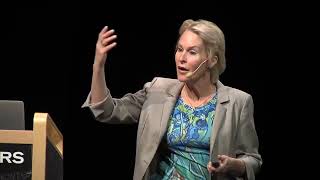
Nobel laureate Frances Arnold explains directed evolution, a method that uses mutagenesis and screening to redesign enzymes for new chemical reactions. She shows how a single amino acid change converts cytochrome P450 into a catalyst for cyclopropanation, and how further evolution enables amination and aziridination. The approach could shift most of the chemical industry from traditional catalysts to biological ones.
Questions this video answers
Both approaches are possible. We often use living cells because they handle DNA transcription and protein translation, but the same evolutionary cycles can be performed in vitro using cell‑free extracts. The core idea is to let evolution do the design, regardless of the platform.
We can target regions if we have a hypothesis, but beneficial mutations frequently appear in unexpected places, so random mutagenesis is also valuable. The number of mutations required varies widely—sometimes a single change is enough, other times dozens are needed—but most successful adaptations involve only 1–4 mutations in a 100–200‑residue protein.
Chapters
I'm glad it's almost over because I'm going to need a vacation after having so much fun with all your fabulous friends. This has been— scientists like parties too, and I've noticed that you have friends who enjoy that. So we had an amazing day yesterday. And I want to start with something that Peter Durbin said. He told us that the goal of synthetic chemistry is the discovery and invention of new properties. And I, I thought that was a great way to describe synthetic chemistry. And that made me wonder, of all my distinguished colleagues who've been at this meeting and who are here today, who is the best chemist in this room? Who is the best chemist in this room? Well, it doesn't take me long to figure that out. It's about the several pounds of microbes that you're carrying around in your guts. You all have a lot of really good chemists. Because if you want to invent and discover new properties, that is what evolution is doing all the time. So nature is by far the best of the chemists. Because when you think about it, simple things like this— simple? They're complicated. They can extract energy, materials from their environment, convert that into self-replicating, adapting, moving, sometimes even thinking machines. And they can do it with efficiency. And they can do it cleanly. And so this is a— for me, of course I'm not trained as a chemist, as I've been told by my Caltech colleagues, but for me this is real inspiration for perhaps the next generation of chemistry. So I look at these microbes as green chemical synthesis machines. There was a lot of hoopla in the press recently about a chemical synthesis machine you could just program and it would synthesize all sorts of complicated chemicals for you. Well, nature discovered the chemical— programmable chemical synthesis machine quite a long time ago. And of course now we have these truly astonishing tools of molecular biology, just in the last 30 years, that has given us the ability to go in and reprogram these things. So if you could reprogram the green chemical synthesis machine, you could imagine making from renewable resources abundant materials, all of the things you need in your chemical lives. Of course, that's a vision that's a long ways from reality. And one reason it's a long ways from reality is that chemists really are pretty clever. Human chemists have come up with a whole slew of reactions that nature never discovered. Why? Because nature didn't need them, right? Nature doesn't need ladies' girdles, as we heard about on Tuesday. And nature doesn't need the materials that go into many of these things. Furthermore, nature never discovered them because many of the reagents were not available to her. But nature is a truly astonishing discovery and invention machine, and that's what I'm going to try to describe to you. All right, so I'm going to do it in the context of a problem that I've been interested in just recently over the last few years. So I'm actually going to tell you about ongoing science that I'm very excited about. And the problem that I pose here is if human chemists have been so clever and discovered new chemical reactions and new catalysts— Sir John Thomas told us that 80% of the chemical processes in place today are catalytic, and only a tiny fraction of those are done by biocatalysts. I want to fix that. I want to make that 80% all biocatalysis. But one thing I have to get over is the fact that nature has invented a certain number of catalysts, a large number, but they catalyze, to some people, a limited set of reactions. So what would it take to genetically encode some of the clever chemistry that humans have invented over the last 100 years, let's say? How do you make an enzyme— so the problem is, how do you make an enzyme catalyze a reaction that's not already known in the biological world? This is not an easy problem. There are a lot of labs that are working on this. This, and they're taking different approaches. But I'm going to introduce you to a design algorithm that really works. Now, one problem is, if you know how to type out any sequence of DNA you want, you know that you can synthesize anything you want. You can type it out, send it by email off to a company in Stockholm or in Northern California or Taiwan, and in a few days you will get back in the mail the actual linear string of DNA, right? You will get back physical DNA. That's one of the truly astonishing advances in molecular biology. But we don't know how to compose that DNA. We can write it, but we don't know how to compose it. We do not know what sequence will encode a particular enzyme function. We're not that smart yet. So we know how the sequence of DNA encodes the polypeptide chain, but how that chain folds up into a 3-dimensional structure? So-called protein folding problem. That's a big open question still. I was told when I was a graduate student a long time ago that that problem would be solved in 5 years. Famous last words. That was optimistic to say the least. But in my business, where properties, the invention and discovery of new properties is important, it's not the protein folding problem that's the problem. It's the protein function problem. It is how does that DNA encode a function. So I challenge you in your scientific lifetimes to solve that problem. In the meantime, it's not going to happen in mine, so in the meantime, we need to have algorithms for designing things we do not understand. And I will propose that evolution is a really good way to do that. Because evolution has been doing this for a very long time. If you look at the sequences of enzymes that exist today, in 2015, You can realize, build them up in a family tree, that they all came from a common ancestor some long time ago. And they evolved over long periods of time, accumulating mutations under the pressure of natural selection to be finely tuned for what it is biology wanted them to do. And they do lots of different things. They were designed, not by a chemist, but by evolution to do this. I would like to do this myself. And in fact, humans have been using evolution as a forward engineering, a design algorithm for thousands of years without really understanding anything about the molecular basis. We have modified the biological world at the level of DNA for thousands of years to create things that biology wouldn't care about. Nature doesn't want these things. They're not even beautiful, some of them. But they are useful to us. And we can do that through this process of artificial evolution. All right. First, let me tell you it's hard. So here's the problem. I don't want thousands of years. I want to do it in real time in the laboratory. And let's say the minimum time scale is a year or two, so you could do it in a master's thesis or perhaps a PhD. And it's hard because there's lots of ways to write out DNA. There's lots of ways to write out a particular protein. You've got 20 letters in your amino acid alphabet. My favorite protein is 450 amino acids long. You look at all those combinations, it's bigger than many times the size of the universe. This number of possibilities is bigger than the US national debt, which is one of the biggest numbers I can even begin to comprehend. So how do you find something useful in this huge space? And I'll tell you, most of them are useless. Most of the ways you could string together amino acids don't encode anything at all, much less something that will help you extract materials and energy from the environment and make something useful. All right. If it were that bad, of course, we would not be here to discuss it because you are the products of evolution reaching all the way back 3 plus billion years. Your parents have all modified, been modified slowly so that you no longer swim like a single cell. You have, most of you, two legs, two eyes, even a brain. But this came about through this process of evolution. So how do we look at it? I don't have time to give you a whole lecture about evolution, but I'll liken it to an optimization problem. If you think of all the ways you can change the sequence of a protein, and you collapse it into two dimensions— actually, there's thousands of ways you can change a single protein by a single mutation. If you collapse that into two dimensions, and then on the third dimension you plot how good is that sequence doing what you want, you get what we call a fitness landscape. And just by thinking about it, amazing people like John Maynard Smith, many years before we knew the sequences of proteins, said, "This has to be smooth." In other words, we have to be able to walk to higher and higher places, better and better molecules, by taking single steps. Otherwise, we would not be here. And many years of experiments have borne this out. We know that this landscape is smooth, which means that you can take a single mutation at a time without killing your protein and find sometimes even better proteins for new problems. Otherwise, I would not be here talking to you about it. I tried to implement this as an algorithm for forward engineering. This is how all life came about and modified. It's one of the processes. But to go into the future, you would have to say, well, how do you implement this in the laboratory? Actually, it's pretty easy. Because now what we do is we take a molecule that exists today. This is not creation. This is evolution. I can scrape from the bottom of my shoe or my cheek one of those rare functional molecules. And then I can copy its DNA. For example, PCR. You probably have done PCR in your biology labs. You can make a gazillion copies with a controlled number of errors. The cells do the hard part, translating that DNA into modified proteins. And then you, as the chemist, you become the breeder of molecules, deciding who lives and who dies. These are not alive, by the way. I use colorful language. But you decide which bacteria that have a protein lives and dies and goes on to the parent, the next generation. So you have to have an assay, for example, for the catalyst that you're looking for. If you've chosen the right kind of problem where you get measurable improvements by a few mutations, then you can go on and iterate on this, and evolution becomes an invention machine. So let me give you examples. Actually, I'm not going to give you examples until I say I'm talking to you about new research. So we've used this algorithm to do all sorts of things, you know, that would really impress you, like making better laundry detergents. I mean, that's a really important problem, right? But most of the consumer products that you have have enzymes that were made by this process. Enzymes that are used in biocatalysis. Enzymes that are used to cure diseases. They're made by this process because we really don't because we don't understand how to do it any other way. But if you want to make a new enzyme, an enzyme that catalyzes a reaction not known in nature, that's a really hard problem, or at least it was thought to be. And I liken it to finding a whole new species, because a protein, right, we know that things can be modified, they can be improved, their stability or an activity that exists might be improved, but to jump to a whole new activity, That could be a harder problem. It could require multiple mutations. And it's hard to catch nature in the act of doing it. But we know nature does that. We know that nature creates new enzymes all the time. Let me give you a quick example. Humans have been dumping atrazine, a potent herbicide, into the environment, billions of pounds, since the 1950s. And at first it wasn't biodegradable. But all of a sudden, in the 1990s, it became biodegradable. Well, guess what? Nature figured out that an old enzyme that was sitting out in the nature had a little bit of capability to do this. And you can go and look at the sequence of the enzyme that does it today. So you're taking off this chlorine as the first step in the biodegradation. And we caught the father of this guy. You can sequence his DNA and know that most likely that's the culprit. That's where it came from because they're very, very similar to one another. And with just a few steps, it acquired this new catalytic capability that was driven by the introduction of these synthetic compounds into the natural environment. And you're doing this all the time when you take antibiotics, for example. You are driving nature to occupy a new niche, for example, which is happening here. And we also know the smoking gun is that today's enzyme, this atrazine dechlorinase, has a little bit of activity for its great-grandfather's reaction. And its great-grandfather's enzyme has a little bit of activity here. So what nature did was take this This inherent capability of today's enzymes, they're very specific, we think, but they also have a lot of capabilities that aren't engineered, that aren't used by nature. But nature grabs it at the appropriate time and evolves it through this iterative process of making mutations and selection to do new things. All right, so George Whitesides mentioned the Internet of Things yesterday, where your refrigerator is talking to your smartphone and everything's over the internet and you can do problem solving over the internet. Well, let me tell you, the internet of living things is a lot more complicated and a lot more functional than the internet of things. And it's sitting there doing crowdsourcing for all these problem solving in real time for 3.5 billion years, 24 hours a day. That's a powerful mechanism for invention of new chemical functionality. So let me tell you how I use that process. So that's the challenge, right? Nature's got 3— a gazillion organisms out there working to solve problems. And you might say, well, what can a master's student in a laboratory do in a year? How could you use this capability to make something new? So I work with an enzyme that does something quite remarkable. It inserts oxygen into an unactivated CH bond at room temperature and pressure. Even Caltech chemists haven't figured out how to do this, and that's saying something. But this enzyme knows how to do it, and it's been worked on by nature for a long time. Let's see what else we might be able to get it to do. It's captured an iron atom in its active site in the form of a heme. That iron atom can activate oxygen so hot that it can insert into very strong CH bonds. And so hot, but still the protein doesn't chew itself up. It's really an amazing molecular machine. And it is a member of a very large superfamily. There are tens of thousands of sequences of P450s, members of this family that are now known in the databases. And there are millions more out there in nature. And not only do this— they do the chemistry that I told you about, but they do a whole slew of other chemistry. So here's an example where nature has diversified not just substrate specificity or stability, but actual chemistry and chemical reactions. So if you look at the mechanism— and no, I'm not going to take you through the mechanism, but a lot of people have studied this because it's such an interesting enzyme. And one thing they noted is that it goes through a whole series of reactive intermediates. And if you study how this superfamily evolved, you'll see that these reactive intermediates were grabbed by nature to catalyze these different reactions. For example— oh, well, what do we have here? So nature has grabbed these different chemistries and evolved them into all the enzymes that exist out there Today, I'm going to do the same. What we're learning is there's some tricks that nature uses that we'll be able to use in the laboratory to speed this process up, because really that's the challenge. How do you use this inspiration and speed it up? Alright, so here's the idea. The idea is that if nature has grabbed all these intermediates, to do this different chemistry, one thing I might be able to do is get a new intermediate in there. And how do I get a new intermediate in there, a new reactive intermediate? I get it by providing this synthetic reagent that nature never discovered before. A human being provides that new niche where life can go and occupy it, where an enzyme can go and catalyze a reaction. And I do that with synthetic reagents. I seem to be having some difficulty here. I do that with some synthetic reagents that didn't exist before. Ah, that one there. Thank you. All right. So let's go through this. So I'm going to provide synthetic reagents that didn't exist before, get this enzyme to catalyze new reactions by making intermediates that she wouldn't have discovered. And here's a carbonoid intermediate. For example, this is well known to chemists, to human chemists. And these reactions, these carbenes can form and be inserted into other compounds in a whole series of clever reactions. So here's our question: can an enzyme do this? And if it can do it, even at a little level, will it evolve? So here's an example. Here's a reaction that chemists, human chemists, have discovered using various metal catalysts and other catalysts to take something like a double bond and add a carbene into that, making cyclopropanes. And you get a mixture of products, 4 different products in this particular reaction. But we found out that heme will do it, that functional group inside of a cytochrome P450. And other enzymes will do it. Will do it at low levels, but not with any more selectivity than the heme. So basically, the heme can do it. Various heme proteins can do it. But a P450, interestingly, does it very poorly. This total turnover is a measure of its activity. But it has an interesting selectivity that's different from the iron-heme. And what happens if you now start adding mutations to it? So you do the evolution. And you find a single mutation increases the activity almost 2 orders of magnitude. Not only that, gives it incredible selectivity so that it makes just one of those products. This is the sort of thing that gets chemists really excited because this is what enzymes bring. They bring the ability not only to catalyze the reaction, it made the product that you want. If you accumulate other amino acid substitutions, you can make just one of the other products. All right. So I told you I want to genetically encode these things. I want to make things that will work inside of living cells. Could this function inside of a cell? Well, every once in a while, we do do design in order to speed things up if we think we know something about the chemical system. And here's a good example. One reason this didn't work inside of cells is this is such a beautifully tuned molecular machine. It doesn't chew itself up when it activates oxygen because it requires its substrate to be inside the catalyst in order to be reduced to get to the active state. That's a nice fine-tuning machine, and here I'm asking it to do something completely different. So we argued that by switching out the ligand that holds that iron in place, which is always a cysteine in the natural world, we may be able to change the redox potential so it could be reduced by something not like dithionite, which isn't remotely biologically compatible, but could be reduced by endogenous red— red— reducing agents that are actually inside the cell. So we switched out the cysteine for something that looks a lot like cysteine. It's called a serine, and that changes the redox potential so that it now can be reduced by NADPH. All right, so now you have a molecular machine that you've designed a little bit. It's just a single mutation. Could have been found by evolution, but we speeded it up by making the right guess. You have a protein that still folds, still puts the heme inside, doesn't do its natural reaction. It's just waiting for you to ask, what do you do? What is your new capability? And its structure is completely unmodified. Well, one thing it does is turn green. It has this beautiful red color when you're working with it, and then it becomes a sickly green. People have seen this before. They said, "Oh, it's dead. It's no longer a P450. It has no catalytic activity." But what they didn't realize, it wasn't dead. It was just waiting for you to ask it to do something new. It had an inherent capability that hadn't been appreciated before. First of all, it's now no longer a P450. It's called a P411. I give it a new name. Am I the mother of a whole new family? I don't know, there's a debate in the scientific world whether you can be a mother of a new enzyme family. But I consider myself the mother of a new enzyme. This now becomes an incredibly efficient catalyst. Once you switch out that cysteine for a serine, it works inside of living cells. And not only does it work inside of living cells, it works as well as any of the catalysts that human beings have made for this reaction. So now you can genetically encode chemistry that biology had not discovered. And in fact, you can do useful things with it. For example, just to show we could, we took Francis Arnold's magic cyclopropanating powder and made drug intermediates that had been made by long toxic processes in the past. And you can scale it up and make gram quantities, and you can modify the reactivity and the selectivity of this by making mutations in the active site of the enzyme. Well, once you've got a good thing going, you might as well keep going with it. And this is a very productive area because there's so much wonderful literature. All you have to do is thumb through your issues of JACS to come up with tons of reactions that if you've got a carbene sitting inside of a protein, you might be able to do. You could insert it into NH bonds. You could insert that carbon into OH bonds, CH bonds. You could do cyclopropanation. And there's a whole series of other things you might be able to do with that. So we're having fun in the lab showing that all these reactions become accessible once you've convinced the enzyme that it can do that. Well, why stop there? Carbenes, that's kind of interesting. It's maybe not as interesting as inserting oxygen. But one thing that's really interesting is making nitrenes and doing nitrene transfer chemistry. That would open up the ability to do direct CH amination, which nature does not do for some reason, choosing to prefer longer routes. So John McIntosh and the group showed already, gee, a whole year and a half ago, that this enzyme that we had engineered to do cyclopropanation efficiently could do intramolecular CH amination. Intramolecular is a lot easier than intermolecular. And we just copied what people had done with chemical catalysts to show that the enzyme, with a few mutations, could have a little bit of activity, but evolution could grab that tiny bit of activity and improve it over generations. And then you get to show that enzymes have that wonderful selectivity property. This is where enzymes really excel. Todd Heister showed that you know, you could take something where the enzyme could choose to emanate at one bond versus the other. And if you have a small molecule catalyst, it always goes to the weaker bond. But if you have an enzyme, you could make the reaction happen at the stronger bond. So Todd showed that with, once again, engineering in the active site, accumulating mutations, it was easy to get it to go pretty selectively to the weaker bond. But the far more interesting thing is that he could convince the enzyme to direct the chemistry to the stronger bond and make the 6-membered ring quite efficiently and with very, very good selectivity. Now I'm just going to throw in this structure side because we actually do— we had a wonderful debate at dinner the other day about the role of structure. Remember, this is how to build things you don't understand. But I take the structures because I want to see how nature solved this problem. And in this particular case, one of the key mutations was to insert this phenylalanine over the heme. Well, the phenylalanine in the structure is in a rotamer state that isn't even in the library that the computational biologists use to compute enzyme structures. So there'd be no way to predict this particular solution. This theme comes over and over again. We find mutations that we don't— we couldn't predict, we can't even explain how they do this. Well, this is an invention machine. We can continue to do new chemistry, harder and harder chemistry. Because now that we've done intramolecular CH amination, and you have an enzyme that's pretty good at that, you can start thinking about, gee, what else can I do with this nitrene? And here are a few intermolecular reactions that you might want to do. We've just published sulfimidation, aziridination. These are very efficient catalysts. And these problems become harder and harder. Because what's happening is there's all sorts of competing chemistry that can go on in the active site. You take your azide reagent that you form your nitrene with, that can be reduced in the enzyme and you can end up just wasting money, basically burning money. But what do— what does evolution do, right? Evolution takes an incipient activity and fine-tunes it over multiple generations. And that's exactly what we see in the laboratory is that you can decrease side reactivities and improve desired reactivities by accumulating beneficial mutations over multiple generations. And so if you're interested in this topic, you can read about that story in the recent publications. So let me just give you, to finish up, a picture of what's happening here. Basically, evolution works by small steps. Chemical innovations Evolution happens by small steps. Speciation happens by small steps. You just have to catch it in the act and guide it in the proper way. So the idea is that you have within you, your enzymes have within them, a lot of capabilities that are not being used at any time by nature. You're very good at what you're doing at any given time, but you're also capable of doing other things. So for example, Bengt, you could be an Olympic taekwondo champion. I bet you didn't know that. It's my job to see that inherent capability in you and draw it out. But I have to choose correctly. And so this is what the process of breeding new catalysts looks like. And then as you optimize the small step, you can move on to the next step, to progressively more and more challenging chemistry. And that's what happened here, is that once we obtained cyclopropanation, those catalysts then had little activity in intramolecular amination. And then those that had been optimized had activity for intermolecular sulfimidation, aziridination. Next step is intermolecular CH amination, and so on and so forth, mimicking the process by which natural discoveries are made. So I'll summarize by showing that this— I think it's a recipe, basically, and that it's a chemical invention machine. And since sequence space is so big, there's lots of room for you. There's lots of room for inventing where nature could go in the future given the right reason. Many, many possibilities and we're just at the beginning of this field in this exploration of an enzyme universe that is probably just enormously creative. Let me give you a few warnings for the ones who would like to be able to design these things. Right? It seems to be a human nature a desire to go in and just write down that DNA sequence through computational design. Let me just tell you some things I've learned over the years. First of all, it's very easy to do it the way that I'm describing. They adapt by this single-step optimization. What a stupid optimization algorithm, but it works really well. That means you only have to screen a few hundred, a few thousand things in each generation. Proteins adapt rapidly. Remember antibiotic resistance? If it didn't happen by single steps, it wouldn't happen. But it happens in real time and very quickly. Scary fact: if you go back and reverse engineer the products of your evolution, you find solutions you cannot explain. Mutations happen all over the protein, 30 angstroms away from the active site. We cannot explain them, much less predict them. We're a long ways away from being able to do that. So I summarize it by saying details in this business, in biology, it matters. I mean, you think about it. One day you're alive, the next minute you may not be. What's changed? These are details. And they're important details. In a protein, the details matter, especially in catalysis. And we don't understand, though, but evolution does. Evolution will take your bad design and turn it into a really good one. And it'll do it just for a little bit of sugar. So I'd like to quit here. Maybe we have time for questions. Thank a really bright group of young people—chemists, biologists, engineers—all working together to explore the future of proteins through this evolutionary process. And thank you very much for your attention. Thank you, Frances, for this wonderful presentation. We actually have time for 2 questions. I didn't really understand when you were talking about enzymes and breeding them. Were you breeding them within a cell, or was it simply synthetic? Well, you could do it either way. Right? Do you breed them inside of a cell? The reason I use cells is because the hard part is translating DNA into protein. That takes a lot of cellular machinery. But now people are doing that in vitro, inside of just test tubes, using the cellular machinery that they take out of the cell. So you could actually make the proteins inside of cells, or you could do evolution outside of cells. And the technology is changing so fast, you could invent whole new ways to do it. It's a fundamental concept though that you let evolution take care of this design process, but you can implement it faster and faster with new technology. Other question? Yes?
When you make mutations to create new enzymes, do you target specific places in the DNA strand or do you make those randomly? Also, how many mutations are needed to create a new enzyme you could use in real life? Right.
So great question. So do we target— one question is, do we target particular regions of the DNA? So if you're smart, right, you— when you target a particular region, you will have made the right choice. If you're not smart, you will have targeted mutations to place it doesn't matter. So one thing that we learned is that mutations that are beneficial can happen in lots of surprising places. They may happen more often in a targeted region. So you just have to try different things. And this is the great thing. You learn through this process what matters and what doesn't. Now, the second question was how many mutations does it take to make something useful? Sometimes it's 1. Sometimes it's 23. That we cannot know before we start the experiment. So it's an exploratory process. But usually adaptation happens quite quickly, within, as I said, 1 or 2% of the sequence. So if a typical protein is 100 or 200 long, 3 or 4 mutations may be sufficient. Thank you. Thank you, Frances.
More from Joshua







Scientist Stories: Hans Waterham, The value of phenotypic assays in peroxisomal disorders




Scientist Stories: Joel Zlotogora, Genetic carrier screening programs for reproductive purposes