Scientist Stories: Frances Arnold, Innovation by Evolution & Bringing New Chemistry to Life
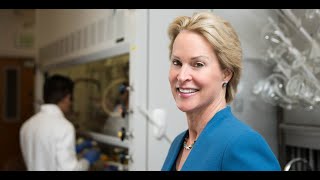
The video records the opening of the Erstel Lecture at the Technical University of Denmark (DTU) honoring Professor Frances Arnold, a 2020 Nobel laureate in Chemistry. After a formal introduction by host Anas and Lone Krumm, Arnold receives an honorary Doctor Technicus degree and delivers a comprehensive talk on her pioneering work in directed evolution of enzymes. She frames evolution as a powerful optimization algorithm that can be harnessed to create novel enzymatic functions beyond those found in nature. Arnold discusses the concept of enzyme promiscuity, the vast sequence space of proteins, and how random mutagenesis combined with selection can navigate this space. She presents multiple case studies: the development of carbene‑transferase enzymes for cyclopropanation, the creation of bicyclobutane‑producing enzymes, the engineering of cytochrome c to form carbon‑silicon bonds, and the expansion to boron chemistry. She contrasts laboratory evolution with rational enzyme design, highlighting challenges such as epistasis, the need for recombination, and the emerging role of machine‑learning‑guided mutagenesis. Arnold also shares anecdotes about media misinterpretation of her work, the excitement of seeing her research applied in industry (e.g., detergents, pharmaceuticals, rocket propellants), and the collaborative, interdisciplinary nature of her lab. The session concludes with a brief Q&A where audience members ask about recombination, epistatic effects, and multi‑enzyme cascades, to which Arnold responds with insights about evolutionary search strategies. The talk emphasizes the potential of engineered enzymes to enable sustainable, bio‑based chemistry and invites the audience to imagine future possibilities.
Chapters
Good afternoon, everybody. Dear students, colleagues, guests, ladies and gentlemen, dear Professor Francis Arnold, it is with great pleasure that I welcome you all here to today's Erstel Lecture to be given by our esteemed Professor Francis Arnold. And yes, actually I say our, and I literally mean our, because at our annual commemoration day on May 3rd, I had the pleasure of conferring upon Professor Francis Arnold the degree Doctor Technicus Honoris Causa in recognition of and I stick to the paper here, development and application of directed evolution for identification of novel enzymatic functions. So we are certainly very, very proud today, and has been for a long time, for our collaboration with you. I've been very much looking forward to this, and actually at the other occasion, I was like symbolizing that, that I handed over the diploma here to you, the doctor's diploma, and I have it in real. So congratulations, Professor Hart.
Congratulations.
Thank you so much. I'm a real doctor now.
And then before we hear what you all came here for, the very interesting lecture, I'm sure Professor Lone Krumm will give a short introduction. So once again, welcome everybody.
So thank you, Anas. Thank you, everybody, for coming. On behalf of the Erster Board, which is in somewhat charge of the Erster Lectures, I'd like to welcome all of you, and obviously, especially today's speaker, Professor Francis Arnold. I'm sure you've all read the notes and will know that Francis Arnold is a professor at the California Institute of Technology. And I'm assuming that many of you for a long time have been very familiar with her work. I'm also assuming that for some of you it may be a quite recent recognition of what Frances has been doing. As you all know, she received the Nobel Prize in Chemistry just half a year ago. And she received that for her groundbreaking research in, as Arnes quite rightly announced, the directed evolution to engineer enzymes. And through tapping into nature, which is my interpretation of it, Frances expands the genetic diversity, and she uses evolution, or her group uses evolution, to engineer enzymes which has improved function, or have improved function, or even have totally new functions. This provides us with fundamental understanding that bridges into biochemistry and biophysics, And I think most of you will also be aware that this has fundamental applied interest. So these novel enzymes with novel activities are certainly part of the big toolbox that we will need to address the UN sustainability goal, tapping into reducing chemical waste, maybe not solving the climate crisis, but at least improving our tools and our ability to do so. So I think this spanning from very basic fundamental, call it groundbreaking science, to the very applied, close to societal society. In that way, today's lecture is truly an Oerster lecture. You will know that Hans Christian Oerster founded this university, and he did so to train young men to go and work in industry. He did so not by training them applied science, but by training them in basic science. And I think if we jump ahead to today, we have come— in all respect for Öster— we've come a little bit further. We also train young women, I'm happy to say. And I think that today's lecture really, and lecturer, really speaks to the motto of DTU today, which is technology for people. And with those words, I would like to give the floor to Frances Arnold, and we look very much forward to your lecture.
Thank you, Lonne. Thank you, President Biagio. Thank you, everyone at the DTO. I'm tremendously honored to have an honorary degree from this remarkable place, and I'm especially honored also to give this Erstad Lecture in the name of a scientist who had a huge impact on the world. I, you know, you don't know too much about my background, but I'm trained as an engineer. I'm a proud card-carrying PhD engineer. And I started my engineering degree at the beginning of the DNA revolution. I made a really pretty movie for my Nobel lecture, which I'm going to share with you while I tell you what I'm interested in. Graphic artists spend a lot of time on this, so I'm determined to use it as much as I can. So I have a degree in aerospace engineering and chemical engineering, but when I started out as a graduate student, it was at the beginning of the DNA revolution. And of course, all of us in this room share an admiration for the biological world because the biological world is the best chemist on the planet. It's the best engineer on the planet. And if we're going to live sustainably, we have to start learning some engineering principles and how to make molecules in a way that's sustainable and from renewable resources, pretty much following some of the tricks that nature has learned over 4 billion years. So who's responsible for all this incredible diversity of chemistry in the biological world? It's the enzymes. Enzymes, they are by far the best chemists. And I wanted to engineer new enzymes that would serve the purposes not of the organisms that make them, but my purposes, human purposes. I wanted to develop new enzyme sequences that would allow them to function in non-natural environments, that would allow them to take on whole new functions. And the problem was, of course, is that nobody knew how to do that. In the 1980s, we were just having the first tools of cutting and pasting DNA, and no one really knew how would you build a new enzyme. And here's the fundamental problem. We have, back then, a little bit of this capability. We have it a lot more today, where we can read any DNA sequence you want. You can sequence anything. It's almost free, not quite free. There's a company in Southern California that makes a lot of money off of this. But it's essentially amazing to be able to read the DNA of the biological world. We can write DNA. You can synthesize, you can email off to your favorite supplier a sequence of DNA. They will synthesize it and send you back in the mail your favorite gene. Or 1,000 genes. So we have that capability. We can edit DNA. My friends, the editors, will have to wait one more year for their prize. So you can read it, you can write it, you can edit it, but what you don't know how to do, and what we didn't know how to do then, was compose it, right? Even the sequence of a single enzyme, a single molecule, eludes us when it comes down to sitting out and composing what that sequence— what sequence will do something that you would like to do. So we go out and get it from the biological world, the gift of evolution of 4 billion years of work. So if we don't know how to compose DNA, this is the problem that I faced back then, as one way to do it is to look at how it's already been done. And as far as I know, nobody sat down with a piece of paper and composed DNA. It was the work of a remarkable process, a design process that has given rise to all the diversity of the biological world, from molecules to entire ecosystems. You have one engineering algorithm. Engineers, eat your hearts out. There is no such thing in human engineering. There's no one design process that works for all problems. But in the biological world, this mechanism of mutation and natural selection is what has created all of this tremendous diversity. So to me it seemed pretty obvious that if you wanted to move forward in the face of ignorance of how sequencing codes function, that this is a process that has proven to work. And the real question is, how can we get it to work on a timescale that matters at the level of molecules. Now I'll just remind you that this is nothing new. Humans have been modifying the biological world for human purposes for thousands of years, making everything from corn to carrier pigeons, lab rats, racehorses, you name it. We have been making things that support us in our will to survive. Things that give us comfort, things that are not remotely natural. This is not natural. This is a figment of a human imagination instantiated in DNA. In Los Angeles, it's not even close to being fit. If it got out, it would be eaten. But we've been doing this and modifying the biological world using DNA. To serve our purposes. And of course, in the past and in natural evolution, in the farmer's barnyard and in natural evolution, there's some limitations on the underlying DNA diversity that goes into evolution. Where monkeys go with monkeys and worms go with worms, but probably not going to get much of interest if you cross those two. If you want to dial in some level of random mutations, you could smoke those cigarettes. But you don't have all that much control over the random mutations. Maybe take a few more transatlantic flights. But essentially there's not that much diversity to work with in breeding or in natural evolution. But of course that's all different now. No, I don't make Wolford. This is my laboratory mascot. Wolford you will find in the Nobel Museum because we made lots of I do not make wolf birds. I make DNA. So DNA in the test tube, all the molecules I make are molecules. But I can take 3 parents. I can use— do breeding with 33 parents. I can dial in any level of mutations that I want. So I now have, thanks to these tools of microbiology, I now have control over the underlying diversity for evolution. And that's great news. Only it's terrible news because you have all this control but you don't know what to do with it. How do you implement an evolutionary algorithm in real time without 10 to the 9th graduate students? And you think about it. All right, so we got some biologists in the audience. I love to offend biologists. If you think of the space of all possible proteins, it's a really big space. Space, and I'll talk about that more in a little minute. Those that nature has tried, rejected, or accepted, the ones that biology studies, occupy the tiniest fraction of the space of possibilities. This is my playground. My playground is big enough for all of you. There's plenty of room in this playground of sequences that nature has never cared about. That may not have function in a biological context, but that serve our purposes. So this space is a very exciting place to be exploring, given the tools of evolution. Now let's think about the numbers, because this is really the key to success versus failure. There's this wonderful short story by Jorge Luis Borges, which had a big impact on me when I read it in the 1970s. He described a library of all possible books made by permuting the letters of the alphabet in 500 pages. And he so well described the despair of the librarians who had to search for meaning in this vast space. Because there's the whole story of your life in this library, but there's almost infinite numbers of false stories. Stories of your life. There's the— there's the— in this space of possible proteins, or the space of all possible books, there's the cure to cancer, there's the extension of life, there's— there's maybe even the cure for taxes in there. But you have to find it. And these librarians had no mechanism of finding the truth in their library. We don't have a mechanism for finding the truth in the space unless we think about how we can do that. Because look at the way— just making 3 mutations simultaneously to a typical protein of 300 amino acids, you've got billions of ways to do that. And the vast majority of those are gibberish. They're not going to be better than something you started with. So it's clearly a numbers problem, and therefore has to be small numbers for a human to be able to even measure these. And look at the space of all the possibilities. That's bigger than any number we can comprehend. It's even bigger than the US national debt. But for me came some hope in the form of this wonderful paper that was written by John Maynard Smith, published in Nature in 1970. I recommend it to all students. It's a model of conciseness, 1.5 pages, and told me everything I needed to know about evolution. And he said, consider a species a protein sequence is surrounded by all of its single mutant neighbors. It's a vast space, but everything's connected to everything through a very small number of steps. And for evolution to occur, and I believe it does, so this is the way he's thinking about the problem. For evolution to happen, a functional protein has to be surrounded by other functional proteins. So that a single mutational walk, which is the high probability, can find another functional protein and traverse this space essentially all the way back to the last universal common ancestor. And only if the space looks like this, this network of functional proteins exists, can evolution take place. We are the products of this process reaching all the way back to the last universal common ancestor. That means that functionality is dense enough that we can find it in a simple optimization process. So what is this? Evolution is an optimization problem, or molecular breeding in my hands is an optimization problem. Engineers, you know this. And it's a problem where the fitness or the performance— let's say how well an enzyme performs a task— plotted as a function of all these possible sequences If that fitness landscape is rugged, very rugged, then any mutation will send you into crevasses of non-function and you stop evolving. If it's very smooth, then any fool can do an optimization because a random uphill walk will take you to the highest peak. And Maynard Smith's argument was that it has to be smooth in at least some of its dimensions for evolution to happen. We are the products of evolution. Therefore, it is smooth. So we could translate that into a simple experimental algorithm, and this is the way it was done in the early 1990s. You start with this wonderful gift from nature, one of these rare functional proteins that you can— that nature gives you on a silver platter or the bottom of your shoe. You can just scrape this off and start with it. PCR technology had been developed by then, and we could do error-prone PCR to make random mutations. Cells do the hard work. They take all those mutated genes and turn those into mutated proteins with recombinant DNA technology. The hard part for the human being is decide who goes on to parent the next generation. You have to individually look at these, and that's called good old-fashioned analytical chemistry. You measure what you're interested in, you get what you screen for. So you measure what you're interested in. Most mutations are deleterious and they that in the old days went to the trash can. In the new days, they go into machine learning algorithms. And if you've asked the right kind of question, where the benefits of 1 or 2 mutations can be measured reliably, and then you can find adaptive mutations or beneficial mutations and feed them back into a process, iterating on this. And the net result is that you can climb a new fitness landscape. So this is what it looks like. You start with this gift from nature. It's usually pretty good at what it does, if not optimized. You ask it to do something new. It's generally less enthusiastic about that. So you fall down a fitness— into a fitness— hopefully the basis of a new fitness peak. And through this simple random uphill walk, you can move and optimize it for a new job. And as a result, this is, you know, you're basically turning the crank if you get everything set up properly. And many people since then, my lab and many others, and especially laboratories like here in Denmark at Novozymes, but at Merck, in a number of industries making enzymes that, you know, go into your laundry detergents or that make drugs. Pharmaceuticals without using toxic metals that replace a lot of synthetic chemistry. This technology is diffused to make all those new enzymes. And I got a really nice free trip to Stockholm in December as a result of this. And I love this photo. It's beautiful. It's a beautiful city. There's the Royal Palace. And I, you know, this joke doesn't work here because you live in Denmark. But I point out to my friends in California that this was taken at 3:30 in the afternoon, and they get a big yuck out of that. And I've met some really nice people. And this is Donna Strickland, the first woman to win the Nobel Prize in Physics in 55 years. So this was a very special year for the Nobel Prizes with two Nobel Prizes in the sciences. To women. We're holding our chocolate. Those are our chocolate coins. They didn't give us our gold coins because they were afraid we'd lose them. Nobel laureates, if they hang on to their gold coins too long, tend to leave them places. So we had to be happy with our chocolate coins under this portrait of Alfred. It was a fun trip. I recommend it. So what did we learn? 25 years of doing this and I still I still do it. It never gets boring. We've learned a few things. We've learned that, by golly, proteins adapt by this random uphill walk, accumulating beneficial mutations. That you can get big changes in function with a small number of changes in the sequence. And this is what we didn't know back then. Because if you look at how biology solves a problem, there's a lot of neutral mutations that accumulate. So you get functional changes that might be separated by 100 amino acid substitutions. And you don't know which subset of those are responsible for the functional changes. But in my experiments, it's all adaptive. So I know what is responsible. Here's your scary fact for the would-be designers. Lots of people ask me, well, you know, aren't we just accumulating enough information till eventually someday we can design? And I say, folks, just get rid of that desire because evolution is such a useful algorithm. And also when you look at the products of laboratory evolution, you get weird things like these beneficial mutations that lie 20, 30 angstroms away from the active site of the enzyme. And when we try to go— we and others try to go and predict or explain how these are transferring their facts, nobody can explain them, much less predict them a priori. We're a bit of a ways away from being able to design, to compose enzymes. So we have this marvelous optimization algorithm. Great, everybody uses it, that's fine. But I wanted to do what the designers were just starting to do. So if you look at the literature and you follow the enzyme literature, people, marvelous scientists like David Baker's lab, were starting to design whole new enzymes, including enzymes that catalyze reactions not known in nature, not known to be useful to anybody, but whole new enzymes and whole new reactions. I said, oh, I hate this. You know, I've got the best design algorithm. How can I make new enzymes? How can I do something novel, right? I mean, think about it. I've got this random uphill walk, one mutation at a time. How do you create a whole new active site by evolution. And I gave up on that problem 15 years ago, but I got more and more agitated as terrible designed enzymes were being published. And it is really true, the designed enzymes are terrible and they're usually recovered, their activities recovered by directed evolution. But it was doing things I couldn't do. So here's really the issue. How do you, use this conservative process to create a whole new function. And of course, you know, anybody who thinks about this problem in any depth, which I guess I had avoided doing, knows that nature solves this problem, right? Nature creates new enzymes all the time. And she doesn't precisely position functional groups on paper and say, you know, this is the design of the enzyme. She discovers them through essentially random uphill walks. But it comes from the fact that new enzymes are already there. So if you look at how new enzymes come about, for example, in response to man-made pesticides or man-made herbicides or other junk we throw into the environment like antibiotics, new enzymes come about because those functions are already there. Graduate students. Enzymes are like you. You are selected for your ability to work 90 hours a week at low pay for some years at a time, but actually you have other capabilities, right? Maybe you can play the piano or you're good at sports. Or maybe you could wash dishes if you have to, right? You have many capabilities that aren't being selected for at any one time. And this is true in the enzyme world as well. A natural enzyme might have multiple functions. We call them promiscuous activities that can become the fuel for evolution when the context changes. When a new food niche becomes available, for example. And that if you're smart enough as the breeder of molecules to recognize those promiscuous capabilities, they could be drawn out and optimized by essentially the same turn-the-crank process. And people like Danny Tawfik showed this really nicely using directed evolution to modify the promiscuous functions of enzymes that he proposed were remnants of their evolutionary history, so that he could convert an enzyme in a functional enzyme family, one member into another one. Well, we took this one step further. We said, Well, if that's true and enzymes have these promiscuous capabilities, am I smart enough to recognize those and do chemistry that has never been shown in nature? Something completely new. Let me give you an example of that. So if you take my favorite enzyme family, long ago my chemistry colleagues said, ah, hydrolases, forget that. Do something I can't do, right? They don't have the capability to selectively hydrolyze. But that never got anybody excited. Insertion of oxygen into an unactivated CH bond at room temperature and pressure does get people excited. These are really hard reactions. Making epoxides from alkanes, heteroatom oxidations, a number of things that this P450 family can do is really impressive chemistry. Now this family of enzymes has multiple functions, and members presumably evolved through this process similar to what I just described, using a reactive intermediate that it invented some millions of years ago, this iron oxo species compound 1, and various other intermediates that it shunted off to do all this different chemistry. Really beautiful enzyme family. We said, okay, if it's learned how to do so many different things, can it learn some new ones? And can it learn some new ones with a little bit of intuition from chemistry? So here is an iron carbene intermediate. This is a man-made compound, but it's well known. OK, first of all, it's isoelectronic with this oxene transfer type mechanism. And this reactive intermediate has been used by chemists trying— chemists who are from the biomimetic chemistry days. Who were trying to mimic some functions of enzymes, probably didn't do a really good job at that, and then discovered some new chemistry they could do, but never went back to the proteins. So these iron carbenoids can, for example, if you have a double bond, you can make cyclopropanes. Or you can insert that carbene into various X-H bonds and do new insertion reactions. And we argued that if an enzyme can learn how to make this reactive intermediate, perhaps it could also transfer it to a second substrate. Make this intermediate driven by the synthetic reagents. That's your new niche. And then directed evolution could capture that little bit of fuel and evolve this whole new enzyme function. To make a long story short, that worked really well. Within a few months, we had the first carbene transferase enzymes. And as far as I know, the only carbene transferases are man-made. Nobody's found a carbene transferase in nature because we have to drive it with man-made compounds like these diazo compounds. But you can form reactive carbenes, transfer them to substrates like styrene, and make single stereoisomers of cyclopropane. So there's 4 possible products here, but you can train the enzyme to make a single one. And these are often done with transition metal catalysts like di-iodium catalyst. And within a few months, we had enzymes that competed with the best catalyst that humans ever made for this kind of useful chemical reaction, all in whole cells. They'll do it for the price of sugar. Then we could show that we could modify the active sites and make the cyclopropane cores to FDA-approved drugs. So this core to Fetsema. Once again, 4 possible diastereomers. It takes 5 to 8 chemical steps with protection, deprotection to make these chemically. But an enzyme happily makes it in a single step with very high selectivity, excellent yields. And these have gone into commercialization already. How about some things that— so the chemists, they're always pushing me. I'm sitting in a chemistry department. They say, ah, Frances, anybody can make cyclopropanes. Yeah, so you're more efficient. Do something I can't do. They're always pushing me at Caltech. Do something I can't do. So here's a story. Here's something they can't do. We asked, can an enzyme make highly strained rings? These are very difficult to make because they tend to blow up or fall apart when chemists make them with small molecule catalysts. So here's an example of a reaction that's not even known Of course, cyclopropanation is not known in— alkene cyclopropanation is not known in biology. Bicyclobutination of an alkyne is definitely not known in biology. And it was never known to be catalyzed by Earth-abundant iron. There's one example using osmium in the whole literature to make these crazy compounds. So the first thing you do is make a cyclopropene. We evolved an enzyme. So here's my trick. You are the breeder of molecules. You have to find your— starting point. You have to know your enzymes well enough to know who has the capability, some tiny amount of activity for forming a cyclopropene from an alkyne now. So you drive the reaction formation of the carbene with EDA, transfer it to an alkyne, you make these strained rings. We're talking significant amount of ring strain. And you can evolve it then through sequential rounds of mutagenesis and screening. We just stop when we feel that the work can be published in some snooty journal. And that was an easy one to make. Actually, it wasn't easy. I didn't do it. I'm sure that Kai Chen worked really hard to do that. But the enzyme, once you find the starting activity, the enzyme can learn how to do it. But what's remarkable— and nobody can design this. You could not design an enzyme that does that. But look at this one. He argued that if you took the cyclopropene and you convinced the enzyme to hold it still in the active site, you could then do a second bicyclobutination— I mean, a second carbene transfer and make bicyclobutanes. Once again, these are pure diastereomers. We can find no other product. There's a single diastereomer out of the 4 possibilities. No human being has ever made these compounds before because there's no way to to make them. Now as far as I can tell, we have a lot of bicyclobutanes. As far as I can tell, nobody cares. Bicyclobutanes are so rare, they're pretty much explosive. You pull on them, they will go boom. And they're really great rocket propellant binders. So this is funded by people who are interested in rocket propellants, all made in E. coli. Who'd have thought that E. coli could make compounds like this? And you can easily make it in the laboratory in gram quantities. So if you think you have something interesting to do with bicyclobutanes, perhaps even in pharmaceutical compounds, it's an interesting isostere for a number of groups. We're happy to make bicyclobutanes. How about bonds never known in nature? The chemistry of the biological world is incredibly diverse, but it's also significantly limited. And think about something like silicon. Humans make carbon-silicon bonds, but no one has ever found a biological carbon-silicon bond. There's 50 products in this room, from your hair gel to your caulks, sealants, your earbuds, they contain carbon-silicon bonds. It's a huge industry. But it's all done by people who don't even read the biological literature, much less synthetic biology, because they always said, you know, nature doesn't even have mechanisms for making carbon-silicon bonds. So we decided to take on that problem and open up a whole new possibility for biological chemistry because if you go to your old journals like your Angewandte or your JACS journals and look in the 1980s, people figured out how to transfer carbenes into silicon-hydrogen bonds to make carbon-silicon bonds. They didn't do it very well. This is kind of a short sad history of carbene transfer to silanes. And you'll see very nice selectivities, but the turnover numbers, the total number of times that the catalyst turns over this, are really terrible. So it's not a industrially useful reaction. But it gave us the idea, could we get— oh, by the way, notice there's no iron on here. No one ever showed that iron could catalyze this. But I'll bet you know what it can do. We found— now I have a refrigerator full of starting proteins, my proto-racehorses I call them. And we found a protein that catalyzes carbene insertion into this silicon-hydrogen bond of dimethylphenylsilane. This protein comes from a thermohalophile from Iceland. No, we didn't go to Iceland. We went to the databases and pulled this sequence out of the databases. Amazing protein, a little tiny thing. It's only 124 amino acids. It's a cytochrome C, so its native function is electron transfer. It has no catalytic activity that's ever been reported. And this thing is so stable you can boil it. You can even give it to a chemist. It's just a magic powder, carbene transfer powder. And it is so stable and it will catalyze the formation of carbon-silicon bonds 40 times before it dies with 97% EE. This is the natural protein. It was like a graduate student out there waiting for somebody to identify that it had this capability. Now, when I talked about this, an expert in cytochrome c is sitting in the front row and jumps up and sputters and says, "Francis, don't you know there's no active site in a cytochrome c?" And in fact, there is no active site in an artist's representation of this crystal structure of this protein. It has a very nice high-resolution crystal structure. And all of the coordination sites on the iron are saturated. Saturated. So there's a methionine here, histidine there, and then the heme occupies all the rest. And if you roll your little ball, your computer ball, over the active site, you come up with a volume that's a big fat zero. But you know what? Nature doesn't care. Nature doesn't care about your calculations, right? This protein catalyzes this reaction because this representation is It doesn't represent what's actually happening in a protein. Protein is a dynamic structure. This ligand is only weakly bound. And in some of its other states that you don't know anything about, this is very happy to catalyze carbene insertion into Si-H bonds. And furthermore, it evolves. So you can take this little bit of native activity and just over 3 rounds of site saturation mutagenesis.— so we thought we were smart and we would just direct mutations to residues near the active site, including the methionine ligand. We were able to improve the activity to where it was 15 times better than the best human-made catalyst for this reaction. So it was very easy to do, and we thought we could get it into a snooty journal with that amount of work. And I'm sure you can improve it further. And once again, these proteins have an interesting substrate range. They don't just catalyze one carbon-silicon bond formation and make all these different compounds, 19 of which had never been reported before. So the SI, the supplementary information for this paper, was 130 pages long. But I'll just point out a few features. Once you evolve the protein, it no longer touches the alkene functionality. Remember I showed you you could do cyclopropanation. Once you evolve it, it is now chemoselective for the silicon-hydrogen bond. No small molecule can do that. You don't get this kind of selectivity with highly reactive dirodium, for example. You don't touch an NH bond, even though NH insertion is really very easy. And in the unevolved state, it does half and half. So you get, by the evolution, this tremendous regioselectivity. I'll just point out these are all perfectly enantiomers. Selective. So that's the capability that the enzyme gives the chemist that really no small molecule catalyst can compete with. Once again, I don't think anybody cares about these particular products. No one has been beating down my door. But if you have interest in carbon-silicon chemistry in the biological world, let me know. In the meantime, we just showed that it works perfectly fine in whole E. coli cells. These Substrates go into E. coli, the products come out. Bacteria have never interacted with organosilicons before, but you can make all these things in whole E. coli. And when this paper I talked about, I always get some crackpot sitting in the front row. I had a reporter from Science, and he says— this was before it was published, so he jumps up and says, "Francis, this is so cool. You have to tell me more about it." Students, if you yap too much, you don't get published in the snooty journals because they don't want you to publish by press release. So you have to be a little bit circumspect. And I said, look, I gave the presentation, I'm not going to tell you anymore. So what did he do? He made up a story. I said nothing in my presentation about silicon-based life, but Robert Service said, oh, we're going to take a step towards silicon-based life. And you remember, this is Spock interacting with the silicon life in the Horta, in the rock. So he said we were trying to look for life in rocks. There's Captain Kirk. We're not trying to look for life in rocks. We're trying to put rocks into life. So not only did they get it wrong, but they got it totally wrong. But I'll tell you, nobody read the paper. But this story went all around the world. And when the paper was published, all of the reporters didn't read my paper. They read Bob's paper. OK. So there was this big debate. And thank goodness Popular Science is around because they said, you know, if you really think about the chemistry, we don't think that silicon-based life comes out of Arnold's paper. But I never said it did anyway. But the reporters were playing with each other. And then Astrobiology Magazine comes in and said, oh no, that one. And all 17 readers of Astrobiology Magazine clicked on this article, making it the most popular article for the year after our paper was published. That was fun. And then by the time you hit the creationist literature— so this is the intelligent design committee that argues that evolution didn't happen. They said, oh no, that's got to be intelligent design. And I said, fine, I'm the intelligent designer. That works. That was good. And then by the time it hits the Twitterverse, all bets are off. Anything can happen there. And we were rolling in laughter. So if you ever want to know what the public think of your science, put it on put it out there and then check it on the Twitterverse. And people have a great sense of humor. So we were really enjoying that. All right. Let me get back to science. So we have the products of evolution. We can do biochemistry, reverse engineering, right? We have the answer. It's great to start with the answer. But if you want to understand what's happening, how did evolution solve this problem, it helps to do good old-fashioned biochemistry, or new-fashioned biochemistry. So Rusty Lewis found a very high-resolution crystal structure of the evolved protein. And as you might expect with 3 mutations, the overall structure is pretty much identical. It still looks like a cytochrome c. But there are big changes in this loop over the heme. And that doesn't surprise me because we modified the axial ligand. So here is the wild-type protein. The axial methionine is shown here. Notice this methionine next door, it's pointing up. This threonine is pointing down. In the evolved protein, this threonine is now pointing straight up, that methionine is pointing down, and the axial methionine has turned into an aspartic acid that gets pulled out into the solvent. And this causes a big change in the entire loop, something you cannot design, right? Nobody could predict this a priori. But that pulls the loop out and it creates— look at that— a big volume, an active site pocket now in this newly evolved enzyme. And that pocket enables the carbene to form. And in fact, this was so exciting, if you took the crystals and you added the carbene precursor to it, you could actually capture the active carbene. Nobody had ever seen a carbene of this nature before. But the protein stabilizes it sufficiently that you can capture the end-on configuration of this highly reactive species. And what happens is once the carbene forms, this loop becomes unresolved. And it's highly flexible, we think. And molecular dynamics simulations show that. That once you form the carbene, you have this flexible loop. And that's what gives both the perfect enantioselectivity. So you've got a flexible loop that you can't see anymore. Turn it on its side, you see the silane approach, and you get the perfect enantioselectivity, but a very broad substrate range because the R group can sit out into the solvent. So you now have a general R-selective catalyst. And we've now been able to make a general S-selective catalyst. So what have I shown you? I showed you that the response to the criticism that the chemistry of the biological world is limited can be relieved. You can do something with that. If you look at how— Carbon bonds to nitrogen, oxygen, sulfur in biology and some halogens, a couple of metals. There's whole swaths of the periodic chart that biology doesn't go after. But humans have done a really good job with that. And that's why they say, you know, you can't do what I've done. Because there are a lot of things we can't do that chemistry has done. But I just showed you silicon. But we also last year added boron to this chart. And if you want to hear the boron boron story. It's pretty much like the silicon story. It's very easy to add both carbon-boron bonds and carbon-silicon bonds to the repertoire of the biological world. I want to spend my last just couple of minutes with two brand new stories. And this one is also— I love the competitive nature of science where people will do one thing and then somebody will up them and then you keep doing that. Here's a really good example of that. So John Hartwig's group and my friend Doug Clark took a perfectly self-respecting iron-heme protein, took out the iron-heme, and stuck in an iridium. Now I don't know why you'd want to do that, but they showed that they could do something really interesting with that. And that is do carbene insertion into a CH bond. So I showed you SH, BH, NH insertion. You can do all those things. But it's really hard to insert a carbene into a CH bond. That gives you alkylation chemistry. So radical SAM enzymes do that, but there's not a whole lot of, you know, alkylation chemistry in the biological world. But it would be marvelous to have that because then you could do late-state functionalization of pharmaceuticals, for example. So I saw this, that 35,000 turnovers for intramolecular CH insertion, but only 300 and terrible EEs for intermolecular CH insertion. CH insertion, making this new bond here. And the reason is that it's very hard technically to evolve something where you have to take the prosthetic group out and put a new one in. It's just too many steps, and you can't do the molecular evolution. So they just had to take the catalyst as they found it. But if you could start with an iron-heme protein, first of all, you get rid of iridium, which we'd all love to do. Iridium is basically you know, liquid iridium. I mean, it's very expensive. And you don't want to use iridium. But if you could do it with iron, you could take something like all these hundreds of thousands of P450s that have been cataloged in the databases and just modify a few active site residues and turn them into alkyl transferases for late-stage modification. That would give you an incredible array of catalysts for synthetic chemistry. To solve this problem, I'll just mention this quickly, we had to do a little bit of design here. I break down and do rational design when I'm desperate because, you know, if you contaminate your beautiful blind experiments with thought, it's usually downhill. But here we contaminated it with some thought, arguing that we want this to work inside of living cells. The reduction potential with the there's always a cysteine here. And it's there because you're forming this reactive oxygen and you don't want to do that unless your favorite substrate is around. Styrene is not its favorite substrate. So we could never get this reaction to go, the carbene transferase to go, because you need to start with iron(II), because you didn't have a high enough— inside the cell, the NADPH is not strong enough reductant So we had to cheat and add dithionite. That is not remotely biological. So we cheated and substituted this always-conserved cysteine for a serine. Looks just like cysteine. But arguing that would increase the reduction potential so that you could just have it in a reduced state even in the presence of styrene. That, of course, that kills the protein, right? It no longer— that was well known. And it no longer does mono-oxygenation chemistry, because a P450 needs a cysteine there. It kills the protein, it turns it an ugly green color. So it'd go from this beautiful red to ugly green. You go from your peak CO binding peak at 450 to 411. I'm the mother of a new enzyme called a P411. There is no searing ligand ever known in the enzyme world as far as nobody has found a serine ligand. So I made a totally non-natural protein. And everybody said, oh, that's dead. But it's not dead. It's just waiting for you to ask what it can do. And it turns out it enables iron— this Iron Man. Iron Man can do anything. It enables this iron-heme protein to catalyze carbene CH insertion. And so on the COVID of Nature, we always come up with cool art to illustrate. And it usually has some sort of electricity in there, even though there's nothing to do with electricity. But people like that. We showed that you could get P450s with this mutation to catalyze CH insertion. So right now we're limited to allylic CH insertion and benzylic. So these are activated CH bonds. But you can get very good EEs, very good turnover numbers for intermolecular CH insertion. And you can do the fun things with evolution that gives enzymes the huge advantage. So in this case, you can evolve the protein to either do the cyclopropanation and not touch the CH bond, or the same protein scaffold can touch the CH bond and not do the cyclopropanation. No human chemist can do that. That is just impossible chemistry.. But not for an enzyme. The enzyme can do it with high selectivity, and you can tune it with this ligand. So I could give you a whole other lecture, but I won't, on what we did for carbene transfer. So you make reactive carbenes. This is human-invented chemistry taken beyond where humans have been able to go. And look at nitrenes. There's enormous literature on the transfer of nitrenes So you can make new carbon-nitrogen bonds. And that is now a wonderful story. And I won't give you that whole story. I'll just share with you the most recent result of that, where we were able to take a P411 now and drive the formation of reactive nitrene with really cheap hydroxamate precursors. So these are acyl-protected hydroxamates. And you form this nitrene. And what happens is the nitrene can go and insert into a CH bond along the chain and do something like make a beta-lactam in a single step. So this is a CH amidation by nitrene transfer with— yes, that is not a typo, that's a million turnovers— with beautiful 96% EE for this reaction. No human can do this. And the reason a human can't do it is that these side reactions kill you. You get a Curtius-type rearrangement or reduction of your nitrene that just gives you the amine. And so it's just chewing up money in that case. Small molecule catalysts do that. But the enzyme can set aside side reactions. This is the power of enzymes. It can set aside side reactions and just promote the desired reaction. So this is an unprecedented reaction in human chemistry and enzyme chemistry. But it was all enabled by recognizing that this is at least possible, testing for it, and evolving it. So once again, you can make a lot of different beta-lactams. If anybody cares, please let me know. I can make any beta-lactam that's on this sheet and probably many more. And let me just show you how easy it is. Chemists, eat your hearts out. You take a precursor that's easy to make— this is really trivial to make— You add your enzyme and you get, you know, you have your substrate, may not be soluble, and the bacteria all mixed in there. After a while, your product comes out of solution. Your substrate gets all converted. Your product comes out of solution. You filter it. And that is 95% pure product, right, or 92% pure product. That's about as easy as it gets for the synthesis. Of these complex compounds. But it doesn't stop there because you can tune this active site. So if you want a beta-lactam, you can tune it for that selectivity. If you want a gamma or delta-lactam, you can tune it for that selectivity, completely overriding the inherent reactivity of the CH bonds. The enzyme does that. The active site directs the chemistry to the place where you want to go. So I think it's a pretty nice demonstration Do we have any organic chemists in the audience or transition metal chemists? If you get queasy, right, so a lot of chemists say, well, I just don't want to work with bacteria, right? If you get queasy at the thought of this enzyme stuff, just think of it as a transition metal complex, right? It's self-assembling. It's DNA encoded. It's chiral. And you can make a million ligands in an afternoon. Right? So you've got this tremendous synthetic power that is enabled by the ability of the bacteria to read the code and synthesize the molecule that you're encoding. And then you can use this power of evolution, this random uphill walk, to create the catalyst that you're dreaming of. So I hope I've given you a flavor of not the door closing but the door opening. You know, we're just at the beginning. Of enzymology, of engineering enzymes to do things that will service human needs rather than bacterial needs, that will do things that can help us live sustainably. And things that, gosh, it's just open for your imagination because we've got hundreds of years of creative chemistry and then all these new tools of biotechnology and You start peering, looking at enzymes with whole new eyes, right? With chemistry eyes, you can discover these gold nuggets that are just lying in front of you. So it's a pretty exciting time to bring this chemistry into living systems. And of course, I don't do any of this. I just go around and get credit for it. But that's fun too. But I have a great group of young, bright students from all over the world who come to California to torment enzymes and also have a good time. And it's a real mixture of people from different backgrounds with computer science and organic chemistry and transition metal chemistry and bioengineering and structural biology all trying to figure out how to work together and talk together. So from them I send you greetings and I thank you for your attention.
I don't know if I get a microphone. Can everybody hear me? Yeah, they're nodding. So Francis, okay, nobody can hear you. Okay, we'll try this. So thank you so much for an absolutely amazing talk. Technical University. I'm going to open the floor for question in just 30 seconds, but I realized when I sat down that I had not told all of you that the lecture is being filmed, and DTU will put the film on its web or on YouTube. So if any of you are not happy of having been filmed, It's just bad luck because it's happened. But I apologize. I should have given you the option to leave the auditorium, which I think would have been too bad for you. So with that, questions or comments for Frances?
Wave your hand.
Yes. Thanks. Thanks for a great talk. One of the fundamental elements of evolution in the real world, in biology and cells, is crossover and recombination. Are you just doing your generation of the offspring based on point mutations, or do you actually have something that mimics that biological process of mating?
Yes. So recombination is a great search process, and we've used it in a number of cases. Where we combine genes from multiple species and do recombinations. So that— I haven't talked about that, but that's another excellent search process.
Yes, in the back. You said nature doesn't care about your calculations. What do you think we are missing?
Everything. I mean, it seems— so 30 years ago, we all thought design of enzymes would be the dominant paradigm, and the more we learn about enzymes, the farther away it seems that we're getting. We understand the dynamics are important. We understand that there are catalytic— electrostatics are important. Tunneling might be important. We don't have the descriptions. Allostery is important. We don't have sufficient descriptions that we can implement on a reasonable time scale. Right? So it's complicated. But evolution doesn't care about all that complication. Right? Evolution works with the function at the level of the function.
Thanks for a very nice talk. I have a question. I like the John Maynard's analogy about these convexity of space, but in a recent paper I saw where they were trying to evolve some enzymes and they did saturating mutagenesis, and they also did error-prone PCR. In the end, when they selected for their single mutants, they found that the improved functions were actually only when they had combinations, right, of changes.
So that's because they directed mutations to specific sites. Very often nature can go around through another circuitous route, is one answer. The other answer is that yes, epistasis, the interactions of mutations, is important. Right? But evolution does not work at that level. Evolution doesn't make big jumps usually. It finds these circuitous routes. What does the evolver do? Right? You can either make big simultaneous mutation libraries and screen more, or you can do really wonderful things like machine learning. So we just had a paper a couple months ago in PNAS. On simultaneous mutations to identify these epistatic combinations and do jumps of 4 mutations at a time. So basically it's a numbers game, and you have to figure out how to make the best use of the small numbers you will always be getting from any experimental measurement. And it— and it's with any optimization problem, there is no one optimization process that works best for all problems. There's no— it's called the no free lunch theorem, right? There is no free lunch. So my optimization method will work for some set of problems and others will work for other problems. Recombination might be better for other kinds of problems. Thank you. Can you do multi-step sequences in the same flask using several different enzymes? Again, it's a combinatorial problem. So if the number of sequences that you can encode with a 300 amino acid protein is 20 to the 300th, if you've got 3 300 amino acid proteins, you've got a lot of possible sequences, and it just grows exponentially. And usually what we do— so if you want to co-evolve things, what we do is evolve something in the context of other two that you hold constant. And you can do that and look at the product, the end product of a cascade, for example. But simultaneous evolution of multiple proteins is just that much more work and difficulty. Not to say it can't be done, but it's not usually not fun.
I see no further hands or waving, which is absolutely perfect timing. So on behalf of DTU and our president, I'd like to invite you, or he would like to invite you, for a reception outside. Before you leave the room, I would really like you to thank today's speaker for an absolutely amazing lecture.
Thank you, Francis.
More from Joshua







Scientist Stories: Hans Waterham, The value of phenotypic assays in peroxisomal disorders




Scientist Stories: Joel Zlotogora, Genetic carrier screening programs for reproductive purposes