Scientist Stories: Gene Yeo, RNA Biology and Therapeutics
This content was created by Joshua Elkington. This content was uploaded by Joshua Elkington. This is a recorded YouTube webinar titled "Scientist Stories: Gene Yeo, RNA Biology and Therapeutics" (posted Nov 4, 2022). It is a scientific presentation by Professor Gene Yeo (UC San Diego) describing his lab’s work on RNA‑binding proteins (RBPs), technologies (eCLIP, STAMP, APEX2), disease and model systems (iPS-derived cells, MDS, ALS), CRISPR screens, stress granules, and therapeutic strategies (isoform-targeting, repurposed MEK inhibitors, targeting RBP readers, small molecules). Joe Lukoc introduces Gene and Casper moderates; the talk includes disclosures, funding mentions, translational/entrepreneurial notes, and an audience Q&A covering therapeutic windows, small‑molecule targeting, stressors for modeling, automation/technological advances, and commercial/clinical considerations.
Chapters
Um, so Joe Lukoc is with us today. He's a Chief Scientific Officer and Head of Discovery at Denali Therapeutics. Um, he just— and, and about a year ago, in fact almost exactly a year ago, Joe gave a webinar for us on what Denali is doing. He specializes in development of novel therapeutic strategies in neurodegeneration biology, including lysosomal function, glial biology, and axon synapse maintenance. And there's 3 principles that guide development at Denali. It's got to be linked to target, genetically linked to the disease. Candidates have to be engineered for brain delivery, and the clinical development is enabled by biomarkers. And when I asked Joe after his talk who he would most want to hear from, he said that he'd like to hear from Gene at UCSD. So it was my hope that he could introduce Gene, which he is now going to do. Take it away, Joe.
Yeah, thanks, Casper, and thanks for having me back here as a guest introducer. It's really fantastic that you guys have Gene to talk to you today. You know, and as Casper mentioned, it's exactly right. You know, he asked who are the people who, you know, I think people would be interested in hearing from, and Gene was on the top of the list. And so just to give him a bit of a proper introduction, Gene is currently a professor at University of California San Diego, or UCSD, and is a founding member of the Institute for Genomic Medicine and a member of the UCSD Stem Cell Program and the Moores Cancer Center. Gene's lab is really one of the world's expert labs in RNA-binding proteins and their impacts on and their potential as therapeutics. And this is really a quickly evolving area with respect to many diseases. Most notably is ALS, actually, where a number of the genetic contributors to ALS have been identified as RNA-binding proteins, arguing that this biology really does play a central role in disease. I've collaborated with Gene on and off for probably over a decade now. That includes a recent program at Denali, just announced we're moving into Phase 1B in ALS patients. And we actually had our own webinar on that last week, in which Jean was our guest speaker to really talk about, you know, the details of that biology. So it's really great to maintain that connection.
On a—
quickly on a personal note, you know, when I first met Jean, pretty quickly realized that there was something different about this guy. And, you know, a lot of academics who interacted with industry, you know, definitely 10, 20 years ago, it was a different type of interaction. But it became clear to me right away that what Gene was interested in is helping patients, you know, and bringing medicines to people to, you know, translate the science that his lab was doing. And it was a very, really a very unique approach. Which has included founding a number of companies, I think most notable of which is Lokana, which Gene also helped raise $55 million in a Series A for that company, is still involved with them. So really had a lot of success in addition to maintaining his own research lab. And if you heard just before the introduction, the motivations are purely about moving the science forward, moving the careers of his trainees forward and creating new opportunities. And so, you know, I think it's a really fantastic intersection of academic science and biobusiness in the way that, you know, I think ideally it could be run, you know, much more broadly in the future. So looking forward to hearing you present, Gene, and thanks for taking the time.
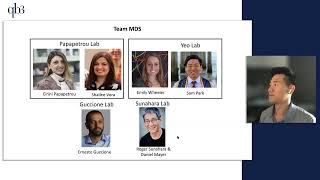
Joe, thank you so much for the very, very kind and generous introduction. It's always been fun working with you, and I'm grateful that you picked me up to do this. Thanks for the introduction again. So, and Casper, let me also share how grateful I think we are in the entrepreneurial space that there is such a thing, amazing thing as QB3. So thanks for that. You're welcome. Looking forward to your talk. Okay. Can you see my screen? All right. So I'm going to be talking about RNA binding proteins. What the lab is doing. Uh, some disclosures of financial interests, and we're very fortunate to be funded by NIH, Paul Allen Foundation, CZI, and other entities as well. Okay, so over the last decade, the number of RNA-binding proteins, or proteins that bind RNA, has increased several, several orders of magnitude, right, from a couple hundred to now thousands, and recently in my lab we've talked through a predicted list of RNA-binding proteins, and the number seems to be close to 5,000. There's a lot of RNA-binding proteins encoded in the human genome. What do they do? From the central dogma, RNA is no longer just an intermediate species. RNA can also have catalytic activity, it can actually convey function. And all of these processes, including the linear RNAs that we study that encode proteins, all controlled by proteins that bind them, RNA-binding proteins. This is a bit more complicated diagram on the right from Tom Tuschel's beautiful review articulating that almost every single step, including ribosomal RNA biogenesis to microRNA targeting rules and translation and control, all pertain to RNA-binding protein function. What we do is we study how these things work. We're also very motivated by the idea that disruption and mutations in RNA binding proteins and their interactions with RNA can lead to diseases such as cancer, and as Joe had pointed out, neurodegeneration and neurodevelopmental diseases. Most of these questions that pertain to how RBPs are related, from our perspective, relate to what are the targets of an RNA binding protein, and can we understand the rules that regulate their interactions with their targets, and then therefore what is downstream, like the molecular and cell biology downstream of that. In the lab, we take many different approaches to study RNA, including a lot of genomics, disease modeling using iPS lines, iPS technology, and trying to think about ways to develop therapeutics. Just in one slide, summarizing big picture, how we classify the work that's ongoing in the group. We think about RBPs as regulators of gene expression, as I mentioned, but these days we think a lot about RBPs and RNA as ways to develop therapeutic agents. Even more recently, we've been thinking a lot about how RBPs themselves are potentially interesting drug targets, and we've been performing a lot of work to do target discovery here, and then, and then leading to eventually, hopefully, small molecule drug discovery. And some of these, uh, work have, uh, have led to us founding companies and hopefully, you know, I think building medicines for people, building tools and resources to enable RNA medicines. And some companies are here, and a lot of my trainees have been involved, uh, and left the lab and joined these companies to, to make them successful. So very grateful to everybody. Okay, the way we've been thinking a lot about RBP is very, as I said, a very bottom-up approach, right? So we take a given RNA binding protein, usually nothing is known about what they do, and we ask what does this protein do and where does it bind? What part of the RNA does it bind to? And so we've been developing a lot of technologies to, identify binding sites for RNA binding proteins. One of the technologies that Eric Van Nostrand in my lab led the development of is this enhanced CLIP approach, and this enabled us to identify using this approach, CLIP, right, that's not been improved, right, the binding site of a given RNA binding protein, say RNA binding protein FOX2, on a given target here with a relevant input control. And you can see that for our libraries, we have a very, very high level of success where the percent here, or fraction here, is the percent usable reads or not PCR duplicates compared to publicly available datasets. Recently, we've also published another method that provides an orthogonal way to identify the binding sites of RNA binding proteins, but at single-cell level and in the isoform-sensitive manner. So here we call this technology STAMP, which is the fusion of RNA editing enzyme that allows us to then edit the RNAs, and then we sequence the RNAs with regular RNA-seq and identify where the RPP binds, similar to CLIP. But here on each track, you can see the first single-cell binding, each track is the single-cell binding of RBFOX2 on this target RNA. So we're pretty excited about the potential of these technologies. Going ahead. We are quite proud of this effort that took about a decade. We had identified thousands of antibodies and identified, you know, some subset of them that worked for IP and worked with many collaborators— Brent Gravely, Chris Burch, Eric Lukian, Shangdong Fu here— to generate a functional map for a very large set of human RNA-binding proteins. These datasets are obviously made available as soon as they are QC'd and generated, and it's part of the ENCODE project. And so we're very proud of this exercise that's led us to new findings on biological mechanisms for how RBPs work, but also provide a resource for the community. So I'm not actually going to talk about this work. It's been out for a year now, but to give you a perspective and a few— a couple of short stories, I would say. That hopefully we have enough time to talk about why we think RNA and RNA binding proteins are a really exciting area of interest, both from the biological perspective but also from the therapeutic perspective. First, a short splicing story, one of three stories. This work is a collaboration between our lab and Irene Papapetrou's lab. Been an intimate and exciting collaboration, and it's really— I want to highlight that it was led by Emily Wheeler in my group and Shelly Vora in Irene's group. And this is a really a long, long collaboration, really helped by Ernesto and Roger Sunahara's group. So MDS, the problem of MDS is a bone marrow failure disease where It's primarily a disease of the elderly, but can also affect younger patients. It is a disease where hematopoietic stem cells in the bone marrow produce red blood cells, white blood cells, and platelets. But in MDS, these stem cells do not actually produce enough mature red blood cells, and you have this mutant clonal expansion of these cell types. We've been very interested in what causes MDS for a while, Then a landmark paper in 2011 showed up to say that there are many mutations found in RNA binding proteins or splicing factors in MDS. Here's a figure basically showing some of the key splicing factors, U2F1, SRSF2, SF3B1, that have highly conserved point mutations in them. What's been interesting is that the mutations tend to be heterozygous. —and are mutually exclusive. So this argues that there are likely common downstream targets downstream of the different mutations that lead to phenotypic consequences here. Now after this paper was published, many groups obviously looked at RNA-seq datasets and generated RNA-seq datasets from mice and human cell lines to look at what are the splicing changes downstream of the splicing splicing factor mutations and whether or not these could help us understand mechanistically the phenotypes. But then critical targets and mechanisms still were somewhat elusive. There were many important limitations of these studies. Some of the mice studies might get very mild, if any, MDS phenotypes. Some of the studies use leukemia stem cell leukemia cell lines, and they express mutant splicing factors at non-physiological levels, and many of the cell lines don't express the same genes as hematopoietic stem cells, right? Mice and humans also don't have conserved alternate splicing, very small fraction of them are conserved, and so we said, went back to the drawing board, and, and really started working very closely with Irene's lab, because Shaili had generated a beautiful isogenic panel of point mutations, heterozygous point mutations in these splicing factors. We only show these two, SRSF2 and then U2F1. Within these isogenic iPS lines, you also put in 3x FLAG epitope tags in the mutant allele only or in the wild-type allele in the context of the mutant cells. This is again provided a very nice human system, and this human system can be differentiated directly into hematopoietic progenitor cells, which we believe is the subject of interest and importance in this disease. The allele-specific tags allow allele-specific IPs that we can then use for CLIPs. And in Shaley, Shaley's experiment also showed that these mutant cell lines have reduced colony-forming potential in methylcellulose acid. So you generate half the blood cells from these progenitors compared to wild type. Okay, so this is human system. They have the relevant phenotype here that we can measure at the cellular level. So next, what Emily did in the lab was she did this allele-specific eCLIP, right, because you can do the mutant allele IP to ask the mutant binding RBP binding sites, are they different from the wild-type binding sites? And indeed, she was able to show that this is true, right? So she finds that in the mutant sites you have the CAG enrichment for the U2F1 mutants but not the wild-type ones, right? And for SRSF2, she also sees corresponding binding preferences that are different, right? This tells us that actually the mutant RNA binding proteins do have a different preference for their binding sites, and it's different from wild-type. She also integrated RNA-seq datasets generated from these HSC progenitor cells and was able to then combine the RNA-seq data there, which was able to identify exons that were included in the mutant or exons that were included in the wild-type more than mutant. In this case, just to summarize that when you see this enrichment here, we point out that the wild-type U2F binding is increased at the 3' splice site of exons, that were included more in the wild-type but less in the mutant, so skipped in mutant. Whereas here you can see that in the U2F1 mutant binding, that's higher in the exons that were preferentially included in the mutant version of wild-type. This trend is the same for the SRSF2 protein. To break these things up even more, Emily broke up the binding events in this exons, skipped exons, cassette exons that were not differentially included in the wild-type or mutant cells, and as into ones which have wild-type only binding for, for UTEF1 or SRSF2, which is a different set, or ones which have binding for both the mutant or the wild-type, or the ones which only have binding from the mutant allele. And in each of these categories, she asked what is the difference in splicing between the wild type and the mutant condition. And indeed, she was able to then assign direct in vivo binding changes at these novel events and show that events which had only the mutant binding sites were preferentially included in the mutant versus the wild type, and events which only have the wild type binding were perfectly included in the in exons included in wild-type but not mutant. Some of these events made sense. MET24 is an event that was previously shown to be preferentially included in the mutant versus wild-type and contains a binding site in our allele-specific clip as well as the regulated exon here. But we didn't find evidence for other ones that was previously reported, including ECH2. Then because we became very interested in what is the commonality, what is the convergence event? What Emily did was overlap the splice events between the two mutant lines. Patients have the same phenotype, so what is the convergence event? Then she added patient cell data, patient cell information, RNA-seq data. To ask if can we trim the events down, and this ended up trimming the events down to 15. Then we layer on top of that the allele-specific clip dataset to ask do these events contain differential eCLIP binding, and so she ended up with only 3 events. At this point we thought maybe this project would come to a standstill because how could splicing factor mutations that lead to hundreds of thousands of splicing changes because at the end, because by one change, right? It turns out that maybe that's the case. So, so she— again, these are the events which are included more in the mutant versus wild type, the delta size or percent splice in, um, and, and with differential binding. So this is pretty neat. So if you look at the CLIP datasets where the peaks represented binding of the wild type allele on exon— on this exon in the GNAS gene, I'll tell you about what this gene stands for, but there's no binding for the wild-type U2F1 protein. But in the mutant one, you can see a lot of binding on this exon, and therefore this exon is included more. This is binding, and so it's included more by RNA-seq-defined changes. You get some similar logic looking at the SRSF2 binding. Indeed, there's more inclusion of this exon in exon 3 in the GNAS gene. The GNAS is guanine nucleotide binding protein alpha stimulating. You can see that in both HSPCs from Irene's lab and then MDS patient cells, you see higher levels of these exon inclusions. This long isoform, can— if you express more of this long isoform that's seen in the mutant case and the patient case, can you reproduce the MDS phenotype? So Shirley performed these experiments to show that you can overexpress the long or short isoform, and long isoform you get the phenotype of lower number of colonies, colonies here. And then when you knock down the long isoform in the context of the mutant cells, not the wild-type, the mutant cells, you see the correction of the differentiation potential of these cell types, which is pretty exciting. It's a single exon inclusion event seems to converge in these different mutants. What is GNAS? G-alpha-s is a member of this heterotrimeric family of G proteins activated by GPCR. In an inactive state, G-alpha is bound to GDP and to become active, it has to release GDP and exchange that for GTP. Previously, an activating mutation was found in a different part of the gene in 1% of MDS patients. We hypothesized that this longer isoform where the exon is not included, obviously different from the mutation, also is a hyperactive form. And so we worked with Roger Sun in Harvard's lab that did this experiment. So Roger showed that using recombinant G-alpha-S long, you see higher, faster binding than G-alpha-S short, right, to this non-hydrolyzable form of GTP. And so this, this plus other experiments tell us that, that the long G-alpha-S form is more active. Than the short form. So what does a more active G-alpha S protein mean? And since many GPCR proteins signaling regulate ERK activity, after many months of looking at many different pathways, the hypothesis here is that increased G-alpha S long activates ERK and MAPK signaling, which you see from looking at phospho-ERK. Levels here, you can see the long isoform activates by overexpression. Same for in the mutant lines, so isogenic mutant lines, right? And you also see this in patient cells. So pretty excited because what's been interesting for us is that we've been looking for, is there a way to now make these mutant cells more vulnerable, right? Since ERK and MAPK activation has been uncovered and the MEK kinase is upstream of ERK in this MAPK pathway, we decided to use MEK inhibitors, which are currently US FDA-approved oncology drugs in melanoma. This is a different drug for melanoma, but it's through a different pathway because it's a mutant BRAF inhibitor. And we added these into these mutant lines to ask if the mutant cells are more sensitive to these. And in fact, there's much higher sensitivity to the MEK inhibitors compared to this control, right? And so we think that targeting this MEK-ERK pathway, because of our efforts in identifying a single isoform that seems to underlie and converge between these splicing factor mutations, may prove to be a new therapeutic agent and are pushing for clinical trials here in this area. And so this is an example where we're able to use some of the technologies we've developed, right, you know, eCLIP and others, to then narrow in and identify a key isoform switch, which leads us to thinking about signaling and therefore looking at available repurposing of drugs. I'm going to go to the next part, which is thinking about what if we just identify RBPs themselves as drug targets. This is a short story here, but I think it's an important piece of how we think about cancer and the intersection of cancer and RNA binding proteins. This study was led by Jackie Einstein in my group. She was a graduate student when she led the project. And helped with by many folks here, collaborators Trey Westbrook and others at Baylor College of Medicine. The study began almost 6, 7 years ago as well when Jackie joined the lab and she became very interested in MYC hyperactivation. In cancer, you have mutations, amplifications, and chromosomal translocations that can create activating state. And so in normal cells, you know, it's involved with transcription and translation, but in cancer cells you have much higher levels of MYC, and so you have replicative and metabolic stress that should normally kill the cell, but the cell also develops safeguard mechanisms that prevent this process. And so If we can identify these safeguard mechanisms, then you might have the ability to identify new therapeutic opportunities. When Jackie started the project, I think this was like 6, 7 years ago now, she developed a very small library, a CRISPR library for human RNA binding proteins. Note we only have 1,000 here, now there's much more, but this is a set we started with. She did these studies in cell lines that were tamoxifen-induced for MYC translocation to nucleus, so hyperactive MYC versus non. She did the CRISPR screens to identify what RBPs, if depleted, would cause a synthetic lethality to the MYC hyperactivation state. After quite a lot of validation, she was able to identify these proteins, and quite interestingly enough, the ones in bold, are ones whose levels are also highly upregulated in this case, triple-negative breast cancer versus normal. Many of them levels are lower in actually patients that survive longer with triple-negative breast cancer as an example of a hyperactivated mixed state. She picked out one, YTHDF2, which is a reader for methyl-6-adenosine. To epistatic methylation. And again, won't go into too much detail in this aspect of the biology and microbiology here, but she identified this protein as a target, and she was able to show that when you depleted YTHDF2 in the context of MYC-dependent cell lines, you get a reduction in cell proliferation and eventually death, whereas in MYC-independent cell lines, all relevant to breast cancer, you don't see this change. It's highly specific, the consequence of YTHDF2 depletion. As an RNA-binding protein, like many RNA-binding proteins, we figured maybe if you deplete it in the wild-type organism, it would be bad and the animal would die and it'd be not safe. But it turns out that if you make a conditional knockout in adult mice, Using shRNAs that deplete— sorry, this is a conditional knockout. You actually see that it's safe. The body weight of these mice aren't different from wild-type. But if you have shRNA that you can induce and knock down YTHDF2 in these tumors, tumors on these mice shrink. Basically, we think that it's a good way to provide sensitivity to make dependent cells without compromising the long-term safety of the organism. Here's an RBP that's a good target. We again didn't understand how it worked because YTHDF2 binds to many mRNAs with m6A sites. Which is a relevant target. What Jackie did was knock down YTHDF2, which is thought to repress— basically relate to RNA stability and downregulate RNA. If you knock it down, you have a lot of now genes that are upregulated. Just look for genes which are upregulated. But it turns out many of these were not direct YTHDF2 DF2 targets by eCLIP, right? And in fact, the ones which were YTHDF2 direct targets, and are also upregulated, there's only a few. And so she looked at this one because it was the most direct, most regulated and direct target of YTHDF2. And so serine protease, PRSS23, turns out to be really important in the intrinsic apoptotic pathway. And, and I don't have time to speak about more of this, but she did quite a bit of work to show that in Myc-dependent cells, when you deplete YTHDF2, you can activate UPR signaling, cause cell death through this PRSS23 pathway, right? So, so, so what she then showed was that if you knock down YTHDF2 in these Myc-dependent cells, cells die. But if you now also knock down PRC23, whose levels are now upregulated when you deplete DF2, you can actually restore the cell growth. So it prevents apoptosis. And this tells us that the effect that YTHDF2 has— loss of YTHDF2— is mediated by this chaperone protein, which I think is pretty exciting because it tells us that the RBP or the RNA target is a potential therapeutic option in this specific disease. In fact, a very nice preview written by Ann Willis here actually points out that our study is important because it reveals that RBP and RNA targets are good options in TNBC, and they actually made a much nicer summary of our paper than we did graphically. We're pretty grateful for them. But this tells us that I think this strategy of identifying new RBPs in different oncogenic contexts is a good way to think about new biological consequences. Finally, I'm going to talk very briefly, high-level, about RNA granules in terms of the biology and therapeutic strategies. Because Joe introduced me and we both agreed that in ALS you have the strongest evidence that RNA binding protein mutations are leading to the disease. We've been interested in this area now for more than a decade. This set of work, it's led by many people in the group, as you'll see. As we go through the slides, you can identify the different leaders here in the different projects. As Joe had pointed out, RNA-binding proteins are highly mutated in ALS. In fact, if you look at the familial cases, a large fraction of them have TDP-40 first mutations and then now C9 mutations, which also lead to— which they all lead to TDP-43 inclusions. And while there are a fair bit of patients with ALS which are sporadic, all of these patients need to have these TDP-43 inclusions, right? So TDP-43 is an RNA-binding protein normally found in the nucleus, but as disease progresses, or as cause of disease, fall into the— leave the nucleus and go into the cytoplasm, exported, and eventually form these aggregates. Now it hasn't escaped anyone's attention that RNA-binding proteins which are linked to ALS contain these IDR domains. And these IDR domains are not where the RNA-binding domains are, but they are typically on the ends of the proteins. And they have, as you can see, many mutations found in familial ALS patients. And so thinking about this relationship between RNA binding proteins and these IDR domains, it became quite clear that mutations in these disordered regions can alter the transition between, you know, different phases of these protein-RNA interactions, right? And so, you know, in this beautiful slide from Cliff Brangwynne's group, they show that you have, you can have mixtures of proteins that are, that are, you know, in a diffuse, highly mixed setting, but you can also have a transition into a more gel-like state, which can then transition into a fibrotic sort of aggregate state, right? In the cell, a good model for this we think about is stress granules, where GGBP1 is an RNA binding protein that is normally diffused. But when you subject cells to stressors like heat shock or oxidative stress, these aggregates coalesce into this bright puncta, as you can see here., and the cell then organizes RBP-RNA interactions into these droplets very differently from an unstretched state. And so we've been very interested in the dynamics and size and composition of these granules, and looking at this in different disease settings, right? From our perspective and many others, the idea is that you have dynamic RNP which then forms these RNA granules during stresses as a triage of mRNA information. But then if you have mutations in RNA binding proteins, or let's say unknown mutations, these stress granules do not dissipate or they may form faster, or they transition into pathological inclusion. In fact, many reports do support this idea. We've also been interested in how these stress states can help model disease. We've been using human iPS systems to integrate patient-specific mutations in ALS as well as environmental stressors. To think about how can we model this interplay to lead to phenotypes that we see in patients. Since the iPS system is an early development system and patients do not get this disease, ALS for example, it's much later. As a reminder, again, we think about stress granules here as a model that we really like from Roy Parker's group. That there's a core set of proteins. DPP1 is a component, and you have RNA in this core as well. This RNA may recruit other RNA-binding proteins that have other IDR domains, and then these things coalesce and, you know, grow bigger, right, to a certain point. And again, you can see that in different cell types, you can treat with stress, arsenide stress here, induced stress, and this diffused GPP1 foci become these brighter blobs. This can be abrogated by cyclohexamide, for example, which is a stress granule inhibitor. In most of our systems here where we try to model ALS, we use iPS-derived motor neurons. We know that in these systems we can treat with pyromycin as a transient stress, but at a dose in which you can treat the cell that's non-toxic for a long time. So motor neurons turn out to be exclusively happy in pyromycin for even a day, and at this level, this drives TDP-43 into GTPP-1 granules in the cytoplasm. And in fact, at this level of stress, you actually alter TDB4G binding to genes. TDB4G now leaves, for example, exon 2A in the STAT2 gene and leading to aberrant splice inclusion of this gene and therefore leads to a STAT2 defect. Stress changes mRNA localization and actually exacerbates delayed onset cell death when you have ALS patient mutations compared to wild-type lines. In these contexts, we treat different cell types with stressors, and Sebastian had led this study to use APEX2 developed by Alice Ting's group to approximately label biotin on the proteins in a small radius. Around GPP1. In this nanometer radius, we were able to identify many proteins in this, what we call human stress granule compendium. It turns out that many of these proteins are RNA-binding proteins, and we do this in different cell types. You see some cell type differences. But what's exciting is that if you can deplete some of these novel proteins, UBE2O is a novel one that we identify here in stress granules, you can reduce transgranular formation. And then going ahead, we're able to also show that you can deplete these in fly models of ALS to recover phenotypes relevant to neurodegeneration. Okay, and then my last couple of slides, we then approach this problem differently. So now we have the components of stress granules that we've identified, and many of them are RNA-binding proteins. Remember the library that I talked about, which is used for the MIC screen? Emily Wheeler in the lab used the same CRISPR library to knock out RNA-binding proteins again, but in this case to identify genes that control stress granule abundance. I mean, the problem here was that our phenotype was a a foci formation, condensed formation, which you cannot really run the same way we ran our synthetic lethality screen because there's no preferential selection, or you cannot really FACS sort either. We had to come up with an assay which will allow us to plate cells that were clonal. Each of these little microwells, microwell arrays contain a cell that had a specific guide RNA knocking out specific RPP that was grown out clonally in this microarray. We use imaging to then identify the cells which were subjected to these specific guides, we then change the stress granule phenotype upon stress to a non-responding one, so the stress granules did not form. And what's cool about these microRNA arrays, in collaboration with Nancy Arbritton's lab, is that you can poke them out after imaging and then use a magnetic wand to then move the, the Raph into a tube, and then you can do PCR and sequencing to identify the guides. So there's a— we can do pooled CRISPR screens in an image-based readout, so to speak. We're able to identify surprisingly many, many other RBPs that were found in the granules to affect stress granule biology, but also some which we were not expecting. For example, SNRP200 is a nuclear protein that's involved with splicing. In our paper, we showed that you can knock down SNRP200 to alter the intensity of stress granule formation. So what gives? And we were very, very excited when we saw Christine Van de Walt's lab showed that you see STRP200 inclusions, right, in ALS patients, right, versus control. So there are more inclusions, there are STRP200 inclusions, and we were able to show previously that you deplete them, you can alter stress granule. So maybe that's a way to think about therapeutics here, which is to attack, attack some of these RNA-binding proteins in the context of ALS. Just one final slide here showing that we can also use the GGBP1 readout to identify compounds that can act directly on aggregates in vitro, and also these compounds can enhance survival of ALS motor neurons in culture. This is just a phenotypic screen. It's hard for us to understand what these compounds actually do at the end. We have some ideas, but they give us a way to leverage the imaging technologies that we're developing for the micrographs and all that to find compounds here that can be used to treat these membraneless organelles. Just to summarize this last part of it, I think there are many steps, many strategies here that we can take to manipulate stress granules. Many of them are targeting the RNA-protein interface or RNA-binding proteins, hopefully leading us towards thinking about therapeutics in this space. Okay, I think I'm a little bit over time for my talk, so I'm gonna stop here. And thank you for the opportunity to, uh, to tell you about science and to introduce all people that have led a lot of the work. Uh, also I want to thank my wife and my little twins that are keeping me up a lot, many, many nights. And for any postdoc training interviews, please email me directly. With that, I'm gonna stop talking, and Casper, feel free to moderate, or I can also do that. Yeah, right, right. So everyone, if you've got questions for Gene, there's that Q&A field in the bottom of your Zoom screen that you can enter them in and he'll answer them directly. Joe, are you here? If you had any questions for Gene?
I am here. And maybe, maybe I'll ask Gene, you know, not being biased on stuff that we've talked about in the past, but Where do you think is the best, you know, the most applicable place to drug RNA-binding proteins? What's the lowest-hanging fruit therapeutically right now, in your view?
I mean, I think there are different ways to think about what does low-hanging fruit mean, right? I think in the area of oncology, I think that's very exciting just because there is been well described that many, many RNA-binding proteins are amplified or overexpressed in cancer. Of course, many of these studies for oncology are in the lab, faster to do and to think about and to get to mechanism. Whereas for neurodegeneration and age-related diseases, the process for looking at safety and thinking about The therapeutic index is a different bar altogether. While the genetic evidence tells us that RVPs are really interesting in ALS and neurodegeneration, we have been thinking about that far longer than our efforts in cancer, but it may be that in the oncology space, that might be a faster path to patients for RVP interactions and targeting that. So that's sort of the, you know, yeah, one perspective.
Yeah, no, makes sense, makes sense, totally. Thanks.
There was a question that came into Erminio by email from Desmond. It says, a question I'd like to address is, given the pleiotropic nature of RNA methylases, assuming they're as ubiquitous as DNA methylases, how will you define a therapeutic window for inhibitors? Yeah, that's a good question. I think there are several companies and efforts out there to drug RNA methylators and erasers. We haven't gone that path because we also have the same concerns, but we are very interested in ones that still read the marks. And, you know, from Jackie's study, we're quite excited when depleting one of the readers in an adult animal— so not obviously non-human primates, right, haven't done that, right— it's somewhat safe but still have a very specific effect on a molecular pathway, you know, and the MEK-driven cancers, right? So I think of readers as a different class because they are RNA-binding proteins that bind instead of a sequence, a modified RNA target. I think that the therapeutic window is probably much bigger. Of course, I could be wrong, but that's how we're thinking about it. Thanks for that question. Yeah, there's a few that are in the Q&A. Yeah, yeah, yeah, cool, cool. Uh, let's see, so Christoph, Christoph, uh, asks, uh, what about using small molecules to restore or modify the functionality of RBPs? Yeah, that's definitely an area of great interest. Uh, we are thinking hard, both academically and commercially, on, on, on good ways to, um, develop small molecule compounds that can alter that, inhibit the RBP, or create new functions for RBP. So that's something that we're interested in. And Nima has asked a good question here. There you go. Are there other types of non-chemical stressors that might be useful here for modeling the physiology of RNA stress granule formation? Non-chemical stressors. Yeah, so one could imagine heat shock. That's definitely something that can be used. We had looked at in Sebastian's Cell paper in 2018 and found that many of the heat shock-induced stress granule components are similar to the oxidative stress induction ones. But there are also some differences. Yes, you can use heat shock. Other stressors could be genetic stressors, ones that we haven't used but could also be used. Then hopefully that was good. Then David Greenberg is asking, are there parts of your R&D that you imagine would go faster in 10 years? Automated CRISPR in a box, automated MN differentiation for for models and also what technological advances that did not exist 10 years ago that made the breakthroughs possible. Great talk. Thank you. Yes, I think it would be great to be able to do everything faster and better and cheaper. I guess cheaper would be important too. I think the confluence of image analysis, using machine learning these days, plus the availability of CRISPR for screens and the ability of us to do sequencing fast, identify targets. I think many of that maybe it wasn't available 10, 15 years ago, can do that now. In the next 10 years, what would be better? I think if you can leverage AI/ML algorithms to identify based on The excitement in protein structure prediction, where to drop compounds in there and all that, I think that would be pretty amazing. Can we basically reduce drug development time? Then other things that could be helpful is to, can we somehow shorten the time of differentiation for any of these iPS-defined projects? I think that's hard to do. When we generate iPS lines and differentiate them into different neurons, right? This will take forever. Is there a way to speed up time? That would be amazing if we can speed up time somehow, and I'm not sure how we can do that, but that would be pretty cool, a cool thing to do. Another question I read here is, have you seen translocation of RBPs to the membrane? We haven't looked specifically at that, but many other groups have looked at RBPs that are that shuttle across the nuclear periphery. Others are dropping them off even into synapses, for example. There is that. We haven't dug in there. Eric Lukier at Montreal is the world's expert in looking at RBP cellular localization, so he would be a good one to answer that. Peter is asking, how do you balance your obligations as a professor running a lab, mentoring students, meeting institutional requirements? Great question. My main focus is to think about the science and think about training, right? So the students and postdocs in the lab have the ability to try new things in the group, and that's my primary responsibility. And when some of their ideas and work lead us to new grounds that we then build something entrepreneurial from that, then they often get the opportunity to follow their idea, you know, follow their idea into these companies. And sort of my— in my mind, my mentorship really is just growth. I try to mentor them, like continue to mentor them but maybe wearing a different hat, and I actually really enjoyed that. Three last questions. How likely is an RBP involved in promiscuous actions within the cell in addition to RNA binding? Chaperones, interaction with non-RNA targets. I'll flip that around and say actually a lot of proteins today we didn't think of as RNA binding proteins are actually RNA binding proteins. And so Matt Hans's beautiful work to show that many metabolic enzymes are actually RNA-binding proteins is really exciting. And so I would flip it around and go, I think that many RBPs have moonlighting roles, and yeah, they may have interactions with non-RNA targets as well as their day job. And so I think we will see this blend between what's known and what's novel in RNA interacting space. Last two questions. On the more commercial side, what are some of the ways that you've looked for at de-risking the process of going from science to treatment? I mean, it's all driven by data. I think that a way to de-risk difficult problems is to collect more data, and better data and clarify the hypotheses. And all that requires talent, talented people, resources, right? And quite a bit of luck, right? So I don't know if you can really de-risk that. I think the best way of de-risking these things is just getting great people in the same room and resourcing them as best as we can. I see Joe sort of nodding. I think that's how I think we all think about it, right? Last one, have you looked at RBPs to restrict SARS-CoV-2 replication? Might help with host dependency factor improved targeted Tx. Great question. I have a fellow in my lab that's working on how many of these actually SARS-CoV-2 proteins are also RNA binding proteins that play roles in controlling the the host response. We— many groups have now published that you can find natural human RBPs that bind SARS-CoV-2. I think the trick is, again, the therapeutic window for targeting those versus the virus. I think if you have a virus in your body, you might as well target the viral directly, or the viral proteins and RNA directly, than the host. So that's how, at least how I think about it, but But yeah, that again, you know, may be different depending on what kind of virus is in there. So yeah, those are all the questions I see on my Q&A screen in like a short amount of time. Thanks, Gene. Yeah, you're out of time. I had more questions, but that's cool. Thank you very much for agreeing to give this talk and your incredibly valuable time. And thanks also to Joe for suggesting Gene and for introducing him. Thank you, Joe and Casper. And Joe, good to see you. We'll catch up again soon, I'm sure. Yeah, okay. Thank you, Casper. Thanks everyone. Bye.
More from Joshua







Scientist Stories: Hans Waterham, The value of phenotypic assays in peroxisomal disorders




Scientist Stories: Joel Zlotogora, Genetic carrier screening programs for reproductive purposes