Scientist Stories: George Church, The Future of the Genome Editing Revolution
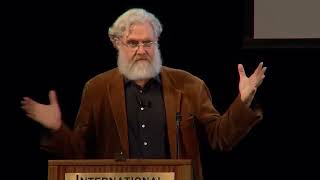
In this keynote, introduced by Jennifer Doudna, George Church outlines the past, present, and future of genome engineering. He begins with a brief biography, emphasizing his pioneering work in DNA sequencing, genome editing, and policy advising. Church then discusses the dramatic cost reductions in DNA reading and writing, the technical advances that enabled them, and the concept that reading and writing are inseparable. He presents a personal ethics timeline, stressing the need for transparent, balanced discourse and the importance of distinguishing enthusiasm from advocacy. The talk covers a wide range of applications: preventive medicine, prenatal diagnostics, organoid disease modeling, gene therapy, germline editing, human enhancement, and large‑scale projects such as Genome Project Write. He examines ethical challenges including off‑target effects, on‑target genome “vandalism,” equity, neurodiversity, GMO regulation, xenotransplantation, gene drives, and the ecological parallels of species reintroduction. Church highlights concrete examples—JAK2 mutation discovery, BRCA1 decision making, synthetic codon elimination, pig organ engineering, and CRISPR‑based virus resistance—while stressing the need for rigorous safety, cost‑effectiveness, and societal dialogue. The session ends with a Q&A where audience members probe off‑target risks, germline cell culture mutations, the first impactful clinical area (CAR‑T, CCR5 editing), organ transplantation ethics, human enhancement feasibility, and the role of AI in genomics. Church concludes by urging responsible, open communication and interdisciplinary collaboration to steer the genome editing revolution.
Chapters
So thank you for coming. I think we're going to have a very interesting evening tonight. And I wanted to start off by telling you a little bit about the origin of this, the idea for this talk and what it's leading to over the next couple of days. So we had very wonderful interaction, myself, Jennifer Doudna, with Bill Hurlbut, who's sitting over there from Stanford, and realized realized that there was an opportunity to get together and discuss the ethics of genome editing, and in particular human genome editing. And we wanted to do this in a— starting off with a very public lecture with someone who really represents a real leader and thinker in the field. And so we were fortunate to have sponsorship for this by the Templeton Foundation, so we're very grateful to them. And it's really a great pleasure and honor tonight to be able to introduce our keynote speaker for this evening, George Church. So let me tell you a little bit about George. He's almost someone that doesn't need introduction, but there's really a lot to say about him. So he received his PhD at Harvard in 1984, and then he joined the Harvard faculty in 1986. And I think I met him around that time when I was a graduate student in a very different field, but you couldn't help but be aware of George and his big thinking and his incredible ideas. And in those days, you know, he was starting to do work on DNA sequencing and thinking about how you analyze organisms from the level of the whole genome. His name has really become synonymous, I would say, with the field of genomics. He pioneered the first direct genome sequencing method, and over the years he's made many incredible developments and discoveries that have led to technologies for genome engineering and genome manipulation. Currently he's the director of a Center of Excellence for Genome Science. He's advised the government on policies in biosafety, personal genetics, and precision medicine, and he's authored over 400 papers and also a book, Regenesis, which a number of us were fortunate to have him sign for us tonight. And, you know, I think that he's someone who's just been a real inspiration over the last couple of decades in the field. Someone who's always sort of thinking beyond what the rest of us are doing and thinking about in science and really trying to ask, where are we going in the future? And that's really the topic, I think, for tonight. And I'm very excited about his title, which is Future Human Nature: Reading, Writing, Revolution. I don't know quite what he's going to tell us, but I know it's going to be very interesting. George, we're delighted to have you here.
Well, it's great to be here, and this is my conflict of interest slide. And if it— it's been up there for a while, but if it goes by too fast, it's on my website as well. And transparency, I think, is an important part of we technologists who take an interest in the ethics side of these things. And I just want to make a special thank you here to this organization, Personal Genetics Education, which was initiated by Ting Wu, a close colleague and my wife, in 2005. And this is where we were at the Office of Science and Technology Policy, OSTP, and also Congress that same day. Giving a briefing, not lobbying, but briefing on genetics, which we do on a regular basis. PGED also teaches high school teachers, and they visit especially underrepresented and underserved communities throughout the United States mainly. And then they work with screenwriters for TV and films to try to get the get the facts straight. So, and this is a picture of MAP-Ed where people will mark that they have some— they will take a test and show they have some knowledge of genetics. It's kind of fun. Anyway, Jennifer was at the congressional briefing, and we were— had the pleasure of being with her when she got her Gairdner Award in Canada, at which she then donated to pgEd.org. So we are extremely grateful. To her generosity. So I'm going to start with a little audience participation. We'll have some at the end as well. So I think most of you— I'm just going to take a guess that most of you feel that human genomics is not useful. And I will ask you to raise your hand if you have your human genome sequenced. You don't have to have it with you, but have you ever had it sequenced? Raise your hand. Well, that's actually quite a lot. I expect from well-educated— steps, or you want the whole sequence? I want the whole sequence, sorry. I mean, 95— I'll settle for 95% since a dirty little secret is that no one has ever had their genome completely sequenced. Anyway, so if I'm going to make the argument that it might be useful, and if what's it useful for— I'll make the argument later on that you need to know your genome in order to edit it. That may sound shocking to some of you, but these are some of the things that you can do. With preconception genetic counseling— this is something that does not necessarily put embryos at risk— you can diagnose very serious diseases like Tay-Sachs. There are hundreds of them now that are highly predictive and actionable in the sense that you can marry somebody based on that information. Now that may seem a little unromantic to some of you. So there are in vitro fertilization diagnostics and prenatal non-invasive testing and so on. There's newborn testing, which many people are shocked to find out that their children, and sometimes they, were genetically analyzed for up to 40 diseases that are actionable, usually something like dietary. Then there's what's called a genetic odyssey, where you have a child that has a developmental delay or some other problem, and you go from physician to physician trying to figure out what went wrong. And very often the parents blame themselves. And just finding out what went wrong, finding an explanation in the DNA, is a great relief to parents, even if there is not a cure. It just means that they didn't cause it. And so anyway, the list goes on. And I think there's an opportunity here for preventative medicine. Very often we're talking about the cure for this, the cure for that. What about prevention? I'm going to just give two quick examples. This is— and you'll notice that I actually show pictures of patients. And I name their names. And you'll think, oh, how can he be talking to us about ethics if on his first slide he's showing John Lowerman as a patient. And the answer is that we run a study where we have— where we make sure that they are educated and that they know what they're getting into. And part of that is if you participate in medical research, the chances are that your data will become public and you will be reidentified. In fact, it's quite likely that all of your medical records, whether you're in a medical study or not, is already in somebody else's hands that you don't want, because your medical records are worth 20 times on the black market your credit card. And if you're interested, I can explain why. So that's— and so in this case, John Lowryman was an author for Bloomberg, and he discovered in the process of our study, Personal Genome Project, that he had a JAK2 mutation, which was not germline. It was in his blood. And it turned out that he had reported that he was healthy, but we found out in his medical records that he had scotomas in his eye and leg pain. And so he takes aspirin for life. Not too bad. Here's another one who, you know, really did a wonderful thing for the world in being quite open about her BRCA1 genetics and then talking about the decision about whether to trust the genetics and take a preventative medicine here. A lot of people think that Angelina Jolie had a lump or some positive result in an X-ray. This was entirely based on her genome. She was said to have 87% chance of breast cancer before she had surgery and less than 5% afterwards. So that's an example of preventative medicine, not reactive. Now this is a list that you'll see a few times during this talk. This is my personal ethics list. These are dated in the order they appeared in my life. They're not necessarily significant or logical in any other way. And they represent ethical things that I've dealt with. And I teach a course in ethics, by the way. It's a required course at Harvard Medical School for the graduate students. And we talk about some of these things. And we're not going to cover all of them today. But the first one I want to talk about is— and it's been throughout my career, not just in 1974— is this idea that when a scientist stands up here like this and talks to you and talks with animation, let's say, about a subject, that means that he is— or she is advocating that subject, that he is an enthusiast. If I were to talk to you about, let's say, Neanderthals, then you would all conclude that I have an active program to clone Neanderthals. This is not the case, or should not be the case. I should be able to discuss topics that I think, from my point of view, are alarming or possibly in a negative sense, and I can say it with animation. Without being an advocate or an enthusiast. And so to that end, I have been co-author on about 30-some articles on the topic of ethical, legal, social issues. Something that, you know, I've been very privileged to have a very close relationship with Jeanine Lunsdorf, for example, who is embedded in our laboratory as a as a bioethicist. And very often, we seek solutions to the polarization that often happens in these, where you were looking for a win-win. And you'll see some examples on this list as we go through them. For example, that, you know, for the win-win for embryonic stem cell, pluripotent stem cells was induced pluripotent stem cells. That was something that satisfied most of the argumentative groups on both sides. Not everyone. So let's talk about equality. That's something that often comes up at the end of a long meeting like this one. That, you know, Saturday afternoon it would come up, well, what about equality? You know, all this great technology. And I'd like to have this conversation start with some of the tough problems. And so let's start with that. And of course I'm going to give you a quirky view on it and take it for what it's it's worth. So what is the revolution we're talking about here? I said reading, writing, and revolution. You could say that's my version of math. But what is the revolution here? And of course, we all know the revolution is CRISPR. But I think that the— I'm not going— the normal acronym, none of those letters have anything to do with the CRISPR technology that we are all enamored of, that we're all fixated on. It is— so I'm going to give you a couple other words that I think better capture what the revolution is, and it has many components, not just nucleases, but the idea of comprehensive data. Biology, or molecular biology, used to be the anecdote. The single gene, single base pair. But now comprehensive data is a possibility and often insisted upon. We have recombination, not just cutting, but actually cutting and splicing and making exactly what you want. We have informatics. We have sequencing. We have pluripotency. That is to say that you can go from a single engineered DNA molecule into a whole organism, plant or animal. And we have reduced costs, greatly reduced costs. And that's what the next two slides are about. And for some of these things, I know this is a broad audience, some of these pictures will be inappropriate. They will be complex. Just think of them as eye candy. So I'm not even going to explain what I just showed you. But I like the NovaSeq instrument. That's the newest of the next generation sequencing. It's named after my granddaughter, whose name is Nova. Anyway, just kidding. So her name really is Nova. But anyway, we have this exponentially shrinking cost of reading and interpreting your genome. So after I had been obsessed with this for a long time— in fact, I've been obsessed with this ever since I left Sung Ho Kim's lab, who's here in the audience, when I was 20-something years old. And, uh, and shortly thereafter we could even— before that we couldn't even conceive of the project. But when we finally started delivering it, it looked like it was going to be $3 billion, which is about the price of this, uh, tallest building in the world. And then it's come down ever since then. It's been about, uh, $1,000 for over a year. And in a certain sense, it will be free soon, in the same sense that that phone has on it free software. Google Maps They used to charge for it, now it's free. And in fact, many people in our project get their genome for free. And so these are the curves. These are the more technical versions of the curves. And the thing that is most striking— so this is factors of 10 on the y-axis. And it goes back to almost the time that I started doing molecular biology. And it was on a Moore's Law curve, which is a very, very steep exponential for computers. It's going very fast. But then it got even faster in 2003, 2004. So what was going on there? We'll talk about that in the next slide. But this is for both reading and writing DNA. I would say that reading has improved over 3 million fold during that period of time, most of it in the last few years. And writing of short oligonucleotides has improved by a billion fold over that same period of time. A billion fold. And I think that both of them could improve by another maybe 1,000 to 1 million fold. Don't ask me when, and don't remind me when it doesn't happen. But anyway, that's my guess. And so far, we've all underpredicted it rather than overpredicted it. So what happened in 2003, 2004? I will give a totally self-centered and self-serving synopsis, which is that these two papers— we figured out how to miniaturize, multiplex, and self-assembly could be used. And biology should be really good at this sort of thing. It is atomically precise, which is about as miniature as you can get, and it does a lot of self-assembly. And so we just captured that along with the revolution in bio— and sorry, in nano— in the electronics industry of microfabrication in both reading and writing. And the key thing here to take away is you can't do one without the other. Our most popular sequencing method is literally called sequencing by synthesis. And every time we do synthesis or editing of a genome, the clued-in people do know the genome that they're editing. You shouldn't be editing a genome that you don't know, although you can, you know, just like you can text and drive your car at the same time. There is— just as I've been impertinent enough to redefine CRISPR, I'm going to be blasphemous enough to say that there is more than one editor in the world. There are 9 editors, and what editor— these molecular machines do is they scan your genome, which for humans is 6 billion base pairs, looking for one place that they like, one 20-mer, 20 ACGs and 2 zeros, that the machine likes, and making either a cut or a combination at that point. How does it do that? How does it find one in 6 billion? Well, the scan head, the place where the action occurs, where that recognition of 20 base pairs out of 6 billion occurs, is either DNA in red or RNA in blue, which is what CRISPR uses, Cas9. Or there are 4 of these that use protein to do the recognition. So you have Watson-Crick base pairs that are doing the scanning for DNA and RNA. And proteins have more complicated, but at this point very well understood, rules. And you can dial them up. And so that brings us to the next question. Why is everyone so infatuated with CRISPR? Why do we think that it's an improvement at all? And a lot of people say, well, it's really easy to use and it's low cost, and that's the reason that we have exalted it to, you know, such a high status. I will say that maybe, but maybe not, because about the time that we were starting to publish this deluge of CRISPR papers where the first few had come out, This lovely paper came out from Jinsu Kim's lab where they, with very little fanfare, assembled an alternative to CRISPR nuclease, a so-called TALEN, for almost all of the protein coding genes, so over 18,000 of them. So it can't have been that hard to do. Even though it wasn't CRISPR. I realize it's an anecdote, but there you have it. That was the previous technology, and its day in the sun only lasted about a year. CRISPR has lasted now a whopping, you know, 4 years in the sun. And it may last forever. It may be the only edit— that may be the last editing method. But this is kind of the history of I could write the same thing for genome sequencing, very complicated plot of a whole series of replacements. But in this case, it starts with homologous recombination in mammalian cells with Oliver Smithies and Mario Capeci. And some people ask, who's going to get the Nobel Prize for genome editing? And I say it's already been given to Mario Capeci and Oliver Smithies. It's very silly of me to say so. But the point is there is some progress. But there's also a lot of— this is, again, factors of 10 on the y-axis. There's a lot of constancy in the editing efficiency. But I think it's the editing efficiency that is what we are celebrating here with CRISPR. Now, to be a party pooper again, there is, if you're going to be applying CRISPR especially in a clinical setting where you're treating a large number of human cells simultaneously, if any one of them gets an off-target event— and most drugs have some kind of off-target event— if you have an off-target event with CRISPR and it lands in the middle of a tumor suppressor gene, then you run a risk of getting a tumor. And so you want the off-target, at least in tumor suppressor exons, to be as low as possible. And I'm not going to go through them, but there's a whole bunch of— and this list doesn't even give it justice. There's a large number of articles that have improved the specificity of CRISPR, at least in certain contexts. And one of them even claims, from my group, that you can detect single nucleotide polymorphisms. That's jargon. SNP. You can detect— you can make a CRISPR that will— recognize one— be off by one nucleotide, and you can do this fairly routinely. It was published in, you know, the first-ranked journal called BioArchive, and I urge you all to publish there. And you'll see a few other references like that. But even as we bring down the off-target as low as possible, the more changes you make, the more risks you have, and they multiply out. So even if you have a an error rate of 10 to the minus 4, let's say, which is among the lowest that you can get, 1 error in 10,000 cells. If you're treating a billion cells, that's a lot of errors. So that's off-target errors. What about on-target errors? Believe it or not, these are ethical issues. OK, these are safety and efficacy issues, mostly safety. But on-target, CRISPR is not Ideal. In fact, none of the nucleases that have been used— the mega nucleases, the TALENs, the zinc finger nucleases— because they create a race situation, a race between repairing the double-strand break and hoping for the best, where the cell makes a mess, which I call genome vandalism rather than editing, and what you want very often, which is to make a precise change. Again, there are solutions to that. And my two favorite are from bacteriophages. In fact, CRISPR itself is something that involves bacteriophages. Most of the gifts that on slides I've been mentioning, most of the technologies were not invented in the sense that we thought about the atoms from first principles and said, oh, I'm going to design a CRISPR. They are gifts. They are gifts from the microbial world. And these two are as well. And these work the specificity that we want on target by not making double-strand break, but by only bringing— only once they bring together the donor DNA that you want to change and their target, then they do their job. And these are not as applicable as CRISPR. You don't go out and sell your CRISPR stock. They are very specialized. In fact, one of them, the beta recombinase here, only works in E. coli K12. You might say, that's coincidental. E. coli K12 is my favorite organism. I'm sure you're all saying that right now, even the non-scientists. You love E. coli K12. But anyway, but we've done arguably one of the world's largest and most radical genome engineering. And I think in this case radical is a good thing. Maybe, where we changed a 4 million base pair genome to eliminate one codon. So all of the organisms in the world, synthetic and natural, use 64 triplet codons, so ACGT to the third power, except for this one. This one only uses 63. And we expected it to be— useful for 4 things. And in fact, it is useful for 4 things. It uses nonstandard amino acids very efficiently, meaning we're no longer restricted with the amino acids of nature. We can put in completely chemically synthesized amino acids. It is genetically and metabolically isolated. So here's an ethics lesson. I hope you haven't missed this. It is biocontainment. If we're going to release something into the wild,— or if we're going to make any new technology, we want to have a reverse button. We want to have some ability to go back. And so that's what this is. And we've proven it. And then finally, multiviruses. And I think this is very profound philosophically as well as practically, which is the idea that you could make an organism resistant to all viruses including viruses you've never studied and that you don't understand, as long as they follow one rule, which is that they use the genetic code of the host. If you change the genetic code of the host, they say, hey, what's up, it's not working, you know. And they can't— and it's radical enough that they can't even evolve around it. That's a theoretical prediction, and it looks like it's turning out to be very, very likely. We were surprised how multivirus resistant these organisms were with just one codon change. And now we're doing 7. We're going to jump now from that radical recoding, that radical application of something that goes beyond editing. We call it Genome Project Write, a variation on Genome Project Read, which is the first Genome Project. This is writing the whole genome beyond editing. We're going to change— to engineering humans. We're going to go into this gently. We're going to start with something that's probably not controversial, which is engineering human cells for diagnostics, for testing therapeutics, for testing hypotheses. When you— we started this exercise as to why you would want your human genome. If you get your human genome, some things are highly predictable. But other things are variants of unknown significance. If you get one of those variants of unknown significance, you'd like to know, how do I make it determine whether it's harmful or not? And this is a new way of doing it, which is you can alter a genome by one base pair, or however many the difference is— let's say as little as one— and then you can make it into a complex tissue or organ or you know, modestly called organoids, and then test whether that function has changed. You can test cause and effect. You no longer need a cohort of 10,000 to prove— you know, you don't need to collect gigantic human population samples to get a correlation, which is not convincing. You can do cause and effect as long as you have convinced yourself that you're changing one base pair and that you've got a good organ model. Doesn't involve animals, it involves actual human organoids. And so in this case, we start at the very top there with PGP-1, which is code name for Personal Genome Project, which I've already introduced. Number 1, full disclosure, the individual number 1, and I said I can release the names of the participants, is not John Lauermond, but it's me. And so we sometimes call me Guinea Pig Number 1. GP1, and you take those cells, which are fibroblasts, turn them into stem cells, turn the stem cells, put in the CRISPR-Cas9, and then use that with a repair oligo to take out that one G. If you leave out the repair oligo, it makes a mess. It vandalizes the DNA. But if you put that in, you can change just that one G. And you say, well, I've been talking to you about off-target, on-target messes. You expect me to believe you just changed one gene in the genome out of 6 billion? And the answer is, we sequence the genome. This is a clonal cell line, so this is embryonic stem cells. Here's an important lesson, is that even if you have off-target, if you have a clonal where you've grown it up from a single cell, you can sample that clone and show that it is extremely unlikely to have anything off-target. In this case, this baby was hypothesized— I mean, in some cases you might have hundreds of hypothetical changes. In this case, the most likely one was missing one G on its X chromosome. Boys have only one X chromosome in every cell, every nucleated cell. And in this case, we wanted to test that. So we made two cell lines from PGP1 that differed by that one base pair. So it's a clean experiment. If we just compared your cells to mine or this baby's to mine, there'd be 3 million differences. That's not a clean experiment. But changing one base pair is. And so Lujun Yang, who did this work, thought nothing— didn't even bother to consult me as to whether she should sequence the genome. And that's what we routinely do. We change one base pair, we sequence all 6 billion. OK. And so then this is— Just example of these cardiac-like tissues with the beautiful repeating sarcomere organization when you have a normal stem cell, again from PTP1 on the far left here, and then change one base pair and it's abnormal physiology, biochemistry, and morphology. So you can determine cause and effect. And if you run this in reverse, you have gene therapy. So now we get to more serious. That was genetically modified human cells and human organoids. This is actually genetically modified humans. And some people are surprised to hear that there are genetically modified humans running around. These are— there are 2,300 clinical trials, research trials on gene therapy. There is only one approved, ironically, in Europe, where they're not keen on eating genetically modified foods, but they're OK with genetically modified humans. And this is the most expensive drug in history. It is $1 million a dose. Now to somebody like me who likes bringing down the cost of things by a million to a billion fold, this is unacceptable. And we have various strategies that we can talk about how to bring that down. The main thing is— increasing the market size. But the problem is a lot of these are orphan drugs. They are very, very tiny market size. But there are some, like infectious diseases, that will have gigantic markets, and that will bring down the cost. So now we get even edgier. So we went from human cell engineering to organoids to human gene therapy, which typically is done in adults, or in some cases children. You have to do In some cases, the earlier the better, because for example, if you cure blindness, which is a real thing, it happens in gene therapy, you have to do it at a certain age. Otherwise, they'll see photons, but they won't be able to see faces, process faces. And you can imagine taking this further and further back, you would want to engineer in utero or earlier. So what is the status of human germline therapy? Some people take it for granted that this will never happen. It doesn't happen anywhere, and it is not allowed anywhere. That is very far from true. It is permissible in many countries, including the United States. Human cloning is actually permissible in the United States. But the question is not just whether it's permissible, whether it's acceptable, and it is already done. So again, here's showing a real, a real patient. This girl in the middle had mitochondrial germline. Now some people say, oh, that's not really germline. Well, but it is. It's passed on to her children. Most of these therapies are to reverse a problem. And I think you can either think of it as a slippery slope, if you think in negative terms, or as the way of carefully testing without putting too many people or embryos at risk is it will start with— it will move on from mitochondrial therapy to sperm infertility, where you'll be reversing— you'll be changing men with certain kinds of infertility genetic traits to fertile. And if you could do that by just engineering the soma, the somatic cells around the sperm, then that would be considered ordinary somatic gene therapy, meaning not affecting the germline. But since it is the sperm itself that's affected in these, then you have to at least reverse it. Now you're just changing it to what everybody else has, but that will probably happen. And if it happens in clones, like the clone that I showed you for cardiac muscle, you could in principle get something that's close to 100% correct. In other words, it has all the low error rate of CRISPR plus all the low error rate of checking the clone by sequencing. So this could possibly make it into fertility clinics. And then if that works well, no embryos have really been put at risk there, then it would be— any more so than any other medical procedure. And then you could move on, might, the world might move on with due consideration, due conversations like the one we're having here, to serious disease like Tay-Sachs, which I said right now is handled with either abortion or in vitro fertilization where in abortion you might sacrifice 25% of the children that are, that are born with a recessive disease like Tay-Sachs, and with IVF you might sacrifice more like 80% of the embryos. So some of them will be normal, but they won't be implanted. And for a large fraction of the United States and the world, that loss of embryos is unacceptable. So this might be— so usually the way this conversation is phrased, almost every conversation I've been in, is we are putting embryos at risk. In this scenario, we actually could be saving embryos, putting fewer embryos at risk than current medical practice. So I just put that out there. And then finally, also note that now there is great progress in making eggs and sperm entirely outside of the body, mostly done in rodents so far. So let's— okay, so we've gone from Human cells, human organs, adult humans therapy, germline therapy, which is past tense. Now let's talk about enhancement. I'm not doing this just to be provocative. I think it's important to visualize things in advance, even if they never arrive. We need to talk about it. And I'm going to make the argument. So here are some of the traits that you might want to enhance in human beings. Or not. There might be the sort of thing you want to prevent the world from enhancing. We right now can only see a very tiny sliver of visible light with our eyes. We can only hear a limited range. We can only sense certain chemicals. And the list goes on—touch, heat sensing. Our memory is very limited. We locomote very slowly, and so forth. But we are already augmented. We are almost unrecognizable to our ancient ancestors. Our ancestral limits have been blown away. We can essentially see the entire electromagnetic spectrum, from gamma rays to radio, and the list goes on. I think you get the point. We can go so fast that we can escape we can reach escape velocity from the Earth and then survive in the vacuum of space and the extremely cold 15 degrees Kelvin out there. We have greatly augmented, and in fact our goals, like being able to go into space and survive in the vacuum and cold, would be incomprehensible to our ancestors. So I will argue that most of the augmentation that already— that will exist and already exists is physics and chemistry. It is not genetics. If we are to talk about genetics, it probably will be intelligence, immunity, and longevity or aging reversal. And much of the ethics that we will talk about will We may talk about other things, but if we get to something that's safe and effective, there's a tendency to drop the conversation. For example, in vitro fertilization was considered very negatively. It was described negatively with terms like test tube baby. Test tube baby doesn't sound as negative today as it did back in the, in the '60s, but it is. But when Louise Brown was born and she was healthy and beautifully healthy, suddenly the ethics turned around almost 180 degrees, where it went from we should never create the monsters of test tube babies, which could be teratogenic-like, to we should not deprive parents of the— of their right to have babies of their own. That is, the product of the union of two people that love each other. But there are things beyond safety and efficacy. We might drop them if safety and efficacy is proven, but we need to be very cautious. And these include the possibility that parents might treat their kids like commodities. They might say— which in a certain sense they already do— they get them the best education and they expect them to perform. There are parents that will be making choices where they choose to have children that have hearing or do not have hearing, that have particular genders. In fact, this is already— if you look at in vitro fertilization in the United States, a very common practice is to choose a gender. And guess what gender that is 80% of the time? Female. And I don't know what your expectations were, but I was a little, you know, it's, it's, it's there. And I've seen editorials that give reasons. We can talk about that in the discussion. And the other thing that will happen that we need to be very cautious about, which is not safety and efficacy, is this loss of neurodiversity. If you look in a classroom, there is a great desire to turn a classroom into an exercise like Henry Ford's of mass production. Where all the children sit in neat rows dressed the same way. They show diversity in their skin color but no diversity in their behavior and appearance. And if somebody fidgets too much or falls asleep, this is a bad thing. You should medicate them. And believe me, if you could genetically medicate them, that would be even— that would be— that would be something we need to be very cautious about because some of our Most amazing citizens are those who are on the edge of some spectrum or other. I think we don't want to lose them. We might want to allow them to not be in pain some of the time, maybe to turn it on and off, but not lose them. And it's very hard to— we talk about diversity, but do we really mean it? Okay, GMOs. How many people here shop at a market that has the no GMO rule? I do. Jeez, this is— you're not a radical Berkeley crowd here. Okay, or QB3, whatever. I will argue that there are some GMOs that nearly everyone likes, even the people that are anti-GM foods, and here they are. It's a longer list than this, but I picked a few here that are recombinant proteins that treat some of them fairly common diseases, others are orphan diseases. So there is a difference of opinion when you get to things that are extreme health interest and sometimes extreme economic interest. For example, in Hawaii they banned GMOs from the entire set of islands. Except for papayas, because that was— the papayas would have gone extinct. So there was some room for negotiation on that subject. I would argue the future of GMOs— and this is actually a report from one of the non-GMO project groups— is that one of the main problems with genetic engineering is that you insert genes randomly. And that could create toxins and allergens. Well, actually, random mutations are definitely random, and we're getting better and better at engineering that's not random. So I would argue that if you want to open a car door, you could shoot it with random shotgun fire, or you could engineer a handle and use it. So So we get to very interesting definitional issues here. This is not technology, it's possibly ethics, which is cisgenics versus transgenics. Now transgenics is a pretty commonly used word, and it almost is the definition that people use for defining GMO plants and natural and organic, is that you have moved the gene between species over a great distance. And the distance is actually defined in regulations, how how far apart the plants have to be, let's say. Cisgenic is a much less frequently used word so far, but I think you're going to see it more and more because it is a regulatory— if you think of it generously, it is a regulatory opportunity, or a loophole if you think less generously. But there are 30 GMOs already in the last 5 years alone. That get through the USDA and to some extent international regulations because they're essentially— they're changing like one base pair. You change one base pair, that could happen in nature. And it's very easy to detect the transgenic because you've got this whole big chunk of DNA that came in from a bacterium or some other plant. But if you change one base pair, that could have happened by the shotgun approach and you just cleaned it up. By conventional genetics. But, and one of the famous recent examples is the white button mushroom where they knocked out a particular gene in order to prevent browning. But an example of a transgenic which surprisingly to me should have passed, should have gotten a pass from the critics because it is a matter of life and death. It is not a typical The reason that the anti-GMO forces are justified for foods is it really isn't a matter of life and death. It's not even a matter of taste in most cases. It's some subtle thing off campus having to do with farmers. But golden rice actually affects millions of people. I mean, or sorry, the thing that it's addressing, which is vitamin A deficiency, millions of people go blind and die. They often die within a year of going blind. It is a cause and effect relationship. And golden rice, however, this was started back in— it was working by 2002. It started well before that. The decision was made to make it transgenic. It didn't have to be transgenic, I think. I can't prove this. Because beta-carotene, which they're making, is made already in rice. It's made in the wrong place in rice. And so cisgenically, you could move it. But instead, they imported two genes from two other organisms, one of them a bacterium, Ruinia. So that's— I don't know where that's going to go. I don't know where golden rice— but it's an example of transgenic that did not escape, even though it's a major health threat. Now here's something that is— you could say it's not beyond safety and efficacy. It's part of safety, but it's not what the FDA, the USDA, and the EPA usually worry about. They worry about sort of like the distant future, which might be next quarter or maybe 10 years from now. But this is 100 years. And here's a juicy example. Hopefully many of you know that in 1872, Yellowstone was established and the gray wolf was already in decline both in Yellowstone Montana and elsewhere, and it was completely gone by 1926. The Endangered Species Act was the second such act, and it allowed reintroduction many years later. In 1995 it began, and the impact of the reintroduction of wolves was dramatic. They— the elks didn't like it. They didn't get a vote, but they started killing a couple dozen elk. Per year. That resulted in the willows coming back, which resulted in the beavers coming back, which resulted in otters, minks, wading birds, waterfowl, fish, so forth. It was a really amazing impact on the environment. So we made a mistake back in 1872, not establishing Yellowstone, but getting rid of the wolves. What if we're doing similar things today? But it's not sufficient to say, oh, well, let's not change anything, because that can have negative effects as well. So let's talk about some quicker examples here. Here, xenotransplantation. So this is even worse than transgenics, if you think transgenics are bad. This is moving genes from humans into pigs, and then pigs' organs into humans. And something like this was in the news today, and it was also in the news Many times. Here's one beautiful article by Carl Zimmer on the topic. We have some skin in the game here, but it goes way back before I was interested in it, which is this humanization of pigs goes back at least 2 decades. About 15 years ago, there was a billion-dollar investment in this field, and it died not just— well, there was actually a pretty good roadmap to changing multiple genes. I think they thought it was 1 or 2 or 3 genes. It's now probably 50 genes that need to be changed or more. But they had a roadmap. What freaked them out was that the pig organs were producing viruses that could infect the immune-compromised recipient of those organs, and that would be a bad thing, probably. You don't want to have swine flu— or the equivalent evolving in your immune-compromised patient. So when we got the awesome power of CRISPR, Lujan, who was one of the co-inventors— many co-inventors— she decided to try— she and her team decided to try this, getting rid of all 62 endogenous retroviral genes from the genome of the pig all at once with one CRISPR And it worked. It was actually pretty easy. We were surprised at how easy it was. Up to that point, people were doing 1 or 2, maybe 3 genes at a time. 62 just seemed completely out to lunch. But in 14 days sitting in the 37-degree incubator, that's all it took, and then a little bit of PCR to screen it. And so now there are piglets that we have ultrasounds on these things where many, many dozens of other genes have been changed as well. And I look forward to seeing and hopefully holding these piglets when they are born. But if they're not, we will try again. And what excites me about this is maybe a little more subtle than the idea of curing the transplantation problem, which is very acute. It's not just that you and I aren't compatible for exchanging organs. It's that there just aren't enough of us to give organs. But it's more than that, which is that when we produce organs, we are going to be highly motivated to do preventative medicine, which is to make organs that are pathogen-resistant, cancer-resistant, and aging-resistant. We are not quite so motivated to do that in humans directly. It is— it was very hard, I think, to get FDA approval to take a healthy human and try to make them resistant to pathogens, cancer, and aging. That preventative medicine is very hard to do unless it just involves taking walks and eating broccoli. Not something as radical as gene therapy. Aging reversal is a real thing, and we will see it both for physical as well as cognitive disorders because we have an aging population and it will be extremely important. I would imagine that many of these things will be used off-label to reverse aging in people who don't have any disorders, that are not disabled, do not have cognitive disorders. But here's an example. There are two, actually two classes of example of aging reversal that's been shown in mice. One of them involves hooking up young mice with old mice. Their blood systems. I don't recommend you do this with your children, but this works. And another one that's just recently been published is using the same reprogramming factors we use to establish pluripotent stem cells. You can do that on a whole organism basis and it reverses aging. Gene drives. Gene drives was something that was hypothesized again about 2 decades ago. Actually was observed in the '70s by Bernard Dujon, who was one of my mentors as a graduate student, but then hypothesized that you could turn it into a technology by Austin Burt. But it didn't go very far until the awesome Power CRISPR came along. And Kevin Esvelt and Andy Smeidler here, a graduate student in my lab and shared with Femenia Cateruccia, published this paper where we didn't do the experiment. We did We didn't do what they did with gain-of-function flu viruses, which was to not talk about it until it was ready to publish. We talked about it before we did any experiments to see if there was a gotcha that people would talk about and to talk about ways to reverse it. And it can do all these amazing things, reverse invasive species and reverse herbicide and pesticide resistance. And most importantly, control vector-borne disease such as malaria and Lyme disease. Nobody likes Lyme disease or malaria. And what it does is unlike normal inheritance where half of your offspring will get, will inherit the trait, here 100% of them inherit the trait. So it spreads exponentially through the population. And it does this— time does not permit a long description here— but it does this by using CRISPR, which is mechanistically, you know, is scissors. It's basically scissors. The crystal structure indicates that they're scissors. And we put in many different scissors, up to 8 so far in the mosquito experiments we're doing, to make sure that the mosquito genome does not become resistant to CRISPR gene drive. We're essentially creating what would normally be called selfish DNA, but in this case it's being altruistic. It's doing what we want, which is carrying the purple cargo there. Purple cargo is resistance to malaria. We're not trying necessarily to wipe out the mosquitoes, though some people would like to do that, but to make them resistant to malaria with a whole variety of known antimalarial antibodies and small peptides. And those scissors are aimed at an essential gene— a ribosomal protein gene, for example— so that if it repairs by genetic vandalism, it dies. But if it repairs by copying the gene drive, making two copies, it lives. That's the basic— you can now tell anybody in the elevator that you understand gene drives, I hope. If not, ask me. But now here's the sophisticated stuff. On the top is how fast it will spread. And this is mathematical modeling, which has been confirmed by experiments in some animals— oh, sorry, some organisms. And then we have a new one, which is again published in this amazing high-profile journal called Bioarchive, where it's called a Jay-Z drive, where we have 3 drives— C, B, and A— and none of them are really gene drives in that they cut themselves. They cut the part of the genome they come from. They cut the part of the genome that the next one comes from. And this, just trust me on this or read the paper, the yellow decays because it is slightly deleterious and it has nothing driving it. The orange lasts a little bit longer because it has the yellow driving it. And then the blue has yellow driving orange driving blue, and it persists longer. But this allows you to do geographically and temporally controlled drives. So we have reversal and we have And we have drives that are local. OK, so what if we cure aging and eliminate poverty and diseases of developing nations? We're going to have a problem, which is overpopulation. Or at least some people say that. And I don't think it's a great solution to say, oh well, then we're not going to cure diseases of poverty or of aging, which is a disease of industrialized nations. So one possibility is going to space. And I don't mean this frivolously. It is a possibility. And it's a good idea from our species standpoint because we are at risk for supervolcanoes and asteroids. But out in space, we have a new set of ethical problems, which is space radiation. Even on Mars, the gravity is very low. And then there's space genetics issues. So we have a consortium on this, and here's some of the challenges. We have this gravity, osteoporosis, there are all sorts of neurobehavioral issues, the radiation issues, microbiome issues. I've made a list of kind of a quirky list here. Rather than rare disease-causing genetic changes, these are rare protective alleles. And I won't go through the list, but there are things that make your bones extra strong. Maybe that could result in something that would help with osteoporosis in space or on Earth. And there's some that reduce sensitivity to pain, which you might be able to turn on and off rather than having— you don't want to have it off all the time because you end up hurting yourself and not knowing it. So little kids will chew on their tongue things like that. And then there are ways that you can— ABC11 will give you low odor, which is very important in close space where you're all together. And in fact, it's a very common allele among Asian populations, the good version, that is. And the list goes on. And down at the bottom, you start getting into things that are so rare you don't see them. They're actually synthetic, and they've been tested in animals. And they include things that have low cancer and high ability at cognitive tests. What about radiation resistance? This seems really improbable. But here's a case in the literature that— where you can improve radiation resistance up to 100,000-fold with just 4 mutations. And there's wide variation among naturally occurring organisms. But this is— a nice experiment because it's isogenic. There's the only difference, those 4 mutations. And then I'm just going to end on this very speculative notion where the normal surgery ward, we have a choice as to what we're going to take into space. Are we going to take the entire Noah's Ark, including, you know, the giant sequoias and the, and the whales and malaria and smallpox and so forth? Or are we going to leave something behind, most notably germs? And if we do, then we don't need to wash our hands for surgery. And if we can turn pain on and off, we don't need anesthesia. So I just want to thank a bunch of— I thanked a few along the way, but there's these people that have helped in our Center of Genomically Engineered Organs. And we have some BRAIN Initiative grants. And these are photos from the annual GET conference for Personal Genome Project, where the people whose identity we should be keeping anonymous wear name tags. Thank you. Questions or discussion, actually.
Looks like it's locked on. Maybe it's on. Is this on? Great. So, George, wow, that was wonderful. So what I think we're going to do is we'd like to have a discussion, and we'd like to invite questions from the audience. And we have a couple of people that are running around with microphones, so if you have a question, if you could just put your hand up and we'll bring you a microphone and we'll open it up to the floor.
So I see one over here. Thank you so much. So as precision medicine continues to grow and we continue to use genome editing technologies such as CRISPR, what sort of implications does this have on the cumulative effect of off-target mutations in, say, non-coding regulatory regions. For example, if an off-target deleterious mutation occurs in the germline, new pathologies that we haven't seen before may arise and perpetuate throughout the population.
All right, wait, before you give up the microphone, clarification. Are you talking about off-target trying to fix something? Yeah, trying—
if you're trying to fix something, and we don't know what sort of off-target effects these genome— fully, these genome editing technologies have. What are sort of the ethical implications of that?
Yeah, so this is ethics in the category of safety and efficacy. Safety mainly. I mean, the safest thing would be to insist that you have nothing off target, at least detectable, which means you get the CRISPR as low as possible, mainly due to computer analysis. And then, and then you sequence the clone. Now most gene therapies are not done on clones. They're done— you'll put— you'll treat a billion T cells, for example, ex vivo and put them back in the patient. And so every one of those is an independent event. Every one has a chance of being off-target. The most serious things are probably going to be in tumor suppressor genes, and they're probably going to be in tumor suppressor exons, but not all of them. And I guess it'll be like every other drug, is that it will go through Phase 1, 2, 3, and even 4 Phase 4 is in the public. And when you start finding things that actually cause cancer, then you will go back and fix it. But it will be very hard to— it will be very hard to prove it. You certainly can't use animal models because they have a different background genome, which is the whole point. It's off-target in a genome that is not a pig or a mouse genome. So it's probably going to have to be tested in humans. But if you want to know what a particular base pair does in terms of cancer formation, I would say organoids are getting better and better and that we should exploit those as much as possible. But right now, organoids— I mean, if it's something that happens in 10 to the 9th cells, organoids are pretty small. They're limited to about half a millimeter. We're starting to get vascularized organoids and those will be whatever size you want.
I see a hand there. Thanks. You mentioned in one slide that one way we could get to germline modification in humans is through synthesizing new eggs or sperm from embryonic stem cells and the like. But there are a lot of mutations that are occurring in these attempts in mice so far. And I was wondering how you see this progressing. How do you think it's doing? And do you think there's a lot more work to be done before we see that working safely in humans?
Right. So the mutations you're probably referring to are mutations that occur just from growing cells. So if you look at your body, it's full of mutations. Almost no two of your cells have the same genome. In fact, a lot of your cells are aneuploid. They're missing or have an extra chromosome. So it's a lot of changes in your body. That doesn't mean that we should glibly start creating germ cells that have the same kind of mutations you have in your body. In fact, the standards should be much higher. But it is true that a huge fraction of human births never make it to term, or sorry, human conceptions never make it to term. And probably a lot of that is that they have mutations that are deleterious to embryonic development. So I think it's a huge challenge. I mean, you hit the nail on the head. It's not due to CRISPR. It's due to just growing cells. Growing cells have a mutation rate of about one or few mutations per cell division. And it's a little worse in cell culture than it is in vivo, but it's a problem both places. So it's an open question. But hey, that's the fun of being a genetic engineer in this, in 2017.
So maybe I'll just interject here and ask you, so I think, you know, during your talk you presented a number of different areas where genome editing and engineering is going to have a big impact in the future. And I wonder, what do you think is the first area where we're going to see this kind of impact? Is it going to be in transplantable organs? Is it going to be in a clinical benefit to patients or maybe something else?
Well, here's where I can cheat by saying that just focusing on what we already have. So we already have genetic genome editing for CCR5 treating patients with HIV infections that already have HIV infection, not preventative. And that's done with zinc finger nucleases. We also have treatment involving CAR T cells or cancer therapies. So it's a pretty safe prediction that those are at least going to make it through serious clinical trials. Some of them are already in phase 2 clinical trials. I think applications to infectious diseases beyond HIV is going to be a major place where you can get larger populations. So that's a fairly safe bet as well. But, you know, the orphan drugs have been— the Orphan Drug Act has made it affordable to companies by getting reimbursable huge— you know, a regular orphan drug might be hundreds of thousands of dollars per year. And if you can do that with one dose, And that could conceivably save money. So I think that's where we're going.
Yeah, I see. Thanks so much for coming here, George. I was super happy to see animal rights on your list there, but then I was a little confused when you brought up sort of growing organs in pigs.
I was surprised not to see sort of a straight jump to in vitro organ growing. Is there a reason for that? It seems like some sort of conflict of— Yeah, that's a very accurate— well, I mean, observant. People wonder how I can be a vegan and also allow one of my postdocs to go off and start a company on making transplantable organs. In all fairness, we are trying very hard to get organs to develop in the lab. I showed an example of an organoid, which is a cardiac muscle. And I think we're one of the first labs that has vascularized organs growing in the lab. And that allows you to pump blood through them and get larger and more realistic ones. I'm just worried that if given a choice If everybody stopped eating pigs tomorrow for all reasons that would— or hurting them, that would be great. But this is a drop in the bucket compared to bacon. I'm not wild about it. You probably aren't either. But it's a temporary— we don't know if we can deliver organs accurately entirely in the lab. I think we can. But until we're sure of that, millions of people are dying for lack of organs. It's an example of a very tough ethical decision of whether a pig's life is anywhere close to a human life. And that pig could save 10 human lives, because you've got all heart, liver, lungs, kidneys, intestine, and so on. I'm very—
I apologize in advance. I see one in the hand in the back there.
Doctor, is it a legitimate analogy to say that aging and cancer and some of these diseases are the Yellowstone wolf and humans are the Yellowstone elk? And should there be any of the pathogens or something that should be not addressed, prevented, etc., by genetic manipulation?
Yeah, that's an excellent question. In fact, there are experiments that— so some people feel that you need— we've got this sudden infatuation with the microbiome. There's a lot of microbiome products. I'm involved in 5 microbiome therapy companies. But the fact is we don't need our microbiome for life. There have been almost every animal, every experimental animal, goats, chickens, and even humans have grown without any noticeable microbiome. They nevertheless are very helpful. So you can— you get certain less than lethal diseases that can be cured with careful, carefully chosen species of microbes. There are even— and for a while people thought it was just good bacteria, so-called good bacteria, but there are actually now shown that you can do some of this also with viruses like norovirus. So I think we have deep ignorance that hopefully will be fixed very soon as we move from merely observing the human microbiome to doing therapeutic experiments and experiments on germ-free mice. But it's a great question and well put in terms of the wolves. Maybe you could edit the human microbiome. Well, you can edit the human microbiome. But I think there's an assumption that it's pretty healthy out there. You just have to get the right one. It has been shown that you can— confer obesity and diabetes via microbiome to germ-free mice. So you want to be very careful, even with naturally occurring microorganisms.
Hi. You discussed human enhancement through genetic modification. And I was wondering if you could give us some examples of what is in our reach right now and which kind of human modifications would be more challenging.
Right, so, so I listed a lot of things that sometimes people list as on their wish lists, you know, so-called, you know, posthuman or transhumanist, but most of those can be handled with physics and chemistry quite adequately. I would, I would not say that I would want to change my genome so I could fly into space without a spacesuit. But what I listed, I thought, that are possible, not addressed by physics and chemistry alone, are longevity, immunity, and cognitive behavioral traits. Some of these will be addressed in adults through conventional therapies. You can already see some conventional therapies that treat some of these, you know, caffeine, metformin, these sorts of things. And there's— and there's— it's hard to raise an ethical issue when you're talking about small molecule drugs, or probably if you have a safe and effective gene therapy applied to an adult human being. And so I think that a lot of the red lines that we draw— I'm not a big fan of drawing red lines ethically I think I'm a fan of having strong discussions and algorithms, but it's much more complicated than a red line. And the red lines that are drawn about, you know, worrying about embryo manipulation are distracting us from real issues. So if you manipulate an embryo, let's say, to be enhanced for cognitive, it's gonna be 20 years before you see any impact of that on survival. Society. While if you can change an adult cognitively, that could spread in weeks through the internet. Everybody's doing do-it-yourself gene therapy on their brain. And that sounds ludicrous, but we live in a time of exponential change. And I personally know several people that are already doing do-it-yourself gene therapy on themselves. These are not wealthy individuals. Either. I'm not encouraging you to do this, okay, but I'm just reporting that there are people doing this. If you look at the latest MIT Tech Review, for example.
Okay, let's take one or two more questions over here. Hi, so I'm sure you're aware that the vast majority of diseases are actually epigenetic in nature and not genetic. And so because epigenetics is so multifactorial, it depends on things like stress and your diet and lifestyle Should we really be using this as a genetic engineering as a crutch instead of altering lifestyle or cleaning up the environment and things like that?
Yeah, so the, you know, the question is how many of these things can be fixed by lifestyle and diet. And Tay-Sachs, to take an extreme example, is probably hard to fix with lifestyle and diet. It is a genetic disease that is pretty well understood, and there's hundreds like it. For diabetes, on the other hand, is something that is an epidemic, and it is probably environmental and lifestyle, and it could be microbiome. It might have a fix that has nothing to do with human genetics, has to do with environment, if you include your microbiome as part of your environment. So yeah, I think we should take a deep breath and make sure that we're not using a bazooka when we could use a flyswatter. But not everything's going to be that easy.
There's one way in the back there. Oh, OK. Yes, please. Way in the back, and then we'll come here, and then we'll wrap it up.
Yeah, please in the back. Hey, I know you said not to ask this, but I'm still very curious. What do you think are the advances required to actually make the next leap in read and write to get the 1,000 or millionfold improvement?
I'm going to ask you to just restate that so I make sure I get it right. Yeah.
Oh, at one point in your talk, you were mentioning that you thought that we could still make thousand or, you know, a millionfold improvement in our ability to read and write. And I'm just curious, what are the enabling technologies you think that are required to make that leap?
Yeah, so if you had asked me in 2003, or let's say at the beginning of that plot, you know, how we were gonna get a billionfold improvement, I might have said very glibly miniaturization, multiplexing, and self-assembly. But that's not a recipe. If I had a recipe in the 1980s, you know, things would be different. But roughly speaking, I'll give you an example that we are actively pursuing is right now DNA synthesis is done by organic chemistry, phosphoramidites. It takes 3 minutes to add a base. You can do many in parallel, but it takes 3 minutes to do each of those in parallel. While biochemistry polymerases can go up to 100,000 times faster than that. That's not a recipe, but it's an indication of where one can go. And that speed turns into cost because the equipment, whatever the parallelism is, however you're directing the pixels in a in an array, the cost of that machine has to be amortized though before it's, you know, over a period of years. And the more cycles you can get per year, the better. So that's a factor of 10 to the 5th, for example.
Yeah, there's a question in the front here, please. Thank you. I really enjoyed the talk. So machine learning and deep learning has really impacted biomedical research, for example, in medical imaging. Algae being able to identify cancers as effectively or more effectively than doctors. I'm wondering, in your opinion, what sort of applications do you see for deep learning, machine learning, even artificial intelligence in genetic engineering?
Right, so the question is about deep machine learning in biology in general, and I think the simple hopefully not too glib answer is everything. Almost everything that we currently do could be augmented by machines. I, you know, I've gone on record as saying that human intelligence has a lot of advantages over machines. We're, that's a 20-watt computer, while Watson, the Jeopardy! winner machine, is 85,000-watt brain. But putting aside small human chauvinist comments like that, I think that the deep learning, it has huge promise in biology. And there's going to be a little loop. So for example, we have a grant from the part of the BRAIN Initiative from IARPA where we're analyzing a cubic millimeter of visual cortex with amazing set of tools for calcium imaging, of a behaving, a live behaving animal and getting the connection wiring diagram for that activity map to synapse level resolution in order to, and this is the goal of the IARPA project, to help the deep machine learning community to handle complex visual tasks like self-driving cars, viewing faces and security footage and so forth, because these are not solved problems in their community. And so there would be a virtuous cycle where they help us read out the brain, and then what we read out from the brain can help them with their algorithms. And do that a few times, and it'll be amazing.
Well, that's probably a good place to stop. But thank you very much to the audience for your great questions. And George, I'd just like to say that I think you're setting a wonderful example as a scientist who is not only thinking about the future and kind of bringing it about and going there with appropriate caution, but you're also coming out of the lab and you're talking about it publicly. And I think that's— we need more of that. So I really applaud you for that and thank you for giving us a fantastic evening here.
Thank you, Jennifer.
More from Joshua







Scientist Stories: Hans Waterham, The value of phenotypic assays in peroxisomal disorders




Scientist Stories: Joel Zlotogora, Genetic carrier screening programs for reproductive purposes