Scientist Stories: Harvey Lodish, Co-Founder of Genzyme
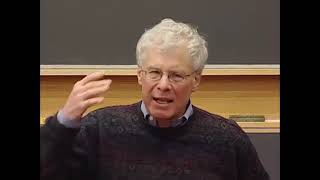
In this interview, Gene introduces Harvey Lodish, a distinguished cell biologist and biotech pioneer, who recounts his personal and professional journey. Lodish describes his upbringing in Cleveland, education at Kenyon College, a PhD at Rockefeller under Norton Zinder, and post‑doctoral work with Sydney Brenner and Francis Crick. He details his early MIT appointment, the formation of a prolific research program on membrane biology, red‑cell development, glucose transporters, erythropoietin, adiponectin, and microRNAs. Lodish explains his long‑standing commitment to teaching, the creation and evolution of the seminal "Molecular Cell Biology" textbook, and his role in founding the Whitehead Institute. He then shifts to his entrepreneurial activities: consulting for multinational firms, co‑founding Genzyme, advising numerous biotech startups, and serving on scientific advisory boards. He narrates his experience as an expert witness in high‑profile patent litigation involving erythropoietin and other biologics, highlighting how his deep scientific knowledge translates to legal contexts. Finally, Lodish discusses his recent work chairing Massachusetts’ state‑level life‑sciences advisory board, shaping grant programs for early‑career investigators, workforce development, and biotech company formation. Throughout, he reflects on his personal traits—high energy, disciplined time management, and a preference for building ventures rather than running them—providing insight into the mindset of a scientist who bridges academia, industry, law, and public policy.
Chapters
Harvey Lodish grew up in Ohio, in Cleveland, in fact, but attended a small liberal arts college in Ohio called Kenyon College, which at that time, he tells me, was for men only. But it's now co-ed. They've seen the light, in other words. He got his bachelor's degree at Kenyon College. In chemistry and math, and has actually retained connections with Kenyon College right up to the present day. And he got his master's— his bachelor's degree in 1962, and then he went off to Rockefeller University and did his PhD work at Rockefeller. Under the mentorship of Norton Zender. Obviously, he didn't take up chemistry or math at Rockefeller, but he got initiated into the biological sciences there. He obtained his PhD in 1966, and then went off to the MRC laboratory of Molecular Biology in England for 2 years on a postdoc assignment, where he worked with Sydney Brenner and Francis Crick. So after 2 years in England, he came back and was on the job market. And obviously, after having worked with all of these giants in the field, his pedigree was impeccable at that time. We had a position available here in this department for an assistant professor at that time. So we said, well, let's bring him in for an interview. He looks like a pretty good candidate. So he came in, and we interviewed him, and he gave his seminar. And we were quite impressed with him. So we offered him the position. And fortunately for us— and I hope Harvey says fortunately for him, too— he accepted the position. As an assistant professor at that time, and became a faculty member here in the department. Those first year or two here in the department, anyone who looked at Harvey for the first time would assume that he was a teenager. And in fact, he often had to prove his age before he could get served in bars. And except for the color of his hair, I suspect that even today, he might have to be flashing his ID card occasionally. Anyway, some of us, in fact, began to call him the kid in the department, because he really looked like a teenager, even more so than he does today. But Harvey was able immediately to establish a very productive research group. And over the years, his research has blossomed in many areas of cell and molecular biology. And today he has a very outstanding reputation at the national and international level. He is a member of several honorary scientific societies in this country and elsewhere. He has served on many government advisory committees, and he's even been involved in business activities from time to time. Throughout it all, Harvey has maintained a going program as a faculty member here. He was a founding member of the Whitehead Institute. He's been involved in the educational activities in the department. Over the years, both at the postdoc level, graduate level, and undergraduate level. In fact, just a few days ago, he reminded me that he's been teaching cell biology to undergraduates for 40 years now.
30.
30?
30 years. Mary Lou, that's another story.
OK, 30 years.
I've been teaching for 40, but only cell biology for 30.
OK, he's been teaching for 40 years. I assumed he started out teaching cell biology.
I'll tell you about that.
I can't remember that far back, Harvey. He's just a kid, right? At any rate, he's been a productive faculty member over the years. And Harvey really has more energy and more enthusiasm than any 10 people, ordinary people, ought to have. And I, for the life of me, have never been able to figure out the secret that he has of having so much enthusiasm and energy. Perhaps he will let us know about that in a few minutes. But it's a real honor for me to have known Harvey and to have been a part of bringing him here and to watch him develop into the really outstanding scientist that he has become. And it's my honor to present Harvey "The Kid" Lovish.
Oh my God, Gene, thank you. Wow. I've been introduced by lots of people in lots of circumstances, but this ranks among them both the best and the most unusual. Thank you, Gene. I want to spend— I mean, thank you all for coming out on this kind of grotty morning. But I want to spend most of the time discussing some of my extracurricular activities. But I thought it'd probably be useful to tell you something about my early background because it does relate into getting involved in these outside things that I get involved with. I mean, where to start? I was born in Cleveland, Ohio in 1941. First 10 years, lived in a fairly insular Jewish area on the east side of the city. My parents and all their friends were children of the Depression. And this was the postwar period when I was growing up. You know, money was a big thing, careers, earning an income. And the two biggest kinds or most important kinds of people in the community were rabbis and doctors. And it was assumed I was going to be one or the other. And in fact, for the first 14 or so years of my life, I was on a fast track to becoming a rabbi. I rather quickly got disenchanted with religion. But I was always good in science. In fact, I was always a very good student. And it comes time to apply for college. There was one obvious school for me to apply to. That was Harvard. In fact, I only applied to one school. I got into Harvard. I got a nice scholarship from Harvard. I visited Harvard and I didn't like it. And I just didn't feel it was the right place for me as an undergraduate. Anyway, I go to my high school guidance counselor— this is Cleveland Heights High School now. The family had moved up to the Heights— and said, where should I go to school? And she suggested this little tiny college, Kenyon College, which is really well known for its language arts, its English, its political science. But I visited there and I just fell in love with it. I mean, these were teachers who were really dedicated to teaching. And somehow it just feel— felt right for me. So I did my undergraduate degree, as Gene said, in chemistry and math. But I need to go back because I knew always that I was going to become a biologist, if not a physician. When I was in high school— this was Cleveland Heights High School— I had a wonderful chemistry teacher, a lady named Ethel Laughlin, who actually started a small research project for high school students in the high school measuring nitrogenous compounds in blood from people with kidney diseases. Anyway, I got hooked on research. And she made an introduction to me to a fellow named Robert Eckel, who was a physiologist and researcher at what is now Case Western Medical School. It was then Western Reserve Medical School. So for 3 summers, beginning in 1958, I worked in a lab on red cell biology. So it's actually 50 years since my lab has been working on red cells, or I personally have been working on red cells. It was potassium transport in cells, trying to understand what molecular molecules powered the uptake of potassium into the cell. That hooked me on research in the summer of 1960. The summer of '61, which was just before my last year at Kenyon, I worked in a lab at Stanford of a former Kenyon graduate, Carl Geraci, chemistry lab. Now, some of you may recognize that name. He's still alive. He's a world-class chemist known as the father of the birth control pill and had set up a company, Syntex S.A., actually in Mexico, which then moved to Palo Alto.— and he had graduate students at Stanford synthesizing steroids. And then when they got the reaction to go, he would move them over to Syntex. And that was an eye-opening experience for me. One is I was in a big research lab for the first time and really saw what a neat thing it was. And second of all, the seed that one could be a faculty member and a businessman somehow stuck in my head. So that was 1960. Anyway, I went to graduate school at Rockefeller. I didn't go to medical school. And my parents were hysterical. And I just have to tell you my first day at Rockefeller. Some of you have heard this before, so forgive me. Again, my parents didn't want me in graduate school. They didn't want me in New York. My mother in particular was just terrified of what was going to happen to me in New York City. And her worst fears were realized the first day of graduate school. We moved into graduate school, graduate student residence hall, and the living accommodations where you share a bathroom with— you have a single room, you share a bathroom with someone else. And to get to the point, the guy I was sharing a bathroom with was a hippie. You know, kind of long hair, unwashed, unshaven. Seemed like a nice enough fellow, but My mother's last words were, you know, "Harvey, you shouldn't have anything to do with him." And that was, of course, David Baltimore. And, okay, you see where we're going. And David, of course, became one of my closest friends and that led to Whitehead and a textbook and other stuff that I'll come to. But I had a wonderful thesis supervisor at Rockefeller, Norton Zinder, who kind of took this very ambitious, somewhat erratic young student and kind of got him to focus on science. My thesis was on genes in the RNA bacteriophage, basically isolating mutants and physiology of the 3 genes that we discovered RNA catalyzed replication, things like that, together with a lot of other people. And then went on at the MRC. I learned another important lesson. I learned a lesson at Rockefeller of the importance of mentoring. And at the MRC, Sidney and Francis left the postdocs alone. They talked to us a lot. But basically, I had my own research project on translational control of this RNA bacteriophage messenger RNA. And was able to publish a number of papers on my own. And actually, the part about taking the job at MIT, there's an interesting— Part of it, it's specifically because of Ronald Reagan that I came to MIT. You don't know that, Gene. But when I was in my last year at Rockefeller in 1966, I was invited to Berkeley to give a talk. It's kind of flattering for a graduate student. But to get to the point, well, I'll never forget that because this was the free speech movement and everything else. And they proudly took me to Sproul Hall. And you could see the blood of the SDS students still on the steps. But as— after I returned back, they offered me a faculty position, which I accepted over the summer of 1966 when I was in England. Now, explaining to a British barrister what a loyalty oath was was something else again. But I was actually on the faculty of Berkeley in name only until Ronald Reagan got elected governor. And that was the fall of 1966. And he started putting the screws on the University of California, wanted the faculty to teach more, et cetera, et cetera. And I don't know what prompted me to do it, but I wrote a letter of resignation. I said, "This is not where I want to go." And that may have impressed Salva more than my academic career, Salvador Luria. I don't know. But anyway, he was the one that was involved in bringing me to MIT. Now, I'll get to the business and stuff, but I just have to tell you my first couple of years at MIT because, again, it taught me something very, very important. Whether by design or accident, I still don't know. Maybe you'll tell me. But when I came, I was given an office next to David Baltimore and basically two that became three large labs and said, go share them. And that's what we did. Each of us had our own research programs. David obviously led to the discovery of reverse transcriptase. Me, I was still working on translation of messenger RNAs, protein synthesis. But we jointly trained a number of graduate students and postdocs. And some of the early work— my first graduate student, David Houseman, some of you know— discovered that mammalian proteins initiate with methionine. Together with David, we did a long series of studies on biogenesis of glycoproteins, particularly the vesicular stomatitis viral glycoprotein, led to ER, to Golgi, to plasma membrane That whole maturation process we worked out. When Jim Rothman was a postdoc in my lab, we were able to develop in vitro systems for studying this, showed that glycosylation, membrane insertion were co-translational, all that kind of stuff. So I was hooked on membranes, as you can probably guess, ever since high school. Then that sort of occupied much of the '70s. [Speaker:AUDIENCE] Was Houseman a postdoc? And he was my— now, it was interesting. David was an illegal graduate student. He was actually a graduate student at Brandeis. And he walked into my lab and stayed. And it took 3 years for Brandeis to figure out he was missing. But he— I mean, the key paper was Hausmann, Tamaj Bandari provided the tRNA. It was Corrado Baglioni and myself. On initiation of globin synthesis with methionyl tRNA. And I'm telling you these stories because collaboration really is such a hallmark of this department. And everything I've done has been so dependent on other people that it's really great to kind of at least acknowledge some of the people. And that was the '70s. I got tenure. I was a full professor. And we decided to go into sort of new areas, a lot of membrane protein biogenesis.— we actually discovered what is now known as the early endosome, the compartment where ligands and receptors uncouple. That was in the early '80s. Molecular cloning came along. And with a number of postdocs, we cloned, for instance, the first mammalian glucose transport protein, first mammalian anion transporter, a number of these other proteins, the acetyl glycoprotein receptor, a lot of work on biogenesis, structure, function of cell surface proteins. Late '80s, Allan D'Andrea, postdoc, cloned the erythropoietin receptor. And that started us on a long series of projects on red cell development. Again, you can see where my love comes in, which all continue to the present day. Current work in the lab, a lot on red cell development. I'm not going to go into details. Stem cell, hematopoietic stem cells and growth factors for them that, again, came out of all this work we were doing over many years on blood cells. Adiponectin, which is a fat cell-derived hormone that we cloned in the mid-'90s, that seemed interesting because it was made by adipocytes and is now known to be a major regulator of fat and glucose metabolism. And more recently, with Dave Bartel, microRNAs, studying their role in a lot of developmental processes. So it's been a kind of long and interesting career just running an academic lab. And I want to make it clear. That this is still my first love. Because I always get nervous talking about my outside activities, like that's really what I like to do. And of course, I do like to do it. But since my chairman is here, I have to be a little careful in how I phrase these various comments. But I have been privileged. And it's really a privilege to get into a lot of these other activities. And let me tell you about a couple. Let me start with business. OK. Now, I told you one of the first things that piqued my attention. The second was actually my brother Leonard. And again, I don't think many of you know this story. But he followed me at Kenyon and then went to MIT to do a PhD in the Sloan School. And his thesis was— this is 1968 he got his PhD— it was a marketing computer program for marketing executives to bring in a lot of what were then databases on who reads what magazine. Tell company people how do you market, I don't know, women's clothes or coffee or whatever they were doing. And he set up a company with his professor, John Little. And by the time he got his PhD, he was already fairly rich. And what I began learning is that lots of people were doing this at MIT, but not in biology. Now, how did I get involved in this? Now, again, I was a lab rat. But this was kind of percolating in my mind. But there were really two things, and I'll just tell you one. One was a next-door neighbor, a woman then named Linda Gordon, who had just gotten her MBA at Harvard and was working in an investment bank downtown. And we used to talk. She was a chemistry major at Berkeley. And we used to talk literally with our kids. I mean, her son and my— I should add to what Gene said. By the time I was on the faculty, I had three kids. And people didn't quite think I was old enough to have 3 kids, but we did. And that's another whole story. But anyway, we used to talk as we were watching our kids play. And she was telling me about whatever they were doing in the investment business. And she said, well, look, why don't you come down and have lunch? So I put on my jacket and tie, my one jacket and one tie, and go downtown to this very luxurious dining room on the top floor of some big building on State Street. We're kind of sitting around having lunch and I'm meeting all the big shots in the firm and so on, all with very elegant suits. And there was a pause in the conversation and the head guy turns to me and said, "Geez, we're really impressed with you and your accomplishments. We'd like you to set up a company and we're willing to give you $5 million." And I was absolutely speechless and I didn't quite know what to say, so I said nothing. And the man, understanding my distress, said, "Well, you know, "Look, if money is a problem, I'm sure we can get you $10 million." So at this point, I knew what I was worth. And I said, "Look, if I can figure out what to do, let me talk to some of my faculty colleagues and see what I can do, and then I'll get back to you." I never got back to you. Never got back to them. But what I did do turned out to be incredibly interesting. Started talking to people. You know, if someone gave me $10 million, what would you do? And who was this? Tony Sinski, many of you know upstairs. And it was doing an OTA report, Office of Technology Assessment report. George Whitesides, who was in the chemistry faculty at MIT, now at Harvard. Chris Walsh, who was then on our chemistry faculty. A number of others. Graham Walker got involved in this. Cho-Kyun Rah, who was a— sort of biopolymers. Charlie Cooney, who was a chemical engineer. And what we decided to do was form a professional to work as a group for a couple of years until we could figure out what we really wanted to do. And it was the most amazing learning experience. This was 1979. And this was really multidisciplinary. We had bioprocess engineers, food chemists, the whole lot in this group. And we positioned ourselves— get this— as strategic management consultants for multinational corporations to consult on the impact of biotechnology on their core business. Okay? So we worked at a real high level and had great fun because we would travel together and teach ourselves stuff. I mean, for instance, what would the impact of biotechnology be on the orange juice industry? Well, you quickly read out how orange trees are propagated by roots growing into new trees, and the answer is none. But people would pay handsomely for this information. We spent a week— it was actually wonderful— in Paris. We were consulting for this large French food conglomerate, BSN Gervais Danone. And they took us to a pasta plant. What's the impact of biotechnology on pasta? None. They actually took us to Avène, where they bottle water. Even more startlingly, the answer was none. The beer industry was not so obvious. But when you start talking to the brewmasters, they don't want cloned yeast. They have all these mixtures of yeast. And it's the taste and the bubbly and whatever else it is. But the point is, they didn't know this. And we did a lot of these multi-company projects. I mean, I'll just give you one other example I did with Charlie Cooney. We were retained by a large paint and chemical manufacturer, Acrylates. And they were making it for petroleum. And they asked us two questions. Could you engineer a bacterial cell to make acrylic acid? And that was my part. And the answer was, yeah, I could show you how to do it, at least on paper. But then what they wanted to know is, what would a barrel of oil have to cost in order to make it economical? And that's when I started working with Charlie. And we came up with a number. And they were very happy. Now, the reason for telling you this is we were retained by an investor, Sherry Snyder, who was putting together a biotech company called Genzyme. And he wanted us to consult on the scientific advisory board that he had assembled. And without going into details, we looked at the credentials of these people and said they weren't very good. So he turned to us and said, would you 8 become the SAB of Genzyme? And that's Genzyme. And in fact, probably the most important thing we did is hire a president. And in one of these actually now famous meetings we had in the chemistry building on a Saturday morning, we interviewed Henri Termir for 3 hours. And at the end, pretty much said, you're it. And of course, Genzyme is, I think, the 5th largest company in the state of Massachusetts. And after we started it, we really worked as an SAB. It was down in this— It was the 12th or 13th floor of a retail ladies' clothing building in Chinatown, on the fringes of Chinatown on Newland Street. And it was really kind of funny. But we'd go there every Friday night and have Chinese dinner and kind of go over all the stuff that the company did. This led to several products— CeraVe, CeraZyme. Graham played a key role in hyaluronic acid and things like that. I began to learn from all these other people, particularly George, who had been in businesses before, Tony, what business was like. And I realized that I could, in fact, help and do something. And it was really a lot of fun. And over the years, I've gotten involved in a number of other building— a number of other companies. I'll just mention— and then I'm going to stop and take questions. And then we can go on to some of these other topics. Just because I'm going to run out of breath. But one which also taught me a lesson was one that none of you ever heard of, Damon Biotech, which was put together by a guy named David Kosowski, who was the CEO of Damon Corporation, which again— well, actually, there's Herman. Oh my god, I hadn't seen you. OK, Herman was one of the original group. And if I may say so, Herman, I learned how not to run a company. And he's nodding. It was well ahead of its time. It was to manufacture monoclonal antibodies, but to encapsulate the cells in an alginate capsule so that the secreted antibody would stay in the capsule and it would be very easy to purify. Now, this worked very well on the small scale. They could never scale it up. But also, I think it was well before people understood what to do with gram quantities of monoclonal antibodies. But anyway, we had a lot of fun meeting together and discussing the science. Asumu was on the board. Who else? George Whitesides again, Howard Green. And again, I remember spending a week in Europe when the company went public on the road show. Let me not go into that. But I learned two things. One of the reasons the company didn't work was technical. The other is they had a president, I won't tell you who, who I think his greatest pleasure in life was flying across the Atlantic first class. And I kind of learned these things are fun and enjoyable, but you got to keep your eye on the prize, as it were. But then over the years, I've worked with a couple of other companies. I'll just mention two. One was Millennium that Eric Lander started. And it may amuse you that for 3 months, Eric and Laurie lived with us in our house because they were actually homeless in the fall of 1986. Having to do with contractors walking on their project, on their house. So I got to know Eric very well. And when he set up Millennium a couple years later, as many of you know, it was to isolate— using human genetics to isolate genes that could be targets for drug development. And I talked to Eric a lot. And he had absolutely world-class geneticists there. But what I told him is that, look, you really need a cell biologist on your board. Because once you get these genes, you're going to become a cell biology company. And that's what happened. I joined not as a founder, but got in very early with essentially founder stock. That was very helpful. And anyway, nurtured that company. I was on the board of Astra, which became AstraZeneca. I still have a— I have a new company now, a company called Allozyne in Seattle, which is putting non-natural amino acids into recombinant proteins for the purpose of using the side chain on the amino acid to link to chemical groups. Modify the proteins. And that's fun. So let me just stop. If any of you have questions about business or my early life, I'm happy to answer them as long as they're not caustic. Anybody? Don't be— Chris. Non-caustic question. So the chemical engineers, certainly, probably the chemists were already up to their elbows in consulting—
Exactly.
—pharmaceutical companies. So how was the relationship between, say, the biologists, which were new to this game, and the college and these others? It was a rocky relationship because there were several people in the biology department, very well-respected faculty, who felt that working with companies on any level was morally repugnant. And as it happens, the most— one of the most vocal of them wound up being the CEO of a small biotech company. That's another story. But there were a number of these awkward moments. And it was compounded, as you mentioned earlier, by the founding of the Whitehead Institute, because many people ascribed to Jack Whitehead that there was something nefarious about setting up an institute that was endowed with money from a company that he had sold. But I think over time people became more and more comfortable with it. Not so much at MIT, but at other places there were abuses of it. There were faculty who would have their graduate students work on company projects. A lot of this got into the press. I think we were very careful to keep the two at arm's length. And I have to say, I'm very careful not just with conflict of interest, but with appearance of conflict of interest, which is actually worse. Anything else? Yes. I don't know your name, but—
I'm Mike Fisher.
I teach in the SDS program. Oh, cool. OK. And I was just in Biopolis. And I believe you have a connection there. And I wonder if you could say how you got involved in— I can. I'm part of the SMA program, which— in fact, I have several graduate students in Singapore that are part of this MIT program. I got to know Philip Yao very early. Philip was a— he's basically an economist by training, but was head of the Economic Development Board. Put together the Biopolis. And for some reason, he liked me. And I spent a lot of time talking to him. I didn't have much influence. But it's an absolutely remarkable set of buildings. And in fact, I'm going there in a couple of weeks again. But it's part of this MIT Singapore program, which, although it's been rocky at times, has really been successful. Gene?
I just wanted to ask you, did you ever think seriously about the possibility of getting into business 100% of the time rather than give up your job at MIT?
I did, and I realized that I'm not suited to do this for the same reason that I never wanted to be a department head. I'm just not good at running meetings and stuff like that. And I like too much— I like the diversity of life that you have as an academic. And in fact, all the companies that I've been involved with have been transient. In other words, I work with them to build them up to a certain level where they don't need a scientific advisory board, and then I leave. So I'm much more of an entrepreneur type than I am someone to actually run a business. I thought about it a lot, and the answer was no. And I also thought about these opportunities of running big multinational corporations. I don't want to do it. I just wouldn't be good at it. Do you enjoy teaching? Yes. Yeah, I do, which actually gets me to the subject of writing textbooks. So I'll come to that in a second. Herman, you had a question?
Yeah, I have sort of a question.
Somewhere I remember reading that Conant, when he was president of Harvard, said something to the effect that any faculty member at Harvard should be able to double his income, his faculty income, by consulting and doing without comparing to the fact that this is an academic. I've thought about that a lot, my own experience and hearing you. And I think that generalization is treacherous. I think it works for some people. It sounds like it worked for you. I found it didn't work for me. And it works for some and not others. Yeah. Why do you think that's so?
I think so. Why? I think it's, you know, Personalities, interests, time management skills. I mean, to return to Gene's questions, I have very good time management skills. I can really focus very intensely for an hour or a day on some project and then walk away. And if you come into my office at MIT, my desk is empty. And I've always been that way. At home, my desk is empty. There's no piles of stuff. I do what I need to do on schedule and I'm done. So it enables me to juggle a lot of And whether it's genetic or acquired, I have no idea. But it's just the way it is. I've always had a lot of balls in the air. And you can decide whether or not it's worked. Let me pick up on this teaching business. When I first joined MIT, I was actually teaching biochemistry with Gene and Jack Buchanan and a couple of others. Early in the '70s, I taught what turned out to be the first molecular biology course at MIT. And I taught it myself. This was bacterial genetics, gene regulation, and so on. Went on sabbatical and then came back in 1978. And then with Mary-Lou— where is she? There you are. I knew you were here. We taught together the first course in cell biology. —And that was an amazing experience. Cell biology didn't exist as a discipline, really. It was sort of microscopy. It was biochemistry. Recombinant DNA was just coming into play. Morphology, fractionating cells, just beginning. Anyway, we taught a course. And I taught membranes and the cytoskeleton. Mary Lou taught gene expression, chromatin structure, and so on. And there were no textbooks. So I decided I was going to write a textbook. And I started talking to a lot of people and got a lot of interest in people wanting to work with me to write a textbook. But everyone had their own idea, and they were all divergent. So I kind of dropped it until about 1980 when Dave Baltimore called me. Because it turned out Jim Darnell, all-time— longtime friend and colleague at Rockefeller, was writing a monograph on mammalian gene expression. And asked David to write a few chapters on cell biology, which David had started doing. But then the Whitehead Institute came into play. And David sort of asked if I would kind of help work on or rewrite his chapters. So it sounded interesting. So I'll never forget the day I went to this house in suburban Connecticut, a kind of writer's place, and read David's chapters. And I think it's best summed up by Linda Chappett's comment. Linda was my development editor and later the president of WH Freeman. And her opinion was that stream of consciousness is a good device in novels, but it doesn't work in a scientific thing. So I said, well, geez. So I talked to David. I talked to Jim. And I said, look, I think I can do this. In fact, I remember saying, it'll take me only 6 months to write 10 chapters. 10 chapters. OK? Now again, I went to Kenyon. I could write. I could always write very well. And indeed, I wrote 10 chapters in 6 months. And I was very proud. I said, geez, one other thing done. I can go off and do something else. And Chris knows where I'm going. And the trouble is they were miserable. And they said, OK, look, the science is good. But there's no organization. You say in the first sentence you're going to say something. You never actually tell them what you're going to do. And the figures are all a complete mess. You have 4 on this subject and none on that subject, and all this kind of stuff that I never, of course, thought about. So I had a tutor, literally, a very good development editor. He would come to my house for about 6 hours every other Saturday. He would go over the chapter that he had suggested I would rewrite and then took the chapter I was working on that week and kind of reworked it. Anyway, it took about 2 years. More. And eventually we got the first edition out. That was '86. And then 1990, we got the second edition out. That was actually in color. And just one vignette, you get into these things. I'm sitting at this meeting in 40th floor of this office building in New York. We're planning this second edition. I guess I was the second author, but I was basically more or less in charge. And they said, Harvey, we want you to pick a color palette. I said, a what? And I said, look, they have all these, whether this shade of red or— anyway. And I said, look, I know what I know, and I know what I don't know. You guys pick the colors. I'll deal with the science. Anyway, second edition was great. David had other things to do. Jim wanted to step down a little bit. And pretty much I decided I was going to be in charge. And here's where the fun really begins. Because what I was able to do is pick my own colleague authors. And for the third edition, Paul Matsudaira, Larry Zipursky, Arnie Burke. Later on, there was various rotations. I was able to get Chris involved, Monty. We're now in our 6th edition, and we're starting our 7th. Hidde is now an author, various other people like Tony Bretscher, Matt Scott, whose thesis committee I had the pleasure of serving on, as I did Chris's. And what's really neat about writing the book— I mean, it's a lot of work. But it's the meeting of the authors where you kind of sit around for a couple of days and kind of plan out what the book is. What's new in science? What's going on in membrane trafficking? What's old? What about transcription? What about chromatin? Maybe we should bring in more genetics, genomics, blah, blah, blah. And eventually, you get a book out. And it's really a collaborative, cooperative affair. And it's one of the things I enjoy most about it. We have very good editors, cool stuff like that. And it's been, I have to say, one of the most rewarding things I did. I started doing it when my 3 kids were in high school. And I have a big desk at home. And they used to come in and pick up manuscripts. And they would say— they would read, the endoplasmic reticulum, and glycosyltransferases, and N-acetylglucosamine, and all that kind of stuff. But 2 of them used the book as young adults, one at Haverford, one in medical school. And actually, well, I can tell you that one story. It was actually Stephanie who was a medical student at Case Western. I'm thinking of her because I just had an email correspondence with her. She went to Case Western Medical School, which is an ungraded medical school. But our book, Lodish et al., was one of the required textbooks for the medical students. And there was a kind of pecking order among the medical students. There was a lot of resentment of the fact that her dad wrote one of the textbooks. Calls me one afternoon. It's amazing these relationships you develop with your adult children. She calls me one afternoon, just absolutely laughing hysterically. She said, Dad, I just have to tell you what's going on. She said, I was standing outside the dissection lab with a couple of my friends. And this kind of arrogant male medical student carries this big green book, Harrison's Principles of Internal Medicine. And kind of walks up to Stephanie, shoves the book under her nose, and says, Stephanie, I just want you to know my dad is a chapter in this book. And without blinking, Stephanie said, so does mine. Anyway, my kids eventually realized what I did for a living. What else have I done that you'd find interesting? Law. I think I've covered textbook writing. Again, I was getting really good questions. So let me see if you guys want to ask anything. You know, what it's like, rewards, anything like that? Nothing. OK.
What's the most rewarding thing for you right now? Rewarding thing?
What activities or activity or activities? Well, right now, it's doing what I'm doing with the state government, which I'll come to. Plus running my lab, which is always very much in the background. I know, I know.
Yes?
Did your parents ever reconcile? No. Oh, yes, yes. They got to know Dave Baltimore— well, first of all, I had tenure at MIT before my mother stopped asking my wife, "Should Harvey go to medical school?" Okay? That was 1973. By 1975, when David wins the Nobel Prize, it's, "Oh my son." You know, son's best friend just won the Nobel Prize. Eventually they did. It took a long time because there was nothing in my family background or anyone else we knew— academics was just not something you did. And I remember introducing my parents to Sydney Brenner. And, you know, you went to England to work with him? You know, he was brusque. He was rude. Deep down, he was one of the nicest people in the world. But it was a whole group of people that I was associating with that were very, very different from anything they knew. Yeah, it took a while, though. Anyway, I'm going to go back to teaching a bit because I do like teaching. One of the challenges of teaching is taking really complicated stuff and getting it across to basically people just at the beginning of their scientific careers. Really teaching complicated stuff to young students. Amen. Yeah. And I mention that because that's really how I got involved in serving as an expert witness in patent cases. Because as I said, in the '80s— I've done 4 cases, and I'll just go through them just in outline. But in the '80s, as I mentioned, we cloned the erythropoietin receptor. EPO, which is the hormone that signals red cell development, is currently about a $9 billion a year drug. And it was probably '96 or so, I got the first phone call from patent attorneys about a case that we're working on, which is a modified version of EPO that had two extra N-linked sugars, which had a longer half-life. The sounds arcane. It's a drug called Aranesp, and it's a $2.5 billion a year anti-cancer drug— or drug that's used in cancer therapy. And there was a legal discussion, a lawsuit involved between Amgen and another company, and whether I'd be interested in working on the case. And without really knowing what I was doing, I started meeting with attorneys. Reading patents and decided I liked it. Because what you really have to do is understand the science very, very well and explain it to attorneys so that they can begin working with you to formulate what is the legal case. I mean, just as an example, was it obvious in the early '90s to take a recombinant protein and add two extra end-link sugars to it and get a protein that not only is functional, but has an additional function, which is long half-life? And that's a cell biology question. And that's the kind of question that I would go over in my classes. You see, because in fact, people who tried mutating end-link sugars destroyed the function of a protein because they're necessary for folding. And there was actually no prior example of somebody who could add one and even keep a normal function of the protein. So I wound up writing, with attorneys, expert reports, that is, summaries of the science in the case. I was deposed, which is another— I don't know if any of you have ever been deposed in a scientific case, but it's a real intellectual debate. And you have to like it or you don't. That is, when a graduate student comes into your lab and asks a stupid question, you never say, geez, that's the stupidest question I've ever heard, and put them down, or just tell them in one sentence why it's not going to work. But in a legal case, that's exactly what you get paid to do. And by the way, just going back to Herman's thing, I won't tell you what my current consulting rate is, but it's roughly 10 times what I get on a per-hour basis serving on the MIT faculty. OK? OK? And most people, most scientists, don't know what they're worth. OK? Confidentially, I'll tell any of you what you're worth. Because I've done it. OK? But I do it not just for the money. Because in fact, in one of the three cases, I donated all of my earnings. I'll tell you about that one to Whitehead. And there were, what, 1, 2, 3, 4, 5, 6 figures. Yeah. OK. Anyway, the first of these cases was actually settled pretty much outside of court. Second one was Amgen v. TKT Aventis, which had to do with validity of EPO patents. And the crux of it was, back in 1983, 3, if you had the sequence of a recombinant protein, a recombinant glycoprotein gene such as EPO, was it obvious that you could manufacture the protein with in vivo biological function in recombinant cells? Was it obvious to use CHO cells back then? This kind of stuff. Basically, there was a company that was making it by a slightly different procedure than Amgen did. Well, I won't go into the details because I've talked about this publicly. But basically, they did it by a slightly different recombinant DNA procedure. And was this taught by the Amgen patent? Now, I'm going back to teaching again. Because taught is a legal term. And it means with the patent in hand, what would one skilled in the art— that is a postdoc, in this case 2 years of experience in recombinant DNA— would that person have known or been able to do what the other company has done? That is, were they infringing or not your patent? So a lot of what I did is explain what the teachings of the Engen patent were— putting a strong promoter upstream of the gene and then a dihydrofolate reductase gene in front of the gene so that you could select amplified copies of the gene and so forth. And I wound up testifying in court, which I found I liked. And even though I was cross-examined for about a day and a half on the witness stand, it's either you like it or you don't like it. And I found I liked it. So anyway, I did that case. Then a case, the so-called Axel patent at Columbia. Richard Axel, who discovered co-transfection and co-amplification, wrote a series of patents on making recombinant proteins licensed to Columbia. And over the lifetime of the patents, it earned Columbia about $350 million. And that's a lot of money. And they filed many extensions and new patents. And basically in 2001, the original patents had expired in 2000. But in 2001, they got a new patent issued with the same specification, the same background information as the old patents with a bunch of new claims. And it was a valid patent. It was issued by the Patent Office. So Columbia sues 9 companies saying, we want royalties, tens of millions of dollars. And the companies countersued and said, hey, no way. This patent is obvious in light of the other patents. And again, obvious is a legal term. Definitions. So it was very interesting. I was asked to represent 3 companies. And in fact, I was representing all 9. But since some of the other companies thought I would or might get involved in testifying against them in another case, I couldn't be representing them in this case. Anyway, worked with a law firm fully in Boston. And I agreed to do it again only under the condition that all my money was going to go to Whitehead. Because Dick Axel's a friend of mine. But nonetheless, lawsuits are lawsuits. Anyway, we won. I wrote an expert report parsing the claims in the new patent and showed how they were absolutely predicted by claims in the other patents. And it actually, again, never went to trial. But Judge Green in federal court said, and I quote, "You know, Lodish wrote the textbook. And he said thus and so, and the other side really has no defense. And if the case comes to trial, it's highly likely that the plaintiffs will win." So anyway, I was deposed— that's another story— in New York by an attorney who— actually, I knew it was OK because the first question he asked me was about serine and threonine. And when you're being deposed in one of these things, you have to answer truthfully, straightforwardly, but the objective is to waste time because they have 7 hours. So I realized I could play games with the guy, and I did anyway. They got nothing out of me in the deposition, and they settled soon after. And then just a year ago, I did Amgen v. Roche. Which was also cool because that was another EPO patent case having to do with validity of EPO patents. And they had made pegylated EPO. So they took erythropoietin, they added a polyethylene glycol chain. And was that covered by the Amgen patent? So there was validity of the patents and infringements of the patents. And I spent 450 hours on the case. OK? And I'll just give you one vignette because, again, it comes down to teaching. You know, it was EPO binding to the EPO receptors. Pegylated EPO bound less avidly, but it bound to the same receptor. It induced the same signaling properties. It was a bigger molecule with a longer biological half-life. And the other side was like, well, it's a different protein. And my point was that EPO is EPO. And if you put a polyethylene glycol on it, it's still EPO. So this is now a jury trial. OK? So you're the forewoman of the jury. I'm sitting here in the jury box. And Judge Young is sitting up there. And how do you explain to a jury, only half of whose members had graduated from college, and only one had any scientific background at all— she was a nurse— how do you explain EPO binding specifically to the EPO receptor? OK? We spent hours, and they must have spent hundreds of thousands of dollars on graphics. —beautiful epopeptides in 3 dimensions. And there's one hormone binding to two receptors and all of that. And we had this armada of just gorgeous pictures. But for various reasons, my testimony kept getting shorter and shorter because the trial is a fixed length and they wasted time early. Basically, I had to get it across really quickly. And in the end, what we did is showed one figure. And then I used my hands. And it was, you know, Dr. Lodish— so you're the attorney for our side, Rusty Day of Day Case Spirit. Dr. Lodish, could you explain EPO binding to the EPO receptor? And I said, sure. It's the EPO key going into the receptor lock. And the receptor binds the EPO, the key, Very tightly and very specifically at multiple sites. You know, it's like this. You see, you're all watching me, right? OK. And then he said, well, what does affinity mean? And I said, that's really how strong the interaction is. How much energy I need to pull it apart. OK? It worked. They got it. OK? I'll give you one more vignette because it again goes back to my textbook. Their job is to impeach me as a witness. You see why I like this kind of stuff. And Monty knows this story because it's his chapter in the textbook. And they try to find something that you've written that contradicts your testimony. And it was actually frightening when I went into my first deposition on the Amgen TKT case because there in these boxes were every one of the several hundred papers that I had written, all indexed with flags in every edition of the textbook and so on. But this time, it was really quite cool because it came out in open court. And they bring up the 6th edition of the textbook. And they always preface it by these grand introductions. You know, is this your textbook, blah, blah, blah. And yes, it is. And is this your— so here's Chapter 2. And EPO was defined by its amino acid sequence. And what they're trying to get me to say was that pegylated lysine was not lysine. So they refer to one sentence that says, we'd already introduced the 100 amino acids— excuse me, the 20 amino acids, 20 normal amino acids. And then there was a sentence that said, well, normal cells have 100. In addition to these 20 cells, they have 100 different amino acids. And she tried to get me to say, well, doesn't this mean that pegylated lysine is not lysine? I said, no. If you look to the next sentence, it says, many of these are modified amino acids. Now, Monty, by chance, put a table on the same page, which was a depiction of 4 or 5 modified amino acids, among which was acetyl lysine. So the whole page is up on the board, and the jury is, of course, watching. And I jump with my pointer— they should have shot me out, but she didn't— and I said, look, I want you to look at this table, because this depicts acetyl lysine, which is a chemical modification of lysine, but it is described as acetyl lysine. It's a lysine with an acetyl modification. And yet we still call it lysine. And then they should have shut me up. But I went on for the killer. I said, and the linkage, the chemical linkage between polyethylene glycol and lysine is the same as between acetate and lysine. And since I call it acetyl lysine, it's still a lysine. Pegylated lysine is still lysine. That was infringement right there. Anyway, you see why I like it. So that's— whether or not I'll do another case, I don't know. Let me, in just the last couple of minutes— well, I'll take just 5 more minutes— tell you about what I'm doing now in the state government, which is again really cool and totally new for me. And I'll just give you the background. A year ago, June, Governor Patrick had just been in office a couple of months. I can take 5 minutes, Jean? Okay. And he announced with great flurry this billion-dollar initiative in life sciences. And it kind of languished over the summer and fall in the legislature because no one quite knew what to do with it and it wasn't really fleshed out. And I had the opportunity of speaking with the governor last fall. It was actually at the Whitehead 25th. And I said to him, look, I really like the idea of $100 million a year over 10 years to support biotechnology and biology in the state of Massachusetts, but you really have to have a scientific advisory board. To give the process credibility and also transparency to the grants that you make. And incredibly, he listened— not incredibly, he's a very smart man. He listened, he got me in touch with the Secretary of Economic Development, Dan O'Connell, met over the fall with DeMacy and Terry Murray and all these other people and kind of the life sciences board, which had 5 people on it now, now it's 7. And what is a scientific advisory board? And of course, they got it. Because it gave credibility to the whole process. And I suppose I knew what I was getting into, but I really didn't. And back in— it must have been January of this year— they asked me to set up the board and to chair it. So we're an independent board. There are, I guess, 12. And we're going to expand it slightly. Leading scientists in a number of academic institutions, leading scientists in businesses, and we're going to expand it with investors. But basically, we pass on all the grants. And we are also— so we've just given— in fact, yesterday it was announced. We had a meeting downtown. We make recommendations. We had one set of grants to young investigators who do not have an R01. There are several of them around here. Another set of grants to colleges and universities to hire new faculty to set up new programs. Gave out 5 grants over the summer. And the third one that we just gave out yesterday are grants to universities, researchers with matching funds by companies to basically develop an early-stage bioproduct. And it's been very rewarding to kind of, you know, in one short year sort of develop the whole thing. But now we're really getting started because the bill was signed by the governor in June. In fact, I had the pleasure of actually speaking at the signing ceremony at the Joslin Clinic about starting Genzyme and how we wanted to develop more Genzymes in the state of Massachusetts. I mean, they see it as economic development. I see it as cool science and medicine. So we're going forward with it. We're going to be investing state money again in young investigators. We're going to be investing state money in new biotech companies and helping them get started and develop some interesting products. I've been meeting with all kinds of people that I never thought I would meet with or actually enjoy meeting with— venture capital people. And I have to say, probably the most rewarding thing about this and a lot of the other things that I do is you call people up and they'll come and work with you pro bono. It's really— I mean, the scientific advisory board, the names are all public. There are a lot of high-powered people on it. And everybody works together. There's not a lot of yelling and screaming or posturing or my idea is better than your idea and that kind of stuff. So it's actually been very cool. And again, what I find rewarding in starting businesses is not quite knowing what I was doing, I was able to get in there at the ground floor and sort of figure out. And this is now a problem that's going to affect lots of institutions in the states. How do state governments support biology and life sciences? We're doing it very differently than California. We're not stem cells. We're everything. And I think we're going to use our money much better than the state of California is using their $10 billion. The state of the state is not good right now. Right. And we took a 40% cut for next year, but we're still going forward. We have the budget. And hopefully over time it will get better. Obviously everything's in trouble right now. But the governor— we had to take a cut. But the governor said no, this is one of his flagship projects. And particularly now as investment in new biotech companies has dried up. So we on the scientific advisory board and a lot of other people on the life sciences board have kind of reviewed this whole field. Where do you go? And that seemed to be one place we're going to put the money in. Because that's— right now, that's the most necessary thing for the state. Second thing we're putting money in, in a slightly different program, is workforce development. Massachusetts does very well in training PhDs who can start and work in biotech companies. The next level of institutions that train very good— train people very well, but more to work in biotech companies, work in biotech manufacturing, instrument manufacturing, all that kind of stuff. We don't do as well as some other states. So we're thinking— and now this is a whole other project— of putting money into that kind of education. Cooperative programs with many state colleges and universities and some of the industries. Do you interact with DeMasi and other people? Not recently. I did at the beginning. Not right now. But what I'm told is the fact that we're there— we're about the only advisory board in the state that is not appointed by the governor. And that gives us immense credibility. And that's what we do. Well, hopefully— I mean, DeMasi's in trouble anyway right now. So I'm not sure I'd want to meet with him, but that's a different matter. Yeah. Any last questions? This has been fun. Yeah. Let me see if I can phrase this right. So when they ask you to testify on a case, in the beginning it might not be obvious, but later on, do you ever develop an opinion that's actually against the side that you will be testifying? What would happen? Okay, good, good, good. I'm glad you asked that. First of all, before I agree to do the case, I become entirely certain that I'm on the right side. Okay, that's point one. Yes. Oh, I've turned down many more than I've done. I just turned down one yesterday because I didn't— for exactly that reason, I didn't think they were on the right track. But second of all, part of what I do is develop the arguments that the other side might make and figure out how to counter them. And the attorneys do that very well. So I'm very careful, and again, not to sound arrogant, but the reason— well, let me make the statement and I'll tell you why it's so important. Everything I write, everything I say in court and in the expert reports, I know personally. Now this may sound obvious to you, but I can In private, I can tell you the experts for the other side in both cases testified to stuff that was stupid and we trashed them. I had great pleasure sitting in court during the Amgen TKT watching our attorney, Rusty Day, skewer the attorney for the— the expert for the other side who was a tenured Harvard professor for saying stuff that was just outrageous. And these were questions that I wrote. OK? And I loved it. It's called schadenfreude.
But I'm getting paid to do it. On that note, let's show our appreciation for Martin.
More from Joshua







Scientist Stories: Hans Waterham, The value of phenotypic assays in peroxisomal disorders




Scientist Stories: Joel Zlotogora, Genetic carrier screening programs for reproductive purposes