Scientist Stories: Heidi Rehm, Clinical Genomics
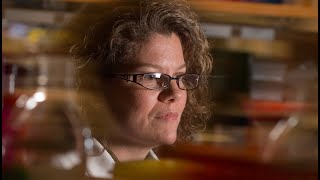
In this interview, Heidi Rehm, Chief Genomics Officer at Mass General Hospital and Medical Director of the Broad Institute’s Clinical Lab, recounts her trajectory from a PhD focused on hearing loss to leading large‑scale clinical genomics programs. She explains how early exposure to the Human Genome Project enabled mapping of a Norrie disease pedigree, and how the $80 M investment by Partners HealthCare led to the creation of the Partners Laboratory for Molecular Medicine to bring high‑throughput sequencing into clinical care. Rehm describes the early bottleneck of interpreting rare variants without adequate population reference data, and highlights key resources—HapMap, ExAC, gnomAD/NOMAD—that transformed variant classification. She discusses the shift from array‑based genotyping to next‑generation sequencing, and how ExAC revealed that rarity does not equal pathogenicity. The interview delves into the ClinGen program’s mission to standardize gene‑variant disease associations through community crowdsourcing and open data sharing, and the ongoing effort to update the ACMG/AMP guidelines toward a quantitative, Bayesian framework. Rehm stresses the importance of global diversity in reference datasets, especially for low‑complexity, highly duplicated genomic regions, and argues for population‑specific reference genomes. She addresses the “missing heritability” problem, the role of the Centers for Mendelian Genomics in discovering novel disease genes and tackling unsolved cases, and the limits posed by embryonic‑lethal or subtle regulatory variants. The conversation also covers ultra‑rare (N‑of‑1) variants and phenotypes, the promise of the NIH All of Us program to provide massive, multi‑omic cohorts for modifier discovery, and the challenges of communicating uncertain genetic risk to patients. Finally, Rehm evaluates polygenic risk scores as an emerging but data‑limited tool and advocates for integrating non‑genetic lifestyle factors into genetic counseling.
Chapters
My name is Heidi Rehm. I'm the Chief Genomics Officer at Mass General Hospital, and I'm also the Medical Director of the Broad's Clinical Lab.
Tell us about your graduate experience at Harvard. What did you work on and with whom?
So, I did my PhD thesis with Cynthia Morton at Harvard Medical School. And fairly early on, I was very interested in the human aspects and the disease aspects of biology. And genetics was a natural place where you could really study human disease, but also understand it at a very granular level. So, I was very attracted to human genetics, actually, from high school onward. And so, in graduate school, I rotated through labs that were focused on human genetics and ultimately chose to do my thesis in Cynthia Morton's lab. While I was there, I— her laboratory studied both fibroid cancer as well as hearing loss. I chose to focus on hearing loss, and I have to say that hearing loss is a human organ that is just anatomically beautifully set up for its function. You can look at the inner ear, the hair cell structures, the tectorial membrane, the snail-shaped cochlea, and really understand exactly how the organ functions, which of course, is very different than considering the brain, sort of more of an amorphous blob that it's really difficult to understand how we think about complex human thought. But the inner ear I was very attracted to because of this just exquisite anatomy and the ability to study the genes that were responsible for all of the different aspects of the function of the human ear and how defects in those genes lead to hearing loss.
When did you become aware of the Human Genome Project and its potential significance?
The Human Genome Project got started while I was in college, and I, I don't think it was really on my radar at that point. There wasn't a lot of talk about the Human Genome Project when I was in college, but when I came to graduate school at Harvard Medical School, that's when I really started to understand this project. And at the very start of my thesis, I had a large human disease pedigree with a disorder that we later discovered was a disease called Norrie disease, and I had to use markers that had been developed through the Human Genome Project in order to map the location of the genetic defect for this large pedigree. And so very early on in my PhD thesis, I understood the benefits of the Human Genome Project. I was using, you know, the the underlying map that was first created in order to do my work. And then from there, you know, it just became more and more useful as we began sequencing the genome and understanding the detailed elements of it.
How did you start the Laboratory for Molecular Medicine? What was its purpose?
So in around 2000, I started my postdoc, and I was doing continuing my research in the basis of human hearing loss. And at that time, Partners HealthCare, which is an umbrella organization over Mass General Hospital, Brigham and Women's Hospital, and about 20 other hospitals, really was recognizing that genetics was going to play a key role in healthcare in the future. And so they invested about $80 million in really bringing genetics into the hospital infrastructure. And the key thing there was to start a center called the Harvard Partners Center for Genetics and Genomics. They recruited Raju Kuchulapati, who was my boss when I took my first faculty position at Harvard. And he asked me to really start up a brand new clinical genetic testing laboratory as part of that Harvard Partners Center for Genetics and Genomics. And the idea was, you know, to really bring novel genetic testing approaches and tests into the practice of medicine and do that at scale, really bringing the experience of the Human Genome Project that he was part of and applying the high-throughput sequencing. Of course, then high-throughput sequencing was Sanger sequencing, so it was not what we're doing today., but really trying to bring higher throughput sequencing into clinical practice. And so I took that job really wanting to extend the work in the lab to patients. And that's when I, you know, really began working on launching the Partners Laboratory for Molecular Medicine.
What were some early bottlenecks in getting genetic information of real clinical importance?
I think one of the big bottlenecks in when we were starting to do higher-throughput genetic sequencing was the fact that we were seeing all of this genetic variation that was very rare and trying to understand its clinical significance. And we didn't have good population genetic databases at the time to understand which of this variation was actually common and therefore not clinically significant. We also didn't appreciate that every human has not only rare variation, but variation unique to themselves that is still benign. We thought, "Well, we sequence a few hundred people and if the variant isn't in them, it must be clinically significant." That was a faulty assumption because we didn't have access to these large population datasets or appreciation for just how diverse people are.
Humans are. What were the first datasets you worked with that did give you a sense of that diversity?
Yeah, I think the HapMap project early on was, you know, a key resource. At the time, it was only 1,000 individuals, but it was really starting to understand the variation that's seen in larger populations. And that started that recognition But then as the ExAC database came along much later, and now we have NOMAD, these are, I would argue, some of the most critical resources to interpretation of genetic variation in clinical testing that we've ever had.
What were some key technologies that allowed for data on common genetic diversity to get into the clinical setting?
So I think that some of the technologies that came out early on in terms of array-based genotyping was a much cheaper technology than sequencing that allowed us to really scale the genotyping of many individuals to start to get at larger population datasets. When we were just doing sequencing, and early on when sequencing was still expensive, we couldn't sequence that many people. But as array-based technology came out and was much cheaper, we could really start to scale the genotyping of larger populations and get a better handle on at least common variation. Now, those platforms didn't really address rare variation, but they at least started to get us to understand the more common variation.
For you, which datasets first explained rare variation in the context of clinically significant variation?
I think when the ExAC database came out was when we really started to understand that rare variation was not equivalent to clinically significant variation. Because now we had large numbers of individuals whose full exome sequencing was available, and we could start to have good statistics on just how many unique, and incredibly rare variants are present in every individual. And I think that was the data set that really started to caution us to be much more careful in how we interpret rare variation.
How did the ClinGen Program come about? What was its purpose?
The ClinGen Program was really developed to address what was becoming a clear challenge in our community, which was the different interpretation of variation in different patients. And we were, you know, getting anecdotal examples of the same variant being reported with two different interpretations in two different patients, recognizing that our community needed more guidance in terms of how to interpret genetic variation, what genes were definitively implicated in disease. And so ClinGen was really created to become an authoritative resource for defining which genes and variants are validly implicated in disease, and share that openly with the community. And not only share our work, but engage the community in doing the work, because it's an incredible amount of work to tackle, to define the association of every gene with whatever diseases have been implicated and whether there's valid evidence for that, and then to begin to tackle the millions, hundreds of millions of variants that need interpretation, and how do we actually do that in a way that can support the community. And so ClinGen is really bringing together the entire community to create this resource as a crowdsourcing effort in a lot of ways, but bringing a strict set of standards to that process that everyone adheres to.
Was there an early emphasis with ClinGen to make sure the data was publicly available?
Yeah, I, I think ClinGen was also developed to address the recognition that much of the data and knowledge being generated in clinical genetic testing was happening in commercial laboratories and wasn't being shared with the rest of the community. And we needed a way to bring that data out to the community to make use of it. And in fact, many of the laboratories were supportive of sharing that data, recognizing that everyone was having trouble keeping up with the resources needed to interpret all of this variation, and that we would have to work together as a community, and in essence, crowdsource the work to support variant interpretation. And so, as we started this process, and one of the key steps was to ask everybody to share their interpretations into a centralized place, they were willing to do that because they recognized the long-term goal, which was we all need everybody's data, and we need the work of each person shared among these efforts to actually support clinical genetic testing. And so, just that sharing was a key piece of it, even be— before we started to apply better standards to the process.
How do you properly interpret genetic variation in a consortium context?
Yeah, I think the interpretation of genetic variation is a challenge, and we've recognized that better standards are needed, and we issued the better guidance in 2015 through the American College of Medical Genetics and the Association for Molecular Pathology. Pathology as a joint guideline to really improve the standards and the approaches that laboratories were taking to interpret variation. And that was, you know, an advance in helping provide a more objective approach to the process, but there's still an element of subjectivity in applying those guidelines. And so, we recognized that that— just putting a standard out there and assuming everyone will implement it exactly the same way was insufficient. And so by getting laboratories to share their interpretations that supposedly were done with these standards, we could identify differences in the final results that would help highlight where those standards were being differentially implemented. And then we could tackle those areas of the standards to say, these aren't well understood, they're not being applied consistently, we need to focus on these areas and giving better guidance. So ClinGen has been putting out incremental pieces of guidance to help create more and more standardization to interpretation. But we recognize that we will never have the standards that are sufficient to ensure everybody does it exactly the same. So we will continue to need to share our interpretations so that we can identify differences and tackle why they're different and resolve them. And that's really where this, you know, expert panels that ClinGen develops brings together the experts in the field, looks at areas that are different between labs, weighs in with their expert guidance to really resolve those differences and come to consensus.
Can you give us some more specifics about how you are planning to update the 2015 ACMG AMP guidance?
So, we are actually— working on a new version of the ACMG AMP guidelines now in collaboration with ClinGen as well. It'll be a three-way effort. And in this next stage of providing, you know, better guidance to interpretation, we're moving towards a more quantitative framework than we had in the last version. Really, you know, we're still not at a stage where we can with a single precise number calculate our confidence in pathogenicity. We're not there yet as a field. The data's not there yet. But we can move to a little more granularity in the level of evidence within a more statistical or Bayesian framework that can move us a little closer to objectivity instead of subjectivity. And so we're working on that now, really converting to a point-based system that is built on a Bayesian framework that will help us, you know, be a little more precise. That said, we are still limited by the fact that the data that we need to calculate pathogenicity is largely unstructured and it's difficult to quantify in many realms. And so we as a field, to really push ourselves We do need to try to develop more structured evidence and define its quantitative rigor so that we can actually build machine learning tools, artificial intelligence, you know, the sort of new wave of doing this, which we're not able to do right now because so much of the evidence is not structured, it's not computable, and we're not able to apply apply some of the most innovative strategies we have today to this problem.
Why is it so important to make sure there is global diversity in that data?
So, you know, diversity in the data that we have in terms of access to global populations is critical to variant interpretation. And there are still areas of the globe that we have a paucity of data that if we would have access to better population data, I think we could improve interpretation. Now, interestingly, most of that global population data is actually helping us rule out the contribution of genetic variation to disease, because if we find a variant high in a population we've never tested before that doesn't have a high incidence of that disorder, we can say, well, it must not cause disease. And so it's actually other populations that help you interpret the population you're looking at. And so the more diversity we have, the more we can rule out variants as causative. I think the challenge for us to rule in variants that are actually pathogenic and are causing disease will require less around population information and more scaling functional analysis and the study of diseased individuals where we can— which does require broader populations as well, so we make sure we are pulling diseased individuals from every population. But it's actually probably the better frameworks for functionally evaluating variation in systems that can tell us what the effect of that variant on the function of the protein in a valid biological system that can recapitulate the disease environment, that is where we really need to go to scale understanding pathogenicity.
Based on that, would a population-specific series of reference genomes be useful?
I think we do need to focus on additional reference genome datasets, and this is probably less critical in the most well-studied areas of the genome, but there are areas of the genome that are still very difficult for us to sequence through that are— represent low-complexity regions of the genome, areas that have highly duplicated and replicated sequence. And those regions are just very difficult to study. They're very difficult to sequence. And I think if we can better understand the diversity of different populations in those regions of the genome, we will be able to develop better methods to tackle routine interrogation of them. And there are diseases already today that affect those regions that we have trouble interrogating. Certain pharmacogenomic markers that are related to HLA markers that are difficult areas. Being able to do blood genotyping to determine reference alleles and blood genotyping for matching. These are all critical areas to healthcare that we really need to tackle better. And there's also, you know, we're still missing critical causes of rare disease. And likely, some of the answers are going to sit into these— in these regions that are difficult to sequence. And so, we have to tackle them if we're going to actually answer some of these questions.
Should we focus more on specific regions of the genome we know are important but are difficult to understand?
Yeah, I do think that we may want to tackle individual areas of the genome, perhaps regions where we've mapped disease to, but haven't been able to identify the causative variant or gene in that region. And, you know, it's likely to be regulatory factors that are important in those regions as well. So starting to understand what those contributions— so I do think really targeted assessment of certain regions of the genome more so than just end-to-end sequencing everybody, I think will be critical.
What are your thoughts on the missing heritability problem?
Yeah, I think tackling the missing heritability element, I think, is not a single answer to the question. I think, you know, as we study genetic diseases that range from rare disease, that things that we absolutely know are monogenic in their origin, and there's really only one genetic defect responsible for largely the entire phenotype. All the way to common disease where we know there are a multitude of factors involved, both genetic and environmental. But we have a lot in the middle, things that start to look monogenic but the penetrance is reduced. And I think we're going to find that there are oligogenic, you know, where there's a few different genes involved, but there's still a large heritability element, but trying to parse out what are the set of genes and how do we study them in aggregate as related to an individual's phenotype, and what are the other sometimes non-genetic factors that influence the expression of disease, both the severity, the likelihood of individual elements, and the overall penetrance of that disorder, I think we're going to find that there's a number of genetic factors, some monogenic in origin, but many others that are not monogenic that are important for us to understand.
In your opinion, what has been the significance of the Centers for Mendelian Genomics?
Right, I think the Mendelian disease centers have been really focused on identifying novel genes. Novel contributions to rare disease. I think one of the challenges— actually, when I— when we were first funded as a Center for Mendelian Genomics, we were in the second phase of those programs. We're all now finishing this— the second phase. And, you know, I was concerned when we got funded that all of the easy stuff was done and that now we're in an era where we're not going to just be able to sequence an exome and bang, find the answer. I was pleasantly surprised that there are still— there is still a lot of low-hanging fruit. And we're, you know, at the more tail end of the frequency and the prevalence of these different genetic contributions where we're finding incredibly rare contributions but they're still quite obvious when you fall on them. Now, it's helped by tools like the Matchmaker Exchange where we can put in our candidate gene from a single family that isn't sufficient to implicate that gene, but with just a couple other people that we can match around the world, we can build that evidence base and publish that paper. And that is still happening with fairly obvious defects. Where we just, we managed to find a few other patients and get these papers out there, and we're continuing to add more and more monogenic disease findings that are right under our noses. That said, every time we sequence, you know, individuals with rare disease, there is still a large fraction we don't solve and have no good candidates to enter into Matchmaker Exchange, and those plague us. And I think in the next phase of the Centers for Mendelian Genomics, a greater focus on solving the unsolved and bringing new methodologies to the table, new algorithms for structural variant detection, new tools to look at the impact of regulatory variation on gene expression, and combining whole genome sequencing with RNA-Seq, for example, so that you have literally a functional readout of your genome in parallel to help inform the variation that you just can't make any sense of. And some of those techniques are still evolving. It's not straightforward to take an entire RNA expression assay from the whole genome and figure out the variation that is being impacted in a dysregulated way. So we still need insight to figure out where to look, but I think those technologies will continue to evolve and help us really tackle these unsolved cases.
Do you think we will ever reach a point where we are unable to solve the function of certain genes?
I think we are going to have a subset of genes and etiologies of rare disease that will be incredibly challenging to solve. They may include things like a gene for which coding sequence impact is essentially embryonic lethal. And the issues that are resulting in disease are when you have regulatory variation that doesn't cause a complete lack of the protein's function, but a partial impact or a tissue-specific impact. Those more subtle changes outside of coding regions that are having this, you know, limited effect, I think, are going to be really challenging to tackle, especially when they're also present at an incredibly rare and low rate. Those are going to plague us for quite some time.
To come. How many genetic diseases, if any, do you think we will identify that only affect a single individual?
It's a great question how many diseases out there we may find only in one individual, how many genetic defects are literally an N of 1. I— certainly that is true for individual variants. We find many variants. In fact, the data from my own clinical lab was that 67% of patients have a variant that causes their disease that's never been seen in anyone else in our hands. So, I think variants will always be unique. I mean, not all variants, but many variants. The question of, will there be genes for which there's only a single person in the world with a defect in that gene? That has a relationship with disease. I don't think we know the answer to that. I imagine there could be and will be, but I hope it's not that common a scenario because those are going to be very difficult to solve.
What about for disease phenotypes?
Yes, absolutely. So there will be phenotypes that are incredibly rare and sometimes difficult to sort out whether they are— represent a single syndrome with a, you know, variety of features that make it up, or whether there's multiple things going on in an individual due to different genetic defects. And we certainly find patients where they are just unlucky and they have more than one thing going on. And when you get down to that incredible rarity, differentiating a single common cause of their multitude of phenotypes versus multiple causes of multiple things is sometimes difficult to sort out.
What do you think is the significance of NIH's All of Us program, of which you are a part?
Yeah, I think the All of Us research program is going to be critical in this next phase of understanding genetic disease. You know, we've identified both causes of rare disease. We've identified variation that's linked to common disease but not fully, you know, causative. But we haven't figured out the modifiers of disease. You know, when we study a monogenic disorder and think we have figured out the gene or set of genes involved, But then we realize that one individual has disease with a particular variant and the next individual doesn't, and the disease is not fully penetrant. We haven't figured out how to explain those differences. To do that, we're going to need much larger populations to study, and I think the All of Us Research Program, being a million individuals or likely more, will start to give us the population sizes we need to start to answer questions that are the modifiers of disease and the other contributing factors. And not only will we get genetic data, but we'll be capturing lots of other data, omic data, environmental exposures, other things like that, and it will give us the platform to really start to answer, ask and answer tougher questions. That try to explain the things that we don't understand well today, where two people with the same variant manifest very differently, or one manifests disease and one doesn't.
How do you effectively and responsibly communicate genetic testing results to a patient?
Yeah, I think, you know, for patients it is challenging sometimes to give back a genetic result that represents something they may be at risk for, but where we can't articulate effectively their true likelihood of developing the disease. And I think that has given our healthcare and our research community pause to say, well, should we return that result to a patient if we don't really understand their true risk? That said, I think, you know, we've we've begun to appreciate that patients have the ability to understand concepts like risk. It's not an easy one to tackle, but they can say and understand when you tell them, "We found this. You may develop this disease, but you may not," and be able to contextualize that information, use it in making decisions, even though we are uncertain what their true risk is. So I think we have to sometimes be less paternalistic about, you know, not wanting to give information that we don't fully understand, but engage the community in that reality and help use that to justify why we need to do the research that we're investing in, why they should be a participant in the All of Us Research Program, why it's important for us to invest taxes in NIH to fuel research and, you know, you know, the causes of disease and treatments for disease. And by engaging the participant in the unknowns, we help provide a platform to hopefully someday solve these unknowns.
Do you think polygenic risk scores are a helpful tool for that?
Yeah, I think polygenic risk scores are an evolving element of returning genetic information, and we're still trying to figure out not only what those mean for an individual, how do we treat them differently based on where they are on that risk spectrum, and when we feel they're, they're high enough or they're low enough to make a different decision about how we care for them. We are going to need more outcome studies to show that treating groups of the population differently based on a polygenic risk score actually leads to improved outcomes. And there's some data that's emerging there, but we need a lot more data to really figure out how to make use of polygenic risk scores and also figure out how to combine polygenic risk scores with monogenic information in a more cohesive package.
How do you think clinicians should communicate non-genetic factors like environment to patients?
Yeah, in addition to thinking about how we bring polygenic risk scores into the paradigm of bringing genetic information to care, we can't do that without bringing the factors that are non-genetic that we know are sometimes even stronger impacts on health and disease, like whether you smoke, and your diet, and whether you exercise, and all of the other factors. And so, I do think it will be critical as we calculate polygenic risk scores and use that to give advice to patients, that we are equally bringing in the well-understood non-genetic risk factors to that discussion.
More from Joshua







Scientist Stories: Hans Waterham, The value of phenotypic assays in peroxisomal disorders




Scientist Stories: Joel Zlotogora, Genetic carrier screening programs for reproductive purposes