Scientist Stories: Hugh Rosen, Intervention for Multiple Sclerosis With Next-Generation Therapies
Hugh Rosen described Ozanimod, a drug that blocks immune cells and protects nerve fibers in MS, showing reductions in relapses and brain lesions in Phase 3 trials. Luke Larsson presented anticholinergic drugs like clemastine that promote myelin repair through a different mechanism, validated in animal models and now in Phase 2 testing.
Chapters
Good afternoon, everyone. Welcome to The Front Row. My name is Jamie Williamson, and I'm here in the relative comfort and safety of my office alone at the Scripps Research Institute. And it's my pleasure to introduce our two speakers today. We've had about 6 or 7 seminars in the past 2 months on coronavirus, and we thought we would change it up a little bit. And today's topic is multiple sclerosis. One of the great things to come out of Scripps in the past couple of decades is the drug Ozanimod. And we're gonna hear an awful lot about that from one of our inventors of that medication, Professor Hugh Rosen. And, you know, multiple sclerosis is a disease with complex traits. And we're going to hear from a second investigator, one of the new wave investigators, Luke Larsson, who will tell us about some new treatments that he's trying to work on, looking at myelination of nerve cells. So this is going to be really a tag team effort. So without further ado, it's my pleasure to introduce Professor Hugh Rosen.
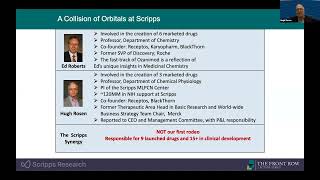
Thanks very much, Jamie, for the introduction. And I'm very pleased to join the virtual audience today to talk about Ozanimod/Siposia. And my topic is Intelligent Intervention: Discovering a New Treatment for multiple sclerosis and ulcerative colitis. And I'm very pleased to talk on behalf of the team of investigators here at Scripps Research that has contributed to these efforts. Disease is very much individual and personal. Genetics and environment collide. Leading to the expression of multiple sclerosis, which is an autoimmune disease that damages the myelin sheaths around the neurons in the central nervous system, leading to symptoms of altered sensation and altered neurological function. And these lesions are disseminated in both time and place, and which is why it's called multiple sclerosis. Autoimmune diseases, interestingly, are not entirely genetically driven because in identical twins, you certainly do not see 100% concordance of disease. And so while disease triggers are often unique, the common pathway that leads to immune tissue damage is open to intelligent intervention. And our focus at Scripps Research has been to discover these common control points and to modulate them to effectively discover new therapies that are both disease-modifying and in fact safe. When we think about therapeutics, we stand on the shoulders of giants. 19th century medicine was really exemplified by Sir William Osler, the Regius Professor at Oxford, who described disease as a mechanism of mechanics. The body was in fact a broken machine, and it required both the art and science of medicine to ameliorate the things you could treat and then to to treat the soul of the patients that you couldn't treat. His successor at Oxford, Sir Archibald Garrett, was the first man to describe genetic defects in metabolism that led to the expression of disease and changed our concept to the modern notion of disease, that diseases reflect a maladapted evolutionary product. A third figure in Oxford was Howard Florey, who really epitomized transformational intervention, taking the early observation of Alexander Fleming about the effectiveness of the mold Penicillium notatum to kill bacteria, from which he and Ernst Chain then developed penicillin as a successful human therapeutic. So our goal is to take the maladapted evolutionary product that is the expression of genetics and disease and to transform it to a small molecule therapeutic. Lewis Thomas, who was the, uh, president of Memorial Sloan-Kettering in New York, in an essay in 1974 said that the mechanisms of disease are quite open to intelligent intervention and reversal. Whenever we learn more about how they operate. This was an essay that I read in the New England Journal when I was a medical student. And I've discovered over the intervening 40 years that creativity in drug discovery requires random collisions of fine minds and doesn't necessarily scale. However, execution is truly scalable. So in my lab at Scripps, where I've been for the past 18 years, we use the power of chemistry and genetics to establish causal relationships between protein expression, signaling, and function, then in both physiology and pathology. And why Scripps Research? What drew me here in the first place? The key legs on the chair are wonderful colleagues, wonderful collaborations, multidisciplinary excellence, and the infrastructure that allows us to bring this to bear on important problems. And so what I'm going to talk about in the talk today is how we took something from a hypothesis through screening, chemistry, some exquisite biology, and ended up with human safety and efficacy in both multiple sclerosis and ulcerative colitis. I talk about colleagues and random collision of orbitals between colleagues. None of this would have been possible without my friend and colleague, Professor Ed Roberts, who has been involved in the creation now of 6 marketed drugs, including Ozanimod. He's a professor in— was based in the Department of Chemistry and brought considerable expertise And we were very fortunate because the synergy at Scripps was that this was not our first rodeo. And between us, we have contributed to 9 launch drugs and more than 15 in clinical development, which shows again what one can achieve on an academic scale that can then translate into large company exercises that reduce it to therapeutic practice. We do this by taking a rational multi-parameter approach. We don't focus on one single feature of a molecule or a process. What we do is we define a gestalt that reflects core scaffolds, toxicity, pharmacokinetics, potency, selectivity, and we slide these around, making the necessary trade-offs to rapidly and efficiently thread needle. So we never focused on one property, but we focused on all of the necessary properties to make a successful drug. And out of this at Scripps has come Ozanimod. We have a kappa opioid receptor antagonist in phase 2 for anxiety and depression, and we have a vasopressin 1A antagonist in phase 1 for the treatment of autism. So what is Ozanimod or Zeposia? It's a selective and well-tolerated oral treatment for serious autoimmune diseases that was invented and first synthesized at Scripps Research. It's an effective first-line single daily dose treatment for relapsing-remitting multiple sclerosis that launched in the United States and is authorized in Europe and should launch in Germany within the next 2 weeks. The first description of this mechanism was from my lab in 2002 in a paper in Science. Ozanimod is the first new chemical entity that began as a hit from the NIH library and an NIH-funded screening center for small molecule discovery. It's a disease-modifying treatment In other words, multi-step interdiction of the disease process inhibits acute attacks and prevents long-term tissue damage. And I will show you these data in a little while. And it's also the first agent where there will be perspective evidence for the enhancement and retention of cognitive function in multiple sclerosis. It protects the brain against long-term damage and loss of cognitive function. One of the features of drug discovery in any environment, and especially in the academic environment, is that it requires tremendous resilience and determination. We began the program in 2002. By 2008, Ed Roberts and I and our lab colleagues had synthesized the molecule that was Ozanimod, and we'd filed a provisional patent. However, in September of 2008, Lehman Brothers collapsed, and so we were looking and struggled to find startup funding to form Receptos in May of 2009. This allowed us to then take the compound into clinical trials after filing the investigational new drug application in December of 2010. And by the time in 2015, or '14, when we had the Phase 2 top-line data for both ulcerative colitis and for multiple sclerosis, of course Receptos was then acquired by Celgene, and the clinical development was continued by Bristol-Myers Squibb, who then bought the rights to the Scrip compounds. And so here we are in 2020 with the approval and launch of Zeposia for relapsing-remitting multiple sclerosis. And in addition, the TOUCHSTONE ulcerative colitis Phase 3 study has in fact been completed and the top-line data have been shared. So TOUCHSTONE shows that Zeposia will also successfully treat ulcerative colitis. TOUCHSTONE was a Phase 3 study of Zeposia in moderate to severe ulcerative colitis patients, and more than 1,000 patients were enrolled, and this concluded successfully. The endpoints were clinical remission and endoscopic improvement, both at the 12-week induction phase and then at the our 52-week maintenance phase. And compared to placebo, these endpoints were met with very high statistical significance, p less than 0.0001. The safety profile in these experiments is very similar to the label for multiple sclerosis. So we expect that Zeposia will also provide biological-level patient improvement in ulcerative colitis with the convenience and the safety of a single daily-dosed oral agent with no black box warning. So over and above multiple sclerosis, which I'll show in detail now, and ulcerative colitis, there is Yellowstone, a phase 3 study in moderate to severe Crohn's disease that is ongoing, and we're very keenly looking forward to the data in Crohn's disease as well. So Zeposia is a disease-modifying therapy because it interdicts multiple sclerosis at multiple points in the pathogenesis. Acting on the immune system, it disrupts the recirculation of lymphocytes, leading to the sequestration of activated lymphocytes in secondary lymphoid organs. It blunts the cytokine storm that is associated with autoimmune inflammatory diseases particularly the type 1 interferon and the chemokine cytokine amplification loops. These lead to a dampening of the immune response and an inhibition of the ability of the body to attack the nerves in the central nervous system. At the level of blood vessels, it enhances the integrity of capillaries capillaries and decreases cytokine production by the cells lining those capillaries, the endothelial cells. This leads to a diminishing leakiness into the brain, which is something that one reads out as gadolinium-enhancing scans in the central nervous system. And in addition, Ozanimod acts in the central nervous system directly on neurons and astrocytes, and enhances the survival of neurons and inhibits the scarring of the brain that leads to long-term dysfunction. So how does Ozanimod work? Ozanimod acts on a receptor for sphingosine 1-phosphate, which is a signaling lipid molecule that is found in blood and in the lymph that drains the lymph nodes. The vast bulk of sphingosine 1-phosphate in plasma is bound to high-density lipoprotein. So if you have good levels of high— of HDL, you have high levels of S1P in your blood, and you're probably protected from certain immune and autoimmune diseases. Tonic circulating levels are then punctuated by the innate inflammatory release of sphingosine 1-phosphate. And sphingosine 1-phosphate has to be very tightly regulated because we live on a knife edge between life and death. Too much free sphingosine 1-phosphate is actually fatal. It causes coronary artery vasospasm and cardiac arrest. It causes bronchial smooth muscle constriction, asthma. It causes leakage into the lungs, pulmonary edema. So it needs to be very, very tightly regulated. So the challenge is we have a family of 5 receptors that bind sphingosine 1-phosphate with very high affinity. These receptors are expressed on a variety of cell types and mediate many different physiological functions. So with these 5 different receptors that are found all over the body, How can we surgically modulate a control point to provide protection from multiple sclerosis yet provide safety? How do we thread that safety needle? We have 5 receptors broadly distributed, many discrete functions, whether they mediate vascular permeability, as you can see in the top of this diagram. They can mediate lung fibrosis, airways hyperreactivity, cytokine storm, which is a very relevant feature in COVID-19. They control the movement of lymphocytes through the secondary lymphoid organs. There are certain receptors that regulate heart rate and can induce cardiac arrest, for instance, in the case of the S1P3 receptor. So we need to understand the wiring diagram. Do we activate the receptors or do we switch them off? What is the control point that can drive both efficacy and in fact tolerability? We're very lucky in the S1P1 receptor signaling system in that mid-range tone is required for the normal movement of lymphocytes. If you disrupt that signal, you can lead to the arrest of lymphocytes by confusion, which is what we call antagonist arrest. And if you disrupt the gradients, you can in fact, by switching these, turning the switch up, you can induce what we call agonist arrest. This is a very fortunate feature of the system. Because if we block the S1P1 receptor, the consequence is leakage of blood vessels and pulmonary edema. You cannot do that safely and treat patients and allow them to sustain themselves. On the other hand, small changes in signaling tone by turning the switch up a little bit cause agonist arrest of lymphocytes protecting the central nervous system, but in doing so, they increase the integrity of small vessels, protecting the lung from leakage and protecting the brain from inflammatory leakage and damage. And this is the saving grace of the sphingosine 1-phosphate system therapeutically. So, we hypothesized that if we understood the wiring diagram well enough, if we understood how the receptor signaled, if we understood the pockets within the receptor, that efficacy and safety would be enhanced by making a selective and biased agonist. So we set up a screen to look for what we call an allosteric modulator. It has a novel binding pocket in the receptor, it activates the receptor. We are able to show this by having a variety of orthogonal functional readouts, what we call mechanism of action confirmation, downstream of the initial receptor assays. We then look at the effects of antagonists, and we show that they're either competitive or non-competitive. We were looking for a ligand that activated the receptor but was non-competitive to the typical antagonist of the receptor that was associated with poor tolerability in man. And we then optimized these compounds for potency, selectivity, stability, and the drug metabolism features that make a real drug. So this is the birth of a therapeutic program. What you see here is a spatial plot showing the compound collection, and the actives are shown in red. We were able to show that the actives were capable of activating the receptor, mediating receptor internalization, receptor degradation through the ubiquitylation pathway and phosphorylation directly of the receptor in order to achieve these effects. So did altered binding changes impact on the intrinsic properties that drove favorable clinical changes? In other words, was this better tolerated, and was it in fact safe and effective? The beauty of the science that came out of Scripps research is that it has been proven at the bedside. Celgene and Bristol Myers Squibb did a phase 3 clinical trial with 2 pivotal studies with more than 2,700 or 2,600 patients over 1 and 2 years to prove the safety and efficacy of Ozanimod. So looking at the primary endpoint, which was the annualized response rate compared to an active comparator, in this case Avonex, the interferon beta, there was a significant reduction in annualized relapse rate at both 1 and 2 years at the 0.92 milligram dose of Zeposia compared to Abanix. So this clearly works even better than the active state of therapy active comparator. The secondary endpoints, you measure multiple sclerosis by the appearance of MRI lesions, particularly the enlarging dark lesions, the T2 lesions that are seen on magnetic resonance imaging. And again, this is active parameter. There was a significant p less than 0.001 difference in diminution in T2 new and enlarging lesions for zaposia compared to Avonex. If you look at the number of gadolinium-enhancing lesions, as I explained, increasing vascular integrity diminishes the leak into the brain, and gadolinium-enhancing lesions measure that inflammatory leak into the brain. These again were very statistically significantly diminished by Ozanimod treatment compared, in fact, to the active parameter Avonex. These three elements, primary and secondary endpoints, show that the drug is in fact significantly effective in the treatment of multiple sclerosis, both inhibiting flares as well as inhibiting ongoing damage. However, there are other measures long term that can be used to look at the effects of the brain because brains undergo some loss of brain volume atrophy. And the accumulation of cognitive changes on long-term damage by multiple sclerosis, where axonal severing leads to the loss of neurons. And what we showed in SUNBEAM and the 1-year study, and in RADIANCE, the 2-year study, that there were significant reductions in the loss of brain volumes at those time points. And if one looks at a particularly important center of the brain, the thalamus, through which so many signals are in fact— it's sort of the circuit box that redirects signals within the brain— we see again that there is protection from thalamic loss compared to the active comparator Avanex. And this is one of the first agents that has ever shown this level of brain protection from long-term damage. So 92.4% of patients showed no disability progression, looking at 3-month disability progression as one of the endpoints in the multiple sclerosis study. More than 90% of patients remained on drug at 2 years, so 94% at 1 year, 90% at 2 years, which is a very good level of retention for a chronic therapy that in fact is dosed every day. And most importantly, less than 3% of patients discontinue their therapy because of side effects in the first year. And this is really an excellent example of tolerability. So by focusing on those intrinsic properties that drive the unusual binding pocket in the receptor, a different mode of signaling, and a different pharmacokinetic presentation, these together allowed us to achieve this level of tolerability as well as first-line efficacy in multiple sclerosis. What's also particularly important is that when one modulates the immune response, one wants to retain a sufficient level of innate immunity to ensure that patients are not vulnerable to all sorts of intercurrent infections. And what you see here is data from 1 year and 2 years in the SUNBEAM and RADIANT studies, which show that both— that zyposia has a less than 1% rate of infection in either of those groups over the 2-year time period. In other words, 99% of patients were free from any significant infection, which is a really pleasing safety encounter. So again, let's think about how Scripps Research science has been proven at the bedside. Clinical development is very unforgiving.. These are randomized, double-blinded, double-dummy studies. There are objective clinical outcomes that are assessed by blinded third parties. There is multi-year follow-on therapy, so patients start on this and then continue while the development program is ongoing. So we have thousands and thousands of patient years of treatment data that reflect the safety profile. And the profile in the approved label from the Federal Drug Administration reflects all of those data. Supposi itself is a disease-modifying therapy. Multi-step interdiction of the immune response works. As I've shown you, it is safe and well tolerated. And the beauty of this therapy is that patients can walk out of their first appointment with a starter kit. We know that 90% or more will show no disability progression, and we know that more than 90% of them will still be taking the drug more than 2 years later because of its tolerability. This makes it a useful additional option for physicians and for their patients. And speaking on behalf of my colleagues, it's both gratifying and humbling to be able to impact on the dignity and the outcomes of multiple sclerosis patients, and particularly the impact for those that care for them, because serious disabling disease has multigenerational impacts on families., and we would love to see multiple sclerosis become a diagnosis that people have, but that they effectively live with without progressing to significant disability that impacts upon their lives. Let me end by acknowledging some of the key contributors in this process. This work was supported by the National Institutes of Health in its formative phase. Professor Ed Roberts and his colleagues, and the colleagues in my lab, contributed to the heavy lifting that allowed us to understand this wiring diagram and to make this drug. Shown in the picture are myself and Ed Roberts with the first box of Zeposia, and then Steve Brown and Miguel Guerrero 2 of our co-inventors in the project when we first opened the first box of Zeposia to reach Scripps. I'd like to thank again my Scripps collaborators, Michael Oldstone and his colleagues, Ray Stevens on the crystal structure and his colleagues, Peter Hodder and Stefan Schurer, who at that time were in the Scripps Molecular Screening Center at Scripps Florida. Colleagues at Receptos, the Scripps spin-out that took on the early development, and then acknowledge the clinical development by Celgene, and then was completed by Bristol Myers Squibb. And I will leave you with the notion that if it's not fly fishing, if you're not looking for an answer to questions, as Norman Maclean said, and therapeutics is simply a variation on that. With that, let me turn the microphone over to Luke Lehrson. Luke is a colleague in the Department of Chemistry who has done some important work on the mechanisms of remyelination. He received his PhD in bioorganic chemistry from the University of British Columbia. He postdoc'd with Peter Schultz, and then worked at Novartis and is now associate professor of chemistry at Scripps and is a colleague that I especially enjoy having around.
Thank you. Thanks very much, Hugh. So as Hugh just elegantly described, multiple sclerosis is a devastating autoimmune disease which can present in one of multiple forms. The majority of patients, when they initially present, present in a form called relapsing-remitting, which Hugh just talked about in detail. But it can also present in other forms including primary progressive and secondary progressive forms of the disease, for which there are at present very limited options for patients. As we've just heard, there's been incredible progress made in the last 10 to 15 years in the treatment of relapsing-remitting forms of MS. And these strategies have all been based on targeting immunological aspects of the disease. And as we've heard, these can have a great impact on patients' lives, specifically in the case of relapsing-remitting MS. But there's still a need to improve on the therapeutic avenues for this devastating disease. Now, we think a very promising complementary approach to targeting MS is to take an orthogonal avenue and to stimulate a regenerative process that's actually required for remission in relapsing-remitting form of the disease. This regenerative process is called remyelination. And so in relapsing-remitting MS, you have an inflammatory flare where a lymphocytic cell, targets a specialized cell type called an oligodendrocyte, which is responsible for myelinating an axon to enable faithful conductance of nerve currents. And as we've just heard, strategies that block this process are very effective at treating the relapsing-remitting phase or the relapsing phase of disease. However, this alternative approach of remyelination is responsible for disease remission, as I said. And so our hypothesis, along with many other labs in the world, is that if we can stimulate this process, we'll have additional benefit in the case of relapsing-remitting MS, and potentially could impact other forms of the disease, including primary progressive MS. So what is remyelination? It's a regenerative process that persists throughout adulthood in the central nervous system. And it involves the activation, migration, and differentiation of a lineage-restricted precursor cell called an oligodendrocyte precursor cell, or an OPC, which results in the formation of a newly born oligodendrocyte. So in the case of MS, when you have disease remission following dampening of this inflammatory insult, the specialized precursor cells migrates to the site of injury, undergoes this differentiation process to form a newly formed oligodendrocyte that then myelinate that axon. And this leads to functional recovery. And disease remission. However, in the case of primary progressive MS, it is believed that this process is quite limited. And so we would love to be able to intervene at this point of disease. So this is a regenerative medicine approach to MS. And with any regenerative therapy, before engaging in a program, it's essential to understand which aspect of the— the process is limiting. So is it a relative abundance of that stem cell or precursor cell population? Is it an inability of that precursor cell population to become activated and migrate to where it needs to work? Or is it a limitation of that cell to differentiate and reach the cell fate or state that's required for function? Evidence from the lesions of chronic MS patients suggests that it is this differentiation process which is limiting in the in the context of multiple sclerosis. And so this is a histological analysis of a plaque of a deceased MS patient. And this staining is staining for a marker of that precursor cell. So you see an abundance of these cells, but for unknown reasons, they fail to differentiate. For reasons which I'll get back to towards the end of my talk, it's generally believed that inhibition of OPC differentiation is not an inherent limitation of aging. And so many individuals, including a friend and colleague, Robin Franklin, believe MS is a disease of aging, and that progression typically happens as patients reach the age of 35 to 45, at which stage in mice, parallel age groups in mice, you see a significant reduction in the remyelination capacity. However, again, I'll get back to this at the end of the talk. It's not generally thought that there's an inherent limitation to these cells, and they should be able to be activated in the context of aging. And so the hypothesis here is that it's inhibition of this precursor cell differentiation at that site of lesion which is causative in disease progression. And so our objective was in this program was to identify molecules and mechanisms that could overcome this inhibited differentiation. And to do this, we used a phenotype-based discovery approach. So just as a background for people that might not be familiar, Hugh just gave a beautiful example of a target-based drug discovery program where you, where you have intimate knowledge about a specific protein target or biomolecular target, which you then can address specifically by identifying a small molecule drug that regulates that biomolecule function. With phenotypic screening, the approach is an orthogonal complementary approach where rather than looking for a specific target, You look for drugs that modulate the cell phenotype or the way the cell looks or the proteins that it's expressed directly. And then retrospectively, critically, you determine what the target of that small molecule is that impacts the change in cell fate or state. In the case of this remyelination assay, we used primary OPCs isolated from rat optic nerve, which we could culture in these miniaturized formats and then used automated imaging and automated image analysis to quantitatively assess how a specific small molecule impacted this differentiation process. And so this is kind of the programs in our lab are generally based on this premises. And it's in pharma, it's a bit controversial because it takes a little bit more time to figure out what the target is. From an academic perspective, it's hugely enabling in that you're not limited by or biased by validated target information. And so this is kind of the general philosophy of our lab, is that we use nature's response to molecular structure to formulate our unbiased testable hypothesis. So we find a molecule that impacts cell fate or state, we figure out the biomolecular target, and that leads to the initiation not only of a drug discovery program potentially, but the elucidation of novel disease-relevant biology. We're focused on the use of small molecules as opposed to genetic methods, although we've used genetic methods to validate, identify targets. And the reason for this is they provide unparalleled capacity to interrogate cellular processes with both time and dose-dependent control. Okay, so back to the remyelination program. As I mentioned early on, we established an assay using these OPCs isolated from rat optic nerve. We developed conditions where we could expand these en masse in a way that they retain their differentiation potential in response to appropriate non-clinically relevant induction cues. And to date have screened on the order of 200,000 unique small molecules, including a collection which you might have heard from previous Front Row lectures, this Reframe, unique Reframe Drug Repurposing Collection at Scripps. Early on in our screening campaign, we identified a class of neurotransmitter receptor modulating agents, including this compound called benztropine, which robustly induced the differentiation of this cell type at relevant concentrations, and this activity had not been previously reported at that time for this class of drugs. We decided to fast-track the characterization of this compound class because these contained FDA-approved drugs that were centrally acting, which is a major hurdle to overcome for an MS-based drug. Critically, we demonstrated, again using quantitative image analysis, in this case confocal imaging analysis, that the drug-induced differentiation resulted in a cell type that was functional and that it had the capacity to remyelinate or to myelinate a co-cultured axon derived from either ES-derived mouse neurons or primary cortical neuron co-culture systems, which is always a critical step in a phenotypic assay to show that the activity you're seeing based on imaging is actually a functional cell type. Without going through the details, we interrogated this class of compounds in a number of models of inflammatory and non-inflammatory demyelinating disease. And surprisingly, when we compared this class of agent to S1P modulators, which you just heard about, we saw efficacy that was comparable in this inflammatory model of relapsing-remitting MS. Now, essentially, our critical issue is that these scores do not necessarily reflect remyelination capacity. So we had to demonstrate that indeed, in this context of inflammatory demyelination. We were getting efficacy through— by enhancing remyelination as opposed to blocking inflammatory state of disease. In parallel, we showed in the absence of an inflammatory insult that these compounds stimulated the kinetics of— the relative kinetics of remyelination, indicating that indeed these compounds were acting where they needed to act to induce differentiation of the specialized cell type, which was encouraging. This is a lot of data. I won't go through the details here, but the critical point which I just raised is that in the context of this EAE model of inflammatory demyelination, it was critical to show that the compound was acting by enhancing the process of remyelination as opposed to blocking inflammation. And these electron micrographs, indeed, quantitative analysis of these electron micrographs supported that hypothesis. This is another data-rich slide, which I'm not— again, I'm not going to go through too much detail. Suffice it to say, in this case, we used a classic pharmacological approach to elucidate relevant mechanisms and targets for this drug class, and based on a significant body of work, identified that antagonism of the M1 muscarinic receptor was a requisite component of the the drug-induced differentiation of this drug class. Now, quite likely there's polypharmacology involved with this class of compounds, and we're still elucidating the relevant components to that mechanism. Just as we had published our findings, Jonah Chan's lab at UCSF was using a very eloquent micro— a nanofiber-based assay in 3D format. Where he looked at the myelination of a nanofiber and found that this converged on the exact same class of compounds. So, two independent labs converged on the same class of compounds to induce this process, which was quite exciting and stimulated the UCSF group to initiate a phase 2 clinical trial of this compound class in the context of relapsing-remitting. And quite encouragingly, towards the end of 2017, the findings were reported in the journal Lancet, which indicated that indeed this class of compound can stimulate the process of remyelination as read out by impact on visual evoked potential latency delay, which was very exciting as it indicated that molecules and mechanisms identified from this phenotype-based discovery platform translate all the way through to clinical efficacy. So where are we now with this area in general, the field in general? Well, this was a very encouraging result. It's generally considered within the field that the magnitude of the effect is maybe not that fantastic and that there's significant capacity to improve on these findings. And specifically, we're currently collaborating with Frequency Therapeutics in Boston to identify combination-based therapies to improve on the overall efficacy that is achievable with this approach. And so this is data to show just what we think we can achieve with FDA-approved drugs by combining drugs that target unique mechanisms. And so vehicle— so this is our cell-based assay. You see with vehicle treatment, you have essentially no differentiation. When you treat with our M1 receptor antagonist, you get a level of differentiation. However, if you combine these conditions with an additional drug, you get a significant increase in overall efficacy, which again is confirmed in that secondary assay for co-culture-based myelination of axons. And so this is where we think we can get to in the clinic is by improving on this level of efficacy to get something as a visual representation that looks more like this. And specifically, this is a very complex process that occurs through at least two defined intermediate cell states. And so we think by targeting unique aspects of this differentiation process, we can significantly enhance the overall results. And then finally, just in closing, one area that I think the field has converged upon as being uniquely critically important— this is an area that's been, again, Robin Franklin has been a major proponent of— and this is based on what I alluded to at the beginning of the talk, where the Franklin lab, in collaboration with Amy Wager's lab, showed using these heterochronic parabiosis experiments where you connect the vascular system of an aged and a young animal and then induce a demyelinating injury, we find that in aged animals there is a deficit in remyelination capacity when you compare it to young animals. However, if you introduce the vasculature and factors circulating the vasculature of a young animal into an old animal, you rejuvenate those— that remyelination capacity, which suggests that it's not an inherent limitation of the aged cell, but rather an exogenous factor that can be modulated to enhance that process. And very recently, their lab showed that if you combine benztropine with a rejuvenation, pharmacological rejuvenation strategy, in this case using the pleiotropic drug metformin, you actually can enhance drug-induced differentiation in the age system. So to conclude, we're excited. We think that this remyelination-based approach can have a significant impact improving the overall efficacy observed with existing inflammatory-based drugs for relapse-remitting forms of the disease and potentially could have a transformative effect on primary progressive forms of the disease. And with that, I will thank the people in my lab that conducted work in this— on this program, as well as our collaborators: Pete Schultz, my former mentor; a graduate student, Hessem; in his lab, Vishal, who kind of pioneered this work. Collaborator Ari and Brian in the immunology department that helped out with the in vivo aspects of the disease, and ongoing collaborators in this area. That— I'll close and be happy to take any questions.
Thanks, thanks, Luke, and thanks to Hugh. Thanks to both of you. You know, I want to stress that making drugs takes a long time, and, and it also doesn't always work. And probably, you know, most people start out their academic career and they hope to, you know, impact human health by discovering new targets and new medicines, and it's very rare that you make it all the way from home plate and back. So, so, you know, Hugh and his team are to be congratulated. This is really a remarkable achievement. And maybe we can even discuss how long it took, because by some clocks it wasn't very long. It seems like a long time, but it was really rapid development. And then Luke is emblematic of people who are in academic labs, and they're taking the techniques and approaches for screening that 10 years ago were only available within big pharmaceutical companies. And applying them in an academic setting and making real progress on just understanding mechanisms and generating promising new compounds that may turn into medicines, but it's a long, slow road. And one of the things we need to do is support basic research and also support people turning basic discoveries into actual medicines. So maybe we could take a few questions. I've tried to aggregate a few things, but maybe I could ask the two of you to talk a little bit about the differences between, you know, the two forms of MS that you discussed and, you know, how does remyelination relate to, you know, S1P inhibition? Is there any crosstalk and is there any opportunity for synergy between these approaches?
Approaches? Well, let me take a first bash at that, Jamie. Relapsing-remitting multiple sclerosis is the most common presentation of the disease, as over time it becomes secondary progressive multiple sclerosis in many people, and we hope that with effective early and aggressive treatments of relapsing-remitting, that many fewer patients will go on to secondary progressive disease. In contrast, primary progressive disease is very aggressive and very difficult to deal with out of the starting box. It has a significant neurodegenerative component to it, potentially, and the mechanism of pathogenesis in primary progressive may well be very, very different. So existing treatments on the anti-inflammatory, anti-immune side like ozanimod will have their biggest impact on relapsing-remitting and then inhibiting, in a sense, the movement of patients from relapsing-remitting towards secondary progressive MS. There is always going to be room for additional modalities that improve regenerative responses within the central nervous system to potentially restore pathways and functionalities. So I think synergy is something that will will be assessed over time as agents reach patients that are capable of driving regeneration as well as obviously immunomodulation. The take-home message though is that patients with relapsing-remitting and secondary progressive disease really should work very closely with their neurologists. To aggressively treat the disease as best they can tolerate to achieve the best outcome, because there are now 19 agents on the market for multiple sclerosis, and a subset of them are effective against relapsing-remitting and secondary progressive disease. And so there are treatment options that patients have that are now far, far better than they were even 5 years ago. And, you know, this is, you know, this is unambiguously good for both patients and physicians because, as I mentioned, disease is individual and it's really important to find the right therapy for the right individual.
Right. Luke, did you want to add anything? Yeah, I completely agree with that. I think an emerging emerging theme from the clinical data, and I'm not coming from the clinical perspective, but what I've heard is that it's critical, critically, really important to intervene early and, as Hugh said, as aggressively as can be tolerated by the patient.
That's an emerging theme.
But as Hugh also alluded to, I think there's always room for improvement with this particular disease. We're not curing the disease, we're treating the disease. Until there's a cure, there's going to be room to improve on the overall efficacy. And also, As Hugh mentioned, primary progressive MS is probably a completely different disease. It could have a completely different origin. And at present, there's not really an effective way to address that, which we're optimistic remyelination might impact.
Maybe I should make a comment. There's a number of people that have asked us questions about, you know, treatment and availability and drug. And I think I should really say that we're not in the position of of giving medical advice for individual patients, and that people that are interested should really contact their neurologist. And they will certainly be aware of symposia as one of the major new medications in this area to come out. But this is really, you know, our purpose here is to talk about how you make drugs and the wonder of basic and translational. More research. So I think there was an— Hugh, you alluded to this really quickly, and there was a lot of interest in your comment as an aside about COVID-19 and what, what zaposia might do for avoiding the cytokine storm that seems to plague many patients who are seriously affected and hospitalized with COVID-19.
Can you say anything more about that? Sure. So, you know, these studies began about a decade ago with Michael Oldstone, who is a wonderful immunologist and virologist at Scripps Research. We began a set of studies looking at cytokine storm in the 2009 H1N1 pandemic in influenza, and we showed that this mechanism was in fact protective, that it inhibited the interferon alpha autoamplification loop and protected from cytokine storm and protected from lethality. We went on in a set of experiments with Michael and his postdoc at the time, John Tahara, now a professor at Scripps Research, to show that the first SARS virus, SARS-1, as opposed to COVID-19, which we call SARS-2, could be successfully treated in animal studies where, where ozanimod-like molecules protected from cytokine storm and in fact enhanced survival. Most recently, we've actually looked at the effect of Ozanimod itself in a guinea pig model of COVID-19. This is a collaboration again with John Tahara in our BSL-3 facility here at Scripps Research. And we've done this over the last number of months since the outbreak began. And we've had very promising early data that Ozanimod is able to protect from the cytokine storm associated with the COVID-19 SARS-2 virus. And in fact, I'm happy to be able to mention that if you look in clinicaltrials.gov, you will find that Bristol Myers Squibb have initiated a clinical trial in Canada looking at Ozanimod, Zeposia, for protection from COVID-19 complications as a clinical study. So we're very excited to see how this plays out. But again, it illustrates that the basic studies, some of them done even a decade back, provide a set of data and insights that we can then apply to evolving pathogens. As they emerge. And with molecules like this available for clinical use, there are the potential for additional means of immunomodulating the response to these viruses and perhaps protecting from the lung leakage that is such a particular problem with COVID-19.
Here's a question from Luke. One of our attendees was particularly interested in, in benzotropine.
Is this—
is there anything on the horizon clinically for that? And how does— and you mentioned synergy with your compound.
So the muscarinic receptor antagonist that UCSF brought into the clinic was clemastine. It was an alternative agent That, that particular compound, and benztropine as well, likely has dose-limiting on-target toxicity associated with it. So part of our work is we've identified a more favorable muscarinic antagonist. As I mentioned, we're collaborating with Frequency Therapeutics to, to develop that, and we've identified combination-based therapies with that, those particular agents, which we think will have added benefit. But at present, there's not a, a study for, for benzropine itself. Okay. Yeah, I think UCSF has an ongoing second study with clomazine.
Terrific. Uh, we're, we're coming up on 2 o'clock, so, uh, I think, I think we should wrap it up here. Uh, there's, there's quite a few more questions. I'm sorry, I don't have time to get to them. Uh, we have recorded the questions, and if possible, we'll be able to get back to you by email responses with, uh, to your questions in, in the coming days. Again, I really want to thank Hugh. Uh, you know, the story that you told us, it doesn't get much better than this in science. Uh, and, and, uh, and Luke, uh, is, is the future of the institute, one of our young faculty who started maybe 5 or 6 years ago and shows great promise for his program. So this is a great place to work. Thank you all for tuning in to the Front Row. I hope you learned something about drug discovery. Be safe, be well.
Thank you.
More from Joshua







Scientist Stories: Hans Waterham, The value of phenotypic assays in peroxisomal disorders




Scientist Stories: Joel Zlotogora, Genetic carrier screening programs for reproductive purposes