Scientist Stories: James Crowe, Monoclonal Antibodies for Infectious Diseases
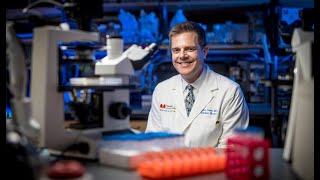
In a Global Lab Meeting webcast moderated by Kristina Wood of the Human Vaccines Project, Dr. James Crowe, Director of the Vanderbilt Vaccine Center, presented a comprehensive overview of monoclonal antibodies (mAbs) as a transformative tool for preventing and treating infectious diseases. He traced the historical use of polyclonal antitoxins, highlighted the limited prior application of mAbs in infectious disease, and argued that the COVID‑19 pandemic has served as a beta‑test that demonstrates mAbs can become a principal armamentarium, potentially complementing or surpassing vaccines in certain contexts. The talk detailed the rapid discovery pipeline now possible through single‑B‑cell isolation, microfluidic platforms (Beacon), next‑generation sequencing, and high‑throughput DNA synthesis, enabling the generation of tens of thousands of candidate antibodies within weeks. Crowe described engineering strategies that enhance breadth (pan‑viral or pan‑family reactivity), potency (single‑digit ng/mL neutralization), and half‑life (Fc mutations such as YTE/LS). Structural biology (cryo‑EM, crystallography) informs epitope mapping, synergy, and non‑canonical mechanisms. He presented clinical data from the PROVENT (pre‑exposure prophylaxis) and TACKLE (treatment) Phase 3 trials of an AstraZeneca long‑acting mAb cocktail (AZD7442) showing >80 % efficacy for six months, and discussed synergy calculations using software like Synergy Finder. Manufacturing challenges, cost per dose, and scalability were examined, noting current $400‑$2,000 per dose pricing, CHO bioreactor capacity limits, and emerging alternative platforms (RNA, DNA, plant, algae, transgenic animals). Crowe introduced the AHEAD100 program, which aims to stockpile human mAbs against the 100 most likely epidemic pathogens, and explored future delivery modalities (mRNA‑encoded antibodies). He also addressed passive‑active immunization strategies, co‑administration of mAbs with vaccines, and the debated role of Fc effector functions. The session concluded with a Q&A covering dosing volumes, half‑life of mRNA‑delivered antibodies, software for synergy, manufacturing scale, and effector‑function engineering.
Chapters
Okay, well, I think we're going to get started here. So hello and thank you to everyone around the world for joining us for this week's lab meeting. My name is Kristina Wood. I am the science editor at the Human Vaccines Project, and I will be your moderator today. As wealthy countries continue to confront vaccine hesitancy and more broadly offer booster doses, COVID cases are still on the rise. The World Health Organization has declared that Europe is now once again the epicenter of the COVID-19 pandemic. 59% of the world's newly reported SARS-CoV-2 infections occurred on the continent last week, as well as nearly half of the world's deaths due to the disease. This has set off a wave of new restrictions, including a lockdown in Austria that prohibits unvaccinated individuals over the age of 12 from leaving their homes for anything but essential activities. Approximately 65% of Austria's citizens are vaccinated, one of the lowest rates in Western Europe, according to our World in Data. Luckily, more good news came this month on a potential oral treatment for COVID-19. This time, Pfizer reported that its pill, Paxlovid, reduced hospitalizations by 89% in a large randomized clinical trial. The drug is given as a 5-day regimen in combination with the medication called ritonavir, which is also a component of some HIV drugs. Earlier this week, Pfizer announced that it signed a licensing agreement with the UN-backed Medicines Patent Pool to produce and distribute the COVID treatment pending regulatory authorization in 95 low- and lower-middle-income countries. In addition to oral therapeutics, today we will be hearing about the role of monoclonal antibodies in both treating and preventing COVID-19. Before we get to today's presentation, we wanted to announce that the Human Vaccines Project is celebrating its 5-year anniversary. Please visit our website or the link shown here to learn more about HVP's year-end capital campaign, which will help support and expand our science communications efforts, including this Global Lab Meeting Series. Just one more note before we begin. The information presented today includes some pre-published data that is currently under peer review. At the request of our speaker, we ask that you not reproduce or disseminate the data presented. This session will be recorded and made available on our website and our social media channels for you to review. With that, I am very happy to introduce today's speaker, Dr. James Crowe, Director of the Vanderbilt Vaccine Center and the Ann Scott Carroll Professor of Pediatrics, Pathology, Microbiology, and Immunology. Dr. Crowe is a board-certified pediatric infectious diseases physician and viral immunology researcher. His laboratory studies the human immune response to infection for a wide variety of human pathogens, including many emerging infectious agents. He is an elected member of the U.S. National Academy of Medicine and has been the recipient of numerous investigator awards. Several vaccine candidates and human monoclonal antibodies developed in the course of his research have been tested in Phase 1 through Phase 3 clinical trials in humans. During the presentation, please submit your questions using the Q&A function in Zoom and not the chat. I will ask our speaker a broad selection of your questions after the presentation, and we will have about 25 minutes for discussion. With that, it is my pleasure to now introduce Dr. James Crowe.
Great. Thanks for having me. And congratulations to the whole project for staying the course to put forward the importance of human immunology and human vaccines. Really proud of what you have done, and especially even the COVID lab meetings have been a voice of sanity and good information I've learned a lot, and thank you so much for even holding them. And I'm, you know, I'm honored to be here today. I'm going to start sharing and get into the talk. So am I good, Kristen, on sound and presentation?
Looks great. Yep.
Okay, so today I'm going to talk about monoclonal antibodies for infectious diseases, and I, I believe Many of us have thought for, for a very long time that monoclonal antibodies could play a dramatic and important role in the management of infectious diseases, but that really hadn't happened in the past. And I think during the current pandemic, you're seeing the technologies come of age, and monoclonal antibodies are becoming an important tool in the armamentarium. And I, I think COVID has been sort of a beta test for how to roll out antibodies at scale, and it hasn't met all its potential. But I want to think about, uh, what we're seeing, and I want to be a little bit provocative because I have always believed, and even more so today, I believe monoclonal antibodies will be, uh, probably the principal tool we use for emerging infectious diseases at the outbreak, uh, and they will, you know, be complementary or sometimes more important than vaccines. And I know most people don't believe that, but I want to sort of provoke you to think about that. Um, this is not a new idea. So polyclonal antibodies have been used since around the late, uh, 1800s, maybe 1880s were first used. Typically, the, um Uh, horse serum was used for diphtheria and tetanus, and this actually, uh, worked quite well. A lot of lives were saved in the era of World War I, and a lot of children, uh, from, uh, diseases as well. So both, uh, service people in World War I who were in close quarters— so equine antiserum was the first dramatic use of antibodies. And you'd think, wow, that is so crude using serum from horses. But there are still products today that are approved by the FDA in the United States that we use that are horse serum. Horse serum used as antitoxins for scorpions and snakes. And so this is still being used actually in many provider sites and hospitals. Just to remind you, the first Nobel Prize, 1901, von Behring got for antitoxins. So antibodies are really, you know, to a large extent predated vaccines, and they are already known to be effective when you, when you have a potent solution. And we've kind of gotten away from that idea. I think many people have forgotten that. And I think I just want to emphasize some fundamentals that I think are maybe obvious to everybody, but I just want to organize them in your mind so you remember. So small molecule drugs are one thing we can use for infectious diseases, antibiotics or antivirals. Typically you'd love to have an oral pill you can take. Some were already mentioned on the call today. A vaccine is great if you can get a prime or a prime and boost and, and have immunity that you generate yourself. Um, and so there's various scenarios where you'd use a drug or a vaccine, but antibodies can be used across the entire spectrum of infectious diseases. So they can be used before exposure, even as prevention. And I'm going to show you today You don't really think that. You think, well, it's sort of temporary and very short-lived. But, uh, and so historically prevention has been the province of vaccines, but I'm going to show you that's no longer true. It's no longer— they're no longer restricted to short-term pre-exposure prevention. Also, if you go— let's say you go to an event and there's a COVID case and you find out that later, um, antibodies are actually quite good for post-exposure prophylaxis., which is not true of most vaccines. We do use rabies vaccine, and some others probably have the capability with early administration. But antibodies are quite good at post-exposure prophylaxis. Also, antibodies can be used as treatment, and either in the outpatient mild disease setting, or even in severe disease. And these are settings where Outpatient disease is typically not implemented well because it's hard to access people. And in the hospitals, sometimes we use small molecule drugs orally or by IV, but they're typically not very good for acute diseases. They're more applicable to chronic diseases. So I honestly, I do not see small molecule drugs impacting epidemics and pandemics because of that fact. Once, once you have a severe disease, it's kind of too late and it's hard to implement oral drugs, you know, widely. But I think if we're honest, we have to say prior to COVID, antibodies have not really been used in infectious disease widely. And I can put all of the instances or all of the approved drugs on a slide, which is sort of embarrassing really. So palivizumab was— you know, the— as a monoclonal. So we've had polyclonals, and we still have many polyclonals that we use in the clinic, not just horse but also now human. We even have sheep, like Digifab for digoxin overdoses, a sheep FAB. We have lots of polyclonals, but the first monoclonal for infectious diseases was a murine monoclonal that was humanized, palivizumab, which has been used in in high-risk infants. I just want to remind people we're using an intervention in premature infants there, so the target population does not have to be particularly robust in terms of immune capability because they just receive the antibody. So it's one of the advantages. There's now, since 2018, antibody approved for HIV. You're aware that two different drug products for Ebola, Zaire have been approved. A combination from Regeneron and then the, the Ridgeback, Ibanga monotherapy were approved after the 2014 outbreak and studies there. There are also, if you look at bacteria, there's an anthrax or there are anthrax drugs, and also C. diff. And, you know, these are variably effective. But now what you see, there's over 200 biologics for COVID that are in some sort of development, and a number of them have been approved under EUA. And so I just want to do a thought experiment. If you sit, you know, if, if I'm saying antibodies have extraordinary potential and they can be used on all these settings, But then they've rarely been used in infectious disease. But, you know, there's over 100 human or 100 monoclonal antibodies that have been licensed by the US FDA for human use. They're the largest drug class. You know, if you look at the top 10 drugs by revenue and things like that, they're monoclonal antibodies and they're for cancer, immunotherapy, autoimmunity, things like that. But they've not been used in infectious disease. So I want to do a thought experiment. And say, when you're a vaccine developer or a treatment developer, I mean, many of us are academics and we don't have to do this, but if you're, if you're in a commercial environment or even if you're in a government policy position, you often have to do what's called a target product profile. What are you going to do? When are you going to use it? In what setting? And who are the recipients? So For COVID, I just put an example of a prevention, which would be a vaccine, and a treatment, which might be a drug. And so a hypothetical good target product profile might be just one shot or one-time dose, and then at 6 months out, because we're, you know, we're urgent to figure out are these things working, that's— that one dose, uh, would reduce, um, problems more than 80%, let's say. And you'd love to see no cases in your vaccinated and cases in your unvaccinated. And then you'd also, you know, you can say, well, I only want to target healthy people, but a lot of the deaths are in high-risk individuals and immunocompromised participants. Transplants, people on immunosuppressive drugs. So it'd be awesome if your vaccine could actually work in high-risk people. And then if I think about treatment, what about one dose gives you even higher, you know, like 88% compared to placebo if you, if you treat early? And, and what about since you know the people who get severe disease are high risk, that treatment study is done in high-risk individuals, not healthy individuals. So these are hypothetical good target product profiles, but actually it was just a trick. What I'm, what I'm showing you is the results of the PROVENT Phase 3 trial. At 6 months, you see extraordinary efficacy. This was done in a target inclusion study with high-risk individuals. The same antibody was used in what's called the TACKLE Phase 3 trial and has a therapeutic effect preventing 88% compared to placebo. And I'm— this is not just severe disease. This is any symptomatic, including upper URI. So this is extraordinary results, I think. This is the AstraZeneca program that we were involved in part of the discovery.— prior to— so the provocation I want to give you is that antibody combination is more efficacious than some of the vaccines that we're using in over a billion people. And so the moment in which we've been saying at some point antibodies will be comparable in terms of efficacy and duration I believe we're seeing that right now. And the same drug product can be used for treatment. And so you're seeing this, this wide spectrum. This is just an example of one that we've been involved in. And obviously there are other groups that have put antibodies out, not the long-acting forms, but the, you know, very good antibodies from uh, AbCellera and Lilly and Regeneron and Bayer and, uh, others have, uh, pushed forward really successful programs. So how did the field get to this place finally? There's a lot of hype cycle that's gone on. Antibodies are going to be great, but they never saw their potential, but now we're seeing it. Um, so I want to just want to think through like, why is the moment now? Why is this possible? So one, is, uh, single cell, single B cell technologies for isolating human monoclonal antibodies are extraordinary now. So it used to be if we made a panel of 50 human monoclonal antibodies from a sample by some kind of technique, we thought that was amazing. Um, but now you can make tens of thousands from single samples, and we do this on a routine basis. So I'll show you how we made these COVID antibodies in March of 2020. So we have in our lab, I've invented about 10 or 12 workflows for how to make one, but one of them uses a microfluidic device called a Beacon. It's made by Berkeley Lights, and they collaborated with us during COVID And essentially what we did is we took memory B cells from individuals who were convalescent after COVID, one of the first several persons in North America who were known to be infected. And we labeled spike protein. And of course, a memory B cell displays the antibody that it would later secrete as a plasma cell. It's on surface, so we can label the antigen-specific B cells and do flow cytometric sorting. And we can just bulk sort them and in vitro activate them with things like CD40 ligand and IL-21 and BAFF. This is all known in the field, how to stimulate memory B cells, and then put those activated B cells onto the microfluidic device. And on the device, um, there are these little channels called pens, and the device can deposit a single cell into the bottom of each pen. So you're interrogating single cells, but you're doing it 10,000 or 20,000 at a time. And then that B cell, since it's stimulated, will fill up that pen in less than an hour. It'll fill up with the monoclonal antibody that's encoded by that primary human B cell. And the antibody spills out into the main channel. Then the channel, we've placed beads, and those beads have been coupled to either on the top spike protein or in the bottom receptor binding domain, which we knew was a target for neutralizing antibodies for SARS-1 and MERS, so presumably for SARS-2 at the time. And you could do multicolor, so you could see this particular pen here, uh, the antibody binds RBD and it binds spike. So that would be an interesting one. And this instrument actually used light, sort of like tweezers, and you grab the B cell, put it in the channel, and then you capture that single B cell. And you can get basically as many as you want. I'm going to show you a movie here. I think this is a 30-minute movie, but it'll, it'll proceed over a few seconds. So I've backed back out on the device, and you're looking down essentially through a microscope onto the chip, and we've deposited single B cells in here and then look for, for specific antibodies. And you can see it's sort of like a volcano— antibody spills out in the channel where the beads are and the antigen-specific interrogation occurs. So underneath each one of those plumes is a single B cell, and we would go through and capture those. And again, you can do this multicolor if you're looking for a broad, broad antibody and you have multiple agents. So that's the, the single-cell technologies are so powerful now. It used to be only you know, 2, 3, 4 labs in the world made human monoclonal antibodies. Now I believe every investigator in any research center can do this basically, and you can do it with all sorts of devices. Another technology that has remarkably enhanced this work is next-generation sequencing. So this is a particular flu antibody we found, but then we sequenced all of the antibody variable genes in the blood sample in parallel from that same person at multiple time points after a flu boost. And each day is a different color here, and we can, we can generate genetic lineages. This is all one clone, it's all basically the same antibody, but their somatic variants occur. It's almost like you're watching a germinal center, and we get all these sequences. So that's the next-gen sequencing piece of it, but also the whole revolution in synthetic genomics in which you can essentially— I mean, we just email or deposit by FTP sequences onto the synthesizer at our partner Twist, or you could do it with lots of companies that synthesize DNA. And essentially, like a desktop printer, you put in letters and DNA comes out, and those DNAs can be Gibson assembly cloned on the instrument into the expression vector. So we just open the FedEx box and put it in Joe's cells, and we have thousands of antibodies very quickly, can, can be within a day. So being able to couple the next-gen sequencing with the high-throughput synthesis of DNA, very rapid, has been very powerful for us. I think another thing that's going to enable the conceptual shift to using antibodies more is breadth. And I think this concept really grew out of the HIV work over the last 25 years. So a lot of HIV strains across the world and even within an individual. So you need antibodies that don't, not only get one strain, but lots of strains. And of course, we're all aware of this with variants, variants of interest and variants of concern for COVID. You want your antibody not only to get the Washington 1 strain or the Wuhan 1 strain, but all those strains after, like Delta and so on. But that idea has extended now. People are thinking, what about pan-family or universal or broadly protective antibodies? And so, uh, it, it wasn't clear that you could find such broadly reactive antibodies until we were able to make 10,000 antibodies at a time. And usually these broad specificities are unusual or rare, so if you only make 50 antibodies, you don't see them. But if you make 10,000 you will find these types of antibodies. And it's amazing how broad an antibody you can find these days if you look. So in the, the antibodies that I mentioned before that AstraZeneca is developing as their long-acting combination, this is the crystal structure we recently published of the, the two predecessor antibodies. They're called 2196 and 2130. They can bind at the same time to the RBD. And so, you know, that's what you want in a combination. You don't want them to compete for binding or sterically inhibit each other. They need to bind simultaneously. And so along the way, we did many interrogations to understand the breadth of these. So if you look at these antibodies individually or in combination, against variants with, um, diverse amino acid changes. This is nanogram per mL IC50 and neutralization. You can see generally, uh, these antibodies maintain activity at single-digit nanogram per mL IC50 even against variants individually. And together you always see single-digit activity and neutralization. So this bodes well. We also did a lot of work with Jesse Bloom's lab, and they've developed yeast display, and you can put every amino acid at every position, and we published some of that. So the point being, you can check your antibodies for escapability during development now. And so that's one idea of breadth, getting lots of strains covered for an individual agent. But the sort of pan-family idea, this is already happening. So I just want to mention a program we've been doing about Hendra and Nipah. So Hendra virus typically is in Australia, comes from bats to horses, and actually infects veterinarians who are taking care of those horses. So there's been 6 or 8 cases, most of them fatal. For veterinarians, although there are some survivors. You also see bat to date palm or bat to animals and then infecting people in Bangladesh or in Malaysia. Bats to fruits to pigs to pig farmers. So these viruses get around. So you have Nipah in that— in those settings. So you have Hendra or Nipah They're different paramyxoviruses or Henipaviruses, and some of them now do human-to-human transmission, which is very concerning. So we took an individual in Australia who's a veterinarian who was occupationally exposed to a horse vaccine. So this person gives horse vaccines but got occupationally exposed to the soluble receptor binding protein or soluble G protein of Hendra. And this person visited us here in Nashville. We obtained blood cells and looked, and in the first sort of panel we looked at of monoclonal antibodies that we made from those memory B cells, about a third of them were specific to Hendra, but half of them recognized Hendra, Nipah virus Malaysia, and Nipah virus Bangladesh, which are all the medically important Henipaviruses, which is very exciting.. And so if we look at neutralization against Hendra or Nipah, we have some antibodies. You see this red one, it's still nearly 100% neutralizing when we get down to very low concentrations. And, you know, we can— we got the co-crystal structure of one of these antibodies, and it sits right where the gray receptor also has been complexed. So this is the receptor binding protein, and in gray is receptor. So the FAB sits right where the receptor does. And that's how it works. It blocks receptor binding, and that's why it's so potent.
You—
the virus cannot attach. So the whole idea of breadth is becoming possible because of the high number of clones we can get in the single B cell technologies. And then there's the idea of potency. So if, again, if you get 50 antibodies, the likelihood that you'll get a single-digit nanogram per mL antibody is not that high. Often you'll see microgram per mL, or 100 nanograms per mL, which is 0.1 microgram per mL. But really now, with the number of clones that we make, we can get very high potency. And we've seen recently, we have some lead antibodies for Rift Valley fever virus, for instance, that are 0.01 nanogram per mL. So 1/100th of a nanogram per mL. Potency. And that gives us a lot of capability, uh, for intervening because not only do— are we able to do half-lives of 3 months now by modifying the Fc, but if you get enough antibody, um, you may be able to exceed the therapeutic threshold or the preventative threshold. You, you can envision for years if you only need 0.01 nanogram per mL, uh, it's— you're able to achieve that in human beings by passive immunization for years. So long half-life plus potency gives you so much area under the curve. I, again, I'm predicting this will be much more effective and more durable than vaccines that we have. And there is a military vaccine, MP-12, for RIF, actually, and we'll be able to compare. And I've mentioned the long-acting antibodies. Numerous investigator groups and companies have identified mutations in the Fc region, and they, you know, it's been determined how this, how the half-life works. So the Fc binds to FcRN, the neonatal FcR receptor, which is not like FcR gammas. It's a, it's a mono, it's a non-canonical MHC molecule that grabs the Fc region and, and moves it in and out of cells and recycles it, and it's sort of a depot effect. And you can prolong the half-life from a conventional 3 weeks for an IgG1 to over 3 months for the same molecule just by changing some residues. And you'll hear people talk about YTE or LS or DHS, and these are amino acid changes that have been discovered in the Fc. So there's, there's various ones that have been used. The ones that are in the AstraZeneca long-acting antibodies that I showed you, they're that are clinically effective for at least 6 months are the YTE, and they've been in, as I, I, over, I think, a dozen clinical trials. So we know these are safe now, um, and they've been in thousands of people. So the long-acting antibody, uh, really is sort of the game changer, and I think that's the tipping point. Um, just to re-emphasize active versus passive immunity, an active vaccine, you need the person to react, and they need to react properly and beneficially without side effects. Whereas passive immunity, uh, you can give this to virtually any individual. It can be a preemie, it could be a 100-year-old person, it could be a stem cell transplant recipient who has no immune system. Uh, doesn't matter what the health condition, typically you can get passive immunization. And that's not true of active vaccination. You might say, well, how many people are there that are immunocompromised? I mean, there's something like 5 million in the United States who are, um, pretty significantly immune compromised. And if you think about other comorbidities— cardiac disease, kidney, obesity, and all the other risk factors, say, for COVID— um, passive immunity is very attractive for those populations. Um, and then I, I want to bring up another, um aspect of antibodies that has grown in the last couple years, and now we're learning how to do this, and this is called synergy or cooperative effects. And that's when the function of a combination of two or more is more than you would expect. You would expect to add the activities, but in fact you get, um, more than that. And people have talked about synergy for as long as I can remember being in the monoclonal antibody field. But I— it's rare that you see somebody demonstrate synergy. It seems like a good idea, and it turns out you can't just take two antibodies and plop them in and say, I hope they synergize. You really have to use a rational process, and we've been learning the rules of how to achieve synergy. So in the particular COVID combination, that's the AZD7442, I've already shown you the crystal structure. This is a single particle EM recon— reconstruction of the same thing, 2196 and 2130. One of the reasons we nominated this combination was if we look at percent neutralization from 0 in white to 100% in red, and then you look at dilutions of this antibody or concentrations, nanogram per mL from 0 up to 250 nanogram per mL, and the second antibody 0 to 250, you can see concentrations where, for instance, at 4 nanograms per mL, you have— and none of the other, you have no neutralization. And at 63, you have no neutralization. But together, they're 93, more than 100, almost 100. And you can do complex— mathematical calculations using various software packages that are— this has really been developed in the small molecule world in pharma, but we're applying these techniques, these mathematical concepts, and antibodies. And you can determine ratios of the antibody that are, that are optimal. So these antibodies synergize, they don't just add their activity. And I don't think you want to base a drug combination or an antibody combination on needing synergy, because if you lost one, then you lose the drug. But here, each of the antibodies is sufficient, and together there's a value added of synergy. And I'll just show you one other example in which we've demonstrated this in vivo, not just in vitro. So, uh, Nipah Bangladesh is probably the hardest, um, antibody or virus to prevent in, um, in a hamster model that's probably more stringent than human beings. And this is a study in which we took some of our lead Hendra antibodies, 5 of them, A through E, and we did a survival curve. This is with Bob Cross and Tom Geisbert at UTMB and the BSL-4. And we can achieve about 60% survival with the best ones, which probably projects to 100% in humans. But, um, but anyway, this is the probably the best in this model anyone's achieved. But we weren't really satisfied with 60. We thought, why can't we get 100? So this is monotherapy. We went back to combinations and vetted them in this synergy profile using a cedervirus construct with Chris Broder at UCSF and his colleagues have made. It's a BSL-2+ or 2+3. They're working through that surrogate of Hendra and Nipah. And we found a synergistic pair in combinations.. And then we went back to the hamster model, and this is the PBS control where you get a lot of mortality. And now we can get 100% survival at the, at the same total dose. We did not double the dose by adding to the same total doses I showed you before. Now we get 100%. We looked at some bispecific combinations of those two antibodies with MAP, and they're also better than the monotherapy. But really, just mixing the two synergistic antibodies achieved in vivo synergy. And then a few last things I want to mention, um, uh, other things that have helped us in the antibody revolution, and that is sort of a renaissance in structural biology because of cryo-EM, but also sort of the hardening off of crystallography. So these are antigen-antibody complexes from the last few years of some of our human monoclonal antibodies, and ours are just a drop in the bucket. So many have been done in the field. But working with Ian Wilson and Andrew Ward at Scripps, Erica Sapphire, Michael Rossman, and Ted Jardetzky, many investigators we've collaborated with, and some of these structures now we're doing ourselves, crystallography or EM. These techniques allow you to understand the, the epitope, the residues that are involved, and therefore you can understand whether they'll be broad or not based on field strain sequences. Also the mechanism of action. If they bind the receptor binding domain, we know they will block attachment, whereas if they don't, they might block fusion and so on. So the structural biology is fantastic. And also, the structural biology can lead you to understand non-canonical functions. So this is an antibody we reported, a flu antibody that recognizes virtually all influenza A viruses, and it works in vivo to protect, but it's non-neutralizing. That was always very confusing. You know, why, why is it non-neutralizing but it works in vivo and it's pan-flu A? And it turns out if you look at a top view on the right here of the influenza HA trimer, this antibody, Ian Wilson's group got it in complex with the monomeric head domain. It recognizes residues that are buried in the interface inside the trimer. So this suggests that the HA heads are dynamic. We know they're dynamic because they have to move during fusion, but probably even on the variant surface are dynamic. Or on the cell surface, and this antibody will recognize that epitope. And now we've seen this for dimer-dimer interface antibodies in hennepavirus. Jared Musa has seen this in MPV. I think Jason McClellan has seen this for RSV. So interface antibodies can be defined using these structural biology techniques. So Lastly, I want to think about for epidemics or pandemics, there's been a big emphasis on moving really fast. In our own efforts, we've hardened this off. We can move very quickly, as can others in the field. But we said, should we move fast when we have a disaster on our hands, or should we plan ahead of time? If you look at this, is just the actual timeline of the COVID antibodies I've shown you today, we got the sample in Nashville March 14th, 2020, and 25 days later, after doing this single-cell stuff, neutralization and so on, we transferred the sequences to AstraZeneca and they, you know, they did phase 3 trials shortly thereafter. So the discovery phase, the actual discovery phase was 25 days in this case. I don't see us being a lot shorter than that. We know we can get it to 14 days, but what's the difference between 14 and 25 days?, at this point. So I think we can move as fast as we need to if we want to use the fast strategy. But we've said, what's faster than 14 or 25 days? And that would be to do this ahead of time, have the GMP material already, uh, vetted in phase 1 trials as safe and stockpiled. And so we propose what's called the AHEAD100 program, or Advanced Human Epidemic Antibody Defenses program. And we are making human monoclonal antibodies for the 100 most likely causes future epidemics. And of course, these group into 26 virus families. So if we could get a pan-Henipavirus antibody, which I've already shown you we can do, then we won't need Hendra and Nipah, and the number will go down. So maybe someday it'll be the AHEAD26 program, but right now, uh, we have a list that experts have agreed of 100 that are likely. And the last thing I would say is people knock antibodies on cost and also manufacturing and speed of production. But there's some new things on the horizon like RNA. So we worked with Moderna and they did a first-in-man delivery of antibody genes into people using RNA. So that you're familiar with the idea of Moderna or Pfizer RNA viral gene going in and being the vaccine, but this is antibody genes from one individual being temporarily transferred in another person by Moderna RNA technology. And this Phase 1 trial, um, was done in 2019. So this is, this is already old, old news. I think this paper will be about out any day now on the Phase 1 trial. So, uh, this is a chikungunya antibody. But RNA is part of the future. You'll welcome LEAP, just had a major grant call and made awards in this area. So you're going to see antibodies being delivered by RNA. And probably made by other modes like DNA and prokaryotic production. So I want to end there, um, just to say we can prepare ahead of time or we can move fast. Those are the two ways to think about epidemics. We can get into the clinic rapidly, um, and mRNA and other alternative systems are promising delivery mechanisms. And just to come back where I started, now that we have antibodies that are over 80% effective for 6 months at least, You know, if you look at the PK, maybe we can do this for years after a single shot. I think these become vaccine comparable in terms of their, their profile, and they can be used in immunocompromised or preemies, etc. So therefore, I think antibodies increasingly are the future of preventing and treating infectious diseases. And I think most of you don't think that, and that's why I wanted to come to this forum today and just say it's happening right before our eyes, so pay attention. You have a cognitive bias in many ways against cost, durability, et cetera, of antibodies, but they're gonna be part of your future. All this stuff I showed you required enormous teams. This is the last known picture before we were masking of our group. We haven't been able to get a group picture since. And lots of our collaborators all over the country, many prominent academic groups, Berkeley Lights, Twist for synthesis, 10x Genomics for single cells also. And our antibodies for COVID are being developed by AstraZeneca, ID Biologics, and also the US government through Resilience and Ology, their contractors. And these are other collaborators, and this is our funding. So thank you for joining, and I'm happy to answer questions.
Thank you so much for that wonderful presentation. We have quite a few questions coming in, some of them very specific and some more general. So maybe we'll start with some of the specific questions. We have one which I think is referring to the AstraZeneca antibody combination and what the volume that is used for the IM injection and how many injection sites.
That is a good question. I, I don't work for AstraZeneca and I'm not on the clinical team. I believe it's a serial in 2 injections to deliver 600 milligrams. And I, I don't remember the volume. I believe it's about 1 mL, but I'm not certain about that. So I did not mention some of the other antibody manufacturers have taken IV preparations and have gotten EUA as an alternate route by taking 4 2.5 mL injections as a surrogate for IV. So it's not really It wasn't designed, you know, to be IM. They're converting it that way, and that's quite a large volume to take 10 mL. And that—
the AZ combination is not that volume, but I, I'm a little fuzzy on the— okay, we have another question on whether the half-life of the mRNA delivery is on par with the IM or IV delivery of the monoclonal antibodies.
Well, so we, we've only— well, we've done, you know, small animals and We've actually published the primate data in Science Immunology if you want to look at that. And there is some very careful PK data in primates. In, in the human situation, again, that paper is about to be published, so you can see very careful PK there. But the sort of bottom line is they're not— it's not currently as long as a conventional antibody. And no long-acting antibodies have been done in that format. So the next step, I think, would be, uh, to add the long-acting mutations to see if we can extend it. So it's more like weeks, uh, than months with RNA. But, you know, it's the first in man. I, I really think it's just the form frust of what we're going to see. And we can, um, we'll see people tweaking the various delivery systems and that half-life will extend.
But right now It's on the order of weeks. Okay. Okay. And we have a question. Someone would like to know what software is used to calculate the optimal ratios of the combinations of antibodies.
That's a good question. The work I showed you was conducted with a software called Synergy Finder, and you can find that on the web. And we think it's user-friendly. There are several softwares that can do this, but that's the one we thought was best for a group like ours. We are currently engaged with some, some highly sophisticated quantitative scientists who work in the pharmacology world, and I would say there are probably more sophisticated and evolving research methods than the one that's, you know, that's implemented in Synergy Finder. But right now, that's the one we're using, and then we're doing research with our pharmacology colleagues I think there's going to be new and better ways to do this, but I want to emphasize, you think it's just A plus B and is C bigger? It's more complicated than that. So you really need to involve some mathematically trained people on your team to think through synergy. And I'm not one of them. I have folks on my team, but I don't think you just plug in numbers and software and you're done.
It's a little more complicated than that. Right, right. So we have a couple of different questions on the scale for the production of monoclonal antibodies and where we are in terms of how many could be produced in terms of millions or billions of doses. And then also what you see is the best or the cheapest manufacturing approach, and if you could comment in specific on plants being used to grow antibodies.
Yes, those are great questions. So, um, the, you know, when you, when you talk about cost, it's complicated. So are you talking about the cost of goods when you have a bioreactor and you make it versus the entire cost of discovery and an antibody and packaging and distribution and regulatory and all that? But the, um, the cost of antibodies that I'm aware of— and I'm not the business person in any of these programs, I just hear sort of things that the governments buying these antibodies in a range of $400 to $2,000 a dose. If you look out on the market for cancer drugs, sometimes they're $10,000 or $20,000 a drug, but that's representing the development costs and, you know, there's profit on the market. So right now these antibodies are being bought, I think, between $400 and $2,000. The cost of goods, you know, if you really go into the factory and say, how much does all the stuff inside the bioreactor cost? Again, I'm not a manufacturer, but I believe that cost is probably on the order of $100 to $200 a gram. So it sort of depends on what your dose is. The doses I told you for, you know, this cocktail that I mostly talk about, 600 milligrams. So I mean, you're already talking about $100 to $200 at a just cost of goods, not even all the distribution stuff. Now, We know that's going to come down. And, uh, like, for instance, the Bill and Melinda Gates Foundation has been focused on this issue for a long, long time because existing biologics for cancer and autoimmunity could be used in other places of the world if you could get the cost down. And, you know, they sort of put a stake in the sand, said, only give us a $1 a dose antibody. That was sort of an aspirational DARPA-like goal. And they have funded, uh, people like Just, which is now Just Evotec, which has made, you know, extraordinary progress on in-silico manufacturability predictions and small-scale iterations. And you, you see the cost coming down over time. I personally cannot envision in my lifetime seeing it a dollar a dose, just the constituent parts. But I do think something like $10 a dose for a pediatric subject might be plausible, uh, at which point it— that becomes cheaper than small molecule drugs we're using, you know, and cheaper than vaccines we're using. So I think, I don't know when that is, but the trajectory is down even for conventional technologies, which are typically Chinese hamster ovary cells. Now, the problem is there may be sort of a hard, hard, it's not a ceiling, but basement on that. And so people are looking at RNA, DNA, what about AAV delivery of antibody genes, and then other expression systems. So you can put, uh, protein encoding genes in algae, fungi, various yeast systems, um, prokaryotic systems. You can make transgenic animals under breast promoters and milk a goat and antibodies will come out in the milk. So a lot of crazy stuff going on in the field, and most of that stuff's not going to pan out. But with all the activity in the field and the desire to bring the cost down I believe some of those technologies will be plausible in the next 5 years. So currently it's expensive, but I, I just think that's a technical problem that we will overcome. I'm not really worried about that long term. And then last thing I say, world scale— there's not enough CHO culture in the world right now to make an antibody dose for everybody on the planet. So you cannot— even if you had all the money in the world, you could not physically make enough antibody. So either we're going to have to build more CHO capacity, and I understand like Samsung is building out football fields of space of CHO bioreactors because there's a demand for that. And you know, that's exciting, but probably we need, um, other systems and some of the more prokaryotic systems. So CHO bioreactors, you know, you top out at 10,000 to 20,000 liters and you might get 5 grams per liter. These prokaryotic systems, there are things in use in the cosmetic or food industry that are 300,000 liters. So if we could bridge to those systems, then we get to world supply in one or two runs in a single bioreactor.
So I'm optimistic that that will happen. Yeah. Right. Looking forward to a bright future. So we have a question about whether you think there would be any ideas around co-administering monoclonal antibodies and a vaccine targeting virus, the idea being to provide protection while stimulating the immune system to maintain longer-term immunity.
Absolutely. I'm very interested in this idea, and it has been done before. So people typically call this passive-active immunization because you're doing the passive and the active at the same time. And just to remind you, this was done, um, historically, uh, with the measles vaccine. So the Edmonson vaccine was too hot, it had too many side effects when it first came out. And people were giving human immune globulin, which had a lot of natural measles immunity because measles was circulating at the same time as they gave the vaccine to sort of cool the vaccine down. And so you're having an antiviral effect against the live attenuated vaccine. So passive-active measles was already done. Um, and then later a more attenuated strain of measles vaccine was developed, now called Moratin, because it's more attenuated. And we didn't need the passive part. But anyway, this was implemented, you know, when I was a kid, people were doing that. We also use this for hepatitis B. So if a kid comes in to our emergency room, or a mother comes into the emergency room, delivers a baby, she's hepatitis B infected and did not get prophylaxis or prenatal care, the kid's at risk of getting hepatitis B from the mother. This is really like a post-exposure prophylaxis. So we give that kid vaccine and hepatitis B immunoglobulin. We already do that passive-active, and we're not totally certain in that setting, you know, which part of it is doing the job or if you fully need both, but we're— that's what we do. Um, and then, uh, rabies, we do that. So we inject the site with immunoglobulin, we inject your rear end with the other half of the immunoglobulin, and then we give you a vaccine. And that's a passive-active that works very well against a universally fatal disease. So there's already instances where we do this. There's a lot of data in animal systems that shows the ratio of these things may be important. So Jonathan Utz in the 1960s and '70s did a lot of studies, as did I when I was a postdoc at NIH, because I was interested in this for RSV. So we did chimpanzee studies giving them Respigam, which was human RSV-enriched immune globulin and vaccine. And what you see if you're— if you do careful studies is if the antibody, uh, titer, especially a neutralizing titer against a virus, is very high, you will suppress the response to the first dose of vaccine. It's suppressive. If you get the stoichiometry just right, you can get enhancing effects because the vaccine is still immunogenic, and probably you're making antigen-antibody complexes they go to antigen-presenting cells, and it's like an adjuvant. So you're getting active with adjuvanted. And then if the antibodies are very low compared to the vaccine, you basically don't see anything happening. You just have no effect. And so you can't just categorically say active-passive always works or doesn't work or suppressive. It depends on the ratios, and, and that's kind of hard to control, I think. Um, but, um, For COVID, we're actually looking at this because this is happening in the field with people not knowing whether, you know, you could or should do this. So Dan Baruch in our consortium, he's at Beth Israel, we just did a large study of, um, of the adenovirus vaccine with or without various levels of antibody. Uh, and now we're, we're trying to do mRNA vaccine and the Novavax protein vaccine to look at you know, does the type of vaccine interact differently in passive-active. So I would say 6 months from now you will hear, you know, at least in a primate model, how does that work. And finally, let me just say one more thing. I know I'm going a long time. You could also envision an mRNA vaccine and an mRNA antibody, one in each arm simultaneously, and the antibody giving you the first week of protection and the vaccine not kicking in until 7 to 10 days later, or DNA, you know, or something like that. So, you know, you could almost have a single syringe do it. That'd be kind of a fantasy where you give both the antibody and the vaccine in a single syringe. Would that work?
I don't know, but that's kind of a dream. Well, I appreciate your excitement and enthusiasm about it. Um, just so everyone knows, we do have a comment that came in. Mark Esser from AstraZeneca to let us know that the intramuscular dose used in the PROVENT study is 300 milligrams, 150 mgs of each monoclonal antibody, and it's 600 milligrams for the TACKLE treatment study, and that the PROVENT study has been submitted to a peer-reviewed journal for publication. So just to update on that, and I think we will try to squeeze in one more question if we could, and that is the thought around the effector function of antibodies, because the AstraZeneca cocktail is engineered to lack effector functions, but reports show that there are enhanced effects of monoclonal antibodies when you enhance effector functions.
So could you comment on that? Yeah, this is a very controversial area, I think, or, you know, it's an interesting area. Um, in this— in the cocktail I showed you, some mutations called TM were introduced to abrogate FCR interactions. And all I can say is there's clinical trial data showing prevention and treatment over 80%. So I don't know what more you need to say that FC is not necessary for protection. So I think the clinical trial bears that out. Um, treatment. So we did some studies with Michael Diamond that were published, I think, in Cell this year, looking at treatment versus post-exposure prophylaxis for versus prevention. And it does look, once you get in animal models, which are semi-permissive— they're not humans and they're— the infection is not normal— that if you knock out FCR gamma interactions, um, we used, I think, LalaPG in that case to knock out FCR gamma interactions, then the treatment is not as good. That you're basically trying to clear infected cells at that point and virus and you need the FC. But, you know, having said that, um, you see a TM antibody working in therapy, and I don't know if people have read the bamlanivimab treatment study very carefully, but if you look in the figures, there was more mortality in the treated than in the untreated and severe cases in one of the studies. So I, you know, you could also envision that if you had an antibody that caused a lot of cell lysis all at once while you were severely ill on an incubator— that, I mean, on a ventilator— that might not be good for you. So I think we need to be cautious about categorically saying we know how this stuff works. So I don't know the answer to every setting, but I know you can get protection or treatment without FC if you have potent neutralizing antibodies. And also the FC-enhanced ones, say from VIR, they're also working too. So I think, you know, they're working in therapeutic setting and you don't see enhanced disease. So I don't know, it remains to be seen.
I think once we have more clinical experience, maybe we'll know more of the better these answers. Well, thank you so much, Dr. Crowe, for the excellent presentation. And I can tell you from the number of questions in the chat and the Q&A, that our audience certainly shares your enthusiasm for the role of monoclonal antibodies. So thank you so much for taking the time to share with our audience today. And thank you to all the attendees for participating in today's webinar and for submitting such great questions for our speaker. I do invite you to join us 2 weeks from today on December 2nd. Our speaker that day will be Dr. Arnaud Marchand, and he will be focusing on maternal COVID-19 immunization. And if you're interested in more research on COVID-19, please sign up for the HVP COVID Report, a biweekly newsletter that provides insights from experts around the globe and highlights the latest scientific articles and data. And finally, please visit our website and follow us on LinkedIn, where we will upload a recording of today's webinar. And with that, I'll say thank you again for participating today. Thank you, Dr. Crowe. Stay safe, everyone, and we'll hope you'll join us again on the next Global COVID Lab meeting.
Thank you so much.
More from Joshua







Scientist Stories: Hans Waterham, The value of phenotypic assays in peroxisomal disorders




Scientist Stories: Joel Zlotogora, Genetic carrier screening programs for reproductive purposes