Scientist Stories: Jason Chin, Reprogramming the Genetic Code
Jason Chin describes reprogramming E. coli's genetic code by recoding a 4-million-base genome to free up codons for non-natural amino acids. His lab rewrote 18,000 sense codons and created a genetic firewall against natural viruses, then reassigned the freed codons to build polymers with non-canonical backbones like polyester linkages.
Questions this video answers
The fully recoded strain grows about 1.5‑fold slower than the parental strain; this defect can be largely rescued by adaptive laboratory evolution, which accumulates compensatory mutations similar in magnitude to single‑gene knockouts.
Yes; the lab has optimized synthetases and tRNAs to achieve high catalytic efficiency, eliminating competition at stop codons and enabling incorporation of many non‑natural amino acids in a single polypeptide.
In *E. coli* uptake is rarely limiting because most α‑L‑amino‑acid analogues enter via permissive transport routes; for more exotic substrates dipeptide carriers or chemical modifications can be employed.
Chapters
Good morning, good afternoon, and good evening, everyone. I'm Ron Vale from Janelia Research Campus, and I'd like to welcome you to Life Science Across the Globe. We are now in our third round of talks, and we are traveling now from South America to across the Atlantic to England, and we welcome our sister institute, the Laboratory of Molecular Biology in Cambridge. The first two rounds of talks by LMB have been spectacular, and I also encourage you to look at previous talks on the website, lifescienceacrosstheglobe.org. Where you can hear these previous talks from LMB as well as all the talks from our sister institutes. And today, I'm sure we'll have another treat of excellent science and science culture talk today. So I'd now like to welcome Andrew MacKenzie, who will introduce today's speakers. Andrew is an accomplished scientist who discovered and characterized a novel class of innate lymphoid cells that play a particularly important role at mucosal surfaces in responding to damage or infection. Andrew is a member of the Royal Society, a fellow of the Royal Society, and also a fellow of the Academy of Medical Sciences. So welcome, Andrew, and we look forward to today's talks.
Thanks, Ron. It's a pleasure to welcome you today to today's seminars from the LMB in Cambridge. The first talk today will be given by Jason Chin, and it will be on reprogramming the genetic code. A few words from Jason's resume. So after completing his degree at Oxford, he was awarded a Fulbright scholarship to undertake his PhD at the University of Yale in chemical biology and with Alana Shepards. He then moved across the US and undertook a postdoc at Scripps in La Jolla with Peter Schultz. Before returning to the UK to establish his own group at the LMB, where he's been for the last 17 years. And along the way at the LMB, he's founded and become head of the Centre for Chemical and Synthetic Biology. He's also become head of the PNSU Division, along with myself, and is also a Professor of Chemistry and Chemical Biology at the University of Cambridge. His research has been recognized with a number of awards, including membership of EMBO, and being awarded awarded the EMBO Gold Medal in 2010. He's a fellow of the UK Academy of Medical Sciences, and in 2019 was awarded the Sackler Prize in Physical Sciences. Whilst not being the head of division and the head of center and a professor of chemistry, his research is absolutely outstanding, and his group has pioneered the development and application of methods for reprogramming the genetic code of living organisms. The work aims to enable site-specific incorporation of designer unnatural amino acids beyond the canonical 20 into proteins in cells and organisms. He's successfully developed orthogonal synthetic pathways for this purpose, and most recently in a landmark work, his group has synthesized and recoded the entire genome of the, of E. coli., which I'm sure will feature at some point in his talk today.
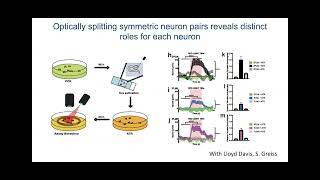
So today I'm going to tell you about our work on reprogramming the genetic code for the encoded biosynthesis of non-canonical biopolymers. A central paradigm in molecular biology is that the heritable information in DNA is copied to RNA, and then the triplet codons in RNA are decoded to produce proteins, polymers of the 20 canonical amino acids, through the process of translation. And we're interested in expanding this paradigm, such that the heritable information in DNA can ultimately be used to encode synthesis of non-canonical biopolymers built up from monomer building blocks beyond the canonical 20 amino acids. This is important because there really are no ways to build long polymers of defined sequence and composition. And ribosomal translation provides the ultimate paradigm for how to do this. If we could harness translation within the context of cells, and turn cells into cellular factories for the encoded biosynthesis of non-canonical biopolymers. We believe this would transform the discovery of new types of materials and therapeutic molecules. If we zoom in on translation, we know that in natural translation, amino acids are recognized by their cognate aminoacyl-tRNA synthetases, transferred to tRNAs, and then each amino acid is decoded in response to one of several codons. On the messenger RNA, and this polymerization happens on the ribosome. And this process allows the encoding of a synthesis, the encoded synthesis of a protein, where the amino acids are added to the polypeptide chain in a defined order, encoded in the codons. In order to polymerize non-canonical biopolymers, we'd require new synthetases and tRNAs that recognize new non-natural monomers, and these tRNAs would need to decode additional codons that are not used in the cell of interest for encoding natural protein synthesis. If we want to polymerize additional types of monomers that are not polymerized by natural ribosome, we may need to alter and evolve the ribosome itself. Now, there's been some progress on this, and the simplest paradigm incorporates single types of non-natural amino acids in response to the amber stop codon, and this approach is genetic code expansion. So here we have an aminoacyl-tRNA synthetase, and it's codon 8 tRNA. These are evolved by directed evolution to recognize a non-natural amino acid, It's chemically synthesized, added to the cell, synthetase recognizes the amino acid, transfers it to the tRNA, and the tRNA in this case is an amber suppressor that reads one of the three redundant stop codons, the amber stop codon. And so by programming the amber stop codon into a gene of interest at a position of interest, we can produce in the cell a protein containing the nonnatural amino acid. And this paradigm with variation in the nonnatural amino acid has been used to incorporate a wide range of nonnatural building blocks, first in E. coli and bacteria, and more recently, with additional developments in eukaryotic cells, yeast, mammalian cells, and whole animals, the worm, the fly, and most recently, the mouse. So let me just give you a couple of snapshots. I can't review this whole field, but let me give you a couple of snapshots of the types of things that have been achieved with this. First, it's been possible to genetically encode post-translational modifications to provide unique insights into the role of these modifications in regulating biological structure and function. And this has been important because many such modifications are identified by mass spectrometry without any idea about how these modifications are biologically installed, and so being able to make the protein by an alternative route and then study the effect of that modification on the protein has been crucially important for post-translational modification studies. Another key approach has been to incorporate amino acids that do different chemistry from natural amino acids, and this has included photocross-linking amino acids that allow us to trap protein-protein interactions, and this has been particularly important for defining protein interactions in membranes. So-called bio-orthogonal chemically reactive groups—these are groups that allow you to label proteins with fluorophores, or drugs, for example, to make either probes of protein function in cells, or to make antibody-drug conjugates as therapeutic-type molecules. The thing I'm going to focus on here is actually the optical control of protein function, where we introduce an amino acid that corresponds to a natural amino acid, but contains an additional functionality, shown here in red, And when we genetically encode this amino acid in place of the corresponding natural amino acid, in this case lysine, we can block the functions of the protein that depend on the corresponding natural amino acid. So for example, if this is a lysine in the active site of an enzyme, and we introduce this lysine, this lysine derivative, in place of lysine, we can abrogate the activity of the enzyme, and then when we shine light on it, we restore lysine back in the enzyme, and restore the activity of the enzyme. And using this approach, we can inactivate a protein, and acutely activate it upon a pulse of light. And we've done this, for example, to activate protein kinases acutely with light. And here you're seeing an example from a collaboration with John James, where we made a photo-activatable LCK, in his reconstituted T-cell signalling system in HEK cells. And what you're looking at is one of these cells in immunological synapse with other cells, and in this experiment we're going to illuminate Lck at one of these junctions, and then you're going to see active Lck recruiting ZAP-70. So you see there, this is where the illumination took place, where the white arrow was, and then you could see Zap-70 selectively move. So that's an example of— allows you to follow then the kinetics of that recruitment process following the acute activation of the kinase. And that's an example of temporal and spatial control of protein activity in live cells using this approach. Now we can also use photocaging to make optically activated recombinases, and we've used this within the context of whole animals. This is with my former postdoc Sebastian Greiss. And essentially you can make a Cre recombinase which is inactive, tightly off, and then when we shine light on it, we can activate the Cre recombinase using the photocaged lysine exactly as I showed you in the previous slide. And then we activate the Cre recombinase. We can use that to turn on a LOX optogenetic channel. But crucially, we can target individual cells in the animal to turn on the optogenetic channel in just a single neuron. And this is important in the worms, because worms, like many organisms, have bilaterally symmetric pairs of neurons. And it's not genetically possible to target these individual neurons to understand whether they have distinct or synergistic roles. So by optically activating Cre in single cells and turning on the optogenetic channel in single cells, we can then illuminate the whole population of worms, but in this dish only turn on a single neuron in each one of those animals. And by turning on the left neuron or the right neuron or both neurons simultaneously, we can dissect out or split— optically split these symmetric neuron pairs and reveal the distinct roles for each neuron in behavior. In this case, this behavior is a touch response, and these experiments showed distinct and synergistic roles of the left and right neuron in the pair. Now, coming back to the problem of reprogramming the genetic code, what I've shown you is just incorporating single types of amino acids in response to the amber stop codon. But in order to reprogram the code and encode the synthesis of non-canonical biopolymers, we require new sets of synthetases and tRNAs for each new monomer building block. We require additional codons for each new monomer. And we require ribosome, potentially ribosome that can polymerize new monomers. If we want to really maximize the scope of polymers that can be made using this approach. And I'm really going to focus just on one aspect of our work on creating orthogonal codons, and come back to, at the end, to show you how we can use it to achieve some of these goals. So the strategy I'm going to focus on for creating orthogonal codons really takes advantage of the fact that the genetic code has 64 triplet codons, but only 20 amino acids. And this means that many amino acids, most amino acids in fact, are encoded by multiple synonymous codons. 6 codons here for serine. Serine is in the 6-codon box. And these codons are read by the corresponding tRNAs. And so the question is, can we simply reduce the number of synonymous codons used to encode serine, to reduce serine from a from using 6 codons to using 4 codons? And then if we could do that, could we then delete the corresponding tRNAs that are responsible for reading the deleted codons, but not responsible for reading the remaining codons? And if we could do that, then potentially we could reassign these codons that no longer have meaning in the genome, by introducing them on a transgene, and introducing a corresponding synthetase and tRNA to read those codons,, and use them to direct the incorporation of a non-canonical amino acid, or non-canonical monomer. Now, this requires the creation of a synthetic genome, because these synonyms that we want to remove are present at many positions in the genome, tens of thousands of positions, in fact. These two codons are present at about 18,000 positions. And requires a synthetic genome in which we replace these codons at every position where they occur with one of the remaining synonyms, if we want to keep encoding serine in the corresponding proteins at those positions. And so this raises a question: what synonymous codon do we replace— do we use to replace each of the target codons at each position where the target codons occurs? And this is a challenging question, because synonymous codon choice is known to matter. Many experiments have shown that synonymous codon has a variety of roles, and not all synonymous codon substitutions are tolerated. In fact, many are not. It's combinatorially impossible to test all combinations of replacements at all positions. And so the question we became interested in is, are there defined rules for synonymous codon replacement, where we can replace one synonymous, one target codon with a particular synonym, and that particular synonym works at many positions. So this is a testable hypothesis, because there are a defined number of such defined synonymous codon replacement rules, in which we simply take target codons, and we define a rule by which each target codon is replaced everywhere that it occurs in the genome. And this basically becomes like a find and replace program in a word processor. So we wanted to ask, are there— preferred synonymous codon replacements for target codons? Can we find such rules? And we decided to look at a number of potential recoding schemes, or recoding rules, for serine, leucine, and alanine. But in order to do this, we also need methods to replace pieces of DNA in the genome. If we're going to replace natural DNA with synthetic DNA, we need good methods to do that.. And we need to be able to do it over a large scale, over large pieces of DNA, because we're talking about replacing megabases. In E. coli, we're talking about a 4-megabase genome. In E. coli, classical lambda red recombination takes linear double-stranded DNA, transforms that into cells, and then uses homologous recombination using the lambda red machinery between the genome and the corresponding linear double-stranded DNA to drive recombination. But this process falls off very— efficiency of this process falls off very rapidly with length. And so it's really not possible to use this approach for genome-scale, whole genome-scale engineering. So we realized that one of the challenges with this is that you're trying to make in vitro, and get across the membrane, linear double-stranded DNA, and then use that for recombination, all in essentially a contiguous process. So we said, what if we could break this up and transform an episome containing the DNA of interest, such that that DNA, once it's transformed, is stably replicated in the cell? And then we could excise out of that episome the linear double-stranded DNA of interest, and then use that linear double-stranded DNA of interest to do the lambda red-mediated recombination into the genome. And in fact, we developed this approach REXA, that follows just these principles, and in addition uses negative selection markers in the genome and positive selection markers in the DNA introduced, to favor the integration of the correct DNA. And this REXA process then gives us effectively length-independent recombination, which allows us to replace hundreds of kilobases of genomic DNA with corresponding synthetic DNA, once it's been assembled. So this provided a tool for replacing genomic DNA with synthetic DNA. We want to use this tool to first test those recoding schemes that I showed you, defined recoding schemes, on a particular test region of the genome. And we needed a region that was rich in essential genes, and so we came across the cell division operon by looking for the combination of essential genes and regions that were rich in target codons. So we designed synthetic DNA where each of the target codons was recoded using one of the defined recoding rules. So we had 3 serine recoding schemes, 3 leucine recoding schemes, and 2 alanine recoding schemes that we tested. And we assembled these synthetic DNAs by homologous recombination in yeast into bacterial artificial chromosomes. So now we want to test these defined recoding schemes test whether they're able to replace the corresponding region of the genome. And what I haven't talked to you about the Rexor approach is that one of the great things about the Rexor approach is that while it's able to replace very large pieces of genomic DNA with synthetic DNA, if there's a region of the synthetic DNA which is not tolerated, you'll get a local crossover, and you'll get the wild-type sequence over the region of synthetic DNA that's not tolerated. So the genomes will then be, in cases where the entire synthetic DNA is not tolerated, genomes will then be a chimera between wild-type DNA and synthetic DNA. And so in these sort of crossover experiments then, if you sequence many clones resulting from REXA, what you'll get is a landscape where you can score the frequency for each codon position as to whether that codon position contains the wild-type codon or the recoded codon. And at positions where the recoded codon is not tolerated, you'll always get the wild-type codon, and at other positions you'll get potentially varying frequencies of the recoded codon. So if you look at this then across a population, this is what the data looks like where we sequence a number of clones, and we're basically scoring the frequency at which each codon, each codon position, is recoded from 0, which is never recoded, to 1, which is fully recoded. Okay, so what you can see is that we have recoding schemes like this one for alanine, or these two for serine, that work really well and we get complete recoding. You'll see for this alanine recoding scheme, we have These two recoding schemes differ in just one base, a GCT and a GCC, but otherwise they're identical. This works perfectly and this fails catastrophically. So you can certainly find recoding schemes that work better on this test region, and this is a plausible scheme, whereas this would be challenging to employ. [INAUDIBLE] You can also see that in addition to differentiating between schemes that work and those that don't, we also identify individual positions where the recoding scheme that works everywhere else fails at essentially a single position. So these are idiosyncratic positions where the context of recoding clearly matters. And what this allows us to generate hypotheses— in this case, the hypothesis that if we change this one codon, we can rescue that recoding scheme.. And that in fact turns out to be true. So what's important about this is that it's not just a method for replacing genomic DNA, it's also a method of understanding which bit of that genomic DNA, down to the individual nucleotides, works and which doesn't. And that's really important for troubleshooting and debugging subsequent experiments in genome synthesis. So these experiments gave us a set of recoding rules that worked, allowed us to triage the ones that don't work, And then we want to basically take one of these recoding rules and apply them genome-wide. And it was this serine recoding scheme that we took here, in addition to recoding the amber stop codon TAG to TAA. The only additional thing we did was to remove the overlaps between genes, so that we could recode the genes independently. And this allowed us to design a synthetic genome, a 4-megabase synthetic genome containing 18,000 codon changes, shown here in red,, and the refactoring positions are shown here in gray. So we went ahead and thought about how to build such a genome, and we thought about this as a retrosynthesis, in the same way that chemists think about building molecules. We started with a synthetic genome, we split it into 8 sections, we took each of those sections and divided it into about 5 fragments, and these fragments are then about 100 kb, And then we disconnected these fragments into stretches of about 10 kb, and this is on the scale that we can assemble or buy commercially. And in the forward sense then, we took these 10 kb sections, assembled them by homologous recombination into our bacterial artificial chromosomes, used the Rexor approach to build these fraction— fragments, and then iteration of the Rexor approach actually allows us to build these sections. And that's using this approach here, and effectively what we do in this approach is we do one step of REXA using a negative and positive selection marker in the genome, and a distinct negative-positive selection marker in the bac. This allows us to replace one region of the genome with the corresponding synthetic sequence, remove the markers from the genome, and introduce new markers. And then this becomes a template for the next round of recombination, where we replace the next the next fragment of the genome with the corresponding synthetic fragment, again removing the markers from the genome and introducing new markers. So by introducing just 2 sets of positive and negative selection markers, we can iterate this process over 5 steps to use the corresponding fragment sequences to build the sections. And then with each of these sections built in parallel strains, we can then assemble those sections into a single strain by conjugation. And this then allowed us to build the largest synthetic genome. This is 10^6 larger than where the field started 60 years ago, so the scale of progress in DNA synthesis has been really rapid. This is the first example of complete recoding of sense codons within a genome, and compression of the genetic code to remove sense codons from the code. Synthesis of this Syn61, in which these codons are removed from the genome, indeed allows removal of the corresponding tRNAs. And a hypothesis is that tRNA deletion, enabled by codon removal, will make the canonical genetic code unreadable, and this of course has implications for horizontally transferred genes and phage infection, because if these tRNAs and release factors are removed, then the corresponding codons that are found in natural genes from other organisms, or from viruses, will be unreadable. And that turns out to be true. We're able to show that in this strain, we don't make any phage,, and nor does the phage have a detrimental or lytic effect on the cell, in contrast to wild-type cells, or indeed cells where simply a single release factor is removed. So these cells really provide a genetic firewall against viral infection. We also hypothesised that codon reassignment will enable non-canonical biopolymer synthesis, as I alluded to earlier, and should allow us to take the codons that we've removed from the genome, TCG, TCA, and TAG, and reassign those to non-canonical monomers, non-canonical amino acids in the first instance, through the introduction of synthetases and tRNAs that decode those codons. And so we actually showed that we could do codon reassignment by introducing synthetases and tRNAs that we've previously described, to allow us to incorporate 3 non-natural building blocks into proteins. In the first instance, non-natural amino acids. And then we showed that we can actually use these to read sequential monomers to actually encode now, in the genetic code, the synthesis of completely non-natural polymeric sequences. And this is really exciting, because actually some of these sequences that we've been able to encode and not just non-natural amino acids with altered side chains, but we've also been able to polymerize, actually, things with altered linkages, including polyester linkages made from alpha hydroxy acids. And you might know that many bioplastics are actually made from— are actually polyesters, but are made from— are essentially homopolymers. So this is really allowing us to get into the space of biodegradable— synthesizing biodegradable polyester sequences,, and to think about these approaches for synthesizing polyesters as potentially useful materials that we also think it will be easy to biodegrade as part of a circular economy. So finally, I'd like to thank the people in my lab that have done this work. This has been a fantastic team of people over a number of years, and funding of course from the Medical Research Council, but also from the European Research Council.
And I'd like to thank you very much for your attention. So Jason, I've got a lot of questions for you. So that was really impressive what you showed. I mean, particularly the incorporation of multiple non-natural amino acids in a single chain. That really is remarkable. But, you know, as you know, the codons are doing so much more than just encoding for an amino acid. Certainly in eukaryotes, fully one-third of transcription factor binding sites are exonic. It's less in prokaryotes, but certainly non-negligible. And things like RNA structure, DNA methylation, How do you think E.
coli can tolerate all these changes? So I mean, I think one thing that's important to say is that, as you saw from the testing of the different recoding rules, not all synonymous substitution rules actually work, right? And so the idea of doing those experiments actually on essential genes and on a relatively substantial region of the genome is actually to identify and remove as many as possible of those systematic problems that might occur at many occurrences of particular codons. So obviously, that's one part of why we're able to get this to work, is that actually we're doing a pretty substantive pre-filtering of which codon substitutions are likely to work, and that will— that's likely to filter out many sort of constitutive features that could be problematic at many, many positions. And then you'll have things that are particular to particular regions of the genome, sort of idiosyncratic things where, you know, a rule a recoding rule that works in many places doesn't work at a particular place in the genome. And there, I think, what is particularly powerful there is that the methods for building genomes actually allow you to identify specifically down to nucleotide resolution which bits of your original design don't actually work. And then, of course, you can use alternative synonymous replacements And those might correct particular local mRNA secondary structures, or they might correct transcription factor binding sites, for example. But the methods are really sort of agnostic to the sort of molecular details of what the nature of the defect is, but simply allow you to identify and fix the defect. I think this is pretty important because, you know, there are things we know that are in genomes. We know there's information in coding sequence, obviously, regulatory sequences for other genes, for example. But we also know that actually what we know about synonymous codon usage is fairly incomplete. So design of experiment efforts where you try and systematically sample things across the known factors that are known to be important for gene expression, you know, suggests that we can only, you know, we can predict less than half of the effects, right? So this tells you that really actually you need to do this empirically. And actually one of the hopes is that in the process of doing that, you will actually generate enough data and ultimately generate, you know, deeper insight into what some of these rules are. And I completely agree that if, you know, that doing this in higher organisms, there's a greater potential for disrupting other types of regulatory interactions, transcription factor binding sites, et cetera, et cetera. And there are actually methods for troubleshooting and rapidly understanding what works and what doesn't work will be almost more important.
Yeah, we're getting lots of good audience questions. I'm just going to ask one more quick one before we start taking those. Are you guys working on touching the tRNA synthetases? Because from the, you know, work to date thus far, incorporation of the non-natural amino acids is, you know, can be unspectacular both in terms of efficacy and specificity.
Are you trying to optimize the synthetases themselves? Yeah, so the synthetases, we've done a fair amount of work on engineering and optimizing the synthetases and tRNAs. And that's part of why we're now able to do— I didn't touch on this in the talk, but obviously part of being able to incorporate many amino acids in a row is ultimately an efficiency issue. If you're trying to put one amino acid into one site in a protein, it's not— often you can get away with synthetases that are not necessarily that efficient. But in order to do that at many sites in many positions, you require synthetases and tRNAs that are much more efficient. And so that then becomes a sort of a focus. So I think the question sort of— The questions you want to answer drive the level of technology that you need to have working. And I think now we need to have synthetases and tRNAs that are very efficient, and we do have synthetases and tRNAs that are very efficient. Historically, part of the issue has been competition at stop codons, for example, that stop codon decoding is intrinsically not that efficient. But in these experiments where we reprogram sense codons, a lot of those issues also go away, and the processes are just much intrinsically much more efficient.
Great, yes, so we had 3 audience questions related to that. Can you say a little more about fitness defects, particularly like with replacing Amber stop?
Yeah, so we haven't removed the Amber stop codon independently of of the other codons. What I can tell you about is the overall strain that we published when we removed the 3 codons. That strain grows about 1.5-fold slower, 1.6-fold slower than the parental strain. And it's known from a variety of similar experiments that you can rescue the majority or a lot of that growth defect by simply growing the strain in the laboratory for a period of time. And you accumulate essentially mutations that fix the growth defect. So there's a growth defect in the original strain that's completely designed. Relatively small. I mean, it's on the sort of same scale as sort of single gene growth defects.
And you can pretty much rescue that defect by growing the strain. Just going to ask two more quick questions here. Can you speak about NNA incorporation? Like, for instance, do you need a transporter to bring it into the cell?
So I mean, in the early days of this sort of field, when we were working on this and we were working on genetic code expansion in the Short Lab, we worried a lot about whether we needed transporters to take these non-natural amino acids into cells and then subsequently organisms. And we did a lot of experiments early on in minimal media, defective in amino acid biosynthesis, to try and drive amino acid uptake. But ultimately, we found that actually, certainly in E. coli, that amino acid uptake was almost never a limitation for the experiment. Now, for some more exotic structures that you have to moderate that view. But most of the times when we found that we couldn't get an amino acid into proteins, it was actually challenging to get a synthetase for the active site. And when we directly measured amino acid uptake, we generally saw that we were able to get the non-natural amino acids into cells. And there are tricks in order to do that. You can make dipeptides, for example, that go through dipeptide transporters, or you can put other chemical groups onto the amino acid backbone to facilitate the transport through other transporters, but the majority of things that we've tried, certainly of the alpha-L-amino acid class, go through, presumably through some permissive uptake route that is not particularly well characterized.
Excellent. And one last quick one. It's more of a long-term prospect of making non-natural RNAs themselves, so you don't have to substitute existing codons?
Oh, so this is asking about the— this is about asking about making non-natural nucleotides and nucleotide triphosphates. So there's this work from Romsberg, which is very nice, where they make non-natural nucleosides, nucleotides, and then show that they can get phosphorylated in cells and incorporated into nucleic acids. I think this is an interesting prospect in the long term. One of the challenges is that the current bases that are used for this are actually hydrophobic, and so they basically stack rather than base pair. And this means that they have to essentially intercalate between two existing Watson-Crick pairs, which effectively means that you can't have them sequentially. And this then limits the amount of coding space that you can generate, even in principle, with these sorts of base pairs. Now, there have been other really interesting developments in making non-natural base pairs in vitro that can pair more through a Watson-Crick-type interaction. And potentially, then you could make an expanded set of codons out of those types of out of those types of base pairs. But of course, if you think about doing this long-term, then you have to be able to— then you have to chemically synthesize essentially all these nucleotides that are going to build your DNA. And so if you think of that in terms of cost of goods, it's actually an incredibly expensive experiment to make any protein at all.
Yep. Okay, well, Jason, thanks for the excellent talk and the excellent Q&A. We are going to wrap this up and turn it over to Chris for the culture talk.
More from Joshua







Scientist Stories: Hans Waterham, The value of phenotypic assays in peroxisomal disorders




Scientist Stories: Joel Zlotogora, Genetic carrier screening programs for reproductive purposes