Scientist Stories: Jay Shendure, Advances in Genomics
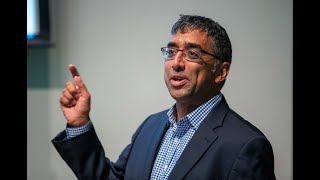
Jay Shendure traces his path from medical student to genome scientist in George Church's lab, where he helped develop next-generation sequencing and exome sequencing for rare-disease diagnosis. He predicted sequencing costs would drop to $6,000, a forecast that came true, and discusses why DNA synthesis remains under-invested despite its potential.
Chapters
I'm Jay Shendure. I'm a professor of genome sciences at the University of Washington in Seattle. I am the director of the Allen Institute— Allen Discovery Center. For cell lineage tracing. I'm also the director of the Broadman Beatty Institute for Precision Medicine, and I'm an investigator of the Howard Hughes Medical Institute.
How did you get into George Church's lab?
I showed up at Harvard Medical School in the fall of 1998 as a first-year M.D. I was looking around for labs I had a vague interest in genomics from being a mouse, you know, doing mouse genetics work as an undergraduate, and I had a computational background from growing up. And there were hardly any genomics labs at Harvard at the time. There were maybe one or two. George was one of them. And so I was stretching a bit and, you know, Googling people and met with him and, you know, got offered a rotation spot. And so I started, you know, I sort of started playing hooky from medical school and worked started working in his lab in March of 1999, and I had a— the lab was very small then, so it's now over 100 people. At the time, it was only about 15 people. And, um, yeah, I did a rotation. I, I— and it was amazing, and I loved it.
What is George Church like as a person and a mentor?
You know, looking back, the lab was a lot smaller then. You can imagine, you know, But even then, he was a very hands-off mentor. It's kind of, it's a little bit hard to explain, but it's kind of like being in a playground with lots of smart people, lots of crazy ideas, almost unlimited resources, and an expectation that you'll kind of try, not be afraid to try odd or interesting things. So the moment, like, just to kind of characterize George a bit, the moment I remember the most is from that early period. So I finished the rotation. It was actually a brutal rotation. I had a rotation mentor who just wanted to see if he could push me, so he had me working very long hours with this idea that this was a necessary thing to get in the lab. And that was actually not the case at all. George had already kind of decided that I was a good fit. And so I was, you know, so second year medical school, I actually focused on medical school, but then I really realized I wanted to join the lab. And so I showed up in March of 2000 and asked him if I could join. He said, sure, and he handed me a list of possible, you know, projects to work on starting graduate school. And the list was— it was all short paragraphs, but it was completely nuts. It was, you know, just to give you a sampling: engineer mirror image life, like making every enantiomer of everything. It also had other things on there that at the time seemed like science fiction, including massively parallel DNA synthesis and massively parallel sequencing, neither of which were anywhere close to fruition at that moment. But the project, you know, the project I ended up picking was trying to basically trace lineage throughout an organism by building a large array of kind of flipping bits based on recombinases. And this is something we can maybe do today, but at the time it was absurd. But I nonetheless jumped into it, you know, spent 6 months on it with all kinds of support to even keep going. Ended up a postdoc talked me out of it after 6 months, even though George was fully supportive of me continuing. And that kind of led to everything else. But it was that kind of environment where you could, you know, you could spend tons of times doing crazy things with a lot of support. If you wanted to switch, you could switch, you know, if you— it was great. It was really— and I think it still is, as far as I know.
How did you first get into genome sequencing technology development?
So I learned to clone during my rotation with George. My first 6 months were spent on this lineage, you know, trying to build this big bit flipper. And then, you know, 6 months in, after giving this lab meeting, I was, you know, I got talked out of continuing, probably with good reason. And so I was looking around for something else to do. And it was right around that time that George got asked by Nature to write a comparison of the Venter and Public genomes. And I had been working some with John Och, who's kind of a staff computational biologist there. And so he I hopped onto this as, yeah, I can, you know, maybe I can participate in this or learn something from contributing to this. And so we had access to the public genome, but we were having trouble getting access to the venter, to the Celera genome, and the dates were getting closer and closer before, you know, we only had a few weeks to compare two genomes using methods we hadn't developed, you know, and we had to write a paper about it. And I ended up you know, all we had finally was this interface with the Celera website where you could download. It was something like a megabase at a time or something like that. You would download a file. So I stayed up all night, and I think I was the first person to obtain the whole Celera genome outside of Celera, just downloading the files and then stitching it back together. And then over the course of a couple weeks, kind of got a crash course on on DNA sequence analysis from John Ock, trying to do something useful with these two genomes and comparing them. And then after that, I basically switched.
Did you have a kind of eureka moment when you were working on what would later be called next-generation sequencing, NGS?
You know, you try to think back to kind of how it all started. I mean, certainly it definitely started with Rob Mitra, who was a postdoc in the lab. And, you know, I was struggling a bit trying to get a clear direction for my PhD, and he took me under his wing around a particular project where he had, you know, so he developed methods for these PCR colonies or polonies that, you know, about the methods he developed are basically identical to what Illumina now does on their chips. But we were having trouble, or he was having trouble sequencing small colonies. And so the colonies he had were actually quite large, you know, and maybe only getting 6 or 7 of them on a, maybe a square inch area. And he had generated all these images where he actually probably had enough data for 5 or 6 base pair reads, right, for 5 or 6 templates, right? So 25 bases of next-gen sequence. And he needed some help with the image analysis. And so that was the moment that I kind of made myself useful. And in the wake of that project and actually being able to do something where we, you know, it was only 25 bases of sequence, but you could see where it was going. And so I ended up with his, with a lot of mentorship from him, switching on to that project and really get involved not only in the computational side but also on the bench side of of trying to advance the technology.
What are your thoughts on the history of genome sequencing technology developments since the HGP?
I think it, you know, you could argue that maybe it was the way it was supposed to go, right, in the sense that there was a lot of thought around developing technologies, advanced technologies beyond Sanger, even for the Genome Project. But because of the timelines got crunched by Celera, the technology development pieces were somewhat squeezed, and those, you know, those things were never really allowed to necessarily come to fruition. I think for me, you know, growing up training at a time when Sanger was the only way, you know, Sanger or Sanger like, you know, Maxim Gilbert were the only ways to sequence, it was hard to even imagine like that you could do anything else, like that there was even another option. Like that just didn't really occur to you. It would never— if I hadn't been in George's lab, it never would have even passed through my mind to think about that as a problem, if that makes sense, right? Or something that would, you know, there might be a chance of exceeding Sanger, right? And, you know, I think if there's a sentence that crystallizes for me, I think a lot about the Church Lab, but also a lot about George. Well, there's a few sentences. So one is something that Rob used to say a lot, which is, if it works on paper, if you understand molecular biology, right, in chemistry, and if it works on paper, it will work, right? It might require some optimization, but it will work. And for me, that was like a, you know, and he was right, right? And I think he showed me that again and again, and I kind of finally got enough confidence to take that home. The other— so the sentence specific to George is buried in this 2003 Analytical Biochemistry paper where we had these 5 or 6 base pair reads, which may be the first next-gen reads, so to speak, in the sense the word is used now. Where— and George, I think, insisted on putting the sentence in, which was, if we are able to improve this technology by a billionfold, we will be able to reduce the cost of genome sequencing to $6,000. And there's a certain amount of gumption in having a sentence like that, but the level of prescience, accurate prescience in terms of what ended up happening, and I think he had a confidence, kind of an even greater confidence to kind of see the full path to miniaturization and where this could go. And he was right. And just having witnessed that once, I think just that Just seeing it, seeing something go from barely working, really barely working, to having this sort of transformative impact, you sort of, you get a lot more confidence and interest in kind of trying to identify other such things and having the desire to work on things even at that very early stage of technology development where they're barely working, if you can see the path. To how they would get to those crazy improvements. And there are, you know, there are other areas like that.
Did the limitations of Sanger sequencing define the types of clinical and biological questions you could answer using genomics?
So my lab, like, we, you know, we developed some of the and applied some of the first exome sequencing methods once I left George's lab and started my own. But if you think about, you know, even at that time, So I think arguably the area in which sequencing technology has had the greatest impact on patients has been in rare disease, right? And we were one of the groups that contributed to the very early work there with applying the first exome sequencing to Miller syndrome and then other Kabuki syndrome and other diseases. But no one was really thinking about that at the time of the— I'm not sure people were thinking about it at the time of the Genome Project. Because people, I think, hadn't anticipated that individual genome sequencing would become cheap so quickly, right? So people were thinking about maybe mapping common diseases and things like that, and using arrays and haplotypes, but this focus on rare disease hadn't quite crystallized, right? And even as I was looking for jobs, it hadn't crystallized, right? Even as we were developing exome sequencing, it hadn't crystallized, right? I don't think we knew what we were going to do with it. Right. Yeah, and I mean, the moment we— you know, I had started thinking about this a bit, and I was talking to Mike Bomshad on a porch at Debbie Nickerson's house, actually, like a summer party or something like that, or maybe a faculty recruitment party. And, you know, I was talking about this, we should just do something like this, and, you know, do we have anything that meets this criteria and that criteria and that criteria? And he said, you know, I think he maybe said it right away or emailed me a couple days later and said, well, why don't we try Miller syndrome? And that ended up being a great test case for this. I'm sorry, yeah, Freeman-Sheldon syndrome and then Miller syndrome ended up being great test cases for both a known and then an unknown, right? And then Kabuki syndrome after that. But, you know, until that moment, you know, well into developing the methods, we hadn't even been thinking about this, right? And ended up, I think, kind of being a goldmine of discovery as well as of clinical impact. A more general theme here, I think, is one of unanticipated benefits, right? So the things we thought genome sequencing would be useful for, right, maybe are still maturing, but there have been many examples of things that we didn't think about, or if we thought about them, we certainly didn't publicly attach them to you know, the justification of the project. When I say it's a royal we, this was before my time, but that I think have been kind of things that have been very important and justify, you know, large parts, if not all, of the project.
Why did large-scale sequencing of Mendelian disorders come so late?
I think people had assumed mistakenly that most of the things that you could solve were solved. With mapping, right, with linkage mapping, and I think neglected the fact that there actually were a large number of things that were unsolved. The majority, or at least a good, you know, certainly enriched for de novo mutations, which is a class of things that are effectively, you know, if they have large effects, unsolvable with classic linkage mapping. So if one had stepped back and thought about it, one would have been able to predict that that there should be this set of diseases that we could find if we applied this technology. We somewhat stumbled into it, so to speak, right? Unbeknownst to us, there are groups in Europe like Hann Brunner and Joris Veltman who are thinking the same way. And, you know, in some cases even going after the same diseases that kind of got some of these things around the same time. Rick Lifton as as well. Yeah.
How is having diverse approaches to research projects aided in moving the field of genomics forward?
It's interesting, you know, being in this institute, which is often associated with large projects, and I think I've come to see that both from the point of view of, you know, I've seen that from an investigator point of view as a member of consortia, more recently, you know, from council's perspective. And I do, you know, there's value to a heterogeneous community, right? Where I think these consortia and things like that are very important and can get things done and produce datasets that you can't achieve with other approaches. At the same time, there's a risk of groupthink setting in and of missing out on, you know, what in retrospect might be entirely obvious opportunities or insights or technologies that you wouldn't have gotten otherwise. I mean, development of next-gen sequencing is another example where it really came, you know, from small labs and small companies, right, that later became bigger companies. But I think that, you know, there too, the heterogeneity of the portfolio, including, you know, Jeff Schloss's program, which, you know, was, I think, pivotal and, you know, formative for me. It was, you know, I didn't go to a single meeting in graduate school. In all of graduate school, no one ever suggested to me that I should go to a meeting like, you know, ASHG or anything like that, except one meeting. The only meeting I went to was an NHGRI grantee meeting, right? Yeah. And it was, you know, for me it was great. And it was, you know, I met Mustafa Arunagi for the first time. I didn't meet Maynard Olson, but I saw him from across the courtyard talking to George. And Rob Mitra, you know, said to me, you see that guy? That's Maynard Olson, smartest man in the world. You know, then I met him many years later. But, you know, for me, it was quite a meeting just to experience and realize that there is a community of technologists, which I think is another thing that is hard to grasp if you're in kind of normal genomics or even other fields of biology, that if you care about technology, there's a crowd, right? And it's a vibrant crowd, and, you know, there was a meeting around 2004. Our paper had not come out yet. There were rumors about 454, right? And George couldn't go, and it was kind of to think about the future of sequencing, and I think it was around a white paper that Maynard had co-written with someone else. I can't remember who, But in retrospect, you look at it and it's basically proposing the 1000 Genomes Project, right? Before the technologies were really there, right? So it was pretty nascent, but it ended up going down. George ended up, you know, he thought he couldn't make it, but he ended up coming down. But so that my second exposure to Maynard was this white paper that he had written, which was incredibly articulate and on point and kind of really also kind of got me thinking about the future.
From your perspective, What has been the significance of NHGRI's $1,000 genome sequencing technology program?
So, George, at least as I remember it, and I could be getting a little bit of this wrong, George did not formally have grants in that first round, but rather he had a SEGGS. And I wrote a good part of that SEGGS with George and others in the lab. It was my first exposure to grant writing. But that CEGS was so closely aligned to the 1000 Genomes, or the 1000 Unlocked Genome RFA, that I think it was funded before it, that we ended up getting invited to the meetings and basically considered de facto members of the program. You know, I think in any space like this, this is an interesting area because you Ultimately, obviously, it's been the commercial technologies that have had the great impact over time, right? But these meet, both the nature of the, well, a couple things. So one, setting the goals, right? And putting it out there that this is even something that we are thinking about or that you should think about or that is possible, that someone thinks is possible. And is willing to invest in it, I think that got everyone's head thinking in the same direction, right? In the same way that I never would have thought about this problem if George hadn't, you know, if it hadn't been something that Rob was working on in the lab. I think there's a lot of other people who wouldn't have thought of it either until you're kind of thinking about this as a challenge and something that's going to change the future, right? In terms of the funding portfolio, one thing that's been, you know, since its early days that I can recall Keeping a very— it's been very diverse in terms of the technologies funded and also the kinds of groups funded, ranging from the usual suspects, of which there were not many, trying to bring people in from other fields, trying to, you know, have companies represented, including small companies and large companies, and trying to get everyone to be as open as possible and share as much as possible. I think those things have been hugely important for driving the field forward and in ways large and small. You could ask the thought experiment, kind of like what would the world look like, you know, had that program not come along or had, you know, it's hard to know these things. I do think the timeline would've been markedly longer than it ended up being to get there, possibly at the risk of not getting there at all. It's hard to say. And you can look back as recently as 2003, 2004, companies like Celexa were barely making it, right? And at threat of falling apart and barely having reads. And maybe we'd be condemned to a 454 future of the program. And again, it's just hard to know, right? But it's hard to imagine things working out as well as they have worked out in reality in terms of the kind of enabling technologies and democratization of access to essentially powerful microscopes, quantitative microscopes for biological phenomena, which are what sequencers have become. It's hard to imagine it going as well as it has. And I think, you know, at least from my perspective, having been on the inside and then a consumer, you know, and seeing kind of it from other angles, is that program has just been critical. I remember reading the RFA. For me, I remember the first time I read the RFA. I don't have a very good memory, so it has a big impact. You think about, well, why are they setting this as an interim goal? There was a lot of thought put into how those goals were structured, which was not to me at the time obvious, because I didn't really know— there are large parts of genomics that I hadn't really fully come to appreciate, right? And in retrospect, I can understand why you would want certain kinds of things to be achieved first, why you would still care about the long-term assembly and haplotypes. And it was a very thoughtful program, I think. Yeah, and more just, I mean, to the broader point of technology and how it's funded, I think relative to the amount of impact that technology has, we tend to grossly underfund it, right? And this is true. It's maybe the least true in genomics, actually. It's much more true, I think, in other areas. I think this institute's been a leader in terms of trying to be unapologetic about investing in it for its own sake. And one thing I particularly liked about this program from the start was just the the clear-eyed view that 90% of the stuff funded would not work, right? But there was a careful attention to knowing if things at least kind of worked on paper according to the physics, right? But beyond that, there was a lot of risk-taking, right? And it's important. I think it's trying to find the technology that will ultimately work is as much about, it's about walking to the, endpoint in an efficient way. But a lot of it's also about closing doors, right? And learning what's not going to work and why, right? And trying, you know, and part of what that program was, was learning what doors to close because it allows you to focus more on the doors that might be the path forward. And also why you should close them. What do we care about, right? What, what, what are the technical homopolymers, right? Like, what are these things that no one thought about before, but like now they're like a major pain and you You think about them every time you evaluate a new sequencing technology. Is the error profile systematically, you know, is it completely random or is it systematically biased? Like, these are, you know, these sorts of things I think are really important. Like, we now have a very clear-eyed sense, and the sequencing technologies are still evolving, right? But we have a very clear-eyed sense of how to evaluate technologies and how to walk that path towards something that can be competitive and useful. That was also kind of a function of that program.
Eric Lander told us he thinks, quote, "Every technology fails, and that's how we learn." Do you agree?
You know, you're always falling short in some way, right? But you keep kind of, you know, pushing forward. And I think also just that the maturation of sophistication in the field for having an intuition for what to invest in, I think, has also been a good thing, right? And you can see that in the nature of where people are, you know. So you want, you know, obviously the, the standard changes, like, you know, you've now got to surpass a certain— it's got to be better in some way than something for a need that's out there, right? Uh, um, but it like, it's shocking, right? It's like if you think about where we were and where we are, it is utterly shocking, right, that that should have happened so quickly. And I think to the— everyone, you know, I can't imagine if anyone tells me they weren't surprised or they saw this coming or they thought it would actually come to pass in this timescale. The only people I might believe would be George and Maynard. I don't think anyone else saw this going as as quickly as it has. So our 2005 paper, we were compared to Sanger, you know, this was with polony sequencing at a read length of 13 bases, a million reads to resequence an E. coli genome. And we calculated our all-in costs, including, you know, labor. We cheated a little bit maybe in the sense that we used our graduate stipends as the labor costs. But the cost came in at about, tenfold lower than Sanger, but the Sanger cost we were using, which was, I think, $1 a read, which was conservative at the time, right, as a calculation for what it cost, right?
How do you go about beta testing a new sequencing technology? What does success look like?
Yeah, I think it's something we're still getting better at. It's always a challenge. I think there's a tendency, and I probably inherited this to some degree from George's lab, to get something working, you know, duct taped together, uh, you know, enough for the proof of concept that you did the crazy thing that you set out to do, and then moving on to the next thing. Um, we're trying to be a little bit better than I think we have been historically about trying to nail things down and, um, put out protocols in a form that they're easily adoptable and reproducible without making people struggle over it. It's an important— I think it's a challenge for the whole field. It's especially important when you have new technologies that are not necessarily commercialized but might still be useful. I think in data science, I think that's where it's both important and you can see the trainees really, at least some of them, taking it on and trying to really embrace fully reproducible analyses. And I think that's just a fantastic trend. And it would be great if we can kind of extend that more into the experimental realm as well.
Are there any recent technologies that have surprised you in terms of how well they've exceeded expectations? Any that haven't?
I mean, obviously CRISPR, you know, has been one that has gone very quickly. CRISPR is a good example, I think, of one that probably has exceeded expectations in terms of the flexibility, but I think that's, that's You know, that's partly luck, right, in the sense that, like, the number of components happen to be small and they happen to work in eukaryotic cells. There are other systems where, you know, the luck may be less so, or the number of components are larger, or whatever it is. But it's also a consequence of a lot of people working on it, right, and being able to innovate in different directions and that kind of heterogeneity. One that I think hasn't gone as well as people thought it would go, and I'm worried that it's consequently not getting enough investment now, but I'm hopeful about the future, is DNA synthesis. And I think, you know, this is the— in my mind, this is the key to kind of the next generation of genomics, you could say, right? Not to synthesize human genomes, which I'm not I'm totally on board with, but to maybe to make perturbations of human genomes, to make other things, to try things, to basically make, you know, to make and test lots of things, right? That is an important capacity to have commoditized in the same way that sequencing's commoditized and will open up a lot of creativity in very unanticipated directions. It's been hard for a variety of technical reasons You know, but it's also gotten a fraction of the investment probably that sequencing has. But I do, you know, especially now that we're in the moment we're at with respect to human genetics and to understanding some things but having this gap between where we are and full understanding, I do think synthetic approaches in combination with genome editing approaches and sequencing are kind of going to be the path that gets us all the way there.
How has massively parallel exome sequencing moved the field forward?
You know, so in the wake of all this, to go back a little bit further than the origins of exome sequencing, kind of in the wake of developing some of these next-gen methods and thinking about starting my own lab and, you know, possibly getting a Solexa instrument and what would I do with that, you know, the cost of sequencing a human genome at the time was still north of $1 million, right? So as a small lab, that was unrealistic. There was a lot of interest from a lot of groups in trying to do more targeted things. You know, and we had been working on methods like involving molecular inversion probes for that, and also hybrid capture methods. And so it became kind of an interesting technical goal. You know, as we talked about a little bit earlier, this idea focusing on Mendelian disease kind of came about through some chance conversations. But once we had done it, right, there was an explosion of interest around this and applying it to other diseases, in part because, you know, it turns out there was this silent majority or whatever you want to call it of human geneticists who were sitting on a lot of diseases that were unsolved cases that they had kind of run out of approaches for. And they didn't really know what to do with, right? And so, kind of in the ensuing couple of years between 2009 and, you know, onwards, you know, you could say there was kind of this renaissance of discovery in the rare disease genetics field where people were applying these technologies to their samples that accrued over the decades that were unsolvable with linkage analysis. And turning up all kinds of things. So collectively, you know, many hundreds of discoveries at this point. And again, because kind of because, you know, in retrospect, it's clear, at least for many of those, why linkage analysis failed, right, or was never going to work, because many of them are de novo mutations. And that in turn has led to, you know, those trio-based sequencing where you're doing mom, dad, and child, looking for de novo mutations in a more direct way than simply screening out common variants like we did originally. And, you know, then we and many others, you know, our work was with Evan Eichler, turned the, you know, turned the cannon, so to speak, towards autism and neurodevelopmental disorders, you know, taking inspiration from earlier studies from several groups that large-scale de novo copy number variants made some significant contribution to those disorders. And in fact, finding something similar with de novo point mutations, which, you know, now collectively explain or at least clearly contribute to a pretty substantial fraction of those cases. So that's been, you know, it's been pretty remarkable to watch both on the discovery end, where you're trying to just the simple task of trying to link genes to diseases, but also on the clinical end, right? Work at Wisconsin and then, you know, now basically everywhere where it's increasingly close to standard of care to go relatively quickly to exome sequencing in the context of trying to diagnose a rare disorder. And that's super gratifying to see that have happened, you know, not over the course of my lifetime, but really over the course of my lab existing, right, like 10 years. That's been quite an amazing change.
Will we soon have a good understanding of the candidate genes for all Mendelian disorders?
I think we're getting there. I mean, I think that the kind of the old adage, you know, the last 20% take 90% of the effort or whatever it is, I think that applies here. There's kind of a, you know, if you look at the history of discovery in this space, right? There are these waves of discovery that follow each technology, right? And, you know, first, you know, linkage mapping and positional cloning, and then the Genome Project, and then exome sequencing. Each of these new technologies enabled kind of a new round of discovery. There is a substantial number of Mendelian disorders that have not been solved by exome sequencing or previous you know, technologies that came before it. And I find these fascinating to think about what might be explaining those diseases, many of which are clearly heritable. I think we need to take a step back and not assume that, you know, applying the same hammer and just hitting harder is going to magically solve those, but rather Let's think about, okay, we were, you know, we getting to de novo mutations required thinking a little bit out of the box. Let's think even further out of the box and what are all the possible explanations for those disorders not having been solved yet? And how can we systematically develop and apply new methods to try and look at those, right? Whether it's whole genome sequencing, whether it's looking at methylation, whether it's looking at alternative hypotheses for what explains those. So we need to, I think, be a little more creative rather than just scaling.
More from Joshua







Scientist Stories: Hans Waterham, The value of phenotypic assays in peroxisomal disorders




Scientist Stories: Joel Zlotogora, Genetic carrier screening programs for reproductive purposes