Scientist Stories: Jennifer Doudna & Shinya Yamanaka, The Convergence of CRISPR and Human Stem Cells
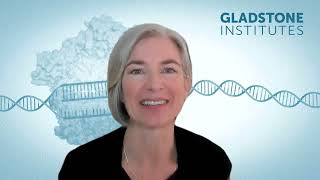
In this Gladstone Institutes panel, moderator Deepak Srivastava hosts Nobel laureates Jennifer Doudna and Shinya Yamanaka to discuss their groundbreaking discoveries—CRISPR genome editing and induced pluripotent stem (iPS) cells—and how the two technologies synergize to reshape medicine. Yamanaka explains the simple reprogramming of adult blood or skin cells into pluripotent cells, their expansion, and differentiation into any human cell type, highlighting applications in regenerative medicine and drug discovery. Doudna describes the CRISPR‑Cas9 bacterial immune system, its RNA‑guided DNA cutting mechanism, and its rapid translation into clinical trials for blood disorders, eye and liver diseases, and muscular dystrophy. The conversation explores how CRISPR enables immune‑evasive iPS cell lines, creation of isogenic disease models, and precise correction of patient mutations, while iPS cells provide a versatile platform for testing CRISPR edits. Both scientists discuss current clinical pipelines (e.g., sickle‑cell, thalassemia, ALS, Parkinson’s, cancer immunotherapy), technical hurdles (delivery, off‑target effects), ethical and societal issues (embryo use, germline editing, accessibility, affordability), and the role of commercialization and startups in moving therapies to market. The panel also touches on mentorship, the qualities of great scientists, and personal anecdotes about serendipitous discoveries. Finally, they envision a 2030 landscape where CRISPR therapies are routine, iPS‑derived organs and 3D tissues are in trials, and CRISPR is leveraged for climate‑change solutions.
Chapters
Welcome everybody. My name is Deepak Srivastava, and I'm president of the Gladstone Institutes. And I welcome you all to a very special conversation that we'll have the privilege of having today with two of our Gladstone faculty, Shinya Yamanaka and Jennifer Doudna, inventors of induced pluripotent stem cells and CRISPR gene editing technologies. These life science discoveries are arguably two of the most important, most broadly impactful of the 21st century, I would say. And they were recognized, as most of you know, by the 2012 Nobel Prize shared by Dr. Yamanaka and John Gurdon, and most recently the 2020 Nobel Prize shared by Dr. Doudna and her collaborator Emmanuelle Charpentier. Now, many of you have heard me say in recent years that we are at an inflection point in our ability to both understand and intervene in human disease in ways that really no longer force us to simply accept disease, but rather gives us the opportunity to actually cure disease. And the discoveries we'll talk about today are actually two of the main drivers in a very synergistic fashion of the transition that will occur in medicine in the coming years. And you'll hear more details from both Shinya and Jennifer about their discoveries. But in brief, Shinya's discovery was that you can take adult cells and take them back in time so that they behave just like early embryonic stem cells that give rise to all the cells in the human body. For the first time, giving us the ability to have limitless quantities of human cells affected by disease right there in front of us. And it also largely obviated the ethical debate around human embryonic stem cells that you all will recall. And Jennifer's CRISPR technology provided a very efficient and easy way to, for the first time, rewrite the genetic code with great precision, both in a dish in cells and in the body for the first time, opening up the possibility to definitively correct genetic mutations that underlie disease. And so, you know, those two are such fundamental groundbreaking discoveries that it has captured the attention and been incorporated all over the world very quickly. Now, at Gladstone, which most of you know is a nonprofit independent biomedical research institute, closely affiliated with UCSF here in San Francisco. The integration of Shinya and Jennifer's labs with teams of world-class scientists focused on overcoming some of humankind's most devastating diseases has really created a rich environment for disruptive discovery. Specifically, we're leveraging these tools and technologies on neurodegenerative diseases like Alzheimer's, Parkinson's, Huntington's, and ALS, cardiovascular diseases ranging from adult heart failure to childhood heart defects, viral diseases ranging from HIV to now COVID-19, and in efforts to, also in efforts to understand and engineer the immune system to fight diseases ranging from cancer to infections to diabetes and other autoimmune disorders. And in each of those cases, the current technology is allowing us to generate enormous volumes of data. And we're therefore making major investments in data science and AI approaches, which really are essential to fully harness the potential of modern biology. And so with all these key pieces in place, all under one roof at Gladstone, I'm so excited about the advances that I'm sure to come in the decade ahead. And today, We will have a chance to explore with Shinya and Jennifer how their discoveries will be driving a new era of medicine forward in partnership with scientists here and all over the world, which fundamentally will change the paradigm of human disease. So that's what we're going to explore today, and I'm really excited to be able to do this with all of you here today. So we have our panelists with us, Shinya, and Jennifer, which I hope you can see and are highlighted. I should say that if you, on your view button at the top right, if you click on speaker view, it'll always be highlighting the appropriate individuals. So let me start with you, Shinya. Shinya did his research training at Gladstone in the 1990s, and he returned to Japan, and since 2007, has been back running a laboratory at Gladstone while also overseeing a research institute in Kyoto focused on translating his induced pluripotent stem cell, or iPS, technology. So, Shinya, let's— maybe you could spend a few minutes describing your discovery in a little more detail and how that transpired.
Sure. Thank you very much, Deepak, for the introduction. But first of all, Jennifer, many, many congratulations on your award. I was so, so happy. And just out of curiosity, where did you receive it?
On December 10th, but in my backyard.
Oh my God. Yeah, not in Stockholm.
Not in Stockholm.
Oh, okay. That must be a very special moment.
Indeed, as you know.
Okay, so as Deepak nicely described, we have been working on new type of stem cells which we designated induced pluripotent stem cells, iPS cells. They are indistinguishable from embryonic stem cells, ES cells, which you generate from human embryos, but the origin is very different. iPS cells, we can make iPS cells from each of you, from your, like, blood cells or skin cells. That's all we need, very small amount of like 10 mL of blood cells from you. That's all we need to make iPS cells. Now the procedure is very simple. All we need is a small experiment, gene transfer. This is like even high school students can do. But by that very simple procedure, we can reprogram the fate of cells, of your blood cells or skin cells, back into the embryonic state. So they become like ES-like stem cells. Once again, we designated these cells iPS cells. Once, once they become iPS cells, we can expand iPS cells as much as we want. And then after expansion, we can convert iPS cells into many types of human cells, including like brain neurons, heart muscle cells, hepatocytes, skin cells, blood cells again. Bone cells, virtually all types of cells. So now we can make a huge amount of human cells from your own tiny amount of blood cells. So now we are trying to use this technology, iPS cells, in two medical applications. One is in regenerative medicine, also known as cell therapy. But equally important application is drug development. We can use these cells to understand diseases and to overcome diseases, to identify new drug candidates by using iPS cells from human, from patient own cells. So these two medical applications are what we have been working for the last almost 20 years.
Thanks, Shinya, and we'll get into some more details about how we can utilize this further. So let me now ask Jennifer to describe her CRISPR technology and I'm sure most of you know Jennifer did her groundbreaking discovery at UC Berkeley and is an investigator of the Howard Hughes Medical Institute as well. And she oversees the Innovative Genomics Institute, which is a joint effort between Berkeley, UCSF, and Gladstone to really maximize the impact of CRISPR technology in the years ahead. And about 3 years ago, she started a second laboratory at Gladstone to marry the disease-focused biology that we're so well known for at Gladstone with her CRISPR-based approaches. So Jennifer, it'd be great for the audience to hear a bit from you about how CRISPR works and maybe even how you came across upon the discovery.
Thank you, Deepak. It's a real pleasure to be here today and with you and Shinya together. It's a delight to have a chance to tell you a little bit about our science. So as Deepak was mentioning, CRISPR is a technology to change the genome of cells. That means to be able to precisely alter the DNA sequence in ways that give scientists incredible control over genetic manipulation. And in the future, and even, even now, thinking about ways that this kind of manipulation can be useful as a clinical therapy. So I'm going to show you one very short video that illustrates how the CRISPR technology works. And, um, share my screen here. So we're looking at a— this is a picture of a cell. And you know that in a human or a plant or animal cell, the DNA is held inside the nucleus of the cell. So it has a membrane around it. And so as I run this video, I'll show you how the CRISPR technology works inside the nucleus to make changes that are precise to the DNA sequence. So let's take a look. So we're zooming into the cell and we're going inside the nucleus and there's all the blue DNA that's sitting in there. And this purple blob that you see is a protein called CRISPR-Cas9. A little molecular zip code in it that allows this protein to grab onto a particular sequence of DNA, unwind it, and then make a precise cut. And once the DNA is cut, those broken ends of the DNA can be handed off to repair enzymes in the cell. Here they come. And those repair enzymes are able to find that break and fix it, and in the process of repair, create an edit. In the example we just saw, the edit is very small, a small single chain, very site-specific change to the DNA. But we can also use CRISPR to introduce whole new sections of DNA that get inserted during the process of repair. And over the last 8 years, this technology has been adopted globally by labs around the world who are using it to understand the function of genes and also increasingly to use it as an actual way to manipulate the DNA in cells for therapeutic benefit. And I'm sure we'll get into some examples of how that's actually working.
Great, thanks Jennifer. So I think all of you can appreciate easily the impact of both of these major discoveries. What's probably harder for you to know is what amazing people both Jennifer and Shinya are in terms of their generosity, kindness, and the way they collaborate. And they're just great people to be around. So we are, we are so lucky to have them both and their laboratories in our community. So I think if you step back and look at what's transpired this century, we've gone from not really understanding the causes of human disease so much to being able to sequence the genetic code or the DNA of individuals at scale. That's been unprecedented. And so even now, and certainly in the coming years, it's not unreasonable that we'll know the genetic variation that occurs in every person. And the challenge will be to understand how that is actually related to human disease and what is the mechanism by which those mutations might cause disease. And so, so that'll afford the opportunity to both understand why disease occurs, intervene in it, and as we mentioned earlier, maybe even correct it by not just reading the code, but then also writing the code. And so let me start by asking, I'm gonna ask each, both Shinya and Jennifer, how the other's discovery has impacted the promise and the capabilities of their own discoveries, because that's really what the beauty of these two is, that they're so synergistic. So Shinya, let me start with you. How does the ability to edit the genome enable the iPS technology?
Well, CRISPR has a huge, huge impact. So we developed iPS cell technology in 2006, and the CRISPR was developed by Jennifer in 2012. So the first 6 years of iPS cell world technology was like a pre-CRISPR era. It was kind of a dark time. And after 2012 with CRISPR, it's a post-CRISPR era. It's a whole new world, actually. So before CRISPR, for example, in cell therapy, we need to worry about immune rejection after transplantation.
And I—
the best way to overcome immune rejection is to make iPS cells from each individual patient, and that's our ultimate goal. But at the moment, it's too expensive and it takes too long. It takes almost 1 year.
So it's not practical.
So as an alternative way, before CRISPR, before 2012, we were trying to make a kind of a bank of iPS cells from like 100 or 200 healthy donors. So even making 100 or 200 iPS cell lines from 100 200 donors is still a lot of work. We can make only like 5 good lines each year. So making 100 is actually very difficult. But thanks to Jennifer, we have another strategy. We can modify our gene. We can modify our genes involved in immunoreactivity. So that we can only have, we can make one or a very small number of like super iPSO lines, which can be transplanted into virtually all human patients in the world. So it was a huge, huge moment for us.
Just for that.
And another example of CRISPR, how CRISPR changed our thinking, is now we can correct gene mutation in iPS cells. So as you know, many diseases are caused by gene mutation.
So we can decapitate disease caused by gene mutation by making iPS cells from patients. But before CRISPR, we could not correct that particular gene mutation. So as a control, we had to use another iPS cell line from another people, from healthy people. But those are not ideal or control because in addition to that particular gene, each of us, patient and control healthy volunteer, they have huge differences in their genome. So as a control, those healthy iPS cell line is not ideal. But thanks to Jennifer, we can now correct just one particular gene mutation so that we can make, we can generate so-called isogenic control line. So those are just two examples of how CRISPR, how Jennifer's discovery has changed our own field. So I really appreciate Jennifer's development. Thank you so much.
Thank you, Shinya. And as Shinya mentioned, there was the pre-CRISPR period of iPS and post-CRISPR. And I know in my own lab, we had been trying to understand the genetics of a heart disease for years, struggling with iPS cells, and there's too much noise in the system. And it wasn't until we were able to use CRISPR technology that all the biology of the system unfolded itself, and we could understand the disease in that way. So Jennifer, let me turn to you and pose the same question. How do you see the presence of iPS technology really enabling your vision of where CRISPR will head?
Well, I hope everyone can appreciate how powerful iPS technology really is. I still remember when that discovery, when your first paper on this was published, and this was far from my field, but nonetheless, it was so impactful. It was so exciting that We were all, you know, aware of it and, you know, just incredibly enthusiastic about the possibilities now that it seemed, you know, in the hands of scientists to control the fate of cells. It's quite extraordinary. And I think that, you know, with CRISPR, these two technologies together offer just extraordinary opportunities. You already heard the perspective from the, you know, from the standpoint of cells. You know, thinking about using CRISPR as a technology to both understand fundamental biology but also to ultimately use it as a clinical therapy, stem cells are absolutely front and center. That's what— that's the, the type of cell that we're going to want to be manipulating with genome editing. And certainly, I think, you know, in terms of understanding the fundamentals of cell development and differentiation. So how does a cell which has, you know, every cell in our body has the same DNA, but some cells are brain cells, other cells are muscle cells. How does that, you know, how do those decisions get made? I think this is where this is still, you know, it's been a question that's been around for a long time in biology and is still being sorted out. So I think that You know, with these two, the CRISPR and iPS cell technologies coming together, we're now at a point where that question can be addressed at a level that wasn't previously possible. So I think there are both opportunities on the fundamental science of cell and tissue development, as well as figuring out how we take that fundamental understanding and use it to manipulate cells in patients in ways that will have incredible therapeutic benefits.
Thanks, Jennifer. And Jennifer, I know that there— one important thing that we think about in our field, both with your discovery and Shinya's, is how serendipity is sometimes involved. And when we're just trying to understand how our body and our cells work, and even other organisms, that it leads to these sort of breakthroughs that can actually affect human disease, even if that wasn't the starting point. Can you say a bit about how you came to your discovery that I'm sure would be interesting to some folks and how important just studying basic science is?
Well, let's start with the fact that CRISPR in biology is a bacterial immune system. It's a strategy that bacteria use to find and destroy destroy viruses. So I started working on this over a dozen years ago when a colleague of mine, Jill Banfield at Berkeley, had discovered in DNA sequences for bacteria evidence of this CRISPR system. And at that time, it was a hypothesis that it might be involved in immune, you know, sort of an acquired immune response that was occurring in bacteria. So I was fascinated by this. As well as the fact that it seemed to involve fundamentally molecules of RNA. So my research in my pre-CRISPR years was focused around the way that RNA molecules can control the flow of genetic information in cells, control how and when proteins are made, whether it's from the cellular DNA or from a virus. So I was fascinated that RNA might be used in this bacterial immune system called CRISPR. And we started investigating the mechanics of that process. And that's how we got involved in ultimately a collaboration with Emmanuelle Charpentier, which led to us figuring out how the CRISPR-Cas9 protein works as an RNA-guided protein to cut DNA. And once we made that discovery, it was possible very quickly to see how it could be harnessed as a technology for genome editing because it takes advantage of the cell's own repair mechanisms to repair double-stranded DNA breaks. So it was a process that began with fundamental, a fundamental question in biology, a curiosity-driven project. I like to say it was small science, not big science, but it led in directions that none of us could have predicted in the beginning.
Yeah, I think it's really quite remarkable when you think about the origins of that, and it just highlights how important it is just to solve nature's problems, and you can lead to this. Shinya, I know that in your training, when you were a fellow training at the Gladstone Institutes in the 1990s, you had initiated a project that in a very circuitous way ultimately contributed to you being on a path to make the IPS discovery. I'm sure it'd be really interesting for folks to hear how that all transpired.
Yes, I did my postdoc training at Gladstone 25 years ago. I hope I haven't changed, although I had a bit more hair at that time. So as a postdoc, naturally I worked very hard and I was lucky to identify one new gene. So, but I didn't have a clue what that gene was doing. And I went back to Japan and I continued working on that gene which I discovered at Gladstone, and I found that gene was very important in mouse embryonic stem cells. I didn't expect at all, but it was just coincidence. So that's how and why I got very, very interested in ES cells, the biology of ES cells.. And I, since then, it was like year 2000, so 20 years ago. And since then I have been working on ES cells, pluripotent stem cells, and that work went to all the way to the discovery of iPS cells. So it started 25 years ago. At Gladstone. But I didn't expect I would work on ES or iPS cells in the rest of my life at that time. So because science is so unpredictable.
Yeah, yeah. And I think one of the beautiful things that really allowed both of your discoveries to spread so quickly is that in both cases, it was really easy. As Jennifer said, a high school student can do gene editing. And in Shinya's case, within a year, every lab in the world studying these sorts of things was able— were able to make iPS cells because it was simple. And so that oftentimes in discoveries or inventions, the simplicity is really key to really democratize these discoveries and allow them to have the greatest impact. So maybe let's turn to how— what are some of the first areas where you think your discoveries can have a clinical impact. Maybe let's, let's start with you, Jennifer, to see, you know, where do you think CRISPR technologies will first have an impact?
Well, you know, it's amazing. We're already seeing the results of clinical trials with CRISPR for blood diseases that include sickle cell anemia and thalassemia. And so several patients have already been treated and it's been, you know, they're well into their second year since the initial CRISPR therapy was delivered and they're doing very well. So it's been an amazing journey of seeing this fundamental biology turned into a technology and now using it in in these initial clinical trials with success. So that's been very exciting. I think in the near future, we'll see obviously expanded use of the CRISPR technology to treat other blood disorders, as well as many more patients that are suffering from sickle cell disease. And then pretty close on the heels of that are applications in the eye, and in the liver, because those are both tissues where delivering the CRISPR molecules into the cells that need editing is relatively straightforward. And so I think over the next couple of years, we'll be seeing increasing applications in those tissues and very likely results of initial clinical trials, both from academic groups and from companies that are doing that work. And then I think the third tier will be diseases that are also resulting from a single genetic mutation in the human genome, as those— as sickle cell disease is an example of. And I'm thinking here of muscular dystrophy, which is a very well-known disease that affects mostly young boys. And is a defect in a single gene that results in muscle deterioration. And right now there are very active efforts to use CRISPR as a treatment for muscular dystrophy. And again, early studies, at least in animals, are looking very promising. The challenge there is delivery. So how do we, how do we get the CRISPR molecules into muscle cells in a patient? To get enough editing so that there's a therapeutic benefit. So that's kind of where that challenge is right now. But, you know, it's just extraordinary to see that in less than a decade, the CRISPR technology has gone from the stage of a fundamental discovery to, you know, an actual application that's being used in patients in the clinic.
Yeah, it's remarkable. The initial paper describing CRISPR was in 2012, only 8 to 9 years ago. It's really a remarkable path. Let's stay on this topic for a moment, Jennifer. You mentioned that delivery is an important hurdle in getting things in various— to address various diseases. It might be worthwhile for people to hear what is it that made you want to come and start a second laboratory at Gladstone some years ago, and how do you see that effort helping you achieve the full potential of your discovery?
Well, as you know, Deepak, I've always been, you know, a scientist who's done fundamental research. And I, you know, like many of us, I always hoped that my work would have a clinical impact someday and, you know, help somebody somewhere. But I didn't have a— it wasn't really a clear, you know, concrete idea of how that might happen until CRISPR for me. And so with this technology, it was immediately clear how this could have ultimately a real tangible, you know, outcome in people that are suffering from a genetic disease and maybe, maybe ultimately from other, other diseases as well, such as cancer. I see a question in the chat about that. And so the question for me was, how do I make sure that my efforts in my fundamental research are going to be funneled directly into the hands of people that are clinically connected and are able to work with patient-derived samples and ultimately with patients? And so the Gladstone was the very obvious place to do that. It was really my top choice, and I was so fortunate to have the opportunity to open a lab at Gladstone where I now have a group of people working side by side with clinical immunologists, with people that have expertise in a whole range of fields including your own work, Deepak, in cardiovascular disease and development, where we have an opportunity to take the CRISPR technology and develop it very specifically for for particular clinical indications. And so that's been very exciting. And I have no doubt that in the coming years, we're going to see real tangible impacts from that work.
Yeah, well, thank you. And I'm certain we will be able to do that together. And we are certainly committed to that at Gladstone. And in fact, many of the folks in our audience are committed to that as well with us on that journey. Shinya, in your case with iPS cells and with the combined use of CRISPR, as you described, How do you— what areas do you see impacting first?
So once again, there are two major medical applications: cell therapy and drug discovery. And in both areas, many applications are already in clinical trials. For cell therapy, for example, for diseases like Parkinson's disease, heart failure, some blood disorders like platelet deficiency and cartridge dysfunction, and also cancer. Those are already in clinical trials. And I think cancer immunotherapy using iPS cells is very promising. Like, CAR-T therapy is already available and it's very effective, but its one disadvantage is that it takes some time and it's too expensive. But by using iPS cell technology, we can lower the price and time for preparation. So I think one— but I interested in the most is right now is cancer immunotherapy using iPS cells, but many other applications are equally important. For drug discovery, we have been using iPS cells from patients suffering from various rare diseases and intractable diseases, and many drug companies have already started clinical trials. One example is ALS, amyotrophic lateral sclerosis. So multiple drug candidates have been identified using patient iPS cells, and some of them are already in clinical trial. And I have access to some unpublished data, and they are really promising. So I hope some of them will turn out effective on human patients as well. As you know, in ALS research for the last 100 years, we have developed many effective drugs on mice, mouse model, but unfortunately they are not effective on human patients. But now we are using human iPS cells from patient. I really hope they will be effective on human patients. As well.
Yeah, thanks, Shinya. And I know there are clinical trials started with iPS cells for Parkinson's disease also, and eye disorders, and a number of other areas. So those things are all moving. And so I think over the next 5 years, we'll see the readouts of those. And I think there's a lot of promise in many of those areas. We had a question about cancer treatment in the chat room, and you touched on, both of you touched on that. And I think we see that as an enormous potential. And for that very reason, just less than a year ago, we started a new institute at Gladstone around genomic immunology to really harness the potential to marry both iPS and CRISPR technologies to create immune cells that are engineered just right so that they can go find and target cancer cells in new and better ways to get rid of them, and also for many other diseases. So I think that these technologies, both of these technologies, really have given us a lot of hope for being able to manipulate the immune system for lots of different human diseases. So as we go along and make these, have these advances, initial trials are sometimes in the academic setting, but also and many times have been in the commercial setting. And so ultimately, if we want to get therapies to people and scale them, they need to move out of the academic centers and into the commercial sector where they can be really developed as a therapeutic and marketed and spread widely. Each of you have taken a little bit different approaches, I think, to that. So Jennifer, we even have some questions in the chat, but I was planning to ask you, about how, how do you view that step and commercialization and your role in it also?
Well, you're right, Deepak. I think for technologies to be actually brought to bear on diseases in a broad sense, they really have to move into a commercial setting typically because of the financial requirements to do that kind of development and the need for a large team. To develop the clinically indicated molecules that are required and move through the regulatory process, as well as of course conducting clinical trials. So I've been a big proponent of helping new companies to get started in the CRISPR space. And I'm involved in a few of them myself. And most of those are companies that have actually been founded by by former students of mine who are now at those companies and developing them. So for me as an educator, you know, I think one of my primary goals with these companies is actually to, you know, to not only establish a place where commercialization can take place, but to do it in a way that gives opportunities to young entrepreneurs who are, you know, inclined towards the business world or the biotech world and are passionate and very deeply knowledgeable about the science that will be necessary for success. And that's been really rewarding. It's been really exciting to see these young entrepreneurs taking off and, you know, getting the kind of support that they need. And I've learned a huge amount along the way. And I have to say, I really enjoy the, you know, kind of, you know, I love running an academic lab and working in the nonprofit world, but it's also been very interesting and certainly very rewarding to help these young companies to get started and now to start seeing the incredible advances that they are making. And as we discussed, you know, these are companies that are starting to run clinical trials. I definitely think over the next 3 to 5 years we'll see the fruits of those trials coming to the fore. And, and not only that, but, you know, creating jobs here in California and elsewhere that are important for pushing forward the whole biotechnology sector.
And Jennifer, as these things move more commercially, what do you see as the biggest threats to the success of this? What are the obstacles that you see that still need to be solved? We talked about delivery. That's one. But what are the others?
Well, I think another— there are a couple of comments in the chat about this, you know, the challenge of, you know, kind of the ethics of genome editing. How do we think about the— and I put in that bucket, I define that fairly broadly. It's not only the ethics of the editing that you're doing, but it's also affordability, accessibility. You know, for me, you know, this will be rewarding only if it ultimately becomes available to everybody. That can benefit from it, not just to, to a few. And so that's a, you know, that's a tall order. How do we, how do we achieve that? And again, I do feel that it's going to be through public-private partnerships. You know, companies, of course, have to be thinking about the bottom line and how to make a profit and reward their, their investors, whereas nonprofits and academic organizations can, can often take a longer view and tackle very long-term kinds of problems that will require a lot of fortitude and maybe a lot of clever students to invest their energies in it over time. So I think that's a big challenge going forward, is just getting that balance right and figuring out how to communicate about this technology so that as it becomes more widely available to treat different types types of diseases and even to do other things such as working as a diagnostic, for example. That, you know, that people understand that CRISPR is a technology that brings very broad benefits and that its risks are being appropriately managed by the scientific community.
Yeah. And I know you've been an international leader in, getting the whole world to think about the ethics of CRISPR technology. And with the Pitch Johnson support, we've been able to focus some on that more. And what about— there's in the chat room the concerns about off-target effects. I know a lot of people think about that. Maybe you could comment on how you think about that.
Yeah. Well, again, I take sort of a broad view of that. I think we can define off-target effects as edits that occur at an undesired or unintended place in the DNA, but it could also be edits that are made intentionally, but then have unintended or undesirable results. And so, you know, that all comes under the realm of, you know, where the technology is today in terms of understanding how it works and how accurately it works. And then continuing to make it even better. And the good news is that right now, I think, you know, the, there's been so much work that's been done to understand the accuracy of CRISPR, to develop forms of these proteins that are even more accurate than they are naturally, that I don't currently see the accuracy of editing as a bottleneck in applying it even clinically. I do think it's critical to understand the outcome of edits and to have the right tools to be able to assess the accuracy of editing. And fortunately, again, there's been a huge amount of work in that area so that we do increasingly have very sophisticated tools for assessing the outcomes of editing. So, yeah, I mean, I guess the summary is It's, you know, we have tools to assess it and it currently isn't really the bottleneck in the field, I would say.
Yeah. And another, as an example of another intersect, being able to put the machinery into human iPS cells of the desired cell type that you want to edit allows one, at least as a test, to see what other changes might be made even before you do it. In the patient. So that's another example of how the two leverage one another. Shinya, in going to the same kind of line of thinking with you, what do you see as some of the ethical issues around iPS? Obviously, it's solved in part one ethical issue around the human destruction of human embryos for human embryonic stem cells, but I know you realize it raises other ethical issues.
Yeah, exactly. For example, we can make like sperm and eggs from iPS cells. In mouse, we can already generate a new mouse, new life from iPS cells by making sperm and eggs. So the question is, how far can we do it? We may be able to overcome infertility issue, but it's a huge ethical question. There is a huge ethical question how much we can do, we should do. The other ethical potentially important issue is to make organs. By using iPS cells in large animals like pigs. So potentially we can overcome the shortage of donors of organ transplantation. But once again, the question is how much we can do, how much we should do. So those are new ethical issues. That we are facing right now.
Yeah, thank you. I think, boy, the time is going by fast. We've got 10 more minutes. I'm sure we could all do this for an extra hour. But let me come to a few more, maybe more fun questions rather than so much the science. But we've got a great question. From the chat room that I wanted, and I'm sorry, I won't be able to read all of these from the chat, but I'll try to address them later. And that is, what makes someone a great scientist rather than a very good one? Jennifer, let's start with you.
Oh dear, okay. I was hoping to hear Shinya's.
Well, we can start with Shinya.
Okay, no, I'll give it a shot. I think it's a combination of things. I think you have to be kind of stubborn You have to be very, very persistent and kind of driven. And partly this is, you know, I've now been running my academic lab for almost 3 decades. And so I've seen a lot of, you know, a lot of very smart, very talented students and postdocs go through the laboratory over that period of time. And I think, you know, consistently, so it's not intrinsic intelligence. You know, all these people are very, very smart. They're very talented. In that way. But I think what separates the very good ones from the really, the absolutely off-scale people who I say, wow, they could, they should have my job, are those that are just, you know, really driven. They're passionate about an idea. Nothing's going to dissuade them from it. They're going to figure out a way to find an answer or get this idea to, to work or to decide that, you know, it's not going to and they're going to pivot to something else that turns out to be interesting in its own right. So it's really that kind of persistence and passion somehow that I think really separates people that I've seen, you know, the really the very, the very best ones. But I don't know how you would— what you would say, Shinya.
Well, I agree, I agree. But in addition to that, I would say unexpected results. Are really a big chance. So whenever you do— every graduate student, every postdoc, they must have had some unexpected result. And you can have two reactions. One is being excited about unexpected result, and the other one is being disappointed. By unexpected results. If you can enjoy unexpected result, there may be a huge chance in it. So that happened probably only twice or three times in my life, in my 30 years as a scientist, but it does happen. And please consider it a huge chance. So that, that's my message.
Yeah, I think that's great advice. And I know in your case, Shinya, when you're training at Gladstone, you were trying to address cholesterol levels in the liver by affecting the liver, and you ended up creating a liver cancer. And you could have been disappointed and moved on, but instead it led you to studying why cells divide more than they should and ultimately do your stem cell work.
So it's great. Yeah, I got excited, but very important thing is that my my mentor, Tom Inoue, he got very excited too. So it meant a lot to us young scientists.
Yeah, yeah.
And it happened to my very first experiment in my graduate school. My very first experiment, I got very unexpected result. I got excited, but my mentor, he got very excited too. So yes, I was very lucky.
Yeah, the only thing I would add to that is you have to know which unexpected results to be very excited about, right?
Yeah, good, good taste. Yeah, you have to have good taste.
Exactly.
Yes, that's right. Well, it speaks to importance of mentoring, which is, as you all know, is so important to us at Gladstone. It's part of our— in our mission statement. You're— you're a great example of the product of that. Uh, Jennifer, uh, uh, You know that I have two daughters who are interested in science. They look up to you. You're their role model, and I know that you think a lot about women in science, and I'd love to hear your thoughts about how— what this means to, you know, two women getting a chemistry prize for the first time ever, Nobel Prize. It's really, really quite remarkable.
The first of many, I hope. Yes, I expect. Yeah, I think it really, you know, it really is is something that speaks to a lot of younger scientists and especially young girls and women who are going into the STEM fields. I can't tell you how many countless students I heard from, especially girls and women after the announcement about the Nobel Prize who were just so touched. You know, and they just, I didn't expect it, honestly. I was surprised, but it really was so interesting for many people it was kind of personal. You know, they felt a personal joy about this particular prize. And I think for many women it made them feel empowered, enabled, you know, supported. And, you know, it was sort of a real shot in the arm of encouragement for girls who might be going into this field. So that's amazing. And I certainly consider myself incredibly fortunate. It's not the kind of thing that I don't think anybody goes into science imagining winning a Nobel Prize. I certainly didn't. And it wasn't something I was thinking about or working towards. But, but I think, you know, it does sort of now give all of us, and especially for women in the field, I think a feeling that, you know, women's work can be can be appreciated as it would be if they were a man. And I think that's a really important message.
Yeah, I see. I tell you, I see it firsthand. It makes a huge difference. So thank you for that. Shinya, you attended the— received a Nobel Prize in 2012, as I mentioned. Jennifer is just a few months into that process. I know that changed your life a lot. And I was wondering if— what you might offer to Jennifer in terms of advice on a post-Nobel period and what lessons you might have learned that might be helpful.
Well, so, uh, the, you know, receiving the Nobel Prize, uh, was a start of many good things. I, I have been very enjoying having many good opportunities like this, but at the same time it was a beginning of many bad things as well. So I got many praises, but I got many criticisms as well. So you have to be tough and you have to have people or protecting you. For example, or in many cases, you have to say no to some offer. If you say no directly from you, some people may understand, but many people may get upset. So if you have somebody to say no instead of you, I think Deepak I think in that sense, Gradstone is a huge help in protecting you because we want to spend as much time as possible on science, not on non-scientific issues. So we do need protection, and I'm sure Gradstone will be has a huge role in that. Deepak is very good at saying no in a very gentle way.
For others, at least. I need to be better for myself. Yeah, I tried to play gatekeeper for a bit for Shinya, which is helpful. So we're unfortunately coming up on the hour. There's so much more we could talk about. There are great questions in the chat room. I'll try it for those that put in questions. I'll actually try to respond to those later with you directly. But let me end with hearing from each of you. What do you envision 2030 looking like with respect to your discoveries? Maybe we'll start with you, Jennifer.
I think we'll see by 2030, I think we'll see multiple therapies that are available for patients with CRISPR, not only for sickle cell disease, but my hope by then is that we see it for muscular dystrophy and probably a few other genetic disorders as well. I think a lot of it, again, depends on other kind of coordinating technologies such as in delivery and sequencing that will be essential to validate those, the editing that will be necessary in those to treat those diseases. So I think that's one thing. And I wanna just also mention that we focused on biomedical applications today for CRISPR, but CRISPR is a technology that also works in many other types of cells, including in plants and in microbes. And one of the things that I'm working on right now at the Innovative Genomics Institute in partnership with a number of scientists, including folks at the Gladstone, is to address some of the challenges of climate change using CRISPR. And there what we're doing is manipulating the microbial communities that live in the soil or even in, together with plant roots, to do things like increase carbon fixation, carbon storage, and also to increase the output in agricultural products, things that will be necessary, I think, over the next 10 years in particular as we deal with those challenges of climate change.
Yeah, I think that's going to be— it's going to be a really fascinating decade to see it unfold. Uh, Shinya, what about you? What, what do you see 2030 looking like?
So of course I hope many applications like Parkinson's disease, cancer therapy, they are in clinics, not in clinical trials, in 10 years from now. But in addition to that, we are now trying to generate tissues 3D tissues and even 3D organs, and I hope by 2030 they will be in clinical trial. And more important is I think many people working in— young people working in iPS cell, like at Gladstone or our institute in Kyoto, I hope they will be doing something very different. Their own science. One good example is mRNA vaccination for COVID-19. The founder of Moderna, he was 10 years ago in 2010, he was making iPS cells by using mRNA.
That's right.
And the same scientist went to Harvard and he started a company, and that company Moderna is leading the the world by making mRNA vaccination. So that's a very good example of how we can change in just 10 years. So yes, I hope many, many same kind of examples will happen from this audience. Hopefully, yes, in my own life as well.
That's right. You have a lot more to go. That's a great point though, because Derek Rossi, who used mRNA for the first time in making iPS cells. That technology is what really shows in Moderna, as you mentioned. But it's a great example that may not be obvious to everybody is that science is basically like building a structure. It's one layer on top of the other, and you really don't know where it's going to end up when you start laying that first brick. But as scientists, we all build upon the discoveries of our peers and people who came before us. And that's really the fun and beauty of science. It's like art. It's like creating something that nobody's seen before, and it's just a beautiful thing. Well, let me thank all those in the audience who are with us today. It was wonderful to be with you. Thank you all for your interest, and many of you for your support. You really drive a lot of our science, and I'm sure we'll be in the coming years. And we're so grateful, Shinya and Jennifer, for your time today and for your great science that you do. And I'm very confident that the visions that you both laid out for 2030 will come to fruition, and we'll do everything we can to make that a reality. Thank you all so much, and have a wonderful evening.
Thank you very much, everybody.
Bye-bye.
Bye-bye.
More from Joshua







Scientist Stories: Hans Waterham, The value of phenotypic assays in peroxisomal disorders




Scientist Stories: Joel Zlotogora, Genetic carrier screening programs for reproductive purposes