Scientist Stories: Jennifer Ross, Single-Molecule Imaging to study the Cytoskeleton
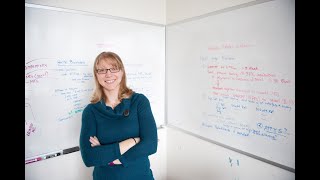
Dr. Jennifer Ross talks about her path from Texas to a career studying how cells move using single-molecule imaging. She discusses the gender bias and harassment she faced in science, her mentoring philosophy, and how she manages time and work-life balance.
Chapters
Yes, it's yours, Aurel.
Okay, so it's a great honor and pleasure to have Jenny Ross with us today. We're keeping the introduction short, so please tell us about your living history.
Great, thank you. I really appreciate being invited, and also especially with the other women who are presenting today. It's really great to hear about everybody's background. So I don't have as many detailed slides, but I have a few that I'll share. And I wanted to start off with this picture, which I feel like really represents how being an academic scientist really is. So nothing that you do, like the whole thing is very upsie-downsies, right? Like you get a grant, the student quit your lab, you got an award, like you don't have any money anymore, whatever it is, right? Like, and so I think what's really important is throughout all of it, I've tried really hard to learn how to ride a bicycle with square wheels so that I can handle the ups and downs. And if you want to ride a bicycle with square wheels, you can do it. It's at the Museum of Math, which is in New York City. And you can go there and actually ride this bicycle yourself. And it turns out that, yeah, it works if you have a hilly, bumpy area to ride on. All right, so going to through back through the high school, kind of starting in high school. So I actually moved a lot when I was a kid. I Only actually until I moved to my professorship, I had never lived anywhere for more than 4 years. And so I kind of grew up in Texas mostly. I did. I started in, in the Houston area and I was in the Cy-Fair School District for— I know there's at least one person from Houston in the audience right now, so you might know where that is. And, you know, that, that's an interesting place to live in Texas. You know, at the time it was actually, people were incredibly nice there. I think that, you know, at the time it was called the Friendship State and people were friendly there. People, you know, if you were going faster than somebody on the road, they'd pull over. I don't know they'd do that anymore, but that's how it was when I was younger. And it was a place where people, there were a lot of women with big mouths and big hair, which I really appreciated. In particular, Ann Richards was our governor. The city of Houston had another woman as the mayor, and these women were outspoken and they were fantastic role models on a very large scale, right? And so, so there were really good benefits of growing up in Texas at that time. Unfortunately, my dad's company, the part of Texas Instruments that he worked for, got bought out. He was not an engineer. He's like a humanities person who got like brought into marketing somehow. But he was very fortunate that he was, you know, when Hewlett-Packard bought out his division, he was brought to Minnesota. So we moved from Texas to Minnesota. And in Minnesota, I kind of moved in the middle of 8th grade and I was a fairly high-level gymnast in Houston. That's like Mecca for gymnastics at the time. And when I moved there, I pretty much immediately injured my back very badly. And so in 8th grade, at a brand new school, I was walking around with a back brace that went down my back and down one leg. So I kind of looked like I was like RoboCop or some sort of android kind of thing going on. And that's a really good look if you're a young woman, for sure. Definitely you want to be wearing a large plastic with a hinge on it back brace. That, that's definitely especially in the '90s, that's definitely what you want to wear. So anyways, I just had no preconceptions that any— my identity did not live in what I looked like in any way, but my identity did very much live in the fact that I was an excellent student. And so even in this new school in high school, I got involved, like, or in 8th grade, I got involved with Odyssey of the Minds. And I was, you know, I looked bonkers, and I just— it didn't matter to me. That wasn't what I was about. I was about like kind of performing well. And in that school— this is not at Orono High School, this is a different school— I had an 8th grade math teacher, and I was in a 9th grade math class because they didn't have honors courses. So instead of being in honors 8th grade, I was actually in 9th grade math. And, um, there was a program at the University of Minnesota where they would allow you to do like advance in math, and I really wanted to do it. And I went to talk to my 8th grade math teacher about it. And she said, no, you will not succeed there because you're a girl. No girls get into that program and no girls will do well in that program. And I will not support you in going into that program. And I was like, well, oh wait, by the way, I forgot to ask Orit and Sri, am I allowed to swear?
Yes.
Okay. By all means. So I, so when, when this teacher told me this, I basically was like very upset about it. And I spent probably the rest of my life proving to her that she was wrong. And so a lot of what I have done and a lot of what I do, and like my motivation is that when people tell me I can't do something and I don't believe them, then I spend like basically the next rest of my life proving them wrong. And so I do think that excellence is the best revenge. So if you have somebody who's been a jerk to you, just go out and blow everything away. Just like be super, as good as you can possibly be. And so what happened is I actually transferred schools after that. So I transferred to Orono High School. It was not in the district. They had an open district policy. So my parents would drive me there every morning and they wouldn't pick me up until after work. So I was there, but you know, high schools get out like 2. So I was there for like 3 hours every night, just hanging out. And what I did every night was I hung out with the, dance squad. So there was a group of women who did kick dancing, like kick line dancing. You know what I'm talking about? And I just sat next to them and I did math. And, and that's because I met this teacher, Mr. Underdahl, and he was an awesome dude who taught out of the Chicago Book Series, which is like from the University of Chicago. And they have this series of books that like you can basically teach yourself. And that's what he said. He said, we're going to do one section a night, we're going to do every problem in this book. When you're done with this, with the chapter, come and see me and I'll give you the exam. And that's it. And it was your own pace. And I was like, awesome. I went up to him like in the first couple of weeks and I was like, I want to go fast. You said we could go as fast as we want. He was like, hold your horses, you know, trying to set me right. And but he wasn't mean about it. He was just like, let's just see how it goes. Like, if you do, if you're able to do this, then I don't have a problem with it. But let's just see how it goes. Because I guess obviously we all teach like a lot of us teach. So, you know, sometimes you have students who bite off more than they can chew. But I had 3 hours every single night. So I just did the math and I did 3 years of math in 1 year. So I did 9th grade or like 10th grade math, 11th grade math, and then through pre-calculus. So by the end of that year, I was ready for calculus in 10th grade, which, you know, people do this. This is not weird, but like he had, he was very supportive of me, you know, as, as I was kind of going through this and was like, yeah, I guess you're ready for it. And then, so I, of course, you know, I made some friends at this school. I had an awesome math teacher and I had a really great also physical science class at this school where they, it was like called, just called physical science. But it was basically like, if anyone's taken a chemical engineering class in separations, that was like the whole class. And it was super awesome. At the end of the semester, they just gave you a jar of stuff and they said, separate this and tell us what's in it. I literally do that every day in my lab because I purify protein. Like, so like, that was like the most applicable, like, high school class I've ever seen. And like, it was fantastic. It was a fantastic class. So the next year after having, you know, kind of developed myself, met all these really cool people, I moved again. We moved back to Texas and my parents moved me to the Plano school district. And I went to, I went to Plano Senior High for one year for like, and then I went to Plano East is where I finished. They allowed me to take AP Calculus BC in 10th grade. That was hard. They had to bus me every single day to one of the senior highs because they have a split system where it's 9th grade, 10th grade, and then 11th grade, 12th grade. So I had to get bussed between those schools every single day. But they did. I was literally the only one on the bus. And it was— the opportunities at this school were fantastic. I did International Baccalaureate program. I took lots of AP classes. I had a great chemistry teacher, Miss Moon, who taught us through organic chemistry in IB, and, um, and it was, it was a really fabulous place for me to be. Um, and I just want to point out that this is what these schools looked like, like, so Orono, and then, um, but look at Plano East, it looks like a community college, like literally, basically, that's basically how they treat you. In addition, I did go to UTD after 10th grade and continued math classes. So I was finished with, what was it, differential equations through at the end of my senior year. So I basically started in, and so it made it getting a math major really easy. So ultimately I graduated from Wellesley College, but actually I went to Oberlin College because I don't, apparently don't like to be in one place for very long. So I actually went to Oberlin College for a year. Oberlin College is crazy awesome. It's like the kind of place where that you see in a movie, like everybody there is like has a weird thing that they're into. I was friends with these like punks and they were all literary criticism majors and then they, they hated the pomos that were like this other literary criticism major. They all had bands, they play every weekend, it was super fun. But ultimately I really wanted to go to Wellesley because I wanted to do physics in an all-female environment and that's very rare as many of you know. I had done a lot of work in high school. I'd written a very long report report on gender biases in education broadly, not just in science education, but broadly. And I was very aware that I was being treated differently in my classes because I was a woman. Obviously, my 8th grade teacher was— demonstrated that exact, that exact problem. And so I felt like I should go to a women's college where I wouldn't have to have that problem. My very first semester there, I got involved in a program. We submitted an application to NASA to run experiments on the Vomit Comet. And so these are a few pictures of, of me on the Vomit Comet. You can see like I'm upside down. The woman who's like kind of perpendicular to me, her name is Gretchen Campbell, and she's at the JQI now at University of Maryland. So I don't know, Arpita, you might know her, but she's— you can't see her face in that picture, but that's Gretchen. And I had— I just met these really amazing women who were all there and have gone off to become amazing physicists. Wellesley College has made an amazing number of physicists. And actually at March meeting, there was a session and they went through the history of physics session, had talked a lot about women's colleges and the effect that they've had on training women in physics. And so like, I didn't even know any of that history. It was really fantastic place to learn because every single person there is a woman or woman identifying, and every single person there is, a leader, like, so they— it's really hard to escape the leadership vibes that you get there. And so it was, it was really a fantastic place to be. My, my instructors were amazing and very positive. From there, actually, when I was finishing, I really had a lot of imposter feelings that I didn't think I was going to get into graduate school. The first graduate school that admitted me was UCLA. And like, I just remember feeling so much relief that I got in any place, like any place at all that was reasonable. I applied I applied to almost every school in California because I really wanted to. I figured if they were going to pay me to go to graduate school, like I should go to a place that was interesting and I hadn't been before. So I had grown up in the middle of the country. I went to the like East Coast for my undergraduate. I wanted to go all the way to the West Coast for my, for my graduate work. So I did get into University of California, Santa Barbara, which again, I'm very fortunate to have done. I was one of only 2 women in my incoming class of about 25. The other woman who was in that class with me is now also a professor in biophysics. So the 2 of us, you know, we weren't necessarily friends, but we did both come from small liberal arts colleges and we've stayed close since then. So, but this is what I looked like in my lab. I did have a small fellowship coming in, And it was not a lot. It was an indicator to me that I belonged there. And I think that, you know, sometimes when, you know, I had a male student at one point tell me, you know, why did you get that fellowship and I didn't? And I had a 4.0. Like, I didn't feel like I belonged there, but I had a 4.0 in my physics classes. I was a physics and math double major. I clearly belonged in graduate school, but it didn't feel that way. I didn't feel like I belonged there. And having that little tiny bit of money, that little bit of fellowship helped me. And what I said to him was, Yet you're still here even without getting that grant, without getting that money. You're still here, and that's different than me. I don't think I would have come here if I hadn't been told like in this additional way that I belonged here. And so that's, I think, why they gave it to me. It, you know, I don't know if it has— that's why. And, and, you know, that was, that was kind of, you know, you faced that a lot. I find that I'm a department chair now, and I find that the grad student on grad student microaggressions are like the most common of all the interactions that are negative interactions that people have in the department. That's just an example of the microaggressions basically that you get or macroaggressions from people that are telling you constantly that you don't really belong here. I remember doing a tour of a lab and I was on the tour to try to decide what research, and I was on the tour with 3 other men. And the professor wouldn't make eye contact with me. And every time I'd ask a question, he would direct the answer to somebody else. I don't think he was doing it on purpose, but it was like a subtle cue that was telling me I didn't belong in his research group. And I did end up going to study biophysics, even though I seemed to have more of a theory background. I was really excited about research. I had done an REU in applied math, and the whole time I kept saying, "I really wanna just do the experiment. Can we just do the experiment? I don't wanna simulate this." And I realized I probably should be an experimentalist. And so going into experimental science was really exciting. I like working with my hands. I love microscopy. I love seeing things. I feel like seeing is believing. And so it's, you know, it's just, it was fun stuff. I really loved the other grad students. I had a really bad experience with my graduate advisor. I ended up graduating without her letter. And so that's survivable. So if you're a grad student and you're facing that, that's survivable, like you can move on in your life and be successful. And again, you know, you— it's, it's, it's something that something happens with people. All right, I went to a postdoc at University of Pennsylvania in the medical school, and then I went to— and then I, I did get a job at UMass Amherst. While I was in it as, as a professor, I love teaching. It's where my biggest impacts are. Um, you know, we, we have a research lab, um, I, it's been a really fantastic journey. I'll talk a little bit more about that. But also along the way, I got married. I have— I got married to somebody I met in grad school. Grad school is weird, right? Because like your personal life and your professional life are super intertwined in like this really weird way. I met my husband, right? Like we worked together. We still work together. We live together. Like it's a weird thing. I had my first child at the very end of my postdoc before going to become a professor. Her name is Aurora Jewel, and yes, that name was on purpose because we're physicists. Then right as I was getting tenure, I had a second child, Elliot Newton. And, you know, it— I always knew I wanted to have kids. This was important to me. I knew I wanted to have a family. And so I made sure that— this is going to sound really weird, but I made sure I had a spouse who also had the same values as me and wanted all of these things. And we, we prioritize being together. We prioritize. So, you know, I had a lot of other offers besides UMass, but UMass was the only one that came through with two positions, and that's where we went. And so that was very important to me. Um, and so here's a more recent picture, although it looks more like them, but that's actually still not even that recent. And then in 2019, we moved to Syracuse University. And so this is my lab last summer at Syracuse. It's— I really love working with the students in the lab. It's, you know, it's wonderful to be able to actually give people a hand up and offer that kindness to people that, that, that is really rare in academia. I just want to— everybody did like their takeaways. Okay, so I'll just do the good, the bad, and the ugly. The good: I have high impacts on other people, especially I love this job because I can really make a difference in people's lives. I have a blog, an advice blog, if you're interested. It's called Woman of Science. I've just outed myself as the person who writes it. It's fine. It's not really, it's not really, it's not really that, whatever, anonymous. I see my lab as a stepping stone for others where they can learn how to do really excellent experimental research. They can learn how to actually be a scientist and, and take this stuff, but I don't— my lab is not— it's not meant to be like building my reputation. My reputation is built on their reputations. And so I want— I'm trying— I've always done this even when I was pre-tenure. And don't tell— don't let people tell you that you can't do this. You need to, you know, if that's what you want to do, if you want to help other people, like being a professor is a great way to do that. And I do feel like I can be my authentic self in my in my new, in my role and where I am now. The bad is that I do have to be very careful about my identity in classes. And in particular, in my first department, I felt like I had to be very careful about being my authentic self and being a woman. And now, and I don't feel like that. I'm a chair now and I don't feel like I have to be super careful about it. But that was, that's because of the department I'm in and the people who are here. I, and when I was at my first university, I was not supported on award applications. You know, I would ask them, hey, I'm the only one qualified in this whole department to, to go for this award, would you please help me put together the packet? No, I had, I'd have to find other people to do that for me. In addition, I wasn't supported in advancement to full, and I had to push really hard, not, not the whole department, but, but on getting there, like how to get there. Like I had a lot of people really saying like, don't go for full, like You know, and I would, even as I was asking, thinking, you know, I'm ready or whatever, with not a lot of mentoring about how to do that. So people, when you're underrepresented, they'll tend to support you to a certain level, and then they think that you're fine and they just kind of abandon you. And so, you know, try, you know, this was the level that it was. It was like they wanted me to get tenure. That was fine. That was good enough. And it didn't matter if I got full or not. And then the ugly was that I faced a series of academic bullying incidents. In particular my own PhD advisor. I had a colleague at UMass who bullied me. I got bullied once by an NSF program officer who's still an NSF program officer to this day. And I had a postdoc who sexually harassed me while he was in my employ. So these are not good things, okay? These are bad things. But I take every single one of them and I use it. I use it to just figure out what needs to be fixed, what to move on, and how to do, you know, make things, the place, a better make science, make physics a better place. And then this is how I handle things. One, time management. I calendar every Sunday. It has every single Sunday, you'll— if you're meeting with me that week, you're going to get an email that says, hi, I have that we're meeting this week. I have to undo any double bookings because that's my biggest stressor in life. If I'm looking at my calendar and I have a double booking on it, I'm like freaking out. And so on Sunday, on Sunday night, I will go through and be like, oh crap, I double booked my grad student normal weekly meeting with this grad student and I have to attend this meeting with the dean. So I email my grad students and say, hey, I'm really sorry, can we move this week? I just need to whatever, or we can cancel this week. And that allows, that like just drastically reduces my stress. So I actually spend every Sunday doing that. I work out every day or almost every day for like at least 20 minutes. I bought an elliptical right before the pandemic hit and it was like the best thing I ever did. Because I just go downstairs and I elliptical. When I'm stressed out, I elliptical. I eat every day. I eat like breakfast, lunch, dinner, snacks, right? Like just whatever. And I sleep. I get 7 to 8 hours of sleep a night. And so while I'm doing all of these things, I'm doing all this. And then I like to put this curve up. I don't know if you— I probably haven't seen me do this before. I do this with my lab. I do like kind of like, you know, professional development stuff with my lab. But one of them was to show this thing. And I always ask them like, where do you think you should be on this curve. OK, so I'm asking you, where do you think you should be on this curve? This curve shows effort on the x-axis, productivity on the y-axis. In your regular life, where should you be? I can't see the chat. Could you guys— can you use the chat? Can people use the chat? Let me just look at— let me pull up the chat because I lost— sorry, I lost my thing. You can also unmute and say, yeah, where do you think you should be on this?
I would say the peak, you know.
OK, the peak. Some people think the peak. No, I always get my students saying the peak. That's not where you want to be. You want to be in the linear regime, but you want to be in the place where if you need to push more, you get more. If you're on the peak, you push more and then you actually lose out. And so yeah, you want to be just on the, like, on the, like, on the lower side, right? So that when you— when on those times when you have to get more pushed more Right before March meeting, right? You've got to get your talk done. Boom. Push a little more. You get a little more out. That means— and what I mean by effort is like effort towards your work, whatever that work is, right? If you're working out every day, you're sleeping enough and you're eating enough, pull back on the working out on like on the days that you need more. That's not so much of a sacrifice to pull back on working out on the days when you're having like on the weeks, you know, when you have more stuff going on. So this is kind of my like words of wisdom that I kind of share with my students every time, and I will, I will stop the share. I think that's all I have. So I have lots more words of wisdom, but you can just email me directly and I'll mentor everybody. Anybody who wants mentoring, just come and get mentored.
So thank you so much. That was an awesome talk. I'm clapping on behalf of everybody, and we're over time, but I think we can stay around for a few questions if people have any. I would— I have a silly question, but did you ever go— did you ever interact as an adult with your 8th grade teacher to let her know how wrong she was?
My God, I wish. Or it— that would be like my dream come true to like meet her in a shopping mall. That would be like— I would be like, I'm a chair of physics. Thanks for telling me I can't do math. Really?
It's gonna be a mic drop there.
I don't even remember her name or it— I have no idea who that person was. They had this massive impact on me and it doesn't— there's like nothing. Yeah.
Other questions?
In some ways, so just a comment on that, in some ways the negative, uh, comment might lead to something positive because, you know, who knows? Otherwise you may not have been as passionate about following math and physics if you weren't out to prove her wrong.
Yeah, I have, I have no idea. I am clearly a stubborn person and I'm very motivated by people telling me I can't do something, and I know this about myself, and it turns out my daughter is the same way. I was trying to be like, you're great at math, and she's like, I don't want to do math, I don't want to do physics. And then one day I was like, you know, you maybe shouldn't take the honors math next year. She was like, how dare you? Like, oh, okay, I figured out her trigger. I'll just, I'll just keep doing that. Yeah, okay, questions or whatever, you can just email me. I'll be happy to email back.
Sounds good. Thank you so much.
Same here. If anybody has other questions, also
More from Joshua







Scientist Stories: Hans Waterham, The value of phenotypic assays in peroxisomal disorders




Scientist Stories: Joel Zlotogora, Genetic carrier screening programs for reproductive purposes