Scientist Stories: Jia Niu, Glycobiology, Bioconjugation & Molecular Evolution
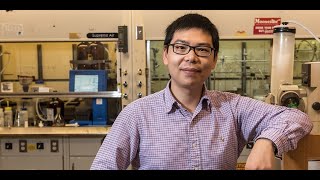
In this GlycoNet ACS Collaborative Seminar, Dr. Jia Niu presents his laboratory’s development of a new early‑stage O‑sulfation strategy for carbohydrates, peptides, and small molecules. He begins by outlining the biological importance of O‑sulfation in glycosaminoglycans, tyrosine‑sulfated proteins, and viral entry, and then critiques existing late‑stage sulfation approaches (both chemical and enzymatic) for their inefficiency, limited flexibility, and purification challenges. Building on earlier early‑stage sulfation methods that suffer from harsh conditions and poor reactivity, his group adapts the sulfur‑fluoride exchange (SOFEX) reaction: a silyl glycosyl ether reacts with an aryl fluorosulfate in the presence of an organobase (DBU or TBD) to give an aryl glycosulfate diester. This diester can be selectively deprotected either by base‑mediated hydrolysis (electron‑withdrawing aryl groups) or, more generally, by palladium‑catalyzed hydrogenolysis, which the team shows proceeds via a palladium insertion into the C–O bond rather than aromatic hydrogenation. They optimize the coupling (switching DBU→TBD, one‑pot TMS‑Cl→HDMS protocol) and demonstrate a broad substrate scope, including various hydroxyl positions on glucose, other sugars, small molecules, amino acids, and peptides, with good yields and functional‑group tolerance. The sulfated intermediates are compatible with downstream glycosylation, serving as donors or acceptors to form disaccharides efficiently. The method enables scalable synthesis of O‑sulfated glycoconjugates and glycomimetic polymers. The talk concludes with acknowledgments to the graduate students, postdoc, undergraduates, and funding agencies.
Chapters
Welcome everybody to 2021 GlycoNet ACS Collaborative Seminar Series. It's my immense pleasure to introduce a good friend and collaborator of mine, Jia Niu. So Jia is Zooming in from Boston College, where he is an assistant professor in the Department of Chemistry. Jia obtained his undergraduate degree from Tsinghua University in China. Prior to moving to Harvard, where he conducted his PhD work in David Liu's lab on enzyme-free translation and directed evolution. Jia then conducted a postdoctoral fellowship with Craig Hawker at Tom So at the University of California in Santa Barbara. And he initiated his group at Boston College just a few short years ago with a focus on sulfation chemistry on carbohydrates and peptides, as well as some work in— genome editing as well. Jia's program has been immensely productive and well recognized already. I think he'll tell us about some of the chemistry he's done on O-sulfation of carbohydrates and peptides today. Jia, thank you so much for coming today, and we're looking forward to your talk.
Well, thank you, Christina, for the overly generous introduction, and I'm very honored to be here.. And this is my first time actually presenting in GlycoNet, and such a wonderful opportunity. And I also got to know other presenters by watching their YouTube videos. So I think this is a great opportunity. And thank you very much, Christina, and all the other organizers for inviting me. So today, it's my pleasure to tell you a little bit about our recent progress in the early stage of sulfation of carbohydrates and peptides. All right, sulfation is critical for the function of many polysaccharides, as well as proteins. But on the polysaccharide side, it's, for example, the glycosaminoglycans, or also GAGs, are a very famous type of molecule that the audience may be familiar with. So sulfated GAGs, such as heparin sulfate, are very important in facilitating the interaction between signaling molecules and their cell surface receptors. For example, here on the upper left corner, you can see that the fibroblast growth factor, or FGF, requires the binding with heparin sulfate, which is a type of GAG on the cell surface in order to properly be recognized by its receptor. FGF is definitely not alone. There are many other growth factors, as well as other cytokines and chemokines, function like this. They require this binding interaction between cell surface heparin sulfate, which is highly sulfated polymer, to interact with their cell surface receptors. And this interaction also are important for a variety of cell functions. But one notable function is stem cell fate determination or stem cell differentiation. It turns out that FGF, the proper signaling of FGF, will trigger the downstream differentiation function of the cells if properly signaled. The cell surface heparin sulfate and other GAGs are also important to serve as decoy receptors in signaling. On the right of this slide, you will see that the heparinase, which is an enzyme that can cleave the cell surface heparin sulfate, actually plays an important role in regulating the growth factor signaling. And the reason for this is that the cell surface heparin sulfate, which is also sulfated, can interact with the growth factors and serve as decoy receptors. And so in other words, basically inhibiting them. But once the heparinase comes into function, they cleave off these cell surface glycans. And the growth factor associated with them, and thereby activating this growth factor signaling pathway. In another recent example, people have shown— I mean, here people means the Polinsky and the Jen Liu's groups. They have shown that another GAG, which is the chondroitin sulfate, actually have this defined sulfation pattern. And that defined sulfation pattern allows it to effectively neutralize the cytotoxic effect of circulating histones, which is released in the mouse model of sepsis. This can be attributed to the anti-inflammation function of chondroitin sulfate. OK, so not only the carbohydrates have O-sulfations. O-sulfation also occurs on peptides and proteins. For example, tyrosine O-sulfation is a ubiquitous post-translational modification, or PTM, of proteins and peptides. In mammalian cells, it is estimated that about 1% of the total tyrosine residues are O-sulfated, which is a significant amount. If you consider tyrosine being a very common amino acid residue in all proteins. So many of the sulfur proteins, unfortunately, are not yet discovered, or their functions are not really clear. The functions of sulfur proteins in the blood coagulation pathway is one of the better understood functions of sulfur proteins. Here, you can see that this is a figure from— a work recently published by our colleague also at Boston College, Professor Abhishek Chatterjee. And his group actually studied the function of this particular protein called human heparin cofactor 2, or HC2. And in that protein, the N-terminus of this HC2 actually is sulfated at 2 residues, 2 tyrosine residues. And this acidic N-terminal domain, or AND domain, is important in interacting with the target protein, which is the thrombin, which is involved in the blood coagulation pathway upon both of the protein binding to GAGs. And the Chatterjee group has identified that between the two tyrosine in the AND domain, one of those is more important than the other in terms of binding to thrombin. And that shows you the sulfation pattern is important in its molecular recognition. Well, last but not least, and this is also very relevant to the current pandemic, the O-sulfated GAGs are also playing an important role in cellular entry of virus. So this is an example mentioned by Professor Hing Wan's talk 2 weeks ago in this same forum. So it has been found that the heparin sulfates are co-receptors of SARS-CoV-2 in addition to ACE2, which is a more known receptor for this spike protein of coronavirus. And people have found that— without the heparin sulfate proteoglycan, or with heparin sulfate but with improper sulfation pattern, then the binding of virus as well as the cellular entry can be affected. So clearly sulfation has a very important biological significance. So to which molecules do the sulfation occur? There are several classes of molecules in biology that are sulfated. For example, glycopeptides, as I mentioned already, the peptide can be sulfated on the tyrosine residue, but also glycopeptide can be sulfated on their sugars too. So both the sugar as well as the peptide residues can be sulfated in glycopeptides. There are also liposaccharides, which are lipid molecules with sugar half groups. Can also be sulfated on the sugar head groups. The glycosaminoglycan is something that I've already mentioned, which have very interesting phenomena, which is so-called sulfation patterns, because multiple sites, multiple hydroxyl groups on the disaccharide repeating unit of many GAGs, such as heparin sulfate or chondroitin sulfate, can be sulfated. But they can also remain as free hydroxyl, which creates a very complex pattern for this sulfate modification. And the sulfation pattern has been implicated in its molecular recognition, as well as the function of many things that we mentioned with the sulfated gas. And also, small molecules can be sulfated too. In fact, the sulfation is a general strategy for our body to metabolize small molecules. Whenever we take a drug molecule, and it will eventually be cleared out from our body, and one of the important ways to clear them out is to sulfate them, to make them more hydrophilic. OK, so there are so many different bioactive molecules that can be modified by the sulfates modification. And so how to study their function as well as their structures? An important strategy to study the functional roles of the sulfation is to generate probes and biomimetic molecules that can recapitulate the structures and the functions of those O-sulfated biomolecules in nature. In the effort of synthesizing O-sulfated molecules, there are mainly two strategies. One is the so-called late-stage O-sulfation. The other one is the early-stage O-sulfation. So let's first take a look at the late-stage O-sulfation strategy. And within this strategy, there are also two approaches— chemical approach and the enzymatic approach. In the late-stage chemical sulfation of oligosaccharides, there's often this kind of a workflow. That's shown on the slides, on the top half of the slide. We start with monosaccharide building blocks. The first thing to do is to orthogonally protect them. And keep in mind that the hydroxyls that we want to introduce the sulfide group will be protected orthogonally compared to all the other hydroxyl groups so that they can selectively be protected at a later stage of the synthesis. And then once we protected them, then we can build the backbone of the oligosaccharides. And then that will be further deprotected to reveal all these hydroxyls to be sulfated. And then it'll be sulfated using SO2 amine— sorry, S3 amine as a reagent. To convert into the sulfide modification. So this procedure has been the mainstay of a laboratory chemical approach for O-sulfation, or late-stage O-sulfation. But it has suffered a series of issues. For example, it's a very laborious synthesis. And very often, the efficiency isn't great. The scale of those sulfation reactions are not particularly high. And the sulfated compounds actually become very polar, such that the purification becomes a challenge. Recently, there's the enzymatic approach has emerged as a promising strategy for introducing O-sulfation to carbohydrate. A typical enzymatic sulfation procedure starts from already constructed oligosaccharide backbone with little or no protecting groups. And itself often is a product of enzymatic glycosylation reactions. There are assembly techniques that people have developed using enzymatic strategies to assemble those carbohydrate backbones. And then this oligosaccharide will be treated with a series of enzymes that can introduce the sulfate at proper positions. These enzymes are usually the glyco— sorry, the sulfotransferases. These are the same type of proteins that install the sulfate groups in nature. Therefore, they also have very good selectivities as well as efficiencies. And these reactions are also pretty good for scaling up. And there have been already a lot of progress in scaling up the sulfation reactions to the industry scale. However, the enzymatic sulfation strategy also has its own limitations. In particular, the reaction sequence is relatively inflexible, meaning that in order to sulfate, for example, the 6 position of the disaccharide of glycosaminoglycan, you have to first sulfate the N position, which is required by the function of the 2-ol sulfotransferase. And the 2-ol sulfation is also required by the function of 6-ol sulfotransferase, right? So you cannot change this particular sequence. You have to start with N-sulfation, which is followed by the 2-ol sulfation, which is followed by the 6-ol sulfation. Another issue with this is that even though the selectivity of this enzyme is pretty high, Conversely, it requires naturally occurring substrates. If your substrate is non-natural, very often you will find that the enzymatic reaction will not proceed. And at last, you also get a highly sulfated compound, which requires relatively challenging separation, and HPLC method is usually necessary. In order to address all the challenges associated with late-stage sulfation strategies, people have developed the so-called early-stage sulfation approach as the alternatives. The early-stage sulfation usually starts with the monosaccharides, and the targeted hydroxyls are directly converted into sulfate diesters as as protected sulfates in the early stage of the synthesis, usually at the monosaccharide level. And those sulfated diester sugars will be then converted into donors and acceptors, which is followed by the glycosylation to build the backbone. And then eventually, it can be globally deprotected to reveal all the sulfate groups. So the advantage of early stage O-sulfation is that it is much more concise compared to the late-stage sulfation synthesis. It is also scalable and relatively easy to purify. You could purify the material right before the global deprotection reaction, and usually the global deprotection reaction generates very little, if there's any byproduct, so you don't need to do the purification at the very last product. However, so there are already, sorry, there are already a few different, you know, sulfide diesters that have been developed to affect the early stage of sulfation. The first one was developed by Penny and Perlin in the early 1980s, and there are also notable contributions from the Simpson group as well as Scott Taylor's group by introducing different sulfide diesters, such as the trichloroethylene and the neopentene, so on and so forth. So among all of those sulfide diesters, there are still limitations. For example, many of those early-stage sulfation strategies require relatively harsh conditions for introducing those sulfide diesters to the carbohydrates. Substrates, as well as the deprotection requires relatively harsh conditions too. The sulfidicesters are often nucleophilic susceptible, and you have to really find the reagents that are compatible with them. And last but not least, they also have— they also result in poor reactivity of the modified substrate. This is because the sulfidiesters usually have electron-withdrawing effect, and that can disarm this donor or acceptors and make their glycosylation reaction more challenging to conduct. All right, because of these limitations, we wonder whether we can develop a new generation early-stage O-sulfation strategy. And we actually got our inspiration from this reaction called SOFEX. It's a sulfur-6-fluoride exchange reaction developed by Sharpness Group in 2014. And this reaction entails the reaction between a thioether, usually aromatic thioether, and aromatic fluorosulfate. In the presence of the catalyst, the DBU, which is organobase, it can generate the sulfated diester as the main product, as well as the silyl fluoride as the byproduct. And in fact, the formation of the silicon fluoride bond is the driving force of the reaction because of its very low bond energy. So inspired by this, we envisioned that we could actually perform this SOFAX reaction on carbohydrates. Which means that if we take a silyl glycosyl ether and make it react with aryl fluorosulfate, it can then generate the aryl glycosulfate diester, which can undergo selective cleavage to cleave the aryl protecting group and reveal the sulfate on the carbohydrates. And this strategy could also be applicable to peptide and small molecules. And generate the corresponding sulfidated compounds as a product. All right, our investigation first began with a model reaction between a galactose-6-TMS cytoether and aryl fluoride sulfates. So the aryl fluoride sulfates can be relatively conveniently generated from the corresponding modified phenols. And the reason that we want to introduce aromatic substitutions on the phenolic structure is because we want to modulate the electronic property of those fluorosulfates and study whether those modulation could actually change the reactivity of the corresponding fluorosulfates. So this reaction can be relatively efficiently conducted by simply reacting the phenols with sulfur fluoride. If you haven't heard of this compound, you must have heard the gas called Vicane, which is the gas used for fumigation. So whenever you, you go to see a house that's been completely covered by a tent, and also if you have watched this TV show Breaking Bad, you will see actually, you know, this kind of a scene. The fumigation gas, Vicane, is, in fact, the sulfur fluoride. So it's a very toxic gas. And I want to make a disclaimer here that this is something that you need to use with care, with caution. And our lab has developed a standard operational procedure, and I'm very happy to share with you if you are interested in this chemistry. Despite of this toxicity, this is actually something that you can very conveniently use you can generate the fluorosulfate in very, very high efficiency, as you can see on this table. And after this, you can react with a glycosyl substrate to generate the corresponding sulfide diester. And we initially just used simply the SOFEX condition in the presence of DBU, and that has already been able to generate the corresponding glycol aryl sulfide diester in pretty good efficiency for many of these R groups. As you can see, as the R group becomes more electron withdrawing, then the efficiency of this corresponding sulfex coupling increases. For the more electron donating group, however, the corresponding sulfide diester reaction is less efficient. Then we move on to test whether our hypothesis is true, and that is whether we can selectively deprotect this sulfide diester by removing this aryl protecting group. And initially, we just think that we could just simply treat it with base, strong base. The reason is that by changing this R group, you can make this areo group a very good leaving group when the R group is electron withdrawing. And that actually can make the corresponding hydrolysis pretty selective and efficient on the areo side of the areoglycosulfate diester, which is indeed true. As you can see, the more electron withdrawing group turns out to be a better leaving group in this hydrolysis reaction in the presence of a 5 molar sodium methoxide. To generate the corresponding sulfate product in pretty good efficiency. As the R group becomes more electron-donating, the efficiency of the hydrolysis reduces. And based on this, we come up with the mechanism hypothesis for this hydrolysis reaction. So this is the sulfate diester, and this is the base. Sodium methoxide. The, uh, the methoxide ion will undergo— will nucleophilically attack the sulfur center, and that is a typical SN2 reaction. The phenol is basically the leaving group, and then you basically will get a sulfide diester with a methyl group. And this methyl sulfide diester isn't stable, so there are only two ways for it to further decompose. One is that, because we conducted this reaction in methanol, there will be a trace amount of water. This water will nucleophilically attack this methyl group to form methanol, and then as well as the desulfated sugar. The other pathway is that if it's nucleophilically attacked by the methoxy, ion, then it can also generate the sulfated sugar as well as the dimethyl ether as the side product. Either way, the sulfated sugar can be generated in relatively high efficiency. But we are still troubled by the fact that when the R group is electron donating, we get very little hydrolysis. So we switched to a different method using hydrogenolysis to do the deprotection. It turns out that regardless of the R group, the hydrogenolysis actually can afford the corresponding sulfate in high efficiency. And this reaction was really a pleasant surprise for us, and we want to study its mechanism, what happens. So we are certainly not the first group to come up with the idea of deprotecting sulfidiesters. In early-stage sulfation strategy using hydrogenolysis. In fact, the first example of the early-stage sulfation method developed by Penny and Perlin already used hydrogenolysis to deprotect the aryl group. But in their paper, as well as some of the following papers, people have proposed that the mechanism being that the hydrogenolysis hydrogenated the aromatic structure, which may convert it into, for example, a cyclohexanol structure, and which then quickly undergo nucleophilic substitution to generate the sulfated sugar. Initially, we were a little bit troubled by this mechanistic hypothesis, because we have observed that less potent hydride source, such as ammonium formate, works pretty well in this reaction, too. And it is pretty well established that this particular reagent, ammonium formate, cannot efficiently hydrogenate aromatic structures. So then what happened? So then we actually did our own study to probe the mechanism of this reaction. So our mechanistic study is mainly conducted using gas chromatography mass spectrometry, GC-MS, which entails that we perform this hydrogenolysis reaction, and we monitor using GC-MS what's the other compounds than the sulfated sugar that's being generated in the process. We also used 3 purified compounds as a standard just to serve as a reference in GC-MS. So we found out that in all of these reactions, it exclusively only generated the corresponding arene structure. For example, if this is the phenol— sorry, if it's phenyl glycosulfate diester, then after hydrolysis, we only found benzene in the product. Cyclohexanone being generated in the process. OK? All right, then we changed this R group to different substitutions. For example, we changed it to methoxy or trifluoromethyl group. And in all of them, it's found that this corresponding arene is being generated, and there's no phenol or cyclohexanone being generated in the process. And there are some side products when we do hydrolysis, hydroanalysis for too long, and that is the triethylamine, which is the reduction product of acetonitrile, which is the solvent that we used in these reactions. OK, so based on this observation, we found that this previously reported mechanism hypothesis is probably wrong. And our proposed mechanism involves the palladium insertion into the CO bond rather than SO bond. So this insertion will then undergo this hydride transfer as well as reductive elimination to generate corresponding sulfated sugar, as well as the palladium areal structure which then collapse into the corresponding areas. OK, so with that, we have already confirmed what kind of ways that we can form and deprotect the corresponding sulfide diester. We still want to do a final optimization of the sulfex coupling before expanding the substrate scope. So, we, first of all, we were a little bit troubled by the fact that some of this electron-donating phenol structures do not actually result in higher yields in the coupling reaction. So, we tested, you know, a new reaction condition by changing the base from DBU to TBD, and turns out that TBD is a more efficient catalyst in this SOF-X reaction and can result in the corresponding sulfidiester in higher yield. For example, in this methyl—paramethyl structure, we can improve the yield from 29% to quantitative. Another optimization is that we found that it can be done— the, the sulfex reaction to introduce the sulfidiester can be done in a one-pot manner. So this can be achieved by changing this TMS protecting— TMS reagent from TMS chloride to hexamethyl disilazine, or HDMS, which is compatible with the fluorosulfate. And then you can add the DBO or TBD to generate the corresponding sulfate diester. All right, with that condition optimization, we then expanded this chemistry to a variety of different substrates,, as well as a variety of different positions to introduce a sulfate diester. As you can see, we used either the stepwise procedure or the one-pot procedure to generate the sulfate diester compounds, and all of them generate the compound in relatively high yield. We also try to see if that R group can allow further optimization of the reactivity in the sulfates, as well as in the deprotection reaction. And indeed, we found that different R groups actually can optimize the reactivity for different substrates. So you will see that some of our substrates carries one R group, and some of the others carry the other R group. We indeed found that some of these reactions are less efficient than the others. For example, this particular substrate, which sulfates at the 3 position of glucose, as well as this one, sulfated at the 4 position, are less efficient than the others. So then we studied what happens to those less efficient reactions, and what are the side reactions. We found that it is, in fact, the corresponding hydrolyzed TMS. That's the only side product that we can observe, which is probably attributed to— the steric hindrance of the corresponding positions. So the fluorosulfate is relatively bulky, and when there's a relatively bulky protecting group on the site, this reaction could actually be less efficient compared to many other positions. But luckily, because the hydrolyzed thioether is the sole byproduct, we could easily recycle this byproduct and resubject it into the next round of reaction. So in this way, we could actually eventually get a recycled yield pretty high. We also try to expand this chemistry to different type of positions, as well as different substitution groups. We found that all of them can generate the corresponding product in pretty good yield, as well as good quantity. And notably, we also can generate corresponding sulfide diester groups. In non-carbohydrate substrates, such as this small molecule as well as this amino acid. So this chemistry, it turns out, is pretty compatible with a variety of different glycochemistry conditions, for example, acidic, basic, unsulfation, oxidizing, and reducing conditions. So because of the interest of time, I'm not going to go into details. About those chemistries. And I'm happy to answer any questions if you have in the Q&A part. So most importantly, this chemistry is compatible with glycosylation reaction, which is probably the most important thing for early-stage sulfation strategy. We found that the sulfated compound can serve both as an acceptor or as a donor. In the corresponding reaction to generate the disaccharide in good yield. And it's noteworthy that when both donor and acceptor are modified by the sulfated diester, we could still generate the corresponding disaccharides in good efficiency. And this glycosylation reaction can be further optimized by changing either the R group on the aryl side, as well as different donor chemistry. And eventually, we could achieve, for example, this disaccharide in 95% coupling efficiency, which is pretty good. Last but not least, we take all this sulfodiester-modified compounds, and we subject it into hydrolysis. It's pretty straightforward that we could generate the corresponding sulfated compounds in good yields. All right, so because I'm running out of time, I will just skip the discussion on the peptide part. But you could imagine that this can also be done on peptides as well. OK. All right, so in summary, we have done early-stage O-sulfation of carbohydrates. And I didn't talk about the peptides, and this, this chemistry is pretty efficient. It's, uh, it's relatively rapid. It has pretty broad functional group compatibility and a very efficient, uh, and selective, uh, for deprotection reaction. So we are actually now applying this chemistry of imbuing glycomimetic polymers. All right, with that, I'd like to, you know, thank my group, uh, and I want to especially point out this work is done by graduate student Chao Liu and postdoc Changjie Yang, as well as undergraduates Siu Wong as well as Samantha Ferraro. I'd like to finally thank all the funding agencies to make this possible. All right, thank you.
More from Joshua







Scientist Stories: Hans Waterham, The value of phenotypic assays in peroxisomal disorders




Scientist Stories: Joel Zlotogora, Genetic carrier screening programs for reproductive purposes