Scientist Stories: Jimmy Lin, Genomics to Address Health Disparities in Cancer and Rare Diseases
The NIH Genomics and Health Disparities Lecture Series featured Dr. Jimmy Lin, founder and CEO of the Rare Genomics Institute (RGI) and CSO of Freenome, who presented a comprehensive view of how whole‑genome sequencing and multi‑omics can be used to close health‑equity gaps in rare‑disease diagnosis and early cancer detection. He opened with a personal patient story (Robert) that illustrates the diagnostic odyssey many families face and how RGI’s patient‑centered, bottom‑up model—leveraging crowdfunding, partnerships with Illumina, and insurance reimbursement—has enabled over 1,000 families worldwide to obtain genomic diagnoses. Lin described downstream efforts such as re‑analysis of unsolved cases, deep phenotyping, model‑organism research, and the “Be Heard” mini‑grant program that seeds rare‑disease research. He then introduced Freenome’s multi‑omics blood test for early colorectal cancer, emphasizing its high sensitivity, virtual trial design, and partnerships with historically Black colleges and universities (HBCUs) to achieve a diverse enrollment (≈13 % Black, 12 % Hispanic). A three‑axis health‑equity framework (research spectrum, stakeholder groups, and forms of diversity) was proposed to map disparities and guide interventions. In the Q&A, Lin advocated for universally reimbursed cancer screening tests, greater inclusion of patient voices in research governance, global access challenges (e.g., funding and infrastructure in low‑resource settings), the importance of listening to underserved communities, and the potential of real‑world data and omics for rare‑disease therapeutics. He also acknowledged that rare diseases affect all racial/ethnic groups, but historical funding biases can create disparities.
Chapters
Good afternoon. I'm Rear Admiral Shardea Rojo, the Associate Commissioner for Minority Health and Director of the Office of Minority Health and Health Equity at the U.S. Food and Drug Administration, or FDA. I'd like to welcome you to the 29th lecture of the NIH Genomics and Health Disparities Lecture Series. The first lecture was held in May 2015, and the series aims to highlight the opportunities of genomics research to address health disparities. The lecture series is co-sponsored by the National Heart, Lung, and Blood Institute, the National Institute of Diabetes and Digestive and Kidney Diseases, the National Institute on Minority Health and Health Disparities, the National Human Genome Research Institute at the National Institutes of Health, and the Office of Minority Health and Health Equity at the FDA. Speakers have been chosen by the series co-sponsors to present their research on the ability of genomics to improve health for all populations, and often the challenges in making sure these improvements are accessible and applicable to all populations. The speakers in this series approach this problem from different areas of research, including basic science, population genomics, translational, clinical, and social science research. And we are thrilled to have with us today Dr. Jimmy Lin. Dr. Lin is the founder and chief executive officer of Rare Genomics Institute, an international nonprofit founded in 2011 to enable any community to leverage cutting-edge biotechnology to advance understanding of rare diseases. Dr. Lin is also the chief scientific officer at Phrenome, working on early diagnostic of cancers, and prior to Phrenome, he was the chief scientific officer Oncology at Natera, where he led the development of new diagnostic technologies for cancer. Before his career in private industry, Dr. Lin led the Clinomics Program at the National Cancer Institute and was a research instructor at Washington University in St. Louis. Dr. Lin earned his MD and PhD from Johns Hopkins School of Medicine and a Master of Health Science from the Johns Hopkins Bloomberg School of Public Health. Dr. Lin is a 2016 Senior TED Fellow. He has been featured in so many media outlets, extensively published, and has so many accomplishments, and we are thrilled to have him with us today presenting on leveraging genomics to address health disparities and rare diseases and cancer screenings. For our virtual attendees, we will have a question and answer discussion following Dr. Lin's presentation, and you can please submit your questions in the Q&A box. So with that, please join me in welcoming Dr. Lin.
Whole genome sequencing offers hope for parents with sick children.
We have 3 children today because of it, and I'm very convinced I wouldn't have 3 children.
We literally don't know if she would be here today without whole genome sequencing.
We were running out of specialists to go to, and we were running out of time. Over the course of the 14 years of looking for a diagnosis, we saw every pediatric specialists. Nobody could figure out what was the matter. If we hadn't found out about genetic testing, things would have gotten very frightening for us. They found a defect in one of Robert's genes that was very rare, so the chance that we would ever have seen a doctor to test for it were impossible. I'm passionate about genetics because it's the very blueprint and the code for life. And being able to unravel that is very exciting to me. It's like solving a great mystery or a great puzzle. We only sequenced the genome around 10 years ago, and now for the first time in all of humanity, in human history, we're able to start doing this for individual patients. We're able to help individual children with rare diseases arrive at a diagnosis. What's exciting about RGI is we are able to offer families some of the most cutting-edge technologies.
Expanding our understanding of the roles of genes in disease by leaps and bounds every day.
Would you like a healthy child?
Everybody would like a healthy child. If you don't have a healthy child, the opportunities are better now than they ever have been.
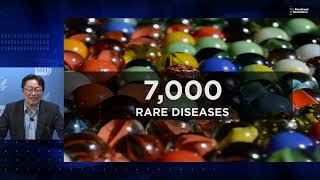
The most gratifying thing of, aspect of RGI, I think, is, is be able to give families hope. To go to a family who has gone to all the different doctors and about to give up on their child and says, you know, we'll come alongside you and we'll help you as much as we can. That is what's, I think, most sort of satisfying. Knowing that through this, really some of the best scientific and medical minds now trying to figure out, you know, what's happening with Robert feels tremendous. Feels like you're no longer, you know, wandering around in the dark, lost, alone. It feels fantastic to know that there may be treatments and there may even be a cure. This has been one of the most exciting things that ever happened to me. My hope is that someday doctors will use whole genome sequencing at the beginning of the diagnostic odyssey that's made such a difference in our family. I think Rare Genomics is really seeing the future and trying to bring that future to us today. [Speaker:Joshua Elkington] Well, thank you. I've seen that video, I don't know, hundreds of times, and still just the promise that genomics have brought to these families is still very heartwarming to myself. First of all, I want to thank all the organizers from— for inviting me. It's a great honor to come back to the NIH. To thank the National Heart, Lung, and Blood Institute, the National Institute of Diabetes and Digestive and Kidney Diseases, the National Institute of Minority Health and Health Disparities, the National Human Genome Research Institute at the NIH, and then the Office of Minority Health and Health Equity at the FDA. It's a great honor to get here because a lot of the things that we'll talk about was pioneered here, even thinking about rare disease and how those are different defined have been— some of these agencies have really sort of been pioneers of this, and it's quite an honor to share a little bit about thinking about how we can leverage genomics to address health disparities for rare diseases as well as for cancer screenings. So first, the obligatory disclosure slide. I am speaking here on my own behalf. These are some of the organizations I'm affiliated with. Rare Genomics is not nonprofit. I don't receive a salary there. Phenomenon and Atera, I've been employees at. I do have equity there. And then there are some of the other disclosures as well. So today we're going to explore the idea of health equity for these two different areas, cancers and screening and rare diseases, in these sort of five little boxes here. We'll start off by looking at a quick introduction of rare diseases and what we do at Rare Genomics, and then also a little bit about what is done Athena in terms of cancer screening, in terms of introduction. Then we'll talk about a health equity framework and a proposal and how we sort of think about health equity in a way that really is going to be sort of holistic and be able to look at all the dimensions. And then we're going to look at some vignettes, first on the cancer screening part and then for rare diseases. So starting off by rare disease, since you just saw the video, and this is— Amazing because this video was done almost a decade ago. And today, we're still seeing how much of this impact is able to really make a difference. And it's funny. I feel like I'm that old folk telling these kids, my kids, like, you know what? We didn't used to have supercomputers in our pockets. We used to have these phones that are connected to the wall. And this is almost telling a lot of the new research today. We didn't used to have NGS to be able to really understand the whole genome in such a quick and easy way. But we'll start talking about that first. So let's talk about rare diseases. For some, they may know rare diseases, although the word rare seems like, oh, there must be not that many people, but it affects millions of patients. In the US alone, it's estimated about 30 million people, almost 1 in 10 people, are affected by a rare disease. And it's interesting, right? Here, the slides are going on their own. Is something— we're having a technical issue here. Are we good here? Okay. So as we were saying, there's over 30 million patients affected with rare diseases. And in the US, it's actually defined by the Orphan Drug Act associated with the FDA. A disease affects less than 200,000 patients is considered rare. So, so many patients, why do we sort of think about that? Well, if they're rare, why are there so many people affected? In fact, it's because it affects— there are over 7,000 different rare diseases. So even if there's dozens of rare diseases that are being studied, Actually, it's only a small fraction because there's so many different types. It's not then a surprise to you then is only about 3% of rare diseases have any type of therapy. We're not even talking about cures. This is only 3% have any therapy. That means 97% of rare diseases does not have any type of therapy. Many of these things nobody's even working on it. Talk about being underrepresented there. So what often needed then is many of these, because it's so heterogeneous, a lot of the top-down approaches can help, but really what you need is a bottoms-up approach for all these rare disease communities to be able to help in this effort. And that's what we founded Rare Genomics. So to really think about, are there ways that we can help communities come alongside researchers instead of a top-down, but bottoms-up to be able to address these rare diseases? So, one of the ways that we do this is, you saw, is through connecting patients to genome sequencing. As you saw in the video, we have Robert. Robert was born healthy, a young child, and just like any child, very, very cute growing up. But when he was about 1 year old, all of a sudden, Janine, his mom, started like, you know, he was reacting a little bit less, and over a period of sort of in a few weeks, he went from this cute, happy child to very limp and unresponsive. So they started doing testing, and actually they grew up in the D.C. region, and trying to figure out what was wrong. And they started testing and testing and testing and testing. And as you saw from the video, 14 years later when they came to us, they still did not know what was wrong there. And what we thought about is, are there ways that we can use genome sequencing to be able to help these patients with rare diseases. And my background is actually in cancer genomics. We use genome sequencing to understand what's the genomic landscape of cancers. And the thing is, can we use those same technologies to be able to help that in rare diseases? So we started thinking, you know what, the first thing we want to think about in terms of helping Robert is getting the right technology. And since here we're on the NIH campus, many of you are not foreign to genome sequencing here, right? So this is a picture of an old, old sequencer. It's a GA II, and we use much more advanced sequencers these days. But that was not, at that time, just starting to be available. Oh, great that this technology was available. Then can we find the people to be able to help? So we called around some of our networks and contacts across multiple different institutions to say that, right, if we have a patient in the community that have undiagnosed disease, can we be able to leverage some of your expertise to be able to do that. And they were more than happy to be able to help. Then we need to figure out how to sort of fund that, fund these studies. And at that time, crowdfunding was just becoming vogue. This is about sort of 10 years ago. And we started creating our own platform to be able to help. So you can see this again. This is the older website. Then each family there, right, you can think about ways to be able to raise funds to be able to do that. For Robert, they were quickly able to raise sort of about $8,000 to be able to do this from over 100-some people. Again, these are aunts and uncles raising funds to be able to actually do genomic research for an N of 1, one individual. So for some people, $7,000 is a lot of money, but for others, like, wow, a genome sequence for that amount is actually pretty, pretty amazing. So what were we able to help Robert? Well, we have now a team of scientists using the latest in technology to be able to figure out there. And we were able to actually be able to figure out the gene that was mostly causative. And there's less than 12 people in all of medical literature with that gene. It's a disease called dystonia 16. And what's really, really amazing is that the whole time, because Robert was limp and unable to communicate, is that whether this disease was something affecting more his brain or just his muscles. And this is a dystonia disease, more muscles. Then Robert was able to then, you know what, his brain probably communication was intact and started using technology like iPads, was able to communicate for the first time to his family. And the cool thing is Robert has a really good sense of humor and plays tricks on people. So this is how we got started. And since we started working on this, now Robert is on his path, and we're thinking about different ways to be able to help. And actually attended Robert's 18th birthday a while back. But since then, we've been able to help over 1,000 different families thinking about this. But there's been really, really exciting developments since we had to do this. One thing is in 2016, one of the makers of sequencing technologies, Illumina, decided that, wow, you guys are helping so many have so many kids, we want to come alongside you and fund this. No longer need for crowdfunding, Illumina then pays for that. We were starting this project with Illumina working with UCSF and Foundation for the Children to now starting to be able to sequence these kids for free, for no cost to the family, no longer even to raise funds for that. Then later in this paper published in 2019, really looking at the red and the green is this became more a medically reimbursed test. More and more insurance is able to now cover for this, so no longer is it even a research to be able to do that. So this is very, very exciting. And then one of the efforts that's funded through here at the NIH called Centers of Mendelian Genomics, huge initiative now to be able to do this at scale. And this is an area where we were off doing sort of one-offs here and there is now a large effort and clinical service now available to many, many, many patients, and we're very excited. But that's only the beginning. At the NHGRI, I saw this little sign, right, is the human genome sequence— sequencing human genome is only the beginning, and this is only the beginning. Once you find out the gene, how are we— how can we help these kids? You know, something like a disease with rubber affecting less than 12 people in all of human history, what are things that we can do? So we're starting to work on what are the downstream things that we can be able to help. For example, this is not for Robert, and only about 30% of these patients get a diagnosis. And as databases continue to grow, we can then go back. And in fact, we've done this many, many times where someone got sequenced, but then a couple of years later, there's a new literature then. We can reanalyze their genome and says, you know what, there's a paper that just published last week or half a year ago And we're starting to be able to really re-annotate and figure out the rest of the 70% that don't get diagnosis. For patients like Robert and others, what we can also do is now starting to do the research. So for the individual then, what are the next steps? There may not be a therapy right away, but we can start doing research and to be able to do that. Genome, we were able to measure the genome, which is 3 billion bases or parts of the exome, 50 million bases. But then we link that only with, you know, disease, non-disease. What we want to do also is deeper phenotyping, working with companies that does wearables or EMR records and to be able to do that, be able to help these kids after sequencing. And then finally, to build communities. And it's pretty amazing now that starting these families, once they figure out that there's a— they have this sick child with a gene, they're starting to gather and create community. We have one of these platforms able to support, but other people have just used Facebook and created these communities to really sort of kick off understanding of these diseases. So, this really sort of rather underserved, overlooked area, because of genomics, is starting to be actually studied for the first time. Like Robert's dad said, you know, he could have took Robert to all the doctors in the world. Again, this affected 12 people in all history, and probably no doctor would have been able to diagnose this. So this is pretty amazing of the power of genomics for rare diseases. So that's a quick introduction about rare diseases. And I'll give a quick introduction about what we do here in the cancer space as well, this other hat I wear at a company called Freenome. What we care about is to really create tools that empower everyone to prevent detect, and treat their disease. And the way that we do this across risk prediction, early cancer detection, early intervention, the one that we really are focusing these days is on early cancer detection. And what we want to do is be able to detect a cancer before it becomes late stage through a blood test using a multi-omics approach. Our first work is looking at colorectal cancer because we know that if you detect colorectal cancer, there's something you can do with it. Do about it, and it really is able to save lives in that way. And does early detection make an impact? Actually, in some diseases, detecting a cancer early actually doesn't— some diseases, actually, you're just sort of enabling sort of more treatment. But for a lot of diseases, earlier detection makes a huge impact. On the graphs you can show here by survival rates, what's shown in the green are if it's detected in a localized manner in terms of survival rate, you can see they're very, very high in some of these diseases, over 90%. But once it metastasizes to the rest of the body in later stages, the very, very low survival. So as long as you catch it early, actually, with the same therapies that's available, people can live longer. And there could be lives be saved. So our here then objective is to detect cancer, test with a tests, make it easier for people to get screened, and then ultimately improve survival and be able to save lives. And the way that we do this is think about cancer is if you think about colorectal cancer, for example, it starts off as an adenoma, goes into C2, and it goes in stages. The signals that often people look for are what's shown under stage 4, sort of tumor-derived, right, the cancer signal. So what we want to do is not— if we want to like earlier, the tumor-derived signal is actually very small. So what we want to do is to look at non-tumor-derived signal to be able to do that. So we can not only catch cancers, but also advance adenomas there. So that's what we're excited to do. And then since here, I know for a general audience, this is a little bit too much. But for the scientific audience, maybe people love to geek out over this. We have a multi-omics platform where we start off with a plasma sample. From the cell-free DNA, we look at both the genome and the epigenome. Looking at methylation there. And then from those, as well as looking at RNA and protein immunoprofiling, our antibodies, extracellular vesicles, and look at all those different signals to figure out what are the signals that really differentiate cancer from normal so we can detect those in the blood. And through bioinformatics, we'll be able to featurize it. And ultimately, with all these green boxes of different features to figure out what are the signal using our machine learning classifier to be able figure that out. And this is really exciting because, you know, for scientists, we love to be comprehensive. And this is really looking across the entire central dogma from DNA to RNA to protein to post-translational modifications of all the different signals to be able to do that there. And we are very excited. We are already showing early data that high sensitivity and specificity across early stages. And we are in the middle of working with the FDA in terms of getting this approved there. So, that's a quick introduction here. And here, the key here is we want to talk about health equity and how health disparity is going to be important. So, I'm going to propose a framework here as we sort of think about health disparity that has crossed sort of three dimensions. Here. And I like to think about things in a very structured way and think about Cartesian coordinates here. If you think about looking at health disparity from 3 different axes, if you think of the x-axis as the research spectrum here, the y-axis as the stakeholders, and z-axis as the forms of diversity, you can start mapping out what are the areas that are being studied, what are not. How are different initiatives be able to address different areas of diversity? What are areas of equity and what are areas where there's disparity as well? The x-axis is what is often called the clinical translational research spectrum. This is a model that was instituted by the Institute of Medicine in 2013, looking at from the beginning of translation all the way to the end. So usually what people think about is starting from basic science at the T0, right? You're starting to do some basic research. Then you move towards translation to human, right? So this is often phase 1 trials for those from the FDA there. And then translation to patients. This is the larger phase 3, phase 4 clinical trials there as we translate them to patients. And then to T3 is an implementation to practice. Once it's approved, maybe there's post-market studies. How do you then translate the effects of the results of the trial to practice, and then ultimately translation to population? And this is an area where people talk about dissemination, right? Just as now we want to sort of communicate that to a larger audience there. So that's usually the clinical translational research spectrum. I added one more, T-1, is because even when we already start off with basic science, Already the questions are already predefined. If you want to really address an area of disparity, what are the questions we need to ask for different populations? So I created this sort of hopefully helping people think about, and T minus 1 is the individuals that often are affected, whether it's a racial ethnic disparity or disability disparity. What do the patients themselves want? There. So, that's in terms of the x-axis when you think about the whole spectrum of from not only from bench to bedside to clinical trial, but lived experience all the way to population health. So, this is what's mapped out here on the x-axis. On the y-axis here, I map out the stakeholders. So, from funders to institutions to research to community to individual. So, let me expand that a little bit. This is As we can think about, what's funding? Again, who are the ones writing the checks to be able to study this? For funding, for example, there's government and philanthropy as well as venture philanthropy or in companies, public or private investors. In order to study these, there's going to be a decision in boardrooms or study sections, to decide these questions? Is there diversity in these sections, even thinking about that, to advocate for these different populations? Secondly, there's institutions, right, whether in the academic institutions, biomedical healthcare, or even commercially in biotech and biopharma, right? You know, what's the thinking about diversity there? Within the research institutions, the researchers themselves, whether it's the key opinion leaders, the KOLs, who are the influencers, The principal investigators who are leading the studies, all the workforce, right? What do you all think about diversity there? Then the community themselves, often the patient advocacy groups there, patient communities, not without a group, or even just the family and caretaker. What are their views as stakeholders? And lastly, the individuals, all the individual participants. Some people like to call them patients. Some people call them Or we can just call them humans or participants there. What do those people, how are they involved in this stakeholder process? So that's then the y-axis in terms of the different stakeholders. Then the z-axis then is, as you go in and out of the board, is the different types of diversity. So there are many, many forms of diversity. The one that's often talked about in these settings, and it's in the US here, is Racial, ethnic, and ancestral origin, right? Do we have diversity there? But there's also many different areas. For example, there's geographic location and socioeconomic status, often it's located, right? Are we sort of considering those diversity? How about disability, disease prevalence, and rare diseases, right? Diversity, that's one dear to my heart, right? Are we having a diversity there of disease? Or biological sex, sexual orientation, gender identity? There's many, many, many other layers that can be built here as we think about that. So through these three different axes, then we can then think about health disparities in potentially a Cartesian format here. And lastly, of course, we want to think about social determinants of health. I did not know where exactly to put it, but I'll just put it there. It could be also in the z-axis as well. So for example, how do we map the different types of diversity? For example, if we think about a racial— and ethnic diversity and ancestral origin, we can start mapping some of what it can look like. A lot of the discussion in this area has really focused on here, racial diversity in clinical trial. So this is at the clinical trial. Are we having trials that are clinically diverse? A lot of thinking about FDA. But what's a lot of the learning is that actually, in order to have a clinical trial, you need the right databases. To be able to do that, right? So there's a lot of work now at NIH and other places to make genomic databases diverse and not just representative of one population. So these are the two main things people sort of talk about. And then I think more and more the conversation has sort of increased. There's historically also, how do we make— think about our— in terms of representation in our research layer here across the entire clinical translational framework, right? How do we train underrepresented minorities so that they can help in that discussion when they are creating genomic databases or clinical trials? Or even related to that, even in the workplace, right? Not even the investors themselves. I know there's recent efforts here, even on this campus, to look at the workplace and look at that diversity. And above all that is the funding question, right? So this is important, right? So because ultimately, anything needs to be done, you need funding. So is there diversity in the grant makers? Who's in the room in the study sections making these decisions? If they are not represented there, how does that affect some of these decisions? Or if you think further down the clinical translation axes, there, it's when you get to a clinical trial, it's more companies. It's more for-profits. So how are the investors thinking about this in terms of diversity there? What are the decisions in the boardroom there? So, this is a map of some of the areas. And then ultimately, here is dissemination, implementation. How do you get the message out? How do you have trusted— even if you have a drug that works for a specific population, how do you have leveraged community to really think about, get this idea out? So, for example, we've recently lived through the pandemic with COVID and vaccine. How do we get that message out that is actually building trust? That as well. And lastly is also reimbursement. Are any of these tests going to be paid for? So this is one way to think about, you know, in terms of z-axis, race, ethnicity, and ancestral origin on these sort of different ways of thinking about disparity. Another way to think about it is, for example, we can map it onto rare diseases. So same here, but then in the z-axis is on disability, disease, and prevalence. Here. On the clinical trial part, the FDA has been doing, you know, really leading work with the— and since 1983, the Orphan Drug Act, right, to really think about— because these rare diseases, it's very, very hard to do large trials to really sort of spur that on. However, the numbers are still small, and we can always use more and more clinical trials in orphan diseases. And then, like we mentioned earlier, in the Centers of Mendelian Genomics and others, NIH is funding more and more genomic studies in terms of the databases. The lion's share, actually, a lot of this work has actually been done by the rare disease advocacy groups, the ones that actually are large, like cystic fibrosis or muscular dystrophy, actually doing some of the even basic bench research, funding that one all the way to translation there, really leveraging the community and the research. So the advocacy groups play a large large way to represent. However, the advocacy group of the 7,000, there's still many, many diseases that are not— does not even have an advocacy group to speak on their behalf. And then in terms of diversity in workforce, we allow for disability in the workforce there. And then funding. In rare diseases, the grant makers here in terms of thinking about funding, and then in a for-profit setting, it's investor. Only a handful of rare diseases is actually worth the investment because so few are affected. What they end up doing is here reimbursement charging extraordinary amounts to be able to do that. So is there a model to be able to do this so that even these underrepresented diseases can be able to be studied and not only just the diseases that make sort of economic sense. More and more actually, and efforts are now moving even earlier on the individual level. There's efforts by high net worth individuals, often someone with a child with a rare disease, and they'll fund a foundation to do that, or through our efforts and others, crowdfunding, not having necessarily to be high net worth to fund a big project to be able to do that. And ultimately, also dissemination. So a lot of these, for example, there are different rare diseases that people are trying to get screened in the newborn screening, and there's some difficulty there. This is, again, just thinking about a map of what disparity can look like there for these sort of two different sort of areas. So with that framework then, to hopefully, you know, you can think through how different efforts— and I'll just do some quick vignettes as we sort of close, get to the end. So one for cancer screening, how do we think about diversity there? And I'll just give an example in terms of one of our trials that we're doing. Here is we want to have a diverse clinical trial, not only race, ethnicity, but also geographic location. So, we implemented a virtual model that allows to be able to recruit from any zip code. We work with historically Black colleges and universities, also federally qualified health centers to be able to make diverse— think about our own workforce diversity and then having support from our investor and boardroom. Many, many people know this, and I will just go through that because racial disparity in colorectal cancer is very significant. Black African Americans have not only a higher incidence— here you can see 45— but also higher mortality rate there. And not only is there a higher amount, but their survival is much, much lower depending— doesn't matter what stage. Right? So this is not only a disease that we should include Black Americans and African Americans in this, but this actually affects them even more. And we, you know, in clinical trials should definitely include this population. In fact, the Multiple Society Task Force recommends screening even earlier at 45, and then for other populations now as well because of these facts. And famously too, I know Will Smith's a little bit controversial these days, but he was a big proponent of getting— he did his colonoscopy and televised it to raise awareness. Or Chadwick Boseman passed away from colorectal cancer there. So knowing this, how do we think about when we ran our trial looking at colorectal screening? Our population, we're targeting over 25,000. Patients. We used a traditional and virtual model. The virtual model be able to have mobile phlebotomy. So anybody can participate. They're in every zip code. So they don't have to be near academic center. And then our study endpoints here is less important here, but how we do the trial, I think, is the emphasis here. So traditionally, in terms of traditional sites, there are about 200 sites, 37 states across 132 zip codes. But our virtual sites, then allows anybody to participate regardless of zip code, really sort of maxing the diversity there. And then partnerships. You can't start doing trials in underserved communities by just dropping in yourself without sort of building that trust. So, we really built relationships with historically Black colleges and universities to be able to do that. And so, we're excited to say that our enrollment is— we have a, you know, a high diverse population, approximately 13% Black, about 12% Hispanic here, working with not only HBCUs and federally qualified health centers and partnerships to be able to do that. And we think that has been a key learning for us is how do we sort of build trust so that we can have diversity there? And as well, accessibility, right? Now, not only working with only the brick and mortar sites, but virtual sites to then go to every single zip code there. So that's a quick vignette of how we do clinical trials there in colorectal space to sort of maximize sort of diversity. One attempt, right? Never perfect there. I'm going to do a few snippets here in terms of vignettes on the rare disease side. So first, our work with genome sequencing. So we start off actually with the individual here, right? So not even a bench, not even actual study yet, right? These are individuals who are excited— well, not excited. They have a child that's sick. How do they get helped? We access a research network, do crowdfunding, as well as providers so we can be able to solve this. So again, this is much more on the individual level. And then some of them can then participate in clinical studies. And then we've been virtual since we started. So many, many different countries can participate in terms of this. So today, as I said, over 1,000 families we've worked with from 33 different countries there. And again, many of these children, when we started off with, had no access to this type of technology here. And there are some of the testimonials. And these things warm my heart. Here is Dana from Venezuela here, got diagnosed and again plugged into a research pipeline at Columbia. Or here, a picture of Charlie. He's so cute here from California, worked with a commercial company here at Ambry and raising funds to be able to do that. I won't read all the quotes here, but again, we derive so much that we come alongside these parents to be able to help their kids there. So that's one way, patient-centric genome projects here. And as I've said earlier, we're now moving more— sequencing is more and more pervasive. How do we think about what's downstream of that? After research, after sequencing, you need to figure out what's wrong there. So we're doing different efforts starting with the individual family. We go for different companies and biotechs to say, are there research that you can give to be able to help start solving some of these diseases there. So this allows for some basic research to be done. We create model organisms like mice and do some clinical research. And then we allow— we give this sort of globally there. This is the effort we call the Be Heard Challenge here. And basically what we do here— I won't read sort of all the text— is we work with a lot of different sort of biotech companies who have technologies that they think can be leveraged here, and we sort of give it to the rare disease efforts to say, you know, these are small funds. This is $10,000, $5,000 worth of research, but can it kickstart, help a little bit of this research here? And again, these are small numbers compared to the amounts that are awarded here at the NIH or FDA, and in total we've given away about sort of $2 million worth, but over 30 different technologies here. And you can see some of the technologies here on the right. But one of the cool stories, for example, is on the very last bullet here, is helping kickstarting off a research. We did a mouse model. They were able to get an NIH grant for another $200,000, and then working with preclinical research and getting an IND with FDA. So I guess check off all the boxes for all the people sort of sponsoring this talk. We have FDA, we have NHGRI, And this is a great success story there to kick off that journey. We now have, you know, we've worked application for 30-plus countries, 300-plus institutions here from all over, mostly still from professors and postdocs. But we can see more and more ways that we can, again, help people outside the system to be able to start figuring out ways on. Some testimonials, I won't go in detail, but the one on the right here was featured on CNN. Jill Wood is an amazing mom. We call these sort of moms sort of dragon moms fighting for their children and specifically looking at this disease MPS3D and just fighting against time for his child and us playing a small part helping her with a mouse model and then getting these subsequent grants here. Many other stories here. I won't go in detail. Small grant again. Some of these small grants can kick off to be bigger grants and then help study diseases that are otherwise not studied. And then this model, we actually presented this at a Milken Institute FasterCures conference to really think about this model as a mini grant model to really empower the community from the bottoms up to be able to do research that otherwise have not been studied at all, type of more representation there. And then the last thing is a platform to enable this. And when we started this, this was much less social media, but this is a way for us to help connect. So connect people with lived experience, research questions. What are the questions they care about? One of the communities does not care about sequencing. Actually, they care about what shoes is the best to wear or what are the ways that they can care for their child at night. To be able to do that. So what are the questions that they want as they talk to themselves? Then some of these generate work on clinical studies that are more sort of patient-centric here where they can participate in studies or even clinical trials in an online platform that we've created and also disseminate some of the findings using this online platform called RareShare. And then we allow global access and translation here. And this is a platform that Some pictures here. We started in 2008 prior to all the sort of social media, but it's now been used. And we have over 1,000 different communities, about 11,000 patients sort of using this, talking to one another, and really sort of educating each other about these diseases, really sort of a bottoms-up way for them to gather to be able to do this. And then education and then raising awareness. So, we've done a lot of this. Raising awareness, the importance of rare diseases here. So this is the third way. And this is 3 vignettes of many within the rare disease space that we can sort of think about this overall framework here. So hopefully, through this framework I propose and then through some of the vignettes between rare disease and cancer screening gives you a little bit sense of how we can think about health equity across different dimensions, across the dimension of clinical translation, across the dimension of stakeholders, and across the dimension of multiple different ways of diversity, that ultimately we can work together to really make health equity a reality for all. Thank you. I was asked to leave a little bit, 15 minutes for questions.
Thank you so much, Dr. Lin. Can you hear me?
Yes.
Okay, great. We have a couple of questions that have come online. The first one here is, what does our speaker think about the current state of cancer screening with multi-cancer tests that are getting to only insured or wealthy patients via the lab-developed test pathway and not through FDA?
So, first of all, I'm speaking as an individual, and I won't comment on other companies there. But one of the things that we think that tests that should be rolled out should be available to all populations. So, if a company is offering only a test that's not reimbursed by healthcare, then, like you said, those are only then— only the rich be able to afford it. So we think that is important to have a test that is not only, you know, working with the FDA so that it can be approved, but also working with CMS so that it can be paid for, so that everybody can be screened for and not just the rich to be able to do that in terms of socioeconomic status there. So that's— we feel very, very strongly about that, and that's why at least for me working at a company that really works on products that can be working with the FDA and be made available to all populations. And I know there are other companies working on other products that are LDTs and they will, they do only go for people who have the ability to pay. So definitely I'm not supportive of that myself.
Thank you so much. Another question is, from your framework that you presented, where do you see— where do you see how government can better connect with the patient's voice, especially incorporating the lived experience?
Yeah, there are a lot of different efforts that are starting to happen already. For example, there's a center called PCORI. Patient-Centered Outcomes Research, and they specifically are asking these questions. I serve as one of their advisory board panelists on patient engagement. So there's organizations that are thinking, but also, I mean, institutions here. I think whether with the FDA or NIH is really now involving and talking to not just the researchers who come up with the questions, but the patients themselves. So I think that's more and more important. Again, don't bring a patient in just so that you can parade around it and then make people feel good, but more, you know what, bring them to the table. Bring them to the study section. Help them as they think about what are the problems to be solved. Help them in terms of the granting process. Involve the people you're going to be studying in throughout the whole process. Think about your workforce. Think about training the researchers. So throughout that whole spectrum, and that's why I sort of think about it that way, it's going to be very, very important. So I think FDA is doing some of that. NIH definitely is doing some of that. And this is why this seminar series exists as efforts to be able to do that more. Thank you for your great talk for both the individuals here in the room as well as those that are on the webinar. I have two questions. My first question is from the context of the global issues is really kind of following up on the access. So can you talk just a little bit about the research that you're doing and your platform and the context of individuals outside of the United States and maybe in middle-income countries or even low-income countries in accessing and being able to benefit? And then the second is you identified several historically Black colleges and universities and other community-based organizations that are part of the work that you're doing. Can you talk for a minute about some of the challenges and the success with regards to engagement with them with regards to your platform? Yeah, happy to do both. So the first question is in terms of global engagement, how that would be in terms especially about health equity. And that is a hard one. Again, we in the US is one of the wealthiest countries, and the technologies that we have access to and even the funds is not available in a lot of these different areas. So for example, we had one patient where in early on rare genomics from Chile. Dad is a Chilean miner. And we think, OK, get patients together to raise $7,000. Like, it's even hard even for Americans. Now think about to do it in Chile. So Joaquin's dad hosted parties, bingo, and to be able to raise funds. It was a much, much harder challenge. To that, and ultimately he was able to raise the funds, and we actually have the whole story on our website talking about that. So, it's a difficulty, but I think through the generosity actually of Illumina, now they're sort of— because they're doing this for free, it's now, you know, crowdfunding is not a problem. But again, that's only one example of a technology. Many other technologies are still very hard to access. In fact, Some technologies are even sort of deployed. I've spoken in many different countries, and they have the machine there, but they don't have the people to run it or to maintain it or to interpret it. So it's a whole infrastructure problem. So I think that disparity still definitely exists. I thank you for sort of pointing that out. The second question is sort of working with historically Black colleges and universities. I think at the end of the day, again, I'm not an expert in this area, but we're all humans. I think sort of treating everybody with respect and listening there. And they know a lot more about their community than I know about their community and vice versa. So how do we all come humbly with— we're told we have two ears and one mouth. And listen and don't go with sort of preconceived notions there. 'Cause sometimes even there could be like even a savior complex where we're coming in to be able to save this community. Like, wait, wait, are these even questions the community even care about? So it's a lot of listening and trying to understand. And within colorectal screening, you can see that, again, like some of my examples like Will Smith or, I know, in the case of Chad Boseman is like, I think, even within the African American community, there is a recognition that this affects that community more and wanting to make a difference so that they worked with us to be able to address this as well. Yeah.
Questions are coming in. So, the other question we have here, can you please elaborate on the role of real-world evidence and omnic data to develop novel treatments for rare diseases? Great.
So, let me define real-world data and evidence first for those who are not in the know. So, a lot of research is done in data that we generate ourselves in a clinical trial, in a clinical study. But more and more, as the electronic medical record is now online and people are generating more and more data, the key is can we use that data that's already generated to be able to do studies based off of data that's there. There's definitely a great possibility in that. The difficulty right now is sort of figuring out the right sharing because privacy, right? Because you don't want to share everybody's medical record in a way. How do we anonymize it in the right way to share it in the right way to be able to do that? So that is definitely one thing that is very exciting in terms of using real-world data or even real-world evidence there to be able to do that. For rare diseases, I think what's— I think this is just one opinion— is what's really needed is not only just the genomics and omics, proteomics, all this omics, is deep, deep phenotyping. Just because they have a dystonia doesn't mean all dystonias are the same, right? So I sort of joke about we generate 3 billion letters of DNA data, and then our patient label is disease, no disease. It's just binary. So, you're matching that. So, I think there's an opportunity to really using the medical records and real-world evidence, real data to flesh out there. Now, with machine learning, natural language processing to be able to sort of do that. And everybody excited about ChatGPT, the way that machine learning is able to understand language, then be able to parse medical data. So, there's a lot of excitement and possibility there. And the hardest thing about rare diseases is finding a large enough cohort that it makes sense, so patients similar to that disease. So that is an opportunity, but needs to be done very, very carefully, respecting the privacy and everybody's sort of data in that way. So it's an area of great excitement, but we need to be also with great caveats as well.
The other question here is, when we talk about rare diseases, Many times we think about rare diseases impacting Caucasian populations. Do you think there is a disparity when we talk about racial and ethnic minorities living with rare diseases?
Yeah, there are over 7,000 rare diseases, and rare diseases affect all people of all stripes and colors. And there are different diseases that affect different ethnic populations, rare diseases A lot of the ones that we talk about here is genetic rare diseases that you can look through genome sequencing. There's other rare diseases due to exposure and environment as well. So it's of all types there. In terms of, I think, maybe the disparity on more sort of white rare diseases, I think it's more of a factor of, again, unfortunately, whether it's historical funding decisions and highlighting of diseases may shift in one way or the other. I don't know in terms of how many rare disease studied of different ethnic populations, but again, a lot of these rare diseases affect— again, because there's 7,000 of them plus— all sorts of different people of socioeconomic status, sexual orientation, racial and ethnic. So I think any group, there's probably a rare disease that affects one group more than the other.
Can you share some of your most important lessons learned from partnering communities with limited access to genomic technologies to address rare diseases?
When we started this effort, I was bright-eyed student still, and I found this holy grail of genome sequencing. And I went around and talked to all the patients, like, you know what, we should sequence your genome. Let's do it, right? And then when I talked to these families and said, you know what, they asked me, what do we do with it? And that's when I started listening and like, wait, actually, does it affect their lives? So we had to be very careful in terms of helping them think because a lot of these patients on these— what's often called a diagnostic odyssey— go through a lot of these ups and downs and cycles of like they're excited about a discovery and not. And the last thing that they wanted to do is another false hope. So when we talk to them, there is then, of course, still listening to them. And being very upfront with them saying that, you know what, so when we were doing crowdfunding, that was going to be another conversation because of funds. But then without crowdfunding, this is available for free. The diagnostic rate is about 30%. So you might go through this whole process. There might not be a diagnosis. And then if there is a diagnosis, there's actually a very small likelihood of an actual cure right away or therapy right away because it's so rare. So there's small examples where that actually happens, but very, very few. So then expectations, like, you know what, we might be able to find it, but then really sort of laying that groundwork for future generations. And then you ask them, like, is this something— given this information, and not in a paternalistic way, it's just sort of given all this information, and they get to decide. Want to know, some don't want to know, in the same way that, for example, like Parkinson's disease, people don't want to know if they can't do anything about it. And so even going to some of these communities that don't have access, they worry about other things, about whether they get enough shifts of their jobs, because a lot of these families have— a parent needs to stay home to be able to do that. Why do they care about genome sequencing? So, I think a lot of these social determinants are actually very, very important as we go to these populations. And as scientists, we're excited to just like, we should do it for everybody. But then when we talk to them, actually, some of them actually it's probably better for them not to because there are things that are more pressing for them.
Thank you so much, Dr. Lin. There were several other great questions that are unasked, but we'll be sure to send it to you through an email. On behalf of the Genomics and Health Disparities Lecture Series co-sponsors, please join me in thanking Dr. Lin for a fantastic lecture and for sharing his work and perspectives. Thank you. Certainly a timely and needed presentation, and I know we all learned a great deal from him today. Thank you for those in attendance for joining us and for your participation in robust conversation. The next presentation in this lecture series is scheduled for June 2023, and I hope you will join us then. Enjoy the rest of your afternoons. Thank you.
More from Joshua







Scientist Stories: Hans Waterham, The value of phenotypic assays in peroxisomal disorders




Scientist Stories: Joel Zlotogora, Genetic carrier screening programs for reproductive purposes