Scientist Stories: Jonathan Long, Exercise Inducible Metabolite Linked to Appetite Regulation
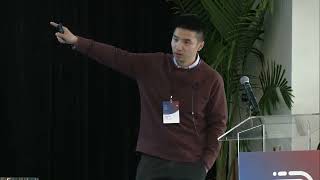
Jonathan Long, a Stanford pathology assistant professor, discovered an exercise-induced metabolite that regulates appetite. He received the Woosai Human Performance Alliance Agility Grants, which fund scientific agility rather than just physical performance.
So it's my pleasure now to introduce Jonathan Long. He's an assistant professor at Stanford in pathology. He's one of the recipients of the Woosai Human Performance Alliance Agility Grants. I've got to tell you a little story about those. It took me an embarrassingly long time to ask at one of our meetings if these were grants entirely about human agility. Turns out, and you should know this, they're about scientific agility.
So it—
but I think for 3 meetings I went through thinking that maybe we were only focusing on human agility for these grants. So with great integrity and scientific agility, Jonathan Wong.
Well, thanks so much, Ewan. And it's really a pleasure and a delight for me to be here today at this wonderful symposium. It's been a great day hearing about all the different kinds of work that's happening across the Alliance.. And I'm really delighted to be here today to share some of our work. So for this audience, this idea that exercise is good for you needs no introduction. Regular physical activity is good for reducing anxiety, is good for your sleep, is good for your brain health, is good for strengthening your muscles and bones, and most importantly, is good for preventing all sorts of different types of disease. Conversely, physical inactivity is one of the leading modifiable risk factors for obesity, cardiovascular disease, neurodegeneration, and many other disorders. Now because of these benefits of exercise, in the popular press sometimes physical activity is compared to a medicine or a drug. OK, and here's just some examples from Discover magazine, why exercise is a real miracle drug. From the New York Times Well section— and Gretchen, I didn't know this is before exercise as potent medicine. And then from the Post, "A non-pill treatment for many chronic illnesses: exercise." And of course, this kind of description of exercise is right in a very particular way, because exercise provides therapeutic benefit for some of the most debilitating diseases of our generation. But I think it raises a very interesting question of whether exercise really is like a medicine. Or not and what ways we might be able to fully capture and capitalize on this idea of exercise as medicine. I don't think we're quite there yet, and that's most simply illustrated by looking at what a real medicine today is. Here is Lipitor. Many of you are probably taking Lipitor or know someone who's taking Lipitor to reduce your cholesterol and reduce your chance of getting a heart attack. If your doctor prescribes for you Lipitor and you pick it up from the pharmacy, you'll also get a very long instruction manual about what this is and how to use it. This is just page 1. This instruction manual tells you what is it at the very top. Lipitor is atorvastatin calcium. What do you take it for? You take it to reduce your risk of an MI or a heart attack. How much is in here? The dosage is either 10 milligrams or 80 milligrams. When should you not take it? If you're pregnant or nursing. What are some adverse reactions if you take enough— if you take too much? What other drugs should you be taking with or without Lipitor? Should you be eating on a full— should you be taking it on a full stomach or empty stomach? This is just page 1. All modern medicines have these 8 characteristics. They start from a well-defined molecule that has some therapeutic effect. Typically, we understand something about how that molecule is working. In this case, Lipitor is reducing your cholesterol. So, there's information about pharmacodynamics, target engagement, pharmacokinetics. We know when you should take it, with food, without food, with other drugs, without other drugs, and most importantly, we know the bad things that can happen if you take too much. Now, you know, the current CDC recommendation of exercise is reduced down to these 4 paragraphs. You can see it's very different than the instruction manual for Lipitor. And I'll just walk through a little bit of it with you because I find it just interesting to compare. The CDC recommends that you should move more and sit less, OK? Some activity is better than none. It can be moderate intensity, vigorous intensity. Maybe it can be spread throughout the week. And the more that you do, the better it is for you. If a doctor were prescribing exercise like they prescribe Lipitor, it would go like this. You should take some pills. Maybe you should take 2, maybe 4, maybe 10. Maybe you should spread your pills throughout the week. And of course, the more pills you take, the better it is for you. OK. So how do we, in the Wu Tsai Human Performance Alliance, think about this idea of exercise as medicine? And how can we start to bridge this gap? And what I would argue is that in the world of exercise and physical activity, oftentimes we don't have an agreement and we lack information about a well-defined molecule. And that's where a lot of our work starts. In our lab, we're really interested in defining the molecules and molecular factors of physical activity, with the idea that once you have a handle on the molecule, you can start to answer some of those other questions. So what kind of molecules can you find, and how do you find them? In the laboratory, we have a special type of instrument called a mass spectrometer. Mass spectrometers allow you to look at the chemical composition of human fluids like blood or tissues with extremely high resolution. So we can understand the chemical composition of the molecules and how they change, for example, before and after exercise. In the past, we've used our mass spectrometers to look at sprint exercise. And what we found was a molecule that was previously undescribed called Lactate, which is shown here. Levels of Lactate in your blood will go up tenfold or more after vigorous sprint exercise or other high-intensity interval exercise, like HIIT. And what's more, when lactate goes up, one thing that it does is it acts on your brain to suppress feeding. And in fact, we can engineer mice that can't produce lactate, and they eat more after a hard workout. And so we think that the identification of lactate and your production of lactate in your body is why, when you're running stadium stairs or when you're doing your HIIT workout, you don't feel hungry after that workout. Now, of course, we're extremely interested in LACv and continue to work more on this pathway, but I thought I'd also share with you some of our ongoing work with the Wu Tsai Human Performance Alliance, because with the generous funding now, we've been able to expand our search for molecules of physical activity beyond just sprint exercise. And in particular, we've been focused on sports nutrition and ketones, which are a supplement that are purported to promote endurance endurance performance and endurance exercise. You can see, for example, in this drink— this is made by a company called Delta-G— it's called Ketone Performance Endurance Resiliency and Recovery. In recent years, ketones have attracted a lot of attention. Many of you may recognize this American runner, Sarah Hall, who's holding, as you can see, a bottle of Delta-G Ketone. But there's many questions about how these supplements work and whether and if they actually improve performance and how they do that. So we've now directed our mass spectrometer to look in blood after people consume these ketone ester drinks, and we ask what happens. And what we found is a new class of molecules that have never been described before that are dramatically increased in your blood after you drink one of these ketone ester drinks. And we call these molecules ketoamino acids. And with this information, with the molecular information, now we're extremely excited to understand once you produce these molecules What do they do? Do they mediate any of the effects of ketone ester drinks on endurance, resilience, or recovery? And that's some of our ongoing work right now. So with that, I'd just like to reiterate this idea that exercise as medicine is true and also not quite there. The way to make it there is to understand the molecules of exercise, and we believe that these molecules will form the fundamental connection between exercise and modern-day medicine. I'd like to reiterate my delight to be here to share our work with you today, and I'm very happy to take your questions afterwards. Thank you.
More from Joshua







Scientist Stories: Hans Waterham, The value of phenotypic assays in peroxisomal disorders




Scientist Stories: Joel Zlotogora, Genetic carrier screening programs for reproductive purposes