Scientist Stories: K. Dane Wittrup, Antibody Engineering in Yeast & Evolving from an Academic Tool
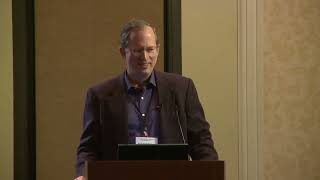
In this recorded talk, Professor K. Dane Wittrup recounts the birth, maturation, and industrialization of yeast‑display technology for antibody discovery. He begins with a personal anecdote about the life‑changing impact of Humira, then explains why yeast display was pursued despite the dominance of phage display, emphasizing quantitative selection using flow cytometry and the need to link selection parameters to thermodynamic variables (Kd, Tm). He describes technical breakthroughs that enabled massive libraries (10^9‑10^10 clones) via homologous recombination directly into yeast, and the use of magnetic‑bead pre‑selection to handle library size. The biology of the yeast cell wall and surface proteins is outlined as the natural scaffold for displaying complex proteins, and the correlation between surface display, mammalian expression, and stability is highlighted. Transitioning to the commercial realm, Wittrup details Adimab’s philosophy of integrating the fragmented antibody‑discovery pipeline into a single, rapid workflow that moves from antigen to human IgG in about a month, delivering hundreds of antibodies per campaign with broad epitope coverage. He stresses the importance of developability metrics—melting temperature, polyspecificity, solubility—and the platform’s ability to normalize epitope representation. The talk concludes with evidence of clinical impact (e.g., a three‑antibody EGFR cocktail in Phase 1) and the broader adoption of yeast display across academia and industry, underscoring the technology’s transition from a niche academic tool to a mainstream drug‑discovery platform.
Chapters
So, what I wanted to do is start out with saying that, you know, the best-selling drug in the world is made up of a number of individual human stories, and I have a close family member who began taking Humira last year for Crohn's disease, and it was dramatically effective, and so, that, you know, I would add to the chorus of gratitude for your work on developing that drug. It's made a big difference in people's lives. Last night, Ian and I were reminiscing about ghosts of IBC's past, and there was always a session at the end of the meeting titled something like "Alternative Display Formats." And after everybody had rushed off to catch their plane, you know, those of us who were doing, you know, amoeba display or bacterial display or slime mold display would talk to each other about our menagerie of curiosities. And so here it is at the end of the meeting and it's a menagerie of sorts still, but the title's much better. It's Great Antibody Discovery Platforms. So that's a step up in the world, a bit of a victory lap for us I think then. I'm going to tell you two stories, one on academic yeast display and one on the industrial platform at Adimab. The academic work started at University of Illinois and continued through my move to MIT about a dozen years ago. When we developed yeast display, it was at a time when phage display was clearly achieving great things, and so the argument was, why are you bothering? Yeast— you know, what do you need yeast display for? Phage display has solved all the problems. And so we had to clearly define what we were trying to accomplish in order to get funded and publish papers. And so here's what we were trying to do. If you're doing a library screen, you get what you select for, so we wanted to very rigorously define what we were selecting for in biophysical terms. And so to link closely the selection parameters we were using to thermodynamic state variables, Kd or Tm, the— to measure the parameters in the screening system and then use those to quantitatively select out the clones we were interested in. And so flow cytometry was an incredible asset in doing this because of its ability to measure very quantitatively these properties in situ in the selection system. We also justified using yeast because it's a simple eukaryote and had the biosynthetic apparatus to make more complicated proteins with disulfides and glycosylation sites and assembly of multimers. And so, if every different expression host had its particular bias, we wanted to pick one that matched up with the types of proteins we were interested in engineering. It was important to be able to screen libraries that were sufficiently large to have winners on the criteria that we were defining. Currently at Adimab, every campaign screens more than 10^10 clones. A single postdoc in my lab at MIT made the library we use for antibody screening. That's about 5 × 10^9 in about a week. So, and then in lead optimization rounds, a single person working at the bench makes libraries of about 10^8, so library size is really not an issue. Along the way, we came up with a way of making these libraries without having to do ligation and go through a coli step, which was actually limiting our library size initially. So, our larger libraries now come through using homologous recombination of PCR products directly into yeast. Yeast doubles rapidly so that you can do the experiments without waiting for your culture to reamplify. Excuse me. And to the extent that those larger libraries would take a long time to go serially through the laser beam in a flow cytometer, we'll do the first round or two by magnetic bead selection so as to do many clones in parallel. So, to set up the genetic particle, the genetic unit, A yeast cell has a thick cell wall that's made up of mostly polysaccharides. At the surface of the yeast cell wall are proteins whose business it is to make contact with other proteins. And in particular, yeast comes in two mating types, A and alpha, and when they bump into each other, they stick through mating adhesion receptors. So yeast, through natural selection, figured out how to put these proteins out there exposed on the surface of the cell wall in such a way as to be able to contact other macromolecules. And so using the heterozygous[No speech] you know, half a kcal and very small differences. And he needed to really measure precisely. And so, here he's measuring those differences and these are 3 different biological replicates in each one of these colors. And the binding isotherms overlay each other very nicely. And then across the data from our lab and other labs now, we find that by and large what you see on yeast is what you see off of yeast. There's no systematic bias in terms of the parameters that you measure. In the selection format relative to the soluble products of that selection. So here's a collection of some of the more unusual and difficult proteins that we've displayed on yeast over the years. Probably the most complicated one we've put out there. Young-sun Kim was instrumental in getting this accomplished in the lab. It's the ectodomain of epidermal growth factor receptor. 620-some amino acids, 25 disulfides, a dozen N-linked glycosylation sites. And having that displayed on the surface of yeast has allowed us to do epitope mapping, fine epitope mapping of where antibodies and other binders bind on EGFR. But basically, you know, the wide variety of different types of molecules are functional in that format. And so then subsequently, there's been many different applications of yeast display in academics.— it was really gratifying to see the technology move on out of the lab and reach the point where people would talk about it without having to cite us. Standing up here saying, "Well, here's Dane's yeast display." No, it was just yeast display. It was just what was done. And so even at this meeting now, Andrew Bradbury, Jim Marks, David Baker, David Liu has done a good bit, George Georgiou published a paper in PNAS using yeast display. Dennis Burton did a very nice comparison of yeast and phage at one point. So, it's nice to know that that's moved out into other labs and has its own capability to be used for lead isolation, lead optimization. And so, to— for this first half of the talk, to give credit for the people I've worked with, the students, postdocs, and collaborators over the years who contributed to the platform, I just picked out a number that would fit onto this slide, but these were people who made particular contributions. And of course, I'd have to call out Eric Boder. What's really kind of striking is that although technology always moves along and improves, by and large if you were to just pick up his Nature Biotech paper from '96 and practice yeast display as he described it there, it would work about as well as we use it now. The most important advancement would be using the homologous recombination which Jeff Swartz came up with, but by and large Eric came up with the way it's still done to this day. And then obviously a number of really fantastic people that I've been fortunate to work with over the years advancing it. And using it for a number of different things in our academic research programs. So, at this point, like Ian said, if we're going to pick the right holiday, I think it would be Easter if it was the second coming, right? But I don't think that YeastOne was crucified, so I'm not sure second coming is quite the right analogy we want to use there. But for the second act of this talk, Adimab is a company that's developed yeast as a vehicle for antibody discovery. And so let me tell you what our founding philosophy was. And it was that, by and large, antibody discovery had been, and to some extent is still, practiced as a series of highly developed technologies that were developed in isolation. So there are some really wonderful silos, and after you run through your one silo to get your lead, you move to the next silo, and so on. And to be fair, academic yeast display was basically just one of these silos. We could take fragments. And find them in a yeast library, and then we could optimize them. But at each handoff point to the next step where you're going to actually start making the drug itself, you'd have to change expression host, you'd have to change format, and then at the end of the day you'd have to go through all the various things you made and see which ones might actually have the properties necessary in order to work as a drug. And each handoff from silo to silo carries risk, and if there has not been an intentional integration of these technologies, really you're just sort of rolling the dice at each transition. And so the founding vision that Tillman and I and Eric Anderson had when we came together was the only thing really worth doing as a company was to start with an antigen and in one fell swoop, as quickly as you could, end up with a plate full of human IgG protein that could be assayed. That it was no good just to say, "I've got a sequence of an SCFV. There we go. Good luck. Off you go." And so the integration was really the objective throughout. And, you know, as you're developing any technology, you have design choices you have to make, so we had a small number of principles, and the mantra as we were developing the platform was more, better, faster. If we were making choices, it was to increase on each of these axes. So Robert Mabry gave a nice talk yesterday from Adimab about bispecifics. And so this is a truncated version of his— one of those slides showing just schematically the workflow through the platform. In comes the antigen. We interrogate greater than 10 to the 10th different human IgGs presented on the surface of yeast using magnetic bead screening and then flow cytometry to do these fine discriminations. After about a week or two, you have those leads that look interesting by flow. And then by a simple change in growth media— and just preemptively, Andrew, I'm not going to tell you how we do it. That's secret sauce, just to save you getting up to ask me that question right now. We then get soluble expression of IgG. And the true average number of IgGs expressed in the high-throughput expression shop right now is in the thousands. Each prep yields a few hundred micrograms of protein, which after an analytical package is put together, delivered to the partner, after their bioassays and testing, it can come back and go through multiple cycles of optimization of binding parameters, specificity, and drug-like properties. And that whole cycle time is on the order of about a month. This is just a cross-section of delivered, actual delivered panels of antibodies to partners. The median affinity is similar to most platforms, single-digit nanomolar, on the order of about 70 antibodies delivered per campaign. The epitopic coverage is broad, and we always bin these to look at cross-blocking epitopes, averaging about 7 per target. One of the campaigns we were particularly proud of, there was a small peptide and we had 3 non-overlapping binders to that small peptide. So, the idea is that although broad epitopic coverage is certainly useful for trying to discover new biology, it is important to actually have some mechanism for selecting those, and then a rapid way of confirming what your coverage is. There's an interesting biophysical property here, which you can see, which is there are phenomenologically such things as hot epitopes.. And so, we've now developed a normalization procedure to try and improve representation of the more rare epitopes. So, my good friend George Georgiou yesterday made the comment that he didn't like the word developability, and so I immediately opened my computer and did a Google search. And there are 38,000 hits on the terms developability and antibody, and I thought, well, that can't be right. This must be, you know, real estate sites or something. And if you page through the first 30 pages, they really are. Antibodies and developability. So as awkward as the word is and however many syllables it has, it does describe something that people care about, and they are using these two terms in juxtaposition. And the reason why is because really there are necessary criteria to have a drug that are not anywhere near sufficient, but they're certainly necessary, which is you need to be able to make it. You need to be able to make it in a host that is appropriate for GMP manufacture. Once you've made it, it's going to have to stay in solution. So fluffy stuff floating on the bottom or on the top of the tube are not going to do you any good. And once you've made it and it's in solution, if it sticks to everything in sight, it's not going to be useful either. So, these may seem like simple criteria, but if you're not in the sweet spot of this Venn diagram here, the campaign is over. And so, people don't make a habit of publishing negative results, and yet nevertheless, some people have made some comments over the years. Here was one commenting on some of his own experience at Merck, Dave Meininger, in a presentation talking about some of the issues they had with some of the antibodies not having developability properties that were sufficient. Out of Seneca, Karen O'Neill had published a couple of papers using a tool called cross-interaction chromatography to try and predict which antibodies will not interact with each other and have strong self-interaction driving aggregation. And in that work, went ahead and pointed out that this tool was necessary in order to screen through antibodies that had been derived from their phage collaborations that were not behaving well. And then Peter Schultz in his PNAS paper this year, where he was noticing that the lead optimization that a vertebrate immune system performs seems to improve thermostability. And so he commented that maybe this is actually part of the criterion, the objective function for the directed evolution in the immune system is not only for binding but for good biophysical characteristics. So those are comments of others. There's another way to maybe try and get a snapshot of how big this problem might be. And this is the, from the TABS database, which if you haven't used it, it's really a phenomenal resource for just getting a broad objective overview of the field. And they annotate all the different antibodies in their database according to the method of discovery. And what was frankly shocking to me was to find the extent to which clinically developed antibodies to this day are not coming from the modern display technologies. That they're for the most part arising from the mouse immune system. And you can dig into that data a little bit deeper and look at the number of antibodies listed in that database that are at a preclinical stage or each of the various different stages of clinical trials. And although this is an instantaneous snapshot, not a longitudinal data set, it gives you an impression of how those numbers decrease as you march through the different stages. And so for example, if you look at mouse antibodies that have been humanized, clearly there are fewer and fewer as you move from preclinical through to approved. The transgenic mouse antibodies have a far less steep slope, so that is certainly encouraging that of ideas that initiate here, the probability of ending up here seems to be greater. But of those antibodies in this database, there's a good bit steeper slope going from initial concept through to approved antibody. And again, this is not my data, this is a public dataset, and I welcome you all to take a look at that data yourselves. So part of the question then would be, you know, I believe the biophysics and biochemistry happen inside of animals, so what is it that is going on inside of people and mice that generates these antibodies that have good drug-like properties, and how can we recapitulate that in an in vitro system? There have been those who will quite vehemently say in vitro systems will not have the capability of generating antibodies with good drug-like properties. And I think the only way you can counter that is by example. It's an argument that's best settled empirically with data. But heading into it, I would say it's not impossible to attribute some of these differences to particular sources. One is, germline sequences in the vertebrate immune systems were evolved at least in part for drug-like properties, the ability to be expressed, be soluble, and not stick to everything. Subsequently, B cells do perform a quality control step to ensure that not only just non-frame shifted but also foldable and well-behaved proteins are expressed. And then if they're not or if they turn out to be sticky, the immune system has ways of fixing it with receptor editing, which is basically nature's light chain shuffling, and ways of testing for that self-reactivity. So if one's going to have an in vitro platform to try and steer through this same path, this same obstacle course, it would be good first of all to try and closely mimic those germline sequences and the recombined repertoire prior to selection, also to have biological system that helps throw out the most egregious offenders in terms of poor expression or stability, and then have a way of fixing the problems that arise anyway in the high-throughput system. So, here is that same snapshot of a cross-section of antibodies delivered to clients from Adimab. The median TM, which is just one of about a dozen different developability metrics that we use, But TM is, again, one of these necessary but not sufficient criteria. If your variable domain has a TM below, say, 60 degrees or so, it's a good indicator that there could be trouble. And you see this band here where, in this same assay, which is the fluorescence assay for melting point, 20 clinical-stage antibodies were found to have TMs of their variable domains in the order of their Fabs, on the order of 74 plus or minus 6 degrees. And the antibodies discovered through this process of first in vitro designed pre-immune repertoire yeast selection and then the flow cytometry lie well within that band. And then just to bring together what was actually a much longer talk I gave at PEGS this year in Boston, the overview would be that by designing a repertoire which did use recombination of D segments rather than site-wise stochastic designs, there is a lower abundance of these undesirable molecules. Then going through a eukaryote that throws out the worst of them, still lets some through, after an affinity selection, any affinity selection, there's some additional— this is one of those you get what you select for observations— there's some additional enrichment for the sticky binders because they'll stick to whatever it is you're using to pull them out. However, then we've developed a way to then counter-select against that stickiness with a polyspecificity reagent. And then that whole process then leads to leads, which you still have to go through a detailed biophysical cross-section on to try and reduce risk downstream. And although it looks like there are multiple steps here, this is still within that one— that one-month process that I mentioned. And for those who want to see this in a much greater detail in about 15 minutes downstairs. Eric Crowland is going to give a good half-hour talk on this process of doing these screens. So it's been a good year for Adimab in terms of moving our technology into the hands of partners. We had done a large number, I think on the order of 25 or 30 drug discovery campaigns with partners, 1 or 2 targets at a time. But just this year, we were really pleased to consummate platform transfers to Glaxo and to Biogenetic and to Novo Nordisk, and GSK and Biogenetic are now fully enabled, and it's very gratifying to think of the drugs that will be coming from that platform going into the future. It's important to give credit here. Here we are looking very pensively at something I really wish I knew what was on the screen that we were looking at there, but My co-founders, Tilman, who is now CEO, and Eric Anderson, who is now COO of the company, who we've seen this through from beginning to the present. And it's been incredibly gratifying, and they've been fantastic partners. The whole team of about 70, which is just an incredibly well-integrated team. And I'd echo the comments that Ian made, which are that, you know, human interactions and life being pleasant while you're doing it really allows better work to happen. That the best work doesn't happen when you dread going into the lab and can't wait to get out. And so this is a happy group of people, many of whom are here at the meeting today, and it's a real honor to work with them. And just as some photographic evidence of that, after we had consummated the deals with our 3 new platform transfer partners, this was the summer when we were celebrating. So, glad to answer any questions that you have. Okay, Ted.
I love that photo of you, the three of you there. It looks like you're on one of those chairs that's gone like that. I'm on my way back. It's kind of a bit weird. You're way too laid back. Right, so following that phage-bashing talk, has anyone got any—
I was going to start it out by thanking phage for saving my family members.
I couldn't resist. Couldn't help myself. Right, questions from the floor to Dame Jane.
Well, it's more of a comment really. So I think that the eSystems are clearly very effective in terms of developability. I'm not quite sure how the comparators work because from, from our experience now of looking at the phase systems, I think in the early days we did have significant developability problems because we were very focused on going for affinity and potency. But I think there's been quite a step change in our understanding of how you screen using phage systems for developability a lot earlier in the process. And so we look more for stability. So it'll be interesting to see how those comparisons evolve over the next sort of 5 or 10 years and see if that evens out. But I think there's a bit of a mindset around how you approach developability, which I think is a fantastic word actually. Is very important in terms of thinking through manufacturing. But it looks like a great system in terms of the East.
Thanks.
I mean, you know, just a further reflection on that. I mean, it is true, we were all absolutely obsessed with affinity, right? It was affinity, affinity, affinity. Everything else could go hang until you then realized you had a problem. So I think, I think in general the mindset has, has shifted. I don't imagine there's a single phase display company out there now that hasn't got this front and center of their, of their radar.
There's the saying, what you manage, what you measure. And so everybody is measuring this now, so I have no doubt that there are many solutions that are in development, yeah.
Okay.
Great talk.
I'm curious—
Can you have your name, please? This is Han Jinzhan from Arogen Biotechnology in Bay Area. So I'm curious that on average how many molecules can be displaced from each yeast, and do you have a technology actually normalizing?
Expression for all kinds of targets. So if I understand correctly, basically you're wanting to hear a bit more about how we put more complicated molecules on the surface.
Yeah, and how do you control the numbers?
Well, the answer in terms of how we control is that we don't, by and large. We just have a strong promoter that drives high-level transcription, and then we get what we get on the cell surface, which it turns out is a selectable parameter. This is something that working with Dave Kranz and Shelley Kiki and Eric Schuster back in Illinois, we found that you could do directed evolution on the ability to do directed evolution. So, you start out with single-chain T-cell receptors that did not express at all, and we were stymied. So, we selected on the basis of the ability to be displayed. And—
[Speaker:MALE_SPEAKER] So, the more abundant display, does that translate to better quality of the protein?
Protein in the— In general, this suite of characteristics display on the surface of yeast, expression, stability, they are rank order related. So if you follow an evolutionary lineage of one fold, if you get better on one, you generally get better on the others. But if you compare different folds, different lineages, different antibodies, there's no universal Rosetta Stone relating those parameters. Fortunately, if you select on the basis of improved display, you generally get better mammalian expression, better thermal stability, et cetera.
Thank you.
Yeah. To development. Dane, so very nice work and very fast to generate these antibodies. So you've been working now for a few years with a number of companies. And I was just wondering, are there already any of the antibodies in the clinical testing? And what is the phase? And, you know, could you give an example of some that we Or you can just have a look and keep an eye out.
[Speaker:CHRIS_KRISTOF] Well, what's public is that Merimac has taken a cocktail of 3 non-overlapping anti-EGFR antibodies we discovered into Phase 1 clinical trials. Obviously, I'm not empowered to disclose anything about that data, but it is the case that that particular campaign was reviving one that failed when it was attempted in phage for DLP reasons. But we did come up with deep picomolar binders against 3 non-overlapping epitopes that had really exciting properties in terms of cross-linking downregulating EGFR. There are a number of other campaigns that are moving into the clinic that again I'm not empowered to say where they are at this stage.
But kind of the Phase 1 arena, that's where things are happening right now.
Yeah, because it's been about 3 or 4 years that we've been putting these back into partners' hands.
Yeah, good, thanks. Okay, Dane, I think we're there. So thank you very much again, Dane.
Very good.
More from Joshua







Scientist Stories: Hans Waterham, The value of phenotypic assays in peroxisomal disorders




Scientist Stories: Joel Zlotogora, Genetic carrier screening programs for reproductive purposes