Scientist Stories: Katalin Karikó, Developing mRNA Therapeutics for COVID, Cancer, and Beyond
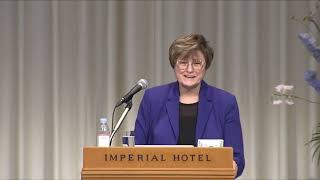
Katalin Karikó traces her path from Hungary to developing mRNA therapeutics, explaining how nucleoside modifications like pseudouridine solved the problem of unstable, immunogenic RNA. Her work led to the Pfizer-BioNTech COVID vaccine and ongoing trials for cancer, heart failure, and genetic diseases.
Chapters
I am here today to talk about developing mRNA for therapy. But how I got here, I have to say something about where I came from. I'm coming from Hungary, where I studied at the University of Szeged, and I went there because in the same time the biological research center was open there. And then my dream was to work in this Biological Research Center. So as a student, I already started and went there. And first I went to the lipid labs. Everybody was thinking that it is very boring because everybody was excited about genetics and lipids. I, you know, who gets excited about lipids? But I was. And here my mentors are who advised me. And what was interesting is that one day, biochem— one part of the biochemistry department representative coming. They wanted us to isolate phospholipids, and we had to follow a very old procedure, make— preparing it from cow brain. Then it came handy that my father was butcher, so I was very easily handling the material. And we did phospholipids, and then what we did We wrapped it DNA and delivered to mammalian cells. So this was my first experience in the laboratory, and we already delivering plasmid DNA to the cells and demonstrated the encoded protein was produced. It is very important to make your hand wet, start with something, because rest of my life, this first experiment followed me. But when I finished my studies, I started in the RNA laboratory. My supervisor, Janos Thomas, actually, together with Furuichi, you know, he published a paper. In this paper, my supervisor made cap analog for the RNA they needed in New Jersey. Aaron Shutkin and colleague, they needed reference material. So in day 1, I learned that the messenger RNA has a cap, but my role was to make a 2'-5' linked oligoadenylate, which we worked together with Janusz Ludwig. Again, another message here, even today I work together with Janusz Ludwig. We work in the laboratory as a graduate student and we were in different countries, but we collaborated even for today. So this molecule, this 2'-5' oligoadenylate, which I synthesized enzymatically, chemically, started my RNA work. This small molecule— this was just 3 nucleotides containing small molecule, actually oligoadenylate synthetizing our body. It activates RNase L, which was supposed to be cleaving and degrading viral RNA, and this molecule was thought that responsible for the interferon-induced antiviral effect. In that point, I learned a lot to work with RNA. In 1985, I moved to the United States where I've kept working on this molecule, did introduce different modification. But this molecule was still, we couldn't use for antiviral effect. When in 1980s, The major enemy number 1 was HIV. We used double-stranded RNA, mismatched double-stranded RNA for treating patients. This RNA, double-stranded RNA, induced interferon. Unfortunately, the HIV patient interferon system was already compromised, so it was not helping them much. But at that point, I already worked with RNA. I synthesized, labeled them, working with different enzymes to modify them, Here we generated double-stranded RNA and learned a lot about the process. But I did not work at that point with the messenger RNA. So talking about messenger RNA, I have to say the messenger RNA was discovered in 1961, and it took 60 years by last year when the first mRNA was FDA approved in the form of COVID-19 LNP mRNA vaccine. What happened during the 60 years? So mostly that I can tell you that two major things which I find important: 1978, first time mRNA was delivered, and this was isolated RNA to the cell, and the coded protein was detected. And then the second one in 1984, when first time in a tube we could synthesize an RNA of our design. But the rest of it was just a little optimization, gradual increase, and incremental improvement. So what happened? So scientists discovering this RNA, you can see that both papers, Nature paper '61, mentioned this is unstable. So the RNA was very This messenger RNA is very unstable. But with this discovery, we learned that what is the information flow, which we know today, is that the DNA, which is in a eukaryote in the nuclei, it transcribes to an RNA, and then in the cytoplasm, in the ribosome, protein is produced. And this is our building block. The next important step was that scientists, of course, couldn't synthesize the RNA. They tried to investigate how this RNA looks. And then one important discovery was made right here in Japan when they discovered the 5' end of this RNA, which was a very interesting molecule. And here, Furuiichi and Mura here in Japan proposed that this is probably the structure of the 5' end. And later, actually, Furuiichi went to the US and together with Aaron Shetkin did further study. They demonstrated that this sequence, this structure is critical to get good translation, good protein production. When they removed, there were no protein produced. And actually, 3 consecutive papers published the structure when finally proved that what it is. And probably 1975 was the year of the cap because by end of the year, even the enzymes which in the viral construct they can put to the mRNA, this element, they were discovered. If you get the Moderna vaccine, you probably get the RNA which was enzymatically kept like this one, and if you get the Pfizer-BioNTech, it was incorporated during in vitro transcription. Some scientists were investigating how the mRNA looked and others, they work with isolated RNA. Where they could isolate from reticulocytes, which is a precursor of red blood cells, so it is enriched in globin. When they isolated first in the '60s, they translated in the cell lysate. Some of them later injected in oocyte demonstrated that the protein is produced. Very important experiment was done in 1978 when the mRNA was wrapped in the liposome. And delivered primary mammalian cells, and at the end of the fusion, they could demonstrate that beta-globin protein was produced. This was the first mRNA production, 1978. What was the next important step? Because we wouldn't be here if we wouldn't be able to do in a tube in our desire to make any RNA. And this was done in Harvard University, Douglas Matton, Paul Krieg, who identified that phage RNA polymerase, the first sp6 RNA polymerase they selected, and in the following year, T7 RNA polymerase, and they generated an mRNA. This is how the mRNA looks. It has already the cap structure you are already familiar with. It has 5' UTR, 3' UTR, and the coding sequence. They had human beta interferon coding sequence and I might mention here important things. When they published this paper in 1984, in the same year you already could purchase the RNA polymerase. So everything was in the '80s, this kind of certain things was discovered and immediately commercially available. So what they did with RNA, they injected to frog oocyte. This is a large cells, so it was easy to inject. And then when they incubated overnight these injected oocyte, they found that they secreted human interferon and then it was functional, inhibited the virus. This was a very critical step. What happened after that? You can see that the '90s, people injected to animals. They injected a reporter encoding mRNA and then vasopressin RNA where they could already show some biological effect. Or they did in '93-'94, they generated mRNA, which was infectious disease vaccine. Then '95, '96, and beyond, you could read mostly about mRNA used for cancer vaccine. It was easy every year, just one publication, not like these days, several publications per day, so it is difficult to follow. But what happened? Why scientists who published 30 years ago this paper never ever published again with anything with mRNA. I tried to follow them for years. But what happened is that the mRNA had only one thing, problem. It was unstable, it was inflammatory. So as a result of it, very small amount of protein was produced for very short time. And everybody kind of left the field after one publication. So what happened during those years, from '90s is that the mRNA was gradually improved and the formulation was improved. Because the RNA was labeled, it had to be wrapped up in something to protect. So the two fields was developing and improving independently and sometimes together. That's what led to reaching 2020. One. So I started to work in cardiology and started to work with mRNA in 1989. In the University of Pennsylvania, there was many people work on the gene therapy, and Akihiro was working with adenoviral deliveries. But me and with Elliot Barnathan, we were working with mRNA coding for therapeutic protein. And why we were so excited, because when we delivered this urokinase-coding mRNA, which translated in the cell, and for it to be functional, it had to be modified, glycosylated, the carboxy terminal had to be processed. And somehow the cell knew all of these things. We just delivered the RNA and the cell processed and the protein was functional. We knew at that point that the RNA will be good for something, maybe for treating cells. But I had to move on and I moved to neurosurgery where again, we will try to develop something for therapy. I worked at that bench here for 17 years. I made all of the RNA up until 2013. With David, we tried to generate some RNA for therapy for stroke, but most of what we were doing is improving the RNA performance, so translation level increase. I was always wanting to deliver an RNA which codes for a therapeutic protein. I was not much worried about immunogenicity up until I met Drew Weissman. It really happened at the Xerox machine and we were chatting and then I made a gag mRNA for him because he was interested to develop HIV-specific vaccine and therapeutic or prophylactic vaccine. And when he tested out in human immune cells, they called human dendritic cells, he delivered the gag RNA with lipofectin, which is a positively charged lipid. He found that this RNA is a fantastic vaccine because so much protein was produced. It also activated all kind of activation marker. It was so immunogenic. And he was so happy, but I was not because I want to make therapeutic protein-coding RNA. And then for delivering to a patient with stroke, an inflammatory molecule is the last thing you want to do. So we were thinking with Drew, why this RNA is inflammatory? And because inside the cell we have RNA and in our body, every cell we have RNA and we don't get any inflammation. But we were thinking that maybe because it is coming to the immunocytes from outside, it recognizes an invader. To figure out what is going on, what we have done, we isolated mammalian RNA from different compartments and tested out on dendritic cells and measured inflammatory molecules, which is TNF-alpha. In purple, you can see those RNA I made, which was in vitro transcribed. These others, the isolated, were not as inflammatory, Interestingly, one of the RNA, which was the tRNA, was not inflammatory at all. This gave us the idea, could it be that nucleoside modification is responsible for lacking inflammatory reaction? But how we could prove that? If we look at, of course, we can see this correlation, the in vitro transcribe which I made is very inflammatory, zero modification, most modified, not inflammatory. So it could be a correlation or it was a cause of effect. Originally and naturally, all of the RNA in your body actually is made by the four basic nucleotides, and these modifications which are present in the tRNA and other RNA, they are introduced by different enzymes. So, and this, at that point, was not much known about these nucleoside modifications. There were a lot of them, as you can see, but those enzymes which can introduce these different modifications to the nucleoside was not known. Not that we could just order one and test out and put on the mRNA. We had to use a different method. We had to order nucleoside triphosphate, which already contained modification. We ordered quite a different one. We insisted that we are just ordering those which naturally present our body, the human body, to make sure that we don't cause any adverse effect. And luckily, 5 of them incorporated by this T7 RNA polymerase, phage polymerase, and we could generate these RNA. This is the gel picture is shown here. And then we started to test it out, and when we added to the human dendritic cells, we found that some of them were not inflammatory, did not induce any TRF-alpha. So when we looked closer at what are those, we found that all of them had a uridine, modified uridine. So the next question was, now we can make RNA which is non-inflammatory, but we want to make a vaccine which calls for some antigen, so translation was critical. So when we tested out whether these nucleoside-modified RNA can translate, we were surprised to find that the pseudouridine-containing messenger RNA produced 10 times more protein, 10 times more than the natural uridine-containing RNA. And we spent like 2, 3 years to try to find out why. But we also did an experiment where we already tried to identify that what is the uridine-containing RNA is activating. And Why we tested all TOR-like receptors? Because Professor Akkikir here, you know, already identified TOR-like receptor 9, for example, that activated by DNA. And in 2001, we also learned that the double-stranded RNA can activate TOR-like receptor 3. What we found is that TOR-like receptor 7 and 8 was those receptors which are sensing uridine-containing RNA. Because when we modified, we didn't find any signal, but when we had Unmodified, it activated. Later, 10 years later, they demonstrated that toll-like receptor 9 crystal structure demonstrated that already even the nucleoside itself can help to dimerize toll-like receptor 8, and toll-7 is also very sensitive to uridine. Crystal structure shows how the uridine is located in those toll-like receptors, and that's what explanation. What happened after that? We published, but nobody was interested. I was invited only one lecture, and it's right here in Sapporo when we gathered here. And then first time I presented about the modified nucleoside and what this RNA with modification can do. Here I am in the first row, and my colleague Hiromi here, and Professor Akira was here, and so it was an exciting time. First time I was here in Japan in 2006. So others was not interested, but we had so much work to do, so we were not waiting, and we started a purification. We could see that TOR3 was activated by this RNA, so we suspected double-stranded RNA was there, and we had a detection method, but After working out the purification method, we could eliminate those contaminants. And as a result of it, you can see that those which were not purified, they induced— or it is a heat map showing all of these cytokines level was increased by uridine, pseudouridine, or double-modified RNA. But after purification, you can see pseudouridine-containing RNA did not induce those. As a result of it, we also get great improvement of the translation, especially human dendritic cells, primary cells, you know, several log more protein was produced. So finally we have pure modified and very effective RNA, and with my colleague Hiromi Muramatsu, we started a lot of animal experiments here for erythropoietin-coding RNA. We injected it to the animals, and when This erythropoietin, those who are following the bicycle race knows that EPO is increasing red blood cell production. What we did, we use this mRNA delivered with Transit to the animals and we could see that after injection, 30 minutes later, we could already detect the protein was circulating in animals. Then up to 4 days, we could measure the EPO level. But when we injected just the protein, because the half-life is very short, it's disappeared, or the U-containing RNA also disappeared very quickly. The produced protein was functional because it increased the hematocrit. Here is when you can see, and when weekly injected a small dose, 0.1 microgram to the animal, we could maintain high level of hematocrit in those animal. Most importantly, here in center you can see that the mRNA was non-inflammatory, whereas uridine-containing RNA was inflammatory. This was 2012. Then again, I visited together with Drew Weissman, we visited Japan because Takeda was interested in the procedure we are doing mRNA delivery. They had formulation and we visited them. Unfortunately, this is the only picture of two of us present in a Chinese restaurant, but we were in the Center and met scientists and we were interested to collaborate with them. But it didn't work out. In 2013, with Hiromi, we moved to Germany from University of Pennsylvania where we worked. Here we combined our effort with Ugur Sahin and his wife Özlem Türeci. In the BioNTech, we started further optimizing the mRNA because as I told you, This is the whole story in an incremental improvement of the RNA performance. Did codon optimization, optimized untranslated region, purified, and all kinds of improvements we made, formulation. And what happened as a result of it, what I showed you, the tiny amount of protein for short period of time. Now that with all of this improvement, we could make a lot of protein for quite a long time, which already could be used for therapy. That's what we started. We started to make therapeutic mRNA coding for therapeutic protein, and one was this bispecific antibody, which recognizing cancer-specific molecule, Claudin-6, and also the T cells. And then it brings close proximity, this bispecific antibody, the immune cells and the cancer cells. And it is already different kind of bispecific antibodies are in the clinic, but the patient had to wear pumps because the half-life is very short. In the animal model, we could show that whereas protein had to be every second day was injected, mRNA was sufficient to inject weekly. And then we could eliminate already established large tumor in animals. This program, we are in BioNTech, will go to clinic. Another study actually we demonstrated in last year, when instead of vaccination, we can use the RNA for tolerization. And the mRNA here is, it is again a nucleoside-modified RNA, one methyl of pseudouridine, and it codes for the autoantigen. And repeated delivery to different animal model of multiple sclerosis, we could demonstrate that repeated injection can induce tolerization in these animals. The lipid formulation is different.— not like in the vaccines, but these are not containing ionizable lipids so that it is not activating any of those molecules. We also did studies, and again, this was the first one actually which I participated at BioNTech, where we were injecting animals which had— here is a melanoma model— and injected cell surface-close tumor. MRNA coded for 4 different cytokines. And that procedure is converting the cold tumor to hot. And these cytokines is produced by the tumor cells and inviting immune cells to this area. And they are recognizing what the tumor look like. And then circulating in the body can eliminate already established metastatic cancer cells. And here shown that, you know, the black spot on the lung, which was in the animal injected with this cytokine mixture mRNA, they did not have this metastatic spot. This study together with Sanofi is in a clinical trial already for patients. Meanwhile, we were working in BioNTech, colleagues at the University of Pennsylvania, Norbert Pardi together with Drew Weissman, were advancing the vaccine program. Here in 2017, they published together with us is that messenger RNA, which contains one methylpseudouridine and coding for the Zika viral pre-membrane envelope protein, and it's formulated in aquitas lipid nanoparticle, and that is very effective. They tested out in mice and monkeys, and what was important, that very, very small amount, 50 micrograms, was sufficient to induce very high level of antibody in, in the monkeys, and those were also protective when animals were challenged. If you get a BioNTech-Pfizer vaccine, you probably get the vaccine which was very similar to that one. And this was the first when one metal pseudouridine-containing mRNA formulated with aquitas lipid nanoparticle was used. What was very exciting is that the dose was very small. In mice, 50 micrograms was sufficient. In monkeys, 50 micrograms was sufficient. And you couldn't see it before when it was a DNA-based vaccine they tried to use. Then, unproportionally, they had to increase. And finally, human was injected with milligrams of DNA-containing vaccine. Actually, this paper just last month got the Biole Award which was the last 10 years' most important publication. Subsequently, Drew, probably he will talk about other studies, we demonstrated that similarly formulated vaccines against influenza and HIV in animal models were very, very effective. So as a result of it, of course, we at BioNTech, together working with Pfizer for 2018 already to develop a vaccine for influenza, was— the program was switched over when the COVID pandemic happened, and the vaccine was developed. And you are aware of that information was available in January 2020. 2020, and by end of the year already many of us, we received already the vaccine. So many, and of course it was FDA approved, fully approved in last August. And many people thought that this is the first time when actually a nucleoside modified mRNA was injected in, in a human being, but Let me tell you it's not so. mRNA, this pseudouridine-containing RNA, was already in advanced clinical trial for heart failure. And VGFA mRNA, which this mRNA codes for a protein which form new blood vessels, and they injected to the heart to patients who are undergoing elective bypass surgery. 30 different spots in the muscle was injected. It is naked RNA, not lipid nanoparticle formulated. And the study already started way before pandemic happened. And this program advanced very well. And this year, January, we learned that the patient did so well, those heart failure patients, that this will enter in next, the phase 3 clinical trial. So this was successful. Another success story was by Intellia reported. And this is amyloidosis, a disease which when the patient is diagnosed with this disease is about like 5 years later they die. And the cause of this disease is that the patients are making a toxic protein, and this protein had to be eliminated. And what Intellia did, they generated a Cas9 mRNA. This is a protein which can edit the genome, and then of course they added the guide RNA. And when it is translated, the Cas9 in the cytoplasm with the guide protein entered to the nuclei and then interrupted to the genes which was responsible for production of this toxic protein. So these patients generated no more toxic protein. And just last month it was shown that one year after initiation of this study, and this patient received only one injection. Those three patients who had the higher dose, they were still not making this toxic protein. So it seems now that the promise of the gene therapy actually will be fulfilled by the RNA. And with that, I would like to thank all of my colleagues who helped me through the years and work in University of Pennsylvania and in BioNTech. And also I would like to thank to my family. My daughter is a 2-time Olympic champion. And usually at the end, I always show her picture because I want to leave the high end. And here we were in London that in rowing she got a gold medal. Actually, I usually mention that the rowing and science is very similar. And the rower is going backwards. They don't say, see, where is the finish line? And they are just pulling like crazy. And this is— we scientists are similar. We don't see— we don't even know that when we are pulling whether we are going to the right direction. But we are pulling, imagining that there is a finish line. And when we reach it, you know, we start another race. And of course, my husband who supported us. And so that's my message, you know, to all of those girls that they have to also find a good husband that who supports their dream. And thank you very much for your attention.
More from Joshua







Scientist Stories: Hans Waterham, The value of phenotypic assays in peroxisomal disorders




Scientist Stories: Joel Zlotogora, Genetic carrier screening programs for reproductive purposes