Scientist Stories: Katherine Pollard, Statistical Methods to Study the Genome
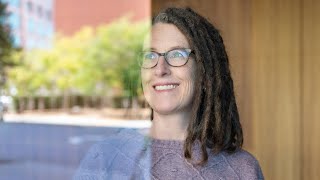
Katherine Pollard explains why studying individual microbial genomes reveals more about host health than traditional taxonomic summaries. Her lab tracks strain-level diversity within people over weeks to months, finding rapid turnover and transmission patterns. She's building reference genome panels for human-associated microbes and calling for a global microbiome genome diversity project.
Chapters
That brings us to our first keynote of the meeting, which is going to be Katie Pollard. So I'm very pleased to introduce my good friend Katie. Katie is director of the Gladstone Institute of Data Science and Biotechnology and a professor at UCSF, also an investigator in the Chan Zuckerberg Biohub. She's well known in this community. I think many of you know her well. Katie has a background originally in statistics, having done her PhD at Berkeley with Mark van der Laan. Then she did a short postdoc with Sandrine Dudoit, where she worked on, among other things, a lot of R programming and some Bioconductor packages. And then she came to UC Santa Cruz to do a second longer postdoc with David Haussler, and in the area of comparative genomics, and that's where I got to know her. I was finishing up my PhD at the time, and we started some collaborative work there that went on for a number of years and was really a lot of fun and quite productive. Katie cut her teeth in the Haussler lab in comparative genomics on the chimp genome project, and then soon after did the work that she became best known for earlier early in her career, which was to identify human accelerated regions, or HARs. Most of you have heard of HARs, and they were discussed in this meeting in Kelly Harris's talk last night. These are sequences that are highly conserved across mammals and other vertebrates, but show recent bursts of rapid evolution since the human-chimp divergence. And many of them, very interestingly, turn out to be enhancers., and some have been shown to contribute to human-specific patterns of gene expression. So in 2005, Katie started her faculty career, first at UC Davis, and then a few years later she moved to UCSF Gladstone, where she's been since 2008. And during her time at Gladstone, Katie has worked in a number of areas. She's continued her work on human-specific evolution and human enhancers and HARs. And other accelerated regions. But she's also branched out into a wide variety of other areas, including the human microbiome. And I think today we're going to hear a talk that unifies a couple of her longstanding interests: the microbiome and also population genetic models, judging by her title. I haven't seen the slides. So without further ado, we'll let Katie take it away, and I think we're all excited to hear what she has to say.
Thanks, Adam. That was a lovely introduction. It's great to be here. I was at this meeting 6 years ago at its inauguration in a slightly different form at Janelia Farms when Adam and Sean Eddy and I decided it would be fun to get a group like this together, and I'm so happy to be here and to see this meeting is thriving. My teaching responsibilities in the fall often make it difficult to come, but this year I came, and so I want to start by thanking Noah Zeitlin, who is teaching my class today. All right. Thank you, Noah. I'm happy to be here. So as Adam mentioned, my lab does comparative genomics over many length scales, from the dynamic processes that happen during gene regulation through to evolution on the tree of life, and we use a variety of different computational computational approaches. We're very dedicated to open-source software development. And in trying to understand the human genome, we compare it to many other genomes, including model organisms. We use stem cells and organoids. And what I'm going to talk about today is our quote-unquote "other genome," the microbes that live in and on the human body. But first, I want to put that in the context of thinking about human genetics, which is the core topic at this meeting. And I'm going to— I'm doing this just so I can make an analogy in a minute to microbiome research. So as everyone knows, to get where we are today with polygenic risk scores and catalogs of rare variation and huge disease cohorts being studied in families and in unrelated individuals, we had to first get a human genome. It wasn't really that long ago, but in this time period of less than 20 years, we have gotten a genome, cataloged genetic variation against that genome across diverse people, figured out ways to quickly assay genetic variation without having to sequence everybody's genome, and then leveraged this towards today where we now can do whole genome sequencing and discover these more rare variants. And building on top of all of this description of genetic variation are, of course, lots of wonderful downstream things that we can do, association studies of all kinds. We can study human evolution and the different processes that contribute to it. We can develop genomic technologies. And from a medical perspective, we are using the genome now for therapies and for diagnostics and clinical clinical decision-making. So I call this Precision Medicine 1.0, the idea that this sick person can come in, have a bunch of precise measurements made on them, and it could influence their medical care. But I want to have you imagine for a moment how this can break down. I'm going to tell you two short but real stories. Imagine that you are diagnosed with cancer. Your doc says, I'm really sorry to tell you this, but you have this life-threatening cancer. The good news is that at this hospital we can do some genetic testing, we'll figure out what cancer you have, and I'm sure we'll figure out how to treat it. So you get your genetic testing and you go back and you're happy to learn that the type of cancer you have does have a really precision therapy available, and that most people respond very well to that. This. So you start taking your chemotherapy and you come back and unfortunately your tumor isn't shrinking. It's gotten bigger. And your doctor can't really explain why. All indications from your own DNA suggested that the therapy you're on could work. This is a true story. And then a slightly less devastating but also horrible one is that people's tumors may respond but they could be having some really horrible unexpected side effects. To their drugs. And in both cases, that wasn't predicted by their human DNA. It was due to the genetic composition of the microbes that live in their body. And so the 1.0 version of precision medicine really couldn't have predicted this. The other story is even more personal for me. My son, whose picture you'll see a little while later in the talk, has been— yeah. Nope, we're just talking. No, thank you. I'm just telling a story. Sometimes slides are distracting. So my son, whose picture you will see a little later in the talk, has been in the hospital a lot lately. Throughout the summer and the last few months, he's had really bad GI issues, terrible abdominal pain, and we are going through what people call a diagnostic odyssey right now, trying to figure out what's wrong with him. Looking at his own DNA, looking at his immune system, looking at how his cells respond to different pathogens, and looking at his microbiome. And we're getting close to figuring out what's wrong, but it's— and he is actually doing a lot better, but The point is that just a few years ago, we wouldn't have been looking at the microbiome, and I think we wouldn't be figuring out what's wrong with my kid, which is looking like he probably has Crohn's disease. All right, so here's sort of the 2.0 vision for precision medicine. And of course, this isn't just from medicine. My stories were medical, but any trait or aspect of our biology that you want to understand, You should be looking, of course, at your human cells and your human DNA, but the idea is that you may also want to look at the microbial component. And that's because if this body represents all the DNA in your body, the human part is here, the orange bit. And most of the unique sequences that are floating around in your body right now are encoded in cells that are not human but are bacterial. The bacteria make up about 5 pounds of your body weight. About 4 pounds of that is probably— approximately is in your GI tract, but they're also in all kinds of other body sites. Orifices and on your skin, around your body. There's trillions of these cells. They represent thousands of different species and they vary a great deal from person to person. So if we're trying to understand why one person gets sick and another one doesn't, in the case of my kid, why he got sick and his twin didn't, totally fine living in the same house, we might want to look at all of this variability outside of the human DNA. It varies between people and across different parts of our body. But what the talk is about today is in line with the focus of this meeting, which isn't describing how much of different microbes are there, but instead looking at the diversity, the genetic diversity of these microbes. So what do I mean by that? Here are two people. Suppose they both have this microbe. Suppose they both happen to have the exact same amount of that microbe. Their microbes still could be doing very different things, 'cause this one has the orange gene and this one doesn't. And this isn't just hypothetical. When we compared people who harbored the same species and asked what genes we could find in their genomes, we saw that this varies across different common gut bacteria from about 10% up to almost 50% of the genes being different between two people's version of that species. So microbiologists would call those the same species, but it is completely conceivable that these guys could be doing different things. One could be a pathogen and one might not. One might be antibiotic resistant and another one might not, because they are very different genetically from each other. And this is gene differences, but there's also, as I'll tell you in a moment, lots of single nucleotide variants, including amino acid changing variants. If you take people, each dot here is a person, and I've taken this species, E. rectile, and I've made a phylogenetic tree relating the people to each other based not on their human DNA but on the genome of their version of E. rectile, based on these gene content differences that you can see here. There are different— there is phylogeny, first of all. There's really different groups. China has its own set, almost unique, with one or two Europeans in that clade. There are two clades that are mixed European and North American, and then these southern hemisphere African and South American individuals have very diverged strains or lineages of this particular bacterium. And so why would that happen? It could happen due to limits on dispersion and just drift. It could happen because of direct transmission, you know, from parent to child, just like our own DNA. Or it could be due to— it may be that the genetic variants get everywhere, but there are different local pressures to which the microbes are adapting, things that people eat, drugs that they take. The human genetics are different in these different populations, so this could also be adaptation. We're interested in understanding all of those and disentangling them, and also studying the microbes who may be just as diverse as these but show a star phylogeny, where the person whose version is similar to yours could be around the globe from you. So not all of them show this pattern. So why do some of them show it, some of them don't, and what does it mean when you see this kind of phylogenetic signal? There is also genetic variation within a person. So here's this one person, and they're measured at two time points. It might be that the species is there at both time points. In January, they have the orange gene. In August, they don't. So you can also change. Unlike your human DNA, which, modulo somatic mutations, which are very important, is fairly stable, your microbiome DNA is changing. And that's going to be one of the major one of the topics for the talk today. And even at a single time point, you may have a mixture of cells. So your population of cells for this particular microbial species may be polymorphic. Maybe 70% of the cells have the orange gene and 30% don't. You could imagine this for other kinds of genetic variants like single nucleotide variants. So here's what single nucleotide variants look like. These are different species of bacteria. This is the fraction of sites in their genome that are polymorphic between hosts in red and within a host in blue. So most individuals have at least an order of magnitude less variation inside of their body than between themselves and an unrelated individual. But there are still many genetic variants within people. So the population of cells aren't truly clonal within any of us. Some of those are very rare mutations, some of them are more common. Some of them are unique to you and some of them are seen in other people. And a good chunk of them are non-synonymous, especially the mutations that are rare inside of a person that look like they've arisen more recently in the global population of this particular bacteria. There are lots of potentially deleterious non-synonymous mutations. So at a genetic level, our microbes are very different from one another. And so they are contributing a great deal of heterogeneity to the DNA in our bodies, along with the differences in our own DNA. So to summarize a lot of work by us and others, there's something between sort of 5 and about 50% of genes are copy number variant. Depending on the species of microbe and depending on which people you sample. There's approximately a SNP every 50 to 500 base pairs. Again, it varies across different human populations and bacterial populations. Many of these are non-synonymous. Most people have somewhere between 0 and 10 distinct lineages of a given species, but typically, as we'll see in a minute, 1 or 2 dominant strains. And all of us have some private SNPs unique to us, or maybe unique to our household. So what my lab has been working on is studying microbiomes at this genetic level, looking at their mutations, and trying to treat them in a way just like an extension of our human genome. This may not sound very surprising or radical, But the vast majority of research on the human microbiome or on microbial communities in other environments, while it does do sequencing, is using that just to build up a pie chart of how much of each type of microbe is there. So there are these kinds, and this person has that kind of a pie chart. This is important. There are pieces of this pie that are more associated with diseases than others. Some arguments that if this pie is more or less diverse, it might be healthy or not healthy. There are human genetic variants that are associated with how big the pieces in the pie are. So there are a lot of interesting things that have been done with this pie, but from the perspective of understanding human biology, I would argue that these pie charts have somewhat limited utility. Some utility, but quite limited. And the reason is that just knowing how— what tacks are there is not going to be enough. As I told you, my version of that species, of that pie piece, and your version could be completely different functionally. One could be a pathogen and one might not be. And I come to this sort of naturally because, as Adam mentioned, I've been doing a lot of my work during my career from an evolutionary perspective, and this audience well knows that form and function change through genetic modifications. And then also, as I've highlighted in the introduction, being on a biomedical campus, my colleagues really care what chemicals and biomolecules are being made by the microbiome and how those are being presented to the host. And they really don't care the Latin name of the microbe that's making that chemotherapy-inactivating enzyme, right? They just want to know if the enzyme is there or not. So So with that, I want to present sort of the analogy now to human genetics of what a pretty small number of us, the minority of the people working in the microbiome field, are doing. Most of them are making the pie charts. We are trying to do kind of the HapMap and 1000 Genomes and Human Genome Project version, but for the microbes. Starting with just getting the genomes, cataloging the variation, which I just gave you a high-level summary of, and I'll tell you a bit more about, and then is there some way to more efficiently genotype, and eventually move on to really understanding the fine-grained differences between our microbiomes, and what those mean for phenotype associations, what they tell us about how microbes themselves evolve. They can also tell us about how humans evolve. There's some famous examples for these microbes that are vertically transmitted. They correlate with language groups and with human genetics. We can track strains or genes that are important phenotypically, and rather than tracking species that could be jettisoning or acquiring those genes. And, of course, develop genomic technologies, CRISPR being one of the more famous recently, coming from a microbe. And these same sort of precision medicine goals, ultimately our long-range objective is to include the microbiome in those. So let's start at the beginning, getting a genome, as you know, is this heroic effort sequenced the first human genome, and we are experiencing a similar sort of slow ramp-up as we try to get genomes for all the human-associated microbes. Many have been sequenced, but many are there. Some of them are hard to isolate or culture. There's some tricks that people have been employing in getting more and more that way. Single-cell genomics, which I'll mention later in the talk, is helping us to isolate microbes that can't be cultured in the lab. My lab and several others have been putting— Jill Banfield and several others have been putting a lot of effort on assembling genomes from metagenomes. So what is a metagenome? It's when you take a pool of DNA from one of these communities that contains a mixture of different organisms, and you just sequence it. You extract the DNA and sequence it. And in there, you're going to have to disentangle which reads come from which organism. And as you can imagine, that makes genome assembly pretty hard. Pretty darn complicated and error-prone. And I have steered really clear of this for about a decade. But the tools have gotten better, the sequencing has gotten deeper, and I'm now actually becoming a fan of this as a way to acquire genomes in a more cost-effective way than this at the moment, although that may switch, and to get the ones that we can't isolate in culture. And then there's many people—Tammy Lieberman, Eric Alm, and others—come to my comes to mind, and many others, of course, who are focusing in on one or two important species and doing a diversity project for them, getting lots of different isolates and sequencing them. And that's been incredibly useful as well. So we're making some progress, but let me show you how bad this is. Most species in the human gut have no genome. And it's one of the better studied environments compared to some of these others. Human skin has a pretty simple community in it, and most of the things in there have been sequenced, so it's actually one of the best characterized at the genome isolate, whole genome level. Most of what's there, about 80%, has a reference genome. For human stool, the number is more like 30% of what's there. But just as in human genetics, we made the horrible mistake of focusing a lot on individuals from industrialized Northern Hemisphere locations. The exact same thing has happened in the microbiome. Most of the genomes that have been sequenced have been from Europe and North America, and some from China. And for that reason, we see that over 40% of the organisms in an individual living here would be in a database where we'd have some reference data to work with. But if that per— if you were from Tanzania or Peru, that number is more like 10%. This was 2 years ago, and just to show how rapidly we're progressing, here's some recent unpublished data on those metagenome-assembled genomes that my lab has produced with Nikos Karipides at JGI. And this is not the amount of coverage, it's a different axis. This is the amount of improvement, basically. So just compare here. You could go from about 10% and add almost 40% more, so getting up to almost half of what's in one of these individuals' metagenome has a reference genome now. So that might sound bad if you're a cup-half-empty person, but it is definitely rapid and significant progress. So we're doing okay on step 1. The rest of this is very much work in progress, and that's what I want to talk about a little bit today. If you stick around for the data science meeting later in the week, you'll hear about genotyping from Jason Shi in my lab. He's developing a tool so that genotyping pipeline that right now can only run on high-performance computing infrastructure, a big cluster, he's done a really great job substituting alignment algorithms like BLAST with K-MER exact matching. Using some bit encoding that's very efficient. And he— this is sort of the compute time. He's taken these really untenable compute times and made them constant so that you can perform genotyping on a laptop. So he'll be presenting that. And then something I'm really excited about, completely nascent project, but just to get towards this rare variation, which is very pie in the sky right now. We're working with Emily Crawford at the Chan Zuckerberg Biohub who has developed a CRISPR-based approach where you design guide RNAs to protect— to guide a dead Cas protein and protect pieces of DNA in a sequencing library that you really want to find but are low abundance. And then you chew up the rest of the DNA and do your sequencing. It's an enrichment process. You can also— there's something called DASH, which does for deletion, you do the exact same thing, but your guides are now against the stuff you want to get rid of. And you use an active Cas protein instead of a dead one. So DASH and FLASH. DASH has been super useful, for example, getting mitochondrial reads out of ATAC-Seq libraries. So we're working on that to go in and enrich for variable parts in these genomes, and then sequence the rare variants just with normal next-generation sequencing. Sequencing but making it much more cost-effective because we only sequence the little bits that are informative. But there is a ton of work to do on all of this. I want to tell you 4 short stories for the rest of the time about focusing in not so much on the making it run fast and all the bioinformatics slogging that many of us do in this field, where we have these orders of magnitude bigger and more complicated data sets than we do in the human genetics part of my lab. But I want to focus on 4 stories where we actually used a model, and it was really important to getting the right result from the study. So first, about phasing. So before I tell you that, I need to tell you How people genotype, there's a number of different ways that people do it, but a common approach if you have at least one reference genome for your species is to align reads from one of these shotgun libraries to a big database full of genomes, and if your best hits are good enough to a particular genome, you infer that that read comes from the genome. So now we're just looking at one species, and this pool of black reads was from one person, and maps to this genome, and then the blue reads are from a second person. These are just genes, and you can see that if the reference genome had an A here, both of these individuals have pool of different reads. We see only As in person 2, and we see a mix of As and Ts in person 1. And you can estimate the frequency of each allele, and as you might guess, these are more accurate as you get more depth. We've shown through simulations you need at least 10 reads to do okay at this, but you'd ideally like more than that. So you could do that at two different sites. And let's say there's another polymorphism here. And you can see that in person 1, the C is more common than the T. It outnumbers it 2 to 1. And over here, the A outnumbers T, 2 to 1. So you might want to infer that A and C are on the same haplotype. But as you can see, there's no reads that span across from here to there. These are short reads that are broken up. And so you need a computational method to phase these, just as you would in human genetics. Okay, so nothing different, but I just wanted to show it in the context of metagenomics. Phasing is, of course, incredibly important. It helps us study the linkage between different parts of the genome. It allows us to infer when recombination occurs, and also to infer if allele frequency changes are happening because a whole strain is replaced by another one, or because of a selective sweep at a particular place in the genome. And we cannot disentangle those without phasing. Our strategy is to leverage the fact that most hosts have a dominant strain. And in many cases it's really dominant, like the bulk of the reads come from that main strain, and then there's a bunch of rarer cells that have a lot of genetic variation on them. And there's a common approach that others have used in published manuscripts, which is to just assume that the major alleles are all on the same haplotype. And as you guys well know, you can make mistakes, and that fails if the allele frequencies— especially as the allele frequencies approach 50%, where you can polarize— make a polarizing error quite easily with the amount— probability of that happening depending on your read depth. So even just here with a simple binomial sampling model, where we look at the amount of alleles, just like I had in the past slide, how many reads of each, how much sequencing depth do I have, we can calculate the error of making— the probability of making a genotyping error at a single site. And then we can try to ask, what if I make two of those errors, what if I make a phasing mistake? It's pretty hard to phase the entire genomes, so we focused mostly on phasing pairs of SNPs and found we got a lot of traction out of that, although we do, as I'll show you in a little bit, also have some longer haplotypes. So working out from that binomial model for a polarization error at a single site, we can think about a whole genome full of single nucleotide variants and what is the chance of making any mistakes on one of those haplotypes, and calculate things like this. This is just an example, but it's one that we used in a recent paper. And the idea is to compare these different pictures here. So this piece here where the major allele is close to 100%, these represent When it's exactly 100%, those are fixed sites. These are obviously truncated here, it goes way up to the sky. Then there's some spread around it due to sequencing error and also to rare variants. But then we can see in some individuals that there's a peak of variants that are at a different frequency. And that frequency can vary, so this one has a peak around 50%, and that might be 2 versions of this species are there, and they have quite a few single nucleotide differences between them. They're fixed differences between the 2 lineages, and those lineages are at about equal proportions in the sample. And so you would be here. And then this one is a more complicated mixture of more than one lineage, clearly. You could try deconvolving these, and we've worked on that a little bit, but it quickly gets pretty hairy as you get lots of peaks. So as a very first-pass thing, we just said, well, why don't we kind of find a threshold, and it's shown here in gray, where we can confidently phase. Where the probability— if we observe an allele frequency above 80%, and we have at least 10 reads there, what's the chance that the true allele frequency was below 50%? That this was actually the minor allele, not the major allele. And we say— we came up with this 80% cutoff, and we said that if 10% of the sites, only 10% lie over here, then the whole sample is phasable. And we sort of back-calculated how bad we might have done. So we call it quasi-phasable because we're not really phasing the whole haplotype, and if it looks like this with a peak around 85, 90%, we've calculated we could make one phase— we are making— expecting that we make about 1 phasing error in that sample. And a worst-case scenario where, like, all of these were miscut, and these— a certain percentage of these were wrong, we think that our error rate might be around 1% of sites. So not great, but we think that these are reasonable cutoffs, and they allow us to still analyze quite a bit of data. So these are different bacteria that are commonly found in people's guts. This was a panel from almost 700 individuals, about 1,000 different samples, because some of the people were sampled more than once. And this is just stacked up how many samples this species was detected in, and the dark blue part of the bar is the proportion of those samples where we could confidently phase them. And so for some species it's not great, it's about half, but for others it's a majority. And together all these blue dots are hundreds of species-host combinations where we can phase the data. There are other ways to do this, which I'm really looking forward to. They will be less messy than this. Leveraging reference genome panels, just as we all do in human genetics. So as we develop diversity panels for these different microbes, we can do the exact same thing of using a panel to guide. And also, of course, And of course, as we get single cells, we can— or genotypes from single barcoded cells, we can get around all this as well. I'll show you an example of that in a little bit. Okay, the second project I want to tell you about is more about evolutionary modeling, looking at the dynamics of genetic variation within hosts over time. And so we have different hosts. There are about 30 species that I showed you in the previous plot have enough feasible samples to do this analysis. And we can just look at the genetic diversity inside of people. And the first observation we made is that when a person harbors more than one lineage or strain, it does not look like those evolved in the person during the course of their lifetime.. So these are healthy adults. You might imagine as a child they got their Bacteroides vulgatus, and over time it separated into two subspecies or lineages. But the amount of genetic variation we see is incompatible with what we think cell division and mutation rates are. These are quite diverged strains that we estimate separated way before the time when either of them colonized the host, in most cases. So that's a frequent pattern. And we also had a number of individuals that we looked at at one time point and then again about 6 months later. And we saw some examples like this where there's a community and then this person somehow takes in this X, which is a new species, and after 6 months we see there's quite a bit of that species kicking around. We call that an invasion. And if there was already something from that same species and this one took over, we would call that a replacement. The new strain replaced the one that was there, or became the new dominant strain. And we see that in about 5% of the time. We cannot always rule out that this thing was undetectable at the first time point, but present at a low amount. And we actually have some evidence that that happens frequently as well. So it's not always coming in from outside. It might have just been very low amount here, but it rose to a high frequency and took over as the dominant strain on the time period of just 6 months. This is like your whole genome swapping out for somebody in Yoruba genome in like a 6-month time period. You could imagine that might make you a very different person, right? So think about that. Think about it that way, that your DNA is— that's in your body is swapping out, and these deeply diverged lineages are coming and going on pretty short time scales. Another thing we saw isn't ecological. I would call both of these ecological forces. These would be evolutionary forces where the dominant strain or haplotype is the same 6 months later, but its genome has changed, either through acquisition of a de novo mutation that arises to higher frequency, or as I'll show you through potentially intergression, meaning that a piece of recombinant DNA came in and replaced that section of the genome. There are also many, many, many smaller allele frequency changes. So this might not seem like that much, 5% of these and 5% of those, but we've been super conservative about calling events. Basically, an allele had to be undetectable and then go to very high frequency, so all the sort of incomplete sweeps are not being counted here. When we look at these— Nearly complete sweeps, we see good evidence that they are not arising from de novo mutation because the derived alleles are very prevalent across different hosts. We can find those same alleles segregating in another person. And they have a low dN/dS, lower than expected for de novo variants, suggesting they've been kicking around and been subject to negative selection for much more time than these 6 months here, or even this person's lifetime. So this is suggestive, but not proof, that these are coming in through horizontal transfer, either from a different strain of the same species, or even from a different species. This has been hard to— a hard argument to make, though, because it relies on all the short read and all of our probability-based calling of these SNPs and phasing. There's a lot of uncertainty. So we've been happy to do more recently some single-cell sequencing called read cloud sequencing with the 10x Genomics platform. These are barcoded droplets. Unlike when you do, say, human RNA-seq with 10x Genomics, where you're really pretty confident that you've got one or maybe two cells— people worry a lot about doublets in single-cell RNA-seq— we have a much worse problem here. These cells are smaller. And when you get them into the droplets, you're expecting about 10 cells in each droplet. So these aren't really single cells. That's why they're called sort of read clouds. But you know that the reads with the barcode came from a smaller— much smaller pool of cells than the whole pool in the sample. But there's still this deconvolving which reads actually came from which species, because you can have a mixture of different species in the same droplet. I'm not going to talk a lot about how we do that, but we can look at two sites in the genome and ask how many different gametic combinations we see, and then associate those with the barcodes to see whether when we see multiple different gametes, are they actually occurring in the same cell or across different cells? This was a time course of an individual person sampled weekly for one year, so we can also look at how the alleles travel with each other over time, and there's a lot of information there as well. So leveraging this sort of gamete analysis and these trajectories, plus the barcodes, which tell us whether these individual sites are occurring in the same cell or not, at distances of up to about 10 kb— so you have to put high molecular weight DNA into this assay, and after about 10 kb, the barcode linkage drops down. But we get really nice haplotypes, resolved haplotypes of about 10 kb, which is a pretty good chunk of a microbial genome. It might not be great for human genetics, but we're pretty happy. What we found with these barcodes was that the observations I just described from all the modeling and the shotgun data were confirmed. So in this one person, N of 1, but weekly sampling for a year, we saw the exact same sorts of processes, like species that had diverged lineages that clearly came in, their common ancestor clearly occurred way before that person was born. We also saw examples of selective sweeps, of strain replacements. And this individual actually took antibiotics in the middle of this time course, and so we could look at what happened in response to the antibiotics. An additional observation was very high linkage within a sample over time. So if there are multiple alleles segregating for that given bacterial species in that person, it seems like it's sort of like two lineages competing with each other and the amounts of each one going up and down when we see allele frequencies changing, not individual alleles segregating. And that's because there's— these are a sort of clonal organism. They're dividing asexually, and so there's actually quite high LD across their genome. So on this time scale of a year, there's really quite high linkage across the whole genome. However, we do see some genetic changes, so let me tell you about those. And I'm going to focus in on the responses to antibiotics, but we saw other changes that didn't correlate with antibiotics as as well. This blue bar is the time period when the individual was on antibiotics. I'm going to throw— show you 3 examples from the genus L. stipes. They're 3 different species. On the top of each plot is the relative abundance of the species. So this one was pretty abundant, and when the antibiotics started, it plummeted down to undetectable levels and then slowly came back after the antibiotics. So that's just the amount of the species. But what you can see here is the genetics were totally stable. So this guy got purged and then came back genetically unchanged. So the alleles and their frequencies here match the ones at the beginning, and they didn't even fluctuate too much during the antibiotics. So this guy was not able to evolve, was not adapting to the antibiotics, wasn't evolving period, just got kind of clobbered and then came back. So that's an ecological change with no genetic change. Here's another species in the same genus, so a different species. This one also got clobbered by the antibiotics, and when that happened, the cells that were detectable still had this rare green genotype. So these are the allele frequencies. Green alleles were present at the beginning, and then they went up after the antibiotics, and they actually remained high. So this looks like a strain within this complex mixture of different kinds of cells for this particular species in this particular person at the beginning. One of them did well in response to the antibiotics and other ones went down. So the rare strain took over. And then this is what a selective sweep looks like, we think. So this is a sweep for a few genes in one part of the genome. The abundance of this particular organism didn't change. It stayed pretty stable. And some of the alleles in sort of gray back here didn't change, but there's a set of alleles that cluster together in the genome, and actually more than one location, but a couple locations in the genome that rise to very high frequency on the background of the dominant genotype. So the haplotype is pretty stable. Stable, but there's this sweep of particular alleles that were very rare or nonexistent at the beginning. So we see a lot of really different and complicated dynamics on the time scale of one year, suggesting our other genome is not something stable, and that if we were to try to understand how it relates to our biology and to our health, we would want to be monitoring it over time. And not assuming that a measurement taken a couple years ago is accurate for what's going on in your body right now. So this makes sort of the precision medicine quite complicated. It's like you have to redo your genetic testing all the time, which is kind of basically not good news. But the flip side of that is that unlike your human DNA, which modulo sort of CRISPR-based human gene editing is not something you can modify too much, this dynamicism suggests that we can actually change your genetic risk score, your microbiome genetic risk, if we could figure out how to control these processes. So I've shown data within a person at one time point, and also over short time periods of 6 months to a year. What happens over your lifetime? Is this sort of messy dynamics and a lot of different processes going on for different microbes, even 3 examples from the same genus, is this gonna just keep going over and over again throughout your life? Or at some point, do your microbes become sort of hyper-adapted to you? And unless you take antibiotics, it's gonna slow down and stabilize. And maybe if it were really adapted to you, you might not even get too many of these invasions anymore, because if something came in, it just wouldn't be as adapted to you as the microbes that are there. On the other hand, you know, it may be that invasions happen all the time, and you can imagine that because the environment in your body isn't stable over time. And so if you have a changing landscape of selection, then you could also have a situation where it's impossible to become hyper-adapted. So to look at this, we looked at twins. These are my twins. They were not part of the study, but I'm showing them to you because they're kids. And others have looked at kids, siblings, and twins, including twins, and have shown that cohabitating siblings have very similar strains of microbes in their gut. So when they have the same species, that's usually they're exchanging it back and forth. And anyone who's a parent can imagine that that is probably true, that there's a lot of bacterial matter going back and forth here. All right, so we know this. What we'd love to have to answer this question is a longitudinal study where we look at my kids now, and then in 20 years when they're off living apart from each other, we ask if their strains have diverged. Nobody's been doing microbiome research that long, so we use sort of these unrelated twins. A number of studies have shown that siblings, or even anybody cohabitating, have these similar strains. And we're going to assume that these adult twins that were studied by Sheehan et al. after 40 years of living apart probably looked like each other 40 years ago when they lived together, like my kids. And what we found reanalyzing this publicly available data, which was certainly not designed to do this kind of analysis, but But we were able to find, by doing these genetic studies of it, that these adults have very divergent strains, no more similar to each other than two unrelated individuals. So even though they may have a bunch of the same organisms, and there are even human genetic mutations that predispose them to have certain kinds of species of microbes in them, the strains themselves have been replaced dominantly, in most cases by new invasions, we would guess, that have happened since they lived together. So while selection is relatively common, or at least different forms of introgression and modification are very common on short time periods, we think that over long time periods replacement actually dominates. So now, knowing that microbes are changing a lot between each other, we wanted to look at transmission. And again, did a reanalysis of publicly available data, in this case, the study of Backhed and colleagues looking at moms and their children during the first year of life. And what that study showed, and we recapitulated, was over the course of the first year of life, the infant shares more and more species with its mom. So the species that are there are mostly not the same as the mom's, and then over time they converge to be similar species. And this has been interpreted by many to suggest that those organisms are being directly transferred from mom to kid. But we did a computer experiment and we permuted the kids, put them in a different household with a different mom, And they converge towards that not their own mom as well. Okay, so an experiment you probably couldn't do with real kids, but we can do it on the computer. We put them with someone else and they see the same trend, but not quite as strong, but almost as strong. And this is— we interpret this to mean that there's just a maturation of the microbiome towards a more adult-like microbiome. So we had an idea. If we can do this genetic level, like, really fine-scale genotyping, why don't we find rare or private variants in the mom and ask whether when we do find the same species in the kid, does it carry those private SNPs? This would be a way to track the strain. And what we found was the exact opposite of what you might infer from this, which is that even though the species are becoming more similar to the mom, they're actually diverging in terms of their genetic content. In other words, their kid's probably picking up stuff from the playground and from other places, from preschool, from food, from other people in the household, from dogs, from dirt. And a lot of those aren't coming from the mom. Like Harold, I need to apologize for putting a line through data where you probably shouldn't fit a line. This is clearly a bimodal distribution, and the point wasn't to do linear regression, but just to show the trend here, because there's a lot of dots down here. We should probably think about a better way to visualize that. The key to this analysis was just coming up with a transmission threshold. So if we see a SNP in a mom and a SNP in a kid, what's the chance that that's a recurrent mutation or a sequencing error versus, like, a true transmission? And to do that, we got technical replicates from the same person, and as negatives, different totally unrelated people who there's no chance they could have transmitted a microbe to each other. They may live in different cities or on different continents. And then we built up— we played around with different transmission thresholds to optimize the separation of these two groups. So just sensitivity and specificity of a predictor that would separate them out pretty accurately, and that is the transmission threshold that we used here. So that's the modeling bit of this study, and it's also a nice example of using rare variants, which I think will be really fun to do with other sorts of traits like tracking strains that are causing problems in the healthcare system. So finally, genetic association studies. So you can also take all this genetic variation and try to associate it with phenotypes, either of the host or of the microbe. This is distinct from associating human genetic variants with the amount of each microbe. So there have been a number of studies that— and we're going to hear about some at this meeting— where the amount of each microbe is the phenotype, and you're looking for genetic associations. This is a little bit different. This is the genetics in the microbes you're associating with a phenotype, either of the microbe or of the host. So flipping where in the equation the microbiome goes. We wanted to look at this to try to understand why some microbes can colonize the human gut and others can't. And we— looked across bacterial tree of life, and there are a lot of shared genes across different species. Even though these are very diverged lineages of life, they harbor lots of the same genes, and you can use their sequence homology to put them into gene families. And so we wanted to look across different gene families and ask whether there were gene families or functions that were enriched amongst microbes that would colonize the human gut versus not. And so our phenotype is the prevalence or specificity of a particular microbe species. And we're estimating these from the shotgun data, from those pie charts. And because they're kind of noisy measurements, we used some maximum a posteriori estimates with a— so shrunken back towards a Laplace prior. And so we're basically associating these phenotypes with these genotypes. But the problem is right here, that these aren't IID observations, and any kind of statistical test that you would normally use in genetics, you're hoping that everyone's independent. So just as we have all had to learn how to account for ancestry in GWAS for human genetics, We have sort of a really big ancestry problem here called the Tree of Life. So what we did was ask, does it really matter? Because these guys are pretty diverged. Maybe, you know, the correlation over phylogenetic distances goes away as long as these branches are sufficiently long. And so we tried just fitting a linear model on some simulated data on different parts of the bacterial tree, and we found incredibly incredibly high false positive rates. So if you don't account for the fact that closely related lineages are more likely to share genes just by chance because they are related to each other through the tree, you will find all kinds of associations between genes and this trait, most of which will be false positives. This is the amount of phylogenetic signal, so it's highest here. This is the Eve's Garland alpha, if you're familiar with it. It's just a measure of the amount of phylogenetic signal. So we can simulate trees where there's more or less phylogenetic signal. Luckily, ecology actually has a solution already that's been used to model traits on trees for macroorganisms, and that is to fit linear models, but where the errors aren't IID, where there is a phylogenetic model determining the correlation structure between the errors in that linear model. And when we apply phylogenetic regression, the false positive problem goes away. And we find very many interesting gene families, showing an example here. So in this case, it's not just the propensity of a microbe to be found in the human gut, but specifically in Crohn's disease, which as you heard, I'm passionate about right now, since my kid is sick. And these are different microbes in the phylum Proteobacteria, and the oranger the lineage is, the more associated that lineage is with Crohn's disease. And what we're looking for in phylogenetic regression— this is just sort of a visual of it— is we want to find a mirroring of the presence of a genetic variant, in this case the presence or absence of genes in this gene family, but it could be a SNP too. And so what you can see is there is beautiful mirroring of lineages here that are common in individuals with Crohn's disease compared to healthy individuals and harbor this gene family, and then a sister taxon that doesn't have it and is also not found. You can see that along the tree multiple times where it's not perfect, but there's a very significant correlation, and that's beyond what you would expect from the phylogeny, because the phylogeny would suggest that this sister group should have the gene family because it's flanked by individuals— or by species that do. So that's the kind of signal we're looking for. This is one example, and it's kind of an interesting one. That would have been totally missed with the pie charts. Proteobacteria are a tiny little piece of the pie chart, often overlooked in microbiome research. But what we saw was that they contribute in a very outsized way to these important genes. And so we've been shedding some light on the importance of this taxonomic group. Okay, so to wrap up, what have we done so far? We've seen that diversity in our gut microbiome is massive. Far outstrips what's in databases, so there's a lot of sequencing effort needed, especially outside of North America and Europe, although that is improving. Species are not static. They evolve rapidly within healthy individuals with evidence of recombination within and across species over short time periods, like weeks, months, years, but with replacement by totally separate lineages dominating over longer time periods. The microbiome species, because of this introgression that we found, where these pieces of the genome come in from another species, it suggests the microbiome isn't totally clonal, it's sort of quasi-sexual, and that we need to think about some new models for their population genetics. So we're very excited about this challenge. And we're starting to see that with appropriate steps taken, we can do some association studies that are finding associations between the microbiome genetics, between our other genome and our biology. And we can also track strains. So I want to leave you with this vision of a microbiome genome diversity project. If anyone is interested in this, I'd love to talk to you. There's still a lot of work to do. We need many, many more a lot of smart people thinking about this, and I'd welcome your involvement. I want to especially thank Patrick, who did the phylogenetic regression; Jason, who's working on genotyping on a laptop; Nandita Garud; and Ben Good, who did the phasing and the models; Stephen Nayfack, who built a lot of the infrastructure and is working on the genomes. Thanks very much. Happy to take your questions.
We have time for a few questions.
As you expand— really nice talk, by the way— as you expand out your sort of diversity panel to try and get more diverse samples of gut microbiome from more locations, are you thinking about looking for, like, examples of adaptation of gut microbiome, for example, in response to diet or local Yeah, just because you can imagine, like, diseases are associated with a switch in diet, a rapid switch in diet, for example.
Yeah, I mean, just as lactase is one of the most famous examples of selection in the human genome, or you can think of salivary amylase and starch, those were both responses to changes in diet. I'm sure our microbes have been responding as well. And good evidence for that comes from comparing us to non-human primates, which have a really different diet than us. And so probably one of the most fundamental things that happened to humans during our evolution was is actually changing our diet rather than bipedalism or some of the other stuff that gets a lot of play.
Yeah. Yeah, very nice talk, Katie. I was wondering whether— what would be the trade-off on switching to a long-read technology? So would that help, or would the loss in number of reads make it such that the long reads are not so effective?
Great question. It's happening. Ami Bot and others have been showing some really nice preliminary data that the long reads are very helpful. It's still kind of out whether that or the read cloud is better. I mean, obviously the long reads are really definitive, but still more costly for the same amount of sequencing. So there's also people who are arguing for the read cloud, although you've got the big deconvolution problem. And then there's some who are just like, I just want to sequence a ridiculous amount, I'm just going to keep doing short reads. And so, I mean, it's basically, you know, the ideal thing versus the cost. So as the cost comes down, the longer reads, I absolutely think they'll be transformative, and I expect it will. And of course there's the combination, right? You can use the long and the short reads. Is that what you're going to ask? Yeah. Yep. Question up here. Yeah. Hi. Hi. I just wanted to know why you have dreadlocks, given that it's culturally appropriative in the context of their history in the US. Yeah, it's a good question. So I like the way they look. I like the way that I take care of my hair. The effort that I need each day to get dressed in the morning. So it's a personal choice, and I do recognize that there are racial associations and ethnic associations and cultural associations with them. Happy to talk to you about it offline. That would be great.
Was there another one up there? Yeah. Hi, so great talk. You have been talking about both this effect of SNPs and the effect of gene presence absence I would be interested in whether you have some intuition on how important each of these is. Would you rank them, or is it like, what's the more important thing, or are there certain contexts where you would rather look for SNPs than for gene presence absence, or how would you think about that?
I think that the gene presence absence is contributing a lot more, probably, to functional differences, just like in the human genome, it accounts for more base pairs and more radical changes to the genome that you can imagine would be functionally important. Also, because genes travel together in bacteria in operons that are co-transcribed sometimes, or at least co-regulated in different parts of the genome, and that can travel on plasmids together, you can insert a whole pathway in or out with this, you know, process of introgression, whereas to to generate a new pathway de novo by mutation is obviously a lot harder.
So that means you would first look for gene presence-absence and after that for SNPs?
Yeah, we've been working a lot on the gene presence-absence angle, although the SNPs— the good thing about the SNPs is there are many of them per genome. So if you want to do this sort of tracking of strains, you have more data to work with. So it kind of depends what you want to do. But for the phenotype associations, as you saw, we really focused on gene presence absence. I think that's probably a good place to start. One last question. I was just wondering, is there someone working on making a 1,000 Genomes type thing for the microbiome? Like really thoroughly categorizing it for different populations across the world? Not a single entity. There are a number of groups who are working on that, going different parts of the world. Some of them are the same people who are doing human genetic diversity are getting samples to do microbiome sequencing. For example, Sarah Tishkoff is doing both in African populations. So it is happening to some degree in parallel, but not through a large consortium.
All right, I think we'll stop there. Let's thank Katie one more time.
More from Joshua







Scientist Stories: Hans Waterham, The value of phenotypic assays in peroxisomal disorders




Scientist Stories: Joel Zlotogora, Genetic carrier screening programs for reproductive purposes