Scientist Stories: Kevan Shokat, Chemical Genetics, KRAS, and Drugging the Undruggable
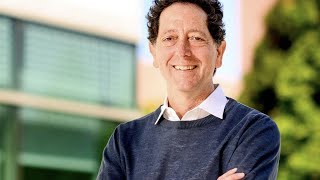
In this recorded lecture, Professor Kevan Shokat (UC Berkeley/UCSF) reviews his laboratory’s chemical‑genetics approaches to dissect signal‑transduction pathways and to develop targeted cancer therapeutics. He begins with a brief biography and the invention of “analog‑sensitive” kinases that accept bulky ATP analogs, enabling selective inhibition and substrate identification for over 100 kinases. Shokat then outlines the therapeutic paradigm of targeting driver oncogenes that are essential in cancer cells but dispensable in normal tissue, using the classic BCR‑ABL example. He explains why a simple linear pathway model fails for RAS‑RAF‑MEK‑ERK signaling, illustrating paradoxical activation of RAF inhibitors (e.g., vemurafenib) and the resulting secondary cancers. The lecture moves to historical attempts to block KRAS membrane localization via farnesyl‑transferase inhibitors, describing the failure caused by a geranylgeranyl bypass and the renewed focus on HRAS‑mutant patients. Shokat introduces a novel “neo‑substrate” strategy that repurposes farnesyl‑transferase to deliver a covalent electrophile to KRAS4B, forcing cytosolic delocalization. He then details the discovery of a covalent pocket adjacent to the KRAS G12C cysteine using fragment‑based tethering, the structural basis of the pocket, and how covalent ligands block guanine‑exchange‑factor (GEF) binding and destabilize GTP binding, selectively killing G12C‑mutant cells. Pre‑clinical data on biochemical potency, cellular selectivity, and synergy with statins are presented, followed by ongoing medicinal‑chemistry optimization and plans to target other KRAS alleles (e.g., G12D) using alternative chemistries. The talk concludes with acknowledgments of collaborators and a brief Q&A on mechanistic nuances.
Chapters
So it is my real honor to introduce Professor Kevan Shokat as the 2015 David E. Green Memorial Lecturer. So David Green was a famous enzymologist and mitochondrial biologist at the Enzyme Institute here at UW-Madison. And this lecture is endowed by his former postdocs and associates. So Professor Shokat comes to us from the Bay Area where he is a professor of chemistry at UC Berkeley and a professor and chair of cellular and molecular pharmacology at UCSF. So Kevan graduated from Reed College in Portland in 1986 and then did his graduate work with Peter Schultz at UC Berkeley where he studied new synthetic routes to catalytic antibodies. Then, after a short postdoctoral stint in more immunology with Christopher Goodnow then at Stanford, Kevan began his independent career as an assistant professor in the Department of Chemistry and Molecular Biology at Princeton in 1994. So it was really soon after he started his independent career that Kevan and his group made the observation that they could re-engineer protein kinases by making select mutations in the kinase active sites that allow these kinases to be able to accept unnatural nucleotides, such as bulky ATP derivatives, and that these same mutations could allow custom inhibition of these kinases with inhibitors that wouldn't inhibit normal wild-type kinases. So these tools became very powerful means to identify the functions functions and the direct substrates of a wide range of protein and lipid kinases, and his group has now done this for more than 100 kinases from a diverse array of organisms. So Kevan's group continues to use these tools and to develop a range of other chemical tools to study the specific functions of kinases and other signaling molecules like GTPases, with the goal of identifying which of these signaling molecules could be really effective targets or therapeutic intervention for diseases like cancer and other immune diseases. So Kevan's work really has been exceptionally influential in the field of signal transduction and for which he has been recognized with a wide range of honors and awards, which include simultaneous— being elected simultaneously as both a Pew and a Searle Scholar, which I didn't even think was possible. A Young Investigator Award from the Protein Society, an Alfred P. Sloan Fellowship. In 2005, he was elected as an investigator of the Howard Hughes Medical Institute, and in 2010, he was elected to the National Academy of Sciences. So with that, please join me in welcoming Professor Kevan Shokat.
Thank you, Tim, for that very nice introduction. I'm going to have to really improve my introductions, because that was great with no notes. I usually have page after page to try to remember what you— that was very, very kind, very nice. Thank you for that. Well, it's an honor to be here for the lecture. I'm looking forward to telling you about a number of projects in the lab. The central themes David mentioned in the lab right now is to really understand how we can find the best drug targets to treat diseases like cancer and then develop tailor-made chemistry to exploit those drug targets to maximal therapeutic benefit. And what I want to do is sort of give you a very— start simple with what the goal is in all therapeutics and how signal transduction pathways ideally work when they're simple, how the drugs work, and then sort of unpeel the layer of when things get more complex, how biology sort of thwarts some of those approaches we take, and then how we can then come back with some new chemistry to try to deal with those challenges. So if I start with a very, very simple premise that what we're looking for are targets that show themselves to be particularly important in the cancer cell but are dispensable in normal cells, the best way to find those are the sites of mutation that drive cancer, the driver oncogenes. And if we identify that they occur in a signal transduction protein like a kinase, one of the prototypes being an example of a kinase called BCR-ABL, a translocated fusion that hyperactivates the kinase. Then we know what to do chemically. We know to put a small molecule in the ATP site and compete for ATP in that kinase. And we know that since the mutation drives this pathway in the absence of the normal input signals, that when we deprive the cell of that signal that hopefully the cell is uniquely dependent upon that pathway, but normal cells can tolerate inhibition of the proto-oncogene, the one that's not mutated, in the rest of the body, and we can get a large therapeutic benefit. And many, many drugs that we make rely on that unique dependence that when you get the mutation, the pathway becomes— the cells become addicted to this pathway, and then starving them of that pathway with the small molecule drug will send them off into apoptosis and then would have a therapeutic benefit. So what I'd like to then introduce you to a little bit more of the complexity of the signal transduction pathways and what are the components I'll tell you about, and that really comes from the importance of post-translational modifications and switching and really the importance of phosphate. Many, many of the signal transduction proteins that we know about, rely on a unique phosphate group. The GTPases are sort of very poor enzymes, and they're really switched on and off by the state of the nucleotide or the substrate. So when they bind GTP, their conformation is capable of binding so-called effector proteins, just capable of doing protein-protein interactions that then send downstream signals. When the intrinsic GTPase is active and that gamma phosphate is hydrolyzed, When bound to the GDP, the conformation of the GTPase adopts a state that's really incompetent for binding effectors and it's in the off state. And then the protein kinases are more traditional enzymes and we can see that they basically just transfer phosphate to serine, threonine, or tyrosine residues and then that creates an on state that sends the signal and it's catalytic here so we can get normal enzyme turnover and signal transduction. What's great about signal transduction proteins means is that evolution has used them over and over again, and they can build very, very quickly modular signaling pathways. So I've chosen these two examples because the pathway that I'll focus on is the Ras-Raf-MEK-ERK pathway. So in one pathway, we have— at the top of the cascade is a GTPase, and then three different kinases that lie downstream. And in that pathway, you can see that they are built up in a very simple way. The GDP is bound to the GTPase, it's not competent to bind the cytosolic kinase, which has a domain on it that is capable of binding to the GTPase when it's bound to the GTP, and then when the kinase gets recruited to the membrane, its activity increases by dimerization, and then it phosphorylates a downstream substrate, which itself is a kinase and starts the cascade. So before I get into the names of the proteins, I just wanted to introduce you to the biochemical functions and how they fit together, and we'll get into that in a second. But the other thing to remember, and I don't have this sort of throughout the talk, but one thing I'd like to remember is how fast these signal transduction pathways can modulate themselves and reorient and associate with the membrane. And my favorite movie of that is a movie from the 1950s of a neutrophil chasing a Staph aureus bacteria through a sea of red blood cells. And I'm sure many of you have seen this movie. I never get tired of it because it's just amazing to see this anthropomorphic sort of hunting and killing behavior of a neutrophil with the Staphylococcus aureus bacteria there in that black pivoting cell. And then these are the red blood cells that get pushed aside. And there's a tripeptide that emanates from the bacteria. There's a GPCR on the neutrophil that recognizes the tripeptide. Setting up a whole cascade of kinases to turn left here, mobilize actin, degrade the bacteria with reactive oxygen species. So the dynamic characteristic of signaling is also something that is, of course, very, very important in signaling and probably why it's been so rapidly evolved and expanded in evolution. Coming now back to cancer and thinking about how this simple pathway that I told you about, how important it is in cancer. It's amazing that 1/3 of all cancer is caused by mutations in the set of 2 proteins. At one position of KRAS, G12, the glycine 12 position, and then in a valine 600 position in the immediate downstream kinase BRAF. This causes about 8% of cancer. This is about 20% of cancer. So it's really remarkable. These two mutations never co-occur. So once you get one mutation, you never get the other, mutually exclusive. So a very clean linear pathway. And over the last 10 years, we've had fantastic developments in drugs to treat this group of patients that have the BRAF mutation. But the patients that have KRAS mutations, even though it's in the same pathway and we've developed drugs that work at this point and below, the KRAS patients do not really show much benefit when we use these drugs. So this is one of the first points I wanted to make, which is that these linear pathways give us the idea that they work like metabolic pathways. And that if we know the pathway and there's a mutation at any one point in the pathway, we could make an inhibitor at any downstream point and get the same therapeutic benefit. But that has been over and over shown not to be true, which is very, very depressing because we have fantastic chemical tools, but they just don't seem to work. And it's probably because the drugs don't selectively inhibit just the mutant protein in the tumor cell, they also inhibit the proto-oncogene in the rest of the body, and we can't dose high enough to suppress the oncogenic signaling while still having the patient tolerate the therapeutic toxicity in the rest of the body. So we just don't have that therapeutic index, first of all, because we don't have drugs that exclusively work on the mutant oncogene. Okay? And also, the pathways are more complex, which I'm going to tell you about in a second. Than we first realized. So one of the most surprising demonstrations of this fact that even if we had a drug that worked downstream of a known oncogene and we knew that the linear pathway was present, the drug doesn't work, is the following situation. Early on, people had developed inhibitors of RAF kinases, MEK kinases, and now ERK kinases. These two had been put into many, many clinical trials for patients that had either the RAS mutations or RAF mutations. And the one drug that worked stunningly well is this drug, PLX4032, or vemurafenib. But it only worked in patients that had the mutant BRAF V600E mutation. A clue about why it wasn't working anywhere else came from an unexpected place, which is— well, let me show you that it works first. Very, very important. 81% of the patients on the first trial had very positive scans throughout their body of metastatic melanoma. After several cycles of the drug, you can see the scans show much less intense signaling after the drug has been given. So the tumors were going quiet, disappearing, and the simple Cell readout was very obvious. If you start with the BRAF 600 mutation, you had phospho-MEK and phospho-ERK, the two downstream kinases were active, phosphorylation was present. You add the inhibitor and you shut off the signaling, everything's good. A very big surprise, though, came about when about 30% of the patients on the phase 1 trial developed a second different kind of cancer. While they were on the drug. The secondary squamous cell cancer was not life-threatening, so the patients stayed on the drug to treat their lethal melanoma that was growing. And a very interesting observation came about that when patients that were taken off the drug for a different reason, those other tumors disappeared. So here's a tumor that is induced by the drug, and its maintenance, it requires the drug. My collaborator on this project, Neil Rosen, immediately tried to develop a cell culture model of this phenomenon and found that there could be— so the idea is there's some paradoxical activation of the signaling pathway by this RAF kinase inhibitor. So you'd like to be able to have a cell line that shows that. So he found that if you had a BRAF wild-type cell but one with a KRAS mutant in it,— as soon as you started, there was very little— there's a little bit of basal signaling at ERK and MEK because the KRAS is mutated. But then when you add the RAF inhibitor, there's a massive increase in phosphorylation. And this really intrigued us because we're always thinking about enzyme inhibitors inhibiting enzyme activity. That is like first day of class. And yet here We're seeing that an enzyme inhibitor is activating enzyme activity. I was just stunned by this. And so we— to cut a long story short and take you through all the logic that we used to get here, I just want to show you the model that we proved and that was supported by several other papers as well that came out around the same time, which is the following: that when an inhibitor binds to a kinase, it doesn't just inhibit the kinase activity, but it changes the conformation of the kinase.. And that conformational change can have a paradoxical effect. So I told you that when RAS is active, it causes the dimerization and activation of the RAF kinase. It's not shown here as a dimer. We still don't understand this. Even though this is such an important pathway, we don't know exactly how dimerization happens, but we know it goes from a monomer to a dimer. And so when the first RAF inhibitor binds, it changes the conformation to mimic the dimer and then pushes the equilibrium to the dimer, and then in the half-occupied dimeric state, one protomer has the drug in it, the other protomer is very active, and that leads to increase in phosphorylation. We tested this with many ways, but suffice it to say that is basically a function of the kinase-drug complex that just nobody ever anticipated. So that's the— So that's just one example to sort of tell you that even though we might be operating just immediately downstream of where there's a mutation in this pathway, we can have a completely unanticipated effect. That's why it's much, much more important, we know now after 10, 15, 20 years, to target as close as we can to where the oncogenic mutation is. Okay. So all the frustrations, let me tell you now a couple of things that we've been working on and give you a little bit more background about targeting RAS tumors. So with all the frustration— before I get there— with all the frustrations of targeting oncogenes and not having an approved drug, one thing that has always been true is that if we have a very good inhibitor of the mutant kinase, we always get an approved drug. We always have therapeutic benefit. And this is just proven over and over again. I still know of no example where this has failed. So that is one important guiding principle. These are all approved drugs. These are drugs that are in trials. You can see that the cumulative frequency of mutation, the first one that was approved was very, very low frequency, but we're now applying this logic to more and more frequent mutations. But one that we don't have an inhibitor of in the clinic is the KRAS mutation. And it's the most frequent mutation, and we just don't even have any drugs. So I'm going to get to strategies to treat KRAS mutant tumors. And this goes back, way back, to the discovery of RAS and the oncogenes from viruses, where in the '60s people were cloning retroviruses, finding genes that cause transformation. Then, you know, sort of 15, 20 years later, people found mutations in human cancer cells that were in the exact same same orthologs or the proto-oncogenes that were causing cancer. We had many, many very, very important biochemical mechanisms that are bound to GTP. They hydrolyze GTP. They have activators of their hydrolysis. And basically what I wanted to summarize here is just to show you how long people have been working on this and where one biochemical mechanism was found for the kinases. Such as phosphorylation, that led to 25 now-approved kinase inhibitors. So that is a very druggable pocket and a place where mutations occur very frequently. Whereas the Ras proteins, we've had only one thing that has made it to the clinic in really these 30 or 40 years. And that is based on the farnesylation that's required of Ras. And so when people realized that Ras had to be at the membrane and it got to the membrane by farnesylation, they blocked the farnesyl transferase to try to prevent prevent it getting from the membrane. Beautiful strategy, worked in mice, and I'll show you some of that data. But ultimately, it failed in phase 3 clinical trials for a reason I'll show you in a second. So this is— we were very close, but for one small detail, it has failed. So let me tell you about farnesylation of Ras and what was known about it. So KRAS has two alternative splice forms, 4A and 4B. The oncogenic, more transforming activity is 4B that has a tail with many, many lysines on it, a near C-terminal cysteine. That positively charged tail promotes its location— localization up to the membrane, but it still needs a farnesyl to be added to the cysteine and then several other trimming steps to get to the final membrane-localized carboxymethylated farnesyl KRAS form, and this is catalyzed by the enzyme farnesyl transferase, which uses FPP, farnesyl pyrophosphate, as a substrate. So this made for a fantastic drug target because this was imminently druggable. People made very good farnesyl transferase inhibitors. At this point, people didn't really appreciate the difference between HRAS and KRAS. They were both RAS. Seemed like they were found— HRAS was found first to be mutated. So it seemed many of the cell models that people use to validate their farnesyl transferase inhibitors, they used HRAS mutant cell lines. And when you add a farnesyl transferase inhibitor to an HRAS mutant cell line, they die. They don't get up to the membrane. Now, when the clinical trials were starting with the drugs, people realized there were more and more KRAS mutant patients. So many of the patients— and just because the sheer number is much larger for K than H— They got put into a lot of KRAS mutant patients and there— and so farnesyl transferase inhibitors work for HRAS. When they got into the trials and then they started to do parallel cell culture models, they realized that the farnesyl transferase inhibitors didn't really prevent KRAS localization to the membrane and nor did they work in any of the KRAS mutant patients. So very, very disappointing, hundreds of millions of dollars, and the reason for this lack of efficacy was a bypass mechanism. When we inhibit farnesyl transferase, we leave behind the cysteine and geranylgeranyl transferase with one more isoprene unit as a substrate can phosphorylate at lower efficiency KRAS4B, and then it gets to the membrane with geranylgeranyl there. Rather than farnesil. So this bypass, again, just shows you the adaptability of these very core important pathways and how some kinds of chemical strategies— the chemistry is beautiful, these are fantastic drugs— they just don't work in the patient population we wanted. So you might be thinking, well, what about all the HRAS patients? Well, it took a long time for that failure to sort of wash through the industry. And very recently, we began to think, my colleague Frank McCormick, that maybe these farnesyl transferase inhibitors should be tried in the HRAS mutant patients. So we just began that. We took it out of— we licensed it from a company that had one that failed, and we're now trying it in HRAS mutant patients. So we'll see if that idea works or if that's still yet another almost there idea or if it's not good enough. But this idea of membrane localization being such an important thing for KRAS activity, we began to think about more and more, and my colleague Frank McCormick had what I thought was a great idea. He said, well, if the cysteine is there and the problem is that it can be geranylgeranylated, let's just put something else on there so now geranylgeranyl can't do the backup system. So he had the idea of taking any small molecule with a cysteine-reactive group and selecting for something that would bind to KRAS4B and then derivatize it in a way that would be cytosolic localized and not get to the membrane, and of course that would prevent bypass. And I like this idea very much, and like many conversations with biologists, their biology sounds great and the importance of it sounds great, but the chemical challenge of that seems huge because KRAS is really like a bowling ball then with the flexible tail on it And Frank wanted to get a drug that bound to the floppy tail, but I couldn't see why there would be any specificity. And so, so we, we were racking our heads thinking about how to exploit this idea but do it in something that seemed more chemically tractable. And a postdoc in my lab, Greg Hamilton, had, I think, a really nice idea, which is to essentially use the enzyme in the cell that's already there to deliver something to that cell. And so he said, well, let's take and use farnesyl transferase, but now instead of FPP as the substrate, let's use Frank's idea and deliver— get an enzyme— get a substrate, what we call like a neo-substrate for farnesyl transferase to deliver something to that KRAS4B tail. And as a proof of principle to get us there more quickly, you'll see that what we did is we just used the known farnesyl tail to help drive it into farnesyl transferase to be a substrate. And now there are many, many reasons why this could fail. It has to compete with a lot of FPP. We have to get a new chemical reaction to happen in an enzyme that was never designed to sort of make a carbon, you know, a substrate. Cysteine attack this reactive group. So there are many things that failed, but we still went for it because we thought this was still an elegant strategy. So this would be the idea. Can we get KRAS to be modified with something that won't let it be up at the membrane, and will it depend on the activity of farnesyl transferase? So luckily, again, lots of chemistry was done on farnesyl transferase, and there was one particular farnesyl competitive inhibitor, that crystal structure was solved of the molecule bound with the C-terminal tail of KRAS, and in gray is the farnesyl transferase. And this hydroxamate phosphonate is shown here, and what Greg noticed is the nitrogen is at reasonable distance in this one co-complex to where the cysteine was. So we decided to attach electrophilic groups to a pared-down version where we deleted the oxygen and kept the phosphonate and got rid of the other carbonyl, but then we modulated everything because we knew that we needed to get the precise alignment for the catalysis. So that was what I showed you up here. That design was— here's the starting inhibitor, we pared it down, and then we wanted several different vinyl sulfonamides, alkinamides, or epoxides. And tested each of these, and you'll see that some of them have 2 carbons between the attachment of the electrophile and the phosphonate, and some have 1. And it was very, very sharp structure-activity relationships, but when we give farnesyl transferase to KRAS to each of these molecules, one of them modifies to high efficiency. Interestingly, we never really get to 100% modification because this product essentially is a bisubstrate inhibitor, so it starts to inhibit farnesyl transferase as we're delivering it, which is a caveat to what I'll tell you about, but it's one sign that we're getting productive binding. Okay. So then we— this just shows you that the modification is on one site of the cysteine, and it has the expected mass. And then we have a control molecule without the epoxide but with everything else the same. There's 0% modification. So throughout this cell data, we'll use the negative control molecule as well as the active compound. So we went into cells where the bypass of a farnesyl transferase inhibitor is easy to see. So, and then we just treated the cells and then fractionated the cytosol or the membrane and then looked for KRAS. So what you can see is without any drug, KRAS is at the membrane and it's not in the cytosol. If we add a statin, which inhibits all FPP production, we then starve farnesyl transferase of its inhibitor and you don't get a localization and you can see that it's localized to the cytosol and the membrane. Brain. And there are a number of controls here, but here's a geranyl— geranyl transferase inhibitor. There's no localization. Farnesyl transferase inhibitor, no localization. That right there is the whole observation why the drug never worked. If we combine them, however, you can see we get very, very good localization to the cytosol. So that shows that their geranyl— geranyl is the mechanism of the bypass. And then I'll skip over a couple of other controls. But here's the active compound. You can see we get a reasonable fraction localized to the cytosol, which is very exciting. And then when we just take off that one oxygen and leave the ethyl group instead of the epoxide, there's no localization. So it looks like the drug is going in there and it's getting modified on Ras, and Ras is not able to get to the membrane as efficiently. The nice thing is this time course, it looks like it takes about 12 to 24 hours to build up. That's because newly synthesized Ras is the only pool that we can actually get down from the membrane into the cytosol. So that, that was very reassuring. Then we want to know whether this modification is dependent upon farnesyl transferase inhibitors. So if we— farnesyl transferase. So if we add a farnesyl transferase inhibitor, we should be able to compete off this localization and let it be bypassed by Dernal Journal. And so if you look here, we see no drug treatment, we see no localization. Farnesyl transferase inhibitor on its own does not localize. And now when we don't add any farnesyl transferase inhibitor, we see cytosolic localization. But as we increase the dose of the farnesyl transferase inhibitor, we compete it and let it go to the membrane by geranylgeranylase. So with that, we were very gratified that we could get the new chemistry to be carried out by the farnesyl transferase inhibitor. We'd like to know how good of it— how good it is at killing cells. And it's reasonable. It is— you can see that it's a sort of a 10, 20 micromolar inhibitor on its own. But if we use a dose of the statin that decreases the competition with FPP and diurnal-germal transferase, it can synergize and make this a much more effective drug. And it only synergizes— I left out the other one— it only synergizes with the active compound. The inactive lovastatin shows no extra effect. So everything, it looks consistent, like we can take this neosubstrate strategy and deliver this molecule to an enzyme that modifies KRAS and begin to delocalize it and avoid this bypass mechanism. With that, we're just now optimizing. There's a lot more chemistry to do here. We don't know if the following steps of modification happen and there's a lot more to figure out, but it's a work in progress on this project. Back to the timeline, many, many years of investment on the farnesyl transferase. We then took a fresh look at the whole picture of RAS and asked, well, what would we really love to have with RAS? If we had this, then we would have a completely new RAS drug. Well, I showed you that we want to directly target the oncogene. Farnesyl transferase is sort of direct, but it's like one step away. But most importantly, for maximum therapeutic benefit, we want to inhibit just the oncogene and not the proto-oncogene. That way we can dose to kill the tumor and not worry about on-target toxicity on the non-mutant part of patients. So how do we do that? So let me tell you a little bit more about RAS and why people couldn't directly target RAS on its own. And I sort of alluded to this. GTPases, they're really nucleotide state-dependent switches. They hold on to the nucleotide at super high affinity. So their Kd for the nucleotide is 17 picomolar in comparison to kinases, which are in the micromolar range. So we would have to make a drug that would compete with GTP. We would have to be a million-fold better at drug discovery than we are now. That's supposed to be a joke. That's like, no way. It was just— it's not possible to do that. So that's probably why we haven't been able to crack K-RAS in that simple, just go for the substrate binding pocket reason because it's built a completely different way. So, well, other parts of the RAS cycle could be drugged. And so I want to introduce those other components to tell you how this new drug we've made works, but also tell you about other parts of the RAS cycle. So I've told you that RAS in the GDP state is is off, so two flexible loops in the GTPase, switch 1 in dark blue and switch 2 in light blue, have a conformation that's incompatible with binding to effectors like RAF or one I haven't mentioned, PI3 kinase. But when they bind— when RAS binds GTP, these two loops fold in, different conformation, and then they're competent to bind the effectors. With such a high affinity for nucleotide, 17 picomolar for GTP or GDP, there has to be some way to get that off, and that's catalyzed by a guanine exchange factor that comes up and opens up the whole protein, the side chains of that, those loops, in order to let the nucleotide fall out. And then in that nucleotide-free state, the higher concentration in the cell of GTP will load in and then put RAS always going through the cycle from the GDP to the GTP state to be on. Once it's in the GTP state, it can switch by intrinsic GTP hydrolysis, or it can be catalyzed, accelerated, that GTP hydrolysis by the GTPase activating protein. It turns out the dominant mutations that cause this 20% of cancer interrupt this interaction. So now— sorry, with the zoom in, the colors are slightly different. In gray is still Ras. Here's the nucleotide. And then in blue is the GTPase activating protein, or GAP. And GAP has an arginine, so-called arginine finger, that brings a positive charge nearby the phosphates to accelerate hydrolysis. Methylines of arginine go right by two glycine residues in Ras. So if any cancer cell can mutate either of those two glycines to anything other than glycine or proline, it will push aside this arginine and decrease the ability of the GAP to hydrolyze. So it'll be stuck more in the GTP state. Okay, so we know then that sort of 20% of cancer is caused by mutation right here. We know why it's caused. What can we do to treat that? Well, if you look at this, it just doesn't— the one pocket I've told you about is where the nucleotide is, but it's always occupied by nucleotide. And the rest of it is a sort of bowling ball. It's just not many pockets that are able to be drugged. So we needed some handle that could trump sort of any very, very shallow pocket and give us an interaction. Then, of course, for chemical biologists, you know, you can look through paper after paper, protein after protein, but if you ever see those 3 letters, CYS, that's what you start to look at because you just can't get distracted away from how powerful a cysteine is in terms of the chemical modifiability. And people looked at the G12 mutations in RAS And they're mostly aspartate and valine, and cysteine was the third most frequent residue, so sort of underappreciated. But in lung cancer, it's the most frequent residue that's mutated, and that's because there's a transversion that causes the cysteine mutation or the valine mutation, and that occurs in smokers. Never smokers get the aspartate because it's a milder mutation. So we thought, well, there's a cysteine there, what can we do to exploit that? And if we could exploit it, we would have something that would be good, which would be oncogene specificity. We would have something that's bad. It would only work for the cysteine, but there's a large fraction of patients that have this mutation. So we solved the crystal structure of the G12C mutation. Here's the GDP-bound form. Here's the switch 1 and switch 2. Switch 2 is very mobile, and in this particular crystal structure was unresolved, but the good thing is the cysteine was pointing out and it looked like a target. So then we collaborated with my colleague Jim Wells to use some of his special cysteine fragment-based screening approach called— that he calls tethering to identify some lead compounds. Tethering is a very nice fragment-based drug discovery tool for several reasons. First is that if you have a cysteine you want to target, it's very cysteine-directed because of the disulfide. It makes a disulfide in a reversible manner, and you can add beta-mercaptoethanol to compete that away. So at very low doses of beta-mercaptoethanol, you can favor disulfide formation with very early, poor starting points. And if the molecule can survive BME, it's probably because some feature of the disulfide binds to a pocket that's next to the cysteine you want. And, of course, you can do controls without the cysteine and the like. So we did that screen and we were very lucky. We found two hit molecules that modified the G12C form of KRAS to 100%. We put the mutation in HRAS. It also bound. That was encouraging. They're so highly conserved. Also negative control, very encouraging. It doesn't bind to the wild type. So it has 3 other cysteines, but it's not reacting with those. So all of that looked, looked very good. Then we got a very, very depressing result, and that is that if we put the RAS into the GTP state and then asked that cysteine to get modified, we got zero modification effectively. And that's very depressing because we think that in the cells, the predominant active oncogenic form is the GTP state. So now our drug is not binding to the oncogenic form of the protein. So we went back and rescreened the GTP state against the whole collection and we got exactly zero. So we had no chemical starting point for the GTP state and we could have either stopped or we, we said, well, let's keep going, let's just optimize, let's see where it's binding and we'll go from there. Solve the crystal structure of the molecule bound, the HIT molecule bound to the cysteine. You see here's the disulfide, and it's binding not into the GTP state, which presumably it could have because it's a covalent bond, it could compete with pKa molar affinity, but it bound in a completely new pocket that nobody else had recognized because it is a half-folded-in state of SWITCH2. This is the pocket that SWITCH2 would occupy when GTP is bound. So that explained immediately why the molecule didn't like to bind to the GTP state. State because the pocket is absent there. But it also showed that this pocket is actually quite, you know, an attractive drug pocket, which is nice. We don't have to compete with nucleotide. But the other feature is it's in an important part of the protein. It's right at the heart of where the machinery is that switches between GTP and GDP. So that was a big, big encouraging result. We still got worried about the GTP state not binding, but we were sort of spurred on by this result that had been published a number of years before with a natural product that binds to another G protein, Gαq, and this depsipeptide binds behind switch 1 in the GDP state of this protein. So it looked like nature had found a very similar kind of pocket in a G protein behind one of the switches in the GDP state. So we said this is sort of a good sign that this is a reasonable place to optimize for a drug. So then we needed to convert the disulfide into an electrophile to go into cells, and we basically just took the disulfide off and put various electrophiles, vinyl sulfides, sulfonamides, acrylamides. And as you can imagine, sort of, if you have hotter electrophiles, you get higher percent modification. When you go down to weaker electrophiles, you get less modification. I think one of the more important sort of lessons on this slide was that subtle modifications to the hydrophobic element here, going from this dichloro to this dichlorophenol, we could get increases in modification even though the warhead was the same. So we wanted to know that the pocket was druggable, and with SAR we could improve binding, and we did that. So in the last couple minutes, let me just tell you what the protein— what the drug does to RAS. So it sits under switch 2, and one of the first things we checked— and I won't show you the data for this— is that it looked like it would prevent the guanine exchange factor from catalyzing exchange because it's sort of pushing right on the interface of where that GEF has to come. And absolutely we don't let the guanine exchange factor load in, take off GDP and catalyze exchange. So that was fine, but people don't really know how much the GEF is really involved in the mutant RAS. It's a little bit a sign of debate. That mutant is supposed to be sufficient on its own, so just blocking that wasn't necessarily enough. But what we started to look at more carefully is what is this doing to the machine of RAS? And the key switch that happens in RAS between the GDP and the GTP state is shown in this animation. So here's our drug complex in GDP. We modeled in the GTP structure and then in animation show you where on switch 2 and switch 1 the hydroxyl groups come to interact with the gamma phosphate. And those motions send glycine 60 right through where our drug is bound. So if the protein is in the GDP state with our drug and glycine 60 cannot come over and stabilize the gamma phosphate— and there are some subtle changes to threonine 35 as well, positioning in our crystal structures— We thought, well, maybe this gamma phosphate will be a little bit destabilized. Okay, so we can measure that by looking at the exchange and rebinding of GDP or GTP. And the prediction is that GDP binding won't be altered because the drug is bound away from that and it's bound in the GDP state. But when our drug is there, the GTPase will not bind GTP as well. So here's the GDP titration with 4 proteins, the wild-type, the G12C, or G12C with 2 different drugs bound. You see there's no difference in GDP affinity, and the reason this affinity is low is because it's the protein concentration that we used. It's in the micromolar range. So, but if we titrate GTP, you'll see that wild-type and G12C are potently bound, but there's a 10-fold shift when we put our drugs in. So we've destabilized the ability of the protein to bind GTP. And in the cell, that's very, very important because the cell allows GTP binding because it maintains the concentration higher than GDP. The intrinsic affinity for GDP and GTP is really the same. So we've shifted is the intrinsic affinity for RAS when our drug is bound. And what's great is, I think, is that we've used the cellular GDP as the inhibitor of the oncogene. Which is something when we started, we thought that was the biggest problem we had, is how do we overcome picomolar affinity? But when we found the drug binding pocket and this observation, I think it really tells us a mechanism that this approach will work. And so we would like to know that this works in a G12C-transformed cell-specific manner. And these are lung cancer cell lines, which have many, many mutations. But the 4 G12C cell lines, 2 or 3 of them are very sensitive, and none of the non-G12C cell lines are sensitive at all. And then a more important control is to take the most sensitive cell line and put 3 different drugs that have different abilities to modify KRAS. And this is the most active biochemically at modifying G12C. And then another one with the same warhead but with subtle changes in the hydrophobic element is 10-fold worse. And then a negative control compound that has the same warhead and very— same warhead but a different hydrophobic element, you see that again the rank order biochemical potency is the same as it is in vitro. So we know now we're getting on-target inhibition and we're now optimizing the compound. We've actually begun a bigger effort with a company to try to optimize the drug, and that's going on very, very extensively. In my lab, and this is just sort of a summary of what I told you, that we've put a drug here, blocks guanine exchange, so the oncogenic mutation blocks the GAP, our drug blocks the GEF and prefers loading GDP rather than GTP, all of which tells us we're going to block PI3 kinase interaction and RAF interaction, but at the level of the oncogene. And so Now we're thinking of other alleles. We go from the easiest to drug, the cysteine, to the most frequent mutation, which is the aspartate. So we're looking for really some novel chemistry to take advantage of the unique reactivity of the aspartate. So it was great to talk with Ron today. And so I'm getting a shipment of all the diazo compounds you have tonight to take me back tomorrow. But I think that's a great— it was really great to hear about that. It's great. And so we're going to be working more on that. We're also exploiting the pocket, as you can imagine, and derivatizing with new compounds. So this is where the cysteine was modified. We've also recently solved crystal structures of hits that bind sort of outside of this pocket. So we're thinking about merging these chemotypes to get more and more affinity. So we're just sort of in the midst of all of that right now, optimizing, exploiting this pocket more and more. Well, with that, I'll just tell you who did all the work. The first farnesyl transferase substrate idea, the idea really originally came from Frank and Greg sort of built in the farnesyl transferase delivery angle. And Chris Novotny was a graduate student that is finishing that project up as Greg has moved. And then the KRAS G12C project was done by two people in the lab, postdoc Ulf Peters and a graduate student, John Ostrom. And the last new pocket I mentioned was from Danny Gentile, a graduate student in the lab. The tethering was done with Jim, and then Yi Ping Deng-Troy of commercialize this and try to see if we can get this compound optimized and into the clinic. So again, thanks for the invitation and happy to answer any questions. So the formation of the breast— —complex is important to prevent cells from unregulated growth, do you think you'd also get oncogenic mutations in the GAP? Oh, good question. I think there are, actually, but I think the problem is there are multiple GAPs. I think in the GAPs and the GEFs side, I put just one, but there are multiple. Oh, no. Well, what I said is true, but then what you said is also true. NF1, neurofibromatosis 1, which is a very famous tumor suppressor, that is a GAP for RAS. So there are, I guess, in those lymphocytes, that's the dedicated GAP. And so that's why that's a very frequent one. Yeah, Kevin Shannon at UCSF.
[INAUDIBLE] Given that you've identified this pocket now that you can inhibit the GTPase without having to worry about the pKa affinity of the nucleotide, at least from a tool perspective, like your kinase inhibitors, is that like a modifiable pocket that you can now explore?
Yeah, great question. That's kind of what this is. So this is the cysteine with the G12C. Z-drug bound, but then exactly what you said is what we wanted to do. And what we've put here is a cysteine in place of a methionine, and this molecule is bound to that engineered cysteine. So that's exactly what we're doing now. So yeah, it would be great to be able to just put in any cysteine there and modify. We're checking out if that has a phenotype on its own. This— after we published this paper, another group was looking for inhibitors. I believe it's the RAL GTPase, and they did a computational screen to find drugs that bind, and they found a non-covalent drug that binds in the equivalent pocket in the RAL GTPase. There's no structure, so we don't know exactly how it works, but that is also further suggestion that, you know, we would be able to get a a tool. So when you talk about the first strategy where you're using an alternative barnacil delivery mode, why does that compound not recruit to the membrane? Is there other physical steps or something? Yeah, we don't know exactly. We— it's a good question. We were worried it was too close It looks really close. The thing that stays on there— so yeah, it had to be a prodrug, but I skipped that. But what stays on is a single phosphate. So we hope that that negative charge would help keep it away from the membrane. But that probably, I think, may not be the final thing. I think it's what I referred to Here. There's other lipidation steps, maybe? Not in— yeah, not in— in HRAS there is, but not in KRAS. And it's in KRAS, there's two other enzymes that have to clip here and then methylate, and you need both of those. So I thought that that data was saying that if you didn't methylate, you just had one negative charge, it didn't go to the membrane. So I thought that phosphate could be like that, or we don't let these other two enzymes work when we put our thing on there. We haven't tested those RCE1, LTE1— I forget the two names of those. But yeah, it's probably because there's two more steps. Yeah, hopefully they wouldn't get recognized. —cancers that are dependent on the drug. The argument is there's a dimer and there's partial inhibition one part of the drug from the other part. Yeah. Could you just dose that up, or is there a predictive— Say the last part. —concentration bucket? You're right. Yeah. Yeah, the prediction is that it's a bell-shaped dose-response curve. You activate, and then at high dose, you suppress. That's what you see in cell culture. But you can't get the drug at that high concentration in patients. No, but it's great. Yeah, people— there— it must be that, that there is a little bit of anti-cooperativity that the different RAF kinase inhibitors will induce, but then the shape of the bell-shaped curve is like wider or tighter depending on how cooperative. So some people are setting up screens very cool to take a slow off-rate RAF inhibitor, put it on, wash it out of the cell so the cell gets stuck in the dimer, and then you screen for another drug, and then you can find what the state of that other one is. Other people are just screening for like completely different things that don't let the dimer happen. What's fascinating is that the— what people So you would have thought the MEK inhibitor would be fantastic, right? Because it's downstream below these things, very little therapeutic index on its own. So, but because of this paradoxical activation, the company that made this, Plexicon, is making what they call a paradox breaker, which doesn't let the dimer happen. But the prediction is that that won't have as good of a therapeutic index. Because in the rest of the body, this drug meets a cell that has just wild-type RAF and wild-type RAS. It just lets the signal go through because it makes a little bit of dimer, but it doesn't inhibit. But anything that inhibits completely RAF in the tumor and the rest of the body will have the therapeutic index of MEK, which is almost nil. It's really fascinating that cooperativity and then how it plays out, but it may be that these subtle differences patients can tolerate better, timing, something. So on the same topic, the patients that have this atypical response, what causes it? I mean, do they have a mutation? Yeah, that's great. So either it's excess growth factor around that tissue that is sending a signal, and without a mutation is just giving a little bit of a signal which the RAF inhibitor boosts by pushing the equilibrium over. Or they have these cells that become the squamous cell carcinoma. They might have a KRAS mutation in them already, but it sent the cells to senescence. And then when the drug comes in and boosts the signal, they come out of that and make the tumor. There's multiple, multiple things. In one patient, they were given the drug They had melanoma, BRAF mutation, gave them the drug, tumor was grown out, they sequenced, they had an NRAS mutation. So then what they did is they stopped the drug and the NRAS tumor disappeared. And then they kept cycling back and forth between the drug and on and off.
Okay, there's no other questions.
Let's, uh, thank Joshua Elkington.
More from Joshua







Scientist Stories: Hans Waterham, The value of phenotypic assays in peroxisomal disorders




Scientist Stories: Joel Zlotogora, Genetic carrier screening programs for reproductive purposes