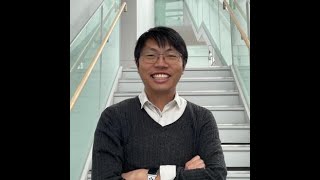
In this Stanford Scientist Stories talk, Kyle Loh shares a personal motivation—his partner’s mother dying of organ failure—to highlight the massive shortage of transplantable organs and the limitations of current therapies. He explains that all humans begin as a tiny cluster of embryonic stem cells (ESCs) that are pluripotent, capable of becoming any cell type, but turning this potential into pure, therapeutic cell populations is extremely challenging. Early attempts at differentiating ESCs often yielded mixed, impure cell batches (e.g., pancreas cells contaminated with bone and cartilage), which are unsuitable for clinical use. To overcome this, Loh’s lab spent a decade constructing a detailed developmental “map” that specifies when to activate or block particular biological signals, effectively steering ESCs along a chosen lineage like a driver following a road map. Using this two‑pronged signal‑toggle strategy, the lab has generated over 20 pure human cell types, including functional neurons that fire electrical potentials, liver cells that extend the lifespan of mice with liver failure, and bone cells that form synthetic human bone in mice. The most ambitious current goal is to create blood‑forming stem cells that can reconstitute a patient’s immune system, enabling immune‑compatible transplantation of ESC‑derived tissues. By freezing a small number of ESC lines and their derived tissue and blood‑forming stem cells, the vision is a limitless, on‑demand source of organs and immune‑compatible grafts for patients worldwide.
Chapters
Last summer, I ended up taking off 2 months from lab. It was actually to spend time with my partner's mother, who who is dying in a hospital of kidney and liver failure. Sadly, she's not the only one. In this country, half of adults will die of degenerative diseases and organ failure. These are diseases like liver failure or Parkinson's disease, and they're caused by the death or malfunctioning of cells in the human body. Because of this, many such diseases cannot be easily cured by any simple drug or pill. Instead, these patients need transplants of new, healthy cells and tissues to replace their own. Today, this is addressed by organ transplantation. If somebody in yellow has liver failure, another human can give up their liver for them. This is a lifesaving technique done tens of thousands of times every year, but it's beset by multiple challenges. First, the ethics of one human giving up their organs for another. But secondly, and most importantly, there's simply not enough organs. If 10 people need an organ or a cell transplant, only 1 will receive it this year. That means that 90% of patients, like my partner's mother, will never get the life-saving transplant that they need. While this is today, we hope that tomorrow we will create an endless source of human tissues in a Petri dish, starting from unique cells known as embryonic stem cells. And to tell you about this, I need to take a step back and explain to you what are embryonic stem cells. All of us began as an embryo, but more specifically, as a clump of just 12 nondescript cells known as embryonic stem cells in blue. And embryonic development is the marvelous process through which in 9 months, those 12 boring cells are transformed into new walking, talking, thinking, and later drinking and eating human beings like you and I. Comprising tens of trillions of cells and thousands of different types of cells, including blood, bone, brain, and everything else in between. And I think it's simply a miracle that these embryonic stem cells, these tiny cells that you can see over there, really have the power to transform into any cell type of the body. You might be wondering, "This sounds great. Where's the problem?" In theory, We know that embryonic stem cells can transform into any kind of cell in the body. But in practice, this is incredibly difficult. Let me give you one example. Early efforts tried to transform embryonic stem cells into pancreas cells to treat type 1 diabetes. However, they made a mixed bag of cells. There were some pancreas cells in blue, but also other non-pancreatic cells in other colors. And what do you think happened when these impure batches of cells were implanted into a diabetic rodent? Sometimes, human bone and cartilage emerged alongside the pancreas. And just think about that. If you had type 1 diabetes, and I promised you a new pancreas, you probably wouldn't be too happy with me if I gave you a new hip bone along with that. And while this might sound simple or funny, this is really the actual problem we face in the lab every day. That these impure batches of cells can't be used for many types of therapies. And my lab's goal is to create pure batches of specific human cells, like bone or heart cells. So why is this so difficult? Let's say you sit down in your car at Stanford, and you're trying to plot a cross-country expedition across the US with thousands of potential destinations ahead of you. You're just like an embryonic stem cell. You have thousands of choices ahead of you. You're not sure where to go. Let's say you want to get to someplace specific, like Chicago. You know that you'll need a detailed turn-by-turn map of the route to get to your destination, explaining all the intermediate waypoints in between where you need to go, and at each fork in the road, whether to turn left or right. Otherwise, you might overshoot Chicago and end up somewhere you don't want to go, like New Jersey in the Gold Star, where I'm from, and I can assure you no one ever, ever wants to go there. I'm sorry if any of you in the audience are from New Jersey like I am. So let's put ourselves in the mindset of an embryonic stem cell. You're driving down the 280, a highway— maybe you guys did that today to get here— and you face a fork in the road, to turn left or to turn right. Believe it or not, embryonic stem cells face the exact same challenge. At each important point in their life, they had to decide whether to turn in one direction and become one cell type, like maybe a bone cell, or turn in the other direction and make another kind of cell, like a blood cell. So what tells a stem cell to go one way or the other? You and I, we can read road signs. Of course, stem cells are not so simple. They interpret biological signals, like A or B, that tell them which way to turn. So our lab developed a really simple but powerful approach We thought, to force a stem cell to steer into one direction, what if we block the signal that makes one cell type, and of equal importance, activate the signal that makes the other? Think about it. Let's say you're driving down the road, and one exit is completely closed off. You have no choice but to steer in one direction. And that's exactly what my lab succeeded in doing. And using this very simple approach, we've succeeded in creating over 20 different kinds of human cells in pure form, like bone, heart, blood cells, and many things in between. So today, I've shown you a lot of real-world maps. Now let me show you the developmental map that my lab created for stem cells. It looks really simple, but it took over 10 years for us to create this map. It begins on the left-hand side with embryonic stem cells. In the middle, it describes every intermediate step that stem cell had to go through in its voyage to become different kinds of destination cells on the right. And superimposed on top of this, and not shown here, are the complex timings and combinations of biological signals that my lab had to toggle on or toggle off at every step every single point to force that stem cell to turn left or turn right, and do that over and over again, reiteratively. This developmental map has finally allowed us to convert embryonic stem cells into pure batches of different types of human cells. We first succeeded in turning embryonic stem cells into brain cells, or neurons. These neurons, they have long projections that fire electrical impulses. Shown on the right in purple is actually the first photo that my lab ever took of a particular type of human brain cell that we had created from stem cells. As you can see in purple, they have these long, beautiful projections, and even more excitingly, when we measured them, they actually fired electrical potentials, and I thought that was pretty cool. Using this map, we can also navigate to other destinations. So the next thing we tried to do was to make human liver cells together with my Stanford colleague Lei Cheng Ang. If we blocked the brain-inducing signals and activated liver-inducing signals, like that two-pronged approach I told you about before, we successfully converted embryonic stem cells into real human liver cells, shown here in brown. When we implanted these human liver cells into a mouse with liver failure, Remarkably, it increased the lifespans of these mice. And this is a really striking result to us, because it suggested hope in the future that we could mass-produce human liver cells to give new treatment options for patients suffering from liver failure, like I alluded to at the beginning of my talk. We also turned these embryonic stem cells into bone cells. I'll never forget this experiment, because I did it on Christmas. But when we injected these human bone cells into a mouse, it generated, for lack of a better word, a real human bone that you can see up there. And when I poked at it with my glove, it was hard, white and bony, for lack of a better word. And I thought, it's just pretty cool that we now understand the steps of human bone development so well in this map that we can now create synthetic human bones in the lab from embryonic stem cells. But now I want to tell you about the last thing that we're working on, which I find most exciting, which is to create new human blood and immune cells from embryonic stem cells. And you might wonder, why are we fixated on this? I've spent today telling you how our lab is doing a better and better job creating tissues like liver, bone and other things from embryonic stem cells. But what happens when we transplant this liver into a patient that needs it? This patient's immune system isn't going to welcome this liver with open arms and say, "This is the lifesaving organ transplant I need." It's going to say, "This is a foreign organ. I have to attack and destroy it." And to me, it was a really sobering moment when we realized that all our efforts at making better and better cells from stem cells would really be for naught unless we could conquer what we thought was the last frontier: the human immune system. And at Stanford, together with my colleagues like Irv Weissman and others, we have an ambitious plan to do exactly that. We are trying to create blood-forming stem cells from embryonic stem cells, such that when we inject these into a patient, it'll generate a fresh, new blood and immune system, shown here in red. So then what happens if we take liver tissue made from the same embryonic stem cell line and give it to that patient? The patient's immune system should say, hey, this is my kin. I should welcome it and accept it forever. And that's what we hope the future of regenerative medicine will be. That one day we'll use a small number of embryonic stem cell lines to treat most patients in need. From each embryonic stem cell line, we hope to produce a tissue and blood-forming stem cells and freeze them down. And then when someone needs an organ transplant, they won't have to wait. We can thaw out the tissue and the blood-forming stem cell and inject them at the same time, replacing this patient's tissues and their blood and immune system simultaneously. So we hope that this will be the future of regenerative medicine, where we use embryonic stem cells to produce a limitless source of human tissues for patients in need. That's the future we're working towards and which we're very excited by. Thank you. The preceding program is copyrighted by the Board of Trustees of the Leland Stanford Junior University. Please visit us at med.stanford.edu.