Scientist Stories: Matthew Porteus, Genome Editing to Cure Hemoglobinopathies
The virtual seminar, organized by CSIR‑IGIB and moderated by Dr. Gaurav Karya, featured Professor Matthew Porteus (Stanford) presenting his laboratory’s genome‑editing strategies for sickle cell disease (SCD) and beta‑thalassemia. After a brief overview of IGIB’s three‑pronged hemoglobinopathy program—genetic screening, iPSC disease modeling, and genome‑editing‑based autologous cell therapy—Porteus described an ex‑vivo workflow that uses CRISPR‑Cas9 ribonucleoprotein (RNP) electroporation together with an AAV6 donor template to achieve homologous recombination (HDR) in CD34⁺ hematopoietic stem and progenitor cells (HSPCs). In SCD patient‑derived HSPCs, 60‑80% allele correction was achieved, yielding >90% hemoglobin A (HbA) after erythroid differentiation, surpassing the ~70% HbA threshold for a hematologic cure. Long‑term HSCs retained 50‑63% correction. Pre‑clinical validation included NSG xenograft and the humanized Townes mouse model, showing that ≥15% myeloid engraftment leads to >60% HbA and disease cure. Safety assessments revealed a single off‑target site with ~1% indel frequency and a translocation frequency of ~0.04%; random AAV integration was below detection. These data supported an IND filing with the FDA, and a Phase 1 trial in the United States is planned, involving mobilization, GMP manufacturing, cryopreservation, and busulfan conditioning. For beta‑thalassemia, the team pursued a universal strategy: using a guide that cuts only the HBA1 allele, they replaced one alpha‑globin gene with a beta‑globin cassette (≈36‑40% whole‑gene replacement), restoring a balanced HbA/HbB ratio in patient‑derived cells. The Q&A covered donor template choices (AAV6 vs ssODN vs plasmid), random AAV integration, larger deletions from NHEJ, hematopoietic effects of alpha‑globin editing, rationale for the universal beta‑thalassemia approach, the role of emerging base/prime editors, the future balance between allogeneic HSCT and gene‑editing therapies, platform selection for resource‑limited settings like India, and handling heterogeneous editing outcomes. The talk emphasized technical maturity, regulatory readiness, and the need for global collaboration to scale curative genome‑editing therapies for hemoglobinopathies.
Questions this video answers
Plasmids trigger a strong type‑I interferon response and are toxic to CD34⁺ cells. The choice is between AAV6 and ssODN. AAV6 gives higher HDR efficiency (≈60‑80% correction), while ssODNs achieve 40‑50% correction—still above the therapeutic threshold. Both are being pursued; the decision may hinge on manufacturing scalability and cost.
AAV does not carry an integrase; random integration occurs at a very low frequency, below the limit of detection in our assays. It is not a systematic feature of AAV, unlike lentiviral vectors.
Large deletions at the cut site are possible (hundreds to thousands of base pairs). We are currently measuring their frequency; it appears low, but exact numbers (e.g., 0.5% vs 0.01%) are still being determined.
In vitro, red‑cell output and total hemoglobin production are maintained. We replace one of the two alpha‑globin alleles with a beta‑globin cassette, leaving three functional alpha genes (alpha‑thal carrier state). No in‑vivo data yet, but the in‑vitro results suggest normal erythropoiesis.
Beta‑thalassemia is caused by a wide spectrum of mutations, making allele‑specific correction technically and regulatory challenging. Replacing an alpha‑globin allele with a beta‑globin cassette provides a mutation‑agnostic, universal solution.
Chapters
Okay, it's live now. Welcome to the second session of virtual seminar series on hemoglobinopathies. Today we have an eminent clinician scientist, Professor Porteous, from Stanford University School of Medicine, who is going to deliver a lecture on genome editing to cure hemoglobinopathies. Thank you so much, Professor Porteous, for accepting our invitation, and it's a great honor for us to have you at our seminar series. Today's section— today's session will be shared by Dr. Gaurav Karya. Dr. Karya is a clinical lead at Center for Bone Marrow Transplantation and Cellular Therapy at Interprasad Apollo Hospitals, New Delhi. Before I hand over to Dr. Gaurav, since there are a lot of clinicians in the audience, in just one slide I will just go over what we are doing related to hemoglobinopathy research at IGIB. Just maybe it will take 1 or 2 minutes. So I'll just share my screen.
Okay, I'm gonna stop sharing. There you go.
Thank you. Okay, so this is the overview of hemoglobinopathies research at CSIR-IGIB, uh, CSIR Institute of Genomics and Integrative Biology. So we do 3 things related to hemoglobinopathies. Openopathies. One is genetic screening for sickle cell anemia and thalassemia. So if the clinician has a patient, he can refer to us. So we do genetic screening. We can find out the— in the case of thalassemia, we will find out the thalassemia mutation, and then we will report back to the clinician. The second one is IPS-based disease modeling for sickle cell anemia and thalassemia. So we take patients' PBMCs and then reprogram them into disease-specific iPSC line. And then recently we have created a small iPSC cell bank for sickle cell anemia and thalassemia. Thalassemia, we have a couple of lines with various disease mutations which are almost prevalent in Indian subcontinent. And then this iPSCs, we have also— it can be used for disease different— it can be differentiated into various cell types. It is disease in a dish. So we have created, we have used genome editing approach and created isogenic iPSCs, isogenic iPSC lines, and then these iPSC lines can be used for compound screening and drug screening. The third approach we are working on is genome editing-based cell therapy for sickle cell anemia and thalassemia. So we are taking two different approach here. One is direct genome editing, and the other one is reactivation of fetal hemoglobin through hereditary persistence fetal hemoglobin. And then we are planning to do the in vivo experiments, and then the long-term goal is putting it back to the patient. So thank you. Over to Dr. Gaurav.
Good morning, Proteus, and thank you for sparing your valuable time for us. I assume it's early morning there. Around 7:30 AM. So thank you very much. So a brief introduction about Dr. Porteous. He's a professor of pediatrics at Stanford School of Medicine. His research basically focuses on developing homologous recombination-based therapies for genetic and other diseases. He has a clinical practice at UCLA Parkland Children's Hospital where he's an attending physician for the pediatric bone marrow transplant services. Dr. Porteous graduated from Harvard School and completed his MD and PhD degrees at Stanford. He did his residency training in pediatrics at Boston Children's Hospital and fellowship training in pediatric hematology-oncology at Boston Children's Hospital and Dana-Farber Cancer Institute. For his postdoctoral work, Porteous trained with Nobel laureates like Dr. David Baltimore, at the Massachusetts Institute of Technology and the California Institute of Technology. During this time, he began studying gene editing and was the first to show that engineered nuclease could be used to precisely modify human cells by homologous recombination. So I'm sure this is a very, very brief introduction about the work what Matthew has been doing and has done in the past. Sorry, sorry, sorry.
No problem. It's the Zoom world.
Yeah. So over to you, Porteous. And we would love to hear from you what you are trying to do. Seva has already highlighted what he has been— he and his colleagues have been trying to do at IGIB. And they are doing excellent work. We'll need a lot of help and support from your end to expand this work further.
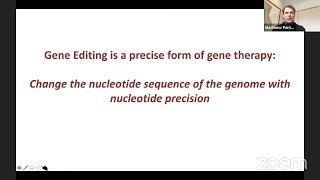
Thank you very much for that kind introduction. And thank you very much for inviting me to participate. In addition, it's always exciting to share one's work that I've been working on for many, many years. What I'm going to talk about has been a career-long goal. But I also hope that this will be an opportunity to build stronger connections between my lab and my research program and all of you in India. It's been a long-term goal to think about this, and I'll end my talk with a discussion about how we might be able to do that. So Stanford requires me to disclose any potential conflicts of interest, and because of my longtime expertise. I've been lucky enough to be involved in several companies, but everything I talk about today is derived from my academic lab. You know, I start with this slide because I think it's so exciting to think that we're right at the dawn of a new era in which we're going to develop a whole new way to improve the lives of patients. And that's not to underestimate the importance of all the prior technologies have have had on the lives of millions, if not billions of peoples around the world. And of course, we're all excited about the importance of a vaccine to get us back to some sort of new normal. Although I will have to say that it's pretty exciting to be able to be in California and yet also be at a conference in India at the same time. And I think that possibility we should continue. But what I like to emphasize is that genetically engineered cells specifically have entirely different pharmacokinetics and pharmacodynamics than these other prior modalities. And because, particularly if you think about modifying a stem cell, they can migrate to all tissues of the body or to the bones, they can generate progeny, and they can last the lifetime of a patient. And I think this lifetime durability raises the possibility to use the four-letter word called cure for many diseases, including sickle cell disease and beta thalassemia. So it was now in the 1970s that, you know, many people began to recognize that with the genetic basis of disease and with new technologies that allowed us to manipulate the DNA outside the body or even the genomes in cells, that there was a possibility of deriving genetic cures for genetic diseases. And my former postdoctoral mentor, David Baltimore, wrote in 1978 that it would be a triumph of medicine if we could do this. And he discussed how we could take bone marrow stem cells from a patient and modify them so that the normal protein could be made in place of the aberrant protein. And this vision is quite simple on a chalkboard, but I think has taken us now many decades to realize. But I hope in the next 45-50 minutes, leaving some time for questions and a discussion, that'll show you that we've actually, I think, reached this point. So I'm going to talk about gene editing, but I want to just remind everyone that gene editing is not different than gene therapy, but it is a precise and more precise form of gene therapy. And the, you know, overall goal of gene editing is to change the sequence of the genome with single nucleotide precision so that you know exactly what the genome is going to look like after you're done.. And this is in contrast to lentiviral gene therapies in which the insertion sites are variable, and so every cell will be slightly different. And it's different than, say, AAV gene therapies, which don't integrate and really currently are not applicable to genetic diseases of the blood because of the division of the stem cells and progenitors. The idea of, I think, using homologous recombination or gene correction to cure sickle cell disease is actually also an old idea. And this was a paper published in 1985 by Oliver Smithies, who actually went on to win a Nobel Prize for developing homologous recombination of mouse embryonic stem cells, in which he showed he could introduce a specific DNA sequence into the beta globin gene with high precision. The problem was, is that the frequency of that targeted integration was only 1 in a million cells. And so far too low to be of any clinical use. And it was also not done in primary hematopoietic stem cells. So, but it's a starting point. It was not zero. And it showed in principle, this was possible. The next major development came about a decade later by Maria Jason and actually several others. Which often occurs in science. And Maria and her colleagues demonstrated that if you could make a double-stranded break in the target gene you wanted to repair, you could stimulate the gene targeting process or the homologous recombination process by 1,000-fold. So now instead of getting 1 in a million cells modified in the way you want, you could get on the order of 0.1% of the cells modified. So, an important— and demonstrating the concept that a site-specific double-stranded break could unleash the recombination pathway. And then when I was a postdoc with David Baltimore, as Dr. Gharov explained, we showed that we could use zinc finger nucleases to stimulate the gene correction process, as well as what Maria Jason had used with the ISC. Nuclease. And the step forward here was that zinc finger nucleases could be redesigned to recognize different target sites. So you could potentially not just target a reporter gene, but you could target any gene in the genome. And there was about a decade of work with zinc finger nucleases, but they were very challenging to really make in high quality. And while Sangamo Biosciences continues to develop zinc finger nuclease editing, most others have had to move on to different platforms. I'll just point out that at the same time we were showing we could do gene correction, Dana Carroll was showing with zinc finger nucleases that was also a way to inactivate genetic elements, and he showed this in flies. And as Dr. Siva explained the possibility of using indels induced by gene editing is an approach being developed to mimic hereditary persistence of fetal hemoglobin. So, to summarize then, what we have is a genome editing process in which we design a nuclease to make a break at a specific site in the genome, and that break can be repaired in one of two ways. One is by the non-homologous end joining pathway in which ends are stitched back together, and usually in an accurate fashion, but occasionally in an inaccurate fashion that allows you to create indels or mutations at specific sites in the genome. This is a way of creating new errors on the genome. On the right-hand side is showing that the other ways, other primary ways cells repair double-stranded breaks, and I'll just point out that Cells have redundant ways to repair breaks because breaks are a natural part of every cell's life cycle, and because the potential damage of a break is so great, our cells have evolved multiple redundant mechanisms to repair them. But the other, as I said, the other way that cells repair breaks is by homologous recombination. And in homologous recombination, the cell finds, the machinery finds a undamaged piece of DNA. And if we provide that undamaged piece of DNA, this recombination machinery will use it, make a copy of that damaged piece of DNA, and then— hang on, let me just do this— and then paste it into the break. And by designing the donor DNA in a way that creates the changes you want, you can create single nucleotide changes or you can insert large cassettes of genes. And that's the process I'm going to spend the rest of the time talking about. I will note that when nature does genome editing, and the most dramatic example of genome editing is to create immune system diversity, it also initiates genetic diversity or genetic or genome, natural genome editing by the induction of a double-stranded break. So we're really harnessing or tapping into but nature does as well. So what I'm going to focus on are two applications of the genome edit, the homologous recombination process. One in which we just change a single nucleotide and how we've applied that to treat sickle cell disease. And then the second is to show how we can use recombination to target one gene into another gene. And what we've done in this is we've taken the HBB gene, the gene that codes for beta globin, and knocked it into one of the alpha globin genes. So we've repurposed the alpha globin gene to make beta globin. The process that we use, and it took many years to develop this process, and really many, many years to really fine-tune the details of the process, I was thinking about this last night, that it's not like a, it's not like a recipe where somebody can add a little less butter or a little more butter or a little less milk or a little more milk. Really what we have found is that the details are extremely important. But the fundamental process we use is an ex vivo process, so we're modifying the cells outside the body. We purify our CD34 hematopoietic stem and progenitor cells using standard methods. We put them into cycle by culturing them in cytokine-supplemented media. And then we deliver the two components of the process, the nuclease. In this case, we use CRISPR-Cas9. And we deliver that as a ribonucleoprotein complex to a synthetic guide molecule. And I've listed some of the sources for these reagents that we can obtain here in the United States. And we deliver this RNP complex via electroporation, shock to the cells. And then we deliver the donor template on an AAV6, and we deliver that immediately after the electroporation. The reason we use a viral vector to deliver the donor is we learned that naked DNA, plasma DNA, which works so well in some of the cell lines we work with, induces a highly toxic type 1 interferon response in hematopoietic stem and progenitor cells. So we've again, harness nature's ability through viruses to deliver DNA to the nucleus with minimal detection. Not no detection, but minimal detection, and certainly much less than what we see with naked plasma DNA. So we're going to use this function for sickle cell disease to rescue a missing function. And of course, this can be applied to hundreds, if not thousands of diseases that affect hundreds of millions of people around the world. And one of the points I make is that even though some of these diseases are considered quite rare, the reality is every patient with a serious genetic disease affects a larger, a much larger community of people, what I call the echoes of the disease. And so I'm now going to focus for the next bit of time on sickle cell disease. Now I realize probably many people in the audience are very familiar with this disease, But just briefly, let me summarize, you know, the real devastating nature of this. So it's an autosomal recessive disease in which both copies of the beta globin gene, generally for sickle cell disease, have— the patient inherits a sickle allele, the HBS allele, from their mother and father. And every sickle allele has the same nucleotide change, an A to a T, at codon 6 of the beta globin gene. This leads to a single amino acid change, a charged glutamic acid to a polar valine. And in the deoxygenated state, the beta globin, the sickle beta globin, sorry, sickle hemoglobin tetramer exposes the hydrophobic surface that then leads to polymerization. And that polymerization of the hemoglobin molecules converts the red blood cell into the sickle shape, giving the disease its name. These sickle red blood cells occlude small blood vessels in the body, thereby inhibiting oxygen delivery to all tissues in the body, leading to destructive systemic destruction of all the organs of the body, including the CNS, the lungs, painful crises in the bone, the kidneys, and basically every system you can think of. Now in the United States, the median lifespan for patients with sickle cell disease is in the mid-40s. In Africa, the median lifespan is in the first decade of life. And actually, I probably will be educated by you about the variability in the lifespan of patients with sickle cell disease in India. I will say what I do know about sickle cell disease in India is that there's a genotype that is associated with high fetal hemoglobin, and that gives some protection against the consequences of the disease. So in many ways, this is an ideal disease for genome editing because one, on a chalkboard, all one has to do is correct that one mutation. I will say that one of the ways that people have shown that corrected stem cells, hematopoietic stem cells, can cure this disease is by allogeneic bone marrow transplantation, in which you use immunologically matched stem cells from a— immunologically matched stem cells, usually from a relative, and transplant them as part of an allogeneic stem cell transplant. And this was first demonstrated in 1984 with a girl who had AML and sickle cell disease. And after her bone marrow transplant, she was converted to sickle cell trait, the blood genotype of her brother, and was also cured of her AML. So in principle, this shows that one can cure the disease with so-called genetically corrected hematopoietic stem cells. The problem is, is that most patients do not have an immunologically matched donor. And even when there are immune matches, there are still significant immune complications, including graft rejection, graft versus host disease, and poor immune recovery. Reconstitution. So what we'd like to do then is replace allogeneic cells and use genome editing to correct the patient's own cells, in which case every patient would be their own donor, and we wouldn't have to worry about the immune complications of allogeneic transplantation. So a large team of people in my lab, including Anna-Lisa Lattanzi, Rasmus Back, Danny Dever, Joe Camarena, and many, many others, We first demonstrated in 2016 that if we designed a guide RNA that was highly active in making a break next to the sickle cell mutation, so here's where the sickle cell mutation is, and here's where our break is, and we design a donor that converts the pathologic T to the non-pathologic A, We put silent mutations into the guide RNA binding site so it can't recut after the recombination process. And then we put silent changes between the cut site and the change we want to make to facilitate full correction rather than just partial recombination. And using the system and using CD34 cells derived from sickle cell disease patients, we are able now to achieve in the laboratory between 60% and 80% allele correction. Really a remarkable increase over, you know, 1 in a million from Oliver Smithies and then even 1 in 10,000 from Maria Jason. And this is at the right site and in the right cells. So when we convert those sickle cell disease CD34 cells into red blood cells in vitro, what we find is that we convert all of the, sorry, all of the pathologic hemoglobin S to essentially over 90% of the non-pathologic hemoglobin A. And as some of you may know, if you can keep the amount of hemoglobin A over 70%, the patient really has a hematologic cure. Sorry. Okay. One of the important questions then is that, if we take these cells through this relatively complicated process of purifying them, culturing them in cytokines, electroporating them, adding a virus, do they still remain their stem? Do they still retain that long-term hematopoietic stem cell property that I argued is really important to give lifetime durability? So one way we looked at this, and this was work led by Ron Baek in the lab is to purify the CD34 population into different subpopulations. So CD34 is a cell surface marker that marks stem cells but also progenitor cells. If you add additional cell surface markers, you can identify phenotypically what the long-term HSC is. And what Ranj found is that while in the bulk CD34 cells, the allele correction frequency was between 70% and 80%. The allele correction frequency in the long-term HSC was slightly lower, between 50% and, say, 63%. I'll note that what we see here is these are cells from 4 different people, and you can see there is some variety in the frequency of recombination or gene correction that occurs between donors. So we will have to take this into account as we move forward. Nonetheless, 50% allele correction, as I'll discuss, is still higher than what we think we need to achieve to cure a patient. So we'd like also to use an animal model to show this, and Siva showed how they're working to use animal models. And what I just want to highlight, and it's really been a challenge for us in the entire field, is what animal models, mouse models, all have their inherent weaknesses. And the question is, are the weaknesses, you know, how much should we trust them? And I'll show you why I have— we struggle with the NSG mouse model. It's because depending on where we get our cells from, we can either see that the frequency of gene-corrected cells after transplantation into the NSG mouse model is completely maintained. So these were peripheral blood CD34 cells from sickle cell disease patients, but non-mobilized, and you can see the level of allele correction did not drop after transplantation in mice, although there was some variability. If we use CD34 cells from healthy donors, that is, people who don't have sickle cell disease, we had an allele correction frequency again of about 50 to 60%. But after transplantation, there was an incredible variability in the mice with some mice having almost 70% of the alleles corrected in the human cells and others less than 5%. Whereas if we use CD34 cells from sickle cell disease patients, again, there's a drop from 50 to 60% now down to 30%. But, and again, a wide variability in the mouse. Now, different sickle cell doctors have made arguments about what level of correction might be needed to cure a patient. Mark Walters and his colleagues have argued that as little as 5% allele correction might provide significant benefit. John Tisdale and Courtney Fitzhugh have looked at some of their patients and have said that 15% allele correction, which is a 20% self-correction, might— it should be necessary. And Marina Cavazzana and her group at Paris have argued maybe in certain patients it might be higher. So we just don't know what the exact level is, but we've been taking the Tisdale-Fitzhugh number as one that we should target. And we can see we can achieve that even in the— this this mouse model. Now, as we were doing this work, my— our lab neighbors, Hiro Noguchi and Adam Wilkinson, had developed ways of culturing mouse HSCs, a really effective way of culturing mouse HSCs. And Danny Dever and Adam began talking and said, well, there's a town— there's this sick humanized sickle cell mouse called the Townes mouse, in which Tim Townes, now I think 2 decades ago, replaced the mouse globin genes with human globin genes, which meant we could use our same reagents. And so to test whether the process I described to you, RNP with AAV6, worked in mouse HSCs, Adam targeted a GFP cassette into the ROSA26 locus, the sort of safe harbor locus in mice and found that he could get about 17% of the cells to be GFP positive. And what was really exciting to me is that, you know, and this was one experiment, here's the range of targeted integration at ROSA26, which averaged 25.5%. When he transplanted these cells into mice, unlike what I showed in the human into mouse example, is we did not see a significant fall even after secondary transplant of the gene-corrected cells across the red cell lineage, platelet lineage, B-cell lineage, and T-cell lineage. So this showed that in a non-xenogeneic setting, there might be a good opportunity for the gene-targeted cells to engraft quite well. And so then Adam and Danny applied this system to the sickle cell Townes mouse. And while our correction, our manufacturing process is not as efficient in mouse cells, we were on average able to get about 20% allele correction. And when these cells were transplanted into mice, we saw that there was some variability in the myeloid engraftment. But what we found is that if the myeloid engraftment was above 15%, well, generally, if it was above 15%, we could get above 60% hemoglobin A in the mice, and the mice no longer had sickle cell disease nor longer had beta thalassemia. So this demonstrated that we could cure the humanized mouse model and that, as would be predicted from the understanding the physiology of the disease, we could— there was a selected advantage for the non-sickling red blood cells. So, we have gone on to scale up this process in human cells as a path towards trying, attempting this in patients. Our allele correction frequency at the higher scale has dropped from that 60 to 70 to 80% level down to 40 to 50%, but that does lead to over 50% of the cells having at least one allele corrected, which again exceeds that threshold that John and Courtney have described. And what you can see on the right-hand side here is that we get a mixture of alleles. We get some alleles that are unmodified. We get some alleles that have the gene correction process. And we get some alleles that have an indel, which will create a beta thalassemia major phenotype. And we're very interested, and many people are very interested, to see if this ratio, what this results in in terms of the hematology of patients who receive this mixed genotype type product. We did, in preparation for filing an IND to the FDA to get approval to do a clinical trial, we did a number of different genetic or molecular biology assays for any genotoxicity What we find is that there is a single off-target site in which the indel frequency ranges around 1% using the process I described, a high-fidelity Cas9. But this site is hundreds of thousands of bases near— nearest— from the nearest gene. And when we annotate it, we can find no known functional significance. We also worked with Richard Frock, a colleague and collaborator of mine at Stanford, to look for chromosomal translocations. And what we found is, is with this high-fidelity Cas9, the frequency of translocations between the on-target site and the off-target site was on the order of 0.04%. So, when we presented this data, the efficacy data I described and the safety data, as well as a functional toxicology study to the FDA last year, they had some— that we had some back and forth, but in the end they said that given the unmet medical need of sickle cell disease and the data you've presented, that you are allowed to proceed with a clinical trial in the United States. And so that generally what we'll be doing is— I show a picture of a girl here, but we'll be starting with young adults in which we will mobilize cells using a plurexiphore and then purify the cells on a Miltenyi Clinimax. The cells will then come into a GMP facility where they'll be manufactured in the way I described. The product will be cryopreserved and characterized for cell number, percent correction, sterility, and a number of sort of standard criteria. If the product passes those quality control, the patient will come back into our hospital, receive full doses of myeloblated busulfan conditioning, to create space in the marrow to allow our autologous gene-corrected cell product to engraft. And when this occurs in the first few patients in the US, which we hope will happen in the next few months, I will not be sleeping very much because I want— we have no idea how well these cells will engraft and reconstitute the blood system of the first few patients. But it's still nonetheless very exciting to see that finally we've gone from an idea on a chalkboard to actually a clinical trial. I will say just in passing that because we're doing this all ex vivo, it turns out that reagent supply is not as limiting as it is for in vivo gene therapies or even for ex vivo lentiviral therapies. And we now have on hand reagents to treat thousands of patients from single lots, which really gives, I think, a different possibility in terms of really scaling this up for the hundreds of thousands, if not millions, of patients around the world. So now I'm going to switch, and after I'm done in the next hopefully 10 minutes, I look forward to your questions on the sickle cell disease program. But now I'm going to switch to the other major hemoglobinopathy, which is beta thalassemia. And again, as probably many of you know, this is a disease that's a cousin of sickle cell disease because it's caused by mutations in the beta globin gene. But instead of generating a pathologic protein, the major problem in beta thalassemia is you don't generate enough beta globin protein. And so what this leads then is to an imbalance of, sorry, of too little beta globin, so you have a severe anemia, and too much alpha globin or unpaired alpha globin chains, which leads to toxic aggregates and causes ineffective erythropoiesis in the bone marrow. So the hypo— and what we know actually from David Weatherall and Doug Higgs and many others is that reducing the amount of alpha globin can actually make beta thalassemia slightly less severe. It doesn't cure the disease, but it can make it slightly less severe. So what we hypothesized was that if we could knock the beta globin gene into one of the alpha globin genes, we would solve both problems with one editing event. And the idea here is that, again, we would replace one of the alpha globin genes with a beta globin gene. So we're going to create maybe alpha thalassemia in combination with beta thalassemia. Or, I'm sorry, alpha thalassemia trait with beta thalassemia trait. Okay, so the first thing we needed to do was identify a guide RNA that would cut one of the alpha globin genes but not both because I sort of misspoke. We don't want to create alpha thalassemia. And so we found, I'm going to focus on guide 5. There is no sequence differences between alpha-1 and alpha-2 in the coding region. So we had to look outside the coding region in 3' UTR. And we found that this guide 5 was able to cut alpha-1 but not cut alpha-2. So then we asked whether we could integrate a GFP cassette into alpha-1, and what we found is that we could get about 30% integration of a GFP cassette into alpha-1 with guide 5 without integrating into alpha-2. So then we needed to move on and say, Okay, I just need to— oh well, I can't do it. Um, sorry, just one second here. Okay, I couldn't see my own data. Um, so, um, what we found is, is that if we paid attention to the exact design of the donor, the beta globin donor molecule, by lengthening the homology in the 5' region of the gene, we can now get up almost close to 40% whole— what Kyle, who led this project, called whole gene replacement, in which we replace the alpha globin gene with the beta globin gene.. And you can see a median of 36.5% of the alpha-1 alleles were replaced by a beta-globin gene. So we then wanted to test how well did this work in terms of the hematopoiesis. And we first had access to sickle cell-derived, sickle cell disease patient-derived CD34 cells. And what you can see is that when we use the HBA1 UTRs and the long homology arms, we can achieve a good alpha globin peak— I mean, a good hemoglobin A peak here compared to the hemoglobin S peak. And what we could see is the percent of hemoglobin A was directly proportional to the percent targeted alleles. And again, in purple are the longer homology arms. So this showed that we could, we might have a chance of getting enough hemoglobin A to rescue a beta thalassemia major phenotype. And so we were able to obtain beta thalassemia patient-derived CD34 cells. And after the whole gene replacement process, we found about 50% of the alleles of HBA1 had HBB.. And when we differentiated those into red blood cells, we find that the ratio of HbA to HbB was now nearly equal, in contrast to the mock-treated cells. And importantly, when we differentiated those cells into red blood cells, we found that the ratio now of beta globin to alpha globin was 0.5, which is the ratio that is found in beta thal trait. And this was work done by Vivian Sheehan. So we think now we have what one might call a universal strategy for beta thalassemia because we are not targeting the beta globin gene, the HBB gene itself, but instead targeting the alpha globin gene with a beta globin gene to compensate. So we're continuing to develop this, and actually that beta thalassemia manuscript has just hopefully will be coming out in press in the next month or so. Of course, one day, and I know there's probably some allogeneic stem cell doctors listening in, and I'm one of them, but I think we can all agree that if we could replace allogeneic stem cell transplants with gene-corrected autologous transplants, that would be a boom. So I would say that, you know, one of the big, challenges is I'm showing a picture here of Lucile Packard Children's Hospital where I work. And of course, academically, if I can cure 1 or 2 patients at Lucile Packard Children's Hospital, that would be an academic success. But I think one of the reasons I'm excited to be on this call is that for patients with the disease, that's not really a success. And we need to figure out how to get these curative therapies to all parts of the world. And so I do think that because genome editing is such a new technology, we have an opportunity to change the equation about how curative therapies get to all patients, that we have the opportunity to say the old way of drug development is not the right way, and let's, let's create a new paradigm. So, um, here's the steps that I think we need to achieve to make bringing such gene-edited, gene-corrected, curative products to patients all around the world. It needs to— we need to develop a process that's outpatient and cost-effective. Outpatient because there's simply too many patients to— and they would overwhelm our hospitals. And cost-effective because there's so many patients, we can't make this really expensive. So I will really acknowledge that the stem cell transplant doctors in India have proven that allogeneic stem cell transplant, which is a much more complicated process than autologous stem cell transplant, can be done at significant reductions in cost than it is in the United States. So there is really an opportunity here to take a very expensive process and make it much cheaper. So to— for autologous gene editing processes, I think we need to take out the GMP room and put it into a closed system manufacturing process. And I'm very optimistic that this can be done because this is an engineering problem. This is not a biologic problem. And there are fantastic engineers all around the world who can solve this problem. And there's already some prototype devices that I think give us some hope that this can be done. Second thing I think we would like to be able to eliminate is this mobilization and phoresis. While feasible, it's, it's still not without its cost and complications. And so what I actually— my vision and something that I really am going to focus on over the next few years is this process where we use molecular sequencing to diagnose patients before they're born, and then at birth harvest the cord blood and use the cord blood in a closed system manufacturing process to create an autologous genetically corrected product. And I think that will be an approach to eliminating this having to do mobilization and pheresis. And of course, with the development of sequencing technologies to do diagnostics, these are becoming cheaper cheaper. And then finally, to really make this outpatient, we will want to develop a way of eliminating the endogenous hematopoietic stem cells in a non-toxic fashion. Now, I don't think we need to get there right away. I think it's, you know, I didn't show it so much, but I'm a firm believer that iterative improvements are the way we get to where we want to go. So we don't necessarily have to do all of these things all at once, but I think we can test and check each one of these as we move along and eventually create a process that might be curative and outpatient around the world. So again, I want to thank you for really the opportunity to present this. I think many of you know that taking something from the laboratory to the clinic requires a huge team of people, and some of— and I've listed just some of whom here. I've been lucky enough to be supported by multiple grants from California and the NIH, as well as by philanthropic grants to support this process. And then a host of collaborators, both at Stanford, at other academic universities, and in biotech. And as I said at the very beginning, of the talk, I really hope that this might catalyze some fruitful collaborations as we move forward. So again, thank you very much. I'm going to stop sharing my screen, and hopefully we can have an interesting discussion. Okay, so Vinod Skaria asks, Yeah, I can, I see some questions in the chat. Do you mind if I just take them?
Yes, Dr. Porteous, I think Dr. Gaurav will coordinate. He will read the questions and then—
Okay, great.
Thank you, Dr. Gaurav, for a fantastic overview of the gene editing approaches, Porteous. And yes, I recently got to know these people, Seva and his team. So they are doing an excellent job, which to be honest, I was not at all aware of. So I think, as you rightly said, we need better coordination because they have already done some significant and very constructive work in past few years. And what we need is how to effectively take it to the clinical practice. So that is what we need to work on. So we would— so we'll move to the question-answer session. And the first question which we have is from Dr.— from Mr. Kartik VK. For efficient HDR in HSPCs, which one will be a better donor, AV SSODN or a plasmid?
Yeah, that, that's a great question. So cross plasmid right off your list. I didn't show the data, but when we spent many years transfecting plasmids into T cells and CD34 cells, and you activate this robust type 1 interferon response that kills the cells. I think you can— so then the choice is between AAV and ssODN. And actually, I make the argument that— so I showed you the data with AAV. Several other groups, including my colleagues here in California, have shown that ssODNs can also template the repair quite efficiently, not quite as efficiently as AAV. They get about 40 to 50% correction. Nonetheless, that's above the number that we think will work. So I am actually excited to see both programs move into the clinic because I think it is only in those Phase 1 clinical trials that we will understand if one is working better than the other. One of the possibilities, of course, is that— let's just take, say, SSODNs. Might not work quite as well as AAV, but they might be able to be manufactured at such a large volume that it becomes an easier and cheaper way to get to more patients. So I think we're going to have to see what the results are, and I'm excited that both are being developed. I will say my group, we only have the bandwidth to do one, so we've chosen AAV, but I look forward to other groups testing ssODMs.
Yeah, so the next question is, is AAV genome integrated randomly like lentiviral vectors in the genome during gene correction?
Yeah, we have— so the AAV process does not have an integrase like a lentiviral vector, so it doesn't integrate as part of its lifestyle. There is a very low frequency of random integration, but it's on the order of 0. Well, what I can tell you is it's, there's a very low frequency. It is below the limit of detection though in our assays, but I wouldn't say that they're zero, but it's not part of the lifestyle of AAV, unlike the lentiviral vector where integration in an uncontrolled fashion is part of its life cycle.
Yeah, thank you. The next question is by Miss Rhythm. And she asked that it's an interesting work. I have one query regarding the alternative NHEJ pathway. Have you checked larger deletion genome-wide after correction?
Yes, so again, not surprising, getting really fantastic questions here. So we— it's not— I think I'll narrow the question a little bit. Larger deletions around the genome are not likely. What is likely though is to get some larger deletions at the site of the break. We have usually just talked about short indels as being what happens at the site of the break, but it is clear that you can get larger deletions of hundreds or even thousands of base pairs. We're in the process of trying to measure that for sickle cell disease. So I don't have an answer, but it is something that I think will become part of the suite of data that we'll want to present moving forward about what that frequency is. I can say it's not high, but I can't tell you whether that subjective, it's not very high, is 0.5%, 0.1%, or 0.05%. 0.01%. That's what we're trying to measure.
The next question is by Dr. Nupur, and he has this question: Could you elaborate more on the effect on hematopoiesis with alpha thal gene editing approach?
Yeah, thank you. Yeah, I know I went through that a little fast. So what we see— again, we have not tested this in the Townes mouse model, so all I can discuss is what's happened in vitro. What we see though is that the number of red blood cells that is produced seems to be maintained, that the total amount of hemoglobin that seems to be produced is maintained. So what we think we're getting here is a 3-gene So we maintained 3 of the alpha genes and then we replaced 1 of the alpha genes with a beta. So that's not alpha trait, it's what alpha— I forget the name. I should be fired now because I'm supposed to know that. Combined with beta thal trait. So I guess it's alpha thal carrier. Or alpha carrier when you have 3. So we think that the red blood cell hematopoiesis should be fine. But again, we don't have an in vivo test of that yet.
Okay, the next one is by Dr. Garima. Why is correcting the beta globin gene a good option to treat beta thalassemia? And instead you opted for changing one alpha. So I think you have partly answered that.
Anything more to add? Well, I, I, let me add that the variety of mutations that cause beta thalassemia major is large, and the process of correcting any one mutation, as you saw for sickle cell disease, is still quite challenging. And so we wanted to not just say So we wanted to find more of a universal strategy, which is why we went down the road now, down the more— the knocking into the alpha globin. Now, as the gene correction process becomes more efficient, both from a technical and regulatory standpoint, it may be possible that we can develop individualized beta thalassemia mutation correction strategies But that remains both a technical and regulatory challenge moving forward. All right.
The next one is by Sarvana Bhavan. And the question is, with the emergence of base and prime editors, what do you think about the future of ssODN and AAVG?
Yeah, so this— yeah. Yeah.
Yeah.
So for some of you who aren't aware, base editing Both the base editing and prime editors don't require double-stranded break. In base editing, you attach basically a deaminase to the Cas9 protein and it deaminates a specific break base. Now, the problem is for sickle cell disease and even for beta thalassemia, most of the mutations you can't directly correct using a base editor. There's sort of a workaround that, that you're working. For prime editing right now, that is a really complicated system, and it involves a reverse transcriptase and even more complicated guide RNAs. And so moving that out of a HEK293T cell into a hematopoietic stem cell is going to take a lot of work. All that being said, I still am a real advocate for AAV because we can introduce large cassettes of genes. For example, the second, the beta thalassemia approach that I described could not be done with a base editor or a prime editor. It can only be done where you can insert 2 or 3 kb at a time, which is still really only possible using a recombination.
So they— these were, uh, the questions from the—
from the—
I think they were more from the researchers, from a clinical point of view. So, so yeah, as, as, uh, uh, we highlighted by, by Siva, so I, I am, uh, I'm a pediatric hematologist and, and, uh, have been involved into— in transplants for almost a decade or more than that. A lot of my work is focused around sickle cell disease. So I think we have done close to 100 transplants, or a little bit more than that, just for sickle cell. And from 2014 onwards till now, I mean, it has been a very, very interesting journey, including both matched sibling donors and haploidentical transplant. So my question is In these past 5, 6 years of the practice at our facility, we have seen a sea change in the clinical outcomes. So the clinical outcomes in the initial cohort, initial 1 or 2 years, were much inferior even when we adopted the same approaches which were used by our colleagues in Europe where I was trained. So Joshua and Selim are very dear friends. So Joshua is my mentor as well. But somehow the initial outcomes were not good, and then we sort of modified our strategies based on the needs of our patients because we were getting some few Indian patients and majority of our patients were from African continent. And with that, the outcomes have improved significantly. Now, if we assume that this pace of clinical improvement will continue in hematopoietic stem cell transplant settings, even with alternative donors, haploantical donors, matched unrelated donors, How do we place hematopoietic stem cell transplant 5 or 10 years down the line vis-à-vis gene therapy or gene editing approaches?
Yeah, it's a great question, and, and, uh, you know, I'm gonna put my pediatric hematologist hat on and my, my, uh, sickle cell disease hat on and my stem cell transplant hat on. And say, let's let them all get better. Let's have a little competition here. And let's see if— how well post-transplant, you know, Cy works in other parts of the world. Let's see how well ALO works. In the meantime, you know, push me to do better and better around autologous gene editing. And in 5 and 10, instead of trying to predict now which one is going to work, Let's see the data in 5 years. And, you know, I actually, I'm going to rely on somebody like yourself and say, you know, Matt, your gene editing process looks good, but it's still not working as well as it needs to. You know, go back and make it better and then come back and talk to me. Or maybe in 5 years, you're going to say, and you know this as well as I do, autologous transplants are so much easier than any allogeneic transplant. I mean, I wish, you know, when an allogeneic transplant works well, it works great. But when it doesn't work well, it doesn't work well at all. Whereas autologous transplants, you know, they tend to work pretty well. So I say let's develop them all. Let's develop HPFH and gene correction and lentiviral gene therapy, and maybe even base editing and allotransplants and happloidentical Allos, and let's see where we are in 5 to 10 years and start making some choices.
Yeah, so I think that summarizes it very beautifully. So that zeal of making everything better is required, and this field is evolving, and it's a very, very promising field, and especially for a country like India, and where we get a lot of influx of patients from Africa as well. So, so all these approaches will be very promising because I, I, what I feel, as you rightly said, that all these modalities will have their place in different patient settings. So, so whether it is a gene editing approach or, or viral vector-based gene therapy approach or hematopoietic stem cell transplant. The other question which I have is that If we decide on a platform to work on, whether it's viral vector mediated gene therapy or gene editing, for a country like India, which one would you suggest should we focus on? I think I asked this to all of my colleagues, because we are a country where we have some challenges, some resource limitations. I say we are not resource poor, but yes, We are a resource-limited country.
So which one would be a better approach in which we invest our time and energy? Well, I'm going to say mine. And I hope— but again, I think what I— and I hope we can follow up with some real longer conversations than just a Q&A. But if you, you ask me what I would like to see is I would like to see us develop an approach where you could pilot each of the different approaches, not necessarily have to reinvent everything from the wheel, and then we can figure out— it's more than— there's no— it's not just one measure, right? It's how easy is it to harvest, you know, freeze the cells, how easy is it to manufacture the cells, How easy is it to give the cells back? And then what's, uh, what does the hematology look like when you have, say, high hemoglobin F versus having very high hemoglobin A? I don't think there's any one metric that's going to tell us what to do now, but I would look forward to working with you to, to establish pilot studies so we get information about which ones might be the one to emphasize. I, as you point out, India's such an interesting country because the technology, your ability to do the most complicated things exists, but then you have this huge over 1 billion population out there as well. And so I think it's a tremendous opportunity to help the entire field figure out which one to use and emphasize.
If you have some time, there's one more question. Yes. So there's a question from Shashank Chaitli. How do you overcome a heterogeneous editing process in case of CD34, that is, some cells having proper homologous recombination, at the same time some having indels?
Yeah, that's going to be a question. We're not doing anything about that. We are characterizing the population for what percentage of the cells have each of those different genotypes. But what we'll be doing then as that heterogeneous population goes into patients will we monitoring to see if the indel cells are causing problems or do they sort of disappear, at least in the red blood cell lineage, because they're beta thal-like cells and so they drop out. This is a question that for now we are measuring the heterogeneity but we're not doing anything about it. If we find in patients that the heterogeneity is a problem, we'll have to go back to the chalkboard or the lab and figure out solutions. So for now, monitoring is the answer rather than trying to do anything specific.
Thank you. Thank you, Porteus.
Over to you, Dr. Seva.
Thank you.
Thank you, Dr. Porteus, for a very interesting talk. Thank you so much for spending time with us.
Thank you once again. Thank you very much for inviting me. And while I look forward to being in person at some point, the reality is this is a pretty efficient way of talking to each other.
Yeah. So yeah, the better part is that, I mean, even in these difficult times, there were almost 200 to 230 people who were there listening to you. So yeah, it lacks the charm of physical interaction, but this gives us opportunity to be together even in difficult times. So thank you once again.
Thank you. I look forward to staying in touch.
Yeah, thank you. Thank you so much. Thank you, Porteous, and thank you, Dr. Gaurav, for sharing the session.
Thank you.
Thank you.
More from Joshua







Scientist Stories: Hans Waterham, The value of phenotypic assays in peroxisomal disorders




Scientist Stories: Joel Zlotogora, Genetic carrier screening programs for reproductive purposes