Scientist Stories: Michael Erb, Harnessing Chemical Biology for Cancer Drug Discovery
In this Front Row lecture, Scripps Executive Vice President Jamie Williamson introduces Assistant Professor Michael Erb, who outlines his laboratory’s chemical‑biology strategy for discovering new cancer therapeutics. Erb begins with a broad overview of cancer’s impact and the central role of gene regulation in tumorigenesis, focusing on oncogenic drivers such as MYC and the HOXA9/HOXA10 transcription factors. Using genome‑wide CRISPR screens, his team identified ENL, a chromatin‑binding protein that activates RNA‑polymerase II, as a critical leukemia dependency that sustains HOXA9/HOXA10 and MYC expression. He describes the development of a fluorescence‑based assay to detect ENL inhibition and a high‑throughput screen of ~275 000 compounds performed with Scripps’ Caliber drug‑discovery platform, which yielded three initial hits. Leveraging a novel parallel‑synthesis chemistry platform pioneered by Dennis Woollin and Nobel laureate Barry Sharpless, the team rapidly generated hundreds of analogues, improving potency ~1 000‑fold. The optimized probe selectively displaces ENL from histone‑anchored sites, down‑regulates HOXA9/HOXA10 and MYC, and suppresses leukemia cell proliferation in vitro, while affecting only a few dozen genes genome‑wide. Erb discusses remaining challenges—selectivity in normal cells, difficulty crystallizing ENL, and the long path from tool compound to clinical drug—including intellectual‑property strategy, collaborations, and funding sources. The talk concludes with a Q&A covering selectivity, AI‑assisted drug design, structural biology, translational pathways, and broader applicability of targeting histone‑binding domains. Erb emphasizes the collaborative Scripps environment (Fellows program, Caliber, mentorship) that enabled rapid progress and highlights future directions such as CRISPR‑based genetic interaction screens to inform combination therapies.
Chapters
Good afternoon, everyone, and welcome, welcome to the Front Row. My name is Jamie Williamson. I'm the Executive Vice President here at Scripps Research, and let me be the first to welcome you to our lecture by Professor Michael Erb. So today the topic is cancer. Probably it's safe to say that cancer has touched everybody who might be listening to this webinar, either directly or through a family member or a friend.
It's a highly prevalent disease. It's a terrible disease. And it's safe to say that there's a lot of work that remains to be done to understand how to cure and treat cancer. Part of the problem is that cancer attacks every tissue and organ in your body, and it does so in a different way. Each cell has its own characteristic set of genes that make it a liver cell or a muscle cell. And cancer is, by its very nature, a dysregulation of gene expression. So cancer has also really become almost— or cancer treatment has become a household word. I would say we can't escape a commercial on television. So people probably have heard of things, drugs like Gleevec or Rituxan. And in fact, people probably are even familiar with phrases like triple negative breast cancer, you know, or ER2 mutations. These things are creeping into our life. And that's because every type of cancer is different. And even for a given type of cancer, there's a lot of individuality. So today we're not going to really talk about treatment of cancer per se, but rather I want to invite you to, to listen to how you go about finding a new drug that would treat cancer. And so what we're bringing on, Michael Erb, is one of our newest assistant professors here at Scripps Research. So Michael was, he got his PhD 3 years ago in 2017 at Harvard University, and he worked for two of the most eminent chemical biologists applying chemistry to discover new drugs. And one is Nathaniel Gray, and the other is Jay Bradner, who's the chief scientific officer for Novartis Pharmaceuticals. So he's got a great pedigree, and Michael was one of the first people that we recruited to Scripps in a new program, which is the Scripps Fellows Program. Typically, before joining the faculty at a university, you do, in between your PhD, you do a postdoctoral study of 3 to 5 years to expand your skills and learn more about research. The Scripps Fellow Program seeks to identify exceptional individuals right out of graduate school. And, and so Michael came to our attention, and we hired him as one of the very first Scripps fellows. And in two short years, we appointed him to the faculty. So Michael is on this stellar trajectory to become one of the leading chemical biologists studying cancer. So he's going to tell you about how cancer works and how you can use chemical tools to interfere with the progression of cancer. So Michael is, you know, at the groundbreaking cutting edge of developing new medicines. And we can talk later about how you might actually turn those new medicines into things that are available in the clinic and what would be involved in it. So it's my real pleasure to introduce Professor Michael Erb.
Well, thanks everyone for tuning in today.
Thank you, Jamie, for that very warm and generous introduction.
It's really my pleasure, I have to say, to share something of a status update for our group and to do so for the first time for me to a general audience. In the past 6 months, it's become very clear to me just from being on Twitter, even the scientists and the rest of the public are really quite mutually interested in engaging with each other.
And so this forum, Scripps offering us as scientists a chance to pull back the curtain, so to speak, on our laboratories, and you choosing to tune in, provides just an amazing platform. And it's a tremendous privilege for me to have this opportunity.
Just 8 or 9 months ago, of course, this lecture would have been given from our beautiful acoustically optimized auditorium, and we would have shared a beer afterward discussing the finer points of the presentation. And while I am of course disappointed that we won't be able to do those things, it's also nice to be able to reach beyond our community here in San Diego and share this with anyone interested enough to dial in. So thank you very much for taking an hour out of your day to hear about our science. Well, while we've all reorganized our lives around this virus, cancer, of course, it's taken no days off. And the necessary limits of social contact in this moment really only make worse the tragedy that is cancer. And so My group has redoubled our commitment to making inroads into this disease. The dedicated members of my laboratory work every single day to understand the basic biology of tumorigenesis.
How does a cell become a cancer cell? Keeping a very close eye on any insights that might be actionable for drug discovery.
So our work is centered around the development and the use of prototype drugs. Optimized not for use in human patients, but as research tools that can teach us in the laboratory about new, as yet unproven drug targets and how drugs designed for such targets might be expected to behave. And then armed with these tools and the insights that they enable, we really hope that others will then be able to do the really difficult work of translating our discoveries into novel cancer therapeutics. And so ultimately, we synthesize expertise in biology and chemistry in the group to approach cancer drug discovery as a multidisciplinary team, so-called chemical biology. And our specific area of expertise is in something called gene regulation. To explain gene regulation to you— and you might also hear me call it gene control or transcriptional regulation, transcriptional control, I'll use these somewhat synonymously. I have to back up a bit and just give a short review of molecular biology so that we're all on the same footing. Broadly speaking, we can organize information flow in biology as running from DNA to RNA and then finally to protein. And the sequence of bases in this very stable DNA molecule are what determine your hereditary traits. The information is encoded as discrete genes, about 20,000 in humans, and they form the blueprint for a living organism. Then on a continuous basis, this DNA-encoded information is retrieved from your genome, it's converted into RNA, which then serve as messengers relaying the instructions to the cell on how to build a particular protein. These proteins then carry out the function of that cell, maybe as an antibody that helps fight off an infection or a digestive enzyme that helps break down your food. And so your genetic information is periodically and repeatedly accessed. It's read and rewritten as an RNA molecule destined ultimately to become a protein. So this is a gene. It's fairly typical gene, perhaps on the smaller side, but it's also a gene that causes cancer. It encodes for a protein called MYC. The sequence of letters that make up the MYC gene is in all of our genomes, and we represent it like a cartoon, which shows the different features of the gene with different sized boxes, but all we need to know for the purposes of this talk is that there's a start and an end of this gene. Encoded in the middle is the sequence of that gene, and one question you might have is, how does the DNA in this gene instruct the production of those RNA molecules that will then go on to help make more MYC protein? Well, a really beautiful and intricate molecular machine called RNA polymerase II is responsible for that process. This molecule, RNA Pol II, finds the start of a gene. It then travels along the DNA, reading the DNA and making an RNA molecule base by base, adding one onto another until it reaches the end of the gene. It then will jump off of the DNA, release the RNA that it has just made, which can then go and become a protein. It will then recycle back, and it does this over and over to make many, many copies of the same RNA. So broadly speaking, for MYC, this is a gene that you want on in cells that need to grow, that need to proliferate, make more copies of themselves, but you want it turned off in cells that ought not to grow. And this is what makes it such a notorious cancer gene. The cell must ultimately signal to RNA polymerase when MYC should be on, if it should be transcribed, or if it should be turned off. And RNA polymerase doesn't just do this for one gene. It doesn't just do it for MYC. It does it for each of the approximately 20,000 genes in your genome. And the cell must decide whether or not that gene should be turned on by RNA polymerase, whether the information stored inside it should be put to use in that particular cell. And you can imagine that with 20,000 genes available, the pattern of which genes are on and which genes are off can create enormously complex patterns. And formally, this is the process by which an organism instructs the creation of different cell types. One pattern might create a cell in the gut that absorbs nutrients. Another, a muscle cell, and yet another, a neuron. And even though these cells have precisely the same information, more or less, encoded in their DNA, each cell type will access different subsets of this information. And that's what makes them unique, especially and specifically adapted to occupy some precise role in the body's systems. This is quite beautifully studied in a process called hematopoiesis, the development of the different cellular components of your blood as they descend from a hematopoietic stem cell. A hematopoietic stem cell is like a blank page for the hematopoietic system, the blood system, and by turning certain genes on or certain genes off, it can eventually give rise, or as we call it, differentiate into the specialized cells of your blood that will carry oxygen, fight infection, create antibodies, so on and so forth. And since the components of your blood must frequently be replenished, you remain populated with hematopoietic stem cells for your entire life.
They produce additional copies of themselves from time to time to keep the right supply, and there are many genes involved in regulating this. But HOXA9 and HOXA10 are two very important genes that I will talk about today and want to explain a little bit.
Anyone who, like me, enjoys Wayfarer Bread is familiar with the roundabouts in Bird Rock here in La Jolla. And HOXA9 is something like a steering wheel that keeps hematopoietic stem cells in their unique cell state. Going around and around this roundabout over and over, producing additional copies of themselves as needed.
And this is normal.
As these cells differentiate or become the specialized cells of the blood system, they turn off this gene, these genes, HOXA9 and HOXA10, so that they can exit the roundabout in favor of a new and a different path. Unfortunately, that makes these genes great contributors to blood cancers like leukemia, which also want to make many, many copies of themselves indefinitely, going around and around these roundabouts. And so through the process of gene regulation, that process of transcription that I described, HOXA9 can be turned on inappropriately when it ought to be off. Helping these leukemia cells to avoid differentiation into a specialized cell type that would ultimately have been destined to die.
Helps to immortalize these cells.
And when I was a graduate student just a few short years ago, I worked for a medical doctor, a physician scientist trained to treat and to study blood cancers. Like the ones we're discussing here. And so in my studies, we sought to ask what genes are responsible for keeping these leukemia cells alive? What keeps them on the roundabout? And we used cutting-edge CRISPR technology to ask one by one of all 20,000 genes in the human genome, which of these genes are required for leukemia survival? HOXA9 was one such gene. That we expected to see.
That wasn't new information.
But one gene that really caught our attention was ENL. This is a protein involved in helping to turn genes on by activating RNA polymerase II. And we discovered that this gene was very important for leukemia survival. If you removed it from leukemia cells, tumors would grow slower in mice, and the mice with those tumors would live longer. And by studying this gene in the lab, we found out that it was specifically important for HOXA9 and HOXA10 to be turned on in the leukemia cells. When we removed ENL from those cells, in fact, HOXA9 and HOXA10 turned back off. Really remarkably, we can ask with today's technology what genes are turning on and what genes are turning off across the entire genome all at the same time.
We don't have to ask about just one single gene. We can ask about all 20,000.
And so we did. We asked what happens to the expression of every gene when you remove ENL from a leukemia cell. And in what was really a major surprise to me and, and I think the other scientists working on this project was we discovered that removing the ENL changed the expression of barely any genes at all. Maybe a dozen or so changed, but among those genes that did change were two that we've been talking about today: HOXA10 and MYC. So if HOXA9 and HOXA10 are like the steering wheel to your car that keeps the car on the roundabout, MYC is the gas pedal that keeps the car going.
It keeps the cells growing. That keeps them proliferating.
And so turning these two genes off in the leukemia cell, we hoped, would help get them off the roundabout. And that's exactly what we saw. Rather than producing more and more leukemia cells, once ENL was removed, these cells differentiated into normal blood cells that were destined ultimately to die. And so In 2017, we published these results together with another group that had discovered the same thing at the same time. This was a great relief to us because it showed us that these findings were reproducible.
Other scientists working on the same model systems would come to the same conclusions, and this was enough to receive my PhD.
So very excited about this new potential target. But needing to complete my training elsewhere as a postdoctoral fellow, like Jamie mentioned, I was all but resigned to move on from this thread of science. However, at the same time here in La Jolla, the chemistry department was searching for graduate students to, upon completion of their PhD, come to Scripps and start their own lab.
Bypassing what would typically have been the intervening training step, the postdoctoral fellowship.
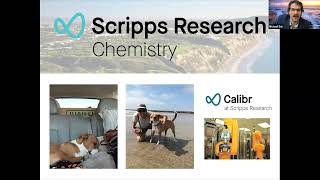
So our president here at Scripps, mine and many others' chemical biology hero, Pete Schultz, had just created this new Scripps Fellows Program and I was finishing my PhD as they were doing so and I was offered the chance to be the second guinea pig of this now, in my opinion, flourishing program. So I accepted the offer immediately, probably before Pete finished describing what the offer was, and I packed my dog up in my 2008 Chevy Trailblazer. We drove across the country, arrived here in San Diego, took a quick detour at Dog Beach, and then I immediately got in contact with scientists at Caliber. Caliber is really, if you don't know, an extraordinary part of Scripps. This is a singular organization that does true professional drug discovery in an academic setting, and it offers academics at Scripps like myself the chance to pressure test their therapeutic hypotheses with industrial-strength drug discovery capabilities. And so, very fortunate to be starting my own lab as a Scripps fellow. I knew that I wanted to search for drug-like substances that could inhibit ENL.
I wanted to follow up on this as a new potential drug target.
Such a molecule would be a tremendous resource for studying ENL for reasons that I won't go into and for determining if it has the legs, as a therapeutic target. Caliber was really the ideal collaborator to look for such molecules, and these capabilities are available very rarely across the world. And so we arrived here in San Diego and wondered, how would we go about finding such inhibitors? Well, what we had learned at Dana-Farber when I was a graduate student was that ENL is something of a traffic controller. You see, cells leave little molecular anchors at the start of genes that ought to be turned on, and ENL is evolved to be reeled in by these anchors. And once bound there to the start of these genes, physically bound, it helps to propel RNA polymerase so that the gene can in fact be turned on and produce RNA molecules. And so, uh, what is this anchor? Um, to explain that, I have to back up just a bit and tell you about something called chromatin. You see, your genome as a physical instance of matter is quite large. If stretched out end to end, your genome would be about 2 meters long, and then that 2 meters has to be swished up and pushed into the nucleus of a cell that has a diameter about a million times shorter. So it's really an enormous physical feat that's accomplished by wrapping DNA around proteins called histones. This is one of the earliest images of DNA wrapped around histones, and you can see how it looks like thread sort of occasionally wrapped around a little ball of protein, and those are the histones. Here in finer detail is the structure of DNA wrapped around histones revealed almost 25 years ago, and you can see that the DNA wraps almost perfectly around this group of histone proteins. This helps very much to compact that 2 meters of DNA into a nucleus, but the trade-off is that this very tight interaction and tight compaction of DNA is that it can make it physically difficult to access the underlying information encoded in the DNA. Physically, it's difficult to reach that DNA. It makes it difficult for proteins like RNA polymerase to unwind the DNA off of those proteins so that it can read those, the sequence of DNA bases. However, at the just the right places in the genome, like the beginning of a gene, that's supposed to be turned on, little chemical tags are put onto these histone proteins themselves, and they serve as anchors for proteins like ENL that will make it easier in some instances for transcription or other processes to occur.
So this is what the interaction between ENL and that chemically modified histone protein looks like.
Uh, ENL, uh, in white, binds to the start of genes that are supposed to be transcribed into RNA by binding to this piece of histone protein shown in blue. It's like a good hug from a grandparent. It surrounds this piece of histone protein perfectly, quite unmotivated to let go.
And so Our mission as drug discoverers is to search for small molecule substances, drug-like in nature, although not in purpose, that could bind into this same spot.
We have to be better than nature and bind into that pocket even better than the histone protein has evolved to do. And you see drug discovery is basically like searching for a key that will fit perfectly into some lock that you want to open.
You need just the right size, just the right shape, the right three-dimensional structure to fit into that little pocket formed on the surface of the protein.
To berate you with analogies, it's like a hand going into a glove, and it has to have just the right shape. So the very simple but important consequence of our discoveries from my time as a graduate student was that If we could do this, if we could create a drug-like substance that infiltrates into that pocket where histones normally bind, then the modified histones wouldn't be able to bind there anymore, and then ENL would never be able to reach the genes that it's helping to turn on. And so in leukemia, this means we could prevent it from turning on the genes that drive this horrible disease like HOXA9.
And Myc.
Just maybe this, this could be an effective therapeutic strategy.
So we got to work.
The first thing we needed was assays, tests that would detect and alert us to whether a drug-like small molecule could bind into that histone binding pocket and inhibit ENL. For instance, We made this assay, which creates a flash of light anytime E&L interacts with a small molecule.
So we can take many, many existing small molecules and expose them to E&L and look for a flash of light, which would tell us we had maybe found a hit. Once we had created a whole suite of assays, we reached out again to our colleagues at Caliber. They have collected and cataloged and apportioned millions of small molecules, something of a haystack into which anyone may look for a needle.
And we tested just about 275,000 of these molecules using big robotic arms that originally come from the auto industry and are capable of testing 1,500 molecules at a time. And just after a short while, we had identified 3 compounds that could inhibit ENL, like the one shown here. Now, this was not a good molecule. It is not a good molecule, but it is a good place to start.
Unfortunately, we needed to make it much better for it to be of any use to us. And this happens by a process called medicinal chemistry.
It's perhaps nicely analogous or San Diego audience to shaping a new surfboard model. A surfboard shaper will start with some shape in mind, ride it a few times, see how it feels, how it performs, and how it behaves. And then with that information, he or she will return to the design, making a few tweaks, a change in the curvature here or a change in the thickness there. And, and then they'll repeat this process iteratively until the board performs just the way he or she intended, sort of throwing away the ones that didn't work. And this iterative process of improvement in drug discovery is called medicinal chemistry.
As chemists, we tweak the shape of a molecule in small and large ways until something much better has been discovered, learning from each successive round of trial and error.
And if this sounds labourious, slow, and difficult, you would be correct. Each molecule has to be painstakingly made and purified away from all the harsh chemicals used to make it, thoroughly characterized to ensure that what you hoped to make is what you actually made, and only then can the molecule be tested. So starting from this molecule, it was clear that we would need an army of chemists capable of making thousands of molecules as we hoped to improve the activity of this first hit. This was something of a disappointing realization because I have a small lab and an army was most certainly out of reach. However, Scripps is quite a magical place for doing collaborative science.
And it's an even more magical place for chemical biology, my flavor of science. And it boasts a really dense concentration of scientists recognized as leaders around the world.
But it's also small enough to be familial. And I had a chance encounter that really changed the course of this project. Speaking with my colleague Dennis Woollin late one night at an event where we recruit graduate students to our program with prime rib and salmon and ocean views.
He told me about a technique that they were just in the beginning stages of exploring in their lab together with the Nobel Prize winner in chemistry Barry Sharpless, who is also in the chemistry department here.
Dennis's group was testing a new approach to medicinal chemistry They hypothesized that a certain chemical reaction being studied heavily in the Sharpless lab was so good, so efficient, so clean, that it could be used to really transform the serialized process of medicinal chemistry into a parallelized process.
Rather than make a few compounds every week, purify them, characterize them, test them, and try again, His lab could make 100, 500, 1,000 molecules at a time, test them all at once without ever purifying them, which saves an enormous amount of time and can turn months or years of work into days or weeks of work.
And so I was very happy after hearing about this really exciting approach to get Dennis and Barry excited enough about our project to let them, let us use this process in a collaboration with them.
And so we put their unique chemical reactivity onto our initial drug hit, and then that same week we tested around 500 unique derivatives all at once and with almost no effort at all.
It was really to our amazement that there were about as many needles in this haystack as there were straws, and some of those were about 100 times better than our original screening hit. So in the end, we made a few more tweaks and arrived at a molecule that was 1,000 times better than the original molecule that we had discovered. We could use 1,000 times lesser quantities of this drug to achieve the same result. And we were able to do this with just one chemist really working at a time, enabled by this powerful insight and chemistry from Dennis and Barry.
And so we were very fortunate recipients of this collaboration. And so you might ask, how does this molecule perform?
Does it look like the genetic studies that I described to you in the first half of this talk? Well, we can show that it does indeed prevent ENL from reaching these little anchors that I mentioned. We can use experiments that tell us how much ENL is bound to these anchors, and we can see with increasing amounts of the drug, ENL is less able of reaching those anchors. You might also remember that we hypothesized that doing so ought to turn off those cancerous genes like HOXA9 and HOXA10 and MYC, and indeed, that's what we observe. When we treat leukemia cells with that drug, those genes are turned off. And so just like we had done before when we asked which genes are affected when you remove ENL from the cell, we asked which genes are affected when you inhibit ENL with this small molecule that we've just discovered. And again, only a few dozen genes were affected. Remarkably specific, and to our delight, again, we see MYC and HOX as two of the genes most profoundly turned off by this treatment.
Adding this small molecule to the leukemia cells, inhibiting ENL, we can steer the cells off of that roundabout and, and ease off the gas pedal at the same time.
And indeed, here on the right of the screen, we can measure how well do leukemia cells grow when they're exposed to this molecule, and With increasing amounts of the drug, they grow slower and slower. Now, we're very much just at the beginning of this journey.
It's very much a work in progress, and I hope you'll judge it as such.
We have a long way to go. This is certainly not a drug, nor is it intended to be. Quite simply, it's a molecule for us to use in the laboratory as we endeavor to learn more about what ENL does, more about its role that makes leukemia such a severe disease.
And so with this information, we can better guide and anticipate the therapeutic considerations that earnest drug development efforts will have to confront.
And we are very hopeful that the work we're doing will have a direct impact on those efforts. So, um, thank you all very much for your invitation, and if you'll allow me, I'd like to take a couple minutes to thank the people that did this work because it's quite important to do so.
We have such amazing people in the lab, each as talented as the next, and it's just an enormous privilege to work with them, to have their their confidence to put their training in my hands, and I'm very thankful for that.
I'll just name a few people that helped work on this project, one of many in the lab. Josh helped to make assays to test the drugs against ENL. Tim did computational biology to analyze the gene expression patterns when exposed to drug. Leo did the big biology experiments at the bench, and Natasha helped work on the chemistry, and while Like I said, this is just one of many exciting projects that these amazing people are pushing forward.
Also Anissa and Yuxing working on other things that I hope to get a chance to share with you again in the future.
Our collaborators and resources available here at Scripps have elevated our science in ways I really didn't anticipate and probably wouldn't have thought possible.
In particular, Ben Crevatt, a tremendous mentor and collaborator to me.
Denison Berry, who I mentioned, and Pete Schultz, who we could really never thank enough for hosting us for the last 3 years.
I was recently promoted from Scripps Fellow to Assistant Professor, but during that time as a Scripps Fellow, Pete tolerated me squatting with my group in his lab that entire time, and so I'm quite thankful for him taking a risk on my group and for his confidence in our ideas. The professionals at Caliber are really a game changer for us, and I'm sure you'll see their work in just about all of these Front Row lectures. I wouldn't be surprised. They're so collaborative and so good at what they do. Professional drug hunters with unique expertise and institutional memory to access. They're really invaluable colleagues for our science. Of course, none of this is possible without funding, so we're very gratefully supported by the LLS, the NIH, the OnoPharma Foundation, and really notable, we're the sort of humble recipients of support from Dr. Larry Greenfield and Carol Greenfield. Their generosity has had such enormous impacts on my young group's ability to get these projects off the ground, and I really can't overstate how grateful we are to them for their support.
The last thing that I want to do is to plug the, the next Front Row lecture. It'll take place on November 12th, and this will be from Professor Reza Ghatiri. He is not just a hero of mine in chemical biology, but also a really great friend and mentor.
And he'll be talking about some really transformative research that just came out of his group on manipulating the microbiome to alter host disease processes. The work is really startling and elegant. You definitely don't want to miss it.
So finally, if you ever want to speak— I know I went fast through this—
please email me. I'd be happy to answer any questions. And for now, I'll be happy take questions.
Terrific.
Thanks, Michael. We have quite a few questions from the audience. We can sort of dive in. So one of the questions that came up is, you know, how do you make this selective for the particular cancer cells And I'm paraphrasing a couple of questions here, but how do you make it selective? Because E-NL is there in regular cells, and it also— E-NL probably does more than just turn on these two genes.
Yeah, that's such a great question, and it's a combination of things. So there's two considerations that each have many considerations of their own.
The first is the target. Like you said, ENL might have roles in other cells. We don't know because we haven't been able to do the experiments yet in living animals where we treat them with drug and, and find out the answer to that question. Does ENL have other roles in other normal cell types? We've shown that ENL is not important for hematopoietic stem cells to survive, and so that's a really encouraging sign to us because normal cells of the hematopoietic system shouldn't be sensitive to these drug treatments, but there may be other types, and only in the fullness of time will we know that. The other consideration is the actual chemical that you've discovered, the molecule that you're optimizing, and there are no shortcuts here. You have to look at whether your drugs inhibit other proteins, other classes of proteins, do they have effects that you don't want, effects that could be toxic to an animal, any unwanted side effects. And so in my lab, the important consideration is that we don't inhibit other proteins because we want to be able to study just the one protein, just ENL. For drugs, it's even more complex, and they have to make sure that, right, it doesn't affect other things that are going to be detrimental to to the person's health. So it's an ongoing conversation that we're having in the lab with our experiments to answer those questions.
Yep. Okay, terrific. So there's another popular theme amongst the several people have written questions. I'll package it together, but so what are the opportunities to use artificial intelligence in this kind of work? And have you thought about that? And are there plans? Do you know of other systems that maybe where AI has made a contribution?
Yeah, so it's a little bit outside of my expertise, but I try to remain peripherally at least aware of things that people are doing with artificial intelligence and drug discovery. And it does seem like there are many improvements recently in being able to search for small molecules that might inhibit a protein you want to inhibit. Seems best for sort of enriching hits within some population of molecules you want.
So just putting more needles in the haystack, so to speak. On our project, we really haven't considered how AI can help here.
I'm definitely open to suggestions. One thing that we, we don't know is exactly how our molecule binds into that pocket on ENL. And so I can imagine that there might be algorithms out there that would be helpful in trying to predict maybe some of those binding sites, which would be valuable information to us in making the molecules better and better.
Right.
And we have one of the other strengths of Scripps research is the structural biology. Have you reached out to the crystallographers to try to get a structure of your compound bound to your target?
Yeah, yeah, I think they're starting to put no vacancy signs up on, on their office doors because I've been bothering too many of them too frequently. Unfortunately, ENL has been a really challenging target to crystallize. We've tried sort of ad nauseam, and so far unsuccessful, but we'll keep trying for now.
So, I know, so this is an early stage research compound that you've just described. So people are kind of interested in, well, how do you access this for a potential treatment? So I think I'm gonna, maybe I'll rephrase the question and ask you to describe for everyone What's the path from where you are today to having a compound that a physician can prescribe for a cancer patient?
That's a great question. First of all, it's a very long path. It's nowhere close. Unfortunately, like you say, this is a molecule for doing research with, and we'll learn really important things, I think, with the molecule. A path to a drug involves a whole other set of considerations that my lab simply wouldn't be equipped or interested in confronting. And so what ultimately we need to do is to get the intellectual property around these molecules into the hands of others, either a startup company or a drug company, and sort of hand it off really. Avail them of our expertise in the biology and the insights that we discover with our tool compounds, but then allow people who their job is to make drugs to do what they do best. And we hope that that's a path for this target and for the molecules that we've discovered, but we'll only know with time.
In the introduction, I mentioned a few cancer drugs. And I think, you know, those therapeutic approaches were initiated 20 to 25 years ago. Right. So it really, it's really a decades-long process. And, you know, it is, and, but that's why it's absolutely critical for us to continue to do this early stage basic research. That's right. This is the next generation of drugs. But what I hope people can appreciate is, you know, Michael described, you know, running into someone at a reception and then having them make 500 compounds and improving the potency 1,000-fold. And, you know, 20 years ago, that would have taken 20 medicinal chemists at Pfizer about 2 years to do.
It's—
So the technology is moving rapidly, and it makes it easier and easier for us in academia academia to actually impact.
And so it's pretty impressive that you were able to do that.
It's really a testament to putting chemists, chemical biologists, biologists all into close proximity, make them drink the same bad beers at the same events, and you'll see what comes of it. And, you know, this isn't the only time that we've had this, where just a chance conversation with colleagues here at Scripps really takes off into an extraordinary project. And it's been hugely enabling to us.
Now, here's a— this is sort of a, just a basic question that someone had. They were asking about HeLa cells. So do you use HeLa cells in your—
HeLa cells. Oh, oh.
And so this was Henrietta Lacks, who had cancer, and that her cells were immortalized and are now used in all kinds of basic research. And there was some popular stories about this. Do you use HeLa cells?
Yeah, yeah, a really great book about that story, and I think opened up, you know, the eyes of many of us scientists, you know, to think about where some of our reagents come from.
The HeLa cells are not used in this project.
Actually, I don't even have HeLa cells in the lab. We don't study that type of cancer.
They're good for other things too.
People use them for a number of different things. But just by chance, our lab doesn't have them. We haven't used them here. These are—
We actually use them in my lab. But we use them to study HIV replication. So HIV replicates perfectly well in HeLa cells. And so anyway, but yeah, that was just an interesting sort of side question. So people are pretty interested in the opportunities for structural biology. And one of the strengths we have here at Scripps is cryo-electron microscopy.
So have you been talking to our colleagues, Andrew Worr, or Gabe Lander about cryo-EM?
Yeah, yeah, it's a good question.
I did talk to Gabe about this, and unfortunately E&L has— well, the part of E&L that the compound would bind into is quite a bit too small to be useful for cryo-EM, and the whole protein has just an incredible amount of disorder. It doesn't create really good defined shapes. And so, um, sort of concluded it's not an approach that's going to be worthwhile investing our energy and resources into, which was a bit of a bummer.
I was, I was pretty hopeful that something would be, would be useful.
Right. So, so here's, uh, here's a question. Um, someone wanted to follow up on, uh, you know, your discussion of patents and licensing to a biotech company. So, you know, maybe just say a little bit of how does that process work and, and how do you decide what is your, what, what is your compound worth in, in the market?
Yeah, I'm actually sort of learning this on the job.
That's how it works.
So I'm very happy if anyone wants to school me on it. But the short answer is that, you know, it's really a fluid process. So, you know, Scripps owns the intellectual property and Scripps is very—
I don't know what the word is for it— agreeable in enabling investigators. We filed patents on these molecules pretty early because you can't really share the structures with people until you filed those patents. And so they let me do that nice and early so that my academic pursuits wouldn't be at all hampered by intellectual property concerns.
And that's a huge A hugely important point. Yeah, and then it becomes very flexible from there.
You work with really skilled business development people that, you know, come with me to meetings with, you know, companies or venture capital firms, make sure I don't say things I shouldn't, reveal secrets that I shouldn't, because I'm an academic with a big mouth and yeah, it's really just a sort of interesting process of talking to people and looking for the right fit for some of this. Great.
Yeah, I mean, I hope it's pretty clear Michael is not motivated by greed and avarice. He's a really pure scientist that he's just trying to understand how these things work.
And but—
I get into trouble sometimes. The whole biotech industry is is really geared at figuring out, you know, so let's say 1 in 100 such molecules might actually make it in the next 10 years into patients and treatment. So the companies are very, very focused on metrics. How good is this compound? Is it potent? Is it safe? Is it effective? And that's ultimately what determines the value. And I think Michael is really really just trying to develop new approaches for this particular type of cancer. But Michael, maybe you could say a little bit more about how, you know, so targeting these histone binding proteins, that should be a generic kind of approach. So ENL is just one target, one gene that controls one thing in one cancer. So how broadly applicable is the approach that you just described to other targets within leukemia or other cancers?
Yeah, this is a really interesting question, and I think I see an opportunity to circle back to the first question. So there are many of these— we call them domains— protein folds that bind to modified histone proteins like that. My thesis advisor Jay Bradner was sort of one of the first people to drug one of these types of domains called a bromodomain. And, and so what we've learned since then is there's a whole array of these types of protein folds, and, and they have a whole spectrum of what we would call drugability, you know, ease with which they can be drugged. Some are very difficult, so-called chromodomains, and then some are much easier, like bromodomains. And so the real challenge has been finding the right targets that, like we talked about in the first question, won't be important in many, many cell types, and analogously won't be important for the expression of all genes. So I worked on another protein called BRD4 as a graduate student, and we made small molecules that could degrade that protein. It could remove it entirely from the cell using an interesting trick of pharmacology that I won't discuss. And what we found out from those studies was that every single gene in the genome that is transcribed in every cell type is dependent on BRD4 to be transcribed. And so degrading that protein wasn't a great therapeutic strategy in my mind because you have to have transcription to survive. Actually, some of the most deadly poisons are RNA polymerase inhibitors.
And so we are now trying to sort of do both, look at What is the set of proteins that we can target and with small molecules?
And then of those, what proteins have some sort of compelling biological function that we can target in a safe and sort of effective way? Now that doesn't mean I'm not interested in making small molecule tools for proteins that don't have good therapeutic implications because I sort of, you know, have two hats that I wear. One is just wanting to know how transcription works.
It's a really exciting field, and so if I can make a drug-like small molecule for a protein that's not a good drug target, I absolutely will, and it'll help me learn something about those.
Right, that's a really major theme at Scripps Research is, you know, small molecules can be drugs, but they can also be incredible tools to understand some commitment to biology. Maybe one last question that we have. We're coming up on an hour, but recently there was a Nobel Prize in CRISPR awarded, and one of— actually, Jennifer Doudna was a very close colleague of mine. I've known her for 30 years. I was very proud to see her win along with Emmanuelle Charpentier. So CRISPR, So is there a way for you to use CRISPR to address ENL function, either in combination or alone with the compounds that you have found?
Yeah, I'm going to dodge that question a tiny bit.
It's not exactly my area of expertise on what the therapeutic possibilities for CRISPR are.
Except to say they're very exciting, and I try to follow that a tiny bit.
What my lab is good at doing, and I think this has been one of the most profound and immediate impacts of the CRISPR technology, is using it in the lab to do what we call genetic screens. And so I sort of explained this on one slide, where we can ask for some given —what we would call a phenotype—like cancer cell death or drug resistance. For some given phenotype, what genes contribute to that observation? And never before have we been able to so accurately discover what genes are involved in human cells for some given phenotype, and we do this by CRISPR-based genetic screening. And so I think there will be a tremendous opportunity, and we already have people working hard on this at the lab just a few steps outside my door, using genetic screens to ask what genes can synergize with inhibiting ENL, what genes confer resistance to inhibiting ENL, and that will give us insights into what to anticipate should it ENL molecule ever reach the clinic, or what would be good combination therapies for ENL. And so we're hard at work on using CRISPR in that way.
Terrific. All right, thanks. I think we'll wrap it up here, but I hope everybody can appreciate that Michael is 3 years out of his PhD and has launched a world-class research program here that the future of basic research at Scripps is in really good hands, and we're really proud of what you've accomplished, and thanks for a terrific presentation. Uh, hope everyone will join us again on November 12th for Reza Ghaediri, and he'll be talking about the connections between your gut microbiome and cardiac fitness. So Thanks again, Michael. Terrific. Thank you all for joining, and see you at the next Front Row.
More from Joshua







Scientist Stories: Hans Waterham, The value of phenotypic assays in peroxisomal disorders




Scientist Stories: Joel Zlotogora, Genetic carrier screening programs for reproductive purposes