Scientist Stories: Michael Gazzaniga, The Future of Cognitive Neuroscience
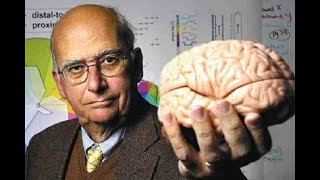
Michael Gazzaniga traces how the search for a neural code began with Schrödinger and molecular biology, then recounts his time at Caltech with Sperry and Pauling. He argues that split-brain experiments and biosemiotics show mind requires layered codes bridging physics and meaning, not just reductionist mechanisms.
Chapters
Our second speaker is Michael Gazzaniga, who is professor of psychology at University of California, Santa Barbara. He is a cognitive neuroscientist who works on the neural basis of the mind and is especially famous for his work on split-brain patients, which I guess he might talk about today. And his title is "The Future of Cognitive Neuroscience." Please welcome Mike Gazzaniga.
I was bragging to a friend of mine, a musician friend of mine, a few months ago about I would be coming to Dublin to be speaking at this conference and being one of the last speakers after a bevy of brilliant scientists will have given their research, and that I was to speak on the future of cognitive neuroscience. He said, let me give you some advice. Get on, get off, get paid. And that's kind of how I feel. Trying to talk about the future of anything reminds me of the famous story of Thomas Watson when he was asked how many computers he thought he would sell, and he said 3. So it's a hard business. But let me tell you what cognitive neuroscientists want to know. They want to know how neurons generate mind. That is what we're up to. And that requires a new way of thinking about the problem, I'm going to say. And I'm also going to claim that Schrödinger had suggested that many years ago. That might be the case. Max Delbrück believed it, and Niels Bohr thought of the way. So let me try to unpack that and tell it through a personal journey, and it all has to do with the role of codes in biology, so we'll follow the code, and we're gonna pick up and see if Schrödinger's prophecy was true, that understanding biology requires new concepts. So for the students in the crowd, I stumbled on this book as an undergraduate. Many undergraduates here, I know. And it was by going to the library to find something else. I was assigned to do something about Krebs cycle or what have you. And in the old days when you browsed in the library, you found other books next to the books that you were looking for. And there it was, sitting there as big as life, was What Is Life? And as a young man, I thought, well, what a— now that's going for the gold, as they say. What was this little Krebs cycle thing I was working on? And so anyway, it was an arresting title, and I remember sitting down and reading it, and of course with no full knowledge or appreciation of its huge impact. As I look back on it, it's had a continuing influence not only on the field of biology, as we all know, but all the way up to, and I want to argue, to the present. And it's all by, because of this man who came up with that book with ideas like code scripts, which we've heard about, proposing that there might be something he thought of and called as a new physics, and his famous aperiodic crystals idea. And interestingly, Schrödinger claims to have claimed to have been— thought of a lot of those ideas derived from the work of Max Delbrück, young scientist at the time, who Schrödinger believed he was compelled to his thinking from a paper Delbrück had written on mathematical biology, and Delbrück himself was the student of of Niels Bohr, and in fact was also beholden to a number of other ideas of Bohr's, namely the whole idea of complementarity, which we will come back to. But these men obviously were the basis of what was the impending biological, molecular biological revolution. It didn't really start fast, as they say, a nice historical review by Gunther Stint, he wrote, it was the romantic idea that other laws of physics, that Schrödinger idea, might be discovered by studying the gene that really fascinated the physicists. And that's why they were flocking into this field of biology. This search for the physical paradox, this quixotic hope that genetics would prove incomprehensible within the frame work of conventional physical knowledge remained an important element in the psychological infrastructure of the creators of molecular biology. And that was— you can see that from Delbrück. Delbrück, who of course was a physicist, doubted the adequacy of quantum law for explaining life. As he wrote it, it may turn out that certain features of the living cell, including perhaps even replication, stand in a mutually exclusive relationship to the strict application of quantum mechanics, and that a new conceptual language has to be developed to embrace this situation. And that, for him, was this idea that the idea of complementarity may be alive in biology. Now, other historians have written that was Delbrück's mistake, and he thought that all his life and never found it. We'll come back to that point. But then, of course, the gold standard of molecular biology and the great discovery by Watson and Crick of the nature of DNA set the tone, the fact that there was a genetic code, and unleashed the incredible field of molecular biology as we've seen realized here. So many times in the last 2 days. So the genetic code was in the air, and now the question became, was there any chance that the brain code could be discovered? I continued my career through— by going to Caltech and having what some people have called the Caltech experience. I went there to work with Roger Sperry. I was interested in the brain. And Sperry was the king of developmental neuroscience at the time, which was how the brain and its neurons hooked up to make the functioning organism. But Caltech was an incredible place. You were dropped into this milieu which you had no idea about in a true sense. And because in our labs, and I was in the Sperry lab, Literally down the hall was Linus Pauling with his incredible hunt for the secret to the genetic code as well. And two floors down was Max Delbrück working on his ideas of the nature of the secrets to biology at the time. And around the other corner from our lab was A.H. Sturtevant who was working on gene mapping, and this is hard to believe but true, Richard Feynman would keep popping his head in the doors of various labs of students and ask them, so what are you doing? Like, come on, what are you doing? And charging up the atmosphere, and then finally in that incredible milieu, coming to the Sperry Lab in 1964. Was Seymour Benzer trying to— making his transition from his work in genetics into the notion of trying to figure out the genes of behavior. So from genetic code to brain code, that was the sense that was going on in those heady days in the early days of molecular biology and in neuroscience. And it all occurred— again, this is for the students in this wonderful building that Leroy Hood knows a lot about— it all occurred in that small space in this small institution. And yet right across the street is the other part of where a great university is, which is where the graduate students lived in a house we referred to as the J. Alfred Prufrock House. And the history of that house would, would get you to, because my roommate was a guy named Sidney Coleman, a physicist, and he lived in the room that Matt Messelson had lived in, and it goes on and on like that. Ray Owen once said, the great immunologist, the trouble with Caltech graduate students is that you all want to know the secret of life, and he would seem to be put out by that. So moving on to the shift from brain code, from gene code to brain code, was done at Caltech. And Sperry, of course, was an enormous influence. And with his work on neurospecificity, kind of the thinking was that the brain came as a prewired system and that there was a set of shifting circuits in there that would control our understanding of cognition and perception as it grew deeper. And that was the search then setting the tone for the brain code. And when Seymour Benzer arrived, he was going to help with that in 1964. And there's a picture of Crick himself talking to Seymour at Caltech. And I can only imagine what their conversation was about, but it was the early days of geneticists getting together and trying to get going on the question of brain codes. Now, across the country at the University of Chicago, other great things were going on, including the arrival of Pitson McCulloch and working in the context of Ravchevsky, Nicholas Ravchevsky, the great mathematical biologist, they came up with a whole idea about how neurologic, neural networks could do logic, how you could in fact go from neurons to a system that could in some sense think. Steven Pinker recently commented one of the most important ideas that he thought the neurologic was one of the most important ideas in the history of human thought. Perhaps more than anything, it solves one of the mind-brain, mind-body problems on how a brain can be intelligent. Now, so that's the setting. And back at Caltech, there was something called Hixon Symposiums. And Hixon Symposiums were places where the great thinkers of the time came together and they hashed out problems about— excuse me— what was going on in science. And interestingly, the chairman of the Hickson Fund administration was George Beadle, the great geneticist, Max Delbrück, Linus Pauling, and A.H. Turnham. These fantastic men of genetics were setting up and inviting neuroscientists to come and figure out how we're gonna crack this brain code. And you look at this picture here, and there was Paul Weiss from the University of Chicago, Sperry's mentor. There was John von Neumann, the computer scientist from Princeton. There was Carl Lashley, the greatest psychologist of the last century. There was Wolfgang Köhler. There was Laurenti de Noe, the great anatomist. And McCulloch didn't show up for the picture, but he was a big feature of the conference. And this— 4 years after this conference, 4 years, mind you, a book came out called Cerebral Mechanisms of Behavior, which is sort of a classic book. And it was the time when conferences were met and then the discussions of the talks were all put together very carefully by an editor and the book presented to the public in due course. And if you have not read this book, it is worth reading every page today because you see the origins of so much of what we're in the middle of. Now, even though there was all this intense interest in McCulloch and Pitts and the single neuron, it didn't really go well because at that meeting, at the Hickson Symposium, Lashley lashed out, as it were, at the notion that by studying these simple cell systems and how they simply would interact, you would get the higher-order functions of thought and all the rest. And Lashley put it, even the simplest bit of behavior requires the integrated action of millions of neurons. The activity of any single neuron can have little influence on the whole. Just as the path of an individual molecule of a gas has little influence on gas or on the gas pressure. I have come to believe that almost every nerve cell in the cerebral cortex may be excited in every activity. Well, in fact, Lashley was very passionate about that, and that became a dominant idea in the field. But as these things go, His ideas at that time didn't particularly stick, and his student, Donald Hebb, is pictured here on the right. His student became famous for pushing the notion of small cell systems and particular cell interactions. And so Lashley's ideas at that time faded away, but as we heard yesterday from Karl Nisseroth, may be coming back. So it's an interesting thing to think about. But anyway, Hebb famously wrote in this sentence, when an axon of a cell A is near enough to excite a cell B and repeatedly for persistently taking part in firing it, and somehow growth processes or metabolic changes take place in or in both cells such that A's efficiency as one of the cells firing B is increased. Well, thank God for editors. So that all distills down to neurons that fire together wire together. And the race was on for trying to figure out the neural code, and it's been going on for 50, 60 years and continues. I have to take a minute to tell you briefly one attempt that I was involved with. So stunning split-brain patients, we felt that we had a way of getting at it. And I went off a few years later after my Caltech years to do a postdoc in Pisa with Giovanni Berlucchi and Giacomo Rizzolatti. And the idea was simple. We knew from split-brain research that information that went into one half-brain, when the one visual field went to one half-brain and then it was transmitted across the corpus callosum to the other half brain. We knew it dead cold, that was the way it worked. So we figured very simply that we were going to figure out what Schrödinger had thought the brain code would be like, a sort of a Morse code, and we would have an animal preparation, we would stick an electrode straight into that corpus callosum and figure out the code as one information, we put information into one side of the brain. And would wait for the Morse code to tap it out to the other side. So we were all tuned up in the laboratory there in Pisa, and finally, after much work for preparation, we lowered the electrode into the callosum, and what we heard over the loudspeakers instead of a neural code was very clearly the Beatles singing "We All Live in a Yellow Submarine." And Retzilati immediately quipped, "Now that is what I call high-order information." So anyway, that didn't work out, so we moved on to other things. And so over the ensuing years, I was involved in lots of split-brain work that basically demonstrated what we've also heard in the last day or two, about the hierarchical and modular nature of the brain. And to give a brief summary of that is just shown by this picture that there's a lot of work now showing the lateral specialization and the specialized capacities that are distributed through widely in the brain. And we live with that model. But we're driving towards a larger question here today. And let me say that if we were to summarize and be poised for what I want to leave you with today, let's think about this. So reductionism, of course, is the explanation of complex life processes and phenomena in terms and in the laws of physics and chemistry. And what I would say is that the majority of scientists, neuroscientists, take that view and that will be the solution to the problem. But there's another school, they call themselves in the finalism school, where there are many, many factors that pour together for the ultimate realization of how we're going to understand life and biological systems in mind. And I'm going to pull upon the work of, and start with Michael Polanyi, the great Hungarian philosopher, where he made the observation, "A machine as a whole works under the control of two distinct principles. The higher-order one is the principle of the machine's design, and this harnesses the lower one, which consists in the physical-chemical processes on which the machine relies." And that certainly would be a minority school. But if you look interestingly at the origins of a lot of these people's thinking, I'm going to lump them together for the fun of it and call it the Chicago School because all of these people were at or in and visiting and through Chicago at the same time. Polanyi, Wolfgang Köhler, the great psychologist, Robert Rosen, the great theoretical biologist, and Roger Sperry. And if you were just to give it a quick summary, What was their thinking? Well, they all believed there was something else than a sheer reductionist view of how we're going to understand this process. For Polanyi, there was his landmark book where he began to raise questions about simple determinism, a book called Personal Knowledge, which is a landmark book. And it became, with his introduction of ideas of tacit knowledge and all the rest, It became really known to the larger scientific community with his 1968 paper called Life's Irreducible Structure. And again, he restates it here, seen here. In this light, the organism is shown to be like a machine, a system which works according to two different principles. Its structure serves as a boundary condition harnessing physical chemical processes by which its organic— its organs perform their functions. Robert Rosen put it more simply, organization must be independent from the material particles which seemingly constitute the living system. All these people were sort of talking, there's an overall architecture that you have to take into account when you're explaining. You have the physical chemical process, but there's an overall architecture that has to be accounted for and is interactive. And let's call it, and I will argue for, that that nature of that architecture is a layered architecture. Well, if you go that far, you still come up with this problem, the gap. How do these neurons get from that to mind? How do you close the gap? How do you get from neurons to mind? Well, that's a long-standing question. John Tindall, the physicist, a British physicist, many years ago, the passage from the physics of the brain to the corresponding facts of consciousness is unthinkable. You can't do it. The chasm between the two classes of phenomenon still remains intellectually impassable. And he raised the question, what would an explanation even look like? What are we talking about? Well, this gives me an opportunity to talk about this man, this physicist, Howard Pattee. Howard Pattee has a way of thinking about the gap and how to close it. Interestingly, Pattee is a physicist. He was trained at Stanford. Prior to that, he was in a boarding school, high school in Pasadena, where his science teacher used to take him to public lectures just like this. And at that public lecture, one of them he recounts, Linus Pauling spoke. And Linus Pauling spoke about Schrödinger's cat. And how preposterous that made the notion of quantum mechanics for big objects. And Patti couldn't have agreed more because Patti that summer had been reading Karl Pearson's book. This is a high school student reading Karl Pearson's book. And in it Pearson had posed, how is it possible for us to distinguish the living from the lifeless if we cannot deduce both conceptually by the motion of inorganic corpuscles. Now, that's what Howard was thinking about when he was 18 years old. It's not what I was thinking about when I was 18 years old, I'll tell you that. But anyway, he then, that's driven him all his life to think about what is it about life? What makes something animate? And Petit, for the last 50 or 60 years, has written this beautiful set of papers over in a field that has become known as biosymbiotics, which is strangely insulatory from general biology, but is recently beginning to emerge. And his work has been put together into this book language life. So I want to give you a minute about it and leave you with a thought about it. Howard Pattie's idea basically is that life is seen as a layered system, and each layer has its own vocabulary. How do the layers communicate across the gap, the schnitt, or as he called it, the epistemic cut? And he reckons we have to understand that, and it starts right at the beginning of life. If we're gonna understand philosophy, how we close the mind-brain gap. So on one side of the gap, there's the firing of neurons. On the other, there are symbols, representations of the physical that also have a physical reality. And he just says, think of DNA, and we can all think of that and see what he's getting at. This is, in his view, a way of putting it, is this is Bohr's complementarity on a larger scale. Two modes of mutually exclusive descriptions making up a single system. So what is life, as he puts it? It is evolvable, and to evolve, the process has to introduce variation so natural selection can begin its work, and variation had to come from a code, an abstract, reliable representation of the instructions. The substrate of the code is a physical structure But codes themselves are symbols, and symbols are subjective, following no physical laws but rules. The gap between non-life and life is bridged by an abstract but physical code, a substance. There's no spook in the system. So Petit is arguing, well, complementarity and the idea has been around for 2,000 years and lots of smart people have talked about it. He feels that Bohr and modern physics made the concept an empirical necessity, and Petit argues it is an epistemic necessity that originated with life. So this finds him now, as he calls himself, a biosymmetician. Biosemiotics distinguishes life from inanimate matter, just to say it again, by its dependence on material construction controlled by coded symbolic information. In short, the distinction between mind and brain. So bring it home to Max Delbrück. What was Max Delbrück's mistake? Because it was judged by historians that Delbrück was always searching for complementarity in biology and never claimed to have found it. And Petit's analysis of this is that, well, the mistake was that Delbruck believed life was a given. As he wrote here, the existence of life must be considered as an elementary fact that cannot be explained but must be taken as the starting point in biology. And Petit argues if he had thought back through what we have to think through, the origin of going from inanimate to animate, And with that, if he had, he would have come up with the idea of complementarity. So in a gesture of— I've heard for the last few days of ideas that may start here and be a continuing tradition of the Schrödinger insight, maybe we can slip Howard Pattee's idea in there, and his idea of the cut, and that it is to be understood by thinking about it in terms of complementarity. Marcello Barbieri, the Italian theoretical biologist, says, so Schrödinger's prophecy was about the existence of something fundamentally new, and that turned out to be true. Life is based on organic information and organic meaning, And these are indeed new fundamental entities of nature. So maybe Schrödinger was right, and maybe semiotics and code biology are here, and maybe we are in a new era. Thank you.
More from Joshua







Scientist Stories: Hans Waterham, The value of phenotypic assays in peroxisomal disorders




Scientist Stories: Joel Zlotogora, Genetic carrier screening programs for reproductive purposes