Scientist Stories: Michael Snyder, Transforming Healthcare with Data & Remote Monitoring
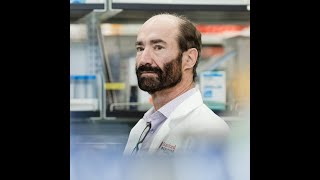
In this Immunome Lab Meeting presentation, Dr. Michael Snyder discusses the limitations of current "sick care" and outlines his lab's multi‑omics, longitudinal health profiling program that combines genome sequencing, epigenomics, transcriptomics, proteomics, metabolomics, microbiome, clinical labs, imaging, and wearable data to define an individual's healthy baseline. He shares discoveries from the cohort, including early detection of Mendelian disease risk, pre‑symptomatic cancer, cardiovascular issues, and type‑2 diabetes subtypes, illustrating how different technologies (genomics, wearables, imaging) complement each other. Snyder introduces the concept of "ageotypes"—distinct patterns of physiological aging—and describes how his company Q Bio aims to scale these deep phenotyping services. He then focuses on remote monitoring: using smartwatches to detect subtle heart‑rate, temperature, and oxygen changes that precede infections such as Lyme disease and COVID‑19, presenting algorithms that generate early red‑alert signals. He also covers continuous glucose monitoring to classify "glucotypes" and reveal personalized post‑prandial responses, and micro‑sampling (Mitra, TASSLE) that enables at‑home blood‑drop analysis of dozens of metabolites, proteins, and lipids. By integrating wearable, omics, and micro‑sampling data, Snyder demonstrates thousands of correlations (e.g., glucose‑C‑peptide, glucose‑α‑synuclein) and argues for AI‑driven personal models that can predict risk, diagnose, and manage health. The talk ends with a Q&A on hormone measurement, variability in glucose spikes, and COVID‑related signal patterns, and an invitation to join future Immunome Lab meetings.
Chapters
Okay. Thank you for everyone, to everyone for joining us for this week's Immunome Lab Meeting. My name is Kristin Abood. I am the science editor at the Human Immunome Project, and I will be your moderator today. Our speaker today is sometimes referred to as medicine's most measured man. By tracking his own health using a smartwatch, or from what I've seen so far, several smartwatches, Michael Snyder has been capturing data, billions of bytes worth, on his own health. It helped him diagnose his own case of Lyme disease and signaled he might have COVID-19 before he ever tests positive on an antigen test. His pioneering work on himself and others has shown that it is possible to use wearable devices to detect small physiological changes that are often indicative of illness or disease before a person feels even a single symptom. Other work from his lab shows just how many health parameters we can monitor from a tiny blood sample. Today, we are going to learn much more about how big data is helping to usher in a new generation of personalized medicine that promises to transform the way we treat and prevent disease. Before we get started with today's presentation, I would like to announce that the application portal is open for the 2023 Michelson Prizes. These $150,000 grants are awarded annually by the Human Immunome Project and the Michelson Medical Research Foundation to support the work of early career investigators that are advancing research in the fields of human immunology, vaccine discovery, and immunotherapy for major global diseases. Reviewers are looking for research topics that are highly innovative and are applicable to many fields. The deadline for submission for the 2023 awards is June 11th, so please use the key— QC code or link listed on this slide to learn more about the prizes and to complete the short and simple application. Please also share with anyone who you think might be interested. With that, it is my great pleasure to introduce today's speaker, Dr. Michael Snyder, the Stanford Aschermann Professor and Chair of Genetics, as well as the Director of the Center of Genomics and Personalized Medicine at Stanford University. Dr. Snyder has pioneered the use of big data and multi-omics to advance scientific discovery and transform healthcare. His laboratory has invented many technologies that are widely used in medicine and research, including methods for characterizing genomes and their products. His application of omics and wearable technologies to perform longitudinal profiling of people when they are healthy and ill is changing the way we think about modern medicine. Indeed, his laboratory's recent work to use smartwatches and wearables to detect illness prior to symptom onset is now being used by many thousands of people. He has co-led many large-scale projects and has co-founded 16 biotechnology companies. During today's presentation, please send your questions using the Q&A function in Zoom. I will ask our speaker a broad selection of questions after the presentation, and we can have some time for discussion. With that, it is my pleasure to now turn it over to Dr. Michael Snyder.
Oh, thanks, Kristen. Fantastic introduction there, and it's great to be with all of you. So let me start sharing the screen. I've already lost where my presentation went. Sorry about that.
No worries.
All right, well, there we go. Too many fields open here. Great. Well, as I say, it's great to be here. I am going to talk about the theme that Kristen brought up, which is this idea about using big data and remote monitoring with wearables and other methods to be able to try and transform healthcare. We think the healthcare system is broken, as do many others. I'm sure many of you have had an adverse experience with the healthcare system at some point with something that was pretty easily preventable. And I think we could change the way things are done again so that we can better manage people's health. For one thing, we tend to practice sick care rather than healthcare. I'm sure many of you appreciate. And even when we do practice healthcare, if you think about it, the process is kind of antiquated. Typically what happens is at some inconvenient time, you have to travel to a physician by car, bus, whatever. When you arrive there, you show up at a doctor's office. It pretty much looks the same as it did 40 years ago. When you're there, they'll draw large aliquot of blood using a needle that typically hurts. From that blood and maybe a few other measurements, they'll wind up making decisions about your health based on population averages. And we think every one of these steps could be improved considerably. And with regards to this last one, treating people on population averages, you've probably been told since you're little that your temperature when you put a thermometer in your mouth is 98.6. But if you actually look at the data that are out there, here's a typical one study of nearly 3,000 people. The temperature turned out to be 97.5. I myself am 97.3. The more important point here though is that there's a spread. This is the 25th quartile, 94.6. This is the 75th quartile, 99.1. So what that means in today's world, if your normal healthy baseline is 94.6,, and you go to a physician's office and they measure you at 98.6, they'll tell you you're healthy, everything's good. You know, what are you doing here? Go home. But I guarantee if you're up 4 degrees over your baseline, you're not healthy. Something's off. And that's a big theme of our work. Know what your healthy baseline is so you can detect those shifts, those shifts from the baseline and tell when things are off. Now I'm sure you appreciate your health is influenced by many things. It's influenced by your DNA, your genome, but then lots of other things we intuitively know impact your health, exercise, food, stress, et cetera. We're in a world now where we can quantify these, so we don't just have to sort of have hunches. We can get pretty good about quantifying activity, as you'll see in a minute. Food's clunky, stress isn't direct, but nonetheless, you can still measure these things. And we're actually, I won't have time today, but we do quite a bit in the area of environmental exposures and pathogens as well. So even if you can't quantify these so well, it's probably just as important we can quantify their impacts because we can do deep data dives on people now. We can make lots and lots of measurements. And a number of years ago, 13 on me and a little bit over 10 years ago on the rest of the cohort, we started this omics profiling project. And the idea of the cohorts, it's smallish. It was meant as a pilot, although it's gotten very, very rich. And so we learn more and more each time. But basically, what do we do? We sequence the genome once off these folks, and then we'll do deep measurements off some of these other things as well. So measure the epigenome, meaning the DNA methylome, transcriptome, and proteome. We'll measure that out of peripheral blood monocyte cells, PBMCs. We'll measure proteome, cytokines, metabolites, and lipids out of the plasma in people's blood. We'll also make a number of microbiome measurements. This has turned out to be quite interesting. This is on top of deep clinical tests, questionnaires. We run some advanced tests too, stress echocardiograms, glucose control measurements. And then a number of years ago, we brought in the wearables as well because we realized they might be pretty powerful physiological markers. They were mostly being used as trackers. So as I say, one aspect of this whole project is to do very, very deep data dives on people. The other aspect is actually collect these samples longitudinally. So we'll sample people every 3 months while they're healthy. And then if an adverse event comes along like a viral infection, we typically take 5 to 7 additional samplings. So you might say, why are we doing all this? Well, we're trying to understand what a healthy profile looks like, not a sick profile, but a healthy profile. How does it change over time? What's the difference between different individuals? So, you know, where many people are on this call, hopefully healthy, how different are we from one another? What happens at the earliest times of infection? This all started long before COVID And then one of the big things from the health management side is can these advanced technologies like genome sequencing, RNA-Seq, things like this, can these be powerful for better managing people's health? And which technologies are going to be most powerful. And I can tell you, at the time we started this, a lot of people didn't like sequencing healthy people's genomes. We thought we would turn everybody into hypochondriacs. It turned out not to be the case at all. But anyway, with regards to this idea about, you know, can these technologies be powerful? Well, it turns out they are. So just in the first 3 and a half years of profiling people, we have more now, We had 49 major health discoveries. So hematology, cardiovascular disease, metabolic disease, lots of different things were found. And I should point out, all these were found pre-symptomatically, meaning they were asymptomatic. No symptoms were identified at the time. And it turns out also that no one technology did it. So we did pick up some with early lymphoma, two people with these precancers, MGUS, multiple myeloma, that this crowd might be familiar with. They can convert to aggressive cancers. We found 2 people with serious heart issues, one from genome sequencing, another from the wearables. So again, no one technology found this. Sometimes it was gene sequencing, sometimes it was a wearable, sometimes imaging. Often it was a combination of these things, imaging say, plus blood markers, that sort of thing. And so the way we like to think about this, if your health is a 1,000-piece jigsaw puzzle, what we're trying to do is measure basically 500 or 600 pieces versus, say, 5 or 6 the way medicine's currently practiced. We're just trying to get a clearer picture of what your health looks like so we can see when things shift. Okay, just to give you a few examples on this, the genome sequencing was, was powerful. So from the first 70 people, uh, 12 had learned something pretty important about their sequence, um, and, and 13 if you count a pharmacogenomics person. Uh, and to give you a few examples, these are the what we call the Mendelian diseases. So these are single gene mutations that can put people at very high risk for disease. The, the classic is BRCA. I'm sure many of you're familiar with women with BRCA mutations wind up having high incidence of breast or ovarian cancer, about 70% for breast, 50% for ovarian. And so knowing this can be useful for screening and some women act prophylactically. In this case, this actually came from a person who was an orphan, so they didn't really know who their parents were. So this was Actually quite useful. 3 people had things that turned out to be a big deal. So one individual had a mutation, this gene, which is a cardiomyopathy gene, meaning their mutation put them at high risk for heart issue. And it turns out after we sequenced their genome, their father died of a heart attack and aunt had had one in her 50s. This person did a follow-up stress echo and basically does have a heart defect, is on medication now. So the point out of all this is that this person, again, by, by having their genome sequenced, they were tipped off about a heart problem. And we think this gene is the culprit that's running in their family. The one of the individuals had a, well, actually two individuals had a mutation in this gene, which puts 'em at high risk for certain kinds of cancers. And they did a whole body MRI follow-up. And once you know it, they actually had early thyroid cancer and that was removed and they were able to keep their, their thyroid, most were thyroid and didn't need replacement therapy. Now coming into the study, 9 individuals were thought to be type 2 diabetic. Generally it's a healthy cohort, but 9 were thought to be type 2 diabetic. One of the so-called diabetics really turns out to have a mutation, just this gene HNF1α, which it's actually a MODY gene. And what that means is that they've, there's a different medication used for MODY relative to typical type 2 diabetes, and they've been on the suboptimal medication for years. So even though it's a minority of people, 12 out of 70 that had something pretty valuable here, if you're one of these 12, it's a big deal. And so again, we think genome sequencing can be quite powerful. I will say though that a lot of sequencing, or sorry, a lot of genetics isn't due to these single gene cases like BRCA, these cases here. They're really— most diseases, genetic diseases, are thought to be complex diseases, and they're really thought to be due to not single gene variants, but rather common variants that if you're unfortunate and get a lot of the so-called bad variants, you wind up high risk. And if you have good variants, you could actually be low risk or protective even. And so the way people do these now, they've set up these what are called polygenic risk scores. Where the idea is that you'll sum over millions of these common variants, and then people make predictions about people's disease risk. So you can see these meant either thousands or millions of variants these days to predict people's risk for these common, these relatively common disease. So it turns out this works, but it really only works for the top couple percent. It's not, the effects isn't so large, or the predictions aren't so great. And we think there's several reasons for that. First, this is a linear addition of these, and anyone who does genetics probably realizes that genetics really is not linear. You really, just 1 plus 1 isn't 2 often. If things are in the same pathway, 1 plus 1 is 1. If they're in different pathways, 1 plus 1 can be 15. Not only that, it turns out these ignore all the rare variants I talked about earlier, which probably contribute to some of the signal as well. So I don't have time to go into this, but we've come up with new methods using machine learning to try and get at complex disease. And if this interests you, happy to share the slides, but we've been able to actually get at the genetic basis of diseases using these new approaches. And there are two approaches. One is we can actually, this is one for abdominal aortic aneurysm, which is discovered when people's basically aorta bursts and they die. It's a terrible way to know you're at risk for a disease. It's relatively common, by the way, 10% of people over 65 get this. And there were three questionable genes when we started, but what we could do, we actually sequenced just 401 people, and then we looked for enrichment of rare mutations and genes with rare mutations in cases relative to control. With machine learning, we actually came up with 60 genes. We show by a variety of means these are probably correct. So that turned out to be quite powerful. And then for 2 other diseases, ALS, I'm sure many of you are aware of, pretty debilitating disease. There's a large GWAS study out. Most recently, for this crowd, you'd probably appreciate this, for COVID, there's a very, very large GWAS study of 5,000 cases, 1.3 million controls. And they had found 47 genes. And what was cool is with our machine learning method, in this case, we look for enrichment of GWAS signals in open chromatin regions. In this case, for this one, it was for motor neurons we used for this one. We actually did all the different cell types from the lung. And what was super cool was that you actually just find many, many more genes. And again, we think they're right. In this case, we went from 7 genes to 690, and we can go in and make iPS mutations and actually recapitulate some of the phenotypes. For this one, we have a variety of different validation methods. And the cool result here is that we found both natural killer and T cells were the predominant ones for the, for the heritability of severe COVID. So I should say this is severe COVID in folks that are younger. Obviously, when people get older, their immune system declines when you're past 65 or so. And that's different. These are younger cases of people who've got severe COVID. And that's generally thought to have at least in part a genetic signal. So again, the genes turn out to be quite interesting and you can look up the paper, it's over here. So we think this is powerful. Now we've been able to set up predictive scores, risk prediction from this. We're still working on it for these, it's a little bit tricky, so we're not there yet. So anyway, genetics we think is quite powerful. For predicting people's disease risk and health management. It's not the only technology. Here's imaging actually picked up the early lymphoma. This person had a large spleen, also had elevated certain blood markers. For this case, we had an individual, pretty young, actually he had way too much IgM relative to everybody else. There are 1,000 samples here. His 2 samples just have way more IgM than, you know, everybody else's. And that's how that was picked up. And that puts him at risk for, again, basically certain blood cancers. And so he'll get screened more often. Excuse me. Same for the smoldering myeloma case. Excuse me, I apologize. One of the interesting things that we've been pursuing a lot is in fact type 2 diabetes. And that's because I'm type 2 diabetic. Very strange one, as we'll probably talk about in a second. So coming into the study, I mentioned 9 individuals thought they were diabetic, and some knew they were pre-diabetic. But after, you know, enrolling them, it was pretty clear 2 people were diabetic who didn't know it, and many, many people were pre-diabetic who didn't know it. And that's very common, by the way. 9 out of 10 pre-diabetics don't know it. And it's a big deal because 70% of those will become diabetic. Usually within 5 years. So knowing whether you're prediabetic, we think, is important. We're very curious, how do people become diabetic? Do they just gradually get there? Does something spike it? What's going on? So during the first 4 years, what's nice about our study is we're profiling people pretty densely. And what we discovered is 9 individuals became diabetic, and others had diabetic range values, weren't officially diagnosed, and then others became prediabetic as well. So how do people become diabetic? Well, for the 9 that became clinically diagnosed, 7 of them just gradually got there, meaning their glucose measures that's shown here in orange or gray is hemoglobin A1C, a measure of steady-state glucose. Those basically gradually went up over time. Now, this individual actually then got treated and started decreasing theirs. This person was measured through something called oral glucose tolerance test, so they gradually went up and up as well. And so, yeah, so for those 7, that was, they sort of follow what most people would expect, although I should point out that only 2 of them gained weight. And that, which is a likely explanation for that. But the other 7 didn't, or sorry, the other 5 didn't gain weight. They just stayed their own weight. So they gradually got, presumably through aging or other mechanisms, not so clear. What's interesting is that 2 other individuals, and I'm one of the 2, got there as though something triggered it. And this one's me. This is 8 years of data. And I first became diabetic after a nasty respiratory syncytial virus, which is a common virus floating around, especially this past winter. Many of you may have even gotten it. And so I became, I actually went in because of my, my genome sequence predicted I was basically high risk. I'm at the high end of the polygenic risk score. So, so I was predicted to be at risk for type 2 diabetes at all. You predicted it. And then when I got, was, and that's one of the reasons I was getting closely measured. I went in for an insulin resistance test and even before we started, I had high fasting glucose. And then a week later got tested again and basically was classified as, as type 2 diabetic. My hemoglobin A1C crossed the threshold, the threshold 6.5, I was 6.7. And again, it was several weeks after I had this nasty viral infection. So I basically did a lifestyle change. This looks like a tiny blip. It's about 10 months actually to a year. I cut out all sugars, I doubled my biking, I started running, and I gradually brought this down to normal values. And so, yeah, so there's no question that it's actually the first time someone predicted disease from a genome sequence. And, and in my case, I was able to manage it at least initially. Now it was running boringly low, and I've stopped actually looking at the data. We were still collecting it, so in some sense it's a perfect control. Someone else looked at it here and said, Mike, do you realize your hemoglobin A1c is back to 7.0? That's what it was at the time. It said, I had no idea. We went back and looked at the data. You can see it spiked up again. And so there obviously had another second viral infection, but I also stopped running right at that time too, so it's not so clear what did it. I did reinitiate running. It brought it down and it never got quite as low. And so, yeah, but, and, and it was low down about 5.7 initially, and then it just started gradually creeping up again. And I was running about as much as I could, basically 4 days a week, 4 to 5 miles a run. And it just kept creeping up and up and up. So I shifted from running to weightlifting. You can't tell, but I lift weights. I can 10 pounds of muscle mass. And the idea there is that glucose is better for, sorry, muscle mass, better for glucose homeostasis. And sure enough, it, it didn't work in my case though. I kept creeping up, up and up and up. So in hindsight, I know why that's the case, but at the time it wasn't so clear. So I finally bit the bullet when I got into the high 6s and I took metformin, which is the frontline drug you use for type 2 diabetes. Many of you may know. And wouldn't you know it, it didn't work on me. I'm a non-responder. Went all the way to 7.5, not shown here. And so, yeah, so what was the net result? Well, I didn't have my glucose under control. And so basically more data, that was the solution. And it turns out I'm insulin sensitive. I won't show you this. And I do make insulin. I just don't release it from the pancreas, which is not unheard of, it's not super common. And so it turns out there's a drug for that. It's called rapinolide, and that worked pretty well. That actually drove things way down. These days I'm on those drugs. You may have heard about the GLP-1 agonists that basically people use for weight loss. I don't wanna lose weight. I'm not overweight at all, just the opposite. So I'm actually always eating a lot to try and keep my weight up. But they do work. It, my glucose was got, it had gotten up to 8.3 actually. After initially getting it under control, got high again, and that worked really, really well. So the bottom line is we call this precision diabetes. By knowing better what's wrong with your diabetes, type 2 diabetes in particular, has many subtypes. By better knowing what's wrong, I could take the right drug and get treated properly, and that seems to have worked. Now, I will point out that this was the first time for type 2 diabetes somebody showed a viral infection was associated with type 2 diabetes. We even know the virus in my case. And it turns out that this is now becoming common with COVID Many of you may know 2 to 4% of people who get COVID actually wind up getting diabetes. It's not always classified as type 1 or type 2, but it's pretty clear that these viral infections can have a pretty severe effect. And I won't show you the data, but it actually turns out the methylation pattern is altered in front of many of my metabolic genes, and we think that's what's going on. That's the molecular basis of that. So we think the viral infection is inducing epigenetic changes. So, yeah, so that's the story about, you know, some of the health discoveries we made for this cohort. Now, the other thing we found is that we could actually tell how people are aging because we're following people over time. And what we discovered is that everybody's aging differently. So this person here, Their top pathway is, is a cardiac hypertrophic signaling pathway. They're cardioager. And we think, by the way, you need as few as 5 measurements within 2 years, and we can tell how you're aging. And as I say, this person's a cardioager. We later learn they're stage 2 hypertensive, which sort of makes sense. Not exactly, but it's not too bad. This person over here, their coagulation, 4 years of data, metabolic pathways, things like that go up. So, So they're metabolic age and have other issues as well. So in the end, what we could do is classify people in the ageotypes, we call them, their aging patterns, if you will. And we, there are 43 people, we're statistically empowered to find 4. I know there's more than 4 ageotypes, like cardio, we only had one of those, but there are gonna be additional ones as well. And so each column here is a different person. Each row is a different ageotype. And the people over here are aging in all 4 categories. This person's aging in 3 of the 4, not much of a kidney ager. I'm somewhere in the middle. I'm not much of an immune ager, I'm happy to say. This person's kidney, kidney and metabolic, and so on. So again, everybody's aging differently, and we can track that. And there are clinical markers associated with this. And we've even seen people who have been able to improve their clinical markers through lifestyle and other methods. So the bottom line out of all this is we can track how you're aging. We think it actually is there, there is opportunity to intervene. And so we've been, yeah, basically now trying to do more lifestyle correlations with, with people and, and how, what the, what it's doing to their ageotypes, if you will. Okay. So one question I get a lot is how are you gonna scale this? This is great. You spent millions of dollars doing this as a research study. How are you gonna get this out the planet. I get asked this all the time. Well, I'm in Silicon Valley, so the way you do this is you form a company. 'Cause I think academics, we're great at discovery, we're great at proof of principle. We're not that good at scaling. We think we are, but we're not. And so we formed this company Q Bio that basically does a medical version of what I just said. They'll do deep data. They don't do all the things that aren't actionable, but they do quite a bit. And then they also do whole body MRI, which we think is a big deal. Now, if you talk to any physician today and ask, should you do a whole body MRI? They'll say, absolutely not. And probably know the reason for that. If this were a live audience, I'd ask you, and one of you would stand up and say, well, it's because everybody has nodules. And if you do whole body MRI, people are going to discover this. And that's correct. Men have them in nodules in their prostate, women in their ovaries. Uh, and, and, uh, but, but, we, we think it's still important. In fact, Mike Sanders says you absolutely should get a whole body MRI. The issue isn't whether you have nodules. The issue is whether you have any growing nodules. And the way you know that is by these longitudinal measurements. So I have 9 nodules, one's on my spine, one's on my spleen, and a few other places. None of them are growing, I'm happy to say, but at least I know where they are. And if I ever, you know, get cancer or something like that and they do a whole body MRI, I'll be able to know which ones are there and if any of them are growing, that sort of thing.. And if I didn't have a baseline measurement, I'd have no way of knowing. So anyway, Q Bio has done this just on the first 100+ people. We're way past this now. They've discovered many more things, but we caught some early ovarian cancer, prostate, often using multiple lines of evidence, just like the lymphoma case I said earlier, cardiovascular disease. We even caught some with early pancreatic cancer, and that was through the longitudinal. That's almost never discovered earlier. So we think this is a big deal, being able— again, same idea. These are all found pre-symptomatically. By doing these deep data dives. Okay, the other aspect that we've been working on very hard lately, Kristen introduced this, is this idea of remote monitoring. And if you think about it, you know, a lot of society these days, we don't really go out to stores so much anymore. You can actually do a lot of this through Amazon. So it's pretty logical you should be able to do a lot of health management, not all, but a lot at home. And so we've been pushing very hard on wearables and also more recently on micro sampling where you take small drops of blood, mail them in and measure it. And, and, and what's gonna sound like, but it does work. So let's start with the wearables. Wearables are super powerful because they're measuring you 24/7. They're mostly, most wearables are smartwatches, thousands of devices out there, smartwatches or rings. And, and they measure you 24/7 as long as you keep 'em charged. And they measure some pretty important things, heart rate, heart rate variability, variability, steps, obviously that's fine. Sleep, respiratory rates, blood oxygen, some of you measure blood pressure. Now some of them are heart rate, heart rate variability, super accurate or very accurate I should say. Other things are less accurate, but the deltas are fine. Like blood oxygen isn't always right and blood pressure is not so right either, but you can still see shifts. And so again, because you're, you're measuring these 24/7, it's very easy to detect those shifts. And I forgot to say I'm a, I'm a big believer in this. You can see my 4 smartwatches if you look up here. I don't know if you can see me there. I got my ring, usually wear a glucose monitor. I mean, even these hearing aids I have, they are for hearing. I do like them for hearing, but they also measure other things as well, social interactions and other things. So we think these devices, again, they're just very powerful because you wear them all the time and they measure lots of important stuff. So I'm gonna just jump right to the crux of this. Right away we discovered you could pick up within a year, I should say, we could tell when people were getting infectious disease. And this is, in this case, it started with when I picked up my Lyme disease, as Kristen mentioned. I actually figured it out initially all presymptomatically because of a smartwatch and a pulse ox. And so you may or may not know, most people don't, your blood oxygen drops on airplane because they don't pressurize the cabins fully. And so I was, the backstory was, I was helping my brother put up fences in rural Massachusetts. And then 2 weeks later was flying to Norway through Frankfurt. And on that last flight, I noticed my blood oxygen was abnormally low on that kind of a jet. It should have been 96. It was median of 90 and never came back to normal when I landed. I saw my heart rate was up. It was very low resolution, but I, I could see my heart rate was up., and I later learned my skin temperature was up, but I didn't notice it at the time. And then I got a fever after that, often. This is presymptomatic. I got a fever off and on after that. I, I did decide to go to a physician in Norway. I warned him it might be Lyme because of the timing. He draws blood. My monocytes are up. You have bacterial infection. Uh, you should take penicillin. And I said, no, I should take doxycycline. Got a little tense there. Um, most physicians don't like their patients telling them what they should be taking. He did give in and gave me the doxycycline, cleared it right up. I took it 2 weeks and when I got back, I got tested and sure enough, I was Lyme positive for antibody test. The, and I even had a few antigens around and it's well-controlled experiment. I give him blood before he left because you can tell I measure myself a lot. And so I obviously seroconverted during this time. So the the important part of this is that we could tell when I first got Lyme pre-symptomatically because just from a smartwatch and a pulse ox. So we had 2 years of data at that time and went back and looked retrospectively. And it turns out I had been ill 4 times with Lyme and 3 other presumably viral infections. One was asymptomatic, so we never measured it. But in the 4 times, um, I was ill, we could see every single time my heart rate jumped up. And so we wrote an algorithm we call it change of heart that tells you when your, your heart rate, when, when you're getting ill and other things. I'll come to that in a minute. 'Cause your heart rate jumps up and, and it worked on me. It worked on 3 other people got sick. One, one of 'em got sick twice. So, so again, we could write this, we built around heart rate because the skin temperature prob— it, it worked on me and one other person, but it didn't work on everyone. I think it's not everyone keeps their watch tight. I think now the devices are better. This is 2000, we published this in 2017. So this is an old device back when we're using it. So of course, along come COVID, right? So we are improving algorithms, building this infrastructure I'll tell you about in a minute. And then along comes COVID, you know, 3 years ago. And these days it runs around 40,000 cases a day, vast underestimate because most people They won't bother reporting it anymore. And if you think about how we measure when people get ill now, well, they use a thermometer. They might use a fancy one, but it's a 300-year-old concept. And if you think about it, it really doesn't work for COVID, right? Most people don't get symptoms. At least half people don't. I didn't when I got COVID, or didn't get fever, I should say. They often get symptoms. I misspoke. They, they just often don't get a fever. And I'll tell you, even these devices today, you know, that they use, I don't know about you, it depends where you are, but you know, if it's cold outside, which it often is, even in California, they shine this light on you. The thing measures 33 centigrade, they wave you in anyway, even though it's a worthless measurement. So the whole concept doesn't make a lot of sense. Obviously PCR or the antigen tests are much, much more powerful. And, and, but you can't do 'em all the time because they're inconvenient and they cost money, et cetera. So we think smartwatches could be a powerful way for detecting illness. And so we pushed very, very hard on this ever since that first Lyme and respiratory viral study. And so after COVID hit, we quickly partnered with Fitbit, rolled 5,300 people, 32 of whom had COVID., and they had a diagnosis and a symptom date. So the first step is, can we just see if we get, can detect COVID with a smartwatch? And here's our very first case. This is a resting heart rate standard deviation plot. And here's a diagnosis day and here's a symptom day. And what you'll notice is that this person's resting heart rate jumped up 9.5 days prior to symptom onset. You can't miss that signal. We, I'll tell you in a minute, we wrote a real-time detection system that follows your baseline, looks for, you know, abnormal signals relative to your baseline in a circadian pattern. So if you see these shifts up for a certain height and certain length of time, it said, we'll show him, it sends off red alerts. Anyway, from the first 32 people, it worked 80% of the time. Took, you know, some people had a hard time getting a stable baseline.. But for most people it does work. And it turns out it's a median of 4 days prior to symptom onset. COVID has a really long pre-symptomatic period, so it actually works pretty well for COVID. We think you need as little as 2 beats per minute increase and we can tell when you're getting COVID. So, or I should say something's off. So, and that's because again, these watches are measuring you 24/7, so you really get a lot of data. And it's pretty easy to pick that up. Like I say, you can't miss that signal. So as I say, we wrote this real-time detection system. It's a cloud-based system that can follow millions and millions of people. So I want you all to sign up, innovations.sanford.edu. I hope you're all wearing a smartwatch. You should be if you're not. And basically, because we're trying to improve this. And so the idea is you sign up and same thing, we wrote a lighter weight algorithm that can follow you, doesn't break the bank. And basically right now you still have to click on it, but soon we'll send you the red alerts. And a red alert means you've had a certain, an abnormal, abnormal signal, mostly resting heart rate above baseline. And it, you know, for a certain number of standard deviations in terms of length of time and period. So it works same number 80% of the time. It's not 100%. Works on Apple, works on Fitbit. Probably works on everything, but we have a lot of data for those two, not so much for the others. This is what we published a little over a year ago, 84 people. And here's one of our first cases again. This person had got their symptoms here, they were diagnosed there, but they were getting red alerts for 3 days prior to symptom onset. I do, it works on, you know, cases that become symptomatic. It also works on asymptomatic cases. Here's a Fitbit example. This person was diagnosed here, but they were getting red alerts for about 2 days prior to symptom onset. So again, very, very powerful, we think. All right. Now I want to emphasize it's not specific for COVID, not surprisingly. It's really a stressor alert system, if you will. And so this is why I want you to sign up in the study. So I know if we pull in more data, we can get this better in terms of specificity. But right now, as it's set up, Workplace stress is the number one trigger of red alerts. Intense exercise, you know, not your normal run, but if you run a marathon, your heart rate will be up for several days. Travel, I mentioned before, it's often stressful on airplanes. Your blood oxygen drops, your heart rate goes up. Other things can trigger, including other infections. We even picked up a mycoplasma one. We can pick up influenza, things like that too. So again, it's a stress detection signal. So I'll show you two examples. This is one recent person shared with us. Um, we shift these dates, I guess, for privacy, but, um, not that you're going to tell anybody who's what by when they got the red alerts. But anyway, um, so this is one individual who attended an event that had a lot of unmasked people. He was wearing a mask, he said, and he was hoping he would avoid it, uh, because apparently a lot of people was later notified that had COVID. And sure enough, 3 days later, he started getting red alerts, but he didn't have any symptoms. And he had 2 green days. And then once, you know, a red day came and, and actually he started getting symptoms, fatigue, but he did test negative. And then actually 3 days later, he tested positive. So the point out of all this is, once again, it was an early detection system.. And it even tested the, it's, you know, we can pick it up from the smartwatch in advance of the antigen test. And I can tell you it worked on me too. Here's my example where I had a family stress event. I had to travel, two red alerts. And then one morning I woke up, I was getting ready to go to New York City for a meeting and I woke up, I'm a little congested. I'm in that twilight zone, you know, is it allergies? Is it coming down with something? I'm not quite sure. You know, it really was a year ago. And so I basically did antigen test, was negative. I looked at my smartwatch and I was positive. So what did I do? I got on the airplane. Big, big mistake. I show up in New York City the next day in order to go to the meeting. You got to get tested. Bright positive. So I basically spent a whole week in a tiny little hotel room in New York City, all because I listened to my antigen test and not my smartwatch. So we think this is really sensitive, again, more sensitive than an antigen test because you just, you know, 2 beats per minute, you can tell if something's off. Now it's not as specific. I didn't know I had COVID. I knew something was up. And so I don't make that same mistake twice, by the way. So the point out of all this, again, we think this is a powerful detection system. I know if we pull more data, I can tell the difference between workplace stress and and a respiratory viral infection. We can get into that if you want. We also think it's going to be powerful for measuring long COVID. People, once they get COVID, they long COVID. There's a period where they actually drop in signal. We can talk about that if you like. But, and then they typically, the long COVID cases actually wind up having signal post-COVID. We think, you know, infection's not the only thing you can tell from a smartwatch. And using a 2016 smartwatch, actually even before that, it's where data came from. We, we showed you could actually predict other clinical measures like red blood cell count, hemoglobin. It's not clinical-grade measurements, but it's enough to see if shifts are going on. And so we think these, and, and because your smartwatch measures many, many different features that are pretty powerful, even hemoglobin A1C and fasting glucose gives a signal from a smartwatch. It's pretty cool. And we picked did all this with machine learning. Okay, the other device we think is super powerful is continuous glucose monitoring. So I don't know if any of you have worn these. These are very, very powerful devices, and the leading ones out there are Abbott and Dexcom. I should put the Dexcom here. That's the Dexcom, that's the Abbott. And one of the things that they were being used for, for insulin-dependent type 1 and insulin-dependent type 2 diabetics. Well, all type 1s are always insulin-dependent, Well, what we did, which is a little unusual at the time, we started putting them on normal people and prediabetics. And what we discovered is that sure, a lot of people were pretty normal. They, their glucose was pretty well maintained even after eating, but some people were moderate spikers and some were severe spikers. And so in the end, we classified people into glucotypes, whether they're low, medium, or high based on their glucose and spiking levels. And so again, we could classify the, these essentially, if you will, people who based on their, on their spiking and glucose levels. One of the things we discovered as an Aaron Siegel is that different people spike to different foods. So some people spike to bananas, others to bread, others to pasta, some potatoes, what have you. It's very different and probably it's in part due to your microbiome. Aaron Siegel showed that. And so this is just two examples from his work. Basically, here's an individual who spikes to banana, but not a cookie. He's probably the only person on the planet doesn't spike to a cookie. This person spikes a cookie, but not a banana. That's more typical. And again, some people spike to potatoes. Very personal. We discovered that, you know, same thing. Some people spike to bread and peanut butter, others to protein bars, which have more than protein in them. 80% of people spike the cornflakes and milk. That stuff's like evil. It's poison. I, if you don't remember anything else from the talk, watch out for this stuff. Not so good. All right. The other thing we've been working very, very hard, we've spent 6 years working on this, is this idea about doing micro-sampling. Like, you know, why do you always have to go to a doctor? We think you can get lots of things measured without leaving your house. And so we started, we tested all kinds of matrices. It was pretty, challenging for a little bit. But in the end, we settled on two different devices that actually work pretty well. These Mitra devices, which give very fixed volumes, something called Tassels, where basically the idea is you do these little pricks at home, then you FedEx them to the lab, and we'll do deep profiling of lipids, metabolites, and proteins, and even do targeted assays. Spent quite a bit of time on this. And so in the end, we measured 22 analytes from a drop of blood. Okay, quite a few. And so we've used this for, I won't have time for this, forgot to say, yeah, we first, you know, demonstrated stability. We did ran things at different temperatures, lots of duration times. Most proteins are quite stable. They really don't change that much. Most metabolites are stable. There are a few that shift. By the way, we know the ones that shift. Lipids, so, so some are stable, some aren't. And so we know which ones do and we can correct for the other ones. Then we did 2 really fun studies. I think this audience will appreciate this. We had 32 people drinking Ensure Shake and we sampled them before, 30 minutes later, 60, 120, 240. So we sampled them up for 4 hours after drinking the shake. Not surprising, you know, hundreds of molecules change when you do this profiling from these little micro droplets. And there's some pretty cool pro proteins that are changing in here too. These are insulin-related control molecules. We can measure those, which is pretty cool. Leptin surprised me, it went down. One of the inflammatory markers may, we'll talk about that in a minute. What was really neat is that when we had these 32 people drink a shake, everybody reacted differently. So this is just looking at carbs, carbs, amino acids, free fatty acids, what have you. Each box is a different person and then this is their profile. And what you'll notice is that this person here, these are just 3 carbs, fructose, lactose. Lactic acid and peric acid. This individual, their carbs plummet after drinking the shake. This person skyrocket, skyrocket, skyrocket, down over here, kind of neutral there. This person goes down as well. So people are reacting differently. So it's, in the end we could cluster people into 5 types. Gray is the, the cohort average dot here. And then these are the class of molecules are either higher or lower than average. And what was really neat was that from this inflammatory marker, again, this crowd should appreciate this. Some people, their inflammation got suppressed by drinking the shake. And other people like this group here, their inflammatory markers went up. So group 4, group 1, they went higher. So the shake was pro-inflammatory to them. And anti-inflammatory to others. And that sort of makes sense. We all react differently to different food. I'm sure this, but it's very understudied. And given that 10% of people in the US have inflammatory bowel syndrome, we think making these kinds of measurements is a big deal so we can see what foods inflame what person. The other thing we've done is we've put it all together. We've done glucose monitoring together with step smartwatches where you can measure steps, heart rate, all, and food logging. And then did this micro-sampling on top. So we took one person who took samples pretty much every waking hour for 7 straight days, total of 98 samples, missed a few, got a few extra. And the net result is we can start making correlations between people's activity and lifestyle and these very important molecules like glucose and so on. And then we do these time-correlated analyses where we're trying to see what events are associated with something else, and causative events should be before downstream events, obviously. So we do this and we find literally thousands of correlations between heart rate, steps, glucose, and all these biochemical markers. So a lot of cool data here. You guys can all explore it. Here's a simple one just to get you oriented. So glucose C-peptide correlates with glucose, not surprisingly. Glucose comes up 10 minutes before C-peptide in this individual. Here's a neat one, the alpha-synuclein, which is involved in Parkinson's. You can see it also goes up and down, does associate with glucose, kind of interesting. And we can start correlating what lifestyle events are associated with alpha-synuclein. And we think this is a big deal for your risk for Parkinson's because this could be, you know, something to watch out for. Perhaps you, just like glucose, you could have an alpha-synuclein marker and watch out for that. So I'm going to wrap up. I see I got a little late. Must start a little later. I talk too much. Anyway, we have a dashboard for bringing our wearable data, clinical, your omics data. You can visualize things at whatever resolution you want. And ultimately, this is where I would like to see healthcare go, where people get their genome sequenced before birth. And then together with these biochemical wearable measurements, we can better— and with AI-driven personal models, we can better predict risk, diagnose, and manage health. We spin off lots of companies in this space. We can share the slides if you want to learn more. This is our way of trying to get out to the world. Here's a wearables team when it was at its peak, pretty big. Here's a microsampling team led by Shelton Ryan primarily. And so I think I did save some time for questions. Got a little later. I apologize for that.
But there's so much there to unpack. I don't know how you could possibly do it any faster.
Sorry.
I hope it wasn't too fast. Fast there. Oh, not at all. Not at all. There's so much there and it's so fascinating. And, you know, one of the things that, that I think is really interesting is this idea of when you do get blood work, you get this range, right? And where you are meant to be within that range. And I'm curious in particular about thyroid hormones. Is that something that can be measured? Like you could do the micro sampling?
Would that pick up? It should. We haven't done that particular one, and it's a good one to measure, by the way. Yeah, we, we need to put that on our list and it's possible it's in the metabolic profile, but, and I know we can measure it in other ways from some other stuff we've done, but yeah, we need to see if that's one of the routine things that we measure. It should be, I would argue. Yeah. Thyroid hormones, the other one that's good to measure, of course, sex hormones. Mm-hmm. That's a big deal too. Testosterone levels, things like that. So there's a lot of health-related hormones that would be great to measure. We focus a lot on glucose for, again, maybe, maybe my own personal reasons and just because the world's very diabetic. Yeah.
Yeah. No, absolutely. And we actually had a question. One question was, do we understand why people see these glucose spikes after different foods and they vary so much?
You said microbiome could be one. Yeah. It's a great question. We're working pretty hard on that. And the answer is only a little bit. Yeah. So Aaron Siegel has shown that the microbiome is a key player, but it only explains 21% of the variance. Genetics play explains a little bit, but most of it's still a mystery. Okay. Yeah. So, so my guess it has to do with, as this crowd will know that, you know, most of your immune cells are in your gut and it's been tuned in a certain way. Your foods you eat are very much tied into your immune, your immune system and your gut. And I think that balance is a big deal. Yeah. And, and it affects how we metabolize our food, which foods we to metabolize. I don't know how. Right. Like, oh, transferases that are in the microbiome are probably part of it, but other gene expression things for the host is probably a big deal.
Right. And we had a question about this pattern of COVID-infected or positive individuals dipping down for a couple of days before they see an increase again with the red alerts, and that there was more to unpack there.
Could you explain what it is that you're looking at? Yeah, great question. I think what's happening is when people first get COVID, they get pretty sick, they were fatigued, so they don't move around as much. And even though we're measuring resting heart rate, I think the resting heart rate's lower at that point. They're probably on drugs, I should say too, because it was just straight up resting heart rate. They wouldn't, um, they're, they're sorry, if they were just straight up infected, their heart rate would go up from the infection. Right. But guessing they're on drugs or something like that. So it's actually suppressed relative to what it would be. And that's where most of our signal comes from. We get a little bit from steps, and that could be part of it. People don't move around as much once they get COVID. Right. And a little bit from sleep. And there, yeah, they might be sleeping a little bit more when they get COVID too. So, but it's mostly steps as a signal as currently exists. And that's why I do think if we can pull in other data types and analyze this better, we can do a better job both on COVID detection and on the Long COVID classification, what's going on.
Yeah, that's fascinating. And how long it stays sort of elevated or what markers there are, right?
Some people, yeah, they'll go out for the full year as long as we've measured them, basically. Yeah, those are people with Long COVID. Yeah. And so same thing, we'd like to correlate the features. From the smartwatch with what kind of long COVID, probably no COVID. Long COVID's very heterogeneous. Right. And we, we don't have that all figured out yet either.
It's still early days in the space. For sure. Well, thank you so much, Dr. Snyder. I mean, that's so much fascinating work and I think you may have convinced me to get a smartwatch, so. Yay.
All right, good.
And then sign up for the study once you do. Yeah. One convert among us. Thank you, everyone, for participating today. We're always glad to have such wonderful speakers and engaged discussions. And I'll just let everyone know that our next ImmunoLab meeting will be on Thursday, June 8th. Joining us that day will be Dr. Alexander Obradovich of Columbia University, who will be speaking on the topic of precision immunotherapy, leveraging immunodynamics and drug combinations to overcome Treatment Resistance. You don't need to register in advance, but you can just check on our website to obtain the Zoom link. And while you're there, please do sign up for the Immunome Report, which is another platform where we share the research and voices of scientists working at the frontiers of human immunology and AI. And finally, just please visit our website and follow us on social media where there will be a recording of today's webinar as well as previous webinars in the series. Thank you again, everyone, for participating today, and we'll see you again soon. Thank you.
Bye.
Okay, great.
More from Joshua







Scientist Stories: Hans Waterham, The value of phenotypic assays in peroxisomal disorders




Scientist Stories: Joel Zlotogora, Genetic carrier screening programs for reproductive purposes