Scientist Stories: Mike Snyder, CRISPR, 10 Years of Genome Editing and More
In this webinar, Stanford genetics professor Michael Snyder provides a comprehensive overview of CRISPR technology, tracing its discovery from bacterial antiviral defense to a versatile genome‑editing platform. He explains the molecular components (Cas9, guide RNAs, Cas13, dCas9) and delivery vehicles (viral vectors, AAV, lipid nanoparticles). Snyder reviews current therapeutic trials—including ex‑vivo editing for sickle cell disease, beta‑thalassemia, Duchenne muscular dystrophy, eye disorders, and cancer immunotherapy— and discusses emerging strategies for HIV, SARS‑CoV‑2, and metabolic diseases. He then moves to agricultural uses such as disease‑resistant crops, nutrient enhancement, food‑preservation, and mosquito population control via sterile‑male releases or gene drives. Ethical and safety concerns are addressed: off‑target effects, germline versus somatic editing, the controversial CCR5‑edited embryos, and the potential for eugenics. Snyder outlines regulatory landscapes in the US, Europe, and elsewhere, noting oversight boards and the need for responsible governance. He highlights practical hurdles—high cost, delivery challenges, and the need for rigorous pre‑clinical validation— and speculates on future directions, including RNA‑targeting CRISPR (Cas13), epigenetic modulation, and longevity research. The session concludes with a Q&A covering guide‑RNA design, delivery safety, commercial translation, plant safety, lipid‑metabolism trials, and the utility of dCas9.
Chapters
I want to thank you all for joining us for our CRISPR: 10 Years of Genome Editing and More webinar today. Today I have Dr. Michael Snyder with me. Michael Snyder is the Stanford Asherman Professor and Chair of Genetics and the director of the Center of Genomics and Personalized Medicine. Dr. Snyder received his PhD training at the California Institute of Technology and carried out postdoctoral training at Stanford University. He's a leader in the field of functional genomics and proteomics and one of the major participants of the ENCODE project. His laboratory study was the first to perform a large-scale functional genomics project in any organism and has launched many technologies in genomics and proteomics that have been used for characterizing genomes, proteomes, and regulatory networks. Dr. Snyder, thank you for being with us today.
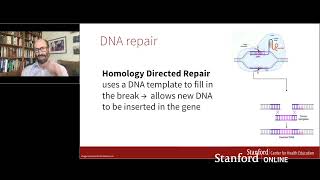
Great, fantastic. Okay, well, it's wonderful to be here and tell you some of the things that's going on with CRISPR. So, as was mentioned, we're somewhat celebrating 10 years of genome editing. CRISPR as a phenomenon was actually discovered in the '80s, mostly as a genetic locus. They didn't know what it did, and it took a long time to figure out what it did. But really, about 10 years ago is when it exploded as an incredible technology for being able to edit our DNA. And it's really had profound consequences on many areas of biology, and we'll talk about some of that. So specifically, what we're going to go over— well, I should mention I have a lot of conflicts. 'Cause I found a lot of companies. And also I'll mention that if you do want to learn more, as was mentioned earlier, do take our CRISPR course and even our genetics certificate program, genetics and genomics. So here's what we're gonna cover today. We're gonna talk a little bit about what is CRISPR. We'll spend a fair amount of time on its current uses in medicine and agriculture, et cetera. We'll talk about some of the ethics and things you might consider where this field field could go and its possibilities. We'll just touch briefly on how this technology can be used in incredible research advances and also a bit in future directions. All right, so what is CRISPR? Well, CRISPR stands for this long name: Clustered Regularly Interspaced Short Palindromic Repeats. And I'll show you this a little more on the next slide. Basically, it's some repetitive sequence. It was discovered as this genetic locus, as I say, nobody knew what it did. In the end, it turns out to be, it's an antiviral defense system that bacteria use to actually block, wipe out viruses that try to invade them. And I'll show you that in a minute as well. And relevant to today's talk, it's really emerged as an incredible tool for editing DNA and much, much more, as indicated here. Here. So basically, here's how it was discovered. People were sequencing and looking at loci in bacteria, and what they discovered was there's this CRISPR locus which has these repeats. That's actually this bluish-purple thing here. And then there were these spacers in between that were unique sequences flanking this, and these turn out to get expressed as RNA, meaning your DNA, for many of you know, that makes RNA of these things, which later will get processed into these sort of repeats with these spacer elements next to them. But also in this locus are a set of genes that are actually quite important as well, that are actually important for the cleavage, as we'll talk about in a minute. So this thing itself, believe it or not, came from a bacterial virus they call them bacteriophages, but from— it was adapted from that. And then in the end, it's used actually as a viral defense mechanism for bacteria. So what happens is when other viruses come into the cell, they have homology to these spacer elements here. The CRISPR system, it's actually a key set of proteins here plus this RNA, if you will, actually attacks it and destroys it. Okay, so it's an antiviral strategy that bacteria use to protect themselves. And of course, then it's got an adapted— it's gotten adapted to be able to actually re-engineer genomes because this idea that you could cleave DNA turns out to be very, very powerful. And the reason it works so well is it's just incredibly efficient. And so in the latest rendition, this is how things got adapted. And this, I should point out, is what led to a Nobel Prize. 2 years ago for Jennifer Doudna and Emmanuelle Charpentier. So they basically set up this system, and really what it involves doing is it's a single protein system, and the protein is kind of famous now, it's called Cas9, it's part of this CRISPR locus. And together with this, what was the repeated element, now it's sort of engineered in its new way and a very specific sequence called a guide. So this was originally set up to destroy, as I say, bacterial viruses, but you can actually set it up with a sequence that's actually homologous to any region of DNA you want to modify. And so what's done is these are called guide RNAs. You have a part of the sequence that's homologous to the region you want to modify,, and together with some of the key recognition sequencing that's recognized by Cas9, and together this guide RNA plus Cas9 will make a double-stranded break here. So it's just two components you need. Again, the protein is this Cas9, and this, what's called guide RNA. And so the way this works is that you would actually get this in the cells, we'll go through this more in a minute, And if you can get the protein plus this guide RNA, what it'll do is it'll go find its locus, the region where it's complementary to, and it cleaves it. And if you don't have any other sequences, what'll happen is it'll cleave that locus and then your cells try and repair that and they don't do it perfectly. They tend to actually leave out bases, gets chewed up a little bit. And so you'll make 1 to 3 base deletions, sometimes larger. And basically that winds up creating a mutation. Gets sealed back up and usually you get mutations, that's the most common, or deletions of some key bases. So this actually then can modify any locus you want. Now, this isn't— it has some use, but it's not as useful as if you can make a very specific modification, and so it's been adapted one more time where you actually do the same thing but instead of just letting it repair itself, You add what's called a template. You add the sequence you would like to see get replaced. And then instead of the other thing was called non-homologous end joining for the aficionados out there. But what will happen here is that you can use homology, the complementary sequences. I know this is a little sophisticated for some of you who don't have a strong background here. I guess that's why you would take our program. But basically what will happen is if you give it a sequence you want to fix, say you have an original mutation in this locus, you can put in the normal sequence and with this CRISPR system you can repair it. So you basically go back in and you'll take a piece of DNA and fix it. And so that's extremely, extremely powerful. And so that's what's been done, it's been done in lots of cells and you'll see in a minute in organisms and stuff as well. All right, so here's how you do this. You actually would take a region you want to modify, and you would actually have this homologous sequence together with the guide sequence, and then also the Cas9 protein. You would either embed this thing, you can encode it, this thing, into a virus, and there are ways of doing that, say lentiviruses, or AAV or other kinds of viruses, things like, believe it or not, we go through in our certificate program. And, or you can use these days, some of these, they're called nanoparticles, these lipid-embedded particles. These are things they use for vaccines now, COVID and such. And either way, you can coat the key elements here and transfer them into cells. And so they'll go inside the cell and then they'll edit the genome in the way I just described. And then make sure it's right, that you did make the right correction, you actually would determine the sequence of that region and make sure everything is what you thought it was. And so it works. And what's special about this CRISPR-Cas system, as they call it, is that it's extremely, extremely efficient. And it often works not just on— we have two copies, as you may know, of all of our DNA, one from our mom, one from our dad. It often fixes it on both copies, not just one. So it's very, very powerful. So basically then, as you might imagine, this has been used a lot. It's used a lot in research for re-engineering cells, for studying biological systems, and there's a ton of activity there. I'll mention some of this at the very, very end, but it's being used a lot in medicine as well, and I thought I would review some of the applications for that here., and then that'll leave us lots of time for questions, by the way, at the end. And so basically it's turned out to have very profound implications in all kinds of areas of medicine, and I'll run you through a few examples. There's now a number of trials out there using CRISPR. Certainly the most advanced trial is actually to fix a disease that's reasonably common called sickle cell disease. It's really very prevalent in certain parts of the world and in African Americans as in the United States and in other groups as well. And also there's another related disease called thalassemia that's also red blood cell disease. And these folks, they basically have a mutation in a hemoglobin gene. It's an important part of your red blood cells. Your hemoglobin, you probably know, it carries oxygen that's in your red blood cells, carries oxygen to all your tissues, really, really important to oxygenate or your cells, and people who have the sickle cell disease, they basically, their cells, they don't work as well is the bottom line. And the cells get misshapen as shown here, they'll actually, you know, become stiff and block blood vessels, what have you. And it can be, some forms are very mild, some forms are pretty extreme. And so it turns out there's two ways that people have been trying to fix, folks, with this. And one is in the— basically in the stem cells, if you will, you can actually remove— there's two tricks. One is that the latest is actually trying to fix the mutation itself. If you see the mutation, you go in and try and fix it. And that's being done here at Stanford by Matt Porteus. Another trick that people use, believe it or not, you actually have two 2 forms of hemoglobin. You have one when you're a fetus and then you have another one once you've been born. It switches one form of hemoglobin to another from what's called fetal hemoglobin to the adult form. And nobody knows why we have those two, but it's— we do. And basically you can actually, instead of directly trying to fix the adult form, you can just leave the— make the fetal form active.. And so you can basically inhibit or remove the gene that turns this thing off. And so the bottom line is that the trick here is that you just leave this fetal— either fetal hemoglobin on or you fix the mutation here. And it turns out from preliminary trials, their numbers are so small, one trial had about 14 people, another had somewhere only half a dozen. They're a little further along now, but it turns out it works. It works. Enough to get roughly 30 to 40% normal levels of hemoglobin, and that's enough actually to fix people. You don't need 100% to fix people. So, so, so far the data are very, very encouraging. And so this looks, this looks starting to look pretty good. So they call this thing ex vivo because you're actually fixing a person's stem cells outside of their body. You collect their stem cells, fix them, and then you return them back. With these modifications, okay? And it works pretty well. So this is now being considered for many other things. A very related condition is called beta thalassemia. It's also a red blood cell disorder. But then there's some other very, very debilitating, I'm sure you know, diseases as well, Duchenne muscular dystrophy, and some of these other things again that are listed here. This one affects the eye. This one's a nerve and heart disease. This amyloid is affecting nerve cells, and people are trying these as well, but people like to actually try to fix the eye for a lot of reasons. First of all, it turns out it's fairly isolated from your immune system. It's an ideal area where people try gene therapies a lot. And also, a lot of people have some severe problems with eyes, and to cure blindness is a big deal. So, anyway, there are people who are actually trying to do these corrections, if you will, for each of these different diseases, and these trials are underway. There's quite a few different trials. There's a lot of other things where people are very interested in yet that haven't quite reached trials, or maybe they're just starting. I think most of these have not started yet, but people would like to. There's early forms of Alzheimer's that if you can fix, that would obviously be huge. People get Alzheimer's, you know, very young age, say 30s or 40s. Cystic fibrosis, you may know, is relatively prevalent. Huntington's is an absolutely incurable disease as it currently exists. So to be able to fix this would be huge. Tay-Sachs also, as far as I know, no known cures, and Fragile X. So being able to go in and manipulate the genetic regions responsible for these diseases would in fact be a huge, huge deal. And there are other ways of treating for certain forms of cystic fibrosis, but not for most forms, actually. And most of those others are not curable. So these single gene mutations that I mentioned before, people are trying to fix. It turns out CRISPR is also being used for cancer. And This gets a little complicated. Again, we cover it somewhat in our course, but CRISPR, it's being used a ton in basic research for cancer. So manipulating cells, manipulating mice to be able to study models of cancer, but it's actually being used in patients now. So some trials have started here and there's several versions of this one. What you can do is it turns out cancer cells are very clever. They've come up with a way of sort of a don't eat me signal that basically means that their immune system is a special set of cells called T cells. Cancer cells make a protein on the surface that is recognized by these T cells that says, hey, I'm self, you shouldn't eat me, you shouldn't attack me. And so they've figured out how to get around their immune system by doing just that. So when you get cancer, they figured out how to basically block your immune cells from attacking them. And so there are ways of tricking then this to get back and try and re-engineer T cells to be able to attack them. And one way to do this is to get rid of that signal here. If you don't have the signal, this thing will— cancer will look like foreign cells and your T cell will actually just destroy it. So the trick here is to actually get rid of this protein here, PD-1. There's another kind of protein out there too. They call these checkpoints that actually they keep things in check and prevent things from eating them, but you can modify these. And so either by themselves, and these days there's also another genetic trick used where actually can promote the attack of these cancer cells. And this one definitely uses CRISPR, and this one usually uses gene addition, but can involve modification using CRISPR as well. So the point out of all this is that we can now treat cancer using some of these same technologies. Again, very, very powerful. People are talking about trying to use this to try and block viral infection. So just like the original idea with bacteria, imagine you have CRISPR sequences embedded in some of your cells, and this is being used for HIV, by the way, where you would actually, well, for this case, the idea is you would actually have these CRISPR RNAs all set up to attack, if you will, SARS-CoV-2. Now, this uses a little bit of a trick. It doesn't— SARS is an RNA virus, so you actually have to have there's a new kind of CRISPR out that actually attacks RNA and makes— So the idea here is that you would use this new system to block SARS, but people are actually talking about modifying your cells to be able to, you may know there's a receptor on your cells for HIV. So when people get HIV, this virus spreads throughout their immune cells because of this receptor, it's called the CCR5. So people are actually talking about And there are trials underway, as you might have seen, to eliminate that so that if you get rid of that, then HIV can't spread and you actually get some good immune cells to help protect yourself. So that's being explored as a very interesting possible therapy for, you know, at least reducing HIV and coming up with a set of very good immune cells so HIV folks can have a good immune system. It's not just humans people are talking about doing this. There's wide potential in agriculture. We run a biotechnology course in our program, and you can read all about all the different ways you can manipulate agriculture. There's a lot of very clever— and some of this is already being used for making, you know, weed resistance and actually improving the nutrients within food people are talking about. And what's special here, and also I should say, turns out preserving fruits and vegetables is a big deal. 30 to 40% of fruits and vegetables spoil. They never get into a stomach. A lot of them die in transplant. They spoil, and then a lot die in your fridge. So really, if you can make things resistant, there are tricks for doing this. From manipulating some of the signaling things that actually lead to resistance. And so people are talking about trying to, again, do food preservation, to make better nutrients, so antioxidants. You know, generally as you get older, you have more oxidative stress. So the goal is to have more antioxidants. GABA is an interesting molecule, and provitamins, things like that. And one important point listed here is that what's different about this from, say, adding genes through viruses and things, that actually modifies the plants. So if you do— and same with humans— if you do viral addition to get things in, that's considered a more serious gene manipulation, whereas if you actually do CRISPR-Cas9, you don't leave any viral sequences behind if you use those nanoparticles.. And so what you're doing is you're able to modify the genome by— and you're not adding any exogenous things like viruses and things like that. People worry your immune system's gonna attack it. So they're generally not considered GMOs if you use this technology because it's a lot cleaner. And so these are some of the things that have been manipulated in the past. And some of this, I should say, is for actually getting resistance to viruses that plant viruses that attack and destroy these too. So it's another— finally, there's all kinds of clever other ways to use CRISPR. I think one of the most interesting ones right now, it's very, very topical, some of you may have just seen this, but people obviously want to control mosquitoes. And mosquitoes, I'm sure you know, they carry very nasty pathogens— malaria, West Nile virus, Zika and malaria in particular, and has been a rage for much of the planet for a long time, especially tropical areas. And it's been hard to eliminate, and so people use nasty pesticides, things like that, and nobody really wants to use those chemicals. They have other side effects that aren't so great, and they're very nonspecific. They don't just wipe out mosquitoes, they wipe out tons of stuff.— So one of the very, very clever ways to use is actually the most common way is using this one here. Is actually you can sterilize males. Mosquitoes tend to mate once, females do. And so what you can do is you can use CRISPR-Cas9 to sterilize the males and then actually they'll mate with the females who then won't mate again because the males were sterile, the females don't have you know, mosquito babies, so to speak. They don't make larvae and such. And so the net result is that you can actually reduce population. So there are trials running right now. In fact, I forgot how many. It's just a huge number of mosquitoes they're releasing right now in the Florida Keys that are manipulated this way. And even in California where we are, it's actually now trials are about to launch in both these two sites using very, very large numbers of mosquitoes. So They've run pilots on this before. These are considered pilots as well, larger pilot. And so this would— this likely will reduce the mosquito population size and therefore hopefully release these things without wiping out all insects. It would be very, very specific for a very specific class of mosquitoes. One particular kind of mosquito is the major culprit in this. Okay, so this is a— this, and there's even some other tricks you can use, something called gene drive, to try and actually drive it even further. So anyway, these are some of the clever ways in which you can use this, and then— but it does raise questions, some of you might be thinking about right now. All right, so we can go around and modify people's DNA. Well, should we do this? Is this a good thing to do? And nobody's going to argue with modifying life-threatening diseases. I think we all would agree that that's a good thing. But what about other things? And some people say, well, you know, if we can figure out genes for intelligence— we can't right now very well, we don't have, I should say, strong genes for this and they're complicated, so it's not usually single genes— but, you know, should we go around and modify all this? And so again, I don't think anybody's going to have a hard time with nasty diseases, trying to fix them. Also, if you fix them somatically, meaning not in the germline, but like I mentioned, fixing people's blood, that's perfectly fine. It's not going to pass on to the kids. You're going to hopefully cure the person. That's all good and exciting. Again, totally non-controversial. But what about going into the germline to start changing things so future generations might be affected? And what if some of these things, you know, it's— we don't know 100% exactly when you start buggering up people's genomes, are we, are we causing issues we don't know about? And so people are very cautious, justifiably so, about what you can and can't do here. Also, I should point out the technology, it's gotten pretty good lately, but people still worry about what's called off target effects. You're trying to manipulate a specific locus, but with some low frequency, you often get changes elsewhere in people's DNA. And what if while you're trying to fix one thing, you create a problem somewhere else? And that has happened, by the way, in genetic engineering before, where trying to fix someone's immune system has led to an increase in cancer, for example, in one kind of trial. And that, that's was, uh, that required a lot of reworking to figure that out. So, so we want to make sure we get it right, get things working well. But there have been, you know, there was a case not long ago where a person in China— it wasn't illegal what he did. He went in and modified 3 embryos, human embryos, actually. One was twin girls and another was from another family. And this is the AIDS receptor, the CCR5, the HIV-1 receptor. And so he went in and modified this gene. The father had AIDS and his argument was, well, this will help protect the kids from getting AIDS. A lot of people felt it wasn't necessary because there are other ways he could have these kids and they wouldn't necessarily— they were in vitro. Fertilize to get the embryos. So it wasn't— it's not clear 100% you had to do this. But he jumped up at a meeting and presented his results from these first twins, and it really exploded into a big controversy. Almost everyone blasted him because at the time the technology was still new. It wasn't clear how much there were these off-target effects. It really created a big stink, but there was one very prominent scientist who said, hey, what he did is perfectly fine. You know, he's trying to actually help these— this family and, you know, have girls that won't get AIDS, which, you know, was the main argument of this fellow here. In the end, he— so it created a big controversy with most people weighing severely against him because he did kind of do it. He wanted to make a big splash and he did. And in the end though, he actually did wind up in jail because he, the way he ran the study, a lot of it was unethical. He didn't quite notify the family quite right. He didn't, it's my understanding, and he wasn't completely honest. There's always review boards whenever you do with, when you work with human subjects, you have to get approval and get everything tidied up nicely. And he was accused of not doing that. So he did wind up in jail for 3 years, just got released this year. So anyway, but the point out of all this is that, first of all, this is the real deal. This— we will be editing people and certainly again, somatically, not in germline. That's, that's, that's a no-brainer.. But in germline, there will be a time when we will be editing people. And so the question is, what's the right approach? How do we make sure it's safe? All these things. And so there'll be committees set up and guidelines to be able to do this in a responsible fashion. I will say though, that then as a research tool, CRISPR again has just exploded. I talked about modifying DNA, but it turns out there are versions of this. I alluded to this where with this one, Cas13, you can actually modify, directly modify RNA. Now that's kind of interesting because if you modify RNA, you're not changing germlines, and there are many applications where this could be very, very favorable. You don't have to worry about causing cancer because it's temporary when you go around and start modifying RNA. In— there are other ways that this is used for research purposes. You can re-engineer these guide RNAs to be able to bring in inhibitory proteins or things that will directly modify your DNA like DNA methylation change, what's called the epigenome. There are other kinds of ways of using this technology as well. And so it's just exploded. It's turned into an incredible tool to be able to use in many, many different ways for helping us understand our genome modify the genome to look at effects. Most things that will involve, like, medical purposes will probably sit around modifying DNA and RNA, but for research purposes, there's many, many different ways to use this. Future directions, well, everything I just said, it's still the early days. We're gonna see a lot more of this for cancer therapeutics, gene therapy methods, You know, we're in a world where we have to figure out how to feed the planet, and being able to increase yield, get disease-resistant plants and food is a big deal for us as a, you know, as a human civilization. And so we really will need to improve all that. And so there will be ways of doing all this. And I mentioned even, well, it will impact climate. Climate is getting more severe, and so having drought-resistant plants and things like that will be a very, very big deal. So that's really what I want to tell you about CRISPR. I know it's kind of just a light touch on all this. You can dig deeper in this program, the Genetics and Genomics Certificate Program, teach about genetics, sequencing technologies, all kinds of fun stuff, including biotechnology that I alluded to here. And don't forget our new CRISPR course, which you can take as well.
We're fielding questions here, and we can start with the first one. Let me begin with the first question, Dr. Snyder, which is, how do we ensure CRISPR Cas9 goes to and edits the exact spot in the DNA?
Yeah, it comes down to designing the probe, these guide RNAs, just right. They really like to target their target sequence. And initially when the technology was set up, they would do that, but they would also recognize related sequences around the genome. It was quite imperfect. But they— the systems have improved a lot. They've evolved. A lot of these systems either grab better high-fidelity proteins and improve the technology a lot. So actually the number of off-target effects is very, very low. And so it's quite minimal these days. Is it low enough to go ahead and start modifying people's germline? That will be open for discussion.
It's a great question. The next question is, how do we ensure the virus isn't detrimental to the cell, and how do we make sure it just acts as a transport?
Yeah, good question. So there's a lot of work around this kind of thing for transferring using viruses for transferring. And in general, people think a certain kind of virus— we have a gene therapy module in our program called AAV. It generally— some of the latest versions are thought to be fairly safe. But having said that, people, I think, to get around that are using these nanoparticles, same things used for vaccinations. So they have zero viral sequences. They're more lipid particles for actually doing the transfer.
And so that's becoming the more preferred route for actually transferring CRISPR sequences and protein. Great, thank you. Next question coming up here is, could you talk about how CRISPR regulations are evolving, and are some countries more restrictive than others?
Uh, yes. Now, I don't know, it's evolving so fast I can't say I know everything, In the US, there clearly are guidelines for all this, and you can't use federal money. So a lot of research that's been supported is in fact federally funded. So you can't use it to go around and start manipulating human embryos and things. So, and, you know, make babies and stuff that's just not allowed yet. So I think there are these oversight boards. So the US, I think Europe is pretty restrictive. And in general, there's been these guidelines, these like the stem cell and other groups have set up global guidelines, although it doesn't mean in certain countries people have to pay attention to those. So it is possible to go off the grid, if you will, and do these sorts of things. And it's conceivable then that in certain countries, people will go charge ahead with perhaps a little less care than we're trying to do in the US. And I don't think there's a whole lot you can do about that. You know, I would hope that in general scientists would be safe and very responsible in executing this technology. And so in general, I think people are discussing— you do get approval for any experiments you do and you get them reviewed by an ethics board and such. And so there's a lot— there's a lot of checks and balances in the US system and in Europe for making sure this proceeds very responsibly.
Great.
And then, as a follow-up question, what is the biggest hurdle to using these technologies broadly? Well, these days they are used quite commonly. I, again, I would say for somatic changes, it really is being used. Now, they are a bit expensive. It's kind of expensive to go in and take out your bone marrow cells, change on these. There's a certain kind of immunotherapy called CAR-T. Believe it or not, that costs about between $500,000 and $1 million per treatment. It's huge. So you could argue there the cost is kind of high, but as we get better and better at this, the costs have a way of dropping. And so I, I think most of us are optimistic that as things move forward, costs will get more efficient, costs will And it would be wonderful if everybody could treat their own individual cancer by manipulating their immune cells. And that is a distinct possibility in the future that may happen. I think there's a ton of interest, many of you may know, in improving longevity and healthspan. And, you know, people will be thinking about ways of manipulating the genome to do that, no question. Now, we don't know how to do that right now, so it's not an issue. But there will be a time when we will. So the biggest barrier, on one hand, I would argue it's the regulation and ensuring this technology is safe to use. Again, zero off-target effects that would create, you'd hate to go around and try to cure, you know, a future generation of a problem and then discover you created another problem of its own. So I think making sure the technology is safe, using it responsibly. Those, those are limiting. And then costs in some of the cases I mentioned.
Great questions. The next question is, why are there not more active commercial applications of CRISPR out there already, and what needs to happen to expedite such breakthroughs?
No, I think there is a lot of companies out there, not to worry. So, uh, feel free to Google it up. I've lost track, there's so many companies out there. And every one of those applications I mentioned, there's a company behind it sometimes too. So there's— I didn't present every— a lot of people are doing what's called preclinical. So when you actually start using these as therapies, you first usually show it works in cell lines and then show it works in animals. And people typically start with small animals like mice and rats. And then later they'll move to dogs and sometimes primates, depends on the therapy you're trying to execute. So you actually have to go through all those steps typically before you start, you know, putting things in humans. People want to make sure it's safe. Now the tricky part is what works in mice and rats doesn't always work in humans. So there is some pain parts of this whole process. So a lot of things will, you know, as someone likes to say, we've cured cancer, you know, a million times in rats, but we still have a long ways to go in humans. So anyway, there's just a lot of preclinical work. There's a ton of activity there, a ton of companies, and then a fair number— I gave you just the tip of the iceberg. They can— we can send around a web link where they talk about all the existing trials or trials are about to come using CRISPR technology. It's skyrocketing, especially when you consider, say, 3 years ago, I believe there were probably very few, if any, trials.
So it's really mushrooming in a big way. In your opinion, are CRISPR-edited plants safe, is our next question.
Are they plant safe? Yeah, I think so. I mean, again, you're just manipulating the DNA and you're doing the same thing you'd probably do with genetics. Instead of selecting strains, which is very, very painstaking, you can go in and directly target, make the changes you want. So in my opinion, they're quite safe. I've never heard of anyone harmed by— even when people have done genetic manipulations of of plants to make them, say, viral resistant or climate resistant, say, to drought and things, no one's ever been hurt by that. I'm a big believer that biotechnology is generally safe. You want to watch and make sure that you don't make a plant that then takes over everything. That's not good.
As far as human consumption, I've yet to hear any manipulation that has adverse effects. Thank you. Next question is, are there any trials for lipid metabolism disorders?
For instance, PKU is in trial, is that correct? I don't know about that particular one. It's possible. Again, there's a lot of trials out there now, and I don't— I can't say I know every one.
I'm not aware of that one, but it wouldn't surprise me.
And then is there a standard— Therapies, by the way, so for just as an example, like on lipid metabolism, whoever asked this may know this, but a lot of people have high cholesterol and there are actually therapies using monoclonal antibodies for actually driving that down. It's called PCSK9 inhibitors and they work quite well. I'm actually on it, works incredibly well. So anyway, just a thought there. So, therefore, the need for manipulating someone's DNA, especially when we're not sure it's safe, is less obvious.
Is there a stand that the scientific community has on the potential eugenic pathway CRISPR has in terms of editing disabilities?
Yeah, it's a good question. I think in gen— it's a great question, actually. In general, life-threatening diseases people don't have a problem with, although it's interesting because, you know, what might seem life-threatening in some cases, for example, sickle cell gives some protection on malaria, and people have wondered whether some of the cystic fibrosis was giving protection, you know, in ancient times on things like TB and stuff. It's not clear. But so you do wonder if you, when you're trying to solve one problem, whether You're creating a different problem that has to be thought through. But as a general rule, I think for correcting severe diseases, people don't have a problem with. I think, you know, I personally don't see the point in correcting, you know, trying to improve intelligence, height, this kind of thing. That's getting into a very dicey area. You know, I do think it's an interesting question to debate. What about people of short stature? And their parents want to make them larger. You may know that we do human growth hormone injections on folks. Is that ethical or not? And some people say, look, my kid will be entirely stigmatized if he winds up at 4'6" amongst all his classmates, and so getting up to, you know, 5-something is probably a good thing. So what do we do about that when it comes to manipulating genomes? I don't know. We're gonna have to debate these things come up with appropriate guidelines for doing this kind of technology responsibly and see what consensus opinions are. So most areas are pretty black and white, what you should and shouldn't do, but there probably are some gray areas.
Great, thank you. And then, can this technology be used to increase the telomerase for longevity?
Good question. Probably. I think it's debatable whether increasing your telomerase is the best way to increase your longevity. It may increase your chance of getting cancer because your cells may grow uncontrollably. So there are other— there's a lot of interest in this longevity space, just a ton. People are putting billions of dollars now every year into new startups around longevity. It's one of the hottest areas. And so there's all kinds of strategies. Some are anti-senolytics, meaning trying to, you know, get rid of your senescent cells. I should say senolytics, not anti— to get rid of your senescent cells, which might help. There are programs to, you know, improve your caloric restriction and other sorts of things. So it's not clear what the right solution for this whole area is. At some point, CRISPR will play a role in this, but we don't know how to solve longevity. I'm not ready to get my telomeres longer. There is a report of someone who actually stuck telomerase in herself to get higher expression. You can Google it up. I personally wouldn't do that, but that seems like you could be making cancer for yourself. But anyway, so we've just— there's just too much to learn. In the case of longevity.
Great, great question though. Another question here is, there are regulations and ethics in the medical community. What are your thoughts on being able to order a CRISPR kit through the mail? There isn't any regulation on what these people are cooking up in their garage.
And an additional comment is, I took your genetics and genomics program and it was fantastic. Okay, well, That's how you knew how to ask that great question there, I guess. I don't know what to say. Yeah, you know, there isn't regulation on this stuff. And should there be? I mean, I just don't think people should be sticking this stuff into themselves or other people right now for germline changes, or again, without there being a life-threatening condition. It just doesn't make any sense. And so I think all the stuff you'd want to to work with a research team and your physician to, again, do this responsibly. I know that seems like a cop-out answer, but I think it is the right answer. We just can't have people doing garage genome editing. I think that'll be a disaster. Yeah, who knows? I'm sure people are gonna do the stuff. They're already cloning dogs and stuff and cats, more cats than dogs, actually.
So what are the different delivery systems, um, technology to get the guide RNA and protein into the cell, is our next question.
Yeah, so I mean, for research, people usually put the Cas9 in first and then bring in the guide separate, but for these therapies, it's really these lipid particles, these nanoparticles I mentioned before. They're very specialized. That's a big— turns out to be a big deal. People don't appreciate this. The key was to make these lipid particles so that they were not immunogenic. That's a relatively recent breakthrough. And that's what led us to be able to make these mRNA vaccines. They're actually embedded in these lipid particles. And that was huge because then you can stick them right in. You don't have an immune response generally to them, or at least not a severe one. And that's how people are doing it now. And, you know, targeting the specific organs, that gets a little tricky. If you're working on muscle, you can try and inject directly in the muscle. You can try and put receptors on the surface of these things to get them in the right place. A lot of things that people do, they do them on skin because it's accessible. They do them in the eye because you can inject in the eye, and there's a lot of pretty debilitating diseases in the eye. And it's also immune protected. You don't have to worry about your immune system blowing up at you if you start doing manipulations in the eye. It's immune protected, as they say. And then the liver is another area, believe it or not, because if you stick things in people's bloodstream, it usually goes right to the liver. So these are some of the most common areas that people are trying to fix. And again, that gets around accessibility. These are organs that are accessible, should be able to manipulate. For skin, people have been manipulating, you know, people put like Botox on their skin and on skin and stuff, and it's, uh, um, it's, you know, that's a nasty toxin, but it's okay, sort of okay. Uh, I'd watch it a little bit myself, but, um, it, you know, it— your skin turns over every few days, so you can actually— it's an area that you can modify. And if you have a, you know, debilitating issue like psoriasis or something, it's not a bad area to manipulate. So, so those tend to be the most popular systems people are going after. You know, how do you manipulate the brain?
That's still a tough problem. Right. Our next question is, why would you use CRISPR for DNA versus RNA, and is there a more curative reason to use one versus the other?
Yeah, so people often like— it's a great question— people often like the RNA because it's transient. So imagine you're not as sure about the therapy. You could actually— and especially for curing some of the blood diseases, you could actually— you pull out some of these stem blood stem cells, you add the RNA, which can— often it's adding an RNA if it's what's called a recessive disease. You would add the RNA and it complements. You can see if it works. Everything looks good. For CRISPR, you'd use the Cas13 system if it's a dominant mutation, try and destroy it. Probably have to get a good copy around of some sort. So, and then you're not, it's transient. You're only, they're gonna be around for a few weeks or a few months, those cells. They're not going to completely, you know, bugger you up permanently, so if something's not working, you'd figure it out kind of quickly and right away. Whereas DNA manipulations, you know, when you repopulate stem cells and stuff, they can get permanent. And certainly if you do it in the germline, obviously you're making a person who's permanently changed if you manipulate an embryo. So the implications are very different., and there may be, but if you're trying to hit every cell in the body, you may have to manipulate the embryo in order to get it to work on every cell in the body, and for certain diseases that will be essential. But for other things like blood disorders, you just have to manipulate the stem cells in your bone marrow, that's where your stem cells are. So the strategy very much depends on the particular disease. This is a great question. And you really need the experts in those areas to actually design a system for, you know, fixing it in those specific cases.
Great, thank you.
The next question here is, any utility for using CRISPR for curbing antimicrobial resistance in pathogenic bacteria? Yeah, great question. So what's— I literally this morning came from a talk where people were using bacteriophage to try to wipe out pathogenic bacteria. And they didn't use CRISPR, they didn't need it because it's all natural. But what's kind of interesting, they, they could probably improve it by using CRISPR, but it comes from a CRISPR concept, which is the bacteriophage come in and destroy the bacteria and they pick phage in a certain way that would actually, say they come in through a transporter, a drug transporter, they might bind that transporter and then get internalized. So what happens is resistance always comes. That's a problem with these pathogens. So many of them by numbers that resistance always pops up. Antibiotic resistance you've heard about, etc. So what's kind of cool about this bacteriophage therapy is that it can actually— when it's coming in through a receptor system or transporter system, like I said, the cell will try to get around that by— when it gets resistance, it'll make strains that actually don't— they're mutated in that transporter, and then they actually don't become drug resistant or kick the drug out. So it's kind of— this might be a little complicated without showing a diagram, but it's pretty cool that you can actually use bacteriophage to actually try to wipe out pathogenic bacteria, and then you come back with antibiotics. It's a one-two punch that seems pretty effective. And so— or it has been effective, I should say. So early days. I suspect we'll be able to make that even better with manipulated versions using CRISPR and stuff. And I mentioned before the HIV stuff, I think I'd be surprised if that doesn't work at some level where you, as I say, and it's being— trials are on that using CCR5 where you delete the AIDS receptor. So AIDS virus can no longer bind those T cells and they multiply and they do their job just like T cells should do. For boosting your immune system. So I think for HIV, it'll be a big deal. We'll have to see about, you know, can you manipulate in humans other receptors for pathogens, for dengue virus, all these sorts of things. It's not clear.
It'll be very, very interesting. I think we have time for maybe one last question here. The last question is, what is the advantage of the dCas9 version of the protein if it cannot cut cut the site of interest?
For the dCas9, well, you can— oh, I know what you're saying, yeah. So you can use it, it's used a lot in research where you, and it could be used in vivo too, it's used, you actually tether it to a system where you can bring in a repressor. And turn off transcription at a very specific locus, for example. So you can shut off gene expression. And so instead of cleaving, you're actually bringing in a repressive protein that can turn off gene expression. Or likewise, you can actually tether it in a way, manipulate it in a way it brings in an activator. So these defective versions, they're very clever tricks for being able to manipulate the genome and gene expression And it's conceivable you could use those in therapies. I think people like the cleaner version where you don't leave anything behind, any CRISPR behind as well, because that, again, the regulatory agencies just don't like the idea of exogenous sequences sitting there. Maybe you'll start making immune reactions, so that could be a mess. So it's better if you can make it clean. But for research purposes, these have been powerful. Imagine, too, you have a gene family where you have 50 copies of the gene. It's hard to go in and target all 50 copies, right? You'll never get there. But if you have one of these dCas9s tethered to an inhibitor, it can bind all 50 copies and shut them all down at once, if that makes sense. So there are clever ways of using that technology.
Great question. And once again, thank you for joining us today. We hope you have a great week and we hope to see you again in our next session. And thank you so much, Dr.
Snyder, for being with us here today. Thank you.
Been a lot of fun.
Great questions. Thank you very much.
More from Joshua







Scientist Stories: Hans Waterham, The value of phenotypic assays in peroxisomal disorders




Scientist Stories: Joel Zlotogora, Genetic carrier screening programs for reproductive purposes