Scientist Stories: Mike Snyder, Transforming Healthcare with Big Data and Wearables
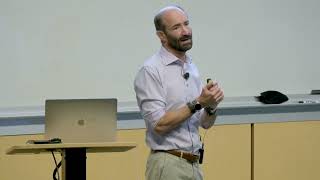
In this talk, Mike Snyder critiques the current, largely reactive and population‑based healthcare system, highlighting its reliance on outdated tools like fax machines and limited measurements. He argues for a proactive, individualized approach that leverages the recent technological revolutions in genome sequencing, mass spectrometry, and wearable sensors. Snyder describes a longitudinal deep‑phenotyping study of 109 participants, where each individual is profiled every three months with whole‑genome sequencing, multi‑omics (proteome, metabolome, microbiome), clinical labs, questionnaires, and continuous wearable data. Over 9.5 years the cohort yielded 49 major health discoveries, including early detection of cancers, cardiomyopathy, pre‑diabetes, and other conditions, often before symptoms appeared. He explains how single‑gene findings (e.g., BRCA, cardiomyopathy, MODY) and complex‑disease polygenic risk scores derived from AI‑enhanced genome analysis can guide precision treatment. Snyder then shifts to wearables, showing how heart‑rate, HRV, skin temperature, SpO₂, and other signals can detect infections days before symptoms, illustrated with Lyme disease and COVID‑19 detection algorithms that flag abnormal shifts in personal circadian baselines. He discusses continuous glucose monitoring, defining “glucotypes” that reveal individual post‑prandial spikes. The concept of stable personal health baselines leads to the notion of “ageotypes” (kidney, liver, metabolic, immune) that describe personalized aging trajectories. Snyder acknowledges privacy concerns and the need for personal data ownership. To scale these insights, his lab has spun off 16 companies, including a service that combines deep molecular profiling with whole‑body MRI for early disease surveillance. He concludes with a vision where genome sequencing at birth, integrated with multi‑omics and wearable data, enables predictive, preventive, and precise health management for everyone.
Chapters
Many of you probably know we're basically in a revolution in terms of our technology and our way we can analyze health. And one of the big focuses of our lab is to try and use big data and wearables. We'll talk about how many of you are wearing wearables, actually. Smartwatch? A fair number. Okay. And we think this is going to be revolutionary for changing healthcare. And again, that's a theme. So I'm going to start out with— well, maybe I'll start out with a question for all of you. How many of you have had a misfortune in the healthcare system, meaning something wasn't diagnosed that was easily preventable? That's all? Usually most people raise their hand. They've had some bad experience that could have easily been avoided through simple either measurements or other situations. Well, I actually think the healthcare system's broken in a lot of different ways, and I'm gonna summarize a few of these. First, the doctor's office of today, for the most part, is pretty similar to what it's been for the last 40 years. So, you know, here's one from 40 years ago, and it looks pretty similar to that today. Second, you may not know, but the number one user of fax machines is, in fact, the hospital system. My daughters— and one of them is 21, the other is 16— don't even know what a fax machine is, right? This is— they're way past that. And there's the reasons why they say use this, but I would argue it doesn't have to be the case. Another problem many of you may be aware is most of the top-selling drugs don't work most of the time. They work on some people, but they actually fail on others. And so here's a paper from 2015. We looked at the top 10 selling drugs, and the best one worked in 1 in 4 people. Okay, 1 in 4 people. And the worst one was 1 in 25. And that's still true in the neural space, neural mental health situations, things like that. So most drugs don't work. There's some of them, the top-selling drugs now work better, but still the best ones are probably 1 and 2, the top-selling drugs. So again, we want to figure out how to get drugs to work all the time for the right people. Okay, some of the things that really bother me about the healthcare system are summarized here. We're very focused on treating people when they're ill. As such, the system's very reactive. Here, I actually have a pointer. We're certainly capable of measuring many more things. We typically measure very few when people are healthy. And some of these are actually of questionable value. Generally, when you're healthy, you don't get measured very much at all. And the worst part here is this one here. Nearly every decision about your health is based on population-based measurement. We think we should be very focused on keeping people healthy, as such be very proactive. We're certainly capable of measuring many more things than we presently do. The frequency, I would argue, should depend on what you're at risk for and what your personal trajectories look like. And of course, the last thing, we think we should be very focused on individual-based medicine rather than population-based medicine. Physicians today say we do that, but I would argue not at the degree at which it could be done. And just to illustrate this last point, you've probably been told since you were little your oral temperature when you put a thermometer in your mouth is 98.6. But if you look at the studies that are out there, this is actually the more, this is the median value. This is a study of 3,000 people, 97.5. I myself am 97.3 and I've been dropping a little bit over the last 8 years, okay. So, but the more important point here is the spread. This is the 25th quartile, so the 25th quartile, the number's 94.6. And 75th quartile's up here at 99.1. So what that means in today's world, if your normal healthy baseline is 94.6 and you walk into a physician's office and they measure you at 98.6, they'll tell you you're healthy, everything's fine, you're normal, what are you doing here, go home.. But if you're up 4°F over your baseline, I guarantee you're not healthy. Something's off. Okay, so that's a big theme of our work. Know what your personal baseline is. Detect those shifts before symptoms appear so you can actually act early. And so we think some of the technologies we're doing, which is, by the way, a research project, we think they will actually find their way into the mainstream. Some already are, actually. We'll go through some of this. So just to remind you, your health is influenced by many things. I'm chair of genetics, and so your genome is in fact one of the most important things. Your genome, you probably know, it's your collection of DNA, 6 billion bases, as we say, of DNA. And it does influence your health. Nobody knows, it depends on the particular situation, but most estimates are about 25% of your health state is influenced by your DNA. And then these other things we all know influence your health. We know this intuitively, like exercise, food, stress, these lifestyle changes, as well as environmental exposures, all influence your health as well. And we're in a world now where it's possible to quantify all of these, actually some quite well. For example, activity you can quantify with wearables. Food, it's clunky, but you can still do that. Stress we can measure indirectly by various means. And environmental exposure, it's a big area we're working on. In fact, I have an exposometer up here that measures airborne exposures, actually. For both biologicals and chemicals. And one reason we can do all this is that there has been a technological revolution, as I said at the outset. So we can now sequence genomes at costs that just skyrocketed— plummeted, I should say, in terms of— oh, that's an old slide. But basically, right now we're paying about $500 a genome. But two new technologies have come out. It's going to be about $100. To get your genome sequenced, to get your DNA sequenced. The interpretation will be more than $100, but the actual sequencing will be very, very cheap. There's also been a revolution in mass spectrometry, which lets us follow molecules. So mass spectrometers are those things in airports, right, that are looking for bombs, explosives. And so you can actually— we don't look for bombs ourselves. We look for proteins and metabolites and things. They're very, very sensitive instruments. And so they can detect thousands, if not tens of thousands, of molecules in your blood and your urine. We use that for profiling. And then we do a lot with wearables we'll talk about later, smartwatches and something called continuous glucose monitors for profiling your health. So we use all these technologies to try and get deep profiles on people. And so a number of years ago, it actually started, it's about 12 and a half on me, but a cohort of 109 people we profiled very, very deeply, meaning we actually sequenced their DNA, their genome, and made predictions about their disease risk. And then we made as many of these molecular measurements. Some of you will know what this is, some of you won't, but basically you can measure the products of DNA. RNA gets made from your DNA, which encodes proteins and metabolites, and we can measure all these with the technologies I just said very, very deeply. They call these omics technology. So your proteome, your metabolome. We also measure— have you heard of the microbiome before? Yeah, everybody. All right, everybody's heard of the microbiome. So obviously this is important for your health as well. We actually sequence the microbiome out of people's poop as well as out of their nose and skin and tongue. So we do very, very deep measurements. And so we're collecting these samples— urine, blood, stool. We also do deep clinical testing, I should point out, As well as we take questionnaires for mental health and foods people are eating. And then we do a lot with wearables, as you'll see as well. So one aspect is to do very, very deep data collection on people. And the other is to follow people over time. So we'll sample people every 3 months while they're healthy. And then if an adverse event comes along, like a viral infection, we'll take 5 to 7 additional samplings to see what's going on at the earliest time of disease. So you might say, well, why are we doing all this? I should say we've been running the study now for over 9.5 years, almost 10 now. And it's a very, very deep data set. It's one, you might say, why are we doing this? Well, we're trying to understand what it means to be healthy. How does it change over time? How does it differ between different people? How does your healthy profile compare to the person sitting next to you? And the biggie for, I guess, this particular audience is these are pretty advanced technologies. Can they be useful for actually managing people's health? And so I'll spend my time on that last part. From these 109 people, just from the first 3.5 years of this deep profiling, we had 49 major health discoveries. Now, it is an older cohort, 53.4, and so we— but nearly half the people learned something pretty important about their health. And it spans a wide range of areas. So hem— hem— oncology, cardiovascular disease, metabolic, infectious. I'll run through this a little bit. And we found some things that were pretty big deals. So for example, we caught someone with early lymphoma, 2 people with what are called precancerous cancers that can convert to aggressive cancer, something called MGUS, smoldering myeloma, 2 people with serious heart issues, a number that had potential heart issues, but one person— and this will illustrate this myth— through gene sequencing, another through the wearables. And that's an important point. These were all found presymptomatically. So by doing this deep data dive, we found this before symptoms. And no one technology did it. It was often, you know, sometimes it was gene sequencing, sometimes it was imaging, sometimes these deep molecular measurements. And usually it was the combination of all those, or subsets of those, that would say something's off. And then they'd get follow-ups, and actually we would find what was going on. So I'm going to walk you through some examples in a minute. I also want to add one other thing. One way to think about this is the way medicine's practiced today, if you think of your health as a 1,000-piece jigsaw puzzle, we're measuring, say, maybe 6 to 10 pieces. And what we're trying to do here is measure hundreds, like 800 pieces, trying to get as clear a picture of your health as possible. And so that's really the idea of these technologies. You've got a very, very deep dive, deep picture of your health. So to show you a few examples, this is a genome sequencing. People all say, well, if I got my genome sequencing, what would I learn and why would that be valuable? Well, from the first 70 people, 12 people learned something pretty important. So these are the different gene mutations. They have mutations in these genes. These are single cases. So for example, there's an individual who had a BRCA mutation. Have you heard of BRCA before? BRCA puts women at very, very high frequency for breast and ovarian cancer. So, it's what Angelina Jolie had. And actually, she really created a lot of awareness. A number of people got checked up after she announced she had a BRCA mutation. Actually, a BRCA1 mutation. Just skyrocketed. So anyway, that's a good— these are single gene mutations that with high frequency can lead to incidence of disease. And so, we went through this, and it turns out 3 people— all these people get screened, so this is all actionable information, we like to say. But 3 actually had a big deal come out of this. So one person had a mutation in this gene, which puts him at risk for cardiomyopathy. And it turns out he has a heart defect. His father died of a heart attack right after we sequenced him, in his 60s. His aunt had one in her 50s. And he did a stress echo follow-up, and wouldn't you know it, he actually has a heart defect. He's on medication now. So this was all revealed from his genome sequence. This individual had a mutation in this gene. There are two X means there were two individuals. And that put her at high risk for certain kinds of cancers. And she did a whole body MRI follow-up. And wouldn't you know it, she actually had early thyroid cancer. And they removed that. And she was able to maintain her thyroid. So she doesn't need replacement therapy, hormone replacement therapy. But the bottom line is, because we discovered that, Again, she was acted on quickly. Again, all— this is all from the genome sequence, all before they had symptoms. There were 9 individuals in the study who had— who were thought to have type 2 diabetes. Well, it turns out one of them has a mutation in this gene, and it's actually not type 2 at all. It's a different kind of diabetes called MODY. And actually, the way you treat MODY is very different from type 2. Typically, you'll treat them with a different drug. So they've been on the suboptimal medication for years, and they switched now as a consequence of this. They're on a more optimal, again, medication. So even though it's a minority of cases, 12 out of 70, if you're one of those 12, it's a pretty big deal, like the BRCA case, right? So we think that, again, it can be very, very powerful. Now, this part might get a little sophisticated, but I'll tell you, most diseases actually aren't these single gene mutations. So we're all at risk for something, right? And you know some of that from your family history. But most diseases are actually what we call complex disease. They're actually thought not to be due to these single gene mutations. They're actually thought to be due to common variants. We actually have— the difference between you and the person sitting next to you are 4 million changes out of your 6 billion, okay? So you actually have quite a few of them, and they're very common, most of these changes. And most of them are benign. But what people do these days, they try and make predictions. These complex diseases like diabetes, coronary artery disease, these are actually thought to be due to these common variants of very, very low effect. So instead of single gene that you can, you know, will basically kill you with a— it's like a sledgehammer wiping you out. These are more thought to be variants of low effect. And if you just happen to sum up and get all the bad ones, you wind up at high risk. And if you have the good ones, protective ones, you're at low risk. Turns out, when we sequenced my genome, we were able to predict what my risk was, actually, from this complex disease for type 2 diabetes. It turns out I'm type 2 diabetic. It was actually predicted from my genome. And so, it doesn't work though most of the time. It only works for people at the extreme ends. So we've come up with new ways of analyzing genomes. This might get a little sophisticated, so I won't get too deep. But we can use artificial intelligence to actually figure out the— by summing over all these changes and come up with ways of figuring out what genes are most likely responsible for a complex disease.. And we've actually applied this, it's very new, to 3 different diseases. Abdominal aortic aneurysm, which actually kills 10% of people over 65. And the way it's usually predicted is when people have their aortas explode, which they die 90% of the time. So that's a terrible way to know you're at risk for something, right? So this is an area where getting predictive scores is a big deal. ALS, you've all heard of Lou Gehrig's disease. There were 3 genes. These are even questionable for AA. 7 genes for this ALS. And severe COVID, it turns out, obviously, when people get very old, their immune system is not as strong, and people die from COVID for that reason. But there's a lot of young people who actually wind up hospitalized or die from COVID right? That's very common. And that's thought to be due to genetics. When things happen at a very early age, it's often thought to be due to genetics because environment hasn't piled up as much. And so we went, basically used this, again, I won't get in details of this, but we used these new AI methods to be able to actually try and get to the genetic basis of the disease. And it turns out it works really, really well. So we went from 3 genes to 60, and I'll show you we can even get a predictive score in a minute. ALS, we went from 7 known genes to almost 700. Using these new AI approaches. And for the severe COVID, again, for the younger folks who get severe COVID, we went from— there was a very advanced study that had 47 genes. We found over 1,000. And so what we're doing now is we're trying to set up prediction scores with these. And so for AA, we've been successful. We're still working on it for ALS and the other, where we can actually just from the genome alone— this gets a little technical, but we have a reasonable predictive score. For those who follow this, you kind of get it. Those who don't, it's hard to explain in 2 minutes. But you get the idea that we— take my word for it, just the genome alone can actually make some predictive value out of a genome sequence for this disease. Again, it's usually discovered when people's aorta bursts. And then if you mix in a little electronic health record information, you get up to 0.6, which is actually a pretty reasonable predictive score, it turns out. And so we're trying to do this for all these complex disease that should be able to revolutionize the way we actually interpret what your risk is for these things. And so again, at an early age, you could potentially predict some of this. And so again, take more preventative measures potentially if you're at high risk for certain things, or at least be on the lookout for these diseases. I'll tell you my type 2 diabetes story in just a second. In just a minute. All right. So genome sequencing is very, very powerful, but there are other forms of data that are actually powerful as well. So here's a case where we caught early lymphoma. This was picked up because this person had a large spleen and actually had elevated blood markers. A couple of blood markers seemed to be off, and then the follow-ups actually said, sure enough, they actually have early lymphoma. They've been treated and actually— again, this was all discovered presymptomatically. They've been treated and they're basically been disease-free for years. That was good. And that is the name of the game, by the way. Catch disease early, you can usually manage it. If you catch it late, especially cancer, if it's metastasized, for certainly solid tumors, that's a big problem. Here's a case of an individual who we studied. He had given 2 samples, and he had way more of this particular protein than everybody else. There's 1,000 samples here, and the other 108 peoples are down there. This person's two samples are way up there. We knew something was off. Follow-up meant he had way too much of these cells, which actually puts him at very high risk for basically a type of blood cancer. So basically, he's getting monitored now fairly carefully. I have my own ideas what— I should point out two things. One is I'm not an MD, so you can disregard everything I'm telling you if you want. And also, I'm highly conflicted. This will come up in a little bit. I've spun off all kinds of companies around this stuff, so I'm incredibly conflicted about all of this. All right. All right, other things we found are plaques in the arteries. 6 people had plaques in their artery. I'm actually one of the 6. This is not me, but mine looks a lot like this. And sure enough, you can see little plaques here, and so the recommendation is increase your statins, or in my case, which we did, but we also tried, if you've heard of these PCSK9 inhibitors, Boy, do they work. They really drive your cholesterol way, way down. And sure enough, my plaques are shrinking. So this is the kind of information, again, that's very, very actionable. That's kind of a big deal for me, because everybody on my father's side has died of heart failure. So actually keeping these things down and under control is important. So diabetes, we have a very strong interest in, because I am type 2 diabetic. I'm a weird one, as you'll see in a minute. So it turns out, coming into the study, 9 people were thought to be diabetic, and 2 people were diabetic who didn't know it when we actually, you know, made our measurements on people. And it turns out that a lot of people were pre-diabetic, almost half were pre-diabetic, and most of those that know— and that's very common, 9 out of 10 pre-diabetics don't know it. I guarantee a lot of you are pre-diabetic and don't know it. And this is a big deal because 70% of pre-diabetics will become diabetic in in their lifetime. So we think this is very, very important to know. I'll come back to this a little more later. So we were very curious, how do people become diabetic? Do they just gradually get there? Does something trigger it? What's going on? This had never been investigated before. So we basically, because we're following these people over time, within the first 4 years, 9 other individuals who were not diabetic became diabetic, and others became prediabetic, and others had actually diabetic range values. So we can see, well, how did these 9 clinically diagnosed diabetics become diabetic? And 7 of the 9 just gradually got there. Let's look at this person. So orange is their fasting glucose. It should be around 90, 100 tops. This person went up. Once you're over 120, you're classified as diabetic. So they first got there by fasting glucose. There's another marker called hemoglobin A1c you may have heard of. That's a marker for type 2 diabetes. When you're over 6.5, you're classified as diabetic. Sure enough, this person shot up. And they were officially diagnosed here, and then they were treated, and basically— I'll come back to that later— got it under control reasonably well. So again, 7 people gradually got there. But 2 people spiked their way there, as though something triggered it. And I'm one of those 2. This is me, 8 years of data. So I was marching along just fine. I got my genome sequenced here. So I went in and actually got certain advanced tests. I was looking for something called insulin resistance, which is a very common form of type 2 diabetes. And it turns out that when I went in to get the test, I actually had a very high fasting glucose score, that 126. I was actually high on hemoglobin A1c, 6.4. And then a week later, I got measured, and sure enough, I was even higher, 138, even went higher. And my hemoglobin A1c went up to 6.7. And I said, uh-oh, I'm diabetic. And so what happened was, it was predicted from my genome, as they say. So what I did was I underwent a very serious life— oh, two things. One is, first of all, when it happened. It happened right after a nasty viral infection, respiratory syncytial virus. Common in kids, not so common in adults. And so the hypothesis is that I'm genetically predisposed And then the viral infection triggered the disease. That genes plus environment have triggered this. So in my case, I was able to initially get it under control by changing lifestyle. I cut out— I didn't know I had a problem. I was eating very poorly, actually. So I cut out all exogenous sugars. Like, I don't eat muffins and all that stuff. You guys, I hope they didn't feed that over at the Alumni Center. That would be bad. Anyway. The point is, this looks like a little blip. That's about 10 months to a year. So I cut out the muffins and all that stuff. I also, I bike. I had been biking, but I doubled my biking. I cut out my excuses, basically, like rain and stuff like that. And I started running. And basically, I got it under control. And it was down to normal levels. And everything was fine for several years. So in fact, I did the perfect experiment. I stopped looking at the data. Here, someone else looked at my data and said, Mike, do you realize your hemoglobin A1c is 7.0? You're back to diabetic again. I said, oh, I had no idea. But I've been collecting samples and data, and we looked at it, and son of a gun, it spiked up again. And guess what? I'd stopped running right there, and I also got a second viral infection. It's not too clear which of those two led to this. But what I did do was I started running again, and I brought it down. I never got it down all the way to the former baseline, but I got it somewhat lower, down the prediabetic range. And so I kept running again, and I was running about as much as I could, 4 days a week, about 4 to 5 miles a run, so 45 minutes. And it just gradually kept going up and up and up. So what did I do? Well, I switched from running to weightlifting. You can't tell, but I've been lifting weights for 6 years now. And I did actually increase my muscle mass. 10 pounds. I do whole body MRIs. I follow all this stuff pretty carefully. And the idea there was that muscle mass is better for glucose homeostasis. Okay, turns out it failed, at least on me. I just kept creeping up, okay, up and up and up. So finally I did what everybody's telling me, Mike, just take metformin. That's the frontline drug for type 2 diabetes, right? I don't know if you know that, but so I did. And guess what? I'm a non-responder. I kept increasing the doses and non-response, non-response. And it was pretty clear when I was at the maximum dose, it was not gonna work. So it's off the chart, but it went up to 7.5. So what was the solution? More data. We basically figured out I'm insulin sensitive, meaning my cells will respond. My pancreas makes insulin just fine. So what's wrong? I don't release it from the pancreas. It's not unheard of, it's not common. I'm not a typical diabetic, right? I'm not overweight or anything like that, nor were actually many of the others as well. They were probably somewhat heavier. And so I have very what's called slow glucose disposition. And we figured out that I wasn't releasing growth factors. So there's a drug for that, it's called rapamycin. And it turns out I'm a good responder to that. So I went down. These days I'm on something else called SGLT2 inhibitors, which are actually quite good for cardio purposes. And so that actually also works quite well. So I'm not down as low as I would like. I'm still playing around to try and get it lower. But nonetheless, I've got it much, much better under control than I did. So we call this precision diabetes, going back to my point. By better knowing what was wrong with me, I could take the right treatments that would be most effective. Now, the one minus with the SGLT2 inhibitors is they cause me to lose weight, which I'm not trying to do, but it's I lost some of my muscle mass as a consequence of that. But nonetheless, it's good to have my glucose under control, so that— or better under control, which is where we're at. So one other lesson, one, is this is the first time someone actually predicted a disease from a genome sequence, believe it or not. And then in my case, it led to this discovery that maybe puts you at risk, and this is the first time people had suggested that maybe viral infections can trigger disease as well. And so it turns out that this is now common, so that viral infections triggering type 2 diabetes have been suggested before for type 1. This is the first time shown for type 2. And now it's pretty clear 2 to 4% of people who get COVID actually wind up diabetic. So this is becoming a general phenomenon. Some of it's type 1, some of it's type 2. So this is now exploding actually as a phenomenon. And so in my case, we've dug in even further. It turns out something called epigenome, my DNA methylation has changed in front of my metabolic genes. We actually have a better idea. It's not all figured out yet, but the thought is that the viral infection has caused epigenetic effects on my DNA, and that's actually what's triggered my type 2 diabetes. So it's really fascinating. All right. So one of the other things we discovered, this is probably the most important point of the whole talk, is that by doing these deep data profiles on people, we learned that everybody's different and we all have our own profiles and they're actually quite stable. So each dot is a different visit, each color is a different person. I have 6 years of data. I'm light blue here. I had the most dots because I measure myself all the time. Hundreds of, you'll notice all my smartwatches. We'll get to to that in a minute. So this is just 12 people with 10 healthy visits, and again, most of them have at least 4 years of data. Some, some maybe a little bit too, but I have 6 years of data. See how my dots are all clustering together, meaning if you use either clinical labs, any of these— there's RNA, there's some metabolites— with any of these measurements, I look— my samples always look like me more than they look like anyone else. That's what point of these dots. This is sort of a relationship plot. And so the point out of all this is that we have our own healthy profiles, and they are actually very, very stable over time. They don't change that much. What that means, if you get up and we took a wipe off your seat, we could know exactly who sat where based on if we had the right reference material. So that leads to privacy issues and things. We can talk about that later. But the other thing that's really, really important is is we discovered is that if people undergo some sort of a stress, like a viral infection we think of as a stress, or in this case, we're actually studying exercise and response to exercise. We had people run to something called their VO2 max, like their maximum capacity. It's a short run. It's 9 minutes, around that, 9 to 12. And what happens is half your molecules will shift when you do that run. And then you do the profile. In our case, we profiled people after the run, for an hour after. And same thing, people's profiles will still look more like themselves. They don't cluster by whether they ran or not. Does that make sense? It's not similar by running, they're similar by person. Meaning your profiles are fairly stable. They shift, but you still look more like you than the person sitting next to you. So why is that a big deal? It means that if I want to figure out if you've got a disease and I just take a sample now, and then I compare with 500 healthy people, it's hard to figure out if you have a disease because the difference between people is bigger than the difference between healthy and diseased for the same person. Does that make sense? But if I have your healthy profile, it's very, very easy to spot if you've shifted, if you've got a disease, because when I compare your, you know, diseased state with your healthy one, it's very, very simple to see that shift.. But it's hard if I'm going to compare your disease sample with everybody else in this room. It just doesn't work that well. So this is why we think it's really, really important to get these profiles while you're healthy and then follow and look for these shifts, which we don't really do in medicine today. They just look whether you're in the normal range or not. And I can tell you, for one of our participants, he was running along in the normal range for one of his liver markers at the bottom, and it jumped up twofold, and he was still in the normal range, and nobody said anything to him. To him. But he asked me, Mike, what's going on? And I said, well, gee, I don't know, go get another blood test a week later. And he does, and he's out of the normal range. And so the trajectory, we think, is really, really important. Look for those shifts so that you can see. And then he actually took action. Believe it or not, he just changed his diet from sort of a, I wouldn't say carnivorous, but he was eating meat and shifts to vegan diet, actually cleared it up. We still don't understand why, but it worked for for him. Not saying that's gonna work for everybody else. All right, so anyway, that's the most important concept. Get your profile. And there's another lesson I gave out of that too. Take control over your own health. Don't count on a physician to do it because they only have 15 minutes to spend with you. You have a lot more time to think about your health than they do. Okay, all right, so what else have we learned? Well, we've learned about seasonal changes. I won't go through that. It's very fascinating. We've learned that actually we can see how people age. So most molecules are pretty stable, but we have 600 molecules that seem to change over time, which we interpret as aging molecules. And it turns out, because we're profiling the same person over time, we can see how they're aging. And everybody's aging differently. This one is me and 4 years of data. I'm a pretty typical ager. My coagulation, immune pathway a little bit, my metabolic pathways, they all shift with with time, and that's what we would expect. This person over here, their top pathway shifting is cardiac hypertrophic signaling. They're a cardio-ager, it turns out. And we later learned this person's stage 2 hypertensive, which sort of makes sense. So they're a cardio-ager. Okay, so we think you need as few as 5 measurements within 2 years, and we can tell how you're aging. Okay, and it turns out we can say, well, how many patterns are there? And We found 4 major patterns. Now, we call them ageotypes. Now, I know there are more than 4. It's just all we were empowered for. So for example, we only had 1 cardio-ager, so that we can't get statistically significant. These are the 4 patterns— kidney, liver, metabolic, and immune. And each column is a different person. Each row is an ageotype. And the darkness indicates whether they have more of that ageotype or not. So the people over here, they're aging in all 4 of these categories. Okay, and normally you would go up in all 4. I'm somewhere in the middle. I age in 3 of the 4. I'm not much of an immune ager. I think that's a good thing, so my immune system's still pretty robust. This person's a kidney ager. This is a kidney and metabolic ager, and so on and so forth. So again, we can see how people are aging. And this information we think is actionable because there are clinical markers associated with these ageotypes. So for example, this is hemoglobin A1T. I'll tell you about. This one's easy to interpret. It's creatinine, a marker of kidney function. So this individual— these individuals, each bar is a different person, and dark means are statistically significant. So the group as a whole goes up, but if you look at the individuals, well, 4 of them do go up like the group, but 4 others went down. For these 4, it's pretty easy to interpret. They either— 2 of them went on a diet, and 2 of them lost weight, 1 of the persons started exercise, so there's an explanation. And actually, it turns out some of the same individuals went on metformin, so they actually adjusted theirs that way. This one, though, for this improvement in creatinine, the group as a whole went up, but 10 individuals actually went down. They improved. And it turns out 8 of the 10 are on statins. I don't fully understand what that means, but it's kind of cool that that happens. So it's something we're looking into. So anyway, these are the sorts of things we can learn from these deep profiles. Now one of the things people say, that's great, that's a research study, that costs millions of dollars, which is true. How are you going to get that out to the world? Well, the answer is we're in Silicon Valley, so you spin off companies, right? That's what we do. I believe academics are great at discovery, we're great at proof of principle, we're terrible at scaling. We try to, but we're not that good. Very good at it. So we have spun-off companies. And so from my lab, we've spun off 16 companies over the years. And they seem to be increasing at a very rapid rate. And I'll just tell you about one of them. One of them is based on what I just told you about. They're doing deep data profile. But they're not doing what I told you. It's a more medical version. And they actually also do whole body MRI. Now if you talk to physicians today, I guarantee you— or any of you physicians, I'm sure I've offended you. One, all right. So you haven't walked out yet, thank you. But yeah, I tend to maybe not be so good about that. But anyway, tell me I'm wrong, but every physician today will tell you don't do a whole body MRI, right? Every single one. I've asked everybody in the med school. That's terrible, Mike, you shouldn't be doing whole body MRI, which is what our companies do. And the reason is they'll find nodules. Men have them in their prostate. Women have it in their ovaries. You have them other places too. I have 11 I've spotted. But that's not the point. The point is, do you have any growing nodules, right? And the way you know that is through longitudinal profile. So I have 11 nodules. None of them seem to be growing. But imagine I get cancer now and they do a whole body MRI. They're going to see those 11 nodules. They won't know if they were there to begin with or they're my cancerous metastases. Right? So we think this is why you want to get your ground truth so you know what— where you stand, and then you can see the shift. So I'll be able to see if mine start growing. Okay, so we think this is important. And as an example of this, this is just from the first 100+ people. Look at all the things that this group discovered. Same thing, the group is about— it's a spread, but it's median age in the mid-50s. And so we caught some early leukemia, ovarian cancer, prostate, and And this is from multiple lines of evidence typically. And look at this, we even caught someone with early-stage pancreatic cancer, which almost never happens. Very, very hard to find. Actually, it's again because we saw the shift, something was off. These are all found pre-symptomatically, just like the cohort I said. So we think this big data screening is very, very powerful. This is how it— now this is not cheap, it's $3,500 a visit. One could argue that's actually cost-effective in certain high-risk categories like cardiovascular disease and such. So anyway, that's how we're trying to scale it. All right, now I want to tell you about wearables. So we got very involved with wearables. Fitbit had come out and people were using it. And they were using them mostly as trackers. We said, gosh, these look like pretty powerful health monitors, right? They're measuring 24/7. They're really, really powerful. Tracker, as people— and literally there are studies around this. People wear them for 3 months. They figure out their patterns. And then they throw the watch in a drawer because they know their patterns and they don't really need to keep wearing it. But as I say, we sort of recognize they might be health monitors. They make hundreds of thousands of measurements. Even the cheapest devices make hundreds of thousands. The more expensive ones make 2.5 million measurements every day. And they're measuring continuous, 24/7, 365 days a year. As long as you keep them charged. Okay. They're also these days worn by over 20% of the U.S. The number's even increasing. Some people say it might be as many as a quarter. And what's powerful is they're measuring many different things. They're not only making lots of measurements, but they're measuring heart rate, heart rate variability. They all measure that. And they're pretty accurate for that. They're better than what you get in a physician's office. We always get pushback on that from physicians. Oh, everybody knows they're not accurate. Well, they're more accurate. Actually, because when you pull your resting heart rate first thing in the morning, it's always constant unless something's off, okay, stress or what other events. Some of them measure respiration. Some of them measure blood oxygen and blood pressure. Now, these absolute values are not accurate, but you can see shifts from that. So even though the measurements aren't accurate, you can see when things are shifting. And then skin temperature, some are accurate, some aren't, and so on and so forth. And there's other devices out there too, radiation monitors, all kinds of stuff. I use 8 of these devices every day. I mentioned my 4 smartwatches. I normally have hearing aids. I actually lost them. I just got my brand new set this morning. So they'll go in later today. They actually track your physiology and they'll tell you if you fall, which is a big deal for folks who get older. Catching them when they fall is a big deal. So yeah, again, they're quite powerful. Yeah, and we'll talk about that. All right, so because they've become popular, of course lots of people are using these. Quarterbacks, Gwyneth Paltrow, she's doing everything, LeBron James, so on and so forth. So point is, they're out there for lots of people to use. So how do we use these? Well, you figure out people's circadian patterns. So this is mine, sleep, heart rate, skin temperature. So I sleep at night, I'm awake during the day, occasional nap. Back to sleep at night. Heart rate, low at night, high during day, back down. Skin temperature, which is different from oral temperature, is usually higher at night, drops in the day, comes back, so on and so forth. So that's my pattern. We all have different patterns, but more importantly, we all have different resting heart rates, resting heart rate, I should say, skin temperature, so on. So we're all different. So the next step is to look for shifts in that pattern. And one of the first things we learned is that actually your blood oxygen drops on airline flights. Most pilots know this, most flight attendants know, most people don't. Okay, I don't know if you know it or not. This is me flying to San Diego from San Francisco Airport. Altitude, blood oxygen drops, comes back up, okay. And it turns out that on long flights you can adapt. I don't understand it. We're trying to figure out what that means, okay. All right, so it turns out we discovered you could detect infectious disease with a simple smartwatch. Than a pulse ox. And the way we figured this out is when I figured out I had Lyme disease, of all things. So the backstory here was I was helping my brother put up fences in rural Massachusetts. And then 2 weeks later, was flying to Norway through Frankfurt, Germany. And on that last flight, I was on a certain kind of jet. And normally on that jet, my blood oxygen— jets, believe it or not, are well pressurized. So it dropped to 96, and it came back to normal when I landed. But on that flight, my median value was 90.. And it never came back to normal when I landed. I saw that my resting heart rate was up. This is low resolution. And I later learned my skin temperature was up. I didn't notice it at the time. So it was all presymptomatic. And then later, I had a fever off and on. So finally, I went to a doctor after a couple of days in Norway. I warned him it might be Lyme because of timing. It was 2 weeks later. And he draws blood, sees my immune cells are up, says, yep, you've got a bacterial infection. You should take penicillin. I said, no, I should take doxycycline. Little tension there. He did give in. And it cleared up right away. And then when I got back, I got tested. Sure enough, I was Lyme positive. And fortuitously, I'd given blood several days before I left. I was negative. We test that sample. Syphilis here converted during that time. And I also had even some antigen. So the point out of all this is I could first tell when I got Lyme from a simple smartwatch and a pulse ox. So we had 2 years of data on me at the time, so we looked at it, and it turns out I was ill 4 times. The Lyme time, viral disease, turns out we later learned this is a viral infection. This time, I had a high— it's called C-reactive protein, sign you're ill, actually. But I was asymptomatic. And every single time I was ill, I had high resting heart rate or skin temperature. So we wrote an algorithm, we call it Change of Heart. Doesn't work for skin temperature, but it worked for heart rate. Where we follow your circadian pattern for your heart rate. We look for shifts that are abnormal. They have to be long enough and high enough to set off this alarm, if you will. And so it works. These are my 4 times. Every single time I was ill, we could pick it up prior. This is all retrospective, but we picked it up prior to symptoms. It worked on me, worked on 3 other people, one of whom got sick twice. Every single time before the symptoms appeared. So of course, along came COVID. And we had been improving the algorithms, building an infrastructure I'll tell you about. And this is May. I should update it, but we're running around 60,000 cases a day. It's way more than that. People have just stopped reporting it to a large extent. But we still have many, many cases every day. So how do we detect COVID now? Well, use temperature, which is a 300-year-old concept. And it doesn't work a lot of times for COVID, right? A lot of people People don't get fever. I didn't get fever when I got COVID. Okay. Not only that, we do use an advanced technology, these infrared thermometers, right, to measure. But if it's cold outside, they don't work very well. Mine measures 33 before I go in a building and they, you know, wave me in anyway, even though it's 33 centigrade. Even though it's a worthless measurement, you still get waved in. So why would we do that? Because we're following regulations. All right, so anyway, there are better tests. PCR is the best, but it takes a day. Antigen tests are better or shorter, but they're not quite as sensitive, and you don't do them all the time. So we think this technology can be very, very powerful. So second lesson I'll have you leave, get a wearable and join our study. All right, so when COVID hit, we quickly partnered with Fitbit, Garmin, and others. Tell you about the Fitbit work. We enrolled 5,300 people, 32 of which were perfect. They had a COVID diagnosis. They had COVID while they're wearing their Fitbit. They had a diagnosis and a symptom day. So can we actually tell if they were ill from a smartwatch? And the answer is yes. So this is our very first case, in fact. So this is looking at resting heart rate, something called a standard deviation plot. But here is a diagnosis day. Here's a symptom day.. And you can see their resting heart rate jumped up 9.5 days prior to symptom onset. So this person was probably running around spreading the illness because he didn't know it, right? Asymptomatic. Here's this real-time detection algorithm I'll tell you in a minute. Again, all retrospective, but we figure out your baseline, look for the shift up from that, and so we have a pretty good manner. And so in the end, we could detect illness a median of 4 days prior to symptom onset. Okay, which we thought was pretty good. So we had built this real-time detection system. So if you have a watch, please join our study. If you don't, buy a watch and please join our study. All right, so I won't get into this, but we built this cloud-based system. I don't know if you know, but 3.8 billion people on the planet have a smartphone, even in remote parts of the world. So we built a system that we hope can handle the whole planet. It's 'cause we have cloud computing all over. And so what we can do is it follows your, baseline on a circadian pattern and looks for a shift up. Again, long enough, high enough, and it'll set off a red alert. Okay, and we built lightweight algorithms so it doesn't break the bank, we hope. And it does work. This is, again, one of our first cases. Here's an individual, they red alert, red alert, red alert, symptoms here, diagnosed positive next day. And it works basically 80% of the time. 3 days this time median because it's a real-time alerting, we're not quite as sensitive.. But 3 days prior to symptom onset, it worked 80% of the time. Okay, and I can tell you it worked for me. So here's me. I'm mostly— most days are green. We set it so the red alerts go off roughly every 6 weeks. So I had a family, particularly family stress. There are other things that trigger this. Other workplace stress is the number one trigger of these red alerts. It's not specific for COVID. Okay, other infections will trigger it. Mycoplasma, viral infections, Excessive alcohol, not 2 drinks for dinner, but if you tie one on, your heart rate will be up for several days. Running a marathon, same thing. Other things trigger it. So here's my story. All right, so mostly green, then I had a particular family stress event, then I had to travel, had the 2 red alerts. And then I'm getting ready to go to New York City, and I wake up that morning, I'm a little bit congested. So I take an antigen test, negative. I look at my smartwatch, positive. So what do I do? I got on the airplane. Big mistake, right? I trust my antigen tests over my smartwatch. Show up in New York City, before I can go to the meeting, I have to get tested again, bright positive. It's not because the tests are different, we've tested them both. So I had to spend a whole week in a tiny little hotel room in New York City, 'cause I listened to my antigen test, I didn't listen to my smartwatch. Okay, so again, it's more sensitive than an antigen test, but it's not specific. I didn't know I had COVID. I knew something was up because I was shifted. All right, so we think this can be quite powerful, and that's the goal. We can also pick up long COVID, people have elevated heart rates after COVID. We think this is the tip of the iceberg because with the smartwatch, you can do this machine learning, it's artificial intelligence I mentioned earlier, and actually figure out people's red blood cell counts, hemoglobin. It's not clinical-grade signals, but it's enough to see a shift. To alert you when something's off. And that's what we think is the power of these. And this is with an old watch. This is a 2016 watch. So we can do this much, much better than watches these days. Of course, my company has a great watch, naturally. And so we think they're much higher resolution. We think we can get better. Last technology I'll tell you about is continuous glucose monitoring, then I'll wrap up. But these are very powerful devices. Have you heard of these before? They're over the counter in Europe. They should be over here, but they're not yet. They will be. And we just started putting these on normal people and pre-diabetics. And what'd you know, a lot of people are serious spikers, meaning their glucose goes way off the roof after eating a meal. Okay, so we classified people into what we call glucotypes. People are kind of normal, meaning good glucose control, moderate spikers, severe spikers. And diabetics will always be in the severe category. And it turns out different people spike to different food. So we found this out. There's some work from Aaron Siegel. He actually shows— so here's a participant who actually spikes to bananas, doesn't spike to cookie. That's rare, probably the only person on the planet doesn't spike to a cookie. Okay, but some people spike to pasta, others— everybody spikes to rice, especially white rice. That's like pure carbs. So, you know, you may spike to bananas, pasta, bread. Some people spike to others it's the brown bread. It varies with the person. And it's partly due to your microbiome, it's largely due to stuff we don't understand. It's an area we're working on hard. We found the same thing. Some people spike the bread and peanut butter. Some people spike the protein bars, which often have carbs. And everybody spikes the corn flakes and milk. That stuff's evil. It's probably poison. It's probably worse than smoking, I think, actually. I kid you not. It's bad. So that's the other thing to remember. Alright, so we built a dashboard now that can pull in your wearable data, your clinical data, even your omics data, and display it whatever resolution you want— daily, weekly, monthly— so you can actually follow your health stuff. And this is an open-source platform. And this is Mike Snyder's world. I want to see us in a world where people are getting their genome sequenced before birth, which you can do, and then together with these deep molecular measurements and wearable data, we'll be able to better predict people's risk, catch disease early, and manage people's disease better. So that's the world that we're trying to achieve. And how you handle the data and return it to people, that's— there are a lot of issues there. But I better wrap because I'm over time. More than— I want to save some time. We have some time for questions, I think. An amazing team, I want to just tell you. Our lab is phenomenal in doing the genome analysis. I won't have time to go through. And Tracy McLaughlin's our clinical collaborator, George Weinstock on the microbiome biome, a genomic group over there, and a big wearables team these days because we think this is going to be— this can spread to the world very, very fast.
More from Joshua







Scientist Stories: Hans Waterham, The value of phenotypic assays in peroxisomal disorders




Scientist Stories: Joel Zlotogora, Genetic carrier screening programs for reproductive purposes