Scientist Stories: Muzlifah Haniffa, Decoding the developing human immune system
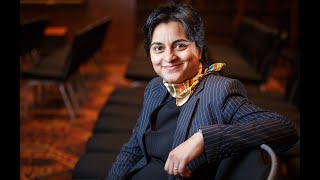
Muzlifah Haniffa explains how the Human Cell Atlas maps the developing immune system through large-scale collaboration. Batch-effect correction must preserve real biological variation, not erase it. The "One Cell at a Time" exhibition used art to help the public understand organ donation and cellular science.
Chapters
I would like to welcome Muz and you all to the live Q&A session of the seminar. Please ask your questions in the box on the screen, and we will ask the most popular questions. So if there is one you would like to see answered, please use the voting function. So thank you so much for your talk, Muz, and I will start with one of the questions, this more philosophical. So as a coordinator of the Development Mental Atlas. You are amazing, you are doing amazing on working with the experts on the field to drive such an ambitious project. And I wonder if you can tell us a bit of what you have learned from this journey and what would you tell people who are afraid of joining because, for example, potential competition.
Thanks, Rosa, and thanks for the opportunity to present today. I think it's a really interesting, good question, and I can, you know, really in many ways there's much, much more to be gained by the scientific community working together, you know, collaboratively, supportively, because you just make that, you know, you make the advances much faster. You get greater insights if you have 10 minds on a question or on some topic than if you had like 1 or 2 minds. So So I think that's fundamentally, it's about the science. And if you work together with various researchers in an open, trusting, and respectful way, you recognize and how credit is distributed appropriately, then that really creates that recipe where everyone then sees the benefit. For now and also medium term and the long term, and that's how communities are formed, and that's what makes successful collaborations. And we've been very lucky in the developmental work that we've done that we've just got amazing collaborators who are all sharing, really excited about the advances and the insights that we uncover, and therefore I think share. You will gain far more by collaborating and sharing than to sort of compete. It's not good for science to compete, and I think recognition has become more plural in terms of authorships, both at the junior, first authors and the last authors. Funders are beginning to see the value of team science, recognizing how credit is apportioned, and this is how we're going to move forwards in the future. Just look at COVID, how everyone worked together how quickly we found treatments, or vaccines for that matter, and also sharing the knowledge around the world.
Thank you, I totally agree.
I wonder if building on that, do you think we have as a scientist a responsibility to work together to deliver the science to really make the most of our funding, or do you think it's more the funders who should really be promoting this?
Another good question. I think it's a bit of both, because, you know, it takes two to tango. There can be incentives from the funders that actually encourages positively nudging this type of collaborative research, supporting the environments that enable this. And also, as researchers ourselves, we need to sort of recognise— and I guess the analogy is, if you think about these big types of projects where lots of people come together, it's like building a skyscraper, like the Shard, whereas the more kind of conventional way of doing research is a little bit like those garden sheds. And it just takes, you know, it's a different, you know, different types of research. They're both valuable, they both contribute, you know, but if you want to do things at scale, then you do need to have that infrastructure, the framework, you know, the support within the scientific community and the funders. So both have to kind of nudge this and support this.
Thank you, Miles.
Last question. So I think that was a really important topic, but perhaps switching more to the science, how important is the experimental design for the cell atlases? To what extent do you think batch effects can be corrected by computational tools?
So I think it's very important, the design is very important, and actually this comes back to the collaboration question before, because if everyone designs the experiment and have comparable ways of generating the data, that's actually really helpful in terms of integrating the data and minimising technical effects. And in terms of technical effects, or what people call batch effects, Some of that is actually biology. So while we do need computational methods that can actually minimise technical effects, what you don't want to do by homogenising and integrating the data is actually throwing the valuable biological information out the window. So basically throwing the baby out with the bathwater. So there needs to be a pragmatic approach as to what are technical effects and what are important biological effects. So particularly during development, if you look at something at, 6 post-conception weeks or 10 post-conception weeks, there are going to be differences even in the same organ, even the same cell types. But kind of like mitigating against batch effects has the tendency to kind of like eliminate those differences, those differences that are important biologically. So yeah, we do need to sort of have algorithms that can do that, but we need to be careful that those algorithms are not, you know, blinding us to biology. And communities working together to design the experiments so that it can actually allow better data integration would be Audible.
Yeah, and so does that, you know, if everybody needs to be kind of using similar tools and recognize algorithms, does that mean that the Human Cell Atlas isn't necessarily open to everybody, or how would someone who's interested in the Human Cell Atlas join?
No, I mean, I think, you know, for, for some people interested in Human Cell Atlas, I'll address the last bit first. On the website there is a, I think in my talk I had a slide that's how to join the Human Cell Atlas, and anyone can actually join and express an interest. And what you find is the availabilities on protocols.io, the protocols that have been used and how the experiments have been designed. But also, HCA has a lot of seminars, virtual seminars within the biological networks, and then also the HCA meetings where people talk about the studies and how they've undertaken the studies. So in effect, it's actually very easy to sort of like engage with the existing HCA community for those researchers who are not— who not been so familiar with it, and then, you know, find out how those researchers are kind of generating the data, analysing the data, and that can actually be of value for everyone. So it's— yeah, so go to the website, reach out to the biological networks of the areas that you're working in, attend our meetings, attend our seminars. There are a lot of, you know, Q&As, and that's one way of kind of making the communities work together.
Perfect, thank you. I'll hand over to Reiza.
Thank you. I will continue a bit on the question of batch effect and data integration, but more into what do you think about sequencing more and more cells? So to what extent is it— we should say, okay, we are fine, we are just wasting money by sequencing more cells, or Actually, you think we are learning more? So for example, if, if you now sequence more cells in the liver, do you think you will get more information that was hidden before?
It's a good question. I think there's sequencing more cells using one modality versus sequencing more cells using other modalities, which gives you different types of information. If we took the liver and the fact that we generated data from— suspension, so where we have to kind of mechanically dissociate the cells very loosely, but nevertheless, you know, it's a 20-minute, 30-minute sort of like dissociation prior to, you know, analysing the cells or profiling them by single-cell RNA sequencing. Some cells are less amenable to dissociation, for example, the hepatocytes. So, we found fewer hepatocytes than would be expected, and we certainly saw that when we compared it to the spatial analysis of the liver where there are, you know, there's an abundance of hepatocytes. However, if you sequence more cells using nuclei sequencing, for example, which does not require tissue dissociation, then you would sample many more hepatocytes. So I think it's not just a question of how many cells, but how are you going to profile those cells? And then another way of thinking about it is how much prior information do you have about the composition of the tissue? So if you think that a cell is going to be found at 1 in 1,000 or 1 in 10,000, then just sequencing lots and lots of cells is just going to increase them marginally to 1 in 1,000 or whatever, and still insufficient. But if you knew some properties about those cells, then you could design enrichment strategies that would upsample those cells and profile those with the other cells so that you now increase their proportional representation from 1 in 10,000 or 1 in 1,000 to now 1 in 10 or 1 in 100. And so you have many more of those. And that was a strategy we implemented in the adult skin analysis. So we were able to identify innate lymphoid cells, for example, in the skin, which are extremely rare, but because we knew they would be in this sort of CD45 positive, CD, you know, class II negative gates, so on and so forth, we could upsample them. So I guess the question about how many cells to sequence has to be taken into account in the context of what tissue you're organising, what platform you're using, what prior enrichment you're using. And let's not forget nowadays, spatial genomics profiling is also extremely informative and will allow us to identify those cells in their in situ location, confirming whether we need to study more, whether we're missing anything, and what next to do in terms of informing the atlas.
Thank you. And now that you mentioned modalities, I wonder if you can tell us what is the modality that you are more excited about?
I don't think there's one to choose from. I actually think they're very complementary. I don't know whether I mentioned in the talk about how I view the different modalities as a little bit like, you know, if you were to have a thermal scan, a photograph of you, an MRI scan, or an X-ray, they are all giving different facets but they're all enriching the information that one could gain about one, you know, about an individual. So, I think, you know, all of those modalities are extremely complementary, and there is actually no one modality that fits all. But, you know, if you can profile a tissue at scale, at high single-cell resolution or sub-single-cell resolution, and it's, you know, cheap, you know, in situ without any other processing and a lot in a sort of like in a big size of the tissue, that technology doesn't really exist at the moment, but that would be the technology that I would be most excited about.
Maybe something to work on.
Exactly, to aspire to.
Thank you. I will hand it over to Sariam.
Thank you. I'm gonna change gear altogether and actually ask you about the One Cell at a Time exhibition. So I went to the launch and I was really fascinated by the art and I thought it was a really incredible project. So I was kind of wondering what the response has been to that project, but also how working with the artists, maybe, you know, how— I guess, how did it affect the way you saw the work and how was it kind of seeing the work through their eyes?
Yeah, no, thanks for that question. So can I just check, the first was the response of other people to the project?
Yeah.
Yeah, okay.
Yeah, so I'll answer the first one actually. I think generally I found that people were kind of like very excited about the Human Cell Atlas. I mean, this is, you know, that they began to kind of like also understand more about what we were doing. And the public engagement program allowed also people to contribute, the public to contribute to what they thought about it. And one of the interesting things that I found was with regards to organ donation, how some organs are considered more or seen differently. So people were thinking very differently about donating eyes compared to donating internal organs because they see with their eyes. So there's this kind of special personal attachment to one organ more than the other, you know, which you wouldn't have understood. But that's very important in terms of understanding the, you know, the background of why people might or might not donate organs. So that's a kind of like important insight that you learn and the response from the public and how they engage. Overall, I thought everybody was like blown away by it. And I think the fact that we never planned for it to be virtual, but the pandemic in a way made the platform entirely online, the exhibition entirely online was great because we could reach out to a lot more people. I mean, I accept that not everyone has the internet, or, you know, which is a problem, but this made it global rather than sort of just being specific site for in-person activities. In terms of what I've learned with working with artists, et cetera, I mean, I've done that before. What I always find is exciting is how you find this shared language. I mean, initially it's almost as though you speak two different languages, and then you find a common sort of language that both of you understand, and how you then perceive your research from the perspective of the creative artists, creative art practitioners, you know, like, you know, one of the things about ways of doing things in terms of you know, how we kind of like copied each other's movements and, you know, the analogy of that with how we kind of like put cells with similar properties together in a kind of like a visualization of a cluster. You know, those sort of things were really quite exciting to see how it's different. Do you see what I mean? Yeah. Yeah, I think there was one, one statement that came from a patient that was relating to that that I thought was really, um, struck me, and it was about finding a matching donor. And, and this patient was waiting on the— for an organ transplant, said, you know, I looked at all the things in my house and the only things that I thought I had matching were a pair of wine glasses. And it's that kind of parallels, but also the different sort of differences that really struck me.
Yeah, I mean, I was quite struck by the artists' kind of interpretations because it's very varied, but it was quite fascinating to watch it. So I will hand back to Rosa.
Thank you. No, it was a nice discussion. I want to go back to science because I have one of the questions that is also close to my heart. That is about how do you think the environment is shaping the human stem cells, and do you think you can interfere with these intrinsic factors, maybe artificially, and modify the cell fate?
I know that's a— to me, that's one of the amazing things that we're discovering because of the that there's kind of like the intrinsic properties, but also the environment. I mean, it's sort of like a nature-nurture type thing. And if we can really understand the sequences of how, you know, a stem cell becomes the differentiated cell and this can be faithfully recapitulated as how it would happen in vivo, think of all the possibilities. In terms of therapeutics, tissue engineering, stem cell regeneration. I mean, that, that's amazing. And the atlas-ing approach, because we've actually taken the framework of where we study everything, allows us to do exactly that, like those, the cells in their environment. And in the bone marrow, fetal bone marrow analysis is when we actually— that was the first generation of the human bone marrow stroma data at single-cell resolution, showing us all of the different different cell types that actually shape the environment in which blood and immune cells develop in the bone marrow. So this is going to be valuable insight that can be leveraged and facilitate new treatments. I don't know if I've actually answered your question.
Yeah, yeah. And no, that's— thank you so much. I was also wondering, like, I mean, there are some stem cells that depending on where you find, like in the juxta, you produce B cells, but do you think, or in the bone marrow you will produce more B cells as you were showing, do you think that's something that is because of the environment, it's all just intrinsic? And so would that mean that if we put these stem cells in another place, they will start reverting? So they have an intrinsic program that you can revert that? Or yeah, what is your— I guess there is a lot of science to be done. And as you say, it's nurture versus nurture versus nurture. But yeah, to what extent do you think we can revert by taking these cells and bringing it to another environment?
So, I mean, I think actually that's going to be very important to dissect because that's something that we've underexploited. And if you look at our studies where we've taken for the same gestational age stem cells from two organs, they have very different properties. So it's not, it's not an age factor. They would have both been derived from the same erythrogonad, mesonephros, hematopoietic stem cells. So something in the environment of the liver, for example, and something in the environment of the bone marrow that permits one, you know, direction of differentiation versus another. So really understanding what cues they're getting from the environment, and supplementing that with what stem cells can do is, is going to allow us to really, you know, fine-tune and engineer the, the development of B cells or whatever else, you know, cells that produce antibodies for when we need it, T cells that can kind of like kill cancer cells or whatever that for when we need it. All of those things are going to be amazing, but it isn't just the environment. There are also going to be additional environmental triggers that one could use. So for example, a good example being, you know, with the skin, if you could get, for example, a therapeutic cell that enters the skin but its program is then activated if you shine UV light, which is used for skin treatment, then you have very, very selective with, you know, limited. So it's a bit like optogenetics, but you activate it with UV irradiation, like, you know, UVA or UVB, which we often can use. So those are the kind of things that we should also think about in terms of how we modulate function. So it isn't just tissue environment, but also the external environment.
I mean, that's fascinating. Thank you. I was wondering if you can— it's fascinating, but at the same time, sometimes it's scary, all the things we can do. And do you think we should I mean, again, as researchers, we have this obligation of being aware of all the ethics and how we communicate, how important this is.
No, I mean, all of those. I mean, we have to kind of like be mindful of all of those. And that's why the Human Cell Atlas has like an expert ethics working group, also engages with a broad range of stakeholders that are, you know, relevant. And also, you know, the public engagement, the communication, not just the public engagement, but, you know, in other forms of media relations. So all of that is part of the Human Cell Atlas. But I think let's stop for one minute and think about what is scary. I mean, you know, if we were going back 100 years ago and told people that in the future we will be having this discussion on a computer screen or a phone screen and be completely in different geographical locations and talking about this, I mean, that would have been a reasonably scary idea as well. Years ago. So I guess what's scary now may not be scary in 100 years' time. So, you know, which is good to kind of like embrace the changes and the advances with what's coming in the future, but be cautious so that, you know, we make sure that they're done in the kind of like best possible standards and also widely communicated and informed by the public, which are the primary stakeholders of any scientific endeavor.
Thank you so much. I mean, that was fascinating. So we would like to thank Mads once again for her presentation and joining us for the Q&A session, and also to the audience who joined this virtual session. So this is the last seminar for 2021, and we'll hopefully be back in the new year with a new series. But if you can't wait until Until then, a reminder that these seminars are archived on this webpage for future viewing. And yeah, we have been delighted that this series has allowed us to share Sanger Science with a diverse scientific audience around the world. So thank you for joining, and we look forward to seeing you next year.
More from Joshua







Scientist Stories: Hans Waterham, The value of phenotypic assays in peroxisomal disorders




Scientist Stories: Joel Zlotogora, Genetic carrier screening programs for reproductive purposes