Scientist Stories: Neeha Zaidi, New Approaches to Cancer Vaccines
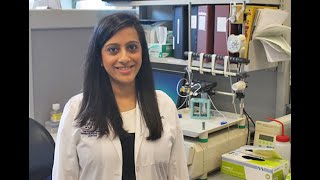
Dr. Neeha Zaidi describes personalized neoantigen vaccines designed to make pancreatic cancer responsive to immunotherapy. In mouse studies, combining synthetic peptides with a STING agonist, OX40 agonist, and anti-PD-1 cleared tumors and generated memory responses. Three clinical trials now test this approach in metastatic pancreatic cancer.
Chapters
And our next presentation will be from Nihal Zaide. I hope I didn't get that name too mangled. And she's currently a medical oncology fellow at the Sidney Kimmel Comprehensive Cancer Center at Johns Hopkins University where she focuses on preclinical and clinical studies on personalized cancer vaccines.. And she's also conducting clinical trials to apply new combinatorial therapies for patients with pancreatic cancer and subsets of colon cancer who haven't been responsive to currently available immunotherapies. So some really important work. She is a product of Cornell University. She majored in biology as an undergraduate. Then she studied medicine at Mount Sinai School of Medicine, but did her medical residency training at Weill Cornell Medical Center, and I guess at one point in that mix you also spent time at Rockefeller University working with Dr. Ralph Steinman. She has already, at her tender age, received many honors and awards, including most recently the ASCO Young Investigator Award. Award, and she's going to talk with us about new approaches to cancer vaccines.
Thank you. Thank you, Dr. Hamburg, and thank you to the organizers for this honor today. Today I'll be talking about next-generation personalized cancer vaccines, and this is work that I'm doing with Dr. Elizabeth Jaffe, who I'm working very closely with in the preclinical and clinical studies.
Sorry.
Am I blocking anyone if I stay here?
So, as you all already know, the last several years have really seen a very accelerated progress in cancer immunotherapy. This started with the FDA approval of a drug called ipilimumab, an antibody against CTLA-4 in 2011 for metastatic melanoma. Metastatic melanoma was previously an incurable disease. And now just a few years later, we have multiple drugs, multiple checkpoint inhibitors, or immunotherapy drugs for a number of different cancers, including lung cancer, bladder cancer, kidney cancer, just to name a few. So this is just to remind you, and you all know this, but T cells are tightly regulated by checkpoint inhibitors such as PD-1 and CTLA-4. And what these molecules normally serve to do is to inhibit T cell function and dampen, dampen any anti-tumor immunity. However, when antagonist antibodies block the function of these molecules, these T cells are unleashed, and it takes the brakes off the immune system, and we're able to elicit antitumor immunity in at least some types of cancers. And this is a growing list of T cell modulatory receptors and ligands. Antagonist antibodies against PD-1 and CTLA-4 have already been approved for a number of different cancer types. And now we're really starting to look at these other checkpoints on T cells and their antigen-presenting cells. And there are a number of clinical trials that are now underway using both agonist antibodies and antagonist antibodies for both stimulatory and inhibitory receptors. And now we're really starting to understand with whole exome sequencing and all the genomic why some patients are responding to these therapies called checkpoint inhibitors and why some patients aren't. And what we're learning is that, as you all know, tumors arise during tumorigenesis and create non-synonymous mutations. And what we're learning, and our group is looking at, is that a tumor mutational burden correlates very nicely to checkpoint inhibitors. So, if a tumor has a high tumor mutational burden and a high number of non-synonymous mutations, it's more likely to respond to checkpoint inhibitor therapy.
And this is just to show you, this is work done from our group which plots objective response rate to checkpoint inhibitor therapy and the median number of coding somatic mutations. What you see up top is melanoma.
Melanoma has a high tumor mutational burden. It's induced by mut—
mutagens and UV. Whereas pancreas cancer really has a low number of somatic mutations per base pair. And this is really the disease that interests us because it has a really minimal response to checkpoint inhibitors, whereas melanoma, you can see, has a very high objective response to checkpoint inhibitor therapy.
And what I'm really going to focus my talk on is this new era of precision cancer immunotherapy. The last several years of cancer treatment have really changed their paradigm. We're now not only treating patients on their tumor types, which is lung cancer, bladder cancer, and their histologic subtype, but we're really able to identify the genetic alterations in a patient's cancer type and then direct targeted therapies to those genetic alterations no matter what histologic subtype the patient has.
And now we're taking this even a step further.
We're able to take a patient's tumor and understand which genetic alterations they have, and we're able to individualize treatment to an individual patient. And one way that we're interested in doing this is by targeting neoantigens for personalized cancer vaccines. Neoantigens are mutations in the tumor genome that arise from mutations in the tumor genome that cause tumors to express mutant proteins that are tumor-specific and not expressed on normal cells.
We think they're—
we think they're very attractive targets for immunotherapy because they're also less likely to be subject to central immune tolerance, and we're finding that they're more more likely to attract T cells within the tumor.
And this is just to show you that, compared to shared antigens—shared antigens are expressed by both normal and tumor tissue—neoantigens of a higher T cell receptor affinity are more likely to expand T cells and result in a higher number of tumor-infiltrating lymphocytes, or T cells, within the tumor. And so, as you can imagine, an increased mutational burden yields a higher number of neoantigens, attracts a greater number of T cells within the tumor, and leads to a better response to immunotherapy. And so now, before I go on any further, I just want to stop here and tell you how are we practically applying this personalized vaccine therapy to our patients, and how are we able to deliver them?
Well, there's still a lot of work to be done, but this is sort of the basic pipeline. First is to obviously biopsy the tumor.
Tumor and obtain normal peripheral blood mononuclear cells, and then we're able to sequence the tumor, identify mutations in the DNA and RNA with whole exome sequencing and RNA-Seq, and then there are a number of in silico prediction models, and this is one of the areas that I think this pipeline needs a little bit more work on, and these prediction models essentially predict which epitopes may be immunogenic, and the one that's most commonly being used is NetMHC, and NetMHC predicts the binding affinity of an epitope to the MHC I— Class I molecule. And then finally, we're able to produce these neoantigen-targeted vaccines. The way we're doing it is we're using 20 to 25 amino acid synthetic long peptides with the mutant residue in the center.
However, as I'll show you, other groups are also using a variety of different platforms, including messenger RNA, DNA, dendritic cell-based vaccines.
Vaccines and a number of other ones. So the areas of investigation that we really need to focus on is predicting which epitopes are most immunogenic, which are most likely to elicit an immune response in the patients, and also how do we best deliver these vaccines?
Which platform do we use?
Which adjuvants do we use? And this is—
there have been a couple of studies that have been published mostly in melanoma, which again has a high mutational burden, is more immunogenic, and this was a a study published in Nature in 2017, and they used a peptide, a personalized peptide vaccine for patients who had high-risk melanoma. So, essentially, these patients had their tumors resected and they debulked, and then after resection, they got vaccine to prevent any relapse.
And this is the pipeline they used, and it's very similar to what I just showed you, but essentially, they used pools of synthetic long peptides, up to 20 neoantigens, mixed it with polyIC-LC, and then delivered it into 4 sites into patients to decrease antigenic competition. And this is the vaccine administration schedule they used. They used 5' immunizations up front, and then every 8 weeks they used a booster vaccination. And what they saw was that they were getting de novo mutation-specific responses. -specific CD4 T cells against a number of minimal epitopes, and you can see that here. And there was another back-to-back study that used an mRNA platform, again, delivering these personalized vaccines to patients who had resected melanoma.
And really, both studies showed that we are able to induce de novo neoepitope-specific T cells in the peripheral blood of patients. Again, these had resected tumors, so we weren't able to look in the tumor.
But best—
the best platform for delivery delivery is still yet to be determined. And what I've showed you is two clinical studies using melanoma.
Melanoma is considered an immunologically hot tumor, for a lack of better words.
It has a lot of T cells infiltrating the tumor already, and because they're T cells that exist, essentially they just need to be unleashed, and so they're more responsive to checkpoint inhibitor therapy.
But what we're really interested in is these cold tumors, including pancreas cancer. Pancreas cancer has a low number of neoantigens per tumor, at baseline it does not have a lot of T effector cells within the tumor, it's not responsive to checkpoint inhibitor therapy, and additionally has a number of other immunosuppressive signals within the tumor.
Oh, I'm sorry, I'm not sure what happened.
We have technical assistance. Oh, okay.
So the key challenge is how do we heat up these immunologically cold tumors?
How do we get them to respond to the currently available checkpoint inhibitors?
And this is really some of the work that we're focusing on. And this is just to show you the histologic nature of pancreas cancer.
Pancreas cancer, again, has very few T cells. It also has a lot of other immunosuppressive suppressive cells that we have to effectively modulate, such as T regulatory cells, MDSCs, and it has a very dense stromal compartment. This is in contrast to melanoma. Melanoma, as you can see, has an abundance of T cells within the tumor, and about 50% of melanomas actually have a spontaneous infiltration of effector T cells.
So the question is, can T cells be induced into pancreas tumor? And as I just showed you, pancreas cancer is really a model of natural resistance, and it has multiple barriers, some of which I've listed here. And so Dr. Jaffe's group had shown that a whole-cell tumor vaccine called GVAX can induce lymphoid aggregates into invasive pancreas tumors. And GVAX is a GM-CSF-secreting allogeneic pancreatic cancer vaccine.
In this clinical study, patients received vaccine both pre- and post-surgical resection of their pancreas tumor, so they got the vaccine before resection and after resection. And what was very interesting— what was found was that lymphoid aggregates were found just one week after a single vaccination.
And this is an intratumoral slice and a paratumoral slice, and I've pointed out where the lymphoid aggregates are.
But what was even more interesting was that although we were getting these lymphoid aggregates into the tumor, we really weren't getting robust clinical responses. And what was found was that even though these CD8 T cells were initially getting activated within the lymphoid aggregates, they were also producing interferon gamma and upregulating other T cell inhibitory signals, such as the PD-1/PD-L1 axis.
And this was a mechanism of adaptive resistance. So here you can see activated T cells leads to interferon gamma production, which then leads induced an upregulation of the PD-1 and PD-L1 axis.
So, this really laid the first proof of principle that although these vaccines can induce and activate T cells into pancreatic cancers, which are typically cold tumors, they also upregulate a number of immunosuppressive signals within the tumor microenvironment.
And so, the next step was to combine GVAX with an anti-CTLA-4 antibody, which is a checkpoint inhibitor, ipilimumab, and we found that the combination combination of GVAX plus ipilimumab actually improved survival, although modestly, in advanced pancreatic cancer patients. And these patients had received already two—
greater than two lines of chemotherapy, and they had failed these two lines. So these were patients who were quite resistant at baseline. So these studies showed us that we could induce T cells into pancreatic cancer and potentially elicit an anti-tumor response, but these T cells really needed optimization. And so we hypothesized that we'll need a two-step process for these immunologically cold tumors. The first will be to induce T cells to convert these tumors into T-cell-rich tumors, but then we'll need to come in with the appropriate agonist and antagonist checkpoint antibodies to optimize T cell function in the tumor. And I'll show you some of the preclinical data that we have that really supports that a successful strategy may be to administer these personalized vaccines plus other checkpoint modulators or tumor microenvironment modulators.
And this is just to show you the two-step process.
First is to induce the T cells. We believe that vaccines will effectively be able to do this, but in order to keep the T cells on and of high quality, we'll need checkpoint agonists and antagonists, and we may need to modulate other signals in the tumor microenvironment that are inhibiting T-cell function.
And now I'm going to go on to some of the preclinical data that I've been working on, and this is using a pancreatic cancer mouse model.
Obviously, mouse models are not perfect, but we do have some compelling data here.
Here we developed a personalized vaccine using this mouse model, and we did whole exome RNA-seq. We used NetMHC to predict which epitopes were the most immunogenic, and then we used an ELISpot assay to determine the interferon gamma-producing CD8 T cells. And so we finally selected these 12 neoantigens for vaccine, and we synthesized synthetic long peptides that were 20 amino acid long with the mutant residue in the center.
So these are the long peptides that we chose for our vaccine. And so a vaccine obviously in this setting needs a powerful adjuvant to stimulate innate immunity and facilitate T-cell activation.
So we mixed these peptides with a number of other adjuvants, and what we found was that a sting adjuvant called R243 actually produced quite robust interferon gamma CD8 T-cells, and that these T-cells were also polyfunctional in that they produced both TNF-alpha, granzyme B, and interferon gamma.
And so the next step was to administer this vaccine, so these are the 12 long peptides plus adjuvant, into mice to see if there was any tumor regression.
And so what you're seeing here in orange is the mice that got the STING adjuvant plus the 12 long peptides, and you can see that at about day 20, there was actually a transient tumor regression with the vaccine only; however, at later time points, this regression was really lost. And so we hypothesized, and we found, that this was because initially, the T cells were being activated, but then later, there was an upregulation of inhibitory checkpoints, and the T cells were exhausted, so they upregulated LAG-3, TIM-3, and PD-1. So, although we were getting the T cells potentially into the tumor, we found that they weren't functioning quite as well.
So the next thing we did was to combine the vaccine with an agonist OX40 antibody, and OX40 is a stimulatory molecule in T cells, and also an anti-PD-1 antibody, which is being used quite extensively in the field.
And so you can see— oh, sorry— that the mice that received all three modalities, including the vaccine plus the OX40 antibody, Ox40 plus PD-1, almost all these mice cleared their tumors, whereas those mice that received the vaccine plus Ox40 alone, some of them cleared— most of them cleared the tumor, but not all. And then PD— vaccine plus PD-1 and vaccine alone didn't seem to work quite as well in clearing tumors. And interestingly, what we found was that when we combined the vaccine with this Ox40 antibody and we looked at the tumor-infiltrating lymphocytes, we found that these T cells had a reduction in PD—
CD8 T cells had a reduction in the co-expression of PD-1 and LAG-3.
And you can see this here, that those mice that received both had a reduction in these markers, which suggests perhaps that these T cells were less exhausted, and we have more follow-up studies to verify this. And interestingly, and most importantly, when we challenged these mice on the contralateral hind, with tumor, those mice that received all three agents—vaccine plus OX40 plus PD-1 in blue—actually rejected the tumor on the contralateral side.
And this suggested the induction of T-cell memory. So the role of OX40 plus vaccine, we think, is to both enhance T-cell memory and potentially reverse T-cell exhaustion so that these T-cells are of higher quality.
And finally, we showed that we were getting vaccine neoepitope-specific T cells that were infiltrating the tumor of these mice, and that these mice displayed robust interferon gamma production. And you can see here on our ELISpot assay that when we took out the CD8 T cells and isolated them, there was quite a good response with multiple peptides, though not all. And this was our control mice.
So based on these, we have a few clinical trials that are up and coming.
The first one is based on some of the preclinical data that we have, in which we'll be combining a STING-targeted-based neoantigen vaccine with nivolumab, an anti-PD-1 antibody, and an agonist DOX40 antibody.
And this will be for patients with metastatic pancreas cancer. And these patients will undergo core biopsy.
We'll then apply our pipeline to predict the epitopes that may be most immunogenic. And we'll restage after about 6 cycles of chemotherapy and then come in with the vaccine and checkpoint modulators.
And the design of these is, you know, is limited by, you know, how fast can we synthesize them, how many peptides we're going to get. So it is a little bit complicated, especially for pancreas cancer, who's— unfortunately whose lifespan is not as high.
So this was— we're going to come in pretty early.
For patients with newly diagnosed stage IV pancreas cancer instead of waiting after several lines of chemotherapy.
And so this is an ongoing trial that we actually have already open, and this is being done as part of Stand Up to Cancer with Bob Schreiber's group at Wash—
at Wash U.
And these are patients who have undergone resection of their primary pancreas tumor and then have gotten adjuvant chemotherapy. Standard of care for about 6 months. And after that, if they're disease-free, if they have no evidence of disease, they'll go on and get the DNA vaccine. And we're going to really look at an immunologic endpoint and look at T-cell responses. And finally, we're interested in—
since this personalized vaccine concept is very intriguing in cancer immunotherapy, but we're also looking at off-the-shelf vaccines. So can we target certain neoantigens that patients share across across tumor types, and one interesting neoantigen is KRAS, and there was a previous study that showed adoptive transfer of neoepitope-specific T cells could induce regression in colon cancer, and KRAS is a recurrent hotspot mutation in pancreas cancer.
It's also a driver mutation that's less likely to be immunologically edited, and KRAS G12D is very frequent, at least in GI cancer, so we already have this clinical trial going.
We have the long peptide synthesized.
These are the 6 mutations that we're going to be using in the vaccine with polyICLC as the adjuvant. And again, this— the schema of this will be patients who have undergone resection of their pancreas cancer, have gotten their standard of care chemotherapy, and if they're disease-free, then they'll get vaccine and anti-PD-1 therapy. And this is the timeline that we'll be using. Again, prime vaccines followed by boost vaccines. Vaccines and the endpoints.
And just to sum up, I think the future of neoepitope-targeted vaccines is very promising, but we have a lot of work to do. We need better technologies to identify which immunogenic epitopes attract T cells and induce the best quality of T cells. We also need to optimize vaccine immunization strategies and identify the the best platforms for delivering these neoantigens. And we need to keep working on the science, including identifying signals on T cells for optimal activations, signals in the tumor microenvironment, even on an individual basis, and also study the requirement of the correct HLA expression by tumors.
And so this is what we believe the next-gen clinical trial designs will— oh, sorry. We're done. So this is just to show you that we think that, you know, we'll really have to personalize based on the patient's evolving tumor microenvironment, so we may need additional biopsies at later time points.
So to summarize, and I'm going to just make this very quick, you know, I've told you that high tumor mutational burden tumors such as melanoma are very responsive to checkpoint inhibitors, but what we're really trying to do is convert pancreatic tumors into ones that can respond to checkpoint inhibitors. And we think that vaccines may have a very big and effective role in this to initially get T cells within the tumor, and then we'll have to come in with other checkpoint modulator therapies. So we currently have 3 sets of clinical trials that are attempting to do this in patients. And these are my acknowledgments.
Thank you.
Well, thank you very much. Such an interesting and important set of studies. I hate to have had to cut you a little bit short, but our session does stand between everyone and lunch, and we have more speakers than in the first session. If there's a burning question, otherwise, you know, people can track you down, but thank you for that important work and a terrific presentation. Presentation.
More from Joshua







Scientist Stories: Hans Waterham, The value of phenotypic assays in peroxisomal disorders




Scientist Stories: Joel Zlotogora, Genetic carrier screening programs for reproductive purposes