Scientist Stories: Pardis Sabeti, Inventor merging genomics with computational & evolutional biology
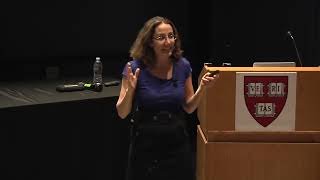
In this public lecture, Professor Pardis Sabeti (Harvard, Dept. of Organismal and Evolutionary Biology) presents her research program that blends genomics, computational methods, and evolutionary theory to uncover recent human adaptations and to study pathogen evolution. She begins with a brief history of evolutionary thought, highlighting early examples of human genetic adaptation such as sickle‑cell resistance to malaria, lactose tolerance, and skin‑pigmentation changes. She then introduces the concept of “fossil‑free archaeology,” explaining how modern DNA from contemporary individuals encodes a record of past mutations and selective events. Sabeti describes the statistical signatures of recent positive selection—long haplotypes, reduced recombination around a beneficial allele, and composite‑likelihood frameworks that combine multiple tests to pinpoint the causal variant. Using this pipeline, her lab identified several compelling cases: the EDARV370A allele that thickens hair, increases eccrine sweat gland density, and alters mammary gland development (validated in a CRISPR mouse); a Toll‑like receptor 5 (TLR5) variant that modulates innate immune response to flagellated bacteria; and population‑specific signals in West African cohorts linked to Lassa virus resistance. She also discusses broader pathogen surveillance work, including sequencing ancient Lassa virus genomes, mapping their geographic spread, and arguing that many “emerging” viruses are actually ancient but only now detectable due to improved diagnostics. Throughout, she emphasizes the interdisciplinary nature of the work—large‑scale population genomics, statistical method development, functional assays in cell lines and animal models, and field collaborations in Nigeria, Sierra Leone, and Bangladesh. The talk concludes with reflections on the balance between genuine emerging diseases and the emergence of technologies that finally allow us to see them.
Chapters
Good evening. It's so nice to see you. It's really nice to see you. How many people from outside Harvard?
Yes.
Excellent. Welcome. I hope you feel comfortable. This is going to be a really great talk tonight. Not just a great talk, it's actually really exciting research. The speaker tonight is Professor Pardis Sabeti. And she's in the Department of Organism— OEB, Organism Evolutionary Biology. And she comes from Florida, Orlando, Florida, so she knows a lot about—
Adaptation.
Adaptation. She went to MIT and became a Rhodes Scholar, got a PhD in England. Got an MD here. She's basically indestructible, brilliant, and a wonderful colleague, and very, very exciting research, which she's going to tell us about tonight, and which I've heard about. And it's the kind of research— last time, I don't know how many people were here for the last lecture, but it kind of was mind-blowing research. I think this is— the same kind of thing. It's the kind of thing where you actually feel like, oh, I'm actually seeing a little bit of the future. So here we have Pardis Sabeti.
Well, thank you very much, Melissa, for a very nice introduction, and thank you all for braving the winter drop in temperature. I saw the New York Times sort of saying prepare yourself, so I was worried people wouldn't come out, but I appreciate you coming out tonight. And I really appreciate the opportunity to speak in this public science lecture series. So thanks for coming out, and it's great to see members of the community. I'm gonna pull out— so I teach in a 450-person intro bio course, and I like to make my lectures actually have a little bit of a response call. So I'm gonna— if you respond to any of my questions at any point, I'm gonna chuck an orange. Anybody who does not want an orange, chuck it away. They are soft. They don't really hurt people. They're projectile. They're nutritious. So those may be coming. And I'll be talking today about evolutionary forces in humans and pathogens. So I'd like to start this— and here comes the first orange. It's okay. So I'd sort of like to start my talk about evolutionary forces in humans and pathogens by kind of putting it into a little bit of historical context. And so can anyone here tell me who those two folks there are? Yep, okay, here we go. All right, there you go, first smooth catch. All right, so this is— yeah, so this is Charles Darwin and Alfred Russell Wallace. And for a very long time, well before them even, people had begun to think about evolution as they started domesticating pigeons and animals and plants. They started realizing that things were changing and evolving over time. But when Darwin and Wallace in 1858 published their papers together on the concept of natural selection, it created a mechanism by which evolution could occur.. And it really started to bring evolution much more into the mainstream, began to develop a big conversation around it. And in 1871, when Darwin published the Descent of Man, it became a different kind of a conversation in the sense it wasn't just organisms, plants and animals around us changing, but that we may be part of that change. But it wasn't actually until about 70 years after that that we had a first example of elucidated evolution. And that example was driven by somebody named J.B.S. Haldane. Haldane is one of the founders of population genetics. And he, like many people of his time, were brilliant in making observations, right? So they didn't have lots of data they could be analyzing, they were just observing the world. And one of the things he observed was the fact that there were many blood— red blood cell disorders like sickle cell anemia and ovalocytosis and thalassemias, and they all seemed to be occurring in in parts of the world that were tropical, and in particular, in parts of the world where there was a lot of malaria. And so he made the observation knowing that malaria affects sort of the red blood cells, is it possible that this is an adaptation to malaria? And just a few years later, A.C. Allison actually showed that yes, the geographical distribution of sickle cell anemia tracks very closely with where malaria is endemic, and he showed individuals that carry the sickle cell trait were protected from malaria. And they also showed that when you look at the prevalence of these sort of mutations, the things that's driving sickle cell, it seemed to track very closely. So this is the first really elucidated example of evolution happening in the human population. And since that time, basically soon after that, there's a number of papers that showed that many different mutations affecting the red blood cells were in fact correlated with malaria, and those were sickle cell anemia, the thalassemias, G6PD, and oval cytosis. And one of the things that you know is that not only— again, I was mentioning is not only is there this biological hypothesis as to how this might be acting, but you also see this effect in the prevalence of these mutations. At this point when they were discovering this, there wasn't that much known about the genome, but you can now see a footprint in the genome that is left behind when evolution is occurring. And we've seen those footprints in many different places now in the genomic era, but we still have a few different examples that have been elucidated. The classic ones that we know about are pigmentation. So after— so many of the human population is believed to have originated in Africa and then moved out to different parts of the world. And as they moved to places with lower sunlight, a lot of changes happened to the pigmentation. Both in Europe and in Asia and elsewhere, is that they were lightening their skin to deal with lower sunlight. There was also lactose tolerance, the ability to drink milk. So mammals drink milk, that's one of the characteristics of being a mammal, and all mammals drink milk from their mother, but after a certain point they wean, and then there's no reason to be able to digest milk anymore because you're not getting it from your mother. But once we domesticated cattle, then there became a reason why you might keep drinking milk, right? So your mother no longer has to give it to you until the age of 25, she's happy, but you're now going to get it from the cattle. And now those individuals who can use that resource have an advantage. And that's another place in the genome where not only do we have a biological reason why something might be occurring, but we see a very distinct pattern. So let's talk a little bit about that. Well, the patterns that I'm talking about are by looking at data like this. So this is sort of a stretch of the genome where you have the vast— the DNA that make up the genome, A, C, Gs, and Ts. And within that, when evolution happens, when a new mutation emerges and spreads through the population, it'll leave behind a footprint. And that footprint is actually quite large, and we'll talk about why it's so large. So it's actually easy to see these footprints that occur when evolution happens. But then it actually becomes another challenge to figure out, well, what was driving that footprint? Somewhere in the middle there, there is a variant that changed that was somehow beneficial that changed the whole architecture of that region. And we're trying to shine a light and figure out what that is. And that's sort of the challenge that my lab focuses on getting to, is to find those footprints and then to really set a magnifying glass to figure out what's the driver and what is it doing. And the interesting thing is that when I talk about the work I do, I talk about the fact that I'm trying to trace things that happened thousands and thousands of years ago. And most people ask, you know, am I looking at fossils? How am I doing this work? And they assume that I have to go back into time to figure out what's going on. But in fact, with DNA, we have a new kind of era that has been termed fossil-free archaeology. And it's really exciting. Essentially, if you take 100 people from a population today, You can look at their DNA, and in that DNA is an archaeological record. It tells you which mutations emerged, when they emerged, and what was driving them. And that's what we do. We collect DNA from sets of individuals, we mine those, and we look for different patterns. And the main things that in— and we'll talk about exactly those kinds of patterns in the mainframe of my talk, but that's the context in which we're working. And so I just wanted to let you know that the kinds of projects that we work on are one, studying human populations. Those are some children in Nigeria that I study and work with very closely, beautiful children. And we study human evolution, not just of African populations, but Europe, Asia, and all over the world. My lab also is very interested in infectious disease. I'm an MD, but I don't practice, but I have a passion for using science to affect medical care, so we work on pathogens as well. And we also develop tools, methods and tools, is very the core of our lab here, where we really build from the algorithms that we developed to mine these types of patterns. And so here's the type of signal that we're looking for. So here's a cartoon of before selection occurs. This is just a cartoon of 6 individuals in a population in one starting generation. And at a certain point in time, a mutation will occur, and that mutation If it's under natural selection, if it's under beneficial selection, what that means is that it enhances the survival or the reproductive success of the person who carries it. By carrying that mutation, they're somehow advantaged to survive and reproduce. So they are just a little bit more likely to survive, reproduce, and therefore pass on that mutation to their children. And their children are more likely to survive, reproduce, and pass on that mutation to their children's children. So in a short period of time, and obviously not this short, this is just a cartoon,, but in a relatively short period of time, this mutation can spread in the population. And what that looks like on a chromosome level looks something like this. So here's essentially a cartoon. Let me see if this— yep. So here's a chromosome across here, and I'm showing just mutations across it, and underneath it there might be these places where selection's occurred. And looking closer up, here's this before population where you have a mutation, it just emerged, and the cartoon is showing you 5 positions, 1, 2, 3, 4, 5. 1, 2, 3, 4, 5, where I'm indicating the original state was, let's say, this green sort of positioning that I'm calling, and at some point each of these positions in the genome had a mutation generating a purple allele, and in the case of the selected variant, I'm just indicating it as red. Right? And so you're having these different mutations occur. Now, who for an orange, or a clementine, can tell me, or guess even, I give clementines for wrong or right answers. Because it's much more about engagement. So can you tell me actually what are the things that are driving diversity in the genome? What are the two classic things maybe? I don't want to do the tell me what I'm thinking. What are two classic things that drive diversity in the genome? What's that? Sex is the driver behind it. Here we go, ready? Nice, OK. And then what is the— what's happening? Yep? Mutation. Yeah, that's one. Do you know the other one? I'm gonna actually— in my audience of undergrads, I've helped them down there. For guests coming from outside, I don't want to pelt them too far. There you go. Nice. Okay, so mutation is one. What's another one? Selection is— yeah, this is true. Selection's affecting what's going on. What's another, just a biological thing that happens generation after generation? So it's related to sex. It's what happens when different chromosomes come together. Recombination. Yeah, where was that? All right. Yeah, okay, check it. Watch yourself. Here we go. All right, nice. Okay. So yeah, recombination. So you have mutation and recombination that are driving it. So I'll tell you a little bit about mutation. So mutation is generating those new purple variants, right? So it's taking the green variants and generating new purple variants in the population. Recombination is a process by which what's going on in that chromosome gets reshuffled. Right? So every time when two individuals come and you have sexual reproduction, you have these opportunities for mixing to go on. And so that's what's happening here. And so for most of the genome, it looks a lot like a mosaic, is there is all this mixing going on, and so you have different variants on different backgrounds. But when selection occurs, this variant— recombination is still occurring, mutation is still occurring, but the mutation is rising up in prevalence so quickly, there's not a lot of time for that reshuffling to happen. Right? So what will happen is you'll have a chunk of the genome where very suddenly maybe a whole part of the genome has all been lifted up. That's why the signal is detectable and also why it's really hard to figure out within that what's going on. Right? So there are different signals. I'm just going to mention them to you so you kind of know. My mom always loves to say haplotype. I always want to make sure I start giving you the language that you might hear, but this is just all kind of the jargon and the techniques we use. I want you to understand the principle. And in essence, it is that you can do different tests looking at genetic data to look for signals of selection. One of them is actually— you can look— let's say, look at this red variant and then look at it in relation to the green variant that was there originally, that was the common one. If you look at the green variant, if you look to the left and to the right of it, you'll see that it branches. So sometimes that green variant is next to a green variant, sometimes to a purple variant. And even if you go, let's say, green to purple, sometimes it's with a purple variant, sometimes it's a green variant. These are all these sort of ancient recombination mutation events that are basically decaying the background on which your mutation occurs on. Right? And that's sort of a broken haplotype is what we call it. The long haplotype is just a region in which everything is correlated for a very long distance. And essentially the prevalence— so what we're looking for are things that are very prevalent in the population. And got to a high prevalence very quickly. So what you're looking for are things that are kind of thick bands showing that there's a lot of individuals that carry it, but if you look to the left and to the right, they're very conserved suggesting they're pretty young. Does that make sense? That's the kind of analysis that we're looking at. Another thing that's sort of more intuitive that we're looking at is just differences in populations. So who can tell me how long ago did human populations— and this is sort of a range because there's a range of values— How long did human populations separate from each other? 50,000 years ago, ready? Whoop, there we go. A bit close, OK. Sorry, I haven't actually started teaching the class yet, so my throwing arm is a little unpracticed. We'll get it. But about 50,000 years ago, and that's right. There's a wide range, so this is a very studied audience, but yeah. Human populations separated about 50,000 years ago. And if anybody watched Cosmos by Neil deGrasse Tyson, that's a very short time in the geological year of the universe. And so very, very recently human populations separated. So we're actually very much alike. Most of our genomes are identical. And not only do we have the same mutations, but we have them often in the same frequencies, same prevalences. So when you suddenly see a region in which, in this case, there's a mutation that's absent outside of Africa and then suddenly within Africa gets to about 100%, that often is telling you something is driving it. Not always, but often. And this happens to be a case of something that protects from Plasmodium vivax malaria. And the mutation essentially is a knockout of a receptor, and it's gotten to 100% in parts of sub-Saharan Africa. And finally, I just want to mention one other test. Before I sort of talk about that test, I'm going to ask another question, which is when did humans and chimps likely split? Split from each other? Yeah, okay, this is a good audience, I like it. So, here we go. There we go. Is it rogue? Did a lot get lost? I will bring one up there. So that does happen, I'll go back and clear it after. This is why— okay, here we go. So about 6 or 7 million years ago, that's a long time ago, most polymorphisms, most Polymorphisms are these mutations. It's when you have the two copies in the genome. Most of them will die out over a certain period of time. So a lot of the polymorphisms that we see today are ones that emerged after the split between chimps and humans. And so one of the things we can do is we can actually estimate which are— what was the ancestral variant, what was the variant that was there before mutation occurred, and what was the one that emerged afterwards. We call that the derived variant. And in general, in the absence of selection, it takes a very long time for these new variants, these derived variants, to rise to high prevalence. And so one of the things we can do is we can look at our relatives. I always call them distant cousins. They're not our ancestors. Our ancestor was back here. But our distant cousins can tell us what likely emerged after the split. And so here essentially we can use that, and what we're looking for are places in the genome where suddenly this new allele, this derived allele, and its neighbors that hitchhiked along to high prevalence are both high frequency— so frequency is another term for prevalence— and so where both of these things have emerged in the population. And that's what we're looking at. And so those are the types of different types of signals that people use. Those are some of the classic ones, or sort of classic modes that people use. And now with data from the whole genome, more and more people can begin to really do scans for genome evolution. So the types of datasets that have been transformative has been complete genomes from humans, chimps, and other species. We have large datasets of genetic variants, now these polymorphisms. So, and again, I'm going to always try to do kind of vocabulary check as we go, but polymorphism is the state that happens after a mutation occurs. It's two forms that emerge. And so we have datasets that tell us what are all these different polymorphisms in the population. You also have genotype data. Genotype data is when you suddenly, you don't only have the polymorphism, but you have have the sort of that information for lots of people in a population. So 100 people in the population, you know the state that they're at. And now with data, next-generation sequencing, we're actually able to sequence many— soon many of you, maybe all of you, will have your genome sequenced. So we're getting very rich datasets that enable us to start really looking at evolution in the population. But still, interestingly, even though we're about a decade into the kind of— 2001 was when the human genome was sequenced. We still actually have very few examples of elucidated evolution that are known. So in addition to the ones that you see here, one of the other ones that's a very nice, beautiful study that was done was showing adaptation to high altitudes. They looked at individuals from Tibet and individuals from neighboring places in China, and they looked for places where there's a major divergence, and they found that actually a few genes that are involved in oxygen regulation were under what appeared to be natural selection. So it was really a beautiful study, but Very few of these have been done. And so the reason why there are so few that are done has to do with that large footprint that we talked about, is that detecting the signal of selection— and this is just a schematic of the whole genome. So we sort of— this is called a Manhattan plot, but you're coloring each chromosome a different color and showing basically we see different places in the genome where you're seeing these peaking signals. But yet that's only the first step, because each of these signals underlying them is a very large region, that giant footprint. It could be a megabase long, a million nucleotides long that's all been driven up. So you have maybe that one mutation, that driver that's driving evolution, but along with it come all these hitchhikers, and they're hitchhiking up to high prevalence, and it's very hard to figure out who's the driver and who's the hitchhiker. So then we really need to figure out how do we localize these signals, how do we clear out this whole landscape and find the things in the middle, and then pinpoint the variant that we care about, and then find out what it's doing. Right, get to its function. And so that's why it's actually been much more challenging, and it's only a first step. So one of the things is that in my PhD, I really worked in this long haplotype camp, and that was one of the areas I spent a lot of time in. And of course, there are people who believe that derived alleles the way to do it, and other people who believe that differentiated is the way to do it. And there's all these battles that go on, as they do in academia, where everyone says my way is the, you know, best way and all of that. Well, I was actually trying to understand a lot of these different methods in a review paper I was writing and trying to see how they all work amongst each other, and I began to be an appreciator of all the methods. I think that while, you know, everyone has their favorite, they're all giving very independent and interesting information about the signal. And so one of the things that my lab did, Sherry Grossman and Ilya Shlachter in my lab, really focused on was essentially looking at all these signals in a very— in a rigorous computational way and saying, what are each of them providing? Well, it's interesting because while they each have different signals that they might find, and some of them are better in some regions and some are worse, the one thing that you might expect is that the actual mutation, the mutation that's driving selection, will have all of these signals. Because if what we're looking for is something that happened recently, that's just the area I'm in. There are obviously selection happening at all terms, but the area we're studying is really evolution that happened in the last 10,000 years. 10,000, 20,000, 30,000 years, the time after we split and populated all these different places. And in that time frame, if that thing was a new mutation that emerged and spread, it'll be on the long haplotype because it's driving the long haplotype. It's pulling everything else up, so it should be on the haplotype itself. And so it should have a long haplotype signal. Apparently my students are working. Sorry about that. I didn't shut off my Dropbox, but it's good to see they're active. And the variant that we're looking for is the new variant. It's not the thing that happened 6 million years ago, because even if there was selection there, the signal would have been lost. So it's going to basically be a derived allele that has risen up in the population if we're picking it up. And because we're really looking for all the things that happened as we moved into new climates and environments, we should be seeing differentiation happening, because we're looking at things after the split. And so we expect to see all these signals. So we were sort of asking if you combine all these statistics together, and we used a statistical framework called a composite likelihood to do this, is could you actually do better at pinpointing where the variant comes from? So let me show you what the data looks like in general. This is what we were all haggling over sort of early in the field. Everyone was competing on— my goodness, OK, their staff meeting is happening. OK, that might be for the course. So sorry about that. But essentially, if you look at all the different tests together, you can see that different signals are picking up things that are kind of beginning to rise above the expectation., but it looks pretty noisy. It's a little bit difficult. You can probably say that the signal's coming from somewhere around here, but you can see there are many, many mutations across this region, and you wouldn't be able to know from any one of these tests who's the driver. When you combine all of these tests together, and this is the beautiful thing, is it really clears up the signal. So this was like one of those aha moments in my lab, where suddenly the background really cleared up, because you could essentially spuriously have a high signal by any one of these tests.. But the probability of having a high signal by all of these tests by chance is very, very low. So when you combine them all, you can really get a lot of power. And so essentially what ended up happening is only the things that were right— the selected locus itself or something very close to it that was essentially just linked so close that it almost looked identical to it were rising. And suddenly here's a region where we knew there was a pigmentation gene, we assumed that the pigmentation gene was driving selection, and when we actually ran the test, it did, it fell right on top of the pigmentation gene. Pigmentation gene, and the top-scoring variant was a phenylalanine to leucine change in the protein structure, and that drives changes in pigmentation. So this is one of the handful— I told you we only have a handful of variants, so we did a lot of work on simulations, and then we went ahead and tested on the handful of candidates that we knew something about to see what they were doing. And we also knew that there are other pigmentation genes that were also in our signals of selection, and so we wanted to say, But in all these cases, these are megabase-long regions, and we're trying to say within that megabase-long region, is it localizing to the pigmentation gene? So that might tell us— it may tell us something else is going on, but if they all worked, luckily they all look beautiful, then it might tell you, yes, those are driving selection, and yes, our tests are working. And indeed, in each case, it falls right on top of the pigmentation gene. So these are other classic ones. In this case, it's— an amino acid change that's the kind of functional element people are looking at. This one's very interesting because this KIT ligand is a very well-known pigmentation gene in multiple different species. There is a sweep that's right on top of the gene. There's also one downstream of the gene. It looks like two different events. This one is actually— this top-scoring thing on this side is in the transcription factor binding site, an important regulatory element of it. So it looks like there might have been two different events going on here. So now that the fun begins, we kind of all feel pretty comfortable, or it's— pigmentation was one of the things that were first sort of expected to be driving evolution. So what we're looking for is new things. That's where the fun begins. And so we now apply it to all these regions, and we love these fadeaways because they show what we were trying to like sift through before and how sort of hard that was going to be. And then when we ran the tests, they really started cleaning out. We started localizing it on regions, and now obviously there's still a handful of things. There's things that are just because of the architecture of the genome, they're so close together, they're kind of— they're moving exactly together in synchrony. So we can't clear everything out, but we can get down to the loci, and that's really important because we can now start to really functionally figure out what's going on. And so I'm just going to give you a couple examples of the types of things that my lab have been looking at. So here's a case of a region. It's 800 kilobases. That's 800 1,000 bases long, and so there's, you know, many, many variants within it, maybe 8,000 variants in there, and you're trying to figure out what's the driver. When we ran the test, it cleared out very nicely, and the top-scoring thing happened to be a valine to alanine change in a gene called EDAR. EDAR stands for ectodysplasin receptor, and I'll tell you a little bit about that gene. So I actually didn't know much about the gene when I started, and one of my friends, Alex Sheer, in who works in developmental biology area, was the one who pointed out to me, was very excited. Because as it turns out, the EDA pathway has actually already been well discovered by David Kingsley and his group out in Stanford. They showed that actually— so in stickleback fish— stickleback fish are very well-studied systems to look at because these stickleback fish kind of populated freshwater very, very often. So they were originally in seawater, and as a lot of these waves occurred, many of them went into these new freshwater ponds and emerged and had to evolve. And what they saw is when you looked at all these stickleback fish going to seawater to freshwater, they kept losing their scale, their external surface, and what's sort of called the loss of the armored plate. And it seemed to all be driven by this EDA pathway. And in essence it was sort of saying in the sea you need this like coat perhaps because of predators and other reasons. In the freshwater, maybe it's expensive to make, you're trying to conserve. They kept losing that scale. And so we see this important thing of something expressed on the surface that is under evolutionary adaptation. In humans, it instead drives other things on the surface like sweat, like hair, like the formation of teeth, and actually a number of different traits from mammary glands to things that are expressed in the lung. It is a very wide range of things, but some of the very common ones, The more obvious ones we see are things that evolve in skin and hair. And so we went to look at it. So here's basically soon after we published our paper showing selection happening here, there are two new papers from Fujimoto and his colleagues that were excellent, this group here. First thing they showed was actually that the trait seemed to affect the thickness of the hair. So if you look at your hair, if you kind of feel your hair, you can see how thick it is. Mine's very fine, it's sort of under a microscope looks like a little string. Stringy thing. One of my friends who is Asian had basically said, my hair under a microscope looks like a fiber optic cable. It looks like this giant thing. And in fact, actually, it's something like that. So this is actually the variant that most people outside of Asia have. This is a heterozygote, meaning they have one copy of the variant that makes this type of hair and one copy of the variant that makes this type of hair. And it's this intermediate. So we call this trait codominant. And then suddenly we have the individuals that carry the two copies of the variant we think is under selection, and their hair is about twice as thick. And essentially, if you look, many, many Asians— not all— have hair on their head that's sort of twice as thick as everyone else. They also happen to have this interesting pattern of tooth shoveling. So I do this sometimes in my class, and people start reaching over and feeling each other's teeth. You don't need to do that, but take me for my word that essentially— or you can do it for yourself, that is allowed— is you can feel behind your front teeth, and for most people it's smooth back there. And a lot of people from different Asian populations, they have a ridge. It was once called the Oriental cusp in ancient anthropology. It's now called Asian tooth shoveling. But it essentially is a ridge behind it. And that also seems to be regulated by this mutation. Now, it's sort of hard to see what's going on, what's actually the driver of evolution. But there's these interests I see. I see some teeth feeling happening on some mutual— hopefully it's consented teeth feeling. But essentially, you know, so those are all correlations, those relationships that you see, but in order to figure out what is it— how does this work, because that's just a— it's a relationship, but there's all these other mutations in the region that may also have those associations. So if you want to say, does this mutation drive this phenotype, and what else does it drive, one of the ways you can do this is to place it into a mouse. And so Yana Kambroff, my postdoc, along with Cliff Tabin— it was sort of this team effort— Bruce Morgan, and Dan Lieberman. What we did here is we took the single mutation. So the EDAR mouse, along with all other mammals, all have the ancestral variant. They all have that original valine that has the thinner hair. And only humans, and only in that one subset of human populations, have this alanine change. So we essentially made that single mutation and created a mouse that has the alanine change. And what we found actually is— recapitulated what we found and then found some more. So we actually found that the hair did in fact get thicker. So we looked at hair in multiple places on the mouse, and we found that they had thicker hair on their body. We also have found something that was interesting, but we don't know what to make of it right now, is that the mammary glands also changed. They became a little smaller and they had more ductile patterns. And we don't know which of these things could be driving evolution, but these are things occurring. But one that intrigued us more was essentially this thing, that essentially it increased the number of eccrine glands. So humans are the only mammals that actually sweat all over their body. It's one of the things I often say, that humans must look so weird to all other mammals because they almost be like, you know, why do you look so odd? We have no hair on our body, we suddenly have this long hair on our head. It's very unusual, but this is a very different thing that we've done. And in essence, here— so we can only really look at the mouse. We can look at the mouse pads and the nose. That's where they're sweating from. Everywhere else they're panting. And so we looked at the mouse pads, and we saw that it increased the number of sweat glands there. So we also looked to see— oops. We also looked to see where the mutation emerged. And it looks like— so we can run this genetic analysis, and see— Joshua Elkington and colleagues in my group did this analysis where we can look to see what time frame did the mutation likely emerge from and where did it occur. And it looks like it emerged about 30,000 years ago in central China and then spread out from there into different Asian populations as well as into parts of Native American populations. And you see some of these phenotypes there too. And we went then, Seja went and partnered with Li Jin there. A very famous population geneticist who had started a cohort, the Taizo cohort. And what he was looking at within those populations, what we did is we worked with those populations to measure a lot of these phenotypes, sweat, hair. And one of the things that we found that came out of that study was actually that individuals who carry the mutation are more likely to have more sweat glands. So the mutation has become so prevalent, it's almost 100% prevalent in the population, that you don't even get copies of the two ancestrals. So you only get copies of people who have like one ancestral and one of the selected variants, or two selected variants. So this sort of diminishes what we can look at. But within that, even if you look at the heterozygote, the one that has the two copies versus the one that has more copies, you see that individuals with two copies of the selected variant have more sweat glands. So I, you know, it often looks like this beautiful pattern of very— of a large number of sweat glands very evenly distributed across. So these are the interesting phenotypes. This is sort of— I call the work we do hypothesis generating. We never know where we'll end up. I never thought I would end up as a sort of sweat specialist, but that's what we're doing. And a lot of— and most people don't know how we ended up here. A lot of times when I talk about this work, they sort of understand sickle cell anemia, they understand lactose tolerance, pigmentation, but this doesn't make sense. But often when I show this picture, I sort of say— and why don't I throw an orange just to keep it up in case somebody's getting famished— Can I ask somebody to just tell me what is the first thing that you would say is different about these individuals? Who, who, does anybody want the orange? Okay, here we go. All right. I'm going to watch you, ready? So let's see what we got. Nice, okay, all right. We're getting a little more comfortable with that. So yeah, so hair would probably be one of the first things, right? If you asked a child what's the difference within these families, and there's other things that are also happening, but that's probably the most extreme. And obviously when you start looking at them, they're walking differently and all these kinds of things. But one of the biggest differences I mentioned is that we are the only mammals that have these deep eccrine glands that are being used to sweat throughout our body. And so thermoregulation is going to be incredibly important in evolution, particularly in pregnancy. You don't want to overheat with all this careful thermoregulation you have to do. So there's a lot of things going on there. But let's talk about something I'm more comfortable with, is the immune system.. So here, one of the other top signals we found in a West African population is localized to Toll-like receptor 5. Toll-like receptor 5 is part of the innate immune system, and so that's one of the front lines of our immune system dealing with different microbes that we're kind of engaged with. And when we— essentially when we look, there's this leucine to phenylalanine change, a kind of major change, that happens to be in what we call the the dimerization pocket. So these are two different copies of the gene. They come together, they form these dimers, and they work in tandem. And this mutation is like right in that sort of spot there, seems to be under selection. We can also actually— one of the things we're trying to do is the work that you have to do to follow up these things takes a really long time, costs like some years of my students' lives. We don't want to follow them up until we feel really confident by computational annotation these are likely to be good candidates, right? If that mouse didn't have anything, I would have felt— I would have owned my postdoc a lot. It luckily worked out. So we spent a lot of time doing these annotations. And one of the things we noticed and we're interested in is, like in the case of EDAR, this mutation is also highly conserved. So all mammals also have— sorry, this position. All mammals all have the leucine variant, so they don't have a change. They all have the same sort of peptide in the protein. And interestingly, once you move down to tenorec— so except for tenorec, sorry—— and platypus, as you go to these monotremes, you see that essentially they also have a change, and that change is actually to the same position. They also move to phenylalanine. So this is some evidence of convergence. It's telling you that this mutation is likely important, and there's this interesting pattern that they also needed to move to this position. And so what we did is essentially— I'm just going to show it as a cartoon— is that we take these cell lines that Christian Andersen, who's in the audience here, I think— are you? —there you go, all right— led this work, where in essence what we did is you take two copies of this toll-like receptor, one that has the ancestral variant and one that has the new variant. Remember we said it was right in this dimerization pocket right here on the surface. And what we do is we have flagellated bacteria— well, we don't actually have it in the study, but we know that what toll-like receptor's job is, is to respond to flagellated bacteria. So it's actually the main responder that recognizes the flagella here. And there's a protein in it called flagellin. And what we do is we actually take the flagellin and we put it into the system and we see how these different proteins respond to the flagellin. And what ends up happening is— so this protein is the first thing. It's the first kind of entry point where it's binding to that protein, and then what it does is it starts a signaling cascade. And that signaling cascade sets off your immune system. And what we found is actually it changes the response. It actually reduces the response to this bacteria. And that seemed counterintuitive. What you're saying is the thing that's adaptive is actually responding less to the bacteria. But as it turns out, sometimes that's important. And in fact, actually, these bacteria co-opt the immune system. That whole immune process actually allows them to enter cells.. And another group showed that if you knock out TLR5 in mice, they can't be infected by Salmonella, Salmonella typhoei, which is very closely related to typhoid fever. And so what we're thinking, we don't know exactly what's happening in humans, but we recognize that it may well be this some sort of a flagellate bacteria that caused us to change in these populations to protect from it. So that's where we're kind of at right now, is we're starting to one by one elucidate these candidates, and this process that we're following is we start with that genome scan, we try to fine map the variants to sort of localized regions of the genome, we use these computational annotations looking at the conservation, looking at the protein structure to try to get good candidates, then we run the functional experiments, and what we hope to find is an adaptive hypothesis, an idea of what's going on. But we have many, many more candidates to pursue, and that's what we're working on right now. And so these are all the different candidates we're now going after. I'm not gonna get a chance to tell you about this, but there's another really interesting study that worked in my lab. Someone named Eleanor Carlson in my lab also did a study where we said, you know, what would be driving evolution? Things that are likely to be driving evolution are things that have been around for a long time, highly fatal, you have a genetic component, widespread prevalence. So old, prevalent, fatal. And actually here in the Ganges River Delta in Bangladesh, is the place that's the epicenter of the cholera epidemic. And it's actually been the historical epicenter. There's records showing it's been around there for thousands and thousands of years. So we applied this approach, and we actually found many things that were under selection in that population, and found that a handful of them at this point— and we're going further— are associated with resistance to cholera. So what we found actually is where we're moving is we started with these handful of things. We're now down to actually being able to look at them with in genes. We can see what loci they track to. Many of them track to genes, but many of them actually track to regions that don't have genes. Genes only make up 2% of the genome, so there's a lot of other stuff going on we're exploring. Many of the mutations affect expression of those genes, so we're now seeing maybe a mechanism of changing the regulation of those genes. Or also, many of them bind to these things called— or go to things called lincRNAs. These are non-coding elements in the genome. That are now beginning to be explored as drivers of evolution, as well as splice changes. So we're kind of moving our way to understanding what some of these things are that we're pursuing. And we're also seeing that they fall into some pathways that we're sort of intrigued by, but we're still at the early stages. So where we're at with that essentially is we're exploring the space, we're moving to— we now have gotten the computational part of this moving very, very well, and what we want to do is make the experimental part move very, very well, and that's what we're working on. But now I just want to tell you a story of pathogens. So we're very interested in pathogens, and that's because one of— well, it's a general interest, but one of the ones that we started pursuing started here. So we ran a genome-wide scan, and we found a signal on chromosome 22 in an African population, and as we ran our composite test, we found that it localized to the this part of this gene called LARG, which was a gene that has many, many functions, but one of its functions— I'm going to just move up here to kind of walk you through what's going on here. So this is the gene LARG, and what LARG does is it binds to this other gene— well, this other protein called alpha-distroglycan. So the gene is the DNA version, and then the actual molecule it makes is the protein, so just so you know. So here's the gene— sorry, the protein binding to this other protein called alpha-distroglycan.. And when it binds, what it does is it adds these glycosyl groups, sort of modifying it, adding these glycosyl groups. As they get bound, the protein gets cleaved, then it gets moved to the cell surface, and there it has a number of functions. But one of its functions is actually, or one of its ways that it's co-opted is by microbes. Microbes use it as a receptor to get into cells. So if you actually knock out LARG, and Mike Oldstone at Scripps showed that if you knock out LARG, this whole process, this glycosyl group addition and this cleavage and move to the cell surface doesn't happen. And if that doesn't happen, these viruses can't get in. So we became interested. What is Lassa virus? I actually went to medical school and I never really heard about Lassa virus. And I looked later and went back to my microbiology textbook and it's only sort of a footnote in one of the tables. It's not very well known. But actually Lassa virus is a very interesting virus. So I'm gonna show you a little bit about it the next slide and it's gonna pop up a couple times in the lecture. Is going to be a little bit hard to handle because I'm going to show you a patient that gets this virus, Lassa virus, and then I'll let you know when it comes off. So here it is. And this is essentially what it looks like. It's a very deadly disease. It's a lot like Ebola, like Marburg, like other hemorrhagic fever viruses. It can cause very extreme overt bleeding. And now I'm going to take it off. So it's a very deadly disease and extreme, and it also— other things about it is it can be aerosolized, so it can travel in the air. In the air, and the fatality rates can be very high, above 50% in some cases. And so it's what we call biosafety level 4, like Ebola, like smallpox, a small class of things we have to work on in very extreme settings. The interesting thing about Lassa virus is it actually is quite widespread. So if this is a map of Africa, here's Nigeria, Sierra Leone, Liberia, and Guinea. In these populations in Nigeria, 20% of the population tested showed antibody evidence of exposure. Exposure to Lassa virus. In some populations in Sierra Leone, in some of the ones that were studied, 50% of the population exposure. Overall, it's more like about 20% in these populations, but very extreme. Imagine if you said 20% of people in this room had been infected with Ebola, right? And the interesting thing is that there's a mechanism by which it could be so widespread, even though the antibody evidence is something to be debated. There is a very plausible reason, because this cute little guy here is Mastomyces natalensis. It's a mouse. It's a house mouse seen in a lot of homes in West Africa. And in fact, actually, it's co-evolved to breed Lassa virus in its blood. In some of the populations tested in Sierra Leone, 20%, 40% of the rodents are all breeding Lassa virus in their blood. This is quite extreme. And so what we started to wonder is, is exposure actually very widespread? And if it's widespread, also, could there be genetic resistance that's emerging here? Is that the— OK. I'm actually going— I'm sort of taking a little bit of time. So I'm going to go through these a little bit more quickly, but we're getting there. What we did is essentially we set up two labs in order to do this testing. This is the hospital in Nigeria. This is what's going on in Sierra Leone. And we set up diagnostics and started testing for individuals who have Lassa to try to understand what's going on here. And so we collected samples. Individuals from rodents in Sierra Leone, as well as individuals from both Sierra Leone and Nigeria. And one of the things we did is we sequenced the virus. Christian actually led a lot of this effort as well. And so we sequenced the virus, and one thing that we found out about the virus is that it's actually quite old. If you look at the data from the virus, it seems to be at least, at least, these are minimum dates, at least 1,000 years old, 1,100 years old in Nigeria. Seems to have circulated and gone to Sierra Leone more recently. We're doing diagnostics to to make this type of work collaborating with Tulane University, who are using a lot of the sequence data we're generating to build bedside diagnostics that can really transform care. But we're starting to see patterns. We see this thing is likely to be very common, and it seems to be very old, consistent with our idea of evolution. Oh, and I'm sorry about that. I'm really— I apologize. But then— so the next slide will actually walk you back to this patient. So I'm just going to remind you of this one patient that we have in Sierra Leone. So here we go. So remember I told you that a lot of our patients, or some of our patients look like this, very overt, you know, easy to detect something is going wrong here, and highly fatal. And now we're off the slide. But most of our patients actually look like this. So the interesting thing is this individual just has, looks like they're a little, have a malaise, they could just have an illness, they may have a little bit of conjunctivitis and things like that, but, or they may have fever, they may not actually. But the interesting thing is these are Lassa fever patients as well. And they're going undetected because they don't look like that picture that you would imagine when a hemorrhagic fever comes. Even though these individuals might have just as high fatality rates, we're seeing extraordinary fatality rates. And so it led us to a question, which is, are we actually dealing— are many of these diseases that we think are emerging, we call them emerging viruses, Ebola, Lassa, we think they kind of come out of nowhere, are they actually not actually emerging, but are they here here, are they circulating widely right now, and have they been so for thousands of years? So Steven Geyer, who led the paper that we wrote to do this, drew this image of the Ebola virus into the backdrop, sort of transformed the Congo River into the Ebola virus to indicate that if we looked at the right angle, are we actually looking at diseases that are actually ancient and common? And so that's what we're exploring. And one of the things when you do this is that by going this way, by starting at the Broad Institute, identifying— and here's our genome center that we work with at Harvard and at the Broad. Can we— as we start sequencing, we find these different things, we move to the field to detect them, but in moving to the field, we actually had to develop diagnostics. We had to partner with those hospitals, and in doing so, we engaged the doctors, we empowered the doctors, engaged the community, and now we're getting more and more samples coming in from people with lots of different fevers, and we're finding all new viruses in those individuals. And so it may well be that if we create partnerships this way, we can actually understand these diseases now before they become pandemics, helping the people that have it and also learning more. And then the last thing, I'm just gonna show you a slide of some of the different types of tools. So at the end of the day, this is where a lot of where we're driving. It's all being driven by all sorts of tools. So different programs that we use to analyze lots of epidemiological data. Andreas Klubri, who's in the audience, developed this, MINE, allows us to sort of look at these sort of datasets looking for patterns. Sweep allows us to go through and look for evolution in the genome. And epiSampler allows us to do these collections in these far-off, very rural areas. And with that, I'm just going to do a series of things. I'm going to let you know that these are the microbes that we work on— malaria, Lassa, Ebola, cholera. And I often have a very kind of long acknowledgment set of slides, because ultimately I want to always leave audiences to know that this is not an individual effort. This is an enormous effort driven by many people. So the acknowledgments, the EDAR work and the 1000 Genomes work, the analysis of the genomes, and the toll-like receptor 5 work are what I talked about mostly. And these are the key people. Jana Kambrough made the mouse. Tseja did the association study. Christian worked on the toll-like receptor 5. Sharon Ilja developed the CMS method that we used, and Shervin was a key player in working on on all that work, and we publish those papers together. Here are the other— but again, it takes a village and it takes the mouse. Obviously give lots of thanks to the mice that participated. Also, Eleanor Carlson drives the cholera work that we studied, but there's a big team that we're working together around the TLR5 work as well. And the emerging virus work, Christian worked again on that. Steven Geyer was the lead here. Also the work on Lassa fever. And then finally, I always flash because there's too many people in my lab, but I'll show you the lab as it evolves. These are our Christmas cards over the year. This is the 2008 when I started my lab. 2009, we got a little creative. People who missed the shot got these new treatments. We wanted the Gossip Girl theme. The next year we went underwater. It was Photoshopped, obviously. We're not in an ocean. There's no shark there, but we did do it underwater. 2011, we got more creative and people people who missed the shot became decapitated heads. Holiday style. So last year Kate's horse made an appearance via Photoshop, Gangnam styling it. And then just to show you, this is our last year's card. We even got celebrity appearances from Chris Martin and Seth Meyers. And we reenacted almost every sort of skit in Saturday Night Live. So I have a wonderful lab that makes all this possible that does very serious work but also extraordinarily creative. We have teams in Nigeria— this is Christian Happi— that work on, that work together with us on Lassa fever and all these different projects. Beautiful individuals, hardworking. This is the work that we do in Sierra Leone and our collaborators there. The Broad malaria community, the Lassa research community, all of the individuals who fund and support us, all the collaboration across countries that make this possible. And then the last thing I'll do is just I just wanted to show you a picture and a song that I played. I sort of end it with a song that I actually recorded with the Nigerians that I do science with. Not only are they amazing, but they have beautiful voices. So this is just the last thing. These are the girls who I sing with when I go to Nigeria. And I think it should start. If it doesn't, we'll just stop it. Music might have shut off. Oh, well, alas. We'll end it there. I'll play it later for people. People as they close in some of the pictures that go with it. But we do this for Lassa fever patients and for each other. I want to thank you so much for your time. So thank you. So any questions? I'm moderating myself, so we'll do a couple questions and then I'll just stay after. Any questions? Yep. You discussed about the difference between emerging viruses and how they may actually be long-existing viruses that are just— what's the test that's showing why you think that they've been around for a very long time? Sure. As opposed to just appearing to— Well, yeah, so what we can do is actually we can— so just like we can kind of analyze the genomes of humans, and there's an archaeological record hidden in human DNA that allows us to understand these relationships. There's also an archaeological record in the virus DNA. And we can look at a lot of the viruses, and we can tell something about how long they've been around. So by analyzing— by Christian and his colleagues, by analyzing the viruses, they can show that it likely must have emerged over 1,000 years ago. We also look to see that there's many different pieces of evidence that tell us these viruses have been around for a very long time. For example, a relative of Ebola virus actually— sometimes viruses can integrate into the genome of organisms. A relative of the Ebola virus actually integrated into the genome of the ancestor of rats and mice millions and millions of years ago and split off. So we can actually see that this class of viruses have been around for millions of years. And we can look at different parts of that to say that Ebola virus has likely been around for about 10,000 years. So we are beginning to see that kind of evidence. Yeah? [INAUDIBLE] change what you look for? Yeah, well, so often these studies are actually done not in a mixed population, because there's a lot going on there. So we call those sort of an— yeah, so we normally try to look for conserved populations. So we'll look at not you and everybody in this room, but you and other people from your same ancestral background. That helps. You can do it even when you have a mixed population. It becomes a little more complicated. So yeah. Do you guys want oranges? I'll just sort of— I have a couple more, so I'll— Yep. Oh, sorry. Yep, go ahead. You mentioned that the EDA mutation affects the density of the mammary glands. Does that affect, one, the incidence of breast cancer, or the rate of growth of breast cancer in people with that mutation? You mean that it's all about growth? [INAUDIBLE] That's a very good question. I know we were looking at some of those types of things. There are differences in cancer rates in between populations. So it may well be. We haven't found a link between EDAR and that mutation and breast cancer, but those are the kinds of things you become interested in because you— Outside of even selection, there are many things that are different in different prevalences between populations. There is an example, for example, of a pancreatic cancer that is very prevalent in African-American populations, and actually that mutation seems to also be associated with protection from a type of bacteria, Trypanosoma. And so there are cases in which something that evolved in order to protect individuals in a population can actually lead to something like a cancer. Or it might not be a— it's a pancreatic disease, sorry. Or kidney disease, actually, I apologize. So I'll take all that back, except for the fact that there are mutations that are evolved to protect you that may actually cause disease. So there's something that evolved to protect from a bacteria that actually causes kidney disease in African Americans. So that can happen. But we don't know if that's the case here. And here we go. Now I feel I don't want to— end this badly. So there we go. Okay, all right, by chucking somebody. Uh, maybe like one more question and then we'll— or two more questions and then I'll take them down here. So what's the answer to the question that you posed near the end? That is, uh, is it the emergence of diseases or the emergence of the technology to identify them? What's the short answer? Yeah, uh, so the, so the question, just in case you didn't hear it, was what's the answer? Is it emerging disease or emerging technology? We wrote the paper because we think it might be the emerging technology. A lot of times when I give this presentation, I say, you know, in the late part of the 20th century, we had Marburg, Lassa, Ebola, HIV, and everyone started thinking, oh my goodness, what's going on? There's all these things percolating. And what was actually happening was a lot of diagnostics were being put in place, right? In addition to other things, we actually think, and there was an outbreak recently in Uganda of Ebola, and everyone said, oh my God, it's an emerging outbreak. Someone had said it's sort of an outbreak of Ebola in Uganda, and I had said it's an outbreak of diagnosis in Uganda, is what I believe is going on. So it may well be that there are things that are truly emerging, but it is definitely clear that we are not testing for enough anyway. So at least we don't know the landscape. It may not be as deep as we think, but there is a landscape we aren't aware of. There have been these outbreaks throughout history, Yeah, it's very possible there have been these outbreaks throughout history, and even throughout the history of recorded history that we're just not looking at. So here we go. Thank you.
And there was one last question there, yeah.
On one of your slides where you were alluding to other work that you do, you showed an MRI picture of a brain, and I was wondering if you could just mention what your work has to do with— I showed it here? Yeah. What did I show? What was the brain? Oh, oh, I think it was when I was just talking about— yeah, in the regions that we're finding under selection, we are seeing things that are showing up in the brain. I was very happy early on when I was doing this evolutionary work that it all seemed to be very skin deep. It was always pigmentation and thermoregulation and things that were not expressed in the brain. We are seeing some things that affect sensory perception and other types of brain features. So there may be something going on. We wrote like a review paper on the ethics of studying natural selection. That's going to be an issue, it's going to be thorny because somebody's going to try to use it and co-opt it in different ways. And we're sort of needing to do a lot as we go into those areas and may find things to really put it into context. Because it's important to know that evolution is not this sort of ascending thing, it's just adapting to a local environment. Something that might have been good here might not be good later, so we have to figure out how to make sure that we present the work in the most responsible way so it doesn't get used the wrong way. But there are some things that do emerge in the brain. All right, with that, I'm gonna moderate myself out. So I will stay down here if anybody wants to chat afterwards, but I don't want to take any more of your time. I really appreciate you coming out, so thank you.
More from Joshua







Scientist Stories: Hans Waterham, The value of phenotypic assays in peroxisomal disorders




Scientist Stories: Joel Zlotogora, Genetic carrier screening programs for reproductive purposes