Scientist Stories: Phil Sharp, Co-Founder of Biogen and Discovering RNA Splicing
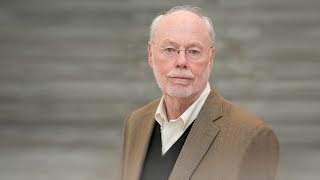
Nobel laureate Philip Sharp traces his path from a Kentucky farm to discovering RNA splicing, a breakthrough explaining how genes are organized. He co-founded Biogen in 1978 and later led MIT's Center for Cancer Research, bridging basic science and therapeutics through interdisciplinary collaboration.
Chapters
As a youngster in Kentucky, your first encounter with biology, it seems to me, was in an agricultural setting.
Yes, I grew up on a farm, and my father was a tenant farmer until we were 7, and until I was 7, and then we bought a small farm. And I grew up on the farm, did the chores in the morning and the evening, worked in tobacco, even though I'm, a cancer biologist. The early days were in part used in growing tobacco.
What were the chores?
Well, we raised milk cows and we milked them in the morning and we had pigs and had to feed them and make sure they were all right. Actually, when I was 7 or 8, 9, we had horses and I have actually worked in the field with a horse. 'Cause by the time I was sort of 8 or 9, my father, the end of the time we had horses, we were plowing a field and my father thought I should get the experience. So he put me behind the plow and that was something. But, and then the horses got replaced by tractors and it was a small family farm.
Hard work.
Hard work. You learn how to focus on a farm.
A lot of biology. I can just imagine the biology thinking of slopping pigs. But most people who grew up on a farm, I think, ultimately view the endeavor as a business that's close to the land, but more of a business. You, however, seem to observe the biology that was there in all of its richness, from the plants to the animals. How did that occur to you?
It's fascinating. Animal behavior is really fascinating. And at the time, as I was growing up, you could recognize so many human traits in animal behavior and their emotional state that it became very clear that there was a continuum in the way the brain works. Between animals and humans, and you could see behaviors that were quite similar. And it was instructive in terms of leading me to questions about biology and evolution that were quite interesting.
What did plants themselves teach you outside of focus and the difficulty of making all the deadlines that farming requires?
I think there was two things that plants taught me. One is, the diversity of plants. There's just an enormous diversity of plant life when you're on a farm, ranging from weeds to trees to crops to all the other things in the middle. And then this was a time in which hybrid crops were introduced and increasing yields of hybrid crops. So, you know, as a young person, I saw corn being raised that was hybrid, that was larger than what we had previously raised and increased yield and talking to my father about what it meant to be hybrid. We couldn't plant the seeds again. They wouldn't germinate and produce the same plant. So I didn't have explanations, but he didn't have explanations. But it showed me the impact on plants that human breeding and selection could have.
How did you evaluate or encounter this tension or balance perhaps between the impulse to control nature that you see on a farm and the sense of mystery that nature delivers in the activities on a farm?
I enormously enjoyed the feeling of being outside. Of being among that noise and diversity and just— it's overwhelmingly beautiful to me. And went for long walks, you know, on Sunday afternoon. You would come home, not much to do, you had a big lunch, and then just go for a walk just to be outside and just see it all. You know, when you're working in a crop, obviously you define a territory and you control that territory for the crop. And that was work. The rest of the outdoors and the farm was always pleasure.
In the initial understanding of how using agricultural techniques you could control and steer nature, did you have a sense of what modern biotechnology could conceivably be? Is there a continuum you could draw from the kinds of techniques that you use to control and defend a territory for a crop and the techniques that really become this much deeper inquiry into the nature of cells and plants themselves?
Well, I didn't think about it in those terms. I clearly understood that we were controlling nature with herbicides and things we used on the farm to control crops and weeds. I think the relationship was that I was very comfortable as I came into biotechnology thinking of this technology as being useful to produce things. And it's some piece of biology we now understood. We understood how to control it and direct it. And we could do that to make things that are useful for people. So that transition came to be naturally, and I was pleased to be able— totally excited in being able to be part of that.
When did you first understand the mechanics of a biological process as you observed it on the farm, say, how a seed becomes a plant, how a plant specializes, photosynthesis? I'm just pulling out of my head the kinds of things you must have observed.
I observed all those things, but, well, as I moved through school, I got deeply infatuated with math and then subsequently chemistry and physics. So I turned my intellectual curiosity to those disciplines, and it wasn't until I was a young adult that I came back to biology in a meaningful way. When I was in high school, I had to take, you know, biology. It was taught by rote memory. It was terribly uninteresting. I couldn't apply principles in general to what I was learning. And when I walked into chemistry, I could learn a few rules, a few equations, and, you know, understand an enormous amount of natural science. So that led me into chemistry. And what led me back into biology as a scientist, actually, as I was finishing my PhD more than— that's when I made the transition— was that I understood that the principles that we were learning in molecular and cell biology were very broad, very powerful, and would lead me into one of the greatest mysteries, and that is what's the nature of the human being. And that's when I came back to biology as a science.
So as a mathematician and physicist, you left the farm. But as a PhD you came back.
Yes.
That's a great narrative. Let's talk about who might have noticed that this fellow Philip Sharp had any talent whatsoever in science in those early days of high school.
Well, you would not have known a lot. I was very strong in math when I was going through school. I went through the public schools in a real part of the state. Butler was the grade school I went to. We had maybe 16 students in the class.
I understand they've renamed the school.
They have renamed the 6th through 8th grade to Philip Sharp School. Nice.
The school.
Congratulations. So it's very nice. It's right at the end of the road of where I lived. And I'm quite proud. One of my MIT colleagues looked at me after that was announced and said, Philip, you can't mess up because you're going to let down all those kids if you do. But it is quite an honor. But I went to a great small school in a small town. And then as I was in the 6th— 1 through 6, I was strong in math. Very poor in English, and conduct was never my high point. And then as I got into 6th grade, I became increasingly fascinated with science, reading books about science, anything I could get my hands on. Anything quantitative, anything about science fascinated me. I started talking to my friends. I get a reputation of somebody who talks about science. And that feeds on itself. And as I move on to junior high school, I become increasingly distinguished in science. And teachers take note of that. And I was put in the more accelerated classes. And then as I moved into high school, we consolidated. I had a couple of teachers who took a lot of interest in me, a math teacher and a chemistry-physics teacher. And that encouraged me, and I stood at the top of the class. So I got encouraged all along through school. Though my parents didn't really understand graduate work, when I was 6 years old, my parents started talking to me about going to college. And I was given a— I paid for and bought a small calf which turned into a cow and I got her calves to sell to save money for college. I raised some tobacco to save money for college. So by the time I got out of high school, I was pretty well motivated to go to college. And I paid for a year and a half of it with that money.
So you were your own biotech startup even back then.
Back then, yes.
On the farm. Tell me about your early undergraduate years and when you thought that college could be a platform for you to actually be a scientist as opposed to just study science?
Well, I went to a small college in Kentucky called Union College. It's down in the mountains in a town called Barberville. The county itself is Knox County, and it is a very poor part of the state. Half of the young males that came out of that part of the state during the Vietnam War failed their physical They had malnutrition when they were younger, and their health was so bad they wouldn't be drafted even. So it was a very poor part of the state. The college itself had about 200 people in a class, 800 altogether. And again, I was majoring in chemistry and math. Really enjoyed those courses, was well known for standing at the top of the classes. And then a professor from the University of Illinois came to teach my junior year. He was recruited, Dan Foote. And Dan taught me organic chemistry and inorganic and several other courses. I TA'd the rest of the day. I basically spent a year and a half with him. And he encouraged me to apply to graduate school. And I thought this would be fabulous. If they'd pay for me to continue to learn chemistry, I was gonna do it. So I knew I couldn't afford it unless I got a fellowship. And luckily, Sputnik went up, and there was a lot of federal fellowships to support students. And I got admitted to the University of Illinois and got a fellowship and started graduate school in chemistry there.
And Champaign-Urbana?
Champaign-Urbana, downstate Illinois.
Still in the cornfields, but compared to where you came from, the big city.
It was— well, the University of Illinois is a first-rate campus, and the chemistry department at the University of Illinois was a really strong chemistry department, clearly ranked in the country in the top 10. And they took themselves serious. Their teaching was excellent. I, coming from a small school, I flunked most of their entrance exams. They said, "Fine, just take our senior classes again," and— or for the first time. I had never had that material. So I took those courses in a semester and then took off on my graduate work. Went very well.
Early mentors at the University of Illinois?
Oh, the most important was my PhD advisor, Victor Bloomfield. Who was a young assistant professor. He had just come a year before I arrived. I was his second graduate school student. And a very long-haired liberal off the West Coast to a short-haired kid out of Kentucky. But we communicated very well. And he was committed to his students. And I immensely enjoyed working for him. After 3 years, I had published several papers with him. He made sure that I went to meetings and got exposure and promoted me. And then I went off to the West Coast for a postdoc with Norman Davidson, chemist at Caltech.
At the time you were with Bloomfield, What sense did you have of the horizon of understanding in the kind of work that you were doing? And where did you want to get to in terms of problem solving, publishing, the problems you wanted to work on?
When I was at Illinois, I was again in the chemistry department. And I enjoyed chemistry and was excited about it. But as I looked at the horizons, I didn't find the problems that chemistry had in front of me fascinating. And I picked up a book from Cold Spring Harbor called the Cold Spring Harbor Symposium. It was in '68. And I read it. It was about DNA and how trying to determine the structure of DNA, how long it was, how much genetic material was there. And my PhD thesis dealt with some aspects of DNA, its polymer statistics. And so I started reading this book, and I started reading more and more about DNA and started reading about genetics and decided that I wanted to make the transition into what we now call and didn't call it molecular biology.
So— Was it the fact that it involved life that attracted you, or was it the raw complexity of the molecules that fascinated you?
It— there was two aspects that fascinated me. One was it became clear to me while I was reading that, that I could use molecular biology and DNA specifically as an entree to understand more about the human being. That's what fascinated me. I wanted to understand more about human thought processes, culture, and health. And so this seemed like an entrée that just had never been offered before in history. And the problems were just from my perspective, unexplored. So it was a new territory. I felt I could really learn something new in that area.
So as a chemist, you could appraise the DNA molecule as clearly an almost limitless horizon of description of life. But as a biologist, you would have to learn the mechanics.
I had to learn biology and learn how to use it and learn the traditions of biology and the genetics and all the other biochemistry. But I knew from my background in chemistry that it provided me the tools to do that. Training in chemistry is a very powerful training because almost everything you deal with is materials and molecules and reactions. And so if you have that fundamental grounding, then as you move forward, you're able to learn by yourself. And though I've been head of the Department of Biology at MIT, I've only had one biology course in my life. And that was in college. I had a general biology. Everything else I've learned through my whole career.
Wow. So from University of Illinois, you went to—
Caltech. I was looking for a postdoc. I wrote to 2 or 3 people. The person I was really most interested in was a man at Caltech named Norman Davidson, who was a physical chemist who was making the— who had made the transition to biology. And I'd read his papers, and I found them fascinating. And I understood where he was moving from DNA into more biological processes. I knew he'd understand my background. And when we contacted him, I was fortunate enough that he said yes. And I then applied and went to Caltech. And it was by far the best possible decision.
And again, looking at this horizon of the problems, short of the grand one that you've already mentioned— understanding the human being— But as you look towards the horizon from the perspective of being at Caltech, what were the problems that seemed to have promise that excited you the most?
So I— first thing I have to say is that the movement to Caltech taught me something that every young person needs to know. And that is, I knew I was among the best of my generation. And if I could hold my own and make contributions there, I knew that I could make contributions anywhere. And that's what Caltech means, and that's what MIT means. So if you're able to come to MIT and do interesting science, then you're able to do interesting science anywhere.
So let me just hold you back there for a second. So really what you're describing is this scientific community of people working at the absolute top of their game that you discovered at Caltech.
Yes. And not only the professors who you know is there, and that's what a great institution is about, but the young people who come to work with those individuals, all about your age as you enter that community. And you look around and you say, who's got the most valuable and interesting ideas? Who's getting things done? Who's moving the show? And if you are contributing, to that picture in a significant way, then you've answered an important question, and that is, you know, what you can do and where you should think about going. At that stage, I was interested in learning more about the chemistry of DNA and how to use that DNA to look at a gene. So with Norman, and his colleagues there, Ron Davis being a very important one, I started doing electron microscopy looking at the mapping of genes on chromosomes. This was totally new. I mean, this was something that no one else was doing. Norman had the idea to do it. I had to devise some tricks in getting it to work. But I was able to get it to work. I established a new area of research. Literally in his lab and much of the country. And it was in bacterial genetics and sex factors and looking at chromosomes. And recruited students to the problem and another postdoc. And so we had a group doing it. So it went very well. But it led me into then a full-time focus on molecular biology. Approach to molecular biology through DNA, and that's where I wanted to be.
Here we begin to see an approach to a problem that draws from various disciplines. Electron microscopy is a sort of a physics—
physics zone.
You've already mentioned the chemistry and of course biology, choosing the organism organisms and the genes that are gonna matter to you. How important is that?
It's terribly important, primarily from the perspective that few people had that mix. So new problems appear to you when you're sitting in that zone of the interfaces of different disciplines that don't appear to other people. And new ways of solving those problems are apparent to you that aren't apparent to everyone else. So, you know, it puts you in a very powerful and productive position. In addition, it takes you out of the traditions. So you get used to working in your own environment with your own judgment. And that freedom not to depend on others for your thought— thinking and your selection of problems and how you go about them. Is really an important step in the development of an intellect. It allows you to become yourself.
Is it fair to say that you took the widespread understanding that there was a relationship between chromosomes, genes, and DNA— Yes. —and through your sort of understanding of chemistry and exploration of the of the DNA molecule grabbed electron microscopy as a way of, you know, if we can see these things, we can figure out the mechanics of what's going on. You're right.
If you can see it, you can understand it. A picture is worth a thousand words. And then if you can see it, you begin to manipulate it so you can see changes and how those changes correlate with biology. And so then if you see DNA changes related biology, you know you're dealing with the fundamental material of biology. And that's what DNA presented at that time. This was in the early '70s, '69 to '71, when I was there. And, you know, we were— the first time we could see DNA at a gene level using this technique of electron microscopy.
Was it these techniques and these discoveries —discoveries that led you to an extraordinary mentorship at Cold Spring Harbor?
Well, it did in a way, but it was another part of this evolution. So at Caltech, I was working with bacteria, which was an organism that most molecular biology was done with. And I was having great luck and success. I went out to look for a job. This was in the early '70s. It was a bad economic time. There was a recession in that period. There were very few academic jobs. I was interviewed at some great places. I didn't get an offer. In fact, I'm pleased now I didn't get an offer. I was contacted by some other places that wanted to talk to me, but I didn't want to be there. I wanted to be in an environment in which I would be stimulated to do the best science I could. So I also wanted to begin to work with human cells. And I wanted to work with viruses that infected human cells because, again, I could isolate their DNA and I could understand that DNA. And I got that experience from working with Jerry Vonnegrad at Caltech, who was also a professor there. And I collaborated with him and Norman once while I was there. So I wanted to learn virology. And I contacted 3 labs to do a second postdoc for a period of time— Dave Baltimore, who was here at MIT, Howard Tinman up at Wisconsin, and Jim Watson at Cold Spring Harbor. And Jim invited me to come to Cold Spring Harbor. I moved there to start working with animal viruses. He had just come down. From Harvard to take over Cold Spring Harbor and was expanding the tumor virus program there. So I joined that program and started to work with mammalian cells and DNA tumor viruses that cause tumors in animals. But to me, they were a tool as well to begin to look at gene structure and function in human cells.
So as a humanist, for lack of a better word, you were interested on some level in the potential for the curative powers of biology by studying viruses, but as a chemist, you saw viruses as this platform, a window into the structure of DNA.
That's right, and the structure of cells, how the complex human cell worked, because in the early '70s, we really didn't have the tools to begin to understand the biology, molecular biology, or cell biology of human cells. They were— it was really a totally unexplored area at the level of a gene and how it functioned. And I saw this as a chemist as a tool that I could move into that question. And I knew that question was central to human human biology. I mean, you can't understand the biology of an organism without understanding a gene. So it seemed pretty apparent to me, it was sort of written on the wall, understand what the gene is. And so I, you know, had multiple reasons to begin these studies. Some was, you know, how cancer developed. Others were fundamental. What was a gene?
Most people who've understood James Watson by reputation at the time that you went to study with him, viewed him as a towering pillar of science who had answered an enormously important question in biology for all time. But when you went to study with him, you were in fact seeing it from the other side, that in fact Watson's work was just the beginning of an extremely long journey that we're still on. How did he understand that we were at the beginning of something versus how you understood it? And how did that work in your relationship?
Jim, at that stage, he had done so much. He had discovered the structure of DNA. He built the Department of Molecular Biology and Biochemistry at Harvard, most outstanding department in the country focused on that. Written his textbook, The Molecular Biology of the Gene, which was the introduction to students of this fascinating field and took over Cold Spring Harbor and resurrected from a lab that was not going to survive much longer. He constructed— he understood that DNA was a critical tool in understanding complex biology and that this subject would lead to increasing insights. He obviously had a much greater vision of all the relationships of, you know, different parts of biology to these questions than I did. And he gathered around him very bright, energetic, interesting people. And he sort of chitchatted at the top, left them alone. And when he found something that was interesting that happened in that mix, he would sort of pluck it out and say, "Nice work. Write that up. Tell other people about that." And so he played that sort of very senior mentor and creator of a community. And in that community, I found some really wonderful people, very talented people. Joe Sambrook I collaborated with, and Ulf Petersen, and Mike Botchem and a whole host of others who are now all leaders around the world. So it was just a very stimulating environment.
Again, this sense of a team of people working at the top of their game, focused in any way they can, using all the disciplines and knowledge at their disposal on the problems that excite them.
That's true, and a team in which there are different disciplines. Jim understood this, that he needed someone with more physical chemistry, and he needed someone with chemistry, and he needed a biologist, and he needed this biochemist. And he sort of, you know, mixed people that would complement one another. And I was the individual who came in with a broad interest in biology, knew physical chemistry, knew electron microscopy. And there was a lot of people in the environment that were virologists and cell biologists who needed this sort of tools. To do their science. So we complemented each other and stimulated each other.
So that fellow Sharp over there, he has a big tool belt. Yeah, that's right.
He can do a lot of stuff. He can do a lot of stuff. So let's get him involved.
Right. Yeah. So is it in part some of those qualities that led you to MIT?
In part. But mostly what led me to MIT was Dave Bolden. More. I learned about Dave when I was at Caltech and then how he was working with virology and had this broad interest in cell biology and in tumor virology. And a very exciting investigator, dynamic individual, charismatic. And I knew around around him would be very good people. I also knew a lot of other young scientists here at MIT. And you'd go to a meeting, and there on the platform in the first position would be this young cell biologist or virologist from MIT. So I knew this was an environment that was incredibly powerful in this area of science, the area that I was interested in, and that is how cells and genes cause disease and how they function.
But in general, MIT wasn't known for biology at that time in the broadest sense.
Not in the broadest sense, but for the people in this field, it was known. And it was known as a place in which change was happening. And they, you know, at the time I came here, they were developing the Cancer Center, which was this strong step into the human cell and a problem fundamental to human biology, cancer. And Salvador Luria articulated very clearly that understanding the fundamental basis of the cell would allow us to understand this disease process. And Dave Baltimore was using viruses, and Bob Weinberg was a young guy who was working with viruses and learning in how to move to cellular genes that were involved in the process, and immunologists and cell biologists were there. So I waited 6 months to get a call from MIT. I had job offers elsewhere. I was hoping they would call me, and they ultimately did. And I interviewed, and they gave me the job.
So you went to work at the Center for Cancer Research, became the Koch Institute. Well, yes.
I mean, this was 30 years ago, and it was the new Center for cancer research and came out of the War on Cancer from Nixon.
Before we talk about your initial experiences in research at MIT, from your, I think, relatively unique perspective on this, describe the strengths and limitations of an institute focused on a specific curative mission as a driver of fundamental clinical science versus a science— a lab that is just purely focused on basic understanding? Does one have strengths? Does one have limitations? You've worked in both. Which is an ideal strategy, or how do you compare them?
Well, it's an interesting problem, and I think it— this issue of focus objective and science and basic science and science. And I think the power of those fields change dependent upon the field you're interested in. So in the case— in the situation I developed as a young scientist, I thought that the most important question to be addressed in my time was, you know, what the nature of the genetic control of genes was like in human cells. And that human being is surrogate for all multicellular organisms. So then medicine became a— or medical science became a field in which there was an objective. Cancer, immunology disease, immune diseases, other diseases. But to approach those problems, you had to understand the fundamental processes. So I joined this community as a community that had objectives. It's a community that reaches out of— outside the Institute and solves problems. It's a tradition of MIT to be engaged in society and to solve problems. But it is also a tradition at MIT to understand the fundamental processes so you can go solve those problems. So that— it was in biology. That was exactly the right mix for the time in the '70s and '80s. Because you got the resources and the critical mass of people together to handle these big complex problems because you were attacking a disease process. And yet you had to fill in the basic science to make progress. And I filled in the basic science. And that led me to then the insights of the structure of a gene in human cells and many other aspects of cellular biology. So it's always been a very stimulating environment to be a scientist in. And it's stimulating in chemistry and it's stimulating in physics because you know that as you add information and insight, it stimulates a lot of people around you to go out and solve problems, and they bring tools and ideas back to you. So then you see from different perspectives what your contribution is like and new ways of actually solving problems. And so this interface is fascinating.
So you've arrived at MIT and really now you spent a good considerable amount of time looking at that DNA molecule and— Still do.
Still do, right.
And wondering and doing a lot of experimental work on trying to identify what are the mechanical processes that actually account for the things that we see in the cell. As you began your work at MIT, where did you suspect that those processes were going to be revealed? Where did you begin to discover the mechanical platform, whatever, all these tools and switches and whatever it was that was going on there, where did you discover it?
Well, I knew that I needed to understand its most fundamental layer, this mechanical process of how a gene worked. And that was the initial information transfer from the gene to the cell in a substance called RNA. And the synthesis of that DNA-like material from DNA is a transfer of information to the cell. And I knew— I suspected, I didn't know at that stage, but I suspected that that process was going to be different in higher cells than in multicellular animals like humans than in the bacterial systems we had been studying.
Let me just encapsulate then. You understood— biologists understood that there is a process whereby genetic material gets from the nucleus into the outer reaches of the cell, the so-called cytoplasm. Yes. And so you were extrapolating that, number one, the process needs to be understood. Two, that if we could understand it at the cellular level, we had a template for virtually all of the genetic mechanics that occur for animal and every species. And you understood that doing single-celled creatures alone wasn't gonna solve the problem.
And I understood there was something new to be discovered there. At least I suspected it. And then That led me to then focus on comparing this transfer of information to the structure of a gene. And when I did that, I discovered that our genes were split, meaning that the information that was transferred in our genes is broken up into little pieces and then assembled in the cell as it is being transferred, a process I called RNA splicing. And that insight is true for almost all our genes. And it's true for almost every gene in every multicellular organism, including plants. So, you know, focusing on that question, I was the first, among the first, Cold Spring Harbor using the same systems that I was using because I came from there and helped set them up there, came to a similar insight at the same time. But that led us to a whole new insight as to how genes were structured and how they were used to transfer information.
And at the time you began this inquiry, DNA was seen as the center of it all, and RNA was something of this kind of Xerox machine that assisted in a kind of copying process and didn't appear to have much importance. That's right.
And then when I looked at this RNA, It turns out it is actually being assembled into genes. So, you know, this discovery meant that we really didn't know in a chemical sense what a gene was. And so then knowing this, we could go back to all sorts of information that had been developed in different biological systems and interpret it in the structure of what the gene looked like in those cells.
So far from from thinking that DNA is this encoded mystery molecule. In fact, what you discovered is that the interaction of DNA and RNA is like the DNA is the blank paper, the ways in which RNA interacts with the DNA are like the letters on the page.
Yeah, and the letters are edited, edited by the cell.
How did you discover that, and what did you feel when you first saw it in action? I literally saw it.
So I discovered it using the electron microscope techniques that I had developed at Caltech or used at Caltech. And then I took some more physical chemistry, combined it to that, and animal virology, mixing all these inner disciplines together. And there in front of me in that electron microscope was that structure.
And it was the chemist in you that gave you the discipline and to go see what's happening. It's connecting here and disconnecting here. That's it.
So that chemistry not only led me to look that way, seeing disconnects and connects and saying this is chemical unity that I have to be able to mix, but it also gave me the technology to do it. And so I was receiving papers from other chemists around around the country, Norman Davidson in particular sent me a critical paper. I look at his paper and I said, "Oh, if that's true, I can do this in the laboratory." I ran into the laboratory and did it. And so, you know, I was mixing chemistry and the cell biology in making that discovery.
And describe the team and how each of you worked on different kinds of problems and your collaborators were really all over the country, all over the world in some sense.
At this time, I was— this was in '77. I came to MIT in '74. So I had been at MIT 3 years. First year, you're, you know, by yourself. I got bored just being in the lab by myself. I had a colleague, postdoc Jane Flint, who came with me, and a technician. 3 people in the lab. So I went to Dave Baltimore down the hall. And said, "Dave, I need some more people to talk to. I'd like to be able to attend your weekly group meeting where all your people are talking, and I'll participate just like them. I'll talk about my science as I did." And Dave said, "Well, that's fine with me." And, you know, Bob Weinberg was already another assistant professor there, and so a couple more joined. So we had the floor meeting every week. Now it's 34 years later. Dave Baltimore is at Caltech. We're still having the floor meeting. I just came from it today. You know, 150 people get together and 2 people, postdoc graduate students, talk about their science. So that was a big community I was looking at. But specifically in my lab, Sue Berggett was a postdoc who was doing microscopy on DNA and interested in this problem. Claire Moore was the electron technician who I had trained and recruited, and myself. And we were interested in this problem. We started looking at the structure of these RNAs that are being transferred, recognized something was different, didn't make sense from a chemical perspective. I said that, you know, if I understand the biochemistry of these processes, that shouldn't be happening. When I looked at it in in the microscope. We started working on why is it happening, and then that led us to the insight of the split gene and the splicing process. So it happened over 6 months or so. And I had dialogue with other people around me about the whole thing as I was doing it.
Now you've described it very powerfully on a fundamental scientific molecular biological level, but for people who come at this from the standpoint of 'How can this deal with tumors? How can this assist us in curing cancer?' What was the immediate sort of application, even way off in the future, of the exciting discovery that you had made? What did people say, 'Okay, if we can do this, maybe this could happen'?
Well, I mean, immediately what we understood is that a large number of the mutations in human genes that cause disease inactivated this process. So it was, you know, an immediate explanation for why a large number of human disease genes were defective. And then almost immediately thereafter, my colleague here at MIT, Bob Weinberg, isolated the first human oncogene from a human cancer cell. And when he isolated that gene, he realized the gene came in pieces. And so, you know, you couldn't understand how that gene worked as an oncogene making cancer without understanding that the gene was in pieces and you had to put the total gene in the position to get activity. Started looking at viruses. And the viruses that were causing cancer, they were stitching together the genes that were causing cancer, just like the processes I was looking at.
So the virus was taking over what what the RNA would have been doing in a healthy chemical situation. Yeah.
And it was using that process to make activities that made tumor cells. So, you know, it just touched everything. And, you know, if you looked at a fly, the same thing was going on in a fly. You looked at a worm, it was going on in a worm. So there was a great continuity of new discovery that happened at that time. So when this fundamental structure of a gene was different, then, you know, how a gene was turned on and turned off was different. You know, all the nature of mutations that cause disease genes was different. It just, you know, around the world within a month everybody knew this. Wow.
How did this discovery also describe the other thing that you talked about a moment ago, that you suspected there was a fundamental difference in complexity between the traditional study organisms, single-celled creatures, and the higher order vertebrates that you wanted to get to. Well, the puzzle—
part of the information we knew at the time I made this discovery was that in higher organism cells, such as our cells, there was just much too much DNA. You know, it was an enormous amount of DNA there. And we knew there shouldn't be over 20,000, even 100,000 genes. But there was DNA present for a million genes. It's just too much DNA. We didn't understand how the cell would function with that DNA. We knew DNA encoded genes, enormous amount of DNA. Did we have a million genes? If we have a million genes that are all important, you know, could mutations in those genes at the rate we knew about it be inconsistent with us functioning? So I knew there was— everyone knew there was just too much DNA in these cells. And therefore, when we found that the genes were structured differently with these editing pieces and pieces separated, we understood something about why all this DNA was there. So let's—
I mean, there was this period of the initial discovery, and then what was the track of research? Because we're talking about a long period of time through the '80s and into the early '90s when your life really began to change once again. Take me through this period of once the initial mechanics had been isolated, where did the inquiry go from there, and how did you work on it here?
So, I mean, there were— I mean, from that initial discovery, there was a whole number of branches that came off. One branch that came off was what we were talking about, how genes created disease. And, you know, my colleagues here at MIT, Dave Baltimore and Bob Weinberg interested in cancer-causing genes developed in that area. There was a whole area of, well, we now know what a gene is, but we have to understand how it's turned on and turned off. So, you know, there was a whole biochemical process, and I undertook to investigate that. I knew I wanted to understand how genes were turned on and turned off because the difference between your skin cell In your blood cell is different genes being turned on and turned off. The difference between tumors and non-tumors is genes being turned on and turned off. So I wanted to understand the chemistry of that so I could contribute to those general problems.
This turned on, turned off business is the gene expression. Gene expression.
Turn the gene on, you get activity. Turn the gene off. So each of our cells has the same genetic material in it, same number of genes. But they're very different. You know, your eye cell is different than your bone cell. So that's all a product of— in that cell, there is a system that keeps genes off in one cell type, your eye, and on in the bone, and vice versa.
And it's all this RNA.
It's all this RNA, all these proteins, all interacting within the cell to maintain that cell identity. And therefore, you had to understand the chemistry of that. And that's where I launched in that area. And then the other area I launched in was at the RNA level, this editing process, which we called RNA splicing. That was central to how genes were structured. And I wanted to understand the chemistry of that. So those two areas I focused on. I worked on that and related to cancer and diseases for about 15, 20 years. And, you know, the material is in the textbooks. Oh yeah, yeah, yeah.
In 1990, you were faced with a pretty harrowing choice between where you would go and what your relationship might be with MIT. Where you would go as a researcher versus what you might do here in in a leadership role at MIT. Describe how that choice was presented to you and what it caused you to think about both yourself and your field.
So in 1990, Paul Gray stepped down as president. And in the tradition of MIT, the corporation— that's the controlling body at MIT— formed a committee to look for the next president. And they asked the faculty to form a committee. And I was asked to be co-chair of that faculty committee with Bob Solow, an economist, Nobel Prize winner, wonderful guy. And so we put the committee together, or the committee— and we met with various departments and various things. And as that process was unfolding, we interviewed a lot of people around the got to know me because at that stage I was— this was in 1990, so I would have been something like 46. I— as this process unfolded, they began to think about, well, shouldn't we think about that guy over there named Sharp? And they ultimately, the corporation, head of the committee came in and asked me if I would be willing to be considered for a candidate. It was such an honor. I love this place. I mean, I owe it so much. And I love it. I love what it does. And I love its meritocratic way of doing things. And I felt obligated to, you know, if the Institute Institute came at me and said, we want to consider you to be our leader, I felt obligated to say yes. And so I said yes, stepped on the other side, interviewed. That was a big world. I really didn't expect the Institute to come to me and ask me to be president. I hadn't— and this is the biggest mistake I'll probably I've made in my life. I hadn't thought through what my emotional state would be if I had to give up science. And you understood that that was the choice? That was the choice. I knew I couldn't do that job and do science.
And at this point in your career, you had done enormously important work. You knew that. Everybody knew that, otherwise you wouldn't been asked, but you still were far from your original quest, and that was to understand the human being.
That's right. And I— That's where you wanted to go. That's where I wanted to go. And I wanted to have time to myself to think about and learn as I moved along. So I had a lab of 20 people at that time, wonderful young young people all doing interesting things. They came and asked me to be president, if I would accept the offer. Came at me at one moment. I said yes. I went home. I had talked to the family, talked to family, and then came back the next day, got my research group together and said, "I've made this decision." And I'm going to have to give up all my research. She's got about 6 months, but I really can't continue much beyond that. And I had so many doubts that I could be happy and committed to that administrative position and giving up science that I said, look, if I have with that degree of uncertainty, I'm not going to do MIT any good. And I'm not going to do me any good. And I should basically deal with this issue now. And so I did. And the only thing that I was disappointed about is that it cast a negative shadow on MIT for a while. However— The last thing you ever wanted to do. Yes, last thing you ever wanted to do. But the great news was MIT, in its way of soldiering on, basically said, fine, we'll go off and continue the search. They found Chuck Vest. Vest took the position. Established a wonderful relationship with Chuck Vest. And for the next 10 years, we worked. He was president of MIT. I became chair of the Department of Biology. We worked together on numerous things in life science and across MIT. And it was an incredibly successful time for me personally. For MIT, for him. So it worked out wonderfully at the end. And we got a great leader who just immensely enjoyed MIT and immensely enjoyed leading the country in science and technology. Chuck Vest became the spokesman for science and technology in this country as president of MIT. And he had an incredible run. Effect across the country. So he was a magnificent leader at MIT, now head of the National Academy of Engineering. So all of it worked out wonderfully. But boy, for a few months there, it was tough.
I can barely imagine. So as you've just said, his success made you believe ultimately that you had made the right decision. You had enormous success also in this period. Of the '90s. How did you come to understand that you were a candidate for a Nobel?
Well, it's pretty apparent when you think about it. So what happens in science is it, you know, if you're lucky enough, you're able to make a discovery, and it becomes well known. You start receiving prizes noting the discovery. Initially, they are prizes from societies and universities and that sort of thing. And then, you know, if the work continues to be noteworthy, you start getting prizes from, you know, the Gardner Prize out of Canada and various international prizes. So you know you're on a list. You know, you get a prize, you look at who had gotten the prize before, and you see down that prize, 25% of the people who had gotten this prize got a Nobel Prize. So it isn't a mystery that you might be in that crowd. So that process was, you know, happening. I had received a number of prizes with Tom Cech, who was a— I knew when he was a postdoc here with Mary-Lou Perdue. He went off to Colorado. He began working in the same RNA field as I did. And he discovered that RNA itself could cut itself and paste itself together. RNA catalysis, a wonderful discovery. And we had gotten a number of prizes together. And then he got the Chemistry Prize in the— I think it was '90, '91, something like that. And I thought the Nobel Committee had, you know, basically recognized this field and, you know, they would move on to other fields. So I was at ease. And then in '93, the great luck, they called me and said they had given me a Nobel Prize for my work in RNA splicing. Slicing and split genes. And that was a wonderful experience. I was department chair at that time in biology. So we had just moved into that new biology building. The department itself was going very well. Maybe— well, it was something like 1,000 to 1,500 people involved. And I was running that and running my research program and then went off to Sweden.
Do you remember just one thing about the Nobel? Do you remember one thing you wanted that audience to know about you when you gave your speech?
I wanted the audience to understand than the evolution of the discovery and its ramifications. And I was aware, and I've always been aware, that I felt that I had come a long way in my own personal life to that position. Coming out of rural Kentucky and making the contributions, evolving along those pathways that we've talked about in education. And I wanted to set the context of that discovery in the context of my own life from that origins. And that's why I said at the beginning when the prize was announced that it was pretty good for a Kentucky boy. My local community where my family had lived for 100 years really thought that was wonderful and got activated. That led to the school being named after me and various other things.
And a big celebrity on a local radio station. I got everything.
Kentucky Day and The road I live on is named after me.
You won some money for some engineering students who were— the radio station said, can you get a celebrity to call this radio station?
They called me and I called them. And you won. Won. And the other part of that is that I wanted to use that little success that I was having to promote students thinking from any part of that state or any other state that if they really wanted to do it, they could do it. If they had the talent, the commitment, and were willing to work, they can do it. That's an important message to send to kids.
Two little scientific things just to complete the picture of your work. The human adenovirus— Yes. —was your original tool for looking at a lot of the mechanics that you eventually made all of your discoveries. Describe what's unique about that particular organism, that particular virus.
Well, human adenovirus is something that most of us are infected with. There are several different types of viruses. The interesting aspect as I was entering science in cell biology in the '70s was that if you injected that virus into newborn hamsters, it would create tumors. So there was genes in that virus that would turn human cells into cancer cells. And the question the scientific community was trying to understand was, How did those genes affect those cells, affect those processes in human cells? It was taking a normal cell and making it a malignant cell. And only 2 or 3 genes. We showed that. I was part of the group at Cold Spring Harbor who discovered it was only a little bit of the virus that did that. And therefore, you know, that few genes were touching in the cell the fundamental systems that controlled the difference between a cancerous between a cancer cell and a non-cancer cell.
So solve the riddle of that process. Solve the riddle of that.
So it was one-to-one.
One-to-one. Inject the hamsters, you got the tumors. You got the tumors. You suddenly have—
You have an understanding of cancer. Right. So that was the fundamental reason to use these viruses. I saw the viruses as well as a piece of about 35 genes worth of DNA. That I could handle in terms of the chemistry, in terms of electron microscopy and how to map genes on pieces of DNA. So it was the right size for me, and it was the right sort of difficulty in terms of virology. So it became a tool to look at genes. It became a tool to look at the cancer process. And then ultimately, due to the work we we did at Cold Spring Harbor and then some here at MIT and elsewhere, it became a vector for introducing genes into human cells. So adenovirus is used as a gene therapy vector in vaccine development and many other types of experiments now.
So if you can develop a repair mechanism for the complex RNA interactions that are responsible for some of these breakdowns. You'd use the adenovirus as the sort of vehicle that takes your therapy in.
Yes, you could in theory do that, and in fact that's somewhat possible. Not in humans yet, because there are lots of things that have to happen to make a human therapeutic work, but you can show it works in cells and in animals.
And are some of these ideas the impetus and the inspiration for the founding of the 3 companies that you've been responsible for helping to find?
Well, Biogen was the 3rd biotech company established in the country, and it was established in 1978, just as this technology of being able to make genes with recombinant DNA and study their activities became possible in laboratories, it was clear that that same technology could be applied to solve, you know, make new therapies, new drugs, new treatments. And so a group of scientists, myself and Molly Gilbert here in the this country and then a bunch of European scientists got together and started a company with some capital from venture capital to organize a group of people and recruit people and get this technology applied. And that led to the establishment of Biogen. I've always had a practical side to my personality. I enjoyed seeing— It's a Kentucky farm boy. It's a Kentucky farm boy. Seeing this get done. So I helped them recruit people to the laboratory and thought about problems and how to do things. And so we started the company in '78. And it's now Biogen Idec. It's a very successful company. It's made a lot of therapeutics that have touched almost everybody's life. The hepatitis B vaccine, which almost everybody's vaccinated with. The genes were originally isolated by Biogen Idec. Alpha interferon, which has been used for cancers and is still a major therapy for hepatitis infection, Biogen Idec produced that. Avonex, which is an interferon for multiple sclerosis, the most effective— well, it was the most effective treatment for multiple sclerosis. Sclerosis. Biogen developed that. Tysabri, which is now the most effective treatment for multiple sclerosis, Biogen developed. And then we merged with Idec. Idec developed the Rituxan treatment for B-cell lymphoma. And it's a marvelous treatment for that disease state. And so I've seen the science that was done by a graduate student in a laboratory, taken across the street, trained people, developed, got management, business leaders, physicians, scientists together, and made very successful companies selling worldwide, worth billions of dollars.
So describe the other—
the two companies that you helped found? So that— in the early— well, the late '90s, in 1998, I was running the McGovern Institute here at MIT. And one of my former graduate students named Andy Fire discovered that that you could feed a worm, a little simple worm, this intermediate of information called RNA, double-strand RNA, and it would silence a gene in that worm. And I didn't read the paper when it appeared in Nature. I was too busy. I was doing a lot of other things, and I didn't read it. Some months later, I was asked to write write a commentary on that field by the National Academy. And as I went back to do that and read about it, I said, "Oh, this is fantastic." I mean, if biological systems will take these little pieces of RNA and silence genes, it could be revolutionary. I didn't understand how this could happen. None of the chemistry or cell biology I knew explained how that worked. So I then started talking to a postdoc in the laboratory, a fellow named Tom Tuschl. And he talked to a graduate student and a colleague here at MIT, David Bartell. And ultimately, he had 2 months as a sort of reprieve between— he completed his work here and he was he was going to Germany. He said, "Let's try this." So to do the chemistry of it, Tom was a chemist. So he developed a chemical process experiment, tested it. First day, first time he tried it, it worked. He, in a test tube, he could take and put RNA in that test tube and it would silence RNA. Fundamental. Here in front of us in a test tube was this reaction going on. So we started working out the chemistry. And that started in '79 and continued. And then in 2001, a couple of years of this science, we knew from the work of Tom Tuschl mostly that these little bits of RNAs could be made in the laboratory. And used to silence any gene in human cells. So here we had a switch that we could make in the laboratory for any gene, and all drugs are basically switches. They throw switches turning on and off genes. So here was a whole new possible mechanism to make drugs. So we got together, the 4 of us, talked about whether we should take this technology and see if we can get it to be a therapeutic. And they were all much younger than I, another generation behind me. And I was also interested in being able to sort of be involved in introducing these young guys into this process of taking technology from the lab bench into use. So we started a company called Onyllum and got some venture capital here in Boston involved. MIT licensed the intellectual property to the company. And we started to recruit management and scientists. It happened to be in the early 2000s was a biotech weak economy, so I got a lot of the best people in Boston involved. And a young fellow who was a friend, the son of a friend of mine who I'd known earlier in my career at Cold Spring Harbor had come up here, great scientist but wanted to move into management in biotech. He took the company as a CEO. And we're doing fabulously well. You know, Enylum is now 5 years old, 6 years old. We have about 150 employees. We're in clinical trials using these small RNAs. We're recognized as world leader in this area. And I'm optimistic that it'll work. And if it works, then a lot of people will benefit from it. And so it's another engagement that I've been with now 6 years. And I hope to be able to continue to be involved until I see it's successful. And Mogen? Mogen is a company that another young colleague of mine, David Fisher, who's now the head of dermatology at MGH— David was a a postdoc in my laboratory. And he had some new science around skin tanning, the process of tanning. And there was interest in it, and he asked me if I would help him organize the transfer of this information. So I joined the board. I'm much less more central into that process than the others. It was basically being an older mentor to a young person trying to make this process happen.
You've said you're practical because of your farm roots, but does this role of entrepreneur pull something different out of you than the scientist that's always been at your core? Yes.
I mean, the thing that entrepreneurship pulls out of you is You have to engage with a much larger sector of society to make that work. You've got to engage with the financial people. You've got to engage with the management people, motivate the clinical scientists and get everything together. You've got to work in the real world to make that happen. And I found that, you know, very interesting, just meeting all these people and trying to understand what motivates them and how and how they do their work. It has led me to a greater appreciation of the talent of the diverse number of people in society.
Some have suggested that your maybe most public expression of affection for this institution involves the task force on dangerous drinking that you were involved in. That clearly it expressed a side of you that was both biological but also very caring and nurturing for the young students coming up. Describe your experience on that part.
Well, we had a student at MIT, a freshman, who in a fraternity early in his time here drank too much alcohol and ultimately died from from that. Chuck Vest asked me to chair a committee to look at this at MIT. We gathered a number of people from around the campus who had various different backgrounds— sociologists, biologists, physicists, and others— and looked at drinking at MIT in the policies that MIT had put in place about this. And what we discovered was that this activity at MIT was much less than at almost any other university. The students work too hard here. They know they can't perform on tests if they are inebriated. However, they— there wasn't a lot of information available to the students about drinking. And the policies in terms of giving help to the students if they got in trouble was not optimal. And we wanted to make sure that students understood that if they helped a colleague, they wouldn't get the colleague in trouble. And then we looked at the fraternity processes that were ongoing. And felt that students were being asked to move off campus probably too early. And then Chuck Vest, with great resistance, put in place this policy that all MIT freshmen had to be on campus for the first year. And so I learned a lot about student life. You know, there's a place, I think, for prudent use of alcohol as a beverage. There's not a place for excessive drinking. There's a strong place for students to care for each other. And in this case, that process broke down. And when a student's in trouble, it is traditional of MIT their friends to step in and help. And this young fellow didn't get enough help. And so we tried to make those principles a little clearer, and we asked MIT to put in place more educational processes related to excess drinking and/or dangerous drinking. And that was done.
Being selected as the founding head of the McGovern Institute. What challenge did that represent for you, and what were your initial responsibilities coming in?
Well, this goes back to the earliest parts of my interest. I entered biological science because I was really interested in how we could understand the human organism. Organism, and both from the fundamental cellular processes, disease processes. And MIT to me seemed underinvested in the most human of the biological phenomena, and that is how the brain works. And as we look across the future of societal problems and challenges, both in terms of major international issues, educational issues, and the fundamental excitement of discovery. The human brain and neuroscience is that frontier. And I wanted MIT to be more strongly invested in this area. And Chuck Vest had worked with Pat McGovern for many years. About his interest at MIT and how he could help the campus. And when it became possible that Pat McGovern might be willing to fund an institute here at MIT, and particularly in neuroscience— that's where I wanted MIT to make the investment— I said to Chuck that if my participation would help that happen, I was willing to to do it and be interested in doing it. And so we made the presentation to Pat. He looked at a number of other places. He ultimately decided to do it here at MIT and to give MIT the funds to start the Institute. They asked me to organize it, and I then started in engaging other— my colleagues here from the neuroscience side. And I had known him, but I hadn't worked close with him. So I started working close with him. I started learning more and more about the science. And it was a fabulous experience. And we got together and we decided what we were going to focus on and how to structure this building with with MIT and Pat McGovern involved. And then put together the organization, selected the people to go in the building and be the core faculty, and then started recruiting new faculty. And then ultimately, we recruited Bob Desimone, who's the current director of the McGovern Institute, who's been a magnificent leader. A very well-known and important neuroscientist. And MIT sort of added this incredible strength of neuroscience to the sciences of the institution.
Part of the MIT contribution to this McGovern Institute is its sense of applying multiple disciplines to important problems. How was that a resource in you assembling the team to be at the Institute here?
The— I mean, neuroscience is the ultimate interdisciplinary work. If you really want to understand human behavior and education and learning, you need to engage, you know, the human in studies. If you want to understand the cellular process behind it, you need to engage the molecular biologists. If you want to understand the behavior in the middle, you need all sorts of people involved doing imaging and behavioral stuff. So when I started thinking about this institute, I reached out to computational people and to biological scientists. I reached out to geneticists and brought a mixture of those individuals to campus. At MIT, that's not considered unusual. That's considered sort of— that's what you do. And we, you know, started functioning as a group, and then it started reaching out. These people reached out to the campus. So I'll tell you a story. Shortly after I was I was director and I recruited a young person named Michael Fee here who's now a professor. He comes into my office and says he's been holding conversations with people in the economics department about the decision processes in economics. And they're interested in how, you know, the brain functions in making those decisions. He was interested in all the the aspects of this behavior. And they needed a few dollars to— thousands of dollars to have a dinner every evening for a month, a monthly dinner for them and people at Harvard who were all mixing, getting together to talk about this. That's become a science now, a whole new field in economics. And it's the way MIT MIT takes insights and basic understandings and relates them to other fields. And right now, a third of all the engineers at MIT are doing something in biology, life science, all the way from synthetic biology, making new organisms, to understanding how the brain works. And we're seeing an enormous impact. Dialogue back and forth between engineers and biologists.
Is the fact that in some places in this building you have to walk through another person's lab to get to the corridor an image, an echo of your original request of David Baltimore to allow you to talk to people and not be so isolated?
Yes. The whole structure of the buildings we build here are to bring people together. And this particular building with that beautiful atrium in the middle in which you can see everybody as you're walking around the atrium and it's so attractive with sunlight to draw you out there is the designing of a structure to create interactions and conversations and people working together. So we think in design of every building, How do we structure the building to bring people together and make it enjoyable?
What are the achievements you're most proud of at this institute?
I'm very proud of the, you know, people I've educated. I mean, I have had an enormous number of outstanding people work with me and then go on and making contributions. I'm very proud of the of science I've done. And I'm very proud of how I've been able to engage MIT in further developments and expansion in life science. MIT has evolved as the opportunities and the needs have occurred to become more and more engaged in life science, and that's led directly to to the surrounding of MIT by biotech and other high technology. And I was a little part of that. I wasn't at the beginning. I won't be at the end. But I'll be a little part of it in the middle, and a particular part involved in life science.
Right now you're focused on a problem or a potential development called RNA interference. How important do you think that is, and how does it relate to your other work?
Well, it's part of— RNA interference is one of the revolutions in biology, and it's already been recognized because Andy Fire and Craig Mello got a Nobel Prize for it only 8 years after they discovered it, which is a remarkably short time. And it has led us to understanding that there's a whole new layer of of biology and cell biology where small bits of RNA are turning genes on and off. And it has led us to the hope that we can take this insight of these small RNAs and make new therapeutic agents. So we are really still on a frontier, a frontier where we don't understand in full ramifications how these processes work in our cells. And we suspect that over the coming decade, we will more fundamentally understand that process. So this is still— life science is still a very new science with astounding discoveries that are still being made and will be made in the coming years. It's not an old science. It's not a mature science. It's a raw new science. And that's what makes it so exciting and so promising as a field for investigation.
Is there a process in the good old cell that you've been studying for all of your career that if it could be revealed to you tomorrow, you would love to know?
Yes. In the good old cell, there has to be a process that allows the programming of genes to be stably turned on and turned off that allows the cell to be different as a skin cell from a blood cell. And though we know little pieces of that process, and we know RNAs are involved and proteins are involved and other pieces are involved, we don't understand the general principles by which that process can occur.
So the organizing principle of the whole process and where it might be directed is unknown. Is unknown.
Man, that's a— And at the core of that problem, you know, changes in that what leads to disease. So, I mean, and that's, you know, called systems biology now as a subject. And with the increased power of computers and increased power of science and engineering, we're getting closer and closer to being able to deal with that problem. We're not able to deal with it now, but we're going to have to deal with that problem before we really understand how the how the brain works. You make progress on understanding how the brain works, but when we begin to understand how each of those cells in your brain differ from one another and what that means, and then how information is stored between them, then we're gonna be in a very powerful position. And it's really exciting. There's decades yet to be done.
At some point between your walks in the beautiful agrarian countryside of Kentucky, and when you chose your graduate studies subject, it occurred to you that what you really wanted to know was the nature of the human being and how the human works.
You think you're going to get there? I think I'm going to get pretty close. I hope to. But, you know, I've defined that problem as a chemist. I wanted to understand how the workings work because I thought I could do that. There's a lot more to being human than just how the workings work. There's a complexity of relationships and a complexity of culture and a complexity of learning from others and all the— now we see the interrelationship of everything. On Earth in terms of interactions. So it's a little simplistic. In fact, it's dramatically simplistic to say we need to understand the human. But I think we can make a lot of progress in understanding how the human physiology works. And that will help us in a small way, but an important way, in understanding how what it means to be a human being.
But what a great journey from slopping pigs in Kentucky to having the perspective that you have. Oh, it's been exciting.
It's really a wonderful experience.
Two little business questions. One, what does it mean to be an Institute professor? What does that enable you to be and do that perhaps is unique to MIT?
There are sort of 12 or 15 Institute professors at MIT. It's a very rigorous process that selects those individuals. And I report to the provost, who's the chief academic officer of the Institute. And I have the license to spend my time doing anything I want to do that obviously should further the interest of the Institute. So I've used that to assume positions of leadership outside MIT on boards. I still teach because I love it. I enjoy those students. I still am involved in academic activities. Activities in the department as committees and recruiting new faculty and things like that. But if I get a phone call saying, would you come to the National Academy and chair a committee to investigate this or that, or would you come and lead us in an evaluation of what this university should be doing in the next 20 years, you know, I have the freedom to do that because I do not have I don't have the obligations to meet every day with, or as you would in teaching with a class. I teach with others and there's flexibility in that program. Or you could take up skydiving. I could take up skydiving, but I'd rather use my time otherwise.
Finally, one of the lay designations of part of your discoveries in your career is the discovery of so so-called nonsense DNA. How would you describe that as a scientist? It certainly gets batted around in the popular media quite a lot.
Well, we completed the sequence of the human genome as a scientific community in 2003, and when we looked at that DNA sequence in its totality, the human genome, We said we recognized 2% of it as that which had information to code for the functional part of the cells. 2%. 98% didn't code for that part. We've since learned over the last decade that there's another 2% or 3% that's probably involved in turning on and off that 2%. But 95% of our DNA is not likely to be involved in these processes of information transfer. They're probably structural, and they have the elements in them of viruses that infected our genome, you know, hundreds of millions of years ago. So we are still struggling with understanding how the structure of our DNA could possibly exist. And I think these discoveries of small RNA are going to lead us to that insight. They are leading us to what the process is like that allowed this structure to happen. So, you know, when you take yourself too serious, you should think that 95% of all the genetic material in your, in your body is nonsense.
So when you look at the DNA molecule, you're seeing the incredible potential for all of biotech that you've studied in your career, but you're also seeing a document of the history of chemistry and biology going back probably hundreds of millions of years.
Yes, we see hundreds of millions of years in this DNA. We can see the relationship between every organism on Earth in in this DNA. Because we can look at those DNAs and they're related to each other. So, you know, somebody says, "I don't believe evolution because I don't believe these rock formations were put there." I can look at the DNA and say, "I see all that evolution in the DNA. It's all there." And I can map it all out as to where those genes come from and how they were shared and all this biological process. So I can make a synthesis that reaches back hundreds of millions of years. Great.
Well, so grateful for you spending the time with us. This is really terrific. Thank you. Thank you.
More from Joshua







Scientist Stories: Hans Waterham, The value of phenotypic assays in peroxisomal disorders




Scientist Stories: Joel Zlotogora, Genetic carrier screening programs for reproductive purposes