Scientist Stories: Rebecca Cox, Immunology of Influenza Vaccines
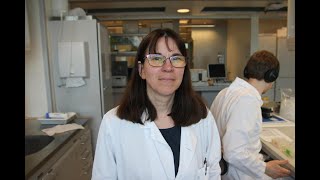
In this Human Vaccines Project webinar, Dr. Rebecca Cox presented the results of a five‑year prospective cohort study of 250 Norwegian healthcare workers (HCWs) who received the AS03‑adjuvanted H1N1 pandemic vaccine in 2009 and subsequent seasonal influenza vaccines. The study tracked serological, B‑cell, and T‑cell immunity before and after vaccination each year, and examined vaccination behaviour. Key findings include: (1) a single 3.75 µg HA dose of the AS03‑adjuvanted vaccine generated rapid, high haemagglutination‑inhibition (HI) titers that reached protective levels (≥40) by day 21, eliminating the need for a second dose in most participants; (2) the vaccine induced broad cross‑reactive antibodies to historic H1N1 strains and robust head‑ and stalk‑specific HA responses, with adjuvant overcoming pre‑existing immunity; (3) 16 % of HCWs were low‑responders who failed to maintain protective HI titers at three months, but a second dose restored their responses; (4) memory B‑cell frequencies remained elevated for years, and CD4⁺ T‑cells showed increasing multifunctionality (IFN‑γ, IL‑2, TNF‑α) over time, while CD8⁺ responses were unchanged; (5) vaccination uptake was strongly linked to prior vaccination history, perceived adverse events, and the 2009 narcolepsy controversy, which depressed later seasonal uptake; (6) repeated seasonal vaccination boosted responses to co‑circulating H3N2 and B lineages, though antibody magnitude plateaued after the third year; (7) a small subset of HCWs who received only the pandemic dose maintained high HI titers for five years, offering clues for universal vaccine design. The webinar concluded with discussion of implications for next‑generation adjuvanted vaccines and the importance of transparent communication about reactogenicity.
Chapters
Okay, let's get started. Welcome to the influenza webinar series hosted by the Human Vaccines Project. The Human Vaccines Project is a nonprofit public-private partnership with the goal of decoding the human immune system to accelerate the development of vaccines and immunotherapies. In order to make real progress toward the development of a universal influenza vaccine, collaboration among researchers around the world is essential. We hope this monthly webinar will foster the scientific foundation needed to advance influenza research. This series of webinars will be broadcast on the third Tuesday of each month and posted online. For a copy of today's webinar, please visit the Human Vaccines Project website at www.hvp.org. Humanvaccinesproject.org/talks. Following the presentation, we will have time for questions from the audience. Please type your questions into the questions box in the GoTo interface. I will read these questions following the presentation. And now it is my honor to introduce Dr. Rebecca Cox. Dr. Cox is a professor of medical virology and head of the Influenza Center at the University of Bergen in Norway. Her research focuses on development of novel adjuvants and influenza vaccines, as well as clinical trials of new influenza vaccines with focus on detailed characterization of the immune response. Dr. Cox has over 80 peer-reviewed publications. She serves as an expert on the SAGE Working Group on influenza vaccines, and she is a member of the Norwegian Epidemic and Pandemic Committee. She is also a board member and secretary of the Influenza and Other Respiratory Viruses. Today, Dr. Cox will tell us about immune responses to influenza A H1N1 PDM9 virus after adjuvanted pandemic and seasonal influenza vaccination in healthcare workers, a 5-year follow-up study. Go ahead, Dr. Cox.
Thank you very much, and good morning to everybody, and good morning, good afternoon to people in Europe like me. And here on the front page, you see our hospital on the left-hand side in the beautiful sun, and I, I work here in Bergen. Between the Seven Mountains, and today I'm going to talk to you about vaccination of healthcare workers. This study was actually conducted at the end of a phase 1 clinical trial where we were testing bird flu vaccines, and then the pandemic hit us in 2009, so we decided it was an important opportunity to actually follow healthcare workers and look at the immune response. So just a little bit of background, as we are all aware, maybe preaching to the converted, influenza is a major respiratory pathogen infecting up to 10% of adults and up to 30% of children each year. It is estimated that between 3 to 5 million severe cases of influenza occur each year, resulting in up to 640,000 deaths. Influenza has a great impact, and particularly in the start of this study was during a pandemic where we see by the size of the triangles that pandemic influenza has a large impact in the numbers of people having clinical symptoms, the numbers requiring hospitalisation, and the numbers that normally die. During the pandemic in Norway, we have 31 deaths, which is a lower number than the 1,000 or so we normally have during an epidemic. We're a small population of about 5 million people, but of the 31 that died, only one was over the age of 70, so one was in what would be regarded as a risk group, and the others were generally young, healthy people. So in terms of life years lost, the pandemic had a great impact. When we look at the smaller triangle, we see the impact of seasonal influenza, but bearing in mind that the last pandemic was in 1968 and then we had one in 2009, overall, if we add these up per year, the impact of seasonal influenza is immense over time. So our study started in 2009, and for annual seasonal vaccination, it is recommended in Europe and North America in the autumn. And we see that pregnant women, the elderly— in Norway, we also recommend people working with, with pigs, but we do not recommend widespread vaccination. It's only recommended for the risk groups., and among these are healthcare workers, and during a pandemic they were the highest priority in Norway for protection of the integrity of the healthcare system and to ensure that these people came to work. So our study actually started, as I say, at the end of our, of our phase 1 clinical trial on bird flu vaccines, and suddenly we were thrown into a new pandemic. So we thought it was a great opportunity to follow in real time the healthcare workers. And we followed 250 healthcare workers for 5 years, which I believe is one of the longest studies of healthcare workers where we actually know their vaccination status for each year. And we also continue to take— we took regular blood samples pre-vaccination, post-vaccination for the 5-year period. So it starts with the pandemic in 2009. And if we think back to the streets in Mexico, it really initially it was a very frightening experience. People were getting rid of their pigs, and it was an experience that for us in Bergen, where actually normally our population, we have very low rates of vaccination, and particularly among our healthcare workers, they're about 20-25%, although this year we have done much better. This was the scene in Bergen where people were queuing up to be vaccinated, particularly the at-risk groups that normally normally we do have quite low vaccination rates. So due to the mass media, people were very worried about the pandemic, and this is why it was easier for us to recruit healthcare workers. So during a pandemic, there is a large number of people being infected over a relatively short space of time. Here we see the daily cases increasing over time with no intervention., and as soon as you introduce a pandemic vaccine, for example, we lower the peak of the epidemic and we spread it out over time, which in terms of healthcare workers that we're going to talk about today means that the healthcare system is still up and running, that people are not absent from work, and we're able to take in the patients that require hospitalisation. So pandemic vaccination was very important. And in contrast to North America, the pandemic in our study actually hit after the vaccine was available in the Bergen region. So we followed healthcare workers who were vaccinated, and in, in Norway we actually vaccinated with the Pandromix, the AS03 low-dose adjuvanted vaccine, 3.75 micrograms of haemagglutinin. And initially this vaccine was licensed for 2 doses,, but as our results show, it wasn't necessary with 2 doses for the majority of the population. So here we see, and we were collecting this data in real time, so this is the pre-vaccination HI titers, and here we see the, the line at an HI titer of 40, and we see that the majority of our healthcare workers actually had no pre-vaccination antibody. But interestingly, a large number of the nurses who worked particularly on the infectious diseases ward had been exposed to the H1N1 with the occasional patient coming in. What we see after vaccination is a rapid response at day 7 post-vaccination, which increases to day 14 and then plateaus at day 21. And this clearly shows that it was not necessary to give the second dose, which would have been given at day 21., and this data was fed into the Norwegian Department of Health and into the European Medicines Agency and helped inform on the decision of whether we should vaccinate our population with 2 doses. And clearly we had not enough vaccines, so it was important in, in the initial stages that if people only required 1 dose, that they would only receive 1 dose so that we could vaccinate more of our population., and as you see here, the dotted line shows when we started vaccination, and in blue we see the number of hospital admissions, and we were fairly low but just starting to increase when the vaccine became available in Bergen. And in red, we only have available from week 44 the number of consultations at accident emergency, which were very high in Bergen. A lot of the desire to be vaccinated, as I said, generally our healthcare workers have very low vaccination rates was due to the fact that we had a healthy 50-year-old man who came into hospital on the Sunday and he was admitted to intensive care and rapidly died. And this, of course, influenced the decision for healthcare workers to be vaccinated. So what we then went on to do— here we see in red the pre-vaccination HITs, and here again is the dotted line at 40, and this is to the California, the vaccine strain. And we see in blue the post-vaccination antibody response at day 21. But what we were also able to show was that when you went back in time through the Brisbane, the New Caledonia, the Texas, the Brazil, and the USSR, and the Brisbane strain, I think here, that we were able with this adjuvanted vaccine not only to induce antibodies to the pandemic strain, but we induced cross-reactive antibodies always above the protective titer of 40 once the healthcare workers were vaccinated. So not only did they induce antibodies to the California, but they also induced antibodies to previous strains that they had experienced. So it induced a broad cross-reactivity. What we went on to look at was also which factors influence whether healthcare workers had pre-existing HI titers before they were vaccinated. And we were able to show that had healthcare workers been previously vaccinated, they had significantly higher HI titers than those that had not been previously vaccinated. And similarly, when we look at the working department, as I said to you, particularly the nurses on infectious diseases and the people working on clinical wards had significantly higher pre-existing titers than non-clinical workers, suggesting some pre-exposure prior to the pandemic vaccine being available. What we then were able to do was we were able to divide our healthcare workers into those that were primed, who had a titer above 40, and those that were unprimed. And we were able to show that with the adjuvanted vaccine, we had a significant increase in titers in the primed as well as the unprimed subjects, but only pre-vaccination was there a difference between the unprimed HI titers below 40 and the primed HI titers above 40. And this you can see clearly that although the primed had a higher response, they had a lower fold induction, so their post-vaccination titers when divided by the pre-vaccination were lower than the primed. So this adjuvanted vaccine induced very high HI titers, some of the highest HI titers I've actually seen in, in humans, and was able to overcome the influence of pre-existing antibodies, a very important factor for a pandemic. We then went on with colleagues at Mount Sinai to look at the HA stalk response, and whilst there are many types of haemagglutinin available, they can be divided into group 1 and group 2. So the 18 HAs can be divided just into 2 groups, and here we see that the, the H1 also falls similarly into the H5 group. And we then went on to look in our healthcare workers to see where the antibodies after vaccination were binding. Were they binding to the conserved stalk, or were they binding to their head-specific domain? And we, we looked in the primed in black here and in the unprimed, and what we were able to show was that the primed individuals had much more head to HA head-specific response than the unprimed, and they had a good boosting of head-specific responses after vaccination. As did the unprimed, whereas when one looks at the stalk-specific responses, again, this was higher and there was a significant increase in both groups. So the adjuvant overcame the pre-existing immunity both in terms of head and stalk-specific responses. And I think we'll just keep going. So the head-specific responses, and here's a nice figure from Florian Kramer at Mount Sinai, In blue, we see that the, the antibodies to the head of the haemagglutinin, they prevent infection, whereas the stalk-specific antibodies function in fusion and uncoating of the virus and also release of the virus. So these two different antibody populations have different functions, and we then went on to look to see if the stalk-specific responses could neutralise both in the primed and in the unprimed. And we see that, that there is a significant increase in neutralising antibodies to the stalk both in the primed and the unprimed, although there is a higher increase in the unprimed, as you can see here with the fold increase with the post versus divided by pre-vaccination titers. So we had higher pre-vaccination stalk antibody titers in the primed subjects, but these were not as well— these were boosted but not as much as in the unprimed subjects. We then went on to look at the function of these STORC-specific antibodies in antibody-dependent cellular cytotoxicity, and here we see the CD107 positive natural killer cells, and we see again that the primed had a significantly higher ADCC activity pre-vaccination, but again the adjuvanted vaccine boosted significantly post-vaccination in both groups. And again, we see that the unprimed had a higher fold increase. What we also did was we had this large cohort of 250 healthcare workers, and we could see that there were— whilst most people responded very well to the vaccine, having good post-vaccination responses which were maintained at day 90. And in terms of a health perspective, this was important for our infection control because they wanted to know, should we be offering our healthcare workers a second dose after 3 months? But we also found that 16% of our healthcare workers, although they were boosted at day 21, they did not maintain their antibody titers at 3 months. And this was, as I say, 16% of our healthcare workers. So we looked to see if there was a difference in the quality of the response, in the strength of binding to the haemagglutinin. And we see that the normal healthcare workers had higher avidity of antibodies to the haemagglutinin head, but there was a significant increase both in the low responders and in our normal healthcare workers. Whereas only the stalk-specific responses were boosted in the low responders. So it appears in our low responders that they had an increase in antibody at day 21, but mainly they saw the stalk-specific region rather than the head-specific region. So what we went on to do was— it took us a little bit of time, but we revaccinated the healthcare workers that were below the protective titer. And what we were able to show here, we show some of the healthcare workers that joined our study. Upon revaccination, they have a boost in HI titers, and this time it is much better maintained. So in the low-responding healthcare workers, they needed 2 doses of this adjuvanted vaccine to respond in a similar fashion to at the larger healthcare cohort, and again, when they receive seasonal vaccination, they boosted properly. So there's a small group of healthcare workers that didn't respond well to this AS03 vaccine, but they responded well upon the second dose. And what we were able to show was that when— this is in the low responders here, but they had a slight increase in head-specific responses, but this was boosted after the second dose of vaccine, as we saw with the HI teeters, whereas the stalk-specific response was boosted both after the first and the second dose of vaccine. But always, these teeters, both to the head and the stalk, remained lower than in our normal responders. So what we were able to show, and this figure comes again from Florian Kramer, was that in previous influenza exposure, one has a minor response to the stalk but mainly head-specific responses. But upon pandemic exposure, because the stalk was the area where one had immune memory, there was a good boosting response to this and also a response to the head. And probably with the AS03, we really boosted the head-specific response as well as the stalk-specific response. So in many ways, I think that with the adjuvant, we skipped over this part of the response. But in our low responders, it was very much a stalk-based response initially and very little head. But with the second dose, they moved to more of a head-specific response. So what we had was we had a cohort of 250 healthcare workers, and what I've really showed you is what we studied in 2009, where we took blood pre-21, 3 months, 6 months, 12 months. And what we then did was we followed these healthcare workers for 5 years, and at the end of 5 years, we could divide them into 3 groups. Each year the healthcare workers are recommended annual seasonal vaccination and it is provided free of charge at the hospital, but it is voluntary to take it. So at the end of the 5 years, we had a group of 33 people who took annual vaccination, and each year they took the annual vaccination, we took blood samples pre-21, 3, 6, and 12 months post-vaccination. We had a larger group who took occasional vaccination. Maybe they weren't at the hospital when vaccination was available, maybe they were on maternity, paternity leave, sick leave, or just because of their duties they were not available, and this was a large group. And then we also had a group of healthcare workers who chose not to be revaccinated, and as you see, this group was 77, so almost equivalent to the occasional group.. And in this group, they provided blood samples once a year so that we could look at the maintenance of HI antibodies or antibodies specific to the California virus. What we were able to do was we're able to show that if you had been earlier vaccinated, it positively influenced the decision for seasonal vaccination. So we see in the group that had annual vaccination every year for 5 years, 88% had been vaccinated before with seasonal vaccine, whereas in the single group only 37% had previously been vaccinated. And furthermore, we were able to show that this, this is influenced particularly by adverse reactions. What we asked the healthcare workers is, why did you choose to take the seasonal vaccine? And mainly it was because they didn't want to infect their patients, or they wanted to protect themselves. Some people because they had members of their family in the risk group and also from the focus of the media. So many of our healthcare workers were actually quite scared about the side reactions, and for those of you that haven't had the AS03 adjuvanted vaccines, vaccine, it is a vaccine that you really feel you have a very, very sore arm afterwards. And as you can see here, 97% of our healthcare workers reported an adverse event. Mainly these were systemic and local, followed by local. Only 3% did not report an adverse event. And we looked to see how adverse events impacted upon whether people took seasonal vaccine. What we were able to show was that if you had a shorter duration, less than 2 days, which was 81% in the repeated group, you were more likely to take seasonal vaccine, whereas in the single group the majority, 53%, had 3 or above days of adverse events. So it was also quite understandably, if you had an adverse event and you remember having that adverse event, you are less likely a year later to accept seasonal vaccination. So what we did was we took blood samples, as I said, for the first year, and here we see the HI teeters after the first year, and we see a good boosting at day 21 and that they are maintained well at 3 and 6 months, and as a group they're still maintained at 12 months above the protective level of antibody. When we went on to look to see how the repeated vaccination, and as you can see that the pandemic, the H1N1 PDM09, was present in every seasonal vaccine for the 4 years, we then took blood samples at regular intervals after vaccination. And here you see that each year annual vaccination induces good antibody responses but less so in the third and the fourth year. But in the initial years, we had very good boosting. Each year is boosted, and if we look at the percentage of subjects that are above the HIT of 40, we see that this increases for the first 3 vaccinations and then plateaus for the last 2 years. So we all— we reach a plateau of about 25% of 75% of our healthcare workers with protective antibody titers. When we then went on to look at the blood samples over the 5 years, we see in blue the repeated group are always lower than the red occasional group, so the people that were not vaccinated every year but chose in some seasons to be vaccinated, although these differences are not significant. What we see in green is the group that chose never to take another seasonal vaccine after the pandemic vaccine, and what we didn't understand was there was this increase between 2010 and 11, which then we see the decay of antibody or the decline of antibody over time. So we went and we looked in more detail at the response in, in the 2009 to 2010 season, and what we were able to show was that a lot of the healthcare workers who had HI titers below the protective titer of 40 seroconverted in that season because the H1N1 was circulating, and it was these people that led to the increase we saw here between 2010 to '11 season. So when we remove these people that zero converted and we look in dark green at the people that maintain their HI titer above 40, we see the decline of antibody, and even 5 years after vaccination, we have maintenance of HI titers above the protective titer of 40. So the AS03 adjuvanted vaccine was a very impressive vaccine in terms of— I've shown you that it induced broad responses to previous strains. It induced both stalk and head-specific HA responses, ADCC stalk neutralising responses, and it induced durable long-term antibody responses for the 5 years of our study. And when we further divide— here is Anders Madsen, a research student in my lab— when we further divide the subjects, we're able to to divide them into groups that were repeatedly vaccinated, and some of these were persistently high each year throughout the period of the 5 years, whereas the majority showed this increase each year in their pre-vaccination titers, which was maintained really for the last 2 years. But perhaps the most interesting group is this single persistently high group, the people that were vaccinated and they never had another seasonal vaccine. Vaccine, but they were maintained high above the— a long way above the protective titer for the 5 years. And these are the type of people that really we want to understand, because if we can understand why they had such a long-term durable response, then maybe we can understand how we can make better improved next generation or universal vaccines. What we were further able to show was we looked at the antibody waning from the peak at day 21 2 in, in each season. And we see in red the waning over the year and in blue the waning to 6 months. And we see that over time the antibody is maintained more in the last 2 seasons, 2 to 3 seasons. So there was a higher decrease from the peak at day 21 in the first 2 years and then a gradual flattening out of this over the 12-month period. We went further on because we've talked mainly about B cells and the antibodies they produce, so we went further on to investigate the memory B cells, to investigate what was happening in a smaller group of volunteers. Because at the end of 5 years we knew who would be in the repeated group, but throughout the study we didn't know who would choose to be take vaccine each year. This is a smaller number of volunteers, but we see in 2009 that the memory B cell response increases after vaccination. Unfortunately, we don't have data available in 2010 and 2011, so we do not know if it's this continuous rise, but we can say that in 2012 and 2013, after vaccination, the memory B cell response is maintained, it is not boosted. And in these two seasons, it's always significantly higher than 2009, but only a significant increase was found in 2009 between pre- and post-vaccination. We went further on to look at the role of the CD4 T cells, the conductors of the immune response, and how they influence the antibody responses. One of the things we could do in our study was we could look at whether single vaccination, who the people who didn't have annual seasonal vaccine compared to the people that had repeated seasonal vaccination, whether there was a change in their CD4 responses. And we could show that annual vaccination maintained the CD4 responses, whereas there was a decrease in H1N1-specific responses in the single group But importantly, there was no difference in the CD8 responses, and there was one paper from Gus Rimmerson's group in cystic fibrosis children showing that if they were annually vaccinated, they had less CD8 response. So here we were able to show that there was no negative impact in the repeated vaccine group on use— on having annual seasonal vaccination. When we went further on to, to look at the CD4 response, we could divide them into naive effector memory cells and central memory cells. We can see that the repeated vaccination had an increase in effector T cell memory cell subset after vaccination. We further went on by flow cytometry to look at the impact of repeated vaccination throughout the three— 2009, 2012, and 2013 seasons. What we were able to show was there was an increase in interferon gamma, IL-2, and TNF-alpha for multifunctionality in the repeated group over time. So both the dual secretion and the triple secretion increased over time. And when we look at this using a spider's web, we're able to see in the blue and the brown that there is an increase in the multi-functionality of the response over time from 2009. So whilst we were not seeing increases in antibody over the, the last 2 years, we were able to see an increase in the multifunctionality of the T cell response. So this spider's web diagram shows that in 2009 there was a high induction in antibody responses. We saw significant increases in HI antibodies in 2009, but less so in, in the 2010 2012 and 2013. We had a good boosting of memory responses, but these were not boosted significantly in '12 or '13, although we saw the maintenance of them at high, high numbers of memory B cells in the last 2 years. We see good interferon gamma T cellular responses in 2009, and we see that basically the vaccine in 2009 induced a broad response with dual and triple cytokine-secreting CD4 cells, interferon gamma cells, MB cells, and HI. And this, as a priming vaccine, it appeared to be very effective in the maintenance of these responses, which were boosted to some extent in the following years. So the results I've shown you are from the H1N1 pandemic vaccine, and each year when we vaccinated with seasonal vaccine, we saw in— we had the H1N1 strain there. But it's important because some people would say that based on these results, in the— at least in the last 2 years, there was no increase in antibody, and we saw maintenance of the multifunctional T cells, maintenance of memory B cells. But it's important to think that In Europe we only, or in Norway at present, we only use trivalent vaccine. So there are the H3N2 and the B strains, and during the period of our study the H3N2 strain changed with Perth and the Victoria. And we see here that it's in the group that were repeatedly or occasionally vaccinated, we see a boosting post-vax vaccination in the H3N2 A Perth response each season, and then again a boosting to the change in strain, the Victoria, after each vaccination. And similarly, during the course of the study, the B strain changed 3 times. We see a boosting in the Brisbane strain to the Brisbane in 2010 and 2011, we see a boosting in HI titers to the Wisconsin after 2012 and a boosting in 2013. So taken together, the results that I've shown you show that the AS03 adjuvanted vaccine was a good priming vaccine in the pandemic. It ensured that our healthcare workers were well, had good antibody responses to meet the pandemic virus in the clinical setting, we had 16% of healthcare workers that were low responders, but these, upon administration of a second dose, responded similarly to the remainder of the healthcare workers. It's important that we vaccinate each year because of the different strains in the vaccine, and although the H1N1 was, was the same strain throughout the 5-year period the healthcare workers that were repeatedly or occasionally vaccinated had boosting in responses to the H3N2 and the B. Subsequently, there are two B lineages, the B. Yamagata and the B. Victoria lineage, and work has shown that often with the trivalent vaccine, we, um, the opposite we see in black, the years that the the opposite strain was predominant, and we see that, that a significant amount of the time the strain selection has not been ideal for choosing the B strain. So our hope in Norway is now the quadrivalent vaccine has been licensed here that we will be able to use this vaccine for particularly in the healthcare setting from next year. We have an annual tender through our National Institute of Public Health, and the tender lasts for a period of time, but next year we may be able to include the quadrivalent vaccine. So I would like to just finish my, my talk saying that during the time that we ran this study, we put in place quite a lot of campaign propaganda to try and increase the number of healthcare workers that were being vaccinated. Vaccinated. As you saw from our numbers, only 33 of 250 were vaccinated each year, and clearly in a healthcare setting, this is important that we try to increase this. We've run campaigns. Here we have Steinar Skreda, who's the head of infectious diseases, and it says, protect yourself and those around you, get vaccinated. And he says, I don't want to infect my patients. So we've used a poster campaign. Of the head of infectious diseases, the head of the newborn department, I don't want to infect my patients. And then we've asked the nurses to wear badges which says, I will happily vaccinate you. And this has helped improve the situation here because we've tried to get away from the idea that I was vaccinated last year and I got flu anyway. And we've tried to persuade people that it's important that they get influenza vaccine, that influenza can be dangerous for them, and it's not healthy to have influenza. And the good news is now, 8 years later, we have finally reached 80% vaccination rates in our healthcare workers. And partly through our study, we've been able to show what influences them, such as being very honest about adverse events, showing them that they have a good immune response after vaccination has also helped in our campaign. So thank you very much for your time. I'd like to finish off by saying that together with, with some colleagues, the Influenza and Other Respiratory Viruses Society is organising a very important meeting on immunological assays and correlates of protection for next Next Generation Influenza Vaccines. It's from the 31st of March to the 2nd of April 2009 in beautiful sunny Siena. I would hope that some of my colleagues joining us on this webinar could join us at this meeting. We've got a very good program and we really would like to have as many of you as possible join us.
So thank you very much for your time. Thank you, Dr. Cox. That was really interesting. At this point, we can take any questions. Just go ahead and type them into your question box and I'll read them aloud. And Dr. Cox, while we're waiting for everyone else to type in their questions, I'm curious if you did any investigation into the low responders in the healthcare workers to see maybe why they needed the, the boost.
Yeah, so we tried to look to see what was, uh, what was a common thing for all of these healthcare workers. And so although some of them were in the risk groups, there was no one factor that stood out. And it's something, you know, we have available PBMCs, we have available serums. So if there's anybody out there listening with some good ideas, we'd be very happy to collaborate to try and understand more what it was about this, you know, these 16% that they didn't respond well to what in essence was a a very effective vaccine. Great. You don't, you don't know yet.
Okay. Someone can help me. Yeah. And we have our first question. So the question is, were the single vaccinated long-term responders mainly in the HCW working on infectious disease ward?
Essentially, what's the chance that these individuals are the ones that had an asymptomatic infection? During our study, we did ask people if they had experienced influenza-like illness, but we didn't swab them. But no, the, the high responders were persistent responders were not from health, from infectious diseases. The infectious diseases have very good vaccination rates. They're the only ward that throughout their 5 years had very good vaccination rates, so none of our healthcare workers in the persistent group were actually from healthcare, from infectious diseases, because they know that it's important that they're vaccinated. They have good leadership which sets an example of vaccination, and basically if you walk into that ward, they will vaccinate you. So no, they weren't. So it wasn't due to subclinical infection. And what I tried to show, and I hope that in healthcare workers that didn't maintain HIT above 40, then we saw subclinical infection. And I've only really shown the results for the H1N1, but we have been able to go back and look to show that there is subclinical infection both with influenza B and with H3N2 in the healthcare workers that were in the single group that didn't maintain protective teeters or didn't have protective teeters to the H3 or the B.
Okay, so not clinical exposure, no.
Okay, our next question is, was there a correlation between side effects of vaccination and responses? There was, there wasn't a clear correlation between side effects and level of responses. What we were able to show was that, as I showed you, the adverse events and the duration of adverse events impacted upon the decision to vaccinate but not on the immune response.
So no, we didn't find that in our data.
Okay, the next question is— oh, go ahead. I was just going to say we only had side reaction data from 2009. We— it's a decentralised vaccination in seasonal for the seasonal vaccine, so we didn't follow healthcare workers up with side reaction forms. We could only do that in 2009 when we were actually responsible for vaccination.
Okay, the next question is, do you know what their pre-existing stock responses were and how that could correlated to their history of epidemic vaccination?
We know what their pre-vaccination stalk responses were at day zero, and through our vaccination system, we can find out if they have been vaccinated, but we didn't correlate, but we didn't see a clear pattern. I think in some— I haven't shown some of these studies, but actually age impacted quite a lot on this, and we've done studies in different cohorts. But I think maybe the overarching point would be that the AS03 pandemic vaccine induced both good head and stalk responses irrespective of your pre-existing tethers or previous priming. Did the finding that the vaccination was associated with narcolepsy have a major impact on vaccine uptake? Yes, absolutely, because Norway was a country where we have had over 100 children who have, have been awarded compensation due to a time period of vaccination and the onset of narcolepsy. It's had a dramatic effect both on our childhood vaccination campaign and on the uptake of influenza vaccine. Now, nearly 10 years later, we are starting to get over the impact of narcolepsy. So whilst all that I've told you is immunologically this was a good vaccine in adults, for the families that were infected, affected in Norway, it has been quite tragic. And only within the last year or two have journalists stopped asking me, can you tell me about the side reactions after vaccination? But it also, as I say, impacts upon our childhood vaccination campaign, and it's something that we really need to think about because it will happen again with another vaccine, that there is good communication channels available. Luckily, we had good surveillance systems. We just had a national competence centre for narcolepsy established, so the children were generally picked up quite quickly, and the initial reports were in Sweden and Finland, our neighbour countries. So yes, it's had a dramatic impact, and it will live with the Norwegian people, I think, for quite a long time.
Was the impact of vaccine on missed days of work by HCW looked at?
No, we didn't do that. I can tell you that we had very little absenteeism in the 2009 pandemic, and that was really critically important because our hospital was at the, the border between cancelling all elective surgery or continuing. And because actually we had very little absenteeism absenteeism from the pandemic H1N1, we were able to maintain services. But we didn't directly look at absenteeism, no, sorry. Would have loved to, but we didn't have the capacity to answer all those type of questions.
Okay, the next question is, there are articles that suggest that NAI tests and MNT tests are better predictors for protection and are also less variable.
Did you use these tests? We use them in a subset of volunteers. We haven't— altogether we have 3,000 samples from this study, so we have divided them into sort of smaller groups, and we've published quite a lot around different assays. But for the larger group, at the moment we've only run the HI. I showed you where we divided the groups into repeated and single, and either they were persistent or transient. And those type of groups we've run a whole variety of assays on to look in more detail, particularly at their serological responses, but not for the whole group. But I think importantly, you know, we were able to show that that our healthcare workers who had HI titers below 40 were those that were most likely to be subclinically infected. So there is a good correlation, at least, between the level of the titers in—
of HI titers to the H1N1 and possible subclinical infection. Okay, and it looks like our last question is a two-part question. So were the immune responses to adjuvanted vaccines compared to responses to standard non-adjuvanted vaccines? And are immune responses in healthcare workers vaccinated with adjuvanted and non-adjuvanted vaccines different?
We only had available the AS03 adjuvanted vaccine. Norway had made a decision to— they had a pre-purchase order with GSK for the AS03 pandemic vaccine. Vaccine, so I can't answer that question. In my view, these— I know the H1N1 PDM09 was a very immunogenic strain, but I have personally not seen antibody responses like the responses I saw to the AS03 adjuvanted vaccine. I said that we had 97% of people that had side reactions, and it really was that you had very sore arm for a period of time. So it was quite a reactogenic vaccine, but it was a very immunogenic vaccine. I would imagine, and as I say, we don't have the data for this, that we had long, higher, and more durable responses after the pandemic adjuvanted vaccine in Norway than I think other countries had with non-adjuvanted vaccines.
Okay, and it looks like one more question snuck in here. In your opinion, high levels of ADCC will contribute to vaccine-enhanced disease? So I guess, will high levels of ADCC contribute to enhanced disease is the question.
I don't actually know the answer to that. I would assume in our healthcare workers, if I take them as an example, they had very high HI antibodies as well, so they would probably prevent infection of cells with the virus. So in our case, I would say they wouldn't, but because it was a— you had both HI antibodies, so head-specific and stalk-specific responses. I know that there are publications of potentially stalk-specific responses enhancing disease, whether ADCC is the mechanism in my—
I don't know the answer to that, I'm afraid. Okay, we have one more. We have some people getting last-minute questions. So if the ASO3 adjuvanted vaccine response was so good, do you think an adjuvant that contains a TLR agonist like ASO1 would make an even better vaccine or improve responses in the low response with just a single shot?
Potentially, potentially. I don't know the answer to that. What we saw was that, remember, that with the adjuvant we also had a very low dose in this study, so we have 3.75 micrograms of HA, but potentially an AS03 with a higher dose would have, would have ensured that these low responders responded better, or potentially, as you say, another adjuvant TLR-S01, something like that, may have induced better antibody responses.
It's all supposition. I'm not sure. Okay, that looks like everything. So thank you again, Dr. Cox, for such an interesting webinar, and thank you to everyone else for joining us.
Have a great day.
Thank you very much then.
More from Joshua







Scientist Stories: Hans Waterham, The value of phenotypic assays in peroxisomal disorders




Scientist Stories: Joel Zlotogora, Genetic carrier screening programs for reproductive purposes