Scientist Stories: Robert Cook Deegan, Gene Wars
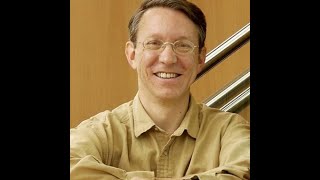
Robert Cook Deegan, a virologist turned policy expert at the U.S. Office of Technology Assessment, shaped early thinking about the Human Genome Project and genetic testing. He helped create the NIH's ELSI program and pushed worst-case-scenario analysis from defense planning into bioethics policy. Deegan argues bioethics became insular and publication-focused, disconnected from the real policy battles over insurance discrimination and genetic discrimination that led to GINA.
Chapters
I'm Bob Cookdeegan, and I'm a research professor at, in the Sanford School of Public Policy at Duke University. So I was born in Pittsburgh, Pennsylvania, in Allegheny General Hospital, which is where my mom had been a nurse and my dad had been an intern and early in his residency. So I was born in Pittsburgh, and then at age 6 we moved to Denver, Colorado, and I grew up in Denver. And I don't have very many memories of Pittsburgh, but I grew up— interestingly, the first 6 years of my life I lived on a VA hospital compound. My dad was a doc, and his dad had been a doctor who came out of World War I and joined the Veterans Administration just as it was becoming— changing from its previous incarnation to the post-World War I Veterans Administration with its health program.
What experiences early in life influenced your future professional and scientific career?
I was a science nerd. I was not the smartest kid in my high school. I was like number 2 or number 3. But we had a fabulous physics teacher, Mr. Robinson. At George Washington High School, and he brought enthusiasm, and he was one of those pioneers who actually did hands-on stuff, you know, where we had the wave generating things and all that stuff. That was kind of new, and he was a fantastic teacher, and he got a whole bunch of us interested in science. So I was born in 1953, so if you think about it, I enter elementary school just as the curricula are being developed post-Sputnik are beginning to pop up in the math and science curricula. And so my whole, you know, elementary school, junior high, high school is populated by all this post-Sputnik enthusiasm about science and technology and engineering and STE, what we now call STEM. And so there was a whole generation of us who were, you know, part of that ethos of if you're really smart, you got to go into science.
What was your undergraduate experience like?
I was super into organic chemistry. I mean, those were the days where at Harvard, um, R.B. Woodward was still there. He was splitting his time between Harvard and Basel, and his group was still active. And the guy who taught me my chemistry tutorial was in his group. He was a postdoc with R.B. Woodward and E.J. Corey, kind of under the shadow of R.B. Woodward, but also doing spectacular work. And he was getting into computers, and I was one of the half dozen undergraduates who started fiddling with organic modeling on computers, on a PDP-9 computer. So it was pretty cool stuff. And that's what I thought I was going to do until— really until my senior year. So what happened, I, after, between my junior and senior year, I, the, the Atomic Energy Commission, that was the year that Atomic Energy Commission stopped being AEC and became ERDA, en route to becoming the Department of Energy. And they had run a fellowship program, and I think we were the last cohort that ever got to do this, but there were 6 of us that were picked from all over the U.S. to go work at the Lawrence Berkeley Lab. And Lawrence Berkeley Lab and the national lab system in general had the highest power computing systems in the world. And as an undergraduate, I was sitting there, and this was really cool because I had a suitcase that you would carry around that was a modem, and you would make a phone call and put the phone actually physically into the modem., and I would sit in my dorm room on the Berkeley campus programming, which seemed like the coolest thing on the planet, and I was the only person, you know, that I knew who had ever gotten one of these, because these modems were thousands of dollars, right? And every time I ran my program up on the CDC system, it cost about $1,000, because— and they had the largest memory, I think, of any computer in the world at that point, and it was 170K. So it was, you know, it was like state-of-the-art. We were doing this, all this stuff in Fortran. But, that said, and I had a fabulous time. I had an incredibly wonderful summer where we got to meet with— there were 7 Nobel laureates in that one department, and we met with 6 of them that summer with just the 6 undergraduates. So it was an incredible exposure to super high-power science. But I also really discovered I think I'm unlike Maynard. I probably do my best thinking when I'm alone, but I just, I get, I go crazy. And I spent that whole summer fiddling with this computer and my model of, you know, shooting things at nuclear atoms, you know, for scattering experiments, and simulating that in a differential equations model. And I just got— I didn't like doing all that stuff alone. And I realized, you know, whatever I do next, I have to have— there need to be a lot of people around. And so that really was the crucial thing. It was that experience at LBL that kind of pushed me away from science, ironically, even though I had a fabulous experience there. It's kind of weird.
How did you end up in Raymond Erickson's lab for your postdoctoral research?
I ended up getting that gig in his lab because I was a med student and I had actually cut a deal when I was a senior in medical school and I was going around. I spent my last— my senior year, I didn't spend any time in Colorado. I did— I worked at the University of California San Francisco. I worked at the NIH here for 3 months with Carlton Gajdusek's group because I had been working on slow viruses, and we thought there might be an association between Creutzfeldt-Jakob and Alzheimer's. And I was studying these big families with Alzheimer's, and there was some— there were some hints about the transmissibility of Alzheimer's disease back then. This is 1970. That's come back now just very recently. So I spent 3 months with— going all over California and then the East Coast, and then I went to the National Hospital at Queen's Square, which is just an amazing neurological hospital that its catchment area is the whole British Commonwealth, and anybody with an exotic neurological condition goes to Queen's Square. So I had an incredible experience there.. And I had already decided that year that I wanted to do research. So as I was interviewing for pathology residencies, I was basically asking not what's my clinical training going to be, but how soon do I get into a lab and do I get to do molecular biology? Because I had figured out that I wanted to do molecular biology. That was partly because what was going on in Alzheimer's disease. We had constructed these amazing pedigrees. We had this one family from Oklahoma that had 5 generations, hundreds of people in this family, and one cohort of 14 brothers and sisters from the same mom and dad, 11 of whom developed Alzheimer's disease. So it was an unbelievable pedigree, and it had been my job as a medical student to construct that pedigree and get the clinical records. And it was in fact the Seattle group that eventually did the linkage. But this is 1976 to 1980, so we have a beautiful pedigree and no tools to do anything with it. You know, you sit there with a beautiful pedigree and maybe you could make a guess about what was going on, but you'd have to be unbelievably lucky. We didn't have the linkage map, right, because the Botstein paper comes out in 1980. So, and Ray White hasn't even begun to do the RFLP mapping. We kind of realized that. And it felt like the Alzheimer's thing, we'd kind of done what we could do, and somebody else was going to have to carry the ball. And, but in cancer, what was happening in the early '80s was this miraculous stuff happening around oncogenes. And just by total happenstance, Ray Erikson was in the very department that I had cut my deal with, because the head of the pathology department said, if you come here you do one year of internship, and then we'll get you into lab after one year. And I had planned to go to residency at Stanford, but, um, that path department was not going to let me into the lab until the end of two years. So that's actually why I chose Colorado and stayed at Colorado. And it was partly because Ray was there, and I thought I might have a shot at working in his lab.
Can you describe the research you did during your postdoc?
Ray's lab was super hot at that point because that's almost exactly the time that Mark Collette had discovered the kinase activity of the sarcomer gene, and, uh, they were continuing that work. And by the time I walked into the lab, we were beginning to discover all these other tyrosine kinases, and we thought there was going to be this beautiful, elegant cascade of kinase proteins that were signaling. And this is, you know, it's what gave rise to the Mark Spector scandal, because he thought he knew what biology was doing, and he simulated his experiments to make sure he got there first. And so we were doing that same kind of biology and trying to figure out what this Okay, so it's a kinase. What's it doing? What's it phosphorylating? And what's the pathway look like? So it was super hot science, and Ray was a very hands-on postdoc director. And it was a small lab. There were only about 7 of us in the lab, so it was a beautiful scale for actually learning molecular biology because all of us had to know how all— everything worked, right? So we're all fixing machines all the time. And slab gels and DNA sequencing were still pretty new. And so it was, it was exciting times. And molecular biology was in that transition to— we weren't doing high-throughput anything. It was all cottage industry at that point. But it was clear that it was going to move in that direction. And the oncogene stuff was the hottest thing going, and the people in that field were spectacular. You know, Varmus, Bishop, Jeff Cooper, Bob Weinberg— these are all people that were doing fabulous work. And so, you know, it was science at the very highest level.
It was fantastic. How did this virus research relate to the future of cancer research?
You know, the cancer gene story was really interesting. So, when I was in med school, we know that Burkitt's lymphoma is associated with a virus. And there are all these discoveries of retroviruses associated— there were a few leukemias that had been associated, right? So, there was this hypothesis that if we keep looking, we're going to find more viral reasons. And of course, Jim Watson and the whole group around Cold Spring Harbor has huge volumes saying that this is the future of cancer research. And of course, National Cancer Act 1971, 1974, you have this elaborate target diagram where viruses are a huge emphasis, right? And of course, it's completely misplaced in terms of the target actually going where you think it's going to go, but it turns out to be marvelous science. And they discover this unbelievably elegant system of a virus that only has 4 genes, one of which is a cancer switch, the Rous sarcoma virus. So if you're a molecular biologist and you want to ask a simple question of nature and you say there's a cancer switch in this 4-gene thing, and we know what 3 of the genes do, right? Right. Surface protein, the polymerase, and the the envelope. So there's only one cancer switch in there. We know what the gene is, but we don't know what it does. That's a beautiful system for studying a single switch that when it's on, chickens get viruses— chickens that have the virus get cancer, and when that's turned off, they don't. And Ray's lab had worked with this temperature-sensitive variation that allowed them to determine whatever the function was. So you look for the correlation between the function and the temperature, and lo and behold, that's how they made the discovery of the tyrosine kinase. So in a way, it was, it was displaced science because it wasn't— these cancer viruses were not turning out to be the cause of most human cancers, but it was a fantastic window into what was going on under the hood in cancers in general because cancers are about cellular transmission of mutations that cause something to— that cause cells either not to die or to proliferate wildly. And there are a few really elegant systems that grew out of that cancer virus stuff. So it was, you know, I don't think we need to be too apologetic for— it's a story of science, right? Right. You think you know where you're going, and it turns out that you were wrong about, you know, you know, it's like Columbus finding the East Indies, right?
How important was the ongoing study of these retroviruses to our understanding of HIV/AIDS?
So, all the stuff that was going on with retroviruses was incredibly important, because that meant it was a 3-year period of trying to figure out what was going on with AIDS, instead of what otherwise probably would have been a couple decades. If we hadn't had all that background of retrovirology going on during the '70s. It's the same class of viruses that are being studied for cancer, and HTLV was the original, right? So this is Gallo's, and it's coming out of the National Cancer Institute. So, you know, Montagnier and Gallo were the two big groups that are trying to figure out what is this What is this virus that's causing this horrible devastating thing that we discovered in the early 1980s that obviously had been circulating for a decade but had never been detected until clusters of these cases show up in New York City and San Francisco. And that story unfolded incredibly fast. To figure out which virus it was and all that, I mean, it was a mess. And really contentious, and there was the huge patent battle over the detection technology and all that. But the fact is, it was fantastic science, and it was completely set up by the cancer virus program because of the retrovirus connection, you know. So they were studying retroviruses because they cause cancer in lower organisms, and lo and behold, it also turns out they cause this devastating immune deficiency in human beings. So it was an amazing story. And of course, that in turn, because these retroviruses have a pretty small number of genes that you can actually study and inhibit, so the pathway from the retrovirology molecular genetics to the molecular biology of finding treatments and inhibitory and protease proteins that would stop the symptoms is also a really compact story of developing the treatments for AIDS and turning it from a death sentence to a chronic disease.
After your postdoc, how did you end up at the Office of Technology Assessment, OTA?
Yeah, so that story is kind of interesting. So I'm at the University of Colorado working in Ray's lab, and Ray's gotten super hot. He gets the Lasker Award, and Harvard recruits him because Wally Gilbert's going off to be the CEO of Biogen, so his lab is open. Ray moves into Wally Gilbert's lab, and I'd been in his lab for 2 years at that point, and it made no sense to try to go with him because, well, I think he wanted to hire new people anyway. We didn't— we never even discussed whether that was going to be happening, but I started applying for second postdocs. And I actually got a postdoc that would have taken me to the University of Utah because Ray White had discovered the first of the RFLP markers. And I thought that's what I was going to do, except I told my wife that and she said, "Oh, you're going to be in Salt Lake City. I'll see you when you get back." And we had just gotten married. So, that wasn't going to work. So, I started looking for other things, and I saw an ad in Science magazine about these fellowships in Washington, D.C., the AAAS Science and Engineering Fellowships, as they were called in those days. And I applied for it, and I got accepted to do a stint on the Hill, where I would have been working for a committee, and at this place that I'd never heard of, the Office of Technology Assessment. And they were doing a study on aging, and it turned out that they were really excited about the fact that I knew something about Alzheimer's disease, because this is the early 1980s and Alzheimer's disease has gone from being the word that you used only for people who got dementia before age 65 to, oh, we're beginning to use this for what we called senile dementia. And people were beginning to realize, oh my gosh, that means there are a lot of people affected by this. And so the whole Alzheimer's disease movement was beginning to build nationally, and the Alzheimer's Association had just been formed, and I was working really, really closely with the chapter that was in Denver. So I was giving talks because I was, you know, I would spend my summers going out to this family in Oklahoma, and there was another family in California, and I would go out and meet with the families. But I was also interacting a lot with the patient movements, the family movements, about support groups for Alzheimer's disease. And that national movement was just gaining steam and it was becoming an issue in Washington, D.C. So the people at OTA were very excited that I knew something about Alzheimer's disease, and so— and it seemed like a pretty cool place to work. So I ended up going for a 1-year fellowship at OTA and I stayed there for 6 years.
What was the OTA's legacy and what kinds of work did the OTA do?
So, OTA, you know, we all wax incredibly nostalgic about it since it doesn't exist anymore. It probably wasn't as fun at the time as it seems like it was in retrospect. But here are a couple things that were cool about OTA. One, it was pretty young. It had only existed since 1975, so it was very much a work in progress. So if you go work there, you feel like, oh yeah, we haven't done this before, and I get to make some decisions instead of inheriting a bureaucratic structure that says this is the only way to do things. There was a lot of improvisation. The other thing was the OTA job for me was the first time I really felt like I was doing something that uniquely drew on my skills, because I love science, but I was, I was not a great postdoc. I was, I'm a little too ADHD to be able to keep keep a column running properly and run sequencing gels and stuff like that. I could fix the machinery. I loved that. But I was not a super talented— I was not a Mark Collette or a Tony Purcio, the people who I was working with in Ray's lab. I didn't have the golden hands. But I loved the conceptual work, and I loved molecular biology as an intellectual endeavor. So here I was in a job where I'm supposed to to explain this beautiful science to people who were a little scared of it, but also knew that it was important. And my job became explaining why the science mattered to them. So for Alzheimer's disease or for cancer, those are the two areas, and mental disorders. Those are areas that I ended up working on later in my career. So OTA was fantastic in that everything that we do we did had somebody in the policy world who cared enough about it to ask for us to do a study. So we had a natural— somebody was going to do something with the information that we produced. And usually that was legislation or it was an appropriation. I mean, appropriation is a subset of legislation of funding science. So we kind of would, you know, we would interact quite closely with both parties in both houses. Very few institutions do that effectively, and yet we had this kind of inside track to work directly with the Hill. And there was a tremendous respect for technical expertise at OTA. So like the National Academies, we would bring in these advisory committees that were the best people we could find in the world, usually in the United States, to help us with a set of problems, there was always a technical aspect to it. And the other thing that was really, really interesting about OTA is we were always trying to bring science and technology information to bear on questions that mattered for policy. And what that meant is we were completely problem-oriented. As opposed to in academe, where you have this pull for methodology, you get really good at doing something a certain way and then you just keep going down that track. At OTA, what you're doing is you're trying to take what's over here in science, technology, law, and the humanities and ethics and bring that to bear to a real problem in the real world. What that means is it's truly interdisciplinary. So our teams, like the team that we put together for our Alzheimer's project, we had a couple PhD biologists, we had a bioethicist, and lawyer, economist, you know, we would just draw on whatever it is we needed to solve the problem that was in front of us. On the Alzheimer's project, in fact, we had two social workers. That were on my staff. And that was— their expertise was every bit as important as the molecular biologists'. And it was truly teamwork.
It was fantastic. When did the idea of the Human Genome Project, HGP, arise, and how did the OTA become involved?
That project was just winding down in 1987 when OTA had done a whole series of reports on biotechnology, and I was working in the part of OTA that was this hybrid of economic policy and biotech policy. And that was the group at OTA that I was part of. I was not in the health program, I was in this biotech part. And the idea of the Human Genome Project kind of popped to the surface in 1985, and by 1986, while this Alzheimer's project is in full bore, Victor McKusick, I think, was the vector who brought the idea of the Human Genome Project to OTA, because he was talking to the folks that were doing the biotech project, and he said, you know, by the way, there's this thing going on, and NIH is interested, and the Department of Energy is interested, and they're squabbling a little bit, maybe, you know, there's something that you guys could do. And about within 3 or 4 months after McCusick gave his talk at OTA, the staff on the Hill began to, oh yeah, something's going on here, we better get something. So, at that point, we had really, really good connections to House Energy and Commerce and the Appropriations Committees, which are the two places where this was going to come up in the House. And then, what was then Labor and Human Resources is now the Senate Health, Education, Labor, and Pensions Committee, and Appropriations on the Senate side. And then, the aging committees. They were actually really interested in the Genome Project. So, all these clusters of congressional staff are paying attention to it, and I was kind of the closest thing that they had at OTA to a geneticist, a human geneticist, because I had done this stuff on Alzheimer's. So, I became the project director of the OTA effort to think about what's— should there be a Human Genome Project? Does it make any sense? And it turns out Totally not surprisingly, these things happen in the real world. The National Research Council, John Burris had the same idea at the NRC. Jim Watson had gone to the McDonnell Foundation, had gotten the check. So the check arrives at the NRC before they're ready to actually start the project. They don't know what to do with the money until it gets officially approved. And those two projects were approved, you know, in the same week with OTA going off and doing something and the NRC doing something. And so it was in the air, obviously, right? And it was obvious that there were going to be some policy decisions that needed to be made. So I became the project director for the OTA project, and in standard OTA fashion, we looked around for whatever talent we could find. And we were incredibly lucky to get two people who were really, really crucial to that project. One was Pat Hoban. And Pat had been trained as a structural biologist at UC San Francisco. So, it was so cool that then Bruce Alberts becomes the chair of the NRC committee because we had a social connection to Bruce. She knew Bruce, and she knew that he was a good guy. So, it could have played out in a different way, because OTA and NRC quite often did these things that were kind of in parallel. We'd be doing stuff, and usually there was kind of a rivalry. And to be honest, of course there is. But the sense was, we actually got along quite well, and John was really, really good at his job, John Burris, and Bruce was a fantastic choice for the chair of that committee, because He'd been writing against big science, and yet here's a big science proposal. So everybody kind of trusted him to do a good job of thinking through what the policy should be. So, and they allowed— I attended their meetings. And that was remarkable, that they would allow somebody from the outside to do that. That was really countercultural, and I give John and Bruce a lot of credit. And I think it's because they thought it was really important that OTA knew what was going on, and they were, of course, invited to OTA, but OTA meetings were always open because, you know, we're part of Congress, and that was part of the ethos.
So it was actually really, really good. What recommendations were made regarding who should lead the HGP?
One of your questions is why was everybody complaining about the— nobody actually said who should run this project, right? So, I think the reasons that neither of these two reports took that on head-on, the reasons are different for the two reports. For the NRC report, I think the reason that they shied away from that is that they didn't have consensus within the committee. And if they had tried to put a recommendation forward that said— most of the committee would have said NIH should run on it because it's biomedical research. It makes no sense. And of course, David Botstein is on this committee, and David's famous quote from the Cold Spring Harbor meeting was, "Oh, this is just a jobs program for unemployed bomb makers," right? He was highly suspicious of the Department of Energy, and Jim Watson was too, and he was on the committee. So, they would have favored an NIH leadership role. But there were enough people on that committee who weren't so trusting of the NIH process. And at a series of meetings, particularly the one that was held at OTA in July of '87, Watson and Kirstein really collided. And it got pretty testy. The transcript of that meeting is quite interesting, and you can see that they really— they were civil. We hadn't gotten to Trumpism quite at that point. But there were real tensions in the air. And it was really obvious that there was a group that really thought there needed to be a concerted, top-down planning effort, or this thing was never going to get done. This thing meaning mapping and sequencing the human genome. And then Ruth, who to the core of her being believed in investigator-driven, let a thousand flowers bloom science. And there was an ideological, philosophical, sociological conflict that was really unresolvable. You had to choose which way you were going to do it. And in the end, you know, the organized concerted effort faction won.
Where did the initial HGP budget come from? What was Jim Wyngarden's role?
It could have gone either way, and left to the normal course of politics, business at NIH would have been business as usual. I think a couple of things explain that. One is, I think Ruth herself was beginning to shift by the end, and certainly within a few years afterwards, she acknowledged quite openly that, you know, I'm kind of glad that they didn't follow my advice. She was pretty cool about it. And so, I think she was softening, but I think it was actually Weingarten, and he really did— he was a pretty hands-off, quiet— he was a taciturn NIH director. But on this particular issue, he was actually pretty decisive. He got the budget for it. Which— that story in and of itself is really interesting because Jim Watson, I think, for a long time— I don't know where he is on this now, but I think he was pretty convinced that his lobbying on the Hill was what generated the budget for the Human Genome Project. And this is a story that I really traced to its roots because I actually did want to know, how did we get this first budget for the NIH in the first DOD appropriations, because it was an appropriations question. And I actually had to camp out in the Appropriations Committee staff room, and I basically sat there and said, "I want to talk to Henry Neal because I know that he's the one who had the spreadsheet that year for the NIH budget, and I'm not going to leave until he comes out and talks to me." I finally did. I'd been trying to reach him for 6 months at that point. And he just wouldn't give me an interview. And the clerks of the Appropriations Committees are really, really— they're so used to being lobbied for money. They just don't like talking about their process to outsiders. But I was so stubborn. He finally came out. And he only gave me about 5 or 10 minutes of his time. But I was able to ask him if he'd been in any of these meetings with Jim Watson. He knew about them, kind of. But only vaguely, but he was really clear on where the budget came from, which is they'd gotten this list of incremental budget additions from Jim Wyngarden, and all Henry Neal had to do was put it into the Excel spreadsheet for next year's budget. And they hit the first two increments that were for mapping and sequencing the genome that Wyngarden had put in. And that's— it's just a really mundane— it didn't— he wasn't paying any attention to this huge debate about should there be a Human Genome Project. He's taking the NIH director's recommendation for a budget and saying, "Okay, that's what we do." How was the decision made that the NIH should lead the HGP? If you think about the politics, you had Domenici, the Energy Committee, and the Appropriations Committee, he's on all three of those in the Senate, and he's a champion of the national labs, and he's— that's who he's listening to. And then you have the NIH, but the NIH is kind of a diaphanous, diffuse constituency, and if either the OTA or the NRC had been stupid enough to say NIH should lead this thing, period. What do you think Domenici is going to do? He's certainly not going to move his money over to NIH, and he's not going to be very happy because here's a group that's actually trying to block him from doing something that he thinks really is important for his constituency. And between Sandia and Los Alamos, two of the biggest employers in his state, hugely important for the future of his state.
State.
And he's not going to let that happen, period. So, what you're going to have is an internecine battle. And the NIH constituency might eventually have won, but what's the point? Why are you saying no to somebody who wants to play in your game? It made no sense, actually. What it did pose, however, was the fact that it was going to be more complicated. It would have been nice if this all played out so so that all the money happened to be channeled in the right direction, but it wasn't going to work out that way. You were going to have to have two budgets in two departments, and you were going to have to figure out how to solve that problem. So one way to solve that problem is to write the rules and say you have to do it this way, and that was the Child's Bill. And as you know, that passed by an overwhelming— there were only three no votes to that. And I don't even know why the three people voted no. Probably just for the hell of it. But that was overwhelmingly passed and it basically set a framework. The downside to doing that though is once something's in statute, you can't fix it if conditions change unless you pass another statute. And it really puts things in place. So what happens is the bill passes. Rand Snell is Lott and Childs' staff person who'd become a really good friend to Patricia Hoban at OTA, so we have really good channels of communication. We're trying— you know, OTA did not support or oppose anything in legislation. That's for our bosses to decide. So, the Senate had done what it was going to do, but then that means that nothing is going to happen unless the House also does something. So, the key position in the House would be the Appropriations Committee, but the Appropriations Committee is not going to make the decision about who runs the project when it's two different departments. 'Cause the Appropriations Committee is in subcommittees, and one's an Energy and Water Appropriations Subcommittee, and the other is in the Labor, Health, and Human Services. And there's no merger except at the very top of the committee. So Appropriations is not gonna be useful for solving this problem. It's gonna be Energy and Commerce. So John Dingell's staff person, Leslie Russell, basically, very politically savvy, says, "Okay, we've got this bill coming from the Senate. What are we going to do?" And she called up Jim Wyngarden and I think it was Ben Barnhart at that point. I can't remember whether it was David— I guess it was probably still David Gallis before he left. And Jim had basically said, "Guys, solve this problem on your own. We don't want to pass a statute here." "because once we pass a statute, it's locked. And so please play nice." And that pretty much carried the day. And that's, I think, the reason for having a formal— there was a formal memorandum of understanding. There was a formal joint advisory committee that was appointed. The people they picked from the Department of Energy, from the national labs, were the heads of the scientific programs, so Moyses and Carano and Branscombe. They were techies, and so they did a very good job, and it was really collaborative. And so that was brilliant, frankly. It was a way better solution than trying to solve this by statute. So basically the political game there was to come up with a framework that would actually work. What we did at OTA was we basically said there are different ways to handle projects like this, and frankly, this is the kind of thing that does not have an analytical solution. There is no one right way to solve a problem like that. There are many ways, and it depends a lot on the leadership and the particular history and the pathway by which you go from point A to B. It's not just, this is the only way to get from A to B. And the NRC committee, I think frankly, I mean, who on that committee had ever run anything? I mean, Jim ran Cold Spring Harbor, but that's a whole different thing. From running a federal administrative apparatus to conduct a coordinated project. So, there really wasn't anybody with a lot of administrative background. So, it was smart for them not to make a judgment, because that's— they had no expertise on that kind of a question. So, I think they were pretty smart to duck that question.
How did the OTA and NRC reports influence the establishment of the HGP?
Here we have these two reports, the NRC report and the OTA report. The NRC report is actually way more important. The NRC was important because the political problem that needed to get solved— you did need the money, right? But in fact, really the only problems at the federal level were let's have a plan where everybody who wants to play gets to play together and we have a coordination mechanism. So, that's the coordination issue that we were just talking about. And then you need the money. You need the budgets to get through the appropriations committees. So, that is, that's really all you need from the federal government. But to actually do the project, you actually have to have a strategy for how you're going to do this mapping, and there was a lot of talk about, well, we know how to do genetic linkage mapping, and we know how to do physical mapping. Well, we didn't, and it was really hard, and thank Thank God they put Maynard Olson on the committee, right? Because he actually knew how to do physical mapping. Then they started listening to John Sulston and Alan Coulson, who were doing the nematode project. If that hadn't happened, it would have been a complete vaporware project, right? The NRC committee became really, really important for thinking through what the scientific strategy should be. It wasn't so much— the report itself was really important. The thing that was so useful about having an NRC committee is that it does make recommendations, and they said, "Go do it." At OTA, we couldn't say, "Go do a Human Genome Project." We have to say, "On the one hand, blah, blah, blah, on the other hand, blah, blah, blah, blah." We were in the business of preparing options and saying, "You guys on the Hill have to decide what you're going to do." So, between them, these two reports are actually very different in character and very different in their political utility. The NRC report did two things. One is say, "Yes, do it." And the other was to actually craft a scientifically credible framework for how to get it done, or at least get it started. And both of the reports are really, really good, and I think both reports stayed pretty pretty far back from the hype and the garbage that was going on in the political realm about how the Genome Project was going to cure all illness and save the world.
Did you think there was too much hype around the HGP at the beginning?
And it's really cool, because I think both reports managed to not do too much hype. And this is— it's incredible, as usual, Maynard being really wise. You do need the hype. It wouldn't have happened without the hype. We wouldn't have had a Human Genome Project if people weren't putting really lots of energy into making sure that it happened, and hype is part of that process. But the report itself cannot do that. You leave that to the media and to personal meetings with legislators and stuff like that, but you don't put it in your written report, even though it's hellishly tempting 'Cause at the time it just feels like, oh yeah, we're— I mean, this really did feel— the Human Genome Project had a lot of intuitive support for it that this just has to be really good policy. And I would confess to having that feeling myself. It just seemed like it was so obviously important to get this thing done, 'cause it was going to improve the efficiency and it was going to create a really powerful tool. And also a really new kind of culture. Because remember, I grew up out of human genetics, where you create a pedigree and you mine it for the rest of your career, and you don't share any information with anybody. Human genetics was horrible. And if the Human Genome Project had grown out of that ethos, we'd still be starting our RFLP mapping, you know, 30 years later. And it really was the nematode-yeast model organism framework that prevailed in the open science ethos of the Genome Project. And that's probably one of its most important legacies, was this— yeah, you can spend a lot of money on centralized resources, but you know what, the information that those resources and the materials that those centers create need to be available to everybody. And a very democratic even though somewhat centralized structure of conducting science. And the model organisms were much, much better at that than the human geneticists were.
How did you come to work at the National Center for Human Genome Research, NCHGR?
The Office of Human Genome Research was actually in Building 1, and the office had gone from being the office of the National Center. And I think that happened administratively. I think Jim Wyngarden figured out he could do that by getting Secretary of HHS to sign on. And then it was the 1990 bill for the NIH Extension Act actually encoded it, but that didn't pass until sometime in 1990, I think. So, and the difference between, of course, the office and the center is spending authority. You have an advisory committee and you actually can spend money. But initially, the Office of Human Genome Research was just right next to Wyngarden's office, right down the hallway. And Elke was working there. Mark Geyer had come. He'd been at GMS. He'd been at GeneX and then GMS. Working for Ruth. So, a whole bunch of Ruth Kirstein-trained, incredibly competent NIH people who know how NIH works and how to make the system produce grants have been moved over. I think Weingarten, knowing full well, and probably advising Jim rather strongly— I don't know the details of this, you'd have to ask Jim this. But I'm assuming it was basically, you know what, you are going to be the titular head, but you know what, you need to actually hire some people who know how to get things done in NIH, and it's a complicated place. So, they were there, and it was a very small staff. I was also hired as a— I wasn't even a special expert, which is I think what Jim was, maybe. I don't remember what my category was, but I was a category down from that. I had been— So I left OTA in December of 1988 to head up what was supposed to be a mini OTA for bioethics. And we operated for 1 year, and I worked 70, 80-hour weeks trying to get this thing to work, but we never did anything useful. It was completely frustrating because we got caught in an abortion crossfire. And I actually learned on September 27th that my agency was going to be defunded in the appropriations process.
Process.
I never got a phone call from any of the staff or the members of either the House or Senate Appropriations Committees. I just learned about it through OTA staff who called me up and said, "Did you know that this was happening?" And I go to C-SPAN broadcasting the appropriations markup and discover that my agency is not gonna get funded, which means if I showed up for work that following Monday, I'm violating federal law. And so I had 4 days' notice that I was unemployed. But I also had a grant from the Sloan Foundation and a grant from NSF to finish my book on the Human Genome Project. And that's what saved me, is I had a little buffer there where I could go back to writing my book, and it cushioned the blow. But about 2 weeks after the agency goes out of business, Jim Watson called me up and said, "Do you want to come work for me?" So, I think he was probably at Cold Spring Harbor when he made that phone call. We agreed that I would come work for him, but it was only about half-time because I was— my grants went through Georgetown, so I was doing that through Georgetown, and that was about half-time, and then I was half-time at NIH. I was not an official government employee either, so I had no line authority, although I did couple of things.
What was the kind of work you did for NCHGR?
So Jim was sending me all over the world because there's a bunch of stuff happening in Moscow, a bunch of stuff happening in Japan, a bunch of stuff happening in Europe, and I became Jim's kind of emissary to the international stuff because there was a lot of politics going on. And Jim also, I think, wanted me to know what was going on on the Hill. But at NIH, as you undoubtedly know, exquisite sensitivities about back channels to Congress. So Elke and the other folks who are line staff very understandably never could trust me, right? Because I'm, in a way, I'm kind of Jim's spy within the staff. Spy is too strong of a word, but I'm basically supposed to be an independent operator. Yeah, and so every time Jim comes into town, we go eat at Pizza Hut, and I'm usually the person who takes him to the airport and drops him off. So we always have, usually at the beginning and the end of each trip, he's dumping information on me about what he's learned. And of course, he's got the best channels for what's going on, especially in those days. He knew everything that was going on in science, in biomedical science. He knows everybody. Listening to gossip all over the world, and he's channeling that information and trying to craft political strategies. So I was supposed to help him, I think, primarily with the international stuff, and also with what's going on politically that I'm not going to learn through my usual channels of the government relations office at NIH, because those people are going to filter it. And I did have really, really good connections. On the Hill. But frankly, for that year, I couldn't use them, because I knew it was a dangerous game that I was playing. And I pretty much stayed out of it, with one exception, and that was— that was the year that Domenici came after the NIH genome budget. And that was actually before my agency died. So, I was working for the Biomedical Ethics Advisory Committee when Jim and Elke called me up. In a panic that they had this $50 million budget cut that Domenici had engineered. And so I made a whole bunch of phone calls just to tell them who to call and who to deal with. And it kind of got partially resolved. But that was about the only political thing I did from the time that I left OTA until I joined the National Academy of Sciences in early 1990, so, or '91. So, my job for Jim was to be his ears in the international discussions and also to channel information about what was going on in, within constituencies in the U.S. that he didn't think he would get through the normal NIH channels. So, I worked first, my first office was actually for a week or two I was in Building 1. And then the whole operation shifted to the Lister Hill Center. And then Eric came on. Eric Youngst was hired to run the LC program. And I'd been doing some of that stuff initially. And then that got handed off to Eric. And then I think Elka is probably who engineered it, but I ended up working in the cloisters in a single office where I was off on my own. I think that was very deliberate. It was good for me and it was really good for the staff because it kind of kept me insulated from— and people didn't have to worry about leaks and stuff like that. I knew that I was not trusted. And I was being careful, but there was no way that I was going to solve that problem. So that was a physical solution to the problem. I was off doing all this stuff, sitting in the cloisters, not talking to anybody. For 8 hours a day, you know, doing everything through my computer and by the phone. So it was really, really odd. It was really uncomfortable, and that's why it only lasted a year. I immediately started, you know, after a month or two of this, I realized this isn't going to work. It makes no sense. What Jim's trying to do here makes no sense. You don't have a spy in the nest. It's just not going to work. So And it was very clear that I wasn't going to be the congressional liaison. And anybody that they hired as congressional liaison was not going to have the depth and number of connections on the Hill that I already had. So it was, it was a really, really odd situation. So I ended up going to the Institute of Medicine. And that was a really, really good decision on my part. And I think it's solved a lot of problems for Elka.
How did the structure of NIH influence the management of the HGP?
Mark and Elka are trying to solve all these incredibly— and NIH is a complicated place, and the tools that they have are basically grants. You're trying to run a— Outmoded grants. A concerted, organized effort to move things forward and push technology and push science using a relatively passive mechanism that involves all sorts of outsiders who aren't fully educated on how the process works, and they're doing grant-by-grant decision-making, which is not how you get things done. So they're trying to make this wobbly machinery do something that it's not very well designed to do, and yet being held accountable for actually meeting these goals 5 years out. That's actually knowing enough about how the system works that you have some confidence that you're going to be able to get there. And really it is about getting the right people to make the right decisions and getting the money into the right hands and stuff like that. So, yeah, they had a few other things to worry about. So, imagine NIH is a complicated place to start with, but now you've got another agency entirely, and you've got a joint advisory committee, so you've got your council, you've got a joint advisory committee, and you've got— patrons that are really focused on the Genome Project, and a fair amount of resentment, frankly, within NIH about all this money going to this new critter that not everybody loves anyway. And so, they had a lot of decisions to make, and the staff was not very big. There was a lot of work to be done, and not very many people to do it. One of the other real challenges of doing a project like this at NIH, as opposed to— I'm not sure DOE is a whole lot better, but as opposed to DARPA, is the tech push stuff. You know, the broad area announcement, a lot of authority to individual program managers who don't have to contend with study section apparatus and the inertia of a peer review process. It's merit review, but it's merit review that's really strong delegation to individual judgment. And the system works when somebody is really, really good at knowing the technology and knowing where it needs to go, which is kind of— that was absolutely essential. The technology stuff was really, really, really important because we weren't going to get to the Human Genome Project with slab gels. Right? So, the automation stuff, which was only happening— so, right, so the debate about should there be a Human Genome Project starts in 1985. The very first publication on the Caltech sequenator isn't until '86. The first physical map publications aren't until 1986 in PNAS. So, this debate is happening before the technology for making it real even exists. And that was making the technologies work. The pulse field gel stuff, that's high-tech whiz-bang stuff. And you need people who do that techie stuff. What I think is really, really— I would have guessed that NIH would not have done as good a job of the tech push on the DNA sequencing, for example, Jeff's contributions there. I think that was actually— somehow they made the system get to where it needed to go, despite the fact that it was embedded in an institution that's absolutely dedicated to peer review. So, somehow they made it work. And it's worth just noting that Carol Dahl and Bob Strasberg and Jeff and other folks, I'm sure, at NHGRI in particular, somehow made that system work, and it was really, really important that that part of the ecosystem be healthy.
What were the origins of the NHGRI Ethical, Legal, and Social Implications, ELSI, program?
Origins of the ELSI program, the story that everybody knows, which is Jim basically starts the ELSI program by responding to a reporter's question, and that's September September 1988, I think it was in Lipsett, I think it's the same place I'm going to be talking later today, to announce that he's going to be the head of the Office for Human Genome Research. He's going to be joining NIH as the director of this new initiative, and says, well, we're going to have a research program that looks at the issues that are associated with doing the science. And that kind of put it out there. And Jim tells that story by saying that he didn't confer with anybody. And I never was quite sure whether he thought he was going to get blocked if he did. I will say that I asked Jim Wyngarden, how did you react to that idea? And he said, oh yeah, it seemed like a pretty good idea. I think he was right. So I don't think he would have gotten a whole lot of resistance to it, frankly. But I think Jim basically probably did know that he was going to do that if he got asked a question about it. That was going to be his response, because it was— concerns about eugenics, concerns about genetic testing were in the air. And because of the history of human genetics, he's very sensitive to the fact that there are some aspects of genetics that are like— there is heavy stigma. So, I think he was I think he was prepared with an answer, and once he put it out there in the public, then it's an irreversible decision. But I also think if you read through the NRC report, there are a few paragraphs in there about we should do something about this. It's about the level of analysis. We actually had a whole chapter that was written by Gladys White in the OTA report. And we did a whole bunch of contract reports. Jonathan Glover, really famous philosopher from, at that point, Oxford, now London, wrote background papers for us. We took it pretty seriously. And the implicit message, like, OTA can't make recommendations, but you read the report and you think, you can't leave this out, right? You better do something about this cluster of issues that are going to haunt the program unless unless you take it on, unless you confront it. So, it was in the air, and having a research program was a logical solution given that that's what NIH does. It's about the only thing NIH does through the extramural program, and there was no intramural program at that point. So, you're going to do it through a grants program. The working group was— the effort to actually do something a little bit more than that, which is to have the capacity for having a group of people think about issues. And it wasn't really so much to steer the program as it was to engage with the policy process and be thinking about it. Jim was really, really insistent on— Nancy Wexler, I think, was probably the only person that he ever thought about. As chairing that, and she was very logical because she was neck-deep in the discovery of the Huntington's gene and in the debate about how should that be turned into a genetic test and the framework for delivering a genetic test that would respect the rights and interests of the people who were getting themselves tested. And her background in psychology and in grants administration here at NIH was great. And then the other folks on the committee, but were, you know, we all knew each other and there had been endless meetings about implications of the Human Genome Project that were going on even as the project was getting launched. So, it wasn't like it was hard to figure out who the network was, and the working group was to tap into that. Francis and, you know, once there's the handover to Francis and you actually have a hands-on director at NCHGR that becomes the Institute, I think there was frustration with the working group because it's part of NIH, which is a research institution, but it has a policy mission. And those two don't sit very well together. And there was— it was really actually, I think, pretty close to impossible for the working group to do what it was supposed to do, which was to have this— let's engage directly with the issues as they're emerging. So things like even GINA, which is relatively non-controversial, everybody's against GINA genetic discrimination in the LC Network. But you can't advocate for a piece of legislation if you're part of the executive branch. You're just not supposed to do that, right? We have laws against that. So how to thread that needle and actually have a public voice was always problematic. And so there was this debate about the ELSI program. And at the time that the ELSI program was created, all of the vectors were in alignment, so you didn't have to make a choice about, are we doing this because we want a— what Francis called the conscience of the Genome Project, that you want people thinking about the consequences of where the science is going and how it's going to be applied. Or are you doing this so that you can say you're dealing with it and you can just get on with the business of doing the science and hold it out as a shield saying, "Hey, we're thinking about this and these are the people we've delegated that responsibility to. Don't worry about it. Trust us." So there is this debate about is it a vacuous PR shield or is it actually doing real intellectual work? And the fact is you didn't need to make that choice. When the program was being created because both functions— you make the decision to do it and it's serving both functions and they are not in tension initially. But when it actually comes down to turning that into operational decisions, then you actually have to start figuring out, are we really running a research program or are we running a policy engagement system? And NIH has a strong inclination to go going to be to run a research program. And that's, of course, what it ultimately became. Working Group disappears sometime in the mid-'90s, right? And Kathy and Francis figured out how to make that happen by asking external advisory committees to weigh in on what's its purpose, and then doing what they wanted to do anyway.
What are your thoughts about bioethics being seen as a field that emphasizes worst-case scenarios?
One of the sets of analytical tools that you have when you're thinking about policy, and this isn't just policy in this domain, it's policy in general, is— and it's a very rational process of thinking through worst-case scenarios. This is what people at DOD do all the time, and this drives war planning and drives planning for a lot of things. Companies do this. So you think about worst-case scenarios and you think about, we don't want to go there, so what do we do to make sure that we don't end up there? That's a very rational process, but it means that when you're doing that as a research project or as a research theme, that's what you write about. And so, and it's not hard. Look at the history of human genetics. Did we do stupid stuff? Did we pass Mandatory Sterilization Act? Acts and Anti-Miscegenation Acts, and yeah, we turned that into state laws that went all the way to Supreme Court and Buck v. Bell, right? So we did some incredibly stupid stuff that in retrospect seems like it was really, really morally wrong and on policy grounds was really bad. That's already happened, and this is the very same field out of which that bad stuff crew. So it's not surprising that Gattaca would basically take the ideas of eugenics and project them forward into Hollywood framework, and that becomes a cultural meme that everybody has to deal with. And in genetic testing, you've got this disease, Huntington's, that you can't do anything about, and, and yet suicide rates are high, and everybody in the, in the field knows that it is scary information that's hard to handle, and you don't just give it to people and figure you're done. So, it makes— historically, it makes a lot of sense. It would have been really interesting if BRCA had been the first set of genes that were discovered, because there you have a surgical intervention, and you worry more about, "Let's make sure people know that they've got this risk facing them," than, "We can tell you that you're at risk, and we can't do anything about it." you can only plan. So, all that stuff is going on, and the finger wagging— bioethics got the reputation of being the place that you send these issues and they concoct the worst-case scenario because that is one of the legitimate frameworks for thinking about policy. And if you paid a bunch of bioethicists to tell you happy stories that feed the hype, that's not terribly socially productive. So, actually, you do want to be paying people to think about the problems, because if something's not a problem, there's not a lot of social value in having people write about it. There's a lot of social value in avoiding pitfalls. So, I kind of understand it's a natural dynamic of how the field evolved.
Is bioethics a discipline? How does ELSI fit into this picture?
The other criticism that you haven't raised, but I think it's potentially even more legitimate, is that bioethics in and of itself became a— it's not a discipline, it's not even really a field, but it is a social network. And two things happened as a consequence of having the ELSI Program. Number one is genetics came to dominate the whole field, because that's where you could get paid to do your stuff. And once the ELSI Program existed as a stream of funding and a research pathway, then you get people who are going to pursue careers who are going to expect to get grants the same way biomedical researchers get grants, and you're going to have a whole cadre of people, and the only place they can get paid is to focus on genetics. So you're going to get an overweighting of those issues that are associated with genetics compared to all the other stuff that's going on in biomedical research. And the other is you get the disciplinary ossification. You get certain ways of doing stuff and schools of doing bioethics that become their own institutional framework because you get a group of people who are evaluating each other's work and sitting on tenure committees, and it's a very academic thing. And this is what academic institutions do, is they create silos that are reputational networks that become very focused on publishing the paper for that network and not really caring about what's going on in the outside world. So, the policy engagement stuff kind of got— it's hard to do both good research and policy engagement because policy engagement takes time and energy, and it has its own expertise, but it's not the kind of expertise that's recognized in most academic shops. So, you got to push into genetics, and you also get a push into doing the— your goal when you wake up in the morning is to publish papers for your colleagues, as opposed to changing the world. And back to our original thing about OTA, that really was distinctive about OTA. It was real-world problem-focused. That was what's so cool about it, is these folks sitting on the Hill have to make decisions about what the laws of the land are going to be, and wouldn't it be nice to help them get the best information they can get when they're making those decisions. So it was very different than an academic ethos.
Can you talk about early LC program staff members Eric Youngst and Elizabeth Thompson?
Eric was brought in probably 1990, and he was His lineage was he was a grad student under Leroy Walters, and if you follow the pathways, you're going to see Leroy Walters everywhere. He was the chair of the OTA committee. He'd been involved with biotech. He goes all the way back to the National Commission. And he was the mentor for Gladys White, who was my employee at OTA. And when I was hiring Gladys, Eric was the other person that I was thinking of hiring at OTA. But Eric had, at that point, he wanted to do academic stuff. So he got a really good academic job and he worked with Dan Klauser at Hershey and at Case. And so he was brought in from academe. But he was brought in because he had a really good reputation within the LC community. And he's trained at the foremost. So originally in bioethics, it's the Hastings Center. Which is not an academic place, it's a freestanding think tank, and Georgetown. And Georgetown is a training center. And so it's the main source of— and everybody who's anybody has either taken the Georgetown graduate program or they've gone through the intensive bioethics course, which is Beauchamp and Childress and Faden and all of— and Pellegrino and half of the pantheon of the first generation of bioethics. Is based at Georgetown. So Eric comes out of that tradition and goes off into academia, and he's hired to come back and run this program. And his job was really to establish— and it was his acronym, ELSI is his acronym, so very clever. He basically builds the program and then goes back to academia and I don't remember exactly when Elizabeth came on board, but she and Jim were both in the network. They were writing and thinking about, in particular, the genetic testing issues, because they both have connections to human genetics, human clinical, like real medical genetics. Elizabeth's got a background in nursing. And they want to move to D.C. So, it was—
she worked with Eric for a long time. How does testing for cystic fibrosis relate to the origin of the LC program?
Huntington's and CF are the two prototypes, right? So, and Nancy Wexler is already embedded for the Huntington side. CF, of course, is discovered in '89. And Francis, you know, becomes famous for that. But what was really interesting is if you go back to the President's Commission of the early 1980s, they actually did a report on genetic testing and screening, because we knew it was going to be an issue, partly because of sickle cell, but it was also obvious that other things were going to be discovered. It was obvious that there was going to be a gene discovered for CF eventually, And even before the gene was discovered, the President's Commission actually had a whole chapter devoted to, so suppose we can test for this, what are the policies that we need to have in place to think about genetic testing and screening? So, here's a policy document that back in 1981 or 1982 is saying, what are the problems we're going to confront that Alex Capron and the group at the President's Commission, incredibly competent group of staff who also go out and seed academic bioethics. Once they've left the President's Commission, they're all famous bioethicists. And they've actually thought about this policy. So, actually, the gene is discovered, and I remember the working group meetings after the science paper came out, and we're saying, "Oh my God, now we got to do it. We got to think about it." And that's the same time, actually, as cancer genes and breast cancer genes— the colon cancer and breast cancer genes are also all in this gamish of— and Alzheimer's. This is all being discovered at more or less the same time, and we realized, oh my gosh, we got to do something about this. So, that's when the idea of having an ELSI program looking at the clinical rollout, or the prospect of clinical rollout of these tests got incorporated into the— the working group meetings became a way of thinking about how NIH could adapt to that. And the idea of harnessing an ELSI component to what were essentially clinical observational or clinical trials studies grew out of those discussions. And CF was where that wave—
one of the places where that wave broke. How does insurance discrimination relate to the origin of the ELSI Program?
So, the American Council on Life Insurance has a report that comes out in— they're working on it in 1988, I think it came out in 1989. The CEOs of all the life insurers get together out in Pebble Beach in California and have an explicit discussion about what are we going to do about this. Are we going to use these tests? Are we going to ask for these tests? What happens? All the discussion about adverse selection and moral hazard they put it in a report and that discussion is beginning to happen. And it is relevant to— life insurance is very relevant to Huntington's and the health insurance stuff looks like it might be relevant to CF and the cancer genes, right? And then You know, when BRCA is discovered, in fact, we realize that women have picked up on this and it becomes the number one reason that people are saying, "I'm not going to get tested," is if I am tested it's going to go in my medical record and I'm never going to be able to get health insurance again if I change jobs. So that's the impetus for— these very practical consequences are beginning to— you can play them out. And the insurers really didn't know what they were going to do. 'Cause they're hearing from their actuaries, you have to take this into account or you're gonna die financially. And actually they hadn't played the numbers out very well, if you think about it. Right. If you, especially in those days, the number of people that would've turned out to be BRCA positive would be noise in the health insurance markets. But they hadn't done really, they'd done limited but very limited actuarial work. Actuarial analysis. But Alzheimer's disease and long-term care, well, then you've got a real issue. Right. Right, because you've got a single gene, ApoE, that does account for a fraction of the attributable risk you cannot leave out of your actuarial tables if you're going to offer this private voluntary insurance. And you've got a real policy dilemma there. Although interestingly, that didn't play in the GINA, right? And it couldn't because there is no policy solution to that problem. You either subsidize or you stratify the market. And neither of those is politically acceptable. So the best way to deal with that is to do nothing until it becomes a crisis. So, and we still haven't done anything about long-term care. Some states have. But long-term care and Alzheimer's is a— that is a smoldering issue. And that one's real.
More from Joshua







Scientist Stories: Hans Waterham, The value of phenotypic assays in peroxisomal disorders




Scientist Stories: Joel Zlotogora, Genetic carrier screening programs for reproductive purposes